Shri Shivrudra Balayogi Interview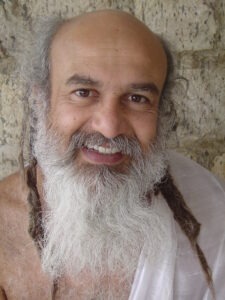
Summary
The conversation explores the role of a self-realized Guru, the value of devotion and meditation, and the need for personal effort on the path to liberation. It also examines divine experiences, spiritual discernment, and how seekers can respond to misleading or misbehaving teachers.
Questions This Interview Explores
- Is a spiritual teacher necessary for self-realization?
- How can a seeker recognize a genuine spiritual teacher?
- What role do discipline and personal effort play in spiritual realization?
- How should seekers understand dreams, inner voices, and other spiritual experiences?
Key takeaways
- A true Guru guides seekers toward self-realization rather than worldly powers or miracles.
- Sincere longing for truth helps a seeker find the right spiritual guidance.
- Divine grace may open the path, but sustained effort and discipline complete it.
- Meditation, devotion, and selfless service work together in spiritual practice.
- Spiritual experiences can be meaningful without being fully explainable by the intellect.
- A seeker should judge a teacher by realization, conduct, and the depth of their guidance.
Transcript
Rick: Welcome to Buddha at the Gas Pump. My name is Rick Archer. Buddha at the Gas Pump is an ongoing series of interviews with spiritually awakening people or awakened in this case. I’ve done nearly four hundred of them now and if this is new to you and you’d like to see other ones go to batgap.com and look under the past interviews menu where you’ll find all the previous ones organized in several different ways. This show is made possible by the support of appreciative listeners and viewers, so if you appreciate it and feel like supporting it there is a PayPal button on the site. I’m very honored today to have as my guest His Holiness Shri Shivarudra Balayogi, affectionately known as Baba Maharaj. Baba is a self-realized yogi one who has completed the path of yoga and attained union with supreme consciousness. A direct disciple of Shri Shivabalayogi Maharaj, he entered his Guru’s service at the age of 19 and was later initiated into sannyas, a monastic life of pure devotion and service. He was placed in charge of the Dehradun ashram in India where he spent 20 years absorbed in intense spiritual practice combining selfless service, devotion to his Guru, and deep meditation. Following the Mahasamadhi, the passing from this world’s physical form of his Guru in 1994 Shri Shivarudra Balayogi was initiated into the spiritual practice of tapas in which he meditated for an average of 20 hours a day continually for the next five years, the culmination of this was the attainment of the goal of all spirituality self-realization the permanent union of mind with the supreme peace of infinite pure consciousness. He now travels the world carrying on his Guru’s mission of teaching Dhyan meditation, true devotion, and selfless service. Baba Maharaj is the embodiment of gentleness and compassion. His life itself is his teaching devotion, selfless service to humanity and unrelenting effort in striving for spiritual perfection. Shri Babaji offers initiation into the technique of Dhyana meditation which he used to achieve self-realization freely and without obligation. He engages audiences worldwide with his profound spiritual insight drawn from deep personal experience rather than scriptural study, although I imagine there were some scriptural studies also but primarily the emphasis is on personal experience. His teachings are the purest form of the sublime philosophy of self-realization taught by the ancient sages of India. So again welcome Baba. It’s an honor to have you on the show.
Baba: Thank you, thank you very much. We are also honored.
Rick: It’s my understanding the word “Bala” means “boy”. Is that correct?
Baba: In one way that is correct. In another way, it’s one of the names of Goddess Parvati that was how my Guru was also named as Shivabala.
Rick: I thought maybe it meant that you had been a yogi since you were a boy but now I understand. You know, I think it was back in the 70s or something that I read a book about your Guru and/or saw some pamphlet or something. We didn’t have the internet in those days and he was kind of like the Buddha boy who was that young boy these days who just spends long long amounts of time in Samadhi and when you first came to my attention I thought you were him but then I realized of course that, you know, you are his student. Anyway, I’ve known about him for a long time.
Baba: Yes, my Guru when he sat for tapas he was just 14 years old, the strange Divine experience when he was trying to squeeze out juice from a fruit that fruit took shape of a Shiva Lingam, Omkar sound came out and when that Shiva Lingam broke into two pieces he saw a Jangama sage standing in front of him and that Jangama sage initiated him into tapas, 12 years tapas.
Rick: What does Jangama mean?
Baba: Jangama means an eternal existence real meaning, so in the area where my Guru was born people who adored the Shiva Lingams and who were followers of Shiva worshippers they were known as Jangama sage, who would be concentrating or worshipping and meditating on the eternal existence of the Divinity as Lord Shiva.
Rick: As I recall your Guru was extremely bright as a child. He left school at the age of 5 to help support his mother who was a widow and he was from a family of weavers and he excelled in that profession even at such a young age producing about twice as much as other people in the shop.
Baba: Yes, he had some inborn qualities of total dedicated courageous approach and disciplined honesty hang on to it. He was like a do-or-die type of boy, so that was when he understood this is the thing we used to hear from his mouth at the age of five he understood that they were poor but he also got educated by his uncle that poverty is not a thing to be ashamed, it’s only circumstances, situation, through hard work and honesty one can overcome that was when my Guru decided that I should drop out of the school because even if I graduate one day I’ll be earning some money which I can do it now itself, so he got into the job of weaving and he became so focused in his work that when others would work the same thing in one hour he would do it in half an hour, so that much of hard work he put. He was like that by nature. In a moments notice he would be ready to undertake any hard task.
Rick: And when you were that age when you were a young boy 5-6 etc. did you have a yearning for God or were you just a regular kid just..
Baba: Around the age of 7 was the first that I started having a yearning for God that was when I heard Adi Shankara’s Bhaj Govindam song my sister was reciting at home, the first stanza had such an impact sing the glory of Divine remember in your consciousness because when your physical body dies none of your worldly knowledge, wisdom, nothing can come to your rescue, so this had an impact and I became obsessed with the death thought. I wanted to know what is death, what is birth, and how are we connected to God, so what has God to do with these things, so that was how yearning started and after reading a little bit about Adi Shankara I started praying God grant me a Guru who would have liberated himself and who could lead me towards liberation that was how it started for me.
Rick: It’s kind of reminiscent of Ramana Maharshi also, you know, whose uncle died and then he was like pondering death and what it’s all about that kind of gave him his kick-start.
Baba: Yeah somewhat like that wanted to know the secret of death who really dies and also another thought came if we are that soul why is that I am not aware in my consciousness what has made me to forget I must know that so this thing made me to go towards spirituality.
Rick: How old were you when you met your Guru.
Baba: 15 years in 1971 while I was studying in Mysore University. It was also through a Divine experience. In front of my house, there was a Hanuman temple, everyday early morning I used to go and spend a couple of hours, the idols were my best friends, I used to be talking to them in my bhava about the soul and Who am I and when can you appear in front of me. I always dreamt that God would appear to me suddenly one day and take me to his fold that was one day when I was contemplating about the soul, in my ears I heard a voice whispering that Shivabalayogi is your Guru, you will get everything from him, so when I opened my eyes and looked around I didn’t see anybody. I was wondering who could have told me this, who is Shivabalayogi, I didn’t know anything about him. Over the next two or three days, I went around into different temples of Mysore City with the idea that a person who had whispered into my ears about Shivabalayogi would recognize me, might come again and give me some details about Shivabalayogi. So finally on the third day when I was walking through the streets in the market, I heard the voice whispering again, go to Raghavendra Swamy temple you will find about your Guru. The Saint Ragavendra lived in northern part of Karnataka state of Southern India who was also a great self-realized soul but propogated bhakti marga. He has mutts all over southern part of India. He is very well known in that part.
Rick: Lets pause just for a second to define a few terms. So mutts are like temples, right? Or ashrams.
Baba: Yes.
Rick: Bhakti marga means the path of devotion, right?
Baba: Yes.
Rick: So I just want to explain that for anybody who doesn’t know those terms. Okay, please continue.
Baba: I went to that temple, where a priest was narrating the story of Lord Krishna, the Bhagavata, and I listened to it for one hour. At the end of the story, an old man came and asked me, “Why are you here listening to God? Have you fought with your parents?”
There was a notion in society that you go towards God only after retirement, at the age of 60 and above, but not before that; you should be enjoying the world. I said, “I haven’t done anything, but I’m looking for Shivabalayogi.” He said, “Shivabalayogi is my Guru. He has an ashram in Bangalore.”
Bangalore is about a three-hour journey by road from Mysore, and the place where I was born, Kolar town in the southern part of Karnataka, is also about 90 kilometers from Bangalore. But I had never heard the name Shivabalayogi. The saying is that the right moment has to come for you to know your Guru.
Then he took me home and gave me my Guru’s small biography. By looking at the beautiful photographs of my Guru during his tapas, I had already fallen in love with him. After three days, I went to return the book to that gentleman. He said, “Swamiji”—my Guru was affectionately known as Swamiji—”is coming to Mysore City for a public program. You come and meet him.”
I was quite thrilled. What a lucky person I was. I had come to know about Swamiji just then, and he was coming physically to this town.
On the third day, I went with him and met my Guru. At the foothills of Chamundi in Mysore, the presiding deity is the goddess Parvati Chamundeshwari. Swamiji was coming to those foothills at the invitation of a monk who was living there.
When Swamiji came and got out of the car, I was instantly drawn to him. It was like love at first sight. I became dumbfounded. Something inside told me, “This is the person you have been waiting for.”
This is the person you have been waiting for.
For about one or two hours, he came inside. People washed his feet, and everybody came to have his darshan, touch his feet, and take his blessings. I thought that if I touched his feet, I would be sent out. I just wanted to watch him, so I came next to him and stood there, looking at him all the time. My eyes were so drawn to him. It was a totally inexplicable experience.
The person who had accompanied me was looking for me. “Where have you gone?” Finally, when he came into the queue, he told me, “Come and touch his feet. Come and take his blessings.” I signaled to him, “Please go. I will come later. I just want to watch him, that’s all.”
Finally, when my Guru got up, I just touched his feet, and Swamiji went away. I came home and spoke to my mother for about two or three hours. I was arguing and trying to convince her. She was trying to determine whether I was really committed to that path or merely momentarily excited. She wanted to see whether I was determined.
Finally, she said, “Stay with me for another three years. By then, you will finish your education also. Even after three years, if your mind is unwavering and totally concentrated on going to your Guru, then I will bless you and send you there.”
For the next three years, I stayed with her. Whenever she permitted it, once every six months, I used to go to the Bangalore ashram. They used to organize functions on the day of my Guru’s birthday and on the day of the completion of his tapas, once a year.
During those functions, after the homa ceremony, he would start giving darshan. He would sit on a tiger-skin-covered dais, and devotees would be allowed to enter the room and then come out in a queue. I had become so madly drawn to him just to watch him. I never spoke to him about anything. There was nothing to ask.
I would join the queue, come inside, touch his feet while watching him, and then come out. I would join the queue again and come inside the room again. This would go on and on for four or five hours. That is how much I was drawn to him.
Finally, in 1974, my mother permitted me to go. She made me promise, “Once you go, I don’t want you to come back. You must achieve on this path. If you come back, I won’t be able to show my face to our relatives, so you must achieve. Go.”
I took her leave and her blessings. My Guru sent me to the Dehradun ashram, so I am based there. It has now been 43 years, and that’s how I finally joined my Guru.
Rick: Beautiful story. Thinking back now, from your current perspective, who or what do you think that voice was that whispered in your ear your Guru’s name before you had even met him or heard of him?
Baba: That’s really a mystery. Some divine voice, because I didn’t get to see any personality. There was nobody there. But all I remember was the name Shivabalayogi. This was very clear to me, so I knew that.
In fact, just one day before I met my Guru physically, Swamiji came in a dream. This dream experience was also very beautiful. It was pitch darkness. I was standing in a queue, and somebody came and took me inside the room, telling me, “Swamiji is waiting for you. Why are you in the queue here?”
They took me inside through a back door. Swamiji was sitting there on a tiger skin. He asked me, “What do you want?” I think that, through the practice of reading Adi Shankara’s teachings—jnana, bhakti, and vairagya—I asked for these things.
Jnana is knowledge of the ultimate truth, and bhakti is devotion to that truth, so that I can achieve it. Vairagya is detachment from the impermanent universe and world. These are the things I asked him for, so he blessed me and gave me a mantra: “Om Shivaya Shivabalayogendraya Parabrahmanaya.” He said, “If you chant this mantra, you will come to me very soon.”
When I got up, I was already chanting it. Another thing also happened in the dream.
Rick: Excuse me. That was the dream in which you received that mantra?
Baba: Yes, yes, I received this mantra in the dream. After giving me the mantra, he gave me a stick, telling me, “You will get everything from this.” I said, “In the dream, I want Swamiji only.” Then he took back the stick. “If you want God, this stick is of no use. This can give you only worldly things.” Then, breaking it, he threw it away, and the dream ended.
I woke up early in the morning reciting that mantra: “Om Shivaya Shivabalayogendraya Parabrahmanaya.” That was how some divine experience happened, which is really inexplicable. To this day, I can only say it was divine grace.
Rick: I always find it fascinating how the Divine can work in that way. Carl Jung used to talk of synchronicities and how all these little signs and things would show up in the environment with which we are synchronous—some of them taking place, or something you were thinking, and so on.
It fascinates me how the Divine actually functions to give people hints, say things to them, and give them dreams. I always wonder about the mechanics of that.
Baba: Yes, definitely. Certain things are very inexplicable. They happen; it happened to me.
Though I myself have always tried to understand spirituality in a scientific way, exactly as it is, I wanted to go to the ultimate truth. That was one reason I didn’t want to become a big scholar. I was introduced to Adi Shankara, Ramana Maharshi, and Ramakrishna Paramahamsa—the three saints—and read a little about their teachings, but I thought I must experience the truth for myself.
That way, I wouldn’t get into an imagination about the truth in a particular way. I thought, “Let me see what it is.” But certain things have happened, and it is so difficult to answer how they happened, in what way, or when I resolved to have such an experience.
Probably, through my previous lives, I was doing sadhana, which brought me in this life into contact with my Guru and brought about these divine experiences. That is all I could say.
Rick: I’m reminded of Krishna in the Gita saying that the mechanics of karma are unfathomable by the human intellect.
Baba: Yes, very true.
Rick: These days, there is a tendency among many spiritual people to say things like, “The age of the Guru is over,” or, “You can be your own Guru.” Thich Nhat Hanh, the Vietnamese Zen Buddhist monk, said that the next Buddha may be the Sangha, the gathering of people.
In part, this sort of attitude has arisen because many Gurus who have come from the East, and even some who have emerged in the West, have misbehaved in various ways. It has given the whole field a bad name.
What would you say to people who have that kind of attitude, who feel that the age of the Guru is over, that you don’t need a Guru, and so on? Is a Guru an absolute necessity for spiritual realization, or can it be that some people actually don’t need one?
Baba: I would definitely recommend a Guru-disciple relationship. From childhood, I myself dreamed that the Guru should be one who had liberated himself and who could lead me towards liberation.
I have always said that when you get such a self-realized Guru who comes in human form, it is like a bonus for you. Guidance might also come from within, through divine grace, but to have a human Guru who is a self-realized soul is one of the rarest of rare things to happen.
If you are really lucky, if you are really blessed to have such a one, then you are fortunate. When I met my own Guru, I felt I had the chance to serve him very closely for 20 years. I saw him closely and saw how a jivanmukta, a self-realized Guru, would be.
When I read about Adi Shankara, Ramana Maharshi, and Ramakrishna, I started dreaming, “I must meet a Guru of that caliber.” I think I was lucky, destined, or blessed by divine grace to have that happen to me.
So I would definitely recommend that, if one is lucky, one should dream of or pray to God for such a Guru. My Guru himself answered this question by saying that having such a Guru means that you keep walking on the path.
You may think that you know the path, but suddenly you come to a circle from which several roads bifurcate. That is the time when you need a Guru to guide you towards the right path.
A right Guru, a self-realized Guru, would insist upon what you have to do again and again. Many times, people come and question me repeatedly. They imagine that instant-coffee-type things will happen, that a miracle should happen and somebody should come.
I think I said that miracles might happen, as in my own case, but self-effort is also very necessary. My Guru used to tell me that the Divine came and made him sit for tapas, but after that, for 12 years, it was his effort, his determination, and his courage.
I think I said that miracles might happen, as in my own case, but self-effort is also very necessary. My Guru used to tell me that the Divine came and made him sit for tapas, but after that, for 12 years, it was his effort, his determination, and his courage.
My Guru used to say, “The Divine Shiva came and made me sit for tapas, but afterward he ground me into chutney and cut me into pieces by testing me.” Eligibility is always tested.
At that time, you need a Guru to guide you onto the right path, keep inspiring you, and keep you going: “If I have achieved it, you can also do it.” That is why I would definitely recommend a Guru-disciple relationship.
Rick: Of course, you grew up in India, and at least the more traditional Indian understanding is very clear about the value of a Guru. I guess these days a lot of Indians are trying to reject that and look to the West.
In any case, in your family and your upbringing, it was a strong sentiment. However, in the West, we really don’t have that upbringing so much. What has been your experience regarding the contrast between India and the culture there, in terms of appreciating a Guru or the need for one, and the West in that respect?
Baba: So far, the people that I have come across, I would say 50:50. In fact, there are many people who have appreciated this Guru-disciple relationship. I have been coming to America for 12 or 13 years now and have been traveling to several cities. The people I have met have been able to appreciate this Guru-disciple relationship.
It was an American devotee, Charlie Hopkins, who dreamed of bringing me to America. He was my Guru’s devotee. In fact, he introduced Charles Seward Agastya to me. They were all very good friends in the old days. He himself recommended that I write a commentary on the Guru Gita.
Guru Gita is a wonderful scripture that comes in the Skanda Purana, a collection of legendary stories. It is a conversation between Goddess Parvati and Lord Shiva. Lord Shiva explains the qualities of a Guru—a real, self-realized Guru—and what the qualities of a disciple should be. All these things have been explained. So I have written a commentary on that also.
When I wrote it, there were some people who wrote negative comments because, in the foreword, the first sentence I wrote was, “The first time I heard about the Guru and the Guru’s qualities was from my mother as a child. She said, ‘Even if God gets annoyed, a Guru can protect you; but if the Guru gets annoyed, no God can protect you.’”
That was the cultural background in which we were brought up. But one person was very wary, and he commented, “Where does this Guru come in? God is the Almighty and supreme.” Then I tried to explain to him that, in our culture, the Guru’s place has been given very, very high importance.
For example, Kabir Das sang:
Guru and Govind both stand before me; to whom should I bow first? I bow first to my Guru, because it is my Guru who showed me God.
He says that if the Guru and God both suddenly come and stand in front of me, the mind is confused for a while about whom it should prostrate to first. But then the mind comes out of the confusion and decides, “Oh, my Guru, let me prostrate to you first, because it is you who told me about God. Otherwise, I would not have known about God.”
This is the culture I explained to him. Then he was happy, and he accepted it. When I have explained this to the small groups that practice meditation in America and Europe, they have also accepted this fact of the Guru-disciple relationship. So I think if we explain the culture and the need for this—why the Guru is considered such an important factor—then they will definitely be able to understand and appreciate it.
Rick: I alluded briefly a minute ago to some people becoming disillusioned with Gurus because many Gurus who have come to the West have been caught misbehaving in various ways. What would you say to people who may have had some experience with a Guru but became disillusioned for that reason? What would you say to inspire them, or restore their faith in the possibility of being with or finding a genuine Guru?
Baba: One thing I have told every seeker is that your own sincerity is very important. Then you would not compromise for any other teachings, and you would not expect anything else from the Guru.
If you want self-realization and spiritual truth, all these things are important, and you will not accept it if a Guru is trying to perform some miracle, such as bringing out a chain or a ring. These are not the important things. God is not coming just to give you a ring, and a few hundred dollars can make you fly in the air at 38,000 feet. You do not need tapas or God for these things.
God, or the self-realized Guru, comes to give you the highest things of self-realization. You will also find the right Guru when you are sincere. That is very important: what you need and what you are looking for.
As children, after I started yearning for God and read about Adi Shankara and all these things, we also came across so many Gurus in India itself who were performing miracles or doing these types of things. But those things never attracted me. I could not accept them as Gurus.
Finally, when I met Shivabalayogi, who had done 12 years of tapas and who gave the message upon the completion of his tapas that humanity had forgotten itself and must do sadhana to know itself, I was attracted to him. I understood that this was the right Guru. He would not compromise, and I would not compromise for anything else.
If we go like this, we will definitely be able to find the right type of Guru. We should not expect easy methods, either. Then we will definitely find the right Guru.
Faith, devotion, and testing
Rick: Yeah, I can think of a number of stories of seekers who had a very strong desire and very ardent faith, and it almost didn’t matter what Guru they found. It was their faith and their desire that carried them through. For instance, there’s that story in the Mahabharata about Drona, Arjuna’s archery teacher, and Ekalavya. Drona sent him away, and Ekalavya just made a little statue and worshiped that. He became the best archer because of his ardent focus.
Then you told the story in one of your books about that boy who was a buffalo herder.
Baba: Yes, Kanakadasa. That is the story of Kanakadasa, who was a great bhakti poet and self-realized soul who lived about 500 years ago in Karnataka, during the time of the Vijayanagara Empire.
As a child, once he had gone out to look after the buffaloes. He saw some priests worshiping God, and he was attracted to the chanting of the mantras. He went to them and requested, “Please teach me how to worship God like this. I also want to do it. I felt very fascinated by your chanting and everything.”
The priests made fun of him. “You are only a boy looking after buffaloes. What can you learn about these things? Do one thing: go and sit under the tree and start repeating, ‘Buffalo, buffalo, buffalo.’ You will get it.”
But that boy was so innocent, and his heart was so pure, that he took the priests’ words as the command of a Guru. He went straight away, sat under the tree, and started repeating, “Buffalo, buffalo, buffalo.” The story says that he had a vision of Lord Yama, who came riding on a buffalo and initiated him into the mantra of Lord Kesava, one of the forms of Krishna. He eventually became a self-realized soul.
He was guided to go to another Guru, Vyasatirtha, who was a self-realized soul of those times. He went, and Vyasatirtha admitted him to his monastery.
There is another small story that happened in Kanakadasa’s life. The Guru wanted to teach the other students a lesson. The other students, who were from an upper-class community, looked down on this boy. They thought, “He is only a buffalo boy. What can he learn?”
One day, the Guru gave bananas to all the students and told them, “All of you go and eat this banana where nobody will be watching you. Take care of this, and then come back and report to me.”
All the boys thought this was such an easy thing. They went, and within an hour they came back. They were supposed to return before sunset, but Kanakadasa had not yet come. The other boys were murmuring, “Today the boy is going to be kicked out of the institution. This small job that the Guru gave to test our intelligence—go and eat the banana where nobody is watching—you couldn’t even do that.”
Everybody reported, “Master, I ate the banana behind the bushes,” or, “I ate the banana behind the door,” or, “I went to the other side of the mountain and ate it. Nobody was watching. I can assure you.”
The Guru smiled and kept quiet. Finally, Kanakadasa came before sunset in the evening. He brought the banana back and placed it at the feet of the Master, saying, “My Master, I am really sorry. I failed, because I tried to eat this banana where I thought nobody would be watching. I went behind the bushes, behind the door, everywhere into the jungle, but everywhere Lord Keshava was watching me all the time. I couldn’t escape his eyes.”
Then the Master explained the lesson: “See, this is knowledge and wisdom. His consciousness has risen to such a level that he can see only God everywhere. When God is everywhere, how can you eat something where nobody is watching? God always watches you from within your heart.”
That was the faith, knowledge, and wisdom that had come to him.
Rick: I had a feeling that was going to be the moral of that story. Very nice story. So, a bit more on the Guru-disciple relationship, and then I want to talk more about tapas and the meditation you teach and everything.
There was just a nice example from your own time with your Guru, when he sent you to a remote part of the ashram and told you to stay there until he came to get you. Hours went by, and you stayed there. He sent a message saying, “Okay, you can come now,” but you stayed because he had said you were supposed to stay there until he came to get you. People would come and say, “He’s getting angry. You really better come.” You wouldn’t move until he finally came to get you, and then he said, “Okay, you passed the test.”
Baba: Yes, yes, I remember. This was way back in 1978. I was visiting his Bangalore ashram. For the office, they had bought a table. The table and chairs had been made in prisons by prisoners who worked on them. They were bought by the ashram and brought there.
In the evening, after darshan was over, my Guru just asked me, “Go and sit there. That is the new office table and chair. See if you like them.” I jokingly said, “Swamiji, please give me a sweet to eat, then I will go and sit down.” Some people had brought coconut sweets just then and offered them to him.
He said, “I am telling you to go and sit there, and you are asking for the sweet. Okay, I will give you this sweet. Now take this sweet and go and sit there, but on one condition: until I come there, you should not get up.”
“Okay,” I said. I went and sat down.
Every night after his food, he would come out again and walk around the hall and the outside compound. But that day, deliberately, Swamiji did not come out. He went inside and ate his food. After he ate, all the boys ate.
He had instructed the kitchen boy, “Do not give him any food there at the table. Tell him that if he comes to the kitchen, you will feed him; that is no problem. Tell him it is time for him to go and eat.”
They came and told me, but I said, “No, I will have to sit here, because Swamiji told me that until he comes here, I should not get up.”
They all made fun of me and tried to persuade me. Then Swamiji sent word again: “Swamiji is getting very annoyed. He is shouting and irritated. Don’t make these dramatic and nonsensical things. You should get up and go eat your food. That’s enough of this.”
I said, “No, I’m not going to go there.” Somehow, that day, determination came to me. I thought he was going to test me, and I said, “I will not go away.”
I sat there. Everybody slept. It was midnight, and then around 3:30 in the early morning, he started coming. When he came near me, I was still sitting there, and he was happy. I made him sit on the chair, and I performed aarti for him.
He said, “You have passed the test. That determination is needed. If this determination is there, you can achieve self-realization.” That is what he told me that day.
That determination is needed. If this determination is there, you can achieve self-realization.
📚 Tapas and the Guru after death
Rick: So your Guru attained Mahasamadhi in March of 1994, and then, as the story goes, he initiated you into tapas in November of 1994. That’s an interesting thing we should discuss. But first of all, does the word tapas mean “heat”?
Baba: No, tapas actually means burning. You cook food to make it properly cooked. In the mind, all the acquired habits are there—all the imaginations and constant thoughts. They prevent the mind from regaining its position as pure consciousness.
By constantly watching through meditation and going into deeper meditation, you have to burn all those habits of the mind, so that the mind becomes purified and regains its form as consciousness. That is where the word tapas comes from.
By constantly watching through meditation and going into deeper meditation, you have to burn all those habits of the mind, so that the mind becomes purified and regains its form as consciousness. That is where the word tapas comes from.
Tapana is like when a goldsmith puts gold into the fire, and then it is brought into proper shape. That is what the word tapas means.
Rick: Sometimes people translate it as spiritual practice, but the way you use the term, it is a very deep, intense form of spiritual practice that doesn’t even begin until a certain stage that we can discuss in a minute, so you don’t use the term lightly. Now, people were paying attention: I just said that your Guru passed away in March of 1994, but then in November of 1994, some six months later, he initiated you into tapas, which means that he must have appeared to you in some nonbodily form. Please explain that to us and describe that experience.
Baba: Well, after my Guru passed away and attained Samadhi, I had been to his native village, Adivarapupeta, where he had dropped his body. I saw his body sitting there, and then it was put into Samadhi. Afterwards, for a while, I felt a void. I was missing him.
When I saw the physical body, I thought, “This is the physical body we served for 20 years. I gave him food, I gave him oil massage, I gave him a bath—everything.” So I started missing him for a while. Then, a little depressed, I went to Mysore and went onto the Chamundi Hills.
On the Chamundi Hills, there is a cave. My Guru used to take us there sometimes and sit peacefully for a while. He used to say this cave was occupied by the sage Markandeya in ancient times, and that he had done tapas there. So I went to that place and sat in that cave. I think I was in meditation for about two or three days.
Rick: Nonstop, two or three days?
Baba: Yes. Probably on the third day, I had a vision of my Guru. He appeared in human form and told me, “Now the time has come that you have to go into tapas. You served selflessly without expecting anything for 20 years, so the seven-year fruits of tapas have come to your mind. If you just do another five years of tapas, you will be able to achieve Nirvikalpa Samadhi.”
At that time, I answered, “I don’t intend to do tapas now. I would like to sing bhajans and serve you. That’s all I feel like doing.” But Swamiji said, “I will create circumstances in such a way that you will be forced to come. This time has come now.” Then he disappeared.
I came back to Dehradun, and for two to three months I was simply there. On the tenth day of November, I think, we were doing aarti, and his photo was on the dais. From his photo, I saw him coming out. I felt that he was holding my hand, and he took me to the room next to the hall. He made me sit on the cot, touched me between the eyebrows, and simply asked me, “You have to be watching in between the eyebrows. You don’t have to repeat anything. Just do not imagine anything.”
What I heard was, “From this room, you have to come out as a yogi, or your dead body must come out. You must not abandon this.” That was the toughness he always showed while teaching. This much I heard, and probably he disappeared. That sent me into a deep meditation, and that was how I sat for tapas and continued it.
Rick: When you had these visions of him—and you had them monthly for years—was it like a concrete form, just as concrete as another human being? Or was it more ghostly, diaphanous, or subtle? Could you see through it or something like that?
Baba: It was as solid as you are seeing me now, in human, physical form. He used to appear and then simply disappear after talking to me.
During the tapas period, I had lost the idea of time and of the days that were passing, but he used to tell me, “I am the Divine Guru, and this is a full moon day. I have manifested, so this is what has to happen now.” That was how I used to come to know that it was a full moon day: he had appeared, and then he disappeared.
Constantly, he was guiding me. Whatever manifestation happens in front of you, whether it is good or bad, do not react; just watch. That was what he was guiding me all the time.
Rick: In Yogananda’s book, Autobiography of a Yogi, he talks about experiences he had with his Guru after his Guru dropped the body. I’m puzzled about this because sometimes it is said—and I think you even say this—that when a liberated being drops the body, it is like a drop of water going into the ocean. It is thereafter indistinguishable from the ocean; there is no shred of individuality left.
Yet you hear all these stories, like the ones you’re just telling, of your Guru coming to you monthly. Yogananda had stories, and there are many others. Some teachers and avatars say that they are going to keep coming back again and again for the sake of their disciples. The Buddhists have the Bodhisattva vow, in which the Bodhisattva will come back again and again to help liberate all beings.
So the question boils down to this: Is it possible for a liberated, enlightened being to continue to exist in some form, on some plane of existence, in order to intercede in human affairs? Or do they completely cease to exist, while the Divine intelligence—which we were talking about before, with your dream and the sound you heard and everything—through its own volition takes a form that people will recognize? In your case, you would recognize the form of your Guru. Do you think it is the latter?
Baba: Yes, very true. Once the Guru drops the body, he does not exist in that form somewhere in space or in some dimension. He has become one with the all-pervaded Divinity, which is the Supreme Consciousness of Existence. But from that Supreme Consciousness of Existence, only when we invoke, or when we have had a previous resolution, does such a manifestation in that form happen.
Now, I would like to explain this a little technically also. The first stage is what I would like to call the mind’s capacity to imagine and be creative. Say you fall in love with a person, and your mind starts visualizing that form. The more and more your mind visualizes that form, the more solidly that form starts appearing within your mind. This is the quality of imagination. The more the mind becomes concentrated, the picture also becomes more and more solid.
The next stage is that if you start meditating with that resolution, then after some time, say when about 50 percent of the mind is gathered, a mental projection happens. It is as if a Guru has come. That form will be like a spirit form, a little ghost-type form, as you were mentioning a while ago.
The third and final stage occurs when the mind reaches the tapas stage and becomes 100 percent concentrated. Before Nirvikalpa Samadhi, it enables the manifestation. Manifestation is the third stage. Manifestation means it will be as physical as this world is.
All these three stages are finally recognized as illusion in spirituality, because the self has to merge with that Supreme Self. That is self-realization. Before that, if a person has a resolution—say, because I had fallen in love with my Guru—I think he had become established in my consciousness so solidly.
All the time, I was visualizing him. Throughout the 20 years, also with total faith, whatever he asked me to do, I went on doing without questioning it. Whether he asked me to clean the toilet, work in the kitchen, or look after a mentally challenged boy, I never questioned, “Why should I be doing this? Why not simply meditation during these 20 years?”
So my mind receded and became concentrated all the time. With total faith, I was serving. That probably enabled the manifestation of my Guru after his passing away from this world, when the time came. He had made me sit for tapas.
There was another incident in 1978, when I was in Bangalore. It was my birthday. The previous evening, a small girl had brought me a big chocolate and given it to me as a birthday gift for the next day. Early in the morning, at 3:30, I took it to my Guru’s room. I took milk for him in the morning, and then I told him, “Today is my birthday. Somebody gave this to me as a gift.”
Swamiji took the chocolate and bit off half a piece. He took half of the piece, and he gave me the other half that he had bitten. “You take this,” he said, and asked me to eat it then and there, immediately. So I ate it.
After that, I gave him a small piece of vibhuti, the sacred ash, for him to bless. He asked me, “Why do you need this vibhuti now?”
I said, “Swamiji, I want to do tapas. I want you to bless this and give it to me.”
Probably to test my faith, he asked and made fun of me: “Do you think this ash can make you sit for tapas, idiot?”
I said, “I have faith, Swamiji. Please bless it. I can do that.”
Then he said, “Look, if I bless this vibhuti and give it to you, you might do tapas, but you may not be able to achieve complete Nirvikalpa Samadhi. You may get some power, and you may get your own following, but you will become egoistic and go away from me.”
Then I said, “No, I don’t need tapas in that case, because I want to remain at your feet. I want to serve you. That is my basic idea. I don’t want to go away. In that case, I don’t need this tapas.”
Then Swamiji said, “When the time is right, it will automatically come. Even if you don’t want it, you will be forced to go into it.”
That is what he had said. After that, in 1978, 16 years later, it happened. This manifestation happened. Even when I didn’t want to go into tapas, I was made to go into tapas. That is how this experience happened to me. This manifestation happened, but the merger is into one single Self. That is the truth that exists.
From that, only when you invoke the Divine in a particular form, or when you have devotion, can the same Divine manifest and give darshan to you in that form. In my case, it was Shivabalayogi.
Rick: When a person becomes liberated or enlightened in this life, while they are still in the body, there is that phrase or word in Vedanta, lesha-avidya, meaning some faint remains of ignorance. Supposedly, that makes it possible for enlightenment to be a living reality. Without that, you wouldn’t be able to distinguish any diversity. You wouldn’t be able to put a spoon in your mouth because you wouldn’t be able to distinguish the spoon from your mouth, as I understand that term.
Do you agree with that notion? Are you saying that when the body drops, lesha-avidya drops, and there is really nothing left to function in any way, shape, or form?
Baba: Yes. When the body is dropped, that is what we recognize as Videha Mukti. After dropping the body, you merge finally; everything is complete.
Before that, when the body is alive, it is recognized as Jeevan Mukta: you are liberated while alive. When people have asked me about my experience, I have told them that a small sattvic ego enables me to live in this body. If that is also given up, this body will be dropped.
For me, an attachment to my Guru’s name, Shivabalayogi, is a sattvic ego. A little bit of consciousness is in touch with the brain, and that is how this body is alive for some time. Then I am able to travel and share my experiences of knowledge and awareness with others.
Once that job is done, when I lose all interest, even in the name of my Guru, this body will be dropped. Then everything ends. There is nothing else to function.
Rick: I’m going to pursue this a little bit more because this question has always fascinated me, and I’m learning new things from you. If the idea is that the soul evolves through millions of lifetimes through higher and higher, more and more complex life forms, up the path of evolution, doesn’t it seem wasteful for God to evolve souls through so many births over so much time, only to have them merge into the Absolute and cease to exist?
Why wouldn’t they retain some small sattvic ego even after the body drops, once enlightenment is attained, in order to, perhaps in some subtle form, continue to serve? As I said earlier, sometimes saints say they’re going to come back again and again for the sake of their devotees. That kind of implies that something is retained, and even though they’re already enlightened or liberated, they’re able to take birth again in order to serve.
Baba: If a person, if an enlightened soul, wants to maintain it, they can do it, but it is still not necessary. It is the Divine, the all-pervaded Divinity, which is working. For example, my Guru, Shivabalayogi, need not maintain his individuality for the sake of his devotees. He has become one with the Divine.
Now it is up to the devotees. If they have faith in the name of their Guru, the same Divine can always manifest in the form of Shivabalayogi to anybody, because there is no difference between Shivabalayogi and the Divinity now. That is how things will happen.
As long as I, as a devotee of my Guru, maintain that devotion and faith, the same Divine can manifest to me as Shivabalayogi at any time. So there is no need for that individuality to be maintained. That will automatically happen from the Divine if the devotee wants it. It is not that the self-realized soul wants it. He won’t have any such visions or desires left anymore.
It is the Divine which will take care of this universe and teach the souls who are there. It is all happening from the Divine, because once you become self-realized, individuality has been lost, even while alive in the body. That individuality is gone, as it is with me. There is no such thing as, “I have a mission,” or “I am sharing the knowledge.” That idea doesn’t come at all. It automatically happens.
It is called automatic Divine activity. Ramana Maharshi refers to this thing. That is how it will happen, so one need not keep that individual ego when the body is dropped.
Rick: Maybe that’s what happened with Jesus also when he appeared to his disciples some days after his crucifixion. Maybe it was just the Divine assuming a form that they could relate to.
Yogi: Exactly, because the disciples had that faith in their Guru, so the Divine appeared in that form as Jesus.
Rick: Yeah, it’s interesting. I’ve spoken to a number of people to whom Ramana Maharshi appeared long before they ever had heard of him. There was one woman I interviewed a couple of weeks ago who, when she was just a teenage girl, had this adamant determination that she needed to know the truth.
She sat on her bed and stared at a door for hours and said, “This is Pamela Wilson, and I want truth to come through that door.” She had this determination, and then she finally went to bed. She woke up a little while later, and this Indian man was sitting on her bed. She threw a pillow at him.
(Laughter)
Baba: Wonderful.
(Laughter)
Rick: She didn’t know who he was. Then, later on, maybe years later, she saw a book in a bookstore with his picture, and that was the man she had seen. It just fascinates me that the Divine works in this very intelligent way.
Any thought of the Absolute being flat, colorless, unintelligent, sort of nothingness, is blown away by these kinds of stories. It’s just this profound intelligence that’s running the show, it seems.
Baba: Yes, because it is the Divine which is the source of intelligence. The Divine is beyond all this. The Divine is not bound by any particular rules or laws of nature. The Divine can work things out in any way it wants.
Rick: And I would presume that you would use the term Divine synonymously with God, right?
Baba: Yes.
Rick: Okay, beautiful.
Five years of intense tapas
Incidentally, people listening, we have about 160 or so people listening to the livestream. If you want to send in a question, go to batgap.com, go to the Upcoming Interviews page, which is under Future Interviews or something, and then go to the bottom of that page. There’s a form you can fill out to send in a question, and some people have already sent some in, which I’ll be asking in a while.
So let’s talk about your tapas. You were initiated into tapas in November 1994, and you began to practice it. You practiced an average of 20 hours a day for five years. As you said, your Master said to you, “Either you should come out a yogi or your dead body should come out. Put in effort until the last breath of life.”
I’d like to know a little bit about your experience during that time. You mentioned in your book that sometimes it became very painful and uncomfortable. Your head would be on fire, and there would be all this discomfort, but you just plowed on through. Give us a sense of what those five years were like, doing that much intense tapas.
Baba: First, I would like to explain what tapas and meditation are. My Guru gave these criteria: when you close your eyes and are able to keep the mind quiet and totally focused in single-pointedness for at least one hour, that is real meditation. Until then, you are trying to meditate, he said.
When you are able to keep the mind quiet for at least eight to ten hours in a stretch, in one single sitting, then tapas begins. After that, your determination and your ability to forbear, that patience, are also very important. These are all put to the test.
There were two different circumstances. When my Guru sat for tapas, physically there were no better or comfortable situations, and no such facilities were available. He was sitting in the mud. Only after some time did devotees build a temple, and then he sat there.
Whereas when I sat inside that room, there was an attached bathroom. After those eighteen to twenty hours, when I got up, I could go and pour some water on myself, have a bath, and then come and sit. There were a few people serving me and looking after me. Once in 24 hours, they used to come and bring some form of food, some liquid food.
Amba Shivranjani was one such person who served me very dedicatedly, like a mother, in those days. She used to come from Delhi, and two years after I sat for tapas, she permanently came and settled into the ashram, giving up her home totally. She looked after me very dedicatedly.
She gave me vegetable soup or some rice and dal in liquid form, because that type of food suited me more than milk. I used to have all these things. However, eligibility and patience are always tested.
Enormous pains in the body do happen, and sometimes there is a burning sensation. Once I fell and hit my head against the wall, so a lump appeared on my head. Amba watched me and then said, “Babaji, what has happened to your head?” Only then did I notice it.
These types of things also happen, but enormous detachment, vairagya, and a firm conviction that this world is impermanent and this body is going to die are essential. This is one opportunity. Before this body dies, we can know ourselves and become aware of ourselves as that immortal soul.
That dedicated priority in the mind will always see us through. The manifestation of the Guru also encouraged me always to have forbearance and keep going, keep going. All these things were happening.
Whenever such visions were coming, other types of visions were also coming. Sometimes it could be some temptation, or sometimes it could be threatening types of things. All the time, my Guru advised me, “Do not react to them. Your ability to keep the consciousness totally quiet is what matters. Quietness and silence need to be achieved. Just watch whatever happens. Nothing will happen to you.”
“They might try to come and wring your neck, but they won’t do it. You should not react, that’s all. If you react, your tapas will fall. You will go back.” This was the basic thing that he taught, because the mind will run away again.
This is the reverse journey. The mind becomes quieter and quieter and concentrates. Slowly, you lose consciousness of the surroundings and, one day, of the body also. But your own consciousness of existence is always there and is maintained. You do not disappear, and you do not become unconscious. That is the most important thing.
Gradually, attention shifts to your own Self instead of its imaginations.
Rick: In your book, you mentioned that in samadhi you do not vanish; your existence is always there, just as you just said. Only the thought of “I,” “my,” and “me” vanishes.
Baba: Yes. The last thought to vanish is the thought of “I,” that individuality. Before that, it can be very awful, because that “I” does not want to disappear. It wants to maintain its egoistic existence to keep you in this world. That’s the thing.
The Vanishing of the Ego in Self-Realization
But if you remain totally determined and ready to die, whatever happens is no problem. “But this ‘I’ must go. I want that truth of existence.” Only then does that “I” also vanish. The doership, everything, vanishes. Then only the Self exists, effortlessly. It is there.
But if you remain totally determined and ready to die, whatever happens is no problem. “But this ‘I’ must go. I want that truth of existence.” Only then does that “I” also vanish. The doership, everything, vanishes. Then only the Self exists, effortlessly. It is there.
But the idea that “This is the Self” will also not be there. Simply, you exist. That is all. It is supremely peaceful and totally contented.
Simply, you exist. That is all. It is supremely peaceful and totally contented.
Rick: Did you sleep at all during this period, when you took breaks?
Baba: Sometimes, yes. In those four or five hours, I used to come out after having some food. I used to rest quietly for about an hour so that the food could be digested, and then I used to get up and go back to meditation.
I don’t remember totally sleeping. It was relaxing. I used to lie down.
Rick: Did the habit become established for pure awareness to be maintained during sleep, if you were sleeping at all? These days, this is a little bit of a tangential question, but do you consider witnessing sleep, or maintaining pure awareness during sleep, to be an important criterion of awakening, or not so much?
Baba: It is. Even a dream could occur, even now, because the dream gets produced by the brain. But it is simply watched as a witness without feeling any involvement in that dream. It doesn’t appear that I am there. A picture appears, a vague picture appears, and then it’s over. You are simply watching as a witness.
Rick: When you were doing tapas in that room, were you just sitting on a cot? Were you sitting without back support, or were you leaning against something? I know that’s a sort of superficial question; I’m just trying to picture your situation.
Baba: In those days, I sat without any back support. I was sitting on a cot.
Rick: Interesting. I couldn’t picture myself doing that. I’ve done some long meditation sessions, but usually it’s an hour, then a break, and I do some asanas, and then another hour like that. Being able to sit for six, seven, or eight hours—I’ve never sat for that long.
I’m wondering if, among your students, anyone has been able to do anything even closely resembling what you did, even for a day or two, or are they all just able to go a couple of hours before having to take a break?
Baba: A few of them have said that they are able to sit for six hours. Five to six hours, they have been practicing.
Rick: Because it seems like if people try to emulate what you did, everyone is going to be discouraged, because nobody could measure up to that kind of routine.
Baba: Yeah, it would be very difficult. It requires a bit of practice. Even during those years of my service to Swamiji, he used to come to the Dehradun ashram for two to three months in a year, and I used to be there for the rest of the year. After attending to the morning chores of the ashram, taking care of cleaning, and doing some puja, I used to prepare a couple of chapatis and then retire. In the backyard, there were a lot of bushes and mango trees. I used to go and sit under a tree and practice six to seven hours of meditation. After that, I used to come out and feel hungry, eat those couple of chapatis, and then come back to the ashram.
In that way, I practiced these things for a long, long time. Before coming to the Dehradun ashram, I also spent four years on Chamundi Hill. There is another cave called Nagar Teertha, which the priest of the temple had shown me. I used to go there. Many times, I used to tell my mother I was going to classes, but I would go up the hill and quietly meditate there for the whole day, seven or eight hours, and then come down. I practiced like this sometimes, so a long period of practice is definitely necessary.
Jangama Dhyana
Rick: There’s a saying these days: so many people sit at their jobs or in front of their computers, and they don’t get much physical activity. The saying is that sitting is the new smoking. What they mean by that is that just sitting a lot without exercise can be really bad for your body, the way smoking is bad. I’m wondering why yogis like yourself manage to stay so healthy with so much sitting and without much physical activity.
Baba: I agree. If you sit for a long time without proper exercise, the body parts can be affected. I’ve been practicing yoga exercises. Even during those five years, when I came out after four or five hours, I would have some food and rest, and sometimes, before taking food, I would do some exercise. A couple of people who were looking after me used to massage my legs and hands very much. That was how I could maintain my body.
My own Guru’s body could not be looked after during his tapas. When he sat, his legs and hands didn’t grow properly. His hands had become totally joined like this. Even after a lot of massage following twelve years of tapas, they came out, but his fingers remained totally joined. He could never straighten them. That type of deformity, or trouble, can occur if the body is not properly taken care of.
Rick: Okay, good. Now let’s switch and talk about the actual mechanics of the meditation that you practiced and that you teach, Jangama Dhyana. I guess one question is, why don’t you explain the mechanics of it briefly, and then I’ll have some questions for you about it?
Baba: In this meditation, you can sit in any comfortable posture. I ask people to keep the back and neck straight. Keeping the eyes closed, you have to concentrate your mind and sight between the eyebrows and just keep watching there, without repeating any mantra or name. There is no need to do that. We also ask people not to imagine anything. These two things—watching and not imagining—are very important.
Throughout the duration of the meditation, do not open your eyes. If you set half an hour, one hour, or two hours, do not open your eyes during that period. That is also important.
The mind has two aspects: thinking and watching. These are different aspects of the mind. If the mind is totally preoccupied with thinking, it cannot watch properly. If it is watching, or observing, and you achieve that watching completely, then the mind automatically stops thinking.
When you close your eyes, hundreds and thousands of thoughts and visions arise. While watching them, the mind has a tendency to analyze: “This is good, this is bad. Why not this?” It gets involved. One thought comes, and another thought is absorbed by analyzing. Instead of analyzing, you are taught just to watch—watch between the eyebrows. Do not think whether those thoughts are good or bad, and do not try to know what they are. Then all the thoughts disappear, and pure consciousness happens. This is the basic technique I try to teach.
Rick: As you know, of course, there are many different kinds of meditation: using mantras, aphorisms, breath control, body feeling, lights, visions, attention to different parts of the body, sounds, and so on. Would you say that different types of meditation are better for different people, or would you say that there are qualitative differences between different kinds of meditation, with some being more effective than others?
Here’s a question that just came in from a guy named Faisal in Lebanon. He said, “I get a headache and feel anger when I try to do third-eye meditation, yet when I rest my mind in the heart center, I go into deep meditation easily. Why am I experiencing such a difference between the two locations?” Would you say that, for Faisal, it might be better to do that kind of meditation?
Baba: Not like that. If you watch gently and politely between the eyebrows, do not rush or force it. Sometimes we have a tendency to rush and force it. If thousands of thoughts are coming, it can be awful and torturous. At that time, people try to force it. Do not force it. Watch gently and politely. Maybe you are straining unnecessarily.
If you simply watch between the eyebrows, even if it is not possible immediately, that is all right. The eyeballs move in parallel; they do not easily come into one direction. It takes some time. Steadily watch and skillfully keep watching the front portion. Then, slowly, they will come together, and it will not be straining at all. You should not rush.
All methods are equally respectable. There are two things. This method, which was also practiced in ancient India, was the technique obtained by my Guru from the Divine manifestation. That is why we would like to teach it. It is like being directly recruited as an officer. In this method, you allow the mind to become quiet on its own, without any external anchor. If you go on watching, the mind becomes quiet, quiet, and one day, when it is completely concentrated, it can easily go introvert and merge with the Self without getting stuck anywhere else.
Using Mantra and Breath to Turn the Mind Inward
There are many other methods, and they can serve as preliminary exercises for focusing first. You first practice concentrating the mind, such as by chanting a mantra or concentrating on the breath or on any part of the body. If you imagine that, then the mind can become concentrated, but it is likely to get stuck there also. To make it go introvert, you have to give up that practice and become quiet. That is important.
It is just like the story of Ramakrishna Paramahamsa. If you have read his life, Mother Kali always appeared to him. He did tapas as a devotee of Kali, visualizing Kali. Then, when Totapuri came and wanted to teach him Nirvikalpa Samadhi, Ramakrishna said, “I am able to withdraw the mind from everything, but Mother Kali is always there.” Then, becoming annoyed, Totapuri is said to have pierced the space between Ramakrishna’s eyebrows with a piece of glass, and that was when Ramakrishna went into Nirvikalpa Samadhi.
That is how all these methods are intended to work: first, you practice concentration, and then the mind has to go introvert. In this method, it can go directly introvert because there is no anchor being given. You are simply using the eyeballs to bring the mind to concentration. Very soon, you will realize that the mind is trying to watch itself.
If it can give up all the thoughts and visions that it is holding through the watching process, then it automatically starts watching itself. Its attention goes onto itself. Just now, the mind is preoccupied with its imaginations. It is like watching a movie: your mind gets sucked into the consciousness of the movie, and everything happening in the movie appears as if it is happening to you. You get involved.
Then a yogi comes and wakes you up: “Come on, you are just watching a movie. Nothing is happening to you. You are perfectly all right.” Your consciousness comes back, and you realize that you were simply watching it; nothing was happening to you.
In the same way, the mind becomes happy, unhappy, fearful, or confused because of its own imaginations. When all these imaginations go away, its attention goes to itself. That is how awareness of the Self eventually occurs, and the mind goes into Samadhi.
Rick: So, in this meditation you teach, your eyes are closed, right? You are actually physically trying, with your eyes closed, to direct your gaze—your eyeballs. If your eyes were open, people would see your eyeballs going upward and becoming somewhat cross-eyed, up toward this area. Explain once more why that is useful and why it works. You are not actually seeing anything because your eyes are closed, so how is it that directing the eyeballs upward and toward the center actually helps draw the mind within?
Baba: Even if it is difficult to go upward, that is not necessary. At the same level, bring both eyeballs together. We call it the vanishing point. If you draw a road, you see that the road goes toward a vanishing point. In the same way, when both eyeballs come together, the vision is lost, and the mind comes in completely; it holds the mind.
The eyes are the strongest of the sensory organs. They can withdraw and hold the mind very strongly without any external anchor. There is no other imagination, thought, or object to hold onto. The eyes are simply watching, and they are not watching any particular form. You are just watching between the eyebrows, but there is no form or name. Thus, you are watching, but you are not actually watching anything. That is when the mind comes back.
The mind is made up of consciousness and energy, and both are inseparable. This is the Shiva and Shakti concept that has been taught since ancient times. Shiva means your existence in a thoughtless state; nishchestit is the Sanskrit word used. In Hinduism, when the body dies, it is known as shava, meaning that it will not move anymore; it is finished. But Shiva appears to be inert, although it is not inert. It is supreme consciousness. That is the concept.
When the mind gathers, its attention goes introvert. Just now, its attention was directed toward its imagination. Consciousness means that wherever you apply your consciousness, you become aware of it. When I am talking, if all of you apply your minds and your consciousness to me, you will become aware of what I am trying to talk about and convey.
In the same way, that consciousness has now become the mind and is preoccupied with its own imagination. When the mind imagines, its attention is also on the imagination. That imagination has to be finished. When it finishes, the attention is on itself. The mind watches itself, and that is when you realize that the mind is nothing but consciousness, and consciousness is nothing but you yourself. It is all the same.
From the Self, consciousness has sprouted. From consciousness, the mind has sprouted, and all the imaginations have sprouted. You simply have to take it back to the Self in this way, by quieting the mind.
Rick: I’m sure you’re aware that in the Gita, chapter 6, verse 13, there is a passage about fixing the gaze on the tip of the nose. Shankara’s commentary was that if fixing the gaze on the tip of the nose were literally meant, the mind would be left with the nose but without God. I’m not questioning whether your meditation technique draws the awareness within; obviously, it does. I’m just trying to understand the mechanics, because if your eyes are closed, what difference does it make which direction your eyes are pointing in? They can’t see anything whether they’re pointing this way or this way. They simply don’t see anything if they’re closed.
Baba: No, because if the eyeballs are constantly moving, it gives a jerk to the mind and keeps the mind spinning. The mind cannot stop. This constant movement and wavering of the eyeballs is one of the basic reasons for the mind’s inability to go into samadhi. Even Patanjali has said this.
The idea is to hold the eyeballs in one-pointedness, if possible at the center between the eyebrows. Slowly, as you go on simply watching, the eyeballs also steadily stop at one point. There, you don’t have any imagination of what that point is. It is neither the tip of the nose nor the space between the eyebrows. There is no imagination; you simply hold on to that, and then you are watching.
Watching Thoughts Disappear into Inner Silence
When you are watching, you will see slowly all the thoughts disappear, all the visions disappear one by one. They all go and get evaporated; they are all the acquired habits of the mind. Sometimes I jokingly say that the garbage of the mind is being thrown out. You just keep watching. Don’t think about what it is. Then this thing happens: the mind becomes totally silent. When it is silent, its attention turns entirely to itself. That’s when you become aware, and that’s when stability comes to the mind.
Eventually, when this mind comes here one hundred percent, it lifts the body consciousness also upwards. The body consciousness is generally known as Kundalini. This Kundalini is nothing but another part of the mind. It is also consciousness, because of which you have obtained yourself as body consciousness.
When this is also lifted, compared to the Kundalini, the mind is much stronger. A seeker is always advised to control the mind first. Then it automatically lifts the body consciousness on its own. They both become one and then get delinked from the brain’s clutches. That is when a seeker can feel as if he is here for a while.
You see, this place has been explained as having a thousand petals, sahasrara kamala. It is only a symbolically worded expression. There is not actually a thousand-petaled lotus. But if the mind is here, it means it is now totally purified and has blossomed like a lotus and is ready to go to samadhi. That is the idea of this practice. That is what will happen.
Then you lose your sense of location, and samadhi starts occurring to you automatically. That is the usefulness of this method of meditation.
🕊️ Purification, imagination, and spiritual bypassing
Rick: There is a term that’s in vogue these days called spiritual bypassing. What is meant by that term is that sometimes people can achieve some sort of awakening, and yet a lot of things haven’t been worked out yet—a lot of kleshas or samskaras or something—and it ends up causing trouble in their behavior.
I gather from what you just said that your teaching is kind of like a master switchboard. If you can enliven or awaken that, it will automatically take care of the other things. For instance, some might say, “Well, you really need to focus on the heart to develop the heart, and if you’re just focusing here, you might develop this level without developing the heart.” So there would be spiritual bypassing. But I think you’re saying that this will pull all the others along, like when you pull one leg of a table, all the other legs are going to come along.
Baba: Exactly, because this will happen only when the mind is totally purified. All vasanas, all acquired habits—everything—disappears. Then the mind becomes totally purified. So there is no bypassing. It has to happen once it is purified. Then the body consciousness also gets lifted. Only then will that start merging into the Self.
When samadhi comes, that is when Self-realization will be total and complete, effortlessly and once for all. This consciousness, abandoning all its cravings, will go and settle into the Self and remain there totally contented, giving you Self-realization. That is why this has been practiced in the ancient Rigvedic era also. This is one of the highest methods that is recommended. It is totally useful.
See, even if you want to look at the heart, it is no problem for a while. But you have to understand: you cannot bring the eyeballs downward like this to see the heart. You have to close the eyes and imagine as if you are concentrating on the heart. That is when the mind becomes purified and has to go introverted. So that is what has to happen eventually. Only then can total purification happen for samadhi to occur. Then abnormal behaviors would not happen. One would be able to observe, and only then can a person be a good teacher and be able to present what really happens.
Rick: You use the word “imagination” a lot, and you talk about how we need to come out of imagination. Here’s a question that came in from Lalita in Albuquerque, New Mexico. She asks: It is easy to get stuck in the imagination of our personal stories. How do we let go of our attachment to our stories, and how important is it that we do so?
Baba: Just by watching them. Do not try to analyze. Letting go is very important, because you have to realize that simply by imagining, you cannot achieve anything. So you have to let go. The past is not going to come back; it is over. The past is meant for you to learn a lesson, so that you don’t repeat it.
More than that, you should not allow the mind to go into complete brooding. You can plan for your future, but you need not be anxious. Thus, you can keep the mind in the present. The present is always a purified state, and it will be totally peaceful and enjoyable.
In this way, you can overcome all those stories. You must have a firm conviction that they are all imagination; they really do not exist. The past does not exist; it is over. The future also does not exist. Until it comes to the present, there is no evidence. Both are simply in your memory and imagination. If you realize this, you will be able to give them up easily and make the mind go introverted.
📚 Faith, guidance, and everyday life
Rick: Here’s a question that came in from Cornell in Kingston, Jamaica, which is in the Caribbean. He says: I have only encountered you through a computer screen, and I doubt I will ever be with you in person because of physical distance. Can the guru-devotee relationship truly exist even when the devotee never gets to be with the guru in person?
Baba: It is possible. If you develop total faith and cultivate it, you will be able to feel the Guru within you, and you will see that guidance also comes to you constantly. Grace will descend depending on your faith. That is why faith is important.
My Guru always said, “You can lose anything, but do not lose faith.” I also jokingly tell you, “You can become annoyed with me, but do not throw away the photo that you buy.” That is your faith. Do not allow that faith to be disturbed.
My Guru always said, “You can lose anything, but do not lose faith.” I also jokingly tell you, “You can become annoyed with me, but do not throw away the photo that you buy.” That is your faith. Do not allow that faith to be disturbed.
In the present-day world, there are so many ways to be in touch. You can write an email to me directly, which I will deal with. If you go to our website, the spiritual questions email address is there, and you can always write. An app has also been developed, called Shri Babaji, in which I have given this technique. There is a time capsule also, which you can set for 10 minutes or 20 minutes. In the beginning, I have explained the technique, and after that, the “time to wake up” shloka prayer is also given.
In this way, you can be in touch with me always, and you will feel my presence within you. Finally, it is your total faith that is needed.
Rick: Your determination and the strength that you had to do the kind of tapas you did are extraordinary. You’re a monk, and I’m wondering if you advocate celibacy to your students in order to cultivate greater strength and make the practice more effective, or if you don’t comment on that.
Baba: It is recommended, though we do not insist upon it. Celibacy is important. If you want to devote that much time to what you need to become, then it is important. If you simply want to practice one or two hours of meditation and then live a stress-free life, that is all right. But if you want to become a Self-realized soul, then you will have to go that much further.
For example, if you want to become a college teacher, you will have to prepare yourself to that extent. But if you want to become the president of the United States, you will have to prepare to that extent—to give that much dedication and that much time. Everything will have to be given. So finally, it is up to you what you want to become.
I wanted Self-realization. That is why I totally dedicated myself to this life, and that is why we could achieve it.
Rick: I think maybe you might want not to use that president analogy for the next four years or so. It doesn’t quite hold up with reality.
Here is an interesting question from Geddes in Bristol, which I believe is in the UK. He or she says: I’m addicted to seeing different clairvoyants, psychics, mediums, and tarot card readers for guidance in life. Even if they’re supposed to be the best in the world, they often confuse me even more, yet I still go back to them. How can I stop being dependent on their readings? Even though I meditate, I still can’t find clear answers on how to make the right decisions in life and not make mistakes.
Sometimes I avoid making any big changes in life because I’m afraid of making a mistake that may cause me suffering. Perhaps it’s better to make a mistake rather than take no action and stay in limbo. So the question is about seeing clairvoyants and mediums and so on, and how to become more self-sufficient, I guess, in terms of making the right decisions in life.
Baba: You see, spirituality teaches you to learn to face the moment. People are always afraid to face the results. If you are ready to face the results as they come, for this my Guru said, “Try to live like a soldier.” When a soldier goes to the battlefield, he knows either he will do it or he will die. Both are equally acceptable. That is why he is never confused.
This life is also like that. You have a desire, you put in an effort, and you try. As the result comes, simply accept it. If it has not happened today, it will happen tomorrow. You try again and try again. If you go on like this, you don’t need a tarot reader or any other things. You just need your own confidence. That is what is needed.
If you practice meditation, meditation will give you more confidence in yourself and belief in yourself that you can do it. It will also help you to face the moment as it happens, totally peacefully. Then life will be more peaceful instead of your becoming confused like this.
Rick: Do people sometimes come to you with personal questions, such as, “Should I get married? Should I go to college? Should I get this job?” Do you actually answer such questions, or do you just tell them to meditate and that they will know the right thing to do themselves?
Baba: We generally advise them to meditate, and the decision will have to be yours. We can help you arrive at a decision, but never get confused. Ponder over your own mind, consider what you want to do, and do accordingly.
Once you have done it, accept the responsibility and learn adjustment and management. That will help you to be stabilized in life always. Those who can adjust and manage will always be happy. This is my advice to everybody.
Rick: I have a question that actually relates to the one we were just discussing. You mentioned in your book, “In many legends you will read of people or even demons performing tapas in which their minds become concentrated to the maximum, and then God has to come and give them whatever they ask.” So my question is, how does one balance asking God for what you want with surrendering to whatever God wants?
You’ve probably never heard of the Rolling Stones, the musical group, and they had a song in which they said, “You can’t always get what you want, but you get what you need.” So, on the one hand, you could have this adamant determination to get a certain thing, but it may not be in your best interest. On the other hand, you could be totally passive and not desire anything, letting God just give you whatever you need, but then you might be too passive and not take dynamic action. So how do you find a balance between surrender to God and determination to achieve something that you desire?
Baba: See, one example my Guru used to give was that if you ask God, you will end up asking for a small chocolate. If you allow God to give you what He wants, God wants to give you the supermarket itself.
Surrendering Desires for Peace and Contentment
If you surrender to the Divine, what is needed and what you are looking for is peace, happiness, and contentment. Ask God to give you these things. That will keep you always happy—not the things that you want, because everything is impermanent in this world.
You start imagining that your happiness is in a chocolate, or in a property, or in a dollar, but that may not be the thing which will give you happiness. Happiness is when you have contentment, when you have peace within yourself. Ask for these things and practice meditation to achieve them, and then you will have everything.
Rick: Sounds like what Jesus said: “Seek ye first the kingdom of heaven, and all else should be added unto thee.” I’m sure you’ve heard that phrase.
Baba: Yes.
✨ Self-realization and teaching others
Rick: These days there are a lot of spiritual teachers around, many of whom I’ve interviewed. I have interviewed 400 people, and you say, “Do not be in a hurry to become a guru yourself.” I would say that in the case of many people I know in the Zen tradition, after your realization you’re supposed to wait ten years before taking on a teaching function. And yet many of these people seem to be really helpful to others. They don’t necessarily claim to be an ultimate, final teacher or anything like that.
When we go to school, we have a teacher in the second grade who wouldn’t be qualified to teach college courses, but they’re helpful to us in the second grade. So what do you think about all these literally hundreds of people these days, many of them Westerners, who are teaching satsangs and functioning as spiritual teachers? What do you feel about their activity?
Baba: They can be helpful for those people who are in kindergarten, who are learners. To a certain extent, that might definitely be helpful. But if a person wants to become self-realized, the teacher will try to create awareness depending on whatever that teacher has achieved. So what people want depends on that.
If you are happy with a small amount of learning, then these teachers can also be helpful, at least to motivate others. We don’t rule them out completely.
I have spoken about what my Guru told us: Become a better disciple first. Don’t be in a rush to become a guru. The important idea behind that is that you do not think you have become 100 percent perfect. So, as long as you don’t have that ego, it’s no problem if you want to teach whatever little bit you know.
Rick: I would say many of the people I referred to I would define as self-realized, as I understand it, and I think they would, too. But most of them would also say, “I’m still a work in progress.” So I guess a question I could ask you is, are there stages of self-realization? Could you actually be self-realized and yet still undergo further refinement or development of some sort? And is there a stage at which no further development is possible—you’ve reached the pinnacle?
Baba: Either you are not realized, or you have become realized. It is as simple as that for me. Once you are realized, it is done. You have come to know that thing after knowing which you don’t have to know anything else. That is self-realization. Once that has happened, it is complete.
Rick: So you became self-realized in 1999, as I understand it, and that’s almost about eighteen years ago now. Do you feel that in these past 18 years there has been any further growth, progress, learning, refinement, or any of that? Or has it really just been sort of a static state that you achieved, and that’s it?
Baba: Yes, it is the same as what I was eighteen years ago. What was achieved remains the same. There is contentment, total peace, and that awareness. The same continues.
Once you are realized, it is done.
🕊️ Spirituality and humanity
Rick: Okay. Well, let me see. I think I’ve pretty much asked most of the questions that came in, or else we’ve just covered them anyway. Are there any sort of final words that you would like to say to people? Perhaps something we neglected to discuss, or some thoughts you would like to leave people with?
Baba: We as humanity have tremendously advanced through science and technology, but unfortunately, we have forgotten spirituality. That is why there are still conflicts among human beings, dissatisfaction, and no peace.
We all talk of peace but do not practice peace, so we need to take spirituality along with science and technology. Spirituality teaches the mind to be cultured, and through that we can utilize the discoveries and inventions that we are making without creating harm to this Earth or to humanity.
We need to be more responsible toward fellow beings and toward other creatures also. Thus, it is important to practice spirituality. That’s what I would advocate. We have respect for all subjects, whether it is science or technology. Everything can be useful if you practice spirituality. That’s what I would like to advise.
Rick: Do you feel that if there were enough of an upsurge in spirituality in the world, all these terrible problems of global warming, famine, war, and all these other things would kind of melt away? Do you feel like all those are really symptoms of a lack of proper spiritual development?
Baba: Yes. I feel that human beings can become more mature and better, because I have never liked to call anybody bad or wrong. Only some are mature and some are not mature.
Through spirituality, humanity can become more mature—considering each other, loving and honoring each other, and respecting the things that we have been given. That’s why I would advocate spirituality.
We all talk of peace but do not practice peace.
Closing remarks
Rick: All right. Well, thank you so much, Babaji. I really appreciate the time we spent together. Bruce said we probably needed to take a few breaks, but we didn’t take any breaks. You just kept going.
Baba: Yes, you made me very comfortable, and it was very interesting. Your questions were also very interesting, giving me an opportunity to share my experience. Thank you for that, and thank you to BatGap for giving me this opportunity.
Rick: Yes, thank you.
Baba: We feel much honored.
Rick: We’re recording this on May 1, 2017, and you’re in the U.S. now, and you’re going to be touring around. So people who are listening to this now, I’ll have a link to your website on my website, and they can go there and see what your tour schedule is. Maybe they’ll be able to connect with you in some city.
If someone’s listening to this a few years from now or something, then go to the website anyway and see what the tour schedule will be. I presume you’ll be doing this for a while. Hopefully, I will, too.
Maybe we’ll do another one of these some day.
Baba: Definitely, certainly.
Rick: Very interesting talking to you.
Baba: Likewise. It’s really an honor, and I really enjoyed talking to you. Let me make just a couple of general wrap-up points.
I’ve been conducting an interview with Shivarudra Balayogi, as most of you know by now if you’ve been listening to it, and I continue to do these interviews once a week. If you would like to be notified of future ones or check out past ones, go to BatGap.com and look at the menus there. There’s also an audio podcast you can sign up for.
There’s an “At a Glance” menu. If you go to that, you’ll see everything summarized that is available on the site. I think that’s about it for now. There’s also a donate button on the site, which I appreciate people clicking if they can. It helps to make this whole thing possible.
So again, thank you very much, sir. It’s really been a pleasure and an honor to speak with you. Have a wonderful tour in the U.S., and give my love to Clifford and Agastya and everyone else there.
Baba: They are all here. They are conveying their love to you.
Rick: Good.
Baba: Thank you so much. My love and blessings. All the best to BatGap. You have been doing a wonderful job of creating this awareness and helping people to know about spirituality. Wonderful. All the best to your efforts. Thank you very much.
 Apple Podcasts
 Spotify
 YouTube