Hans Wilhelm Transcript: Karma, Reincarnation, Guardian Angels, and Negative Entities
Summary
The conversation examines how spiritual beliefs can be tested through personal experience rather than accepted as dogma. It explores reincarnation, karma, the purpose of earthly life, spiritual openness, and the ethical challenge of living by love and the Golden Rule.
Questions This Interview Explores
- How can spiritual beliefs be tested or known through personal experience?
- What is the purpose of human life and earthly challenges?
- How does reincarnation explain suffering, inequality, and personal circumstances?
- How can people apply spiritual teachings in everyday life?
- Why is openness important when exploring questions about God and spirituality?
Key takeaways
- Belief becomes personal knowledge when spiritual principles are sincerely applied and their effects are observed.
- Spiritual knowledge carries a responsibility to guide how we act toward others.
- Love, compassion, and the Golden Rule provide a simple foundation for daily spiritual practice.
- Reincarnation offers a larger framework for understanding suffering, inequality, and life circumstances.
- Earthly challenges can be viewed as opportunities to resolve karma and release selfishness.
- Remaining open to new perspectives allows spiritual understanding to deepen.
Transcript
Rick: Welcome to Buddha at the Gas Pump. My name is Rick Archer. Buddha at the Gas Pump is an ongoing series of interviews with spiritually awakening people. As of this fall, I will have been doing this for 10 years, and there are over 500 interviews online. If this is new to you and you’d like to check out previous ones, please go to batgap.com, B-A-T-G-A-P, and you’ll find them organized there under the past interviews menu.
This whole production is made possible by the support of appreciative listeners and viewers, so if you appreciate it and would like to support it, there’s a PayPal button on every page of the site, and then there’s a page of other ways to donate if you’re not fond of PayPal.
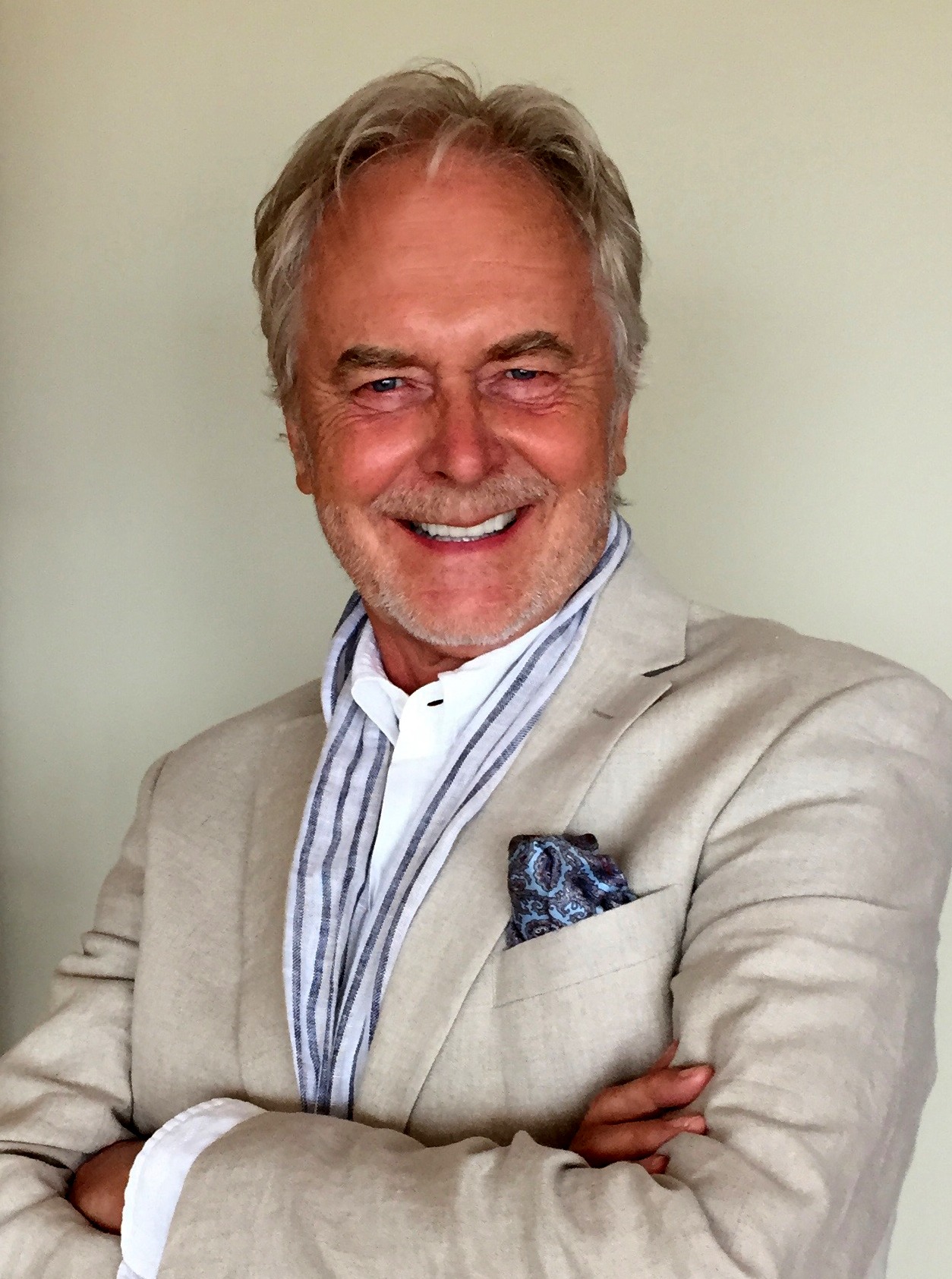
My guest today is Hans Wilhelm. Hans is the author and illustrator of over 200 books for all ages, including some created with Byron Katie. His books have sold over 40 million copies and are translated into 30 languages. That’s a lot.
Hans has created over 70 short YouTube videos in which he explores the dynamics of universal spiritual laws. He says that his mission is to offer these videos to inspire viewers to question and explore spirituality and their own relationship to the universe. During these videos, Hans skillfully illustrates his points on a whiteboard as he speaks.
This back-of-the-napkin approach has been so appealing that his YouTube channel has more than 110,000 subscribers. I’ll be linking from Hans’ BatGap page to his website, lifeexplained.com, and also to his YouTube channel and some of his books.
Hans does not use his videos to sell books, nor does he ask for donations. He finances the videos out of his own earnings as an author and illustrator. Hans lives in Connecticut, not far from where I grew up, and just around the corner from where my band used to practice when I was 19 and 20 years old. So, welcome, Hans.
Hans: Well, thank you so much for inviting me. Thank you, Rick. This is a great honor, and I’m delighted to be here.
Rick: Good to have you. Today we’re going to be discussing topics such as karma, reincarnation, guardian angels, spirit possession, and all sorts of things.
I think it’s worth asking in the beginning—firstly, as I listen to a lot of your videos, I find that I agree with you on just about everything. I share a similar philosophy. There are some things that you say that I’m not so sure about, but I don’t rule them out; they’re just more hypothetical to me. Most of this stuff I’ve been feeling comfortable with for many, many years.
One guy sent in a question which I think is somewhat relevant to this. His question was kind of snarky, but I reworded it. He was complaining that most of your ideas are originally found in Hindu teachings, and yet you provide no attribution for these sources. But I would say that most of these ideas are found in the perennial philosophies of many traditions, not just Hindu.
But the bigger question is, do these traditions—or you and I, for that matter—have any way of knowing these things for sure to be true? Or do they just sort of resonate with us, or make us feel comfortable or something?
I’ve interviewed some people, even people who claim to have had a profound awakening, who reject a lot of the things that you and I are going to be talking about today as religious mumbo-jumbo that was just devised to make people feel good, but there’s no way of proving it. So, how do you deal with that issue, that question?
Hans: I think there’s no way anybody can prove God, or the existence of God, or even the spiritual life. If you don’t want to believe it, that’s fine.
From Belief to Experiential Knowing
It is something which comes from my experience, only through the application of the laws and exercises which really made a change in my own life. So, it has come from a belief. It starts with a belief. I’m ready to believe whatever it is, and then apply that knowledge in my life. When I see actual changes in my life, then my belief turns into a knowing.
It is something which comes from my experience, only through the application of the laws and exercises which really made a change in my own life. So, it has come from a belief. It starts with a belief. I’m ready to believe whatever it is, and then apply that knowledge in my life. When I see actual changes in my life, then my belief turns into a knowing.
That knowing is my own knowing. I cannot share that knowing with anybody. I cannot make you know what I know. You can only do this yourself. It’s the same with logic, for instance. We say one plus one is two. But only once you add one and one and see the two things together in your own mind does it become logical and true to you. You have to make this process in yourself.
That’s why the spiritual path, as I know it—I have tried to live for much of my life like you have—and I found so much truth in it. It has helped me in so many instances, and I began to see things differently.
Just through the experience and the positive results that I have had in my own life over the years, I know that this is all true to me. But I have no possibility of making that known to anybody else, neither do I have the desire. I have no desire to convince anybody. If what I share works for anybody, great. If it doesn’t work, that’s great too. I have no interest in convincing anybody of anything that I share in my videos.
Rick: Well, that’s a good answer. I think it’s kind of a scientific answer, actually, because it’s based on experience. The way science works is you hypothesize something and then you test it to see whether it can be confirmed experientially. If it can, that doesn’t prove it; it just adds sort of gravity or weight to the truth of it.
But scientists would never say that anything is absolutely true and could never be disproven because, as you say, all crows are black. If somebody shows up with a white crow, then boom, that hypothesis has been disproven. But there are a lot of things we rely upon that have been scientifically established because they’ve been established so many times that we don’t see a lot of anomalies or violations of them.
Hans: It’s true, yeah. We often remind ourselves of something. We’re always thinking. Every time we say the sun is rising and the sun is setting, we know intellectually that it’s not true—that the Earth is turning—but we sort of see the opposite, and so on. We are constantly having to readjust our beliefs to reality.
Rick: Yeah, and when I mentioned the perennial philosophy, a lot of different traditions that had no way of communicating with each other came up with the same stuff, like reincarnation and various other points that we’ll be talking about today.
Perhaps seers in all those different traditions had some deep cognitive insight into the way the universe works, into the way life works, and that’s why they came up with the same notions, unbeknownst to one another.
That brings up a point, which is that we don’t just accept these things because we’ve read a lot of books about them, but there’s a sort of experiential evidence that is accumulated over time. Another one of the scientific principles is repeatability. If somebody does an experiment, somebody else can do the experiment and see if they can repeat it, and if they can, that adds credibility to it.
Hans: It’s true, but still, you have to walk the walk yourself. There’s just no way; nobody can do that for you.
A lot of people collect spiritual information intellectually, more and more and more. They binge-watch and so on, and they continuously take it in intellectually but are not willing to really apply it. That’s where the problem is, so they become very frustrated with it, and they’ve already become critical about it.
I think it’s a tremendous burden to accumulate spiritual knowledge without applying it. It really, karmically, has an effect on our life. There’s a quote which I heard, and I really don’t know the exact words, but it says:
It is far more severe for a saint to step on an ant than for a caveman to kill a mammoth.
Because a saint should know what to do and not to do. Once we accumulate spiritual knowledge and don’t use it in our life—doing the right and wrong things—we are creating karma even more severely because we know what is right and wrong and what we should do. While somebody who has never heard about it is rather ignorant, and his karma will be judged by himself in a different way.
Rick: Yeah, I’ve heard that kind of saying too. Another way of saying it is that the judge gets a more serious sentence than the common man who doesn’t understand the law if the judge breaks that same law.
Hans: Yes.
Rick: So how do you recommend that people apply it? You say we can study all this stuff, but if we don’t apply it, then that’s not good. How do we apply it?
Hans: Well, I don’t present anything new. The lessons that are given to us in the spiritual world are in all cultures. It is basically the Golden Rule. Apply the Golden Rule seriously in our life—or I would simplify it today a little bit more and say, love and nothing else.
We have the Golden Rule here in the West, we have the Ten Commandments, the Sermon on the Mount. These are very clear directions for us to follow: not to lie, not to cheat, not to hurt anybody, and to help those who are less fortunate.
It is so simple. But if we don’t do that and only think of our ego and ego satisfaction, and step on other people, and cheat and lie, then we create a world as we have created now, which is really dimming. The light is dimming here, with all the ecology dying and everything.
That is the result of our ego because, over time, we have created so much harm to the world and too much harm to ourselves as well. So we have not lived by the Golden Rule or the Ten Commandments, whatever it is.
I would say, start with the most obvious ones. Start with the Golden Rule. It’s not—what I find, having studied for such a long time, is that God is ingenious simplicity. It’s a very simple path to God. The Golden Rule is very simple. It’s not simple to live, but it’s a very simple rule: do unto others what you want them to do unto you, or the other way around, do not do to others what you don’t want them to do to you.
Rick: Yeah, some people give a nice interpretation to that, which is that if your awareness is deep enough or enlightened enough, then when you look at others, you see yourself because you see the unity of everything. So then it comes naturally to do unto others as you would have them do unto you, just as you would not punish your hand if it got dirty or something. You would just clean it because it’s part of you.
If everything in the universe, everything in the world, is seen as part of you—as you, essentially—then you’re going to tread very lightly and compassionately and not harm people or anything.
Hans: Precisely. If the word “you” is too difficult for people to see and accept, perhaps they can see divinity in everything—however they see God or whatever it is—but everything is divinity. It is, in a way, crystallized light ether. So whatever we look at, whatever we feel, whatever we see is basically, in a way, divinity.
Rick: It’s easy for you and me to sit here comfortably and talk that way, but in our day-to-day challenges, when we have to pay the bills or fight somebody in traffic, we so quickly forget.
Hans: The day-to-day life is really a challenge, and everybody, as you see in my video “The Earth Life, the School of Earth,” gets everyday tests. We get our own little lessons where we have to really apply these simple laws vigorously—of not hurting anybody, loving anybody, and everything.
Reincarnation and the purpose of life
Rick: Yeah, well, we’re going to explore a lot of angles during this conversation, and personally, I think that the whole philosophy of Sketch Out, if people could really take it to heart, makes life a lot easier to live. Not understanding these things, life must seem very cruel and confusing—unfair and accidental, and just meaningless, and all those kinds of words. But understanding these things and really understanding them deeply and experientially, to whatever extent we can, life flows completely differently.
Hans: That’s exactly the experience I had when I was in my early twenties and had my first encounter with the teachings of Edgar Cayce. Edgar Cayce’s teaching includes reincarnation, and suddenly, overnight, everything became clear to me. Every question I had about why there are bad people and good people, rich people and poor people, sick people and healthy people—suddenly, for the first time, I was exposed to the teaching of reincarnation.
I could suddenly put everything together, basically, and I just said, “That was it.” And that’s why a lot of people, as you said earlier, think I took it from the Hindu belief. No, it’s not Hindu. It’s Christian teaching: reincarnation. I must also be very honest: I have never studied Hinduism or anything, but I must say that 30 to 40 percent of my emails come from India, from my listeners. And for some reason, I must be saying the same thing that is in their ancient teachings.
But the moment you understand reincarnation, everything does make sense, and everything in your life changes very drastically. And it is so sad that in our Western world, the Catholic Church—or the church as such, not only the Catholic Church but the churches in general—has suppressed the teachings that Christ taught. Christ taught reincarnation. That was suppressed, and unfortunately, we have the result.
I now see a very selfish world where we only think, “This is the only lifetime I have. This is life, and I just do everything so I get my share of the cake.”
Rick: Yeah, it’s definitely not big-picture thinking. And since you said earlier that we can’t really prove any of these things to anybody—prove God, prove reincarnation—actually, to a certain extent, we can. The word “proof” is too strong, but we can provide evidence.
For instance, there is a university in Virginia—I forget the name of it. Do you know about that? They have been doing studies on reincarnation. They have thousands of accounts of young children who remember details of past lives, which are confirmable. They go to the kid who describes this, that, and the other thing, and they check it out. Sure enough, that happened. There was no way the kid could have known that.
Even the notion of God—I mean, if you study physics or if you study nature very deeply, you see an intelligence and an orderliness operating in all aspects of nature, which at least indicates that life is not accidental or random. There’s some kind of deep intelligence of some sort orchestrating things.
So it doesn’t prove God. It certainly doesn’t prove the old-guy-in-the-sky-with-the-beard God, but it does indicate a more all-pervading, omnipresent organizing power of nature—something along those lines.
Hans: When you open yourself up to that possibility, you see it. Sometimes I always say to somebody, “I can’t do this. I can’t do this.” If we say, “I am willing to look into it. I am willing to consider the existence of God,” that moment you open yourself up.
But many people say, “I don’t believe in God. I don’t see it,” or whatever it is. Then we close ourselves. But when we open ourselves up just by saying, “I am willing to do that,” then something can happen, and we can suddenly recognize and come into contact with the teachings of people through whom we suddenly see the world very differently.
So it’s very much up to us how much we open ourselves to new perspectives instead of continuously protecting what we already know—or think we know.
Rick: Yeah, good point. Again, that’s the scientific attitude. I mean, a scientist can be an agnostic, but I don’t think he can really be an atheist and call himself a scientist, because scientists, by definition, have to be open to evidence as it presents itself.
Hans: Yes, I would agree.
Rick: Yeah, so let’s take some of these topics more deeply. Here’s a good one to start with. We’ll come back to reincarnation, but you have a video entitled “Why Are We Here?” Part of the description of it is, “What is my purpose here on Earth?” What do you have to say about that?
Hans: Well, I usually can draw it better than explain it, but I’ll give it a try. That’s why I made the video. I like to see these things, and in my video I show that it is not—I just say again, I have no intention of convincing anybody. It is my understanding, from over 50 years of study, experience, and applying these laws, that we definitely are, or have been, perfect spiritual beings at one time, a long, long time ago.
Through what is generally called—and what the Bible has called—“the Fall,” we left that pure spiritual heaven and fell down into lower spheres of existence, right down to the bottom, what we call the material universe, in which we are right now.
Our goal is to return to the light, back home. This is the story of the famous prodigal son, which Christ talked about. The Father let us go. We wanted to explore physicality, et cetera, the pleasures of whatever it is, and we found out this is not all there is, and this is not really the best there is.
So eventually, many of us have fallen so deeply and are so lost, sad, and depressed that this is the moment when we return home and say, “There must be more to life.” Suddenly, many people are opened up to this. We find this a lot in AA, where people really have to hit rock bottom before they say, “This is enough,” and turn around, so we go back to the light.
All the spiritual teachings that I refer to and study confirm this, and they say this is the path. You have to really undo what we call your “karma,” which is all the negative thinking, thoughts, and actions of the past, to become pure and clean again and come into a higher vibration, because the whole universe works on the principle that like attracts like.
The highest vibration is love, and we are now at a very low one. To reach our true self, we have to become the same high vibration as love and return to this. This is our struggle; this is our goal.
Every day we have been given challenges to purify ourselves, to let go of everything we call ego—what we can call selfishness, self-centeredness, and all these kinds of things—which have really isolated us, made us colder and harder, and made us unhappier, sadder, and more depressed.
We have to let that go and move back into the light, so to speak. That is really the reason why we are here: to undo our karma. Every day we are given many opportunities where we are reminded of things we might have done in the past, which we can now rectify through repentance and forgiveness and asking for forgiveness.
Rick: What you said reminds me of that T. S. Eliot quote, which I just looked up: “We shall not cease from exploration, and the end of all our exploring will be to arrive where we started and know the place for the first time.”
Hans: Yes.
Rick: Remember that one?
Hans: Yes. I don’t know whether I know it for the first time. I think we will be jubilant to see it again, because we have known that home all the time within us, and we will be absolutely—we will be so excited to be back home again.
Rick: So let me play a couple of devil’s-advocate points on that. If we used to be in a very high state and we fell from that and we’re working our way back to it, when we get back to it, do we have more than we had before we left because of this whole journey we took?
Hans: We do have the experience. Yes, we do have the experience. And all these so-called spiritual beings who have stayed back in the Pure Heaven, who have not joined the Fall of Angels, are in a way quite amazed at how much we have taken on ourselves, because we became stronger through this whole path.
When we return, we have the memories, but only the memories, with no longer any attraction, which is very important. All the sensuality, all the pleasures, and everything about the worldly lifestyle we had will no longer attract us, but the memory will be there. Through this, we will be richer.
Rick: Okay. Now, some would say—well, actually, I can counteract this point myself. I was going to say that some would say that if the universe has an evolutionary agenda or trajectory—it’s always hard to say that word—then how does this cyclical thing serve that, where we’re in a high state, we lose it, and then we have to regain it?
But if what you just said is true, that we come back to that state having been enriched by the whole travail that we went through, then that’s evolutionary.
Hans: It is evolutionary, but that was not our purpose. This detour that we have taken is not what was planned. The reason behind the detour was very different. It was really to undo creation. That was a Luciferian fall, a Lucifer fall, because he wanted to undo the whole pure creation.
We were the ones who followed him—or her, whatever you want to say, Lucifer—and came to undo the creation. That was the purpose of why we did this whole thing.
Now, realizing that this can’t be done, slowly, one after the other, the so-called fallen angels return to the light. When they return home to the open arms of the Father, we are back home again.
So this whole thing had nothing to do with evolution. The desire was actually devolution. That was the original desire behind why we left. The spiritual evolution of the universe continued all the time; it was continuously and perpetually expanding and growing. The Pure Heavens were continuously creating new planets, new stars, and so on. That continues, but we made this little loop where a small group of people just left and came back again.
Karma and the Golden Rule
Rick: Okay, so we’ve used the word “karma,” and I’ve had people come up to me and say, “There’s no such thing as karma. How could there be karma?” How do you explain—and I think everybody has a rough idea of what karma is supposed to be—but let’s talk about it a little bit and try to explain the mechanics of how it would work, or how it does work, if we accept that it does.
Hans: Well, karma—my definition of karma—is any unloving sensation, emotion, thought, word, or action in our body. Anything that is against our true nature, which is love.
We are 100% love. Every time we act against who we are, through our thinking, feeling, speaking, or acting, we create a shadow. We can call it karma if our soul is burdening itself with a shadow.
We are 100% love. Every time we act against who we are, through our thinking, feeling, speaking, or acting, we create a shadow. We can call it karma if our soul is burdening itself with a shadow.
So, we’re creating something negative, which eventually we will have to face again to realize our mistakes. Otherwise, we wouldn’t know what we are doing.
Karma is just the loving lessons coming back to us. It is never a punishment.
It is only a consequence of what we are doing, thinking, and saying. So, it is only a mirroring of what we have been doing to other people or to ourselves, and it just shows us, “Please don’t do this. Love yourself, love everyone, love everything.” That is the message of karma.
Whenever we do something negative, this action is stored in many ways. It is stored, of course, firstly in our soul, which is like a computer recording. Then it is in our body. It is also stored in the Akashic Records, which surround our planet Earth, where everything is recorded—all our actions and emotions, whatever happens here on Earth.
And then it is also stored, most importantly, in the repository planets of the material and semimaterial universe. These planets of the same vibration continuously upload, like a cloud program, all this so-called negative karma.
Eventually, they have to unload it again, through constellation. Then the karma comes, when they change a certain kind of constellation or situation, and the karma comes back to the sender. So, the karma is stored mainly in these planets.
Right now, we are reaching a time here on planet Earth when a lot of these planets and stars are ready to upload a lot of stuff, because we are really having a rather tough time for many people here on Earth.
This is created by ourselves. Nobody did this to us. We created it ourselves. And if anybody wants to point to past presidents or governments, we must not forget that we have been here many, many times before. We personally have co-created the situation we are facing on the planet right now.
So, this uploading may come down in many difficult times, but it is not punishment, again. It is for us to undo what we have created.
We can either experience the karma—if I rob you, I might get robbed again by someone else or by your future being—or we can also do the other, the most sensible thing. We can ask for forgiveness, forgive and repent our action, and no longer do it. That is the real healing thing.
Then the karma is eliminated, disappears, and is gone.
Rick: I should add that the word karma comes from a Sanskrit word, and it basically means action. So, it is not necessarily negative. There is also positive action and good karma generated through positive action, just to sort of complete that point.
Hans: May I interrupt?
Rick: Yeah, sure.
Hans: This is the point I respect. This is the one thing where I disagree, because there is no need for good karma. When you do something loving, this is your natural being; there is no karma.
Love is love. If I love, I don’t create karma. I’m just my natural being. The sun shines with the sunrise. It doesn’t create karma by shining. We are like the sun. We are the sun; we are love. When we love, we are just ourselves. We don’t create anything—any karma or anything.
But if we are against our true nature, then, and only then, do we create karma. I know a lot of people say there is good karma. But good karma is something which they often say is something good that comes back to us.
Once we are loving, the world comes automatically lovingly back to us. It’s not that I’ve sent something loving out that comes back to me, but the love that I send out responds to other people’s love. So, automatically, I am in a much more loving atmosphere.
By my being loving, it’s not good karma coming back. It’s just the other love from around me coming back to me. But negative karma is something which I have to face. So, I accept your viewpoint. It’s just that I share that particular viewpoint.
Rick: Well, some actions are more binding than others. Generally, actions that violate, we can say, natural law or spiritual laws bind us more tightly. Other actions can be more liberating.
Traditionally, it’s understood that everything has a ripple effect. We’re like transmitters, and we’re transmitting various kinds of vibrations or influences, positive or negative. They influence everything, and the influence is reciprocal; it does come back.
But usually, karma has a negative connotation because it refers to bad stuff that happens to us. Anyway, that’s the traditional understanding. I don’t need to argue for it. That’s just the way it’s generally understood.
It can’t be that we could do anything which wouldn’t have an effect, because everything is interconnected. Every flap of a butterfly’s wing, every blink of an eye, has some kind of influence which interacts with everything. The universe is infinitely correlated.
Rick: Let’s talk about guardian angels. I believe we have them. I have friends who actually say they see them routinely and can see them around other people. So, who are they? What are they? Why are they here? How can we communicate with them, if we should?
Hans: Well, our natural way of being is, of course, being a spiritual being or a soul, and it’s such in the spiritual world. But when we incarnate only here for an average of 800,000 hours, we are really exposed to a lot of danger, a lot of temptation, and a lot of tasks we have agreed to prior to our incarnation.
We are given a guardian spirit, mostly one; some people have two, to be with us. They are not with us 100% of the time because they also have to do their own lessons and learning, but they’re directly connected to us. So, if we are in immediate danger, like, for instance, an unexpected car crash or something, they are faster than light and can intervene if that needs to be done, whatever it is.
We are given a guardian spirit, mostly one; some people have two, to be with us. They are not with us 100% of the time because they also have to do their own lessons and learning, but they’re directly connected to us. So, if we are in immediate danger, like, for instance, an unexpected car crash or something, they are faster than light and can intervene if that needs to be done, whatever it is.
So, they are there and they guide us, and they speak to us continuously—not, of course, with voices, although some people may hear them, too. I don’t. But they do speak to us through our consciousness. They speak to us very much through our solar plexus. When we are doing something which we know isn’t quite kosher, isn’t quite right, et cetera, we get this uneasy, queasy feeling. This is usually a message from our guardian spirit which says, “Be careful. Don’t do this.”
Now, this may be exciting for some people. I especially want to do it because I have this rather funny feeling here. So, we do have communication there all the time with our guardian spirit, and our guardian spirit cannot communicate with us if we are in deep anger or upset or having hateful thoughts. Then we are sending out negative vibrations of such intensity that our guardian angel has to remove himself from us for a while until we have calmed down.
So, whatever our thoughts and actions are, they are very important, and they also have to do with how close we can be with our guardian angel. The guardian angel is there basically to help us fulfill the tasks which we have set out to fulfill in this particular lifetime, so that we more or less stay on the course we had laid out.
In my video, I show that I see our future life before we incarnate as a riverbed, sort of winding. There are some rapids in it, there are some waterfalls, some parts go fast, and some go slow. Our life is full of these little challenges, a little unevenness, et cetera, and we have to swim through this river until we reach our end in this lifetime.
Our guardian angel makes sure that we keep our boat sort of halfway on track because the life outline that we have agreed to prior to our birth is not 100%. It’s a suggestion. This is how it more or less will be or should be, and here are the danger points. Here you have to be careful. You are meeting this person, and he will challenge you. Here, there’s a difference. Here, you may be tempted. You should be careful.
So, we agree to all this, and hopefully, we swim according to the guidance of our guardian angel, which is basically through our good conscience, if we want to say. We do what we do from a good conscience and live by the Golden Rule.
Rick: So, here’s a few quick questions about guardian angels. I’ll ask three or four questions, and you can answer them all. You said that there isn’t necessarily a one-to-one correspondence between guardian angels and people. So, is it sort of like guardian angels might have a group of 20 that they’re responsible for, and they kind of run around and keep track of those 20? That’s one question.
Another is, were guardian angels once human beings who have ascended to become angels, or are they going to become human beings later after they serve as guardian angels? And I guess I only have those two questions. What do you say about those?
Hans: So, the first one is, yes, the guardian angels, like every spiritual being, are taught by higher beings. So, the guardian spirits as such, in a group or not, are taught by teaching angels, which usually come from the pure heavens and teach them, really. They have never incarnated on Earth, but they’re teaching them and keeping them on track.
So, every soul has teaching angels according to the levels of where they are. And the other one was, again, the second question?
Rick: Well, there was—okay, so that just—
Hans: Oh, yeah, yes. No, they do not incarnate as human beings. On the contrary, they may have been human beings and have slowly evolved back to at least the third or fourth level of purification. Then, out of love, because they have reached the level of opening love again, they go back and want to be a guardian angel for somebody here on Earth to help them go through their life.
So, these can be—not everybody has been incarnated here on Earth. They can be incarnated on other planets or even not incarnated at all. But they are not the ones going down to later become a human being. It’s somebody who already is higher than a human being.
Rick: Okay. And then there’s the thing about the numbers. I mean, are there as many guardian angels as there are people on Earth, or is it like a one-to-ten ratio, or what?
Hans: No. You can say everyone has at least one. Some have two guardian angels.
Rick: Then there must be billions of them.
Hans: Yeah. As I said, we mustn’t think so limitedly with our Earth. As you said earlier, the example of tiny little Earth and trillions of galaxies and so on. This is where our mind is so limited. It is gigantic. Creation is so gigantic, we have no idea.
And, therefore, we are really having all these helpers here around us. The whole universe is helping us. Everything we experience is nothing else than a calling back, coming home. Everything we see, including medicine to help us heal ourselves. Every person we meet is there as an angel, basically, for us to bring us home.
Every challenge we have is a challenge to bring us home, to bring us higher, into a higher vibration of love again.
🕊️ Negative entities and spiritual vulnerability
Rick: Have you ever seen the movie Ghost with Patrick Swayze and Whoopi Goldberg?
Hans: One hundred percent correct movie.
Rick: Yeah. Bruce Joel Rubin wrote the screenplay. He’s been on Batgap. But, in that movie, negative entities were portrayed as well as positive ones. There were these really bad guys that came and took the guy—the villain of the movie—when he died. Would those also be doing their thing in the whole scheme?
Hans: Oh, definitely. That’s a problem. These are the really, really deeply fallen angels who have gotten so enmeshed in the material temptations, world, and energy. So, they have lost their own energy. They have fallen down, and these are the so-called negative entities. Some call them demons or whatever it is, and they are there.
That movie Ghost is 100% correct. And we are surrounded by these souls, and these souls are very, very dangerous, and they’re very tempting and very alluring. They have no interest in us, but they want our energy. And they get our energy, sometimes—we call them possessive souls—in many, many ways.
The whole struggle we have here on Earth, even the wars, whatever it is, is nothing else but fighting for energy. Because we have lost our original energy, which is our divine energy, because we have removed ourselves so far away that our vibration is so low that now, to survive, we have to eat a lot of food and stuff like this, et cetera, to feed ourselves, to survive.
And very low entities really feed on us, on our negative energy, what some call the “loosh” energy, which is the energy that we have in wars, in destruction, in hatred, in fighting. This is a strong energy. I said earlier that the guardian spirit can’t come close to us because the energy is so strong. It’s a negative energy, but this gives energy to the negative forces.
So, they will guide or misguide us into anything that can be destructive and harmful, but only so that they get energy and can survive, and also so they do not get caught up in the wheel of reincarnation. This is basically the reason why they do this as well. They don’t want to reincarnate facing their stuff. And they can avoid it as long as they can pull energy here on Earth from other beings.
It’s very complex, but in my video, I think I show this in greater detail—possessive souls and so on. So, what I’m saying here may sound very abstract to many people, but once you see how simple it is and how prevalent these entities are around us continuously, and particularly when you’re speaking about possessive souls, I made a video on that one.
At the end, I think I’ve got five medical doctors in this video who have written books—medical doctors who have written books—about people who were possessed by negative entities and what to do about that. So, we are not talking about some kind of spiritual, airy-fairy stuff here. We are talking about things with medically supported evidence that these entities exist.
These entities take over other people, and these entities can do tremendous harm.
Rick: Yeah, I’ve got a couple of questions based on all that. One is that book I’m reading about the guy who had that marvelous experience on the beach. He also had, throughout his life, terrible eczema, a really bad skin condition. And at one point, after he learned to meditate, his life started to change really profoundly.
At a certain point, he experienced this thing coming out of him—“homunculus,” he used the word. But something that had been possessing him was somehow expelled by the influence of his meditation, and then things started really improving for him.
So, I know this sounds kind of superstitious to some people, talking about being possessed by negative entities and so on. I’ve had experiences myself of things attacking me and also being released from me that make it very real to me over the course of my many years of practice.
I think there is something to it, but to understand it necessitates understanding that there is a subtler realm that we don’t perceive with our earthly eyes, and there’s stuff going on in that realm, as you’ve been saying, and as you say in so many of your videos. If you can kind of grasp that concept, then this other stuff begins to make more sense.
Hans: Yeah, and actually, if we could really see how busy it is when we go to a city like this and see the real human beings there, and all the other spirits around it as well, we would be sort of shocked. People who have the gift of seeing spirits would be shocked to see how much negativity there is, particularly in cities and so on, or bars, or whatever it is. It’s enormous. It’s enormous—the quantities of negative entities that are here and not interested in anything else.
There are a lot of people playing with this field, and I’m one of the few people who say, “Be careful what you do when you do things like going to séances, using a planchette, or even astral traveling.” These are the areas where you can really get into and attract souls of such negativity that you have no power to conquer them. So I would stay away from all of this as much as I can.
Also, anything that you feel is a dark area, like bars or wherever there is a lot of drunkenness or whatever happens. I even made a video about being careful in graveyards. Now, it sounds crazy, but graveyards are full of spirits. They are not always evil or negative or whatever. They are usually lost. They are usually caught up in the belief that they have to wait for Judgment Day.
Rick: No, it’s interesting. Do you think that, by the way people behave, they can make themselves more vulnerable to these things? Or, on the other hand, can they build up a sort of invincibility against the influences of these things?
For instance, if you take a lot of drugs or drink or whatever, you’re opening yourself up; you’re making yourself vulnerable and susceptible to these negative influences. On the other hand, if you do the opposite of that kind of stuff and live a healthy life, then although these things may be around, they really can’t bother you because you have a kind of—you know, there used to be a toothpaste ad where it was like an invisible protective shield, so the bad stuff couldn’t get to your teeth because that shield was there.
Hans: Sure, you said it. The thing is, the negative force can only do something to us if something similar is already in us. Everything works on the law of “like attracts like.” So the negative force can only harm a person who has some similar weakness, desire, or whatever in them as well.
So if you do not have any of that, and if you appear to be—well, they just cannot do anything to you. So you’re right: if you live a more positive and healthful life, there’s less chance for anybody to do anything to you.
But if we’re having extremely negative thoughts, or are angry or grumpy, all this kind of negative stuff can attract. We mustn’t forget that these negative souls can see our aura. We can’t. I can’t see your aura. Many people can see auras, but I can’t see anybody’s aura. They can see our aura. They immediately see what we’re thinking and what we’re feeling.
If they are going out hunting, they immediately see, by what somebody is sending out, whether there’s something they could link into. So we are continuously sending out how we feel, what we sense, and so on through our aura. These negative forces can see it and can immediately latch onto us.
We have to be careful of how we think, feel, act, and speak, because that all affects our aura.
Rick: It would seem that if you’re going to work in a place that has a lot of negativity in it, like a mental hospital or a prison, then you would have to have a lot of purity and strength yourself so as not to be infiltrated by those influences.
Hans: Yeah, it’s very challenging. You’d better do that. You’d better protect yourself. I mean, there’s always this exercise of putting your light around yourself and things like this, but the best thing is that it has to come from within. The outer light surely can help, but it has to come from within. You purify yourself as much as you can from within.
Rick: Yeah. When I hadn’t been meditating—I had been meditating maybe a year or two—and my mother was in a mental hospital, I used to go and visit her. I’d come in there feeling really good, and after about half an hour, I was really incoherent. Really incoherent. Whatever degree of coherence I had established was just sort of broken down by all those influences.
Hans: You were a juicy morsel for them.
Rick: Yeah, really.
Hans: Yeah. Oh my gosh, yeah. I believe that fully.
Rick: Another question from Art in Charlotte, North Carolina: “Hans’s knowledge is refreshing and has me looking at the Bible with very new eyes.” Would you say that the Bible has been manipulated by man? I ask this because I wonder now: Which parts do we believe, and how do we determine which parts are right?
Hans: I think there is very little doubt that it has been manipulated tremendously. But I would say, read the Bible for whatever purpose you want, but take the essence. The essence in the Bible is the Ten Commandments and the Sermon on the Mount. Anything else, you can read what you would like. People have changed it, whatever it is, but take these two things to your heart.
That is really the important thing, because if you take certain passages from the Bible and start arguing with other people about them, saying, “This is what God means” or “That is what God means,” it doesn’t get us very far. Take the Ten Commandments and take the Sermon on the Mount, and find your own God.
Finding God Within Rather Than in Scripture
God is not in some churches or in heaven; God is only in us. This is the key: We have to find the God in us. The God in us will be the guiding light, the guiding energy in our life as we go on. When we open ourselves up for that, we don’t need much of the Bible.
God is not in some churches or in heaven; God is only in us. This is the key: We have to find the God in us. The God in us will be the guiding light, the guiding energy in our life as we go on. When we open ourselves up for that, we don’t need much of the Bible.
But if the Bible gives you comfort, please read it. Do not believe that every word is from Christ, though. I have a very interesting example. I spent some time with the Quakers, and we were in a Bible study. We took the Bible sentence by sentence, and I had my German Bible there, from a Lutheran country, and it was something totally different. I mean, they were supposedly the same Bible, and we couldn’t believe it.
They have two different versions, and all the Bibles have different versions anyway—King James or whatever it is. So don’t stick to the word. Stick to the meaning. Get the meaning of the words, but not the word itself. “The word kills,” as the Bible says, probably.
Rick: Yeah, well, not only that, but nobody wrote anything down for a couple of hundred years. So who knows exactly what Jesus really said? Some people argue that He didn’t even exist, but we won’t go there. In any case, imagine that nobody had written down anything that Thomas Jefferson and Benjamin Franklin had said, and now, just through word of mouth, we’re supposed to write down what those guys actually said. How garbled could it be after a couple of hundred years?
Hans: Yeah, yeah. But I like to say, from my own experience of having written many, many spiritual books, there is one book which I may mention here. I may plug it. It’s not my book, so I can’t do this, but it is one which I found. I’m just reading it for the third time. It’s called The Cosmic Teaching by Jesus of Nazareth to His Disciples and Those Who Could Grasp It.
It’s a very thick book. It is on my website under Recommended Books. You just click on it and you’ll find it. That is direct channeled material from Christ, as I understand it. The lessons and the clarity of that book are just mind-boggling.
Whenever I read something like this—so clear and so helpful—I just feel, why go back to the old texts, which have been manipulated and manipulated? God speaks to us all the time, to us as well as to prophets and to people who have this inner word and speak all the time. He did not hide himself because he is a loving father. He doesn’t send his kids off eons ago and then come back whenever you want him to. No, he continuously speaks.
God never stops speaking to us, and he speaks to us directly in our hearts.
Rick: Good. I think people who are listening, at least to the live interview, will have heard our dogs bark. You have a video in which you say it’s all about animals. Where do animals come from? Do animals have souls? What do you have to say about animals?
Hans: Well, again, the video shows it much better than I can quickly explain it. Animals, in a way, are a sort of progression from—let’s say, I show in my video how creation starts. It starts with an atom, with a divine atom, which later becomes a crystal and then a field of crystals. There we have this group soul of crystal.
Then it later goes through all the crystals and the stone and mineral kingdoms, and then becomes the plant kingdom. It goes through all the plant fields and all the different plants, and it is still a group soul. Then it becomes the animals. The souls, still as a group, go through the whole animal kingdom.
Once that has been achieved, they go to the nature-spirit kingdom. The nature spirits are very interesting. They are the ones who take care of all the animals and the plants. These are like the gnomes, the elves, or whatever they are. We know the devic kingdom.
By then, the soul is already unique, a single soul, no longer a group soul. When it has reached that level, it then incarnates as a child—as a spiritual being in the spiritual world—which means a perfect human—well, not human, a perfect spiritual being.
These spiritual beings are the ones who populate the spiritual homes, our true home. This is what we are in truth, all the time. This is all etheric, made of ether; this is all light ether. They do not eat. They do not consume things. They do not have organs like we have.
All these beings are actually created slowly and evolve from step to step. There is no such thing as the survival of the fittest, like Darwin. It is a matter of evolving, slowly evolving higher and higher.
We and the spiritual beings—some of them, like you and me and everybody else here, have incarnated here on Earth—we are the form of the fallen ones. We also have the animals. The animals joined us because human beings, or spirits, cannot live without animals. Animals can live without us, but we cannot live without them.
Like the bees: If they were not here on Earth, we human beings would die out within a few years, as Einstein said. So we need the animals, but the animals don’t need us.
The animals are basically earlier stages of ourselves. They are our little brothers and our little sisters, exactly like little brothers and sisters who are a bit younger than us. They are the same kind of energy. They are on the way to becoming spiritual beings like you and me.
The animals are basically earlier stages of ourselves. They are our little brothers and our little sisters.
So when we kill them, that’s not nice. You don’t kill your brother and sister. Therefore, it is much healthier to live a more vegetarian or vegan lifestyle, because the killing of an animal is really like killing your brother or sister. It’s just logical. I’m not making this up. We have gone through this whole phase. We have been everything, and the animals are on the way.
The animals look up to us. For them, we are these wonderful creations. We are God’s children; we are divine beings. They look up to us, and what do we do? We kill them, we murder them, we experiment on them, and we do horrible things to them.
So I would like to open up the possibility for us to look at animals differently—not as something that nature provides for us, but as our little brothers and sisters.
Rick: So did you just say that animals don’t evolve directly from animal lives into human lives, but they sort of leapfrog the human stage and go into some higher spiritual realm, and then from there they may come back and incarnate as humans?
Hans: Exactly.
Rick: Okay, because some people say, “Well, okay, a cow becomes a human in its next life,” or something.
Hans: No, it still has to go to the nature-spirit kingdom. It still has to become a higher being. The animal does not have free will, and it slowly has to learn to have free will. This comes then through the nature being.
When the nature being, out of love, helps the animal kingdom, the animal later becomes the spiritual being. No, it is not my understanding that a cow, or whatever it is, can become a spiritual being directly. The soul sometimes could, in the past, before Christ came and stopped this whole evolution of the soul, have incarnated in animals. That is possible. But I understand that it is no longer possible.
Rick: Okay. Incidentally, I just want to add, for your sake and for the sake of the listeners, that as I listen to all this stuff and think about all this stuff—I take everything with a grain of salt. I’ve been doing this for a long time, not just since this interview.
At the same time, I give everybody the benefit of the doubt. I take everything as a hypothesis, something that is interesting to think about, talk about, and investigate. Some hypotheses seem to carry a lot more credibility for me than others, but I wouldn’t absolutely deny anything you’re saying, nor would I absolutely say, “Yes, it’s got to be true.” That’s just the way I go through life.
Hans: In the same way, I don’t try to convince anybody, neither you nor anybody else. But since you asked me the question, I tried to explain it.
Rick: Yeah, yeah. A discussion like this, for me, is fascinating, interesting, and stimulating. It’s a way of exploring ways of thinking that I might not have considered. It’s not an opportunity to take on new beliefs and cling to them tightly. It’s more like, “Let’s talk about this. Let’s explore. Let’s think, and maybe we’ll come away understanding things more deeply, at least with more possibilities open to our way of seeing things.”
Hans: Same as you, for me as well. Over the years, we’ve both been on the spiritual path for, what, 50 years or whatever, and it is a gradual thing. The first time I heard this, it took me a second. It takes time to accept it.
I remember there was so much stuff in Edgar Cayce’s teachings that I was fighting against, really saying, “This can’t be true. This can’t be true.” I no longer read this stuff. Then, a few months later, I said, “Wow. Yes, it’s true.”
So, yes, of course, we have to be skeptical, and it’s good to be skeptical. But nothing is worse than accepting everything right away without questioning it. The answer should always come from our heart, most likely, and not from our intellect.
Does the heart say, “This makes sense,” or does my head say, “My intellect says this makes sense”? If our heart says, “This makes sense,” then there’s something to go for. I think, in the end, that is the only guidance we can really trust.
What happens after death
Rick: Yeah, you have a video, actually, called Intelligence vs. Intellect, and you say there’s an important difference between the two. Is that what you were just alluding to?
Hans: That’s part of it, yeah. The intellect really doesn’t—actually, the intellect is a good tool in many ways for survival, but it never goes to the source of the problems. It only comes up with patches and never gives us the real answer.
The real answer is always love, and the intellect will not give us that answer.
Rick: Okay. Another title of yours that jumps out at me is Ten Surprises When You Die. I don’t know if you can remember all ten. What are some of the surprises?
Maybe they won’t be a surprise to somebody like you, who already thinks about these things, but perhaps they would be surprises to the average person.
Hans: Well, since you mentioned it, this is actually why I made this video. My father was dying, and his four children were around him. He was a real soldier in the war, and he had seen a lot of death in his life. He just knew there was nothing after death. This is over. He didn’t mind dying, but it was just, “I had my life. It’s over.”
We all took our own turns with him in the last days, and I was alone with him. I said, “Look, Dad, I know that you don’t believe there’s anything after life, but just in case you are on the other side and find yourself still alive, these are the ten things, or whatever it is, which you may see and experience. So don’t be surprised, but I want to tell you about them.”
So I told him these things, and then he just smiled. He couldn’t speak anymore, and it was, “Let’s forget it,” and so on. “Yeah, that’s your belief system.” Anyway, I totally forgot about it. I never even gave it any thought.
Some six or seven years later, I was at a book signing for a medium, Roland Comtois, who was very well known and very young. Everybody raved about him, and I wanted to meet this guy. I had seen a lot of people doing that, and there was nothing special to me about it. I wasn’t really curious; I just wanted to meet his approach to it.
Since it was in a very small area in a bookstore, I wanted to come early. I wanted to sit down, so I came a bit earlier. It was empty. I sat down and closed my eyes in meditation.
Somebody tapped me on the shoulder and said, “Excuse me, I am Roland Comtois. I saw you coming in. The moment you came in, your father came to me and said, ‘Go to this man. This is my son. Thank him for what he has told me.’ It was the most valuable information he has given me because it really helped me to find my way on the other side.”
Then there were a lot of other things. He also said, “Would you please write books about this? I see a lot of people where I work coming in every so often, coming to the other side, and they are totally confused. They don’t know what’s happening, what’s hitting them, and so on. So they need to know about it.”
Anyway, that was the idea. I said, “I’m not going to write books, but I’ll make some videos.” So let’s just go on to these points, which I remember.
First of all, the biggest surprise is probably that you are still alive. A lot of people—not everyone—say, “Yeah, there’s no change. You are still alive.”
Second, you have a body. You have a body like some people have it younger, but it’s very similar to the one you had before. It’s a spiritual body, but it is a body.
You will also notice that your body is sending out light. Maybe you’re not noticing it right away, but you can’t hide anything in the spiritual world. You are who you are. If you really lived a very horrible life, you will be in rags or whatever it is. You realize, “Oh, my God, this is what I did.” So your body, or your soul garment, gives away who you are in a way.
Then your character is also not changing. If you are a nasty person now, chances are you are nasty on the other side, too. If you are whatever it is, people don’t change through death. The characteristics are what we believe in. None of this really changes.
Whatever I take on as programs in this lifetime, I take into the other lifetime. So the personality as such does not change. Neither do our desires and cravings. If I am an alcoholic, if I do drugs, sex, or whatever it is, this desire—this physical-body desire—is still in me very strongly. It can also be so strong that I rush back to incarnate again for that reason.
I will also find out that everything I thought was so important in this earthly life—the achievements, success, and so on—is of absolutely no consequence. It doesn’t mean anything. The only thing that means anything there is, “Have I loved?” That’s the only thing: “Have I loved?”
Then, of course, I will also realize that I might meet other light beings around me. We call them angels or our guardian angels, who may guide us further. There may even be relatives who have died to greet us. Most likely, there may be our pets who greet us.
The only thing that means anything there is, “Have I loved?”
I think the most important thing is that we will also find out that there is no eternal damnation, there is no eternal hell, and there is no big final judgment day for everyone.
These are just a few of the points that most people—or many people who do not believe in life after death—will find very surprising.
Now, every death is unique. What I just mentioned here is a very broad brushstroke. There are, of course, very horrific life forms—people who have lived very horrific lives—who might be immediately pulled into very negative astral areas. So there are a lot of other little possibilities that can happen. But for the majority of souls who step over to the other side, this is basically one of their first realizations.
Rick: That’s a pretty good summary. I’ve interviewed some people who regressed people hypnotically back to the between-life area. I haven’t interviewed Michael Newton, but he was one of the founders of this line of thinking. I’ve read his books.
There is a great deal of agreement among these people and among all the people they have hypnotically regressed as to what happens after we die and between lives. They’ve mapped out the territory quite clearly and systematically.
If we want to put it in a nutshell, it’s just that you don’t die. Like you said, you do come back, and there’s a life review. Life is for learning, and we may have a rest period in between lives, and all kinds of things like that.
But I think that maybe the bigger-picture point we’re making here is that if we think this way, then our vision and perspective are so completely different from what they would be if we thought we were just this body and that our existence ended when this body died.
What a completely different orientation to life. It seems to me that it would dramatically and profoundly influence the way you function in this world, depending on whether you’re thinking one way or the other.
Hans: Yeah, that’s why I find it so sad that the churches don’t give answers about it—the Christian churches, at least. I must be careful here. But they know very little. There’s very little written about what happens after death. It’s very nebulous. You can’t ask any priest, “Tell me what’s really happening,” because it’s not really mentioned there.
And forget even about reincarnation. That has been totally suppressed. So you’re right. Our society has the “You only live once” mentality, which means, “Give me all I can get.” This is, unfortunately, the situation.
Rick: Yeah. Yogananda, in Autobiography of a Yogi, said that reincarnation was edited out of the Christian teaching at the Council of Nicaea because it was felt that it gave people too much latitude for their salvation. It was thought, “Oh, well, if we have lifetime after lifetime, I’ll just do whatever I want in this life because I’ll fix it next time.”
But it actually had the opposite effect. Telling people that this is the only life, as you said, made them greedy, cynical, and short-sighted.
Hans: Yeah, I made a special video on this—on why it was taken out. Reincarnation, Part Two really goes into these facts, which are facts and have nothing to do with spirituality, and explains why they were taken out and the sad result of that.
Rick: Well, while we’re on the topic of love, let’s close by talking a little bit about relationships. There are a couple of your videos. One is entitled Four Secrets of Relationships, and your comment is, “I wish I had known these incredible secrets earlier in my life.” Another is Five Facts About Soulmates. So what would you like to say about relationships and soulmates?
Hans: Well, I don’t remember that video too much anymore, and it’s a fallout. You put me on the spot here. But the main thing is often that we feel attracted to another person because we feel he or she has something that I don’t have. That is basically why we fall in love, because we like his strengths, his energy, the sex, or whatever it is.
So many relationships are based on trading. I give you a little bit of what I have. I can cook well. I’ve got sex. I get your security, whatever it is. So there is this wonderful exchange, and everybody thinks they’re in seventh heaven because it’s wonderful. They fit wonderfully together. That’s why they have a trophy wife, et cetera: a nasty-looking person has a trophy wife, but he is very rich and very powerful, et cetera. So it works perfectly.
A lot of relationships are based on this and not necessarily on love, because sooner or later comes a time when one of the two partners no longer wants to give what they used to give. They may change their mind. They may change their views or whatever it is, and then we fall out of the magnolia tree. Then, of course, it’s the end of the world, et cetera. It’s no longer, “Get this,” and then we get angry, et cetera.
So it never was a love relationship. It was a trading relationship. The idea is that we are attracted to these opposites so that we develop in ourselves the very qualities we admire in the other person. We have to become independent, strong, and whatever it is, et cetera, et cetera.
Then we are strong, and then we are a true partner for our partner, because we are both strong in our own way. We are complete. But as long as we are infatuated by the other person’s qualities, whatever they may be—characteristics, finances, position, or whatever it is—and we don’t develop ourselves, we are totally dependent there, and this will usually crash. That relationship has to come to an end sooner or later.
So we have to develop whatever we admire in the other person. The other three at the moment escape me. The other thing is “soulmate.” Soulmate is an interesting point. It’s my understanding, and it’s very different from what most people say. They long for their soulmates here on Earth because this is what a lot of videos and a lot of New Age gurus tell them, and so on. “Look for your soulmate.” There are shelves of books about how to find your soulmate.
My understanding of soulmate is very different. It says the soulmate is truly your partner in the spiritual world. They are male and female, totally together for eternity in love, and they are just totally close.
The soulmate does not normally incarnate at the same time you are here, because, again, you must learn on this planet Earth all the tasks on your own. You have to become strong. The soulmate would make it just too easy. It’s just like you’re going to college and you get your mommy as well as your dog into college, all your comfort and your blanket and your food, everything, to college. You wouldn’t grow if Mommy were around you all the time.
So you have to be on your own for a while in the college years, really to become strong. The soulmate is not somebody we find here on Earth for most of us. There is an exception. One of the exceptions is that if I decide with another spirit being, my soulmate, to do some major spiritual work here on Earth, like Mother Teresa’s work or whatever it is, in a way where I help other people, where my purpose is not to undo my karma but to serve the people, to serve the souls. That is the only exception that I can think of.
Now, that does not mean we can’t have fantastic love relationships with other souls here, and that is absolutely normal. This is how it should be. We can be deeply in love, and that is absolutely perfect, to be wild and crazy in love with anybody we meet here. The same person can, in another lifetime, have been your brother or your sister, whatever it is. We play the partner role here in this lifetime, so it just changes.
Become the powerful, loving person right on your own, with all the help given to you, but not by your soulmate.
But looking for your soulmate so that you are saved in your hard life here on Earth, and it would be so nice to have a comfortable person to cuddle up with and experience this life—forget it. This is not what you are here for. You have got 800,000 hours. Most of them you probably have spent already. Now live it up and become the strong person you are. Become the powerful, loving person right on your own, with all the help given to you, but not by your soulmate.
Rick: Good. Well, that’s probably a nice, emphatic point to end on. As people listening and watching this can tell, Hans has made about 76 or 70 different videos, and we’ve touched upon a whole bunch of them here—not even half of them. Each time we’ve touched on one, I calculated, because I downloaded all your stuff and converted it to audio, that it would take about 14 hours to listen to it all. That includes several other interviews you’ve done.
So we’ve just touched upon a lot of things, and people can take this as a sort of a tickler or teaser. With “12 Things Higher Evolved Beings Have in Common,” you can only remember two or three. If you want to know the others, watch that video. You’ll see not only him say this stuff, but illustrate it on a whiteboard as he goes along. It’s very entertaining, and that’s why his website is so popular—over 110,000 subscribers and many, many viewers.
So this has been an introduction to the work of Hans Wilhelm. Let me just hold up your books here. I didn’t do that in the beginning. This is the one you referred to, I’ll Always Love You, inspired by the work of Dr. Kübler-Ross, and it was actually based upon your experience with your dog, I guess, when you were younger.
Here’s a couple you wrote with Byron Katie: The Four Questions for Henny Penny and Anybody with Stressful Thoughts, and you’re the illustrator, obviously. And then Tiger, Tiger, Is It True?, another one written with Byron Katie, Four Questions to Make You Smile Again. Good little books. They’re kind of written for children, but adults could even—well, if you know some children, buy them, read them, and then give them to the children. You’ll both benefit.
Hans: Thank you so much, Rick. It was such a pleasure to be with you, and I’m very honored that you thought of me and gave me the opportunity to share the little I have discovered with such a large audience like yours.
Rick: It’s been great. I want to apologize to the people who tuned in for the live thing. I had a computer problem and lost you all, so we only had about five or six people on here instead of the usual 150 or 200. I’m sorry that happened, but you’ll get to see the whole interview when it goes up permanently in a week or so. Actually, it’s up now if you’re hearing me say this.
Anyway, sorry about that if you were looking forward to the live one. You mentioned you get emails a lot from people. Can people actually contact you to ask questions or tell you things or whatever?
Hans: Yes, but only by email. Some of my videos allow comments, and people make comments there, but I do not respond to them. There are too many. I can’t deal with that.
This is a sideline. I am a children’s book author. I’ve got many contracts to do children’s books. This I only do as a sideline, so this is not my main job, and I have to be careful. But if they send me an email—and under each video there is my email address—they can just write me an email, and I do answer what I can. Yes, I can do that.
Rick: Okay, great. So that’s clear enough. Thank you for doing this with me. It’s really been fun.
Hans: Thank you, Rick.
Rick: It’s been fun preparing for it, too. Every week I spend the whole week listening, reading, and thinking about the person. I kind of get to know them before I even talk to them, you know?
Hans: It’s amazing how much work you have to put into all these interviews—I mean, to prepare yourself for them. Sure, you enjoy it too, but it’s a lot of work, isn’t it?
Rick: Yeah, but it doesn’t seem like work, because I love doing it. It’s like if you love playing baseball and you’re a professional baseball player, then it’s not work. So this is fun.
All right, so thanks to those who have been listening or watching, and we will see you for the next one. If you go to batgap.com, not only will you be able to look into all the previous interviews, as I mentioned at the beginning, but there are a few other things you might want to check out.
There’s an audio podcast; you can subscribe to that. There’s an email notification thing if you’d like to be notified each time a new interview goes up, and a few other things. Check out the menus.
Also, if you’re watching this on YouTube, if you feel like it, subscribe to the channel, because it helps to have a lot of subscribers. If you’re listening to this on iTunes or Stitcher, one of those things, if you leave a positive review, it makes the whole thing more prominent on those platforms. Do that if you feel like it; that’s a good way of supporting the show.
So again, thanks for listening or watching, and we’ll see you for the next one. Bye.
 Apple Podcasts
 Spotify
 YouTube