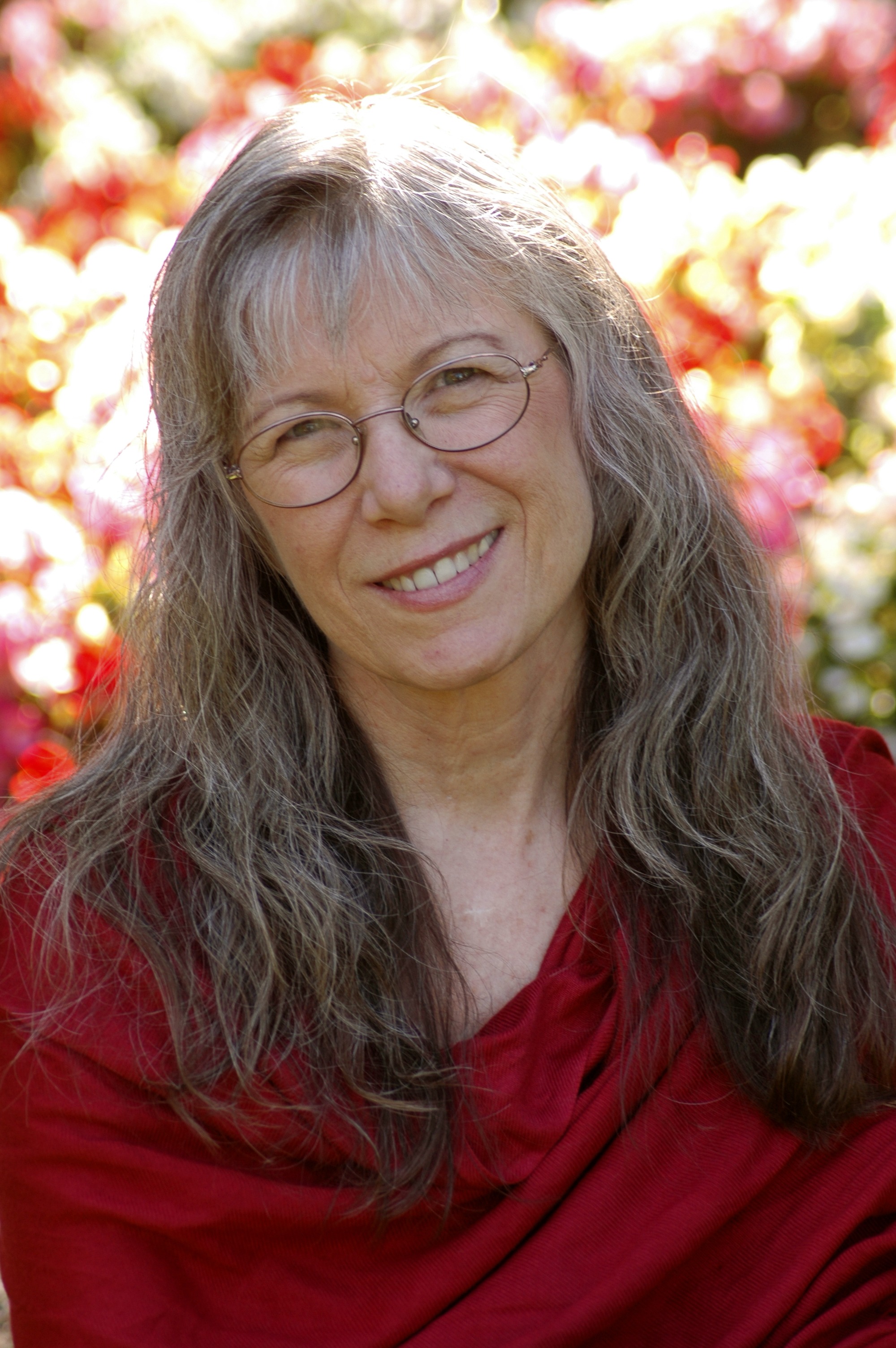
Summary
Chris Celine describes moving from severe childhood trauma and suicidal despair toward healing through spiritual practice, surrender, and divine guidance. She explores how fear, separation, psychological distortion, and resistance obscure love, while openness and willingness support awakening.
Questions This Interview Explores
- How can spiritual practice help heal trauma and despair?
- What prevents people from awakening or accepting spiritual help?
- How can psychic experiences and subtle guidance become distorted?
- What role do surrender and willingness play in healing?
- How should spiritual guides and an intelligent universe be understood?
Key takeaways
- Healing requires willingness and openness rather than force or self-reliance alone.
- Fear can hide behind certainty, success, pleasure, and the need to be right.
- Awakening involves unlearning beliefs of separation as much as gaining knowledge.
- Psychic sensitivity without inner stability can become confusing and distorted.
- Spiritual guidance should support healing, not reinforce hierarchy or superiority.
- Love can reach each person through forms and teachings suited to their needs.
Transcript
Rick: Welcome to Buddha at the Gas Pump. My name is Rick Archer. Buddha at the Gas Pump is an ongoing series of interviews with spiritually awakening people. There have been about 355 of them now, and if this is new to you, go to batgap.com and you’ll see them all categorized and organized in various ways, so you can watch previous ones.
This show is made possible by the support of appreciative listeners and viewers, so if you appreciate it and feel like supporting it, there’s a donate button on the right-hand side. If you don’t like PayPal, there’s a donation page that explains how you can do it in different ways.
My guest today is Chris Celine. I’m going to read a little bio that she sent, and then we’ll just get right into it. She says:
My childhood world was one of abuse, repression, and terror. This is what I believed the world was about, until, from the depths of my despair, I began searching for a new way. My conscious spiritual journey began when I was called, as a young adult determined to find new life and freedom from this limited world, to a higher quest for the truth of myself. I studied many forms of spiritual practice, including Buddhism, Native American traditions, Judaism, and others, and soon became aware that the source of all life is within all traditions. I entered a shamanic healing path centered in the heart of Brazil. I remained fully committed and dedicated to my journey in this form for eight years, healing most of the false ideas that I carried through all my lifetimes. After this, I was called to enter a several-year retreat. During this time, I was guided to enter fully into the teaching of A Course in Miracles . I received the transmission completely through my heart, guided by my prayers, intention, and deep devotion to be healed of all that held me prisoner in this temporary illusion. My heart completely melted, and I awakened to the truth of all love. Since my awakening, I have dedicated my life to guiding, with radical gentleness and complete devotion, all beloveds who have a deep desire to come home easily and gently.
And you’ll notice that the word “gentle” and “gently” appeared several times there. I’ve listened to quite a few hours of Chris’s satsangs, if she calls them that, and I would say that gentleness is probably the one adjective I would use to describe them. There’s a very sweet, gentle feeling about her whole way of teaching, which you’re about to experience. So welcome, Chris.
Chris: Well, thank you so much. I appreciate it. It’s lovely to be here.
🛤️ From abuse and fear to a spiritual search
Rick: Yeah, good to have you. We’re probably going to spend most of our time talking about the knowledge that you have to present, but people always like to hear a little bit of the background, and I just read out some of that. What’s worth discussing in your background? What would you like to elaborate on in terms of what I just read?
Chris: Well, the crux of the past was fear, and fear brought through the belief that what I was experiencing was the totality of what was possible, and that the only difference might be that one is lucky to have love in their life in their early years, and that the rest of us were unlucky. The sense was that life was just terror. It really was.
I took it into—I ran away when I was 18—but I was… I ran away, and one of the most significant elements that occurred was that I made a decision a couple of years after I ran away that I had to completely stop any connection with the beloved who had come as my father, because if I continued to be in that energy field, I would die.
Rick: Your father had been abusive?
Chris: Very. It was torture, starvation, imprisonment. It was very strong—everything. He controlled everything. There was never any allowance of using the phone or having anyone personal in the house who was not his choosing. Every word had to be specifically spoken according to the rules. So it was everything.
The strange part was that after running away, nothing changed. The nightmares were in my mind and in the physical energy field also, and it just continued. The nightmare just continued. I made that decision and at least stepped out of the basic energy field.
I went into therapy for many, many years, believing that it was going to at least give me something, which it did. It taught me tools. It taught me how to communicate. It taught me how to recognize emotions and those types of things. But basically, by the time I stepped away from therapy, there was still nothing. It was still an empty vacuum of space where only I was the source of the pain and suffering.
So it was really… I had no choice. I had tried to commit suicide many times. The last time I was almost successful, I was about 28 years old. When it wasn’t successful, I ended up in a mental hospital for the allotted time that you had to stay there. But I still wanted to end my existence every day, and even through the spiritual journey I was ready to leave, until I received the message that said, “Your wanting to leave is a rebellion against God, because this is where your remembering is. This is the world that you made through your belief in separation, and this is where the healing will be.”
Rick: How did you receive that message, and in what form?
Chris: It was a voice that was very clear and was not my own choosing, because that was not the message that I would have formulated myself.
Rick: I’m sorry I interrupted you before you finished saying that message.
Chris: No, that’s all right. The message really was, “Be here and completely embrace being here so that you can be healed of the illusion that is in your mind.” I made that commitment to be here and to further devote myself even more deeply to God’s calling.
Rick: Kind of like you signed up for this, sister, so now get on with it.
Chris: Exactly right. Also, what happened in that moment was the complete realization that if I did not heal in this lifetime, I would continue in the same basic way through other lifetimes, and that the only answer was to remember.
Rick: Had you, at that point, studied some teachings that talked about reincarnation, or did you just somehow cognize that this is the way it worked?
Chris: No, I was very connected with past lives. I would see past lives at a certain point. It wasn’t like a place of entertainment by any means, but I could see the pattern in every reincarnation that I was gifted or offered to see. It was always the same: pain, suffering, destruction, remorse, hatred of God, fear of God, and fear of the world. It just continued.
Rick: Had suicide also been a pattern?
Chris: Pardon me?
Rick: Had suicide also been a pattern in those past lives?
Chris: That was not clear, no. But in one past life I was hanged, you know, and most of it was death and destruction. So it became pretty clear that I might as well be here and give everything, because I did not want to redo another lifetime.
Rick: Do you still feel that way now that you have this liberation? Now you probably think, “Hey, you know, this is sort of good. I wouldn’t mind contributing in whatever way I can.”
Chris: Oh, I love every day. There’s nothing—no, there’s nothing left of that false identity and that false fear of the world.
Rick: So would you say now that if it’s God’s will for you to have more lifetimes to serve in, whatever way, you’re fine with that?
Chris: Absolutely. No, it makes no difference. Love is love is love. Where you are in form makes no difference.
Rick: Yeah, that’s beautiful. Okay, so let’s pick up the story from where we were.
Chris: Yes. Where were we?
Rick: Well, you had gone through all this therapy, and it was still leaving you feeling empty. You had been having some past-life experiences, and you were apparently aware of some esoteric teachings, but I don’t know if you’ve really talked about how much you practiced them, if at all.
Psychic sensitivity and distorted perception
Chris: What I discovered was that I was extremely connected energetically, that I had always been, for lack of a better term, psychic. Actually, I discovered that even in the insanity, the psychic abilities, if you will, are not discriminatory to your state of wellness.
Rick: In other words, you can be pretty messed up and have psychic abilities.
Chris: You can be pretty messed up, except that the psychic abilities become distorted through that messed-up mind and can really drive somebody crazy because of the distortions.
I recognized that my grandmother was psychic, and I recognized that my mother was psychic. These beloveds were in a very messed-up state of mind, and so for them it was real—and even for me, in the past, it was painful and confusing.
So the work that I went through at that time, if you want to call it work, was really learning through many teachers how to stabilize the energy fields and use them as love would want them to be used. Then I had more channels opened within, so I began seeing very clearly what was holding divine beloveds back.
One of my teachers, who was just so lovely, said, “The key is that when you look at someone and you see the distortion in their energy fields, and you see the pain, you don’t lock into that and identify anyone through that source. This is being shown to you so that you can be of service, not to either entertain or to know something about somebody and think that you have the upper hand in some way.”
Rick: A few points come to mind from what you just said. One is these teachers that you’re alluding to. Are we now in Brazil with the shamanic teachers, or are you talking about even before that?
Chris: No, in Brazil and here, and also teachers… I had a beautiful ability, if you want to call it that. Every teacher that I was drawn to, whether it was a teacher who had been on this earth plane years before and was no longer within this earth plane—I received their teachings energetically. I received transmissions from them, so it was as if that teacher was right there with me.
It was so profound because I would say yes so deeply that I would really receive their teachings in a transmission that was pure and perfect.
Rick: Just before we lose the thread, when you were talking about people who are psychic or very sensitive but who are sort of messed up, to use that phrase, so that their sensitivity gets distorted through that filter, do you think that many people perhaps in mental hospitals who are having all kinds of crazy hallucinations and hearing voices and all, are actually picking up on some subtle stuff, but it’s coming through a very occluded filter?
Chris: Yes, because they’re carrying so much pain in themselves. I use a term for that: they don’t yet have the spiritual maturity that will help them, because the channel is open and it’s like a radio.
Rick: Yeah, it’s getting too many channels at once or something.
Chris: They’re just overwhelmed by all of this information and these visions. It would be wonderful if, in mental hospitals, there were some spiritual connection so that they could be truly assisted.
Rick: I bet you that’ll happen one of these days. There could be some pretty highly evolved people locked up in those situations.
Chris: That’s true.
Rick: There’s a certain niche of people who listen to this show who perhaps tend to have more of a Buddhist or Zen background, who regard any kind of talk of subtle realms or guides or any of that stuff as what they call “makyo,” which means a delusional fantasy. They’re really cool with the idea of the absolute or ground of being and that sort of notion, and obviously they’re cool with the relative world we perceive, but anything in between—all this sort of subtle realm stuff—seems to them like just an indulgence in fantasy. I don’t know if you can say anything that would convince them otherwise, but perhaps, just to help put this in context, how would you address that doubt?
Chris: Well, here’s what I would say. First of all, I don’t know that I could convince anyone of anything, but I have had—even quite a long time ago—one of my guides was Jesus. Now, this is one of the examples that I use.
Obviously, almost everybody knows the story of Jesus when he was walking on the earth and that his purpose was to demonstrate eternal life. It wasn’t about death; it was about forgiveness and eternal life—that you can’t die, that the Divine Spirit is not capable of dying, and the Divine Spirit is not capable of being changed. The only thing that is going on is the outside form and the identity that has been developed through agreements and through the belief in separation from universal love. That was true for Jesus also.
So when I say that Jesus was a guide, it’s because there’s no death, and his Divine energy, which is not separate from this Divine energy, is of service constantly and has no limitation to serve. When a beloved asks for help, it isn’t just informed that it comes; it comes from the universe. The universe is love, and it responds completely to everyone who is saying, “Help me,” because that opens the door, and it’s never not heard.
Now, there are so many layers within every beloved. There are so many layers of no that even when the “Help me” is finally there, which I call the white flag, because that’s usually how it is—the white flag says, “I’m ready, I’m ready”—there’s so much no, so much fear, and so much resistance that it doesn’t happen instantaneously, usually. Every once in a while, I’ve said this many times, you can wake up in a nanosecond.
The little willingness to wake up
Rick: What is it that keeps everybody from waking up in a nanosecond?
Chris: Well, yes.
Rick: That’s what I want.
Chris: The only thing that stops it is the resistance from within—unconscious resistance—and the realization hasn’t come yet that all beloveds are living in the past. They’re not living here because it’s too frightening. It’s so frightening to be in the mind, so frightening to come and be present, and you don’t even know how that could be possible because you don’t know that you’re in the past.
So it’s that movement into trust. All of these beloved beings that serve love—that’s temporary; it’s not a permanent state. It’s no more permanent than my service, what you would call my service to beloveds. It’s temporary because, in truth, everyone is the light of love and just hasn’t remembered yet. It doesn’t change them.
Rick: For those listening, incidentally, Chris refers to people as beloveds. She referred to her father earlier, and anytime she refers to somebody, she refers to them as a beloved, just so people understand your language.
Speaking of the help coming, first of all, I just want to say that I’ve done a lot of interviews, and there have been a number of stories in them of people who raised the white flag, as you put it, who at some point maybe even literally got on their knees and said, “I am lost here. Help me.” It’s really kind of inspiring and surprising how responsive the universe is when one reaches that state.
It’s as if one feels what one can do on one’s own, and then the universe says, “Okay, you’re fine. You’re doing it, at least you think you are, so let us know when you’re ready.” Then, when a person really makes that entreaty, the response can be quite dramatic.
Chris: Yes, it is. It absolutely is, and it can’t be judged by anybody else’s experience. The beauty of the wisdom of the universe is that the wisdom of the universe knows exactly how to reach each beloved perfectly if they are willing, and it’s the willingness.
The willingness is our only—whether you call it choice or willingness, they’re very connected—but that’s really all we have: a willingness. What gets in the way the most is knowing. Knowing is the complete defense system of separation, because everything that we know in our beliefs of separation, everything that we know, is made up.
When we have that call for love, when we say, “Help,” and raise the white flag, that’s where it keeps coming back to unlearning and learning. The unlearning is just as important as, if not more important than, the learning.
To be able to come to a place of humility and really recognize that this is my defense system—this is all that this is—is to defend myself against love, because it’s so terrifying to open your heart and give yourself to everything that is of love, and to completely release and surrender all of the defense systems that have been built because they are so painful, and they’re not seen as painful.
The little willingness opens that door.
Satisfaction, pleasure, being right, success, winning, right and wrong—all of it is camouflaged. It’s camouflaged purposefully so that it doesn’t look like fear; it doesn’t look like pain. It’s held as a high standard of success within the world, and all it does is block.
There was a teaching that I received quite a long time ago. I was told by someone that I had to build a better ego in order to have it torn down, because I wouldn’t be able, with my weak ego, to withstand the destruction of my self-identity.
I began really asking, “Is that possible? Is it possible that I need a better ego?” And I was shown so clearly, “No, I had a great ego. I had a superb ego. I had built one of the best egos because it was an ego that was based on pain and suffering, that I could stand against anybody in my pain and suffering.”
So that ego was really strong, just as strong as anybody’s. There really is no difference between good egos, bad egos, strong egos, or weak egos. It’s all just the belief that you’re separate from love.
🩺 Healing, ego, and surrender
Rick: But let’s explore that for a minute, because I know the point that the person made to you, which is that if a person is really psychologically unstable or shattered, or just really discombobulated mentally, then a teaching that attempts to dismantle whatever ego they have may be injurious to them or might be dangerous. It might destabilize them further.
So it’s advocated by people who say this sort of thing to get your act together, achieve some sort of psychological integrity or health, and then we can talk about going beyond that.
Chris: That’s a separate category, really. But even there, there are so many beloveds, and they only can find that for themselves, really. There are so many beloveds who are longing for the truth, and here’s what’s missing in the psychological profile: In healing, it is all truly miracles. It’s not done by yourself at all. It’s not done by you at all, really. You’re just showing up.
The wisdom of the universe, the wisdom of God, is not going to destroy a beloved so that they have a chance to recognize their truth. Every single healing that I received was brilliant and perfect for this healing, because that is the wisdom of love itself.
So, yes, you may be able to push somebody into something, but really, that deep healing is so perfectly orchestrated that there is no fear of anything, and there’s no destruction, even though it can feel like destruction. But the deep, deep healing is not going to just have its way without the awareness of what every beloved truly needs to be helped on their own journey.
Rick: Yes, there’s an underlying assumption here, which you’ve actually stated fairly explicitly, and which we might want to dwell on for a minute, and which I very much resonate with. The assumption is that the universe is definitely not dumb, mechanistic material—rock and stuff. It’s totally brimming with intelligence, saturated and permeated with intelligence.
It’s not just intelligence in an amorphous, oceanic sense, where it’s simply vast intelligence; it’s also intelligence that expresses itself in a variety of ways, an infinite variety of ways. I should probably let you take it from here, but why don’t you talk just a little bit about the notion that the universe is intelligent, and that there are various agents or expressions of that intelligence, which have various functions and perhaps various jurisdictions or degrees?
You mentioned Jesus. He could be thought of as maybe a general in this army of the universe, whereas maybe others are privates, and others are colonels or corporals or whatever—just different degrees or spheres of influence, we might say.
Chris: There may be that. I have never noticed, actually, a hierarchy. All love is maximum. Every guide that I had—and I had many, many guides—they would kind of take turns. One would come in, one would leave, depending on what the guidance was for and what was being called to be remembered at that time.
It’s almost like going to college and having professors in all different types of courses. They’re not less or more than each other; they are helping in specific ways. So I have never noticed any hierarchy at all, really, even in that. It’s easy to see it that way, I believe, but I never saw it that way. I never experienced it that way.
For example, the relationship with the Divine Mother—the Divine Mother’s aspects are vast and diversified. You have Quan Yin, you have Shiva, you have all of these elements of the Divine Mother.
Rick: Shiva is masculine, but Lakshmi or Parvati or whatever.
Chris: Yes, and all of these different beings that have served love and continue to serve love are equal in all the truth of love, because there’s no duality, for sure, on the side of love, and so there is an equality.
Let’s say you’re taking a swim in a river, and you dive underneath the water and hear the voice of the Divine Mother. Is that a lesser voice than the Divine Mother who carries the universal message of peace, harmony, comfort, and healing? No, it’s exactly the same. It has just taken a different aspect and come into that water, and is the water itself, and responds to whoever is willing to meet that beloved Spirit.
Rick: I guess the reason I wondered is that I know people who perceive guides. I have a friend who perceives them routinely, so there’s usually a little cluster of them around every single person. But it would seem like there are some who would have a broader kind of connection or realm of responsibility.
Then they talk of Gaia, for instance—the intelligence that abides in the earth, for whom the earth is the body—or Surya, for whom the Sun is the body, and so on. It would seem that those are kind of bigger beings in a way, or more highly—yes, something or other like that.
Chris: Well, it may be, but it’s a disservice. I see it this way: it can be a disservice to categorize love because, let’s say you have that and then you’re thinking, “Okay, I’m moving up because my guides are getting bigger.” That’s a disservice to yourself, to believe that there is a hierarchy in that way.
It may not be that. It may be that they have particular roles that they fulfill. But let’s put it this way: let’s say you’re walking down the street and a dog shows up and starts walking with you, and you realize that something is happening. Why is this dog walking with me? If you’re open, if you’re willing, there’s a beautiful connection there, and that being can be bringing you a teaching.
Rick: Oh, yeah.
Chris: We don’t know.
Rick: You mentioned Shiva. There were stories of both Shankara and Yudhishthira, who was the hero of the Mahabharata, in which a dog started walking along with them. It was a test for them, and it turned out that the dog was actually Shiva taking that form. He was testing to see how they would respond to the dog, how they would treat it, and so on.
Chris: Right. So everything is offering a teaching, and in that way everything is the Being of Love and can use all forms, and does use all forms, with your permission.
That also speaks to healing. There’s a beautiful teaching that says the Spirit of Love knows no bounds and will—let me see if I can say it correctly—that you will always be taught if you allow everything to be used in your life.
But it’s the surrender of your life, the surrender of each situation, the surrender of the moment, and the openness of that—of saying, “Teach me, teach me. I’m available. This is what I want.” The lessons come in everything.
If every beloved would, when anything occurs—anything—let’s say the other night we had a fan that was running during a teaching, and several beloveds said, “Turn off the fan. Let’s turn off the fan because of the noise.” There wasn’t a yes to turn off the fan, and the real reason is because that fan was not there because of the annoyance of the noise. It was there as a teaching for anyone who was disturbed by it, to go beyond the disturbance that was being made in the mind and really open to what was just being present.
The benevolence of the universe
Rick: We were discussing the point that the universe is intelligent, and in fact it could be argued that it’s nothing but intelligence, just moving in different forms. If we are open to it, I guess one way of putting it—see if you agree with this—is that not only is there intelligence, but the intelligence has almost as if it has a benign motivation. It wants our growth. It wants evolution. It wants higher and higher expressions of itself through our forms. If we’re cooperative, then it will do—well, finish my sentence.
Chris: I would say that it is the divine love of the universe that we are, and our call for help, which is within us and may not necessarily be expressed verbally, but it’s in our, if you want to call it, soul or spirit. That spirit is calling and calling for that love to show up.
What we have to do in that acceptance is not judge the form that it comes in. There’s a beautiful joke that I remember hearing almost at the beginning of the spiritual journey, which was someone sitting in meditation—I’m sure you’ve seen it—and saying, “Give me all the greatness of the universe, but I don’t want my life to change.” That is the joke, the cosmic joke, because each moment is that opportunity.
I’ll say, too, that because of the illusion, which is all temporariness—it changes shapes, changes vibrations, changes whatever—everything that is temporary can be surrendered to be used, even though it actually has no value, so to speak, on its own, except the value that’s given to it. It can be used for a higher purpose, and in that it transforms everything that is in your life into love itself.
Rick: There is a story I heard you tell at one of your meetings where there’s this farmer living in China, let’s say, and his horse escapes. His friend goes, “It’s terrible that your horse escaped.” The farmer says, “We’ll see.”
But then the next day, the horse comes back with a whole bunch of wild horses and walks right into the corral. All of a sudden he’s rich; he’s got all these horses. The neighbors say, “That’s great, you’re rich!” And he says, “We’ll see.”
Then his son is training one of the horses, trying to ride it, and he breaks his leg. “Oh, so how are you going to run the farm now? Your son broke his leg. It’s terrible.” “We’ll see.”
Then, next thing you know, some army comes to town recruiting all the young men, but his son can’t go because he broke his leg. And so it goes on like that.
Chris: And that’s it. It’s neither good nor bad; it just is, and using it for love is the only real purpose of it. Yeah, the universe is completely benevolent, and everything else is just coming from the fear that gets generated through the belief in separation, the belief that you are alone, the belief that you are without.
Rick: So what do you say to somebody who hears you say that the universe is completely benevolent, and they’ve just been in Nice when that truck plowed through all these people, or in the middle of one of these mass shootings, or something tragic happens—9/11? It seems kind of airy-fairy to say the universe is benevolent when you are hit with something like that. What do you say to them?
Chris: That’s always the ego’s first place to go, to the unexplainable disaster. But it isn’t really unexplainable. We create; we make our lives. We can see this with many, and it’s not about anyone being less or more, but when there is a universal consciousness being held of battle and war—and bringing it down to the basics, when you’re irritated with someone, when you have a little irritation and you decide that they are not doing what you want them to do or behaving as you want them to behave—that hatred is the same hatred.
Every beloved has the calling within them to learn the truth of who they are, which is love; what they are, love; and to bring that love into every aspect of their personal life. That is transformation.
Those beloveds who were killed, first of all, in truth they didn’t die. They did not die. They left their bodies, and their divine essence continues in their journey. We don’t know why they were there and what that was in their belief system, but it isn’t God’s will for them to suffer, and it isn’t God’s will for anyone to suffer, including the families of those beloveds.
But the most liberating essence of that is that they are still those beloveds, and that they are here. They’re not gone someplace. They are completely one with the universe, and there is no death.
Can someone accept that who has that kind of grief? Probably not, probably not. But at some point the grief starts to dissipate, and comfort can be received. It is absolutely the truth of comfort to realize that there is no death.
There is no death.
I was just given the gift of—and I’ve done this many times—being with a beloved who was part of the community here in his passing. The gift of that is the willingness for that beloved to leave peacefully, with courage and with the realization that he was not dying and that we would not be separate; that the Eye of the Eye would walk with him forever, because there’s no separation.
I’ve often said jokingly that the reason we are learning to love is because we will be with everyone for all eternity, not as a conscious state, but as the Oneness of Love itself. So we’re here to learn to love.
✨ Faith, healing, and the end of self-reliance
Rick: And this is another one of those things that I don’t know if you can convince somebody of. How does one go from hearing this as a nice belief that they can’t believe to having the certainty that you have?
Chris: All you have to do is walk in my past.
Rick: Yeah, which was your past and not anybody else’s past, right?
Chris: Well, that’s true, but I was healed. I was set free by the benevolence of love itself. I showed up; I was willing.
I had one teacher who said of me, which was really a surprise, somebody was complaining because I seemed to be understanding things more deeply than they were, I guess. This teacher said, “I’ll tell you why she’s where she is: because she never stops, because she’s devoted to remembering, because she doesn’t want to live this past again.”
That is a great impetus. It truly is. But the whole element is, I did not heal myself. There’s no way that I could have untangled the insanity and the pain and the suffering that I held so firmly as my right. I could not have healed that. There’s not a possibility that that could be healed without intervention, without the universe and the calling of that power, the calling of that healing.
I have never, not for a second, believed that this was something that I did. No, it’s not possible. I’m not saying that someone can’t wake up in ten minutes. Yes, someone can, absolutely. We don’t know the past lives that led to that. We don’t know how that’s possible.
But there was nothing that I—and I know that this was true because the truth is that there’s nothing that I haven’t touched in the world of pain and suffering. There’s no emotion that I haven’t felt. There is no hatred that I haven’t carried. There wasn’t one cell in this identity that wasn’t filled with hate.
I’m going to go back here for a second, just to affirm this. When I was about—I don’t know what stopped it—I was going to murder my father. I had the knife in my hand, and I know that if we had been a family that had guns, either I would have been dead or he would have been dead way before that.
Something stopped me from murdering him, but the hatred, the poison of wanting to cause not only death but pain—I wanted to inflict pain—there is nothing that matches that pain within, that poison. That belief in that poison, in that hatred, in that fear, was what had to be healed.
And it had to be healed through incredible resistance at times, because when you build a defense system that you believe is keeping you alive, you don’t give it readily, you don’t surrender it readily, and you don’t let go of your defenses readily.
But faith in the teachings of truth is what opens the door. When I would read the teachings of different masters, they were all exactly the same. It didn’t matter if it was a Buddhist, it didn’t matter if it was Ramakrishna, it didn’t matter where it came from; they all spoke to the same truth.
The faith in that is what heals, because you have to have faith. You have to be able to do the bungee jump. You have to be able to become undefended and no longer be at the effect of anything on the outside.
Rick: There’s an interesting paradox here, because on the one hand, “Seek and you shall find; knock and the door shall be opened.” Every teacher says, “Go at it with great zeal,” and the more ardent your search, the more likely the result, or the quicker the result, will come. Yet on the other hand, success comes from surrender. So how do you reconcile that paradox?
Chris: The willingness—the willingness has to be there so that the door can be opened, that little bit of a crack, so that healing can occur.
When you have willingness, you’re saying, “Come in, come in. Come into my world, come into my insanity, and help me, because I can’t undo this insanity. It’s too entrenched.”
So the help is—if someone can do it without help, I’m happy for them, but it certainly wasn’t what I walked through.
Rick: Yeah, I think it’s a point worth belaboring just a little bit. There’s that saying, “pulling yourself up by your own bootstraps,” which, of course, you can’t do if you try to pull your bootstraps and lift yourself up off the ground. You’re not going to do it. But it’s interesting to just ponder the mechanics of awakening and whether it’s something that actually results from an application of individual effort or a relinquishment of individual effort.
Chris: It’s both, to a certain extent, but mostly relinquishment. Relinquishment is, there’s nothing to know, there’s nothing to hold on to. I have no idea what’s next, I have no idea how this would happen, and I have no idea what is occurring. But I’m here. I’m here, I’m in a yes. I say yes to love because I know that that’s the only thing that I know. But I don’t even know that—that love is the truth of the universe. The willingness is everything, and it doesn’t have to be a lot.
The little willingness is—and this is a fine study, as one of my teachers would say, a very fine study—the little willingness opens that door. All you have to do is find a little, because if it were more, then it would be a setup. You have to get to a certain point before you can even have willingness. No, the little willingness is in everyone, and it’s a light that is the light of the sun that is within each beloved. Finally, you touch into that little willingness, and transformation begins. Sometimes it takes a long time, but it’s there.
Rick: And there are examples of that in different traditions, too. I mean, the grain of mustard seed in the Bible, and there’s a verse in the Gita which says, “Even a little of this dharma delivers from great…” Or maybe it’s, “A little of this knowledge removes great fear.” But I bet you we could find it in almost every tradition: just take a step, just a little bit.
Chris: That’s right, just a little bit. Yeah, because that’s the place that is so exquisite. You can never be truly—I mean, you can be disillusioned or worried that you don’t have enough—but it really is just the little willingness.
There was a time when I was in the throes of pain and suffering, and I was lying on my bed crying, crying, crying. I was crying because I wanted an outcome that was particular in that moment, and I was talking to God, saying, “I’ve been so good. I have tried so hard, and why can’t you give me this? Why can’t I have this? It’s so important to me.”
Somewhere within came the little willingness. My prayer said—I stopped, and all of a sudden my prayer was, “Don’t listen to that. I’m a little willing. I’m a little willing that the universe, God, that you know what’s best for me. You know what is going to help me the most, and I don’t know. I don’t know, but I’m a little willing.” From then on, it was the little willingness.
Rick: That’s nice. Yeah. You said that thing earlier about not knowing, and while you’re saying that I was thinking, well, maybe that means certain kinds of knowing and not others. For instance, if you’re a mathematics teacher, you don’t show up in class one day and say, “Well, I’m on a spiritual path now, so I’ve forgotten all my mathematics.” You still know that stuff, but you’re talking about a different kind of thing that we would not be adamant about our knowledge.
Chris: No, not really. It’s the professor who’s the math professor who can still teach what he knows, but he knows he doesn’t know. He knows that this is not part of his truth. He knows that this is just, in this world, what he’s offering, and he has the opportunity through that knowing, if you want to call it that, that he’s offering love if he chooses to.
Anybody who’s a teacher can either teach the world or teach love and bring whatever it is—whether it’s math or not—what they deliver can be love. Then it’s in service of love, but it’s no longer theirs.
The pride of that beloved’s relationship to his math awareness, if he has pride, that’s his prison. If he is trying to get ahead through that knowing, it’s his prison. If he’s lost in the identity of that, and his professorship gives him an identity of worth, he’s in prison. But the knowing that he has of his math skills can be surrendered also and used for love. Then he’s free much more deeply, because he’s no longer attached to the persona that he’s developed as a math teacher. He’s no longer hooked into proving his worth.
Beyond political and personal identities
Rick: That’s a good answer. I saw some YouTube video the other day of this guy who is—maybe it’s part of a group—trying to get people to lighten up in terms of the political divisiveness in this country. The title of it was “I’m Right and You’re an Idiot,” which is basically what both sides are saying in the political debate. But there’s this sort of rigid, adamant certainty of my correctness and your idiocy, and it seems to me that we could all get along a lot better if we just held all that a little bit more loosely.
Chris: Well, yeah. To me, it’s the opportunity to see these beloveds who are engaged in this at whatever level, and to recognize that none of this is their reality. This is not the reality of who they are or what they are. There is no difference between Donald Trump and Hillary Clinton. Those are just names. They aren’t remembering yet that they are the light of God and that they are love itself, and that everything that’s being put into division is a game of worth and trying to win. There’s nothing to win.
Rick: But it would be more accurate to say that superficially there are differences between all kinds of things, but deep down it’s all the same. Deep down, we’re all one at our center.
Chris: Absolutely. The personality is what’s been developed—the identity, the past, everything. It’s not who they are. That’s just their version of separation, and some look more separated than others, but it’s still all a call for love. It’s all a call to return, and everyone who is watching them has the same calling: to not judge them by their actions and their beliefs that they’re portraying, because they are the light of love itself.
Rick: Yeah, I would say, don’t judge, but vote. Before I run out of time, I bet you there’s some interesting things to talk about still with regard to your journey, like that whole thing in Brazil, studying with shamans. Did that involve entheogens such as ayahuasca?
Chris: Yes.
Rick: Would you like to give us a few nuggets of that whole episode in your life?
🧘 Brazil, shamanic practice, and disciplined surrender
Chris: Well, it was a very beautiful, beautiful journey. I have no idea how I got there. I’ve said this many times: it was like I was—I had panic attacks for ten years, and I was still having panic attacks when I went to Brazil. I have no idea how I got there. I was put in a bubble of some kind that could get me to Brazil, because I didn’t go on planes for all those ten years, or drive cars with other people and things like that.
Rick: So you obviously got on a plane to go there.
Chris: I did. I was put in a bubble of some kind and made it there.
Rick: You mean you weren’t even conscious, and you don’t even remember buying a ticket and getting on a plane?
Chris: I remember buying a ticket, but I—you know, I had beloveds, friends, who would say to me, “What are you going to do?” And I had no answer. I was just going. I was just going. It was a remarkable journey.
My main teacher was there, and the reason that he became my main teacher was because he just exuded love and peace. His whole being was love and peace, and I had never experienced someone being peaceful. I had never experienced that place of nonjudgment that was so beautiful and so pure.
So I followed and I learned. I’ll tell you what I learned the most: I learned the most about self-discipline. I learned the most about what I call firmness in truth, where I would be tempted so, so, so often to let the mind run or let my old patterns have their way. The firmness was, “No, this is not of God. I am not allowing this to be my master anymore.”
It was really, really surrendering to the master of love itself. It was like a really fast track of surrender.
Rick: Yeah, and then after that you came back and you did a retreat for a couple of years and were guided to enter A Course in Miracles.
Chris: I wasn’t there—I wasn’t in Brazil—the whole time. I only went a couple of times to Brazil, but the rest of the time I was here, studying the same teachings. Then I went into what I call soft seclusion, which was called for.
When I was called to go into what I call soft seclusion—which only means that I still had to go to the grocery store, I still had to use the phone, and so on—but for most of the time I was just with the inner peace, I freaked. I absolutely freaked out, because it hit me exactly in the right place. I was terrified of being with me. The idea of being with me was absolutely horrendous.
I saw myself in a meditation. I saw myself in an empty house and being two or three years old. It wasn’t true; it was just a metaphor. But I was in this empty, dark house, sitting in the middle of the floor with nobody ever there. That was my fear. That was the fear.
Through that seclusion, not only did I open to deeper teachings, of course, but it was freedom. I met the divine within through that trust and through that aloneness, that solitariness. I met the love within, and nothing else was needed.
Now, in that, it’s also the learning to offer love so completely, because that’s all that there is. There’s nothing to get. Everything is the offering of love, and that is where all the love expands, constantly expanding, because love expands. But you have to find that. You have to find the love that is waiting to be met within, and it’s there.
Rick: It’s interesting how you knew what you had to do, and you did what you had to do even though you were terrified of doing it. Somehow a deeper calling or something enabled you to soldier on and do it.
Chris: Yeah. When I would receive direction—which I received—it was always obedience. It was obedience to the calling, to whatever was asked of me next, because it’s what I wanted.
If you hold at the center of your being what you truly want, then you keep coming back to that point: What is it that I truly want? I want to be free. I want to remember. I want to learn the truth of love. Then you give yourself to whatever is called for, because how would I know what was best for me? All I could do was base it on something in the past, and that was my only knowing. So it was always that surrender of, “Take me. Show me. I’m willing.”
Rick: Yeah, it’s neat. “Highest first,” in a phrase, I suppose you could say. You had a sense of what was highest, and you made that the priority.
Chris: Yeah. I will say also that I didn’t know that it was the highest. I just knew that that’s what I was supposed to go to. Maybe there was an interpretation that could have been saying, “This is the highest good,” and it probably was, but it was still the unknown. I didn’t know where I was going with it.
Rick: But it’s cool that you had that intuitive guidance or almost intuitive certainty that this is the way I’ve got to go. You know it ain’t going to be pretty, but this is what I have to do, and you just do it.
Chris: You know, it isn’t pretty, and it isn’t necessarily easy. When I stepped away from the shamanic path at that point, all that I could hear was the teaching for me that said, “You cannot leave love. You’re not leaving anyone. You are, they are, you know, there’s no love lost. There is no separation here. Every beloved is still the beloved in my heart, and nothing is lost.” That was a teaching in and of itself: I couldn’t leave love, not in any way.
Rick: Yeah. Well, you know, if you want to fly from Ashland to Myrtle Beach, you’re probably going to have to change planes several times, but it’s not like you’re giving up the journey. It’s like each plane has its value and is essential in making the entire journey.
Chris: And what I came to see, actually, in that relinquishment was that I couldn’t wake up where I was because of certain intentions or certain beliefs or whatever, but that I had to step away and come into that solitary truth within.
Rick: Like you’d taken that vehicle as far as it was meant to take you, and now it’s time to get in a new vehicle.
Chris: Yeah.
✨ A Course in Miracles and awakening
Rick: And so, the Course in Miracles: Did you just study the traditional Course in Miracles, or did you somehow have your own download of the Course in Miracles?
Chris: I had, well, both. As soon as I opened—and I’ll tell you a funny story with this—I had a friend who came to a shamanic ritual. After the shamanic ritual, we were in a group, kind of processing, and she said, “What I’ve realized through this ritual is that my path is the Course in Miracles.” In my arrogance, I was sitting there thinking, “That’s not a path, that’s a book. You know, it doesn’t have any rituals. It doesn’t have any—you know, there’s no incense, there’s no whatever.”
And when I was called to the Course in Miracles, I couldn’t stop laughing, because here I was, after that arrogance—that was a statement that I’d made many years before—but it came right back at me to see the humor in my thinking that I knew something.
When I started with the Course, as soon as the first words were there, I was aware of this transmission. The transmission from Jesus was really clear, and I dove in, as I had always dived into whatever. I dove in, and I had a beloved say one time, “I’ve been studying the Course for years, and I don’t get it.” It was just the depth of my embracing the teachings and the opening through the transmission.
Rick: Yeah. I mean, there are certain books which we could probably read all of our lives, and they’ll continue to become a new book each time we read them as we grow, because the book has so much vertical depth to it.
Chris: Yeah, absolutely.
Rick: And so then you say—I guess it was sort of after this Course in Miracles phase, or during it—“I received the transmission completely through my heart and guided by my prayers, intention, and deep devotion to be healed of all that held me prisoner in this temporary illusion. My heart completely melted, and I awakened to the truth of all love.” And then you said, “Since my awakening,” so on and so forth. So it sounds like that was really the watershed moment there.
Chris: Yes, it was. And it was not—in hindsight, it was perfectly orchestrated, but at the time it was, you know, one moment was, “I’m completely lost,” and then the next moment, everything’s gone.
Rick: So it was that abrupt? You could mark it on the calendar?
Chris: Well, it was, and yet, you know, it’s hard—it’s so difficult to talk about it in words, because at the same time there was a movement of deepening, deepening, deepening, deepening, and freedom, freedom, freedom that was occurring. So it isn’t one moment, and yet they’re both there.
And even after that dramatic element was being in the world and learning to ground this love into the world itself. I had many lessons there, too, because it was about learning the ways of the world without being in it, you know? It really was, and it was still the journey of love and learning. I continued to learn how to be in this world and not of it.
✨ Presence, sensation, and the absence of a personal self
Rick: It seems like it’s a lifelong enterprise. Do you feel like—well, on that note—do you feel like there is a sort of finality in your experience, or is it a continual deepening, clarification, and learning to bring it into the world—integration or stabilization, whatever words you want to use?
Chris: No, everything is just present. There’s nothing else. I had a beloved who asked me how I was feeling and was asking about before and after—how you feel, you know, like that. And I said, “I have nothing to say. Every moment is itself. I don’t carry an identity from moment to moment and assess it. I have no—there’s nothing to hold on to.”
So I can’t say that I’m better today than I was yesterday in some physical way. It doesn’t have any purpose.
Rick: Not so much in a physical way. You just coughed, and you said you had laryngitis the other day, so you could be worse today than you were yesterday or the day before.
Chris: Yes, but I don’t notice it. I really don’t, because there’s not an assessor that’s making that be right or wrong or good or bad or anything. So I don’t remember the last week, what it meant, or anything else. It was just—every day is just love.
Rick: That’s nice. So, in other words, you feel so present that you couldn’t really say, “Well, ever since this awakening”—whatever year that was—“there has been such-and-such a sort of growth or maturation,” or whatever. There’s just presence, presence, presence, and it’s really hard to quantify it.
Chris: It is. It doesn’t have any way to hold it. There’s no way to hold it of anything. I had a beloved say to me—because he was looking at the part of being awake—and he says, “I think I see it.” He says, “You don’t care,” which is true, “and there’s no temptation. There’s nothing of time or space that is tempting. When you’re in love, there’s nothing else.”
Now, does that mean that I can’t make a sandwich or take a bath? No, of course not. But it’s all love, and it’s not personal. There’s no personal pull to anything. It’s what is and what shows up, and serving that.
Rick: Do you feel that you have lost all semblance of a sense of personal self, or is it somehow that the personal self is there but in a much larger context, or what?
Chris: I don’t—it’s not the feeling of it’s there in a larger context. No, it’s just—yeah, it’s not here. There’s nothing to hook with.
Rick: So, you met Judith.
Chris: Yes. Judith used to be asked, when we would travel quite a bit to do satsangs in different locations, and beloveds in those gatherings would pull her aside and say, “Is she always like this? What do you see that’s different?”
And Judith would say, “I’ve been waiting for years, and I’ve never seen any disturbance, anything that is not in alignment. It’s only love. That’s not easy to live with sometimes, but there’s nothing else there.”
Rick: Yeah, but obviously, if Judith comes in the room and says, “Hey, Chris,” you turn your head. There’s some sort of response from this location, as opposed to—or if you stub your toe, some pain is felt in this mind-body system, not in Judith’s toe. I mean, I’m just kind of wrestling with this thing, because I’ve talked to a number of people about it, and I’ll be talking to more because—well, go ahead. I’ve talked too much right now. You go ahead and respond.
Chris: Well, the stubbing of the toe—yeah, there’s no caring. That’s the key. It’s just the toe is stubbed.
Rick: But you’re feeling the pain, not some guy in China. I mean, you know that it’s—
Chris: Well, that may be, but actually, for the most part, I don’t feel that much pain either. I don’t consider it to be pain. It’s a sensation.
I had a lot of pain in the past from the childhood abuse and a lot of physical damage. I turned to Ramakrishna, because he was definitely one of my teachers, and I asked—I wanted, through his own healing that he received from—you know, because he had throat cancer—I said, “Please show me the way to release this belief in pain, because it can’t be the truth.”
And I was shown and released all of the pain. It didn’t mean that the body was healed. So Ramakrishna showed me how to rise through the pain and see it only as sensation, and that that sensation did not have an identity with it. It was freedom. It was freedom—not because the body works better, but because it just isn’t identified with.
Rick: Yeah, it’s an interesting thing. It’s a hard thing for people to understand who aren’t actually experiencing it. I mean, I don’t want to belabor it, because I sent a point about this to a friend the other day, and she said, “Are you still chewing on that bone?”
And, you know, I tend to chew on bones until there’s nothing left, until I really get it, but I think to a great extent it’s just going to have to be something that one experiences.
Chris: Yes, yeah, and it’s hard to explain how that’s even possible, because I just entered and asked to be shown, and I was shown—not through a graph, you know, but within.
Rick: Yeah, yeah. Well, I’m sure that you and I could continue on for hours talking about this and that, but we’re not going to do that. So what is there that you would like to convey to people that we may not have touched on yet that you want to be—because thousands of people will watch this, so this is a good opportunity for you to just say whatever you want to say.
Chris: If I could, in any way—not convince, but offer—that healing is completely possible, that remembering is just so close, and not to give up on that journey. And, if at all possible, that every beloved surrenders their knowing—the knowing of the past—and the willingness to step into not knowing, just allowing that you will not be left without. You will not be left without.
There is the benevolence of the universe that is completely yours, completely yours, and nothing ever is on the side of God that is being held from anyone. It’s all from within that we stop, and it just doesn’t need to be, because this is all that we’re here for.
We’re not here to make a good identity; we’re here to remember.
These are the circumstances that we made, that now we’re walking through, and it’s all for remembering. It’s its only true purpose.
You know, when beloveds say to me, “I want to make a difference in this world. I want to do something,” yes, then do something. But the main thing that you can do to serve humanity is to remember the truth of love. That is at the center of everything, and it diminishes every other sense of accomplishment, because your accomplishment is only in the remembering of your true, divine, perfect, innocent nature.
Rick: And do you have a prescription for that? I mean, you yourself have been through probably a dozen different phases of spiritual quest that we’ve talked about. What do you do now with people that come to you? Do you send them to Brazil? I mean, what do you do to help them realize the truth of what you’re saying?
Chris: Yeah, I was called to burn open a path that has no connection to—you know, sometimes somebody will say, “Well, is this connected to this path or this path?” No, it’s not, and not because all paths aren’t perfect, but this is a particular path that I was called to burn open that focuses completely on learning to love, and on the gentleness and kindness of that personal journey.
It doesn’t mean, just because it’s gentle and kind, that it isn’t a squeeze, because it is a squeeze, but it’s there for anybody.
Rick: So each teacher has their own style, or their own way of operating. So you, as a teacher, would you say that gentleness and kindness are your hallmark?
Chris: Probably, yeah, and also the consistency that nothing ever changes. There’s no kind of awake where you can still have your personality irritations, mood swings, and anything else. There’s just nothing, and that’s what gets recognized and then transmitted through that. That is also the reflection.
It’s who you are, it’s what you are. You are that kindness, you are that light, you are that innocence, the gentleness, the honesty. That’s all love, and learning to live in the world as that.
Rick: That’s interesting, what you just said, because there are some people who argue that there’s really no correlation between awakening and behavior, and that a person can be a real SOB, or even an alcoholic or something like that, and yet be awake, and be irascible and have all kinds of undesirable qualities. Yet what you’re saying seems to have just contradicted that.
Chris: Well, I don’t know. I don’t know what the purposes are of those other beloveds being in their personalities or whatever. I don’t know. Maybe that’s what somebody needs. I don’t know.
Rick: Yeah, I would like to think that awakening means you actually are going to become kind of saintly in a way. I mean, it seems like that would be desirable, but there are people who argue that it’s not necessarily the way it’s going to work. I don’t know either. The jury’s out on that one, I guess.
Chris: Yeah, I don’t know. It’s funny because of all the masters that I was drawn to, none of them were sordid personalities.
Rick: You’re lucky.
Chris: So I can’t even speak to it in that way because I guess I was never drawn to that. What sparked within me was love.
Rick: Yeah. Maybe like attracts like, you know.
Chris: Maybe so.
Continuing the work of gentleness
Rick: In addition to your little group up there in Ashland, you do Skype sessions and occasional retreats. Do you travel at all to do this stuff?
Chris: I’m not traveling anymore. I haven’t been called to it. And what else did you say?
Rick: Skype sessions. You can do that with people?
Chris: Yeah, sometimes, yeah.
Rick: If they want.
Chris: Actually, phone sessions are usually easier because they’re not so invested in the physical.
Rick: Right.
Chris: And actually, I find it easier for the beloved to sometimes hear it without the physicality.
Rick: Good, all righty. Well, I hope this has been—I hope you feel that this has been a good representation of what you would like to say to people. I’ve enjoyed it.
Chris: Well, I appreciate it, and it’s been lovely being with you in this way.
Rick: Likewise, and it was lovely listening to your things over the last week or so, and listening to you. So, people, I’ll be linking to Chris’s website, as I always do. She’ll have a page on BatGap.com, and it’s chrisceline.com, C-E-L-I-N-E, right?
Chris: It’s actually theawakenedheartofchrisceline.org.
Rick: Oh, but there’s also a short one, chrisceline.
Chris: Oh, maybe. I think it just reverts to that.
Rick: It redirects, yeah.
Chris: Yeah, yeah.
Rick: But you can go directly to chrisceline.com, and there it is.
Chris: I never do it, so I don’t know.
Rick: I was just doing it this morning.
Chris: Thank you.
Rick: And do you have any books published or anything?
Chris: No, I don’t.
Rick: Okay, no problem. But you do have a YouTube channel, and there are lots of satsangs, if you call them that, that people can watch.
Chris: Yeah.
Rick: So, thank you very much. And for those who’ve been listening or watching, you probably realize that this is an ongoing series, and there are hundreds of them if you’d like to check out past ones. You can subscribe on iTunes if you want to just listen to the audio. And, of course, there’s the YouTube channel where all the videos are. You can subscribe to the YouTube channel, and YouTube will notify you whenever a new interview is posted.
You can also subscribe on BatGap.com, and we’ll send you an email whenever a new interview is posted, which is usually once a week. There are some other things you can do there if you just explore the menus. There aren’t too many, but you’ll find some interesting stuff. So go to BatGap.com, check out the different menus, and it’ll be a little Easter egg hunt for you to see what you find.
So, thanks for listening or watching, and thanks again to you, Chris. I really enjoyed this. Thank you very much.
Chris: Appreciate it.
Rick: Keep up the good work.
Chris: All my love to you.
Rick: Love to you too.
Chris: Bye-bye.
Rick: Bye.
 Apple Podcasts
 Spotify
 YouTube