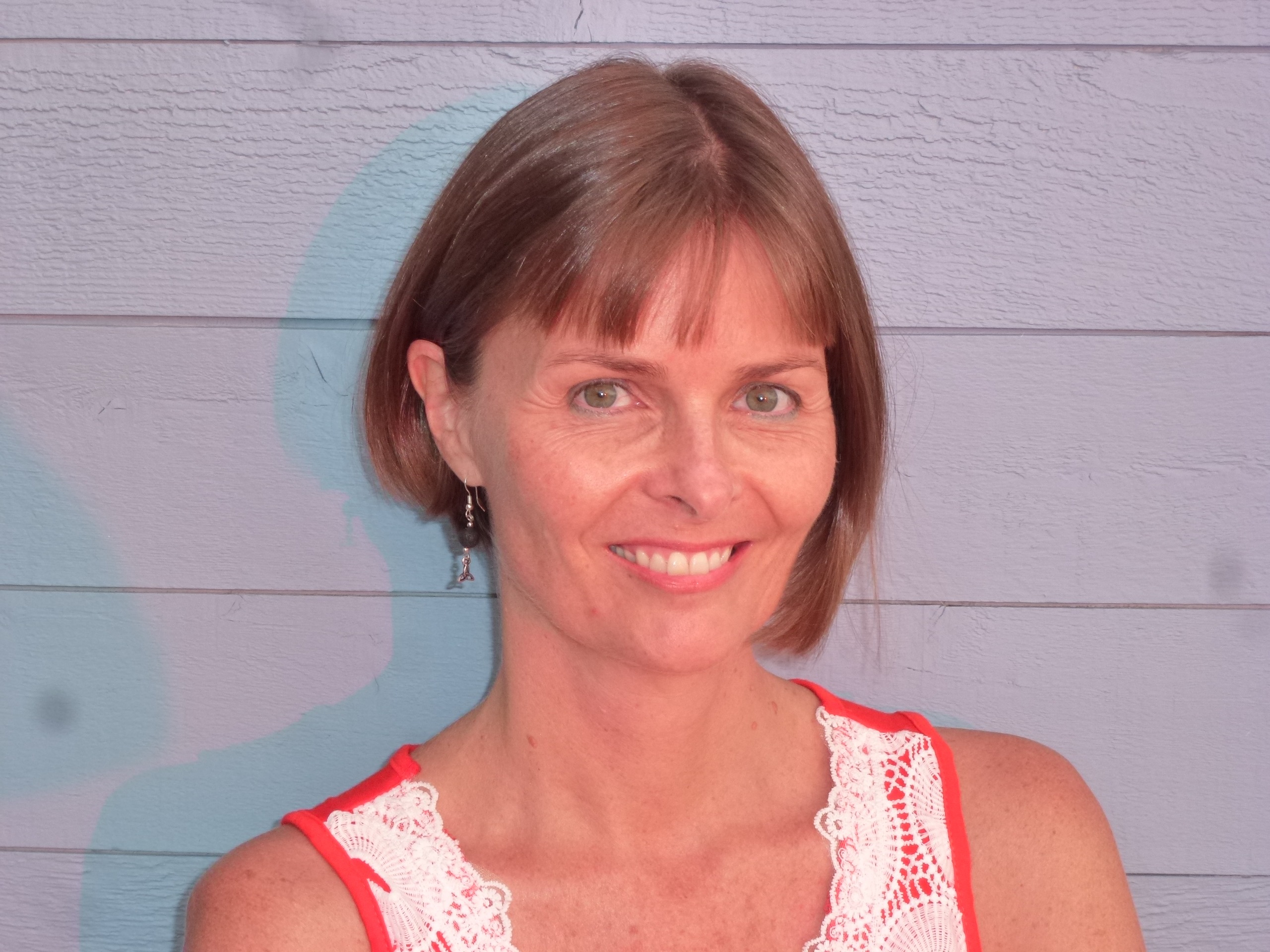
 Canela Michelle Meyers 2nd Interview
Summary
The conversation explores how acceptance, relationships, and spiritual awareness can reveal personal blind spots and bring receptive and active qualities into balance. It also examines how presence, intuition, and surrender shape ethical choices and the ongoing unfolding of awakening.
Questions This Interview Explores
- How can spiritual awareness transform conflict and misunderstanding in relationships?
- How can I distinguish genuine intuition from fear, conditioning, or social pressure?
- What practices help me become more present and receptive to inner guidance?
- Does spiritual awakening end, or does growth and discovery continue afterward?
Key takeaways
- Accepting people as they are can dissolve the urge to change them.
- Relationship conflict can expose resistance and unintegrated qualities within oneself.
- Balance comes from listening to both receptive and active aspects within oneself.
- Intuition grows clearer through slowing down and noticing immediate experience.
- Awakening may end seeking, but discovery and refinement continue.
- Greater awareness can reveal both love and suffering more clearly.
Transcript
Rick: Welcome to Buddha at the Gas Pump. My name is Rick Archer, and today I’m with Canela Michelle Meyers, whom I’ve interviewed before a couple of years ago. If you’re new to this, Buddha at the Gas Pump is an ongoing series of interviews with spiritually awakening people. There are over 300 of them now on batgap.com, so go there and check out the past interviews menu.
I’ve been receiving emails and Facebook messages from people in the last week or two asking, “What happened? Are you okay? Where have you been?” because we took a little vacation. I’m now going to be doing a series of interviews up here in the Vancouver area. I’m at Canela’s house on Bowen Island, a very beautiful place looking out over the water, although you can’t see it in this video. It’s good for me to be here. I love doing interviews in person. I’d do them all in person rather than Skype if I could, because it’s just much nicer to sit with the person.
Canela: It’s also really nice to support you, with all the support that you provide for people by interviewing them. I think it’s very valuable for me, and it feels good in my heart just to support what you do.
Rick: Well, thanks. If anybody else feels that way, there’s a donate button on batgap.com. We do appreciate that support, and it enables me to be as involved in it as I am.
One of my fundamental assumptions and observations is that growth—spiritual evolution—is a continuum, and there’s no end to it that I can see. I’m always curious, if I’ve spoken to someone before and it’s been a couple of years, how they feel they might have grown since we last spoke. What do you think?
Canela: Well, that’s great. No warning on that. Always growing, always growing. I would say that since we did the last interview, probably the main aspect that I feel I’ve learned the most about, and that has sort of spilled into the unknowing aspect of life, is my relationship with my husband.
He apparently looked like a very patriarchal fellow, and that was harder for me. The learning was mostly about innocence: that, however he might be, he doesn’t know what he doesn’t know. It was never anything that was meant to hurt me. It was just because I’m sensitive, and he can be a little rough at times.
At first that was rougher on me, and then it got softer and softer as I saw that he wasn’t meaning to treat me any particular way. It was how he was with himself, seemingly listening more to the logic of life than to the feminine aspect, which I feel is what the patriarch is: just out of harmony. It’s just how most of the world is.
Rick: When you say most of the world, the thought I’ve been having as you’ve been saying that is that we could probably say these things about everybody in the world, because none of us know what we don’t know.
Canela: Absolutely, absolutely. That’s the innocence. It’s been said by sages, of course, over time that ignorance is the main culprit.
Rick: Remember what Christ said: “Forgive them, Father, for they know not what they do.” There are degrees of that.
Canela: But there’s also the reality of being a human being and really living that rather than just saying the words. Actually feeling the real innocence, so that no matter what the person does—even if it feels like a slam of the door in your face or something like that—it just isn’t that anymore, because you can see that they’re not doing it in any intentional way.
I’m also aware that that sounds worse than it actually is. I’m just very sensitive. In a relationship, it might look like not being heard, not being seen, or not being included.
All these aspects were more about how he wasn’t hearing his own feminine. He would go more toward the logical route, what he was more used to listening to, which is what the patriarch is. It’s not listening to their own nature as much as listening and responding—or reacting—to the way we’ve been trained to be in the world.
Rick: You’re alluding to his blind spots. How about your blind spots? I actually asked you about your growth.
Canela: Right. My growth has been seeing the blind spot that I took it personally, or that he was supposed to be any particular way other than the way he is.
My side of it was not really being so into his side of it—whatever it was he was doing—or trying to change that. Instead, it was learning where I was not being fully receptive and understanding.
Rick: I think there’s a key thing here, which is really important: people are who they are. There’s an art to learning to accept and appreciate people as they are, and not wanting to change them into something that they’re not, which is a hopeless endeavor.
Canela: Exactly. The funny part is that once I didn’t really want him to change, he changed.
Rick: Interesting.
Canela: It’s almost like he was willing to be those aspects until I could accept myself in this scenario and see the innocence of it. Then whatever that was seemed to melt away, and certainly we have a completely different way of relating now.
People are who they are. There’s an art to learning to accept and appreciate people as they are.
Balancing the masculine and feminine
Rick: I don’t consider myself at all to be psychologically adept in terms of understanding psychology and relationships and all that stuff. I couldn’t write books like John Gray writes, for instance, about relationships and human interaction and so on.
But the one angle of this show that’s a little unique, and perhaps distinguishes it from 10,000 books on how to be a better person and interpersonal relationships and all that, is that we’re trying to tie in the dimension of being awake to one’s true nature, or being awake to pure consciousness, or a ground state of the universe, or whatever we want to call it—and the significance of that for all other aspects of life.
There are probably so many different books and seminars and whatnot that deal with relationship issues that don’t even touch on that. I would suggest that perhaps there’s an advantage to being able to touch on it. Being open to the dimension of the Self, or consciousness, gives you an advantage in being able to work out issues that everybody has to deal with.
Canela: The difference is that there’s acceptance of what is. There’s acceptance of what is.
I can only be honest with myself if that wasn’t full, rich, and satisfying. Wherever it feels like there’s some sort of—where it appears that it’s not okay—that would be my indicator that something’s up.
Even though that sounds really personal, in my acceptance of the patriarch itself, I had been more resistant to it. I had categorized it somewhat, until it too was also equal.
In that learning, it’s so wonderful, because I can see all of its innocence across the world. The difficulty is that, as I think I mentioned, people—men and women—are listening more to the masculine side of themselves, predominantly over the feminine aspects of themselves.
So I don’t see it as a men-and-women thing at all. I see it as a self-invitation for harmony. Each appearance of self—like yourself or myself—is this blend of the masculine, the yin and yang. How do we bring harmony to that?
As we bring harmony to ourselves—which was the gift of having been in a patriarchal relationship and seeing the innocence—it really was an acceptance of my own masculine inside myself. Of course, then I wanted to support people in that, because what’s on the inside is what’s on the outside.
Rick: You’re saying that in the world in general there seems to be—I mean, people talk about the awakening of the divine feminine in the world. The implication is that the masculine has been way out of proportion to the feminine, and that now somehow there’s an awakening in world consciousness taking place. People are having spiritual awakenings and all, and this is bringing with it a greater awakening of the divine feminine. Are you saying that?
Canela: That still sounds like too much of that. What I would say is that it’s more a balanced listening to both aspects of self. If it goes more to the feminine, then that’s not it either. It’s more of a balance.
It’s just been sort of an almost habitual, collective way for the mind to pick the masculine aspect. That’s what everybody’s supposed to do.
Rick: In society in general, that’s happening.
Canela: In the collective mind, in what appears here.
Choice, intuition, and righteousness
Rick: Yeah. So if there’s a spiritual awakening happening in the world, as many people feel there is, how does that relate to a greater balance between the masculine and the feminine? How is it helping to facilitate or bring about a greater balance?
Canela: In the choice points. What appears here as a choice point—we need to talk about choice, then, whether there is choice or there isn’t choice. Ultimately, there is no choice. Yet in the moment there can be an apparent choice, just like there’s an apparent you or an apparent me. Self shows up here as this man, Rick.
Earlier you asked about something to drink: Would you like juice or would you like water? In that moment, it appears that consciousness is making a choice.
Rick: Yeah.
Canela: And you do—you pick juice.
Rick: Yeah.
Canela: Right, so this kind of choice point. In the moment when a person is about to make a choice—and it might be, say, in a corporation—of whether or not to… I mean, the Volkswagen thing that’s going on right now.
Rick: Diesel.
Canela: Diesel.
Rick: If you follow the news.
Canela: And somebody at some point decided to go for the bottom line of the money, rather than what might also have been present in that moment, where they felt that maybe that wasn’t quite right.
Rick: Yeah. Right, so they made an unethical choice, took a shortcut, for money.
Canela: That’s what the outcome came to be. But in that actual moment, what they did was override what might have been there in the feeling of what felt right.
Rick: Yeah.
Canela: That’s what I feel Jesus meant about righteousness. It’s not about rules and regulations, like a religion would say. It’s about what’s the right way, the felt sense of being who you are in the moment, and leaning left or leaning right.
It’s very much just the moment, making decisions based on where you are right then, inclusive of the masculine and the feminine aspects of what your heart feels and what’s practical.
Rick: That’s an interesting point. As I look back on my own life over the decades, there’s—I mean, there’s that cartoon of the little angel and devil on a person’s shoulders. There’s still a small voice within that you know to be right, even though everybody around you might be saying, “No, that’s crazy. That’s wrong.” It takes discernment, I think, to recognize that voice.
One can easily mistake something that actually is wrong and interpret it as, “This is my intuition. This is what I’m supposed to do.”
Canela: The reception of what is.
Rick: Yeah.
Canela: The feminine aspect receives the information, and the masculine aspect takes action on that information.
Rick: Yeah.
Canela: Or appears to. I mean, that’s the dance.
Rick: And there’s that phrase, “women’s intuition,” you know. A popular phrase.
Canela: Yes, yes.
So, if anything, I think that the divine feminine awakening is basically giving more space to actually hear that voice that does know in the moment, and actually respond to that voice rather than overriding it with, like you say—
Rick: Possibly with the intellect.
Canela: Oh, yeah. “Everybody’s going to disagree with me, so I better just do what they want me to do.”
Rick: Yeah.
Canela: Or what you think they want you to do.
The feminine aspect receives the information, and the masculine aspect takes action on that information.
Listening more deeply
Rick: So what you kind of have said then—so far in this interview—is that over the past couple of years since we spoke, there’s been a kind of—maybe you’ve said this—a greater enlivenment or a greater attunement to that intuitive voice. A trusting of it, a surrender to it. And thereby or therefore, an acceptance of people as they are.
Canela: Well.
Rick: Does that relate to what you’re saying about your husband?
Canela: Yes. In a way. It’s almost because the relating was pretty good prior to this particular relationship. I just hadn’t been with somebody who was more patriarchally oriented. So this school of life—this relating—has basically exposed this aspect of consciousness directly in my own direct experience, as well as over time what’s been here. So it’s a conglomeration of the revealings and learning in each moment of how it all works.
Rick: Yeah. So perhaps, based on your own experience, can we kind of extract a general prescription that could enable people to be more attuned to that intuitive voice and learn to align their behavior with it more clearly?
Canela: Well, often it’s the part that feels vulnerable. Like you say, consciousness will almost bring you up to the edge of the scenario you spoke of earlier, where everybody else seems to be going in another direction and yet your inner voice says no. And a lot of people will choose, “Oh, I’ll go with them.”
Rick: Yeah.
Canela: To follow along, instead of being more closely with this hearing. And so there’s a slowing down. Meditation, of course.
Rick: Yeah.
Canela: And getting to know the humanness that rises here as you.
Rick: Yeah.
Canela: Right, because it’s so completely unique. Nobody else is here to learn you. They’re here experiencing. Consciousness is experiencing its life as this human being, and in that, consciousness is looking to become more conscious and more aware of its own self—the play that’s here. So an interest in that, of course, is the root.
Rick: It makes you more inner-directed, and if you’re more inner-directed, then you’re more sensitive to that inner voice. Whereas if the attention is always sort of outward, outward, outward, you can kind of ignore the inner thing because you’re always focused.
Canela: Well, in fact, when you’re inward—whatever inward and outward, you know, there’s no inward or outward.
Rick: Yeah.
Canela: But when you’re resting with where you are in each moment, the outside is included.
Rick: Yeah.
Canela: So the deeper you hear from where you actually are, with all the information coming in, and you’re no longer going out to anything—everything’s coming in, coming in, but there’s no in or out. It’s just the appearances. But as that gets more and more seated, and more and more time is spent with exactly where you are—so you’re in the bank instead of having your attention out: How long is the lineup? What time is it? And all that kind of stuff—it’s like feeling right where you are. Inclusive. You won’t cut out all the outside details by being present to the inner experience as well.
Rick: Yeah.
Canela: So it’s that balance between the outer and the inner.
Rick: And there’s also something here which I think you kind of mentioned, which is an acceptance of things as they are, which is very Byron Katie-ish. But if you’re in the bank and there’s a long line, you’re not going to speed up the line by fretting and fuming about it. And so it’s kind of an opportunity to tune in and just sort of…
Canela: Right. To even get a kick out of consciousness fretting and fuming. You know, because if you admit that, then it becomes fairly…
Rick: You can do that, but you can also say, “All right, well, this is the way it is. There’s this line and here I am, so make use of the time.” Read a pamphlet or listen to my iThing.
Canela: Or feel your breath.
Rick: Or just feel my breath. And finish my mantra. You know, whatever people do.
Canela: Well, I recommend actually experiencing where you are rather than listening to your iPad. Or, you know, it might be in a moment, but feeling your feet in your shoes.
Rick: Hmm.
Canela: Feeling that there’s clothes on your body, your heart. Letting your awareness rest with where your heart is, and also the incredible amount of information that’s already there. The colors of the skin. You know, how light reflects off of skin. The movements that are around you. The way the sounds echo. Whatever is really real in that moment. And the more that there’s this listening to what is real in the moment, the stronger that listening gets.
Rick: Yeah.
Canela: And the more you are with where you are, just in its incredible ordinariness. And that’s why people don’t listen to it, because it seems so ordinary and plain. It’s not nearly so dramatic as having a problem of fretting. You know, there’s a dilemma of some kind, and then we get to share with somebody else, “Oh, I had such a long lineup in the bank,” and, “Oh, you know, I had troubles,” and blah, blah, blah. Quite different than saying, “I saw this person, and, man, I could just see the light in their eyes and the way that the light reflected off their skin. Oh, isn’t it amazing to be alive?”
Rick: Yeah. That’s it. You said an interesting thing just now—several interesting things—but the thing about the more you tune into that, the stronger it gets. And that’s such a good principle. I mean, there are so many obvious examples of that in the mundane sense. You know, the more you do push-ups, the better you get at push-ups, or the more you play tennis, the better you get at tennis. But the more you tune into that still, quiet voice and intuitive impulse, the more clearly you’ll be perceiving it. And the more easily and spontaneously your behavior will align with it.
The more you tune into that still, quiet voice and intuitive impulse, the more clearly you’ll be perceiving it.
🛤️ From seeking to exploration
Canela: Well, awareness is here.
Rick: Yeah.
Canela: It’s all—and we’ve heard this in many of the interviews—it’s already here. You don’t need to wake up and all that. Unless you do, right? Because if there’s an awareness—or consciousness wants to wake up—you’re helpless to that. I mean, relax, open to seeking if that’s what’s true. I mean, I love the aspect of my life when I knew what I was looking for without knowing what I was looking for. Just that I was looking. To awaken. That I could feel that there was a truth in this, and I loved it. It was very short. And I missed it when it was gone, I really did, because there was such a juicy, alive direction in it that disappeared, of course, when it found itself.
Rick: It did, but it’s sort of like the seeking ended, but the exploration never ceases. You know, the discovery, the refinement, the unfold—it just takes on a different flavor, right?
Canela: Totally. And, you know, like a twig in the hurricane happens differently than before, when I just sort of felt like I was being picked up and brought to different places.
Rick: Yeah.
Canela: I still feel that a lot, but it’s much more peaceful and full and sort of…
Rick: Content.
Canela: Content. It’s thicker, if you will. And it feels like—it does—it feels like the whole world’s moving with me. So the movements are sort of thicker in that way.
Rick: Yeah.
Canela: And I guess it’s because awareness knows itself more.
Rick: Yeah. I know from my own experience there were so many years of—for me, it took longer than you, I’m sure—but so many years of this sort of desperate yearning, miserable, “I can’t even stand it, and I’ve got to get there” kind of thing.
Canela: Do you miss it?
Rick: No. And now it’s more like there’s this baseline of contentment and, “Isn’t this fun?” You know, it’s like, “Whoa, life is so enjoyable, and it’s so interesting.” And I could readily acknowledge that I’m still a beginner in terms of the whole vast span of possibilities. But that’s great, you know, because it means all that much more fun and exploration and discovery and adventure. And the whole thing is just a fascinating ride. It has just lost the sort of unpleasant flavor it had when there wasn’t that contentment there.
Canela: Well, wouldn’t you say that it’s more that you’re not resisting the unpleasantness?
Rick: That too, but there isn’t very much unpleasantness, you know. I mean, it’s like there’s a lot of bliss and a lot of fulfillment. And again, it’s like one man’s bliss is another man’s misery. If either of us were to somehow snap back to where we were 20 or 30 years ago, it would be like, “Ah, I’m going to die. This is horrible,” even though then we might have felt pretty okay, you know. And by the same token, perhaps if we were to snap to where we’re going to be 10 years from now, it would be like we wouldn’t be able to continue this conversation because we’d be so blissful we’d have to just sort of sit here and marinate in it for a while.
Canela: I don’t know. It seems like—and I don’t know that it will end—it feels like it’s pretty much a sure thing that love will continue to embrace itself more deeply and more deeply and more deeply.
Rick: Ad infinitum.
Canela: Yeah, yeah, and that’s the play here.
Rick: Well, that’s kind of what I mean. It’s like creatures acclimate, you know. Every creature acclimates.
Canela: Truly.
Rick: And I always thought it’s a kind of God’s mercy that we acclimate, you know. Because if we didn’t, life would be so intolerable. But we kind of acclimate to whatever our situation is. And there’s always this evolutionary impulse to progress and to evolve. And as we do so, we acclimate to that, we acclimate to that, we acclimate to that, and we just keep going.
✨ Awakening and the world’s turmoil
Canela: Yes. Basically, it becomes more flowing, and yet there’s a lot more that’s seen about what isn’t in harmony. And so, as much as there’s also the direct expression of love, there’s also a seeing of the less nice aspects of what’s happening.
Rick: In you and the world and anything.
Canela: In the world, in the way that things are, you know.
Rick: Okay. Like, give me an example.
Canela: Well, it’s also in our media. It’s how everything’s evolving. There’s so much more that we know. There’s way more rape happening than there used to be because now we know about it.
Rick: We know about it.
Canela: There might have been a lot more, but it appears like things are getting rougher.
Rick: Yeah.
Canela: With ISIS and all that. Things are quickening, not only in the aspect of people moving more toward love, but also in people moving toward fear.
Rick: I think you got something there. I mean, we could say, well, at least we’re not in the middle of World War II, or the purge under Stalin, or the Holocaust, or some of these horrible things that have happened. But I have heard many people say that there’s sort of a magnification of both positive and negative forces in the world. The polarities are getting more defined.
Canela: Getting more and more strongly defined.
Rick: Yeah.
Canela: Maybe the sheep and the goats are being separated, or the wheat from the chaff.
So I’m looking at that, right? When you said, is it getting better, I’m saying that yes, in a way, my personal experience maybe is better, but also I recognize that there is some pretty rough stuff happening and that people are experiencing it. Because people are getting more sensitive with the evolution, they’re also experiencing the rough stuff a little more acutely.
Rick: Well, you know, it could be that, to a certain extent, the chickens are coming home to roost. I mean, we’ve been doing so many things that are unsustainable.
Canela: Exactly.
So what can we do about that right now? That’s what I’d like to talk about.
Responding rather than reacting
So can I ask you, do you have an example of something that’s happening in the world these days, something you’ve heard of lately, that honestly is disturbing to you?
Rick: Yeah, I could think of many examples. For instance, I’m very keenly interested in the whole climate-change phenomenon. You have half of the Congress in the United States denying that it even exists, that there is a problem. And those who grudgingly acknowledge that there’s a problem are saying, well, it’s not man-made; it’s sunspots or something.
And yet, even by some somewhat conservative estimates, we could get a four-, five-, or six-degree rise in temperature over the next century. And if it’s six, it probably means no more human beings on the planet. Going from here to that, if that were to come to pass, is not going to be a picnic.
You know, the migration of Syrians right now is going to seem like a picnic, in a positive sense, compared to the mass migrations of billions of people if the oceans rise several meters, or several feet.
Canela: And so what happens? Where is the disturbance in your body, energetically, as you look at climate change and the political action around that?
Rick: I don’t know. Maybe I’m blind to it, but I don’t know that there is a disturbance in my body. Maybe there is. I mean, if my body is really cosmic and contains the universe, as some people say they experience, then if there’s a disturbance in nature, there must be a disturbance in my body.
Canela: Exactly.
Rick: I feel that a great danger is coming, and I think we have to bring about a shift in world consciousness so that people are more awake to what’s going on and less delusional. I’m doing what I can to serve that.
Canela: Right, right. What I was looking for was the aversion part. What part of you, if you watch the news, do you shake your head at and feel disturbed by?
Rick: Well, you know, the funny thing is, if anything, I’m sometimes disturbed by my lack of disturbance.
Canela: What I meant by my relationship with my husband? That’s exactly it. If I can really say that I’m accepting that, in your personal relationships, that’s the place that is going to still have some bits, because it’s where you’re most at home.
Rick: No, I mean, when I watch stuff happening in the world—and I like to watch the news and keep abreast of current events—
Canela: And so what often happens is people see the news and they have some sort of feeling of complaint.
Rick: Yeah, they throw shoes at the television.
Canela: Or they honestly feel disturbed. And then they feel helpless because it seems like it’s a global issue, and there they are, just one little person.
Rick: Yeah, see, I don’t feel that.
Canela: Some people might. And so a way that a person who gets disturbed or feels that they don’t like what’s happening in the world can respond is to stop when they’re in the midst of experiencing not liking it. That’s the disturbance, right? “I don’t like this.” And instead of signing petitions or whatever—I mean, those things can help, but if the energy hasn’t been met, it just gets pushed around and put into the next thing, and put into the fight against the bad guys. Here’s the good guys, and here’s the bad guys, and that just shuffles the energy around. But people feel better because they feel like they’re doing something.
Rick: Yeah.
Canela: And so what I’m saying is, first, whatever it is that you want to change, instead of attempting to change it, feel the wanting to change it first. Feel where it touches you inside. Feel where it touches something, and feel the touch. Breathe, relax, open, and feel that.
Then, after they’ve experienced whatever that is in the interior-looking aspect of experiencing life, that actually helps dissipate the energy. Or, at a minimum, it will give them some sort of learning about themselves that will be a gift. Usually, my finding is that love will show up. Even when people are being murdered and horrible things are happening, the personal experience, if it’s explored, will reveal love. And when that happens, that’s the energy transformed.
Instead of attempting to change it, feel the wanting to change it first. Feel where it touches you inside.
Rick: Yeah, that’s good advice. I mean, when you think about it, there are so many polarizing issues in society: abortion, gun control, race issues, gay issues, all kinds of things. Like that lady in Kentucky who refused to issue marriage licenses to gay people and had to go to jail for five days. And there’s all this sort of… You see these people on the news shouting at each other, nose to nose practically, over…
Canela: Completely disturbed.
Rick: Yeah, and completely, “You’re totally wrong; I’m totally right.” So what you’re saying, yeah… Kind of elaborate again on what you just said in light of those examples I just gave you, instead of spitting in each other’s faces and yelling at each other.
Canela: Say we were fighting with each other, right? Then I would say, “Hold on a moment. Can you just stop right now? I just need to feel what’s going on right now inside.” Breathe, relax the body, open, and feel what’s going on inside. Because when a person is in a fight, usually they’re contracted because they’re moving forward and fighting something outside of themselves. And that’s what keeps that energy alive.
Rick: Hmm, interesting point. There’s a line from a Dylan song where he says, “You’re right from your side and I’m right from mine.” And that Buffalo Springfield song, you know, “People carrying signs mostly say hooray from my side.”
Canela: You know what? It isn’t even really a case of right or wrong. What it is, is that everybody’s moving from a place of caring and love.
Rick: Right.
Canela: At some level, somewhere. And then, in some people, that’s been distorted by traumatic experiences. But they’re still attempting to figure out their way of doing the right thing, of being the way that they think they should be, and they’re still coming from that place. If I could be with them personally, I could show any person, no matter what’s going on, that it’s love.
Rick: Yeah.
Canela: And then, when that person settles down into that, there’s all sorts of stuff that can happen. Because then they’re in this open, receiving place, because it’s love. You can open anybody. Even just the word creates an opening.
Rick: Yeah.
Canela: So if a person can meet themselves in the fray of it, where they feel disturbed by the news globally, or even in the masculine-feminine thing, where there’s a lot of violence towards women.
Rick: Sure.
Canela: There’s a lot of just slimy stuff—offhand remarks and things like that. Women can feel that.
Rick: Yeah.
Canela: You can go into a store and see some guy check you up and down, and instantly what happens is the woman will then go, “Ooh,” and close. To protect themselves. But the tricky part with consciousness is, if they’re aware that the person is being slimy, it’s already in. The information is already in the body.
Rick: Yeah.
Canela: So when that sliminess has happened, to close to it is basically locking the energy in. And then, when that energy is locked in, more sliminess, because it magnetizes whatever it is inside to the outside.
Rick: So what you’re suggesting, I think, is that the more we can become sensitized to what’s going on inside of us—
Canela: Well, if we recognize that it has already occurred, stopping and protecting, the closing to something, isn’t going to work. Because if you have perceived it to have happened, it’s in.
To know that you’ve already received that energy, and to then let it fall through the system, almost like you’re the particles that you are. Just to relax, open, and let the energy complete its route through you. And then it’s a funny thing: in the moment, often the sliminess stops completely.
Rick: Yeah.
Canela: Because part of what creates that whole man-woman thing is that the protection comes up, and then that gives them something to bounce against as well.
Rick: I want to make sure that people can understand what you’re saying to the point where they could actually do it.
Canela: Basically, your system will say no. And it’s recognizing your system saying no, because that’s going to happen, and then seeing—it’s quite a vulnerable thing to do—if you can relax your body open. Then that lets the energy in. You’re no longer holding it, so the energy can fall into the openness.
Rick: Would part of it just be, rather than reacting to the guy one way or the other, to ignore him?
Canela: Ignoring, too. Because you’re not ignoring. The information is already in the energetic system of the human being that you are. If perception has happened, it’s already in. Consciousness is experiencing itself here.
Rick: But things come in all the time, and we can either hang on to them or not. Maybe that’s what you mean about letting it pass through. There’s this Vedic sort of analogy about making a line in stone, making a line in sand, making a line in water, or making a line in air. In every case, a line is made, but the different media that you’re making it in hold it to greater or lesser degrees of time.
Canela: It might not even disturb the next person. They might not even notice. But it may not be about sensitivity. It might just be that they don’t have that energy that needs to be jostled. It usually happens when somebody does have something that consciousness wants to be conscious of.
And so we can have that happen again and again and again. Or we can say, “Hey, is consciousness attempting to get our attention with this? What is this really about?” Because this whole attention thing, and this slimy attitude or whatever, isn’t what it’s really about. That’s just what’s there to disturb the energy so we can find it.
And then, once we find it, once we recognize that we’ve said no to something and we’ve contracted—if you can feel that you’ve said no, or contracted, or you’re trying to protect, or you’re trying to get away, or ignore—to relax open to the ignoring happening. Relaxing the body open, relaxing the energy field. However somebody can relax: if somebody can contract their body and just tighten, then they know how to relax it.
So it’s that kind of action: to relax open. And it’s always a gift, the present. It always points to some sweet bit that the person gets to know about themselves.
🩺 Trauma, violence, and healing
Rick: Now we’re talking about a fairly minor situation where some guy looks at you in a store, but obviously there are much more intense situations that people encounter: spousal abuse, or a boss at work who is really abusive and nasty and critical, or all kinds of rough stuff that people encounter in life. With those sorts of things, it might be more in the category of easier said than done.
Canela: Well, no, no. I’m speaking from personal experience, having had violent action taken against myself—or really, it’s against the perpetrator himself.
Rick: Yeah.
Canela: When you understand what’s really happening. But that was my question to myself over time: If it’s all love, how could this be love? How could being raped be love?
Rick: You were raped?
Canela: Yeah.
Rick: Wow. I don’t know if you told me that before.
Canela: No, I hadn’t really. I’m just starting to write about it now, as I understand how come—how do I know what I’m talking about?
Rick: So now you’re talking about something that happened years ago, and you’re looking at it from a much broader and more detached perspective than you were when it was happening. The way you were talking a minute ago about the guy in the store, you were describing a way of reacting to it or dealing with it as it was happening. But how would you deal with actually being raped as it was happening, or something of that intensity and horror?
Canela: When I was raped, I was seven years old. And again when I was eighteen.
Rick: Uh-huh.
Canela: And again, as I know—and you probably know this—people have experienced much worse happenings, more ongoingly.
Rick: Sure. Shellee Rae, whom I interviewed a few months ago, was raped by her father from the age of nine to fourteen.
Canela: Well, it’s not weird, because this is the balance and the harmony that consciousness is attempting to come to.
Rick: Yeah.
Canela: How are we going to be with this violence, instead of trying to stop perpetrators from doing such things? The energy needs to be dissipated.
Rick: And perpetrators need to be stopped, but—
Canela: Well, perpetrators will stop as the energy is dissipated.
Rick: Whoa. So, I mean, that might sound like you’re saying that the rape is the fault of the victim.
Canela: No. Once it’s happened. What I’m saying is, once such things have happened, how do we become harmonious with ourselves? And the side effect of that is the dissipation of a perpetrator. So it’s not to say that it didn’t happen.
But on a bigger-picture scale, how come we’re finding out more about this now? It’s because we’re able to actually be with it more now, at a deeper level, and find our way with this to bring harmony to it.
Rick: You mean as a society?
Canela: Yes. As a human species, we have become much more able and aware of what’s going on. In a much more real sense, and many more people are waking up. And in that awakeness, the reality of what’s happening here is much clearer.
Rick: It’s interesting how tragic events become catalysts for social change. Like the guy getting shot in Ferguson, Missouri, and then that brought up the whole Black Lives Matter thing, and some progress is made.
Canela: There’s an invitation that improvement can happen. In all of this stuff, that’s why it’s happening: because harmony is wanting to find itself.
And so can we go along with that? And in the recognition of love, that helps us to support harmony within ourselves. It’s a long-time thing, to reveal it—to have it revealed to myself.
Rick: Sure. None of this stuff is overnight. It’s a process.
Canela: But with the sensitivities and the seeing of it as energy, and seeing it as love, now I can really support other people.
And so there’s the love of it. I mean, the invitation to me personally was, can I find the love? Can I really unearth the love of this? Is it all love or not? And in my heart I knew it had to be, so I was wanting to find my way with that.
Even when people are being murdered and horrible things are happening, the personal experience, if it’s explored, will reveal love.
Harmlessness and inner coherence
Rick: There are so many people I know who are serving in some sort of teaching capacity now who are equipped with abilities that they wouldn’t have had had they not gone through certain difficult things. It’s almost like they had to go through those things to eventually end up as someone who could help others go through similar things.
Canela: That’s harmony attempting to happen. That’s how it’s doing its thing. And so I don’t say that children, or people—men or women, because it’s happening to boys and men too—all sorts of violent happenings. It’s not just women. It’s humans.
Rick: Look at these kids who are being pressed into being soldiers at the age of twelve in Africa.
Canela: Exactly. I was thinking of the military myself, as well. Even the whole mentality of being trained to kill people is something in and of itself.
All of these happenings have been a support to who I am today. I can see that. I can’t take them out of my life. I can’t say, “I wish it hadn’t happened.” Because the incredible exposure of compassion is real. In the revealing of what happened, the natural response is incredible compassion for the little girl.
Rick: The little girl that you were.
Canela: Yeah. She’s here when she’s here, you know. And everybody knows that. It’s beautiful. It’s falling in with self. Falling in love. That’s the real action of it.
And then, as that happens—as a balance in the human system and more harmony happens—this is the harmlessness that Buddha spoke of. Without having energy caught and held inside, when that goes on, it’s harmless, because there’s no energy to it.
Rick: Hmm.
Canela: Whereas if there’s anger and pent-up rage, and “us and them” and all that—
Rick: Then it gets held.
Canela: It’s got some power.
Rick: That’s an important thing. There’s a principle in physics called the Meissner effect. When something becomes sort of super-cool, to the point of near absolute zero—I think this is the way it works. I may be getting my principles mixed up. But anyway, this sort of macroscopic quantum coherence takes place, and the thing becomes impervious to incoherent influences. They just sort of pass right through it. Whereas something that’s in a more chaotic state holds those incoherences.
But what the principle is, is that we can establish an internal state of coherence, or sort of a superfluidity of consciousness, which makes us sort of impervious to incoherent influence.
Canela: There’s oneness that’s here. Self is moving as one bit. There’s nothing that—you know, we know that, right? You can see it when you drop a pebble in water and see the ripple effect. Just going like that is the same thing. There’s a ripple effect to that.
Rick: Everything influences everything.
Canela: Everything influences everything. Mostly, that interior-exterior—what happens on the outside is a reflection of the inside. If it’s disturbing, if it’s not disturbing—like, you saw 9/11 happen. It wasn’t a disturbance. It’s none of your business, right? So it’s where you’re called that is where you’re disturbed.
Rick: It is my business in the sense that I feel that I can have an influence on the world through what I do and thereby contribute positively to avert situations like that. I feel like we all exert an influence continuously, and that anything that happens in the world is just sort of an outcropping of the collective influence that we’ve all generated.
Canela: All these world events are just sort of symptomatic of elements in collective consciousness that we all contribute to constantly. And they just sort of crop up here and there as an invitation for harmony.
Rick: Yeah.
Canela: Consciousness is all of it, right? Even the people who aren’t conscious of being consciousness—it isn’t that they’re less part of consciousness. There isn’t a less or more at all. But as consciousness gets to know itself, then there’s a strength in that.
Responsibility in the present moment
Rick: Responsibility. People want to help; they feel helpless.
Canela: Responsibility is also—we sort of touched on it in the examples—but people take on responsibilities for their kids and their job, and they feel overloaded with all these responsibilities.
Rick: So much pressure.
Canela: Pressure that they think they’re responsible for, when really they are just a movement of energy. They’re responsible for the system that they are, to feed and clothe that. And it’s only in the moment. There’s no longevity to the moment. It’s in this moment: “Okay, I need to have shelter, so I need to pay for that shelter.” The responsibility would be to look around and see, “Okay, well, how can that need be met?” Look for possibilities and what wants to happen in the moment, and provide for yourself.
The tricky part is that people then hold on to responsibilities: responsible for their partner, responsible for their children. In a way, you are, but not in the sense of controlling their happiness. People feel like they are, and it’s genuine. People want their kids to be happy, but it’s not up to them to make their kids happy. They can support their kids to find happiness.
Rick: I think I know what you mean. It kind of reminds me of the alcoholics’ oath, or whatever it is, where they say, “The ability to change things I can change, accept the things I can’t change, and the wisdom to know the difference.”
You know, there are certain things over which we have jurisdiction, or appear to have jurisdiction, and there are many other things over which we don’t. Many people muddle up the lines between those and get themselves all stressed out trying to control things that should really be allowed to run their own course.
Canela: To be able to respond is being responsible—to respond to the moment rather than taking something on as a job and making it something that I’m responsible for.
Rick: I think another nice thing about that word “responsibility” is that it implies that our ability to respond can be augmented, enhanced, and improved.
Canela: Absolutely. To be responsible would be to see how you respond in the moment to whatever it is that’s happening. Able to respond. Response-able.
Rick: Regarding global issues, there’s a certain pace of life and of change that seems to be accelerating more and more. We have to be fit to deal with the increasing intensity and pace that the world seems to be undergoing.
I mean, if you have a donkey and it can barely carry a load, you have two options: strengthen the donkey or lighten the load. We may not have the option of slowing down the world. There’s just so much going on, but if we—
Canela: What people often do is think about where the donkey is going and where they have to get to, instead of taking care of the donkey. That’s it: just taking care of where you are is the responsibility. You only have this moment. There is no other moment than this one. So it’s quite vital in the mix of what appears as life.
To be responsible would be to see how you respond in the moment to whatever it is that’s happening.
Rick: I see very often people fretting and fuming about stuff, and they aren’t accomplishing anything by doing that because it’s not now. “What if this happens? What if that happens? Oh, she said that, and he said that,” and yada yada yada. They’re not having any influence on any of that stuff. It’s completely outside the realm of their control or influence.
Canela: The only thing that’s happening energetically is that they’re staying at a surface level, possibly because it’s uncomfortable to be where they are.
Especially with complaint: “I’m complaining in some way. If they only did this, if they only did that, and did it like that.” Okay, wait a moment, wait a moment, wait a moment. What’s happening right here?
Canela: When people feel that someone has power over them—the government, or when something’s unfair—they feel helpless. Nobody likes to feel helpless, so they fight. They’re fighting their own helplessness. Instead of—and it’s not—to be helpless is quite different than to feel helpless. What does helplessness feel like? Most people are avoiding that, so more helplessness happens. Consciousness keeps riling this up until people get to, “Oh, wait a moment. What if I felt helpless? What if I really saw and felt how helpless I am here?”
We’re not even really—who’s having the thoughts? They just come in. Something’s perceiving them, and we imagine it’s us, but they came out of nowhere. We didn’t plan our noses or eyeballs.
Rick: I certainly didn’t plan it.
Canela: Some people say that maybe we did, that it’s something—
Rick: It’s all karma.
Canela: But I don’t know. There’s nothing certain about anything.
Rick: According to Buddhist traditions, we’ve been—we’ve had so many lives that if you took all the bones from all those bodies, they would be higher than the Himalayas if you piled them up. So we’ve done everything. We’ve been murdered. We’ve been murderers. We’ve been raped. We’ve been rapists. We’ve been this, that, and the other, on opposite sides of just about every experience you can imagine.
Canela: And so that’s where I don’t really look at that that much. I just look at, okay, if the whole thing is love playing itself out, if consciousness is getting to know itself in this action, getting to love itself, whatever doesn’t look like that, doesn’t look like love directly or feel like love, is an invitation.
And then that exploration is in curiosity, not in, “Okay, prove it to me. How is this love?” Although people have come to Satsang and said, “Oh, what do you mean? You can’t say—tell me how this is love.”
Rick: Pointing out some horrible thing or something and saying, “Tell me how Auschwitz was love,” that kind of objection, you mean?
Canela: I can support them. Whatever feels wrong to that particular person, I’ve been able to support them in seeing the love of it. Not as if the action of somebody being strangled is a loving action. It’s more about what happens once something has happened, because people tend to generalize and say, “This is bad and this is good.” What I like to say is, “Is it disturbing or is it not disturbing?” If it’s not disturbing, it’s nothing to do with you. If it is, here’s consciousness looking for harmony.
Rick: So, okay, let’s emphasize that point just a little bit. You’re saying that anything which disturbs us is an invitation to…
Canela: To find the love of it.
Rick: To find the love of it.
Canela: Yes, inwardly. Whatever is disturbing is actually like a storm on the surface of the water, but the deep sea is there.
Rick: Right.
Canela: Usually people are more entertained by the waves going on and the fray of it, because they feel like they exist when that happens.
Rick: I’ve often felt that the ego wants to maintain its integrity, its identity. Controversy helps it do that. I’ve started a number of internet chat groups over the years, and one in particular has had hundreds of thousands of messages posted to it. So many of those messages are just people sniping at each other, battling. I look at that and think, they’re just aggrandizing their egos. They’re trying to fortify their egos, and that’s why people do that.
Canela: There really isn’t one, right? There’s a play of energy in the moment. In some moments there’s a fortification, as if there’s an “I,” by creating a disturbance of the experience so it can feel like it’s alive.
Rick: Yeah.
Canela: Compared to feeling nothing, which is the scary part of waking up.
Rick: They’re just hyping up a false thing, trying to whip it into existence and keep it in existence.
Canela: Using words and thoughts to fortify it.
Rick: Whereas there’s a kind of scariness to allowing it to just dissipate or dissolve back to its source.
Canela: They’re more comfortable with the hardness.
Whatever is disturbing is actually like a storm on the surface of the water, but the deep sea is there.
Living as a human being
People have asked sometimes about whether to serve cookies and tea and stuff at Satsang. They’re hosting Satsang with Canela and tea. I do have a little thing for chocolate.
Rick: Oh, yeah.
Canela: People have come to know that, but it’s not the best thing for meditation. It’s different. But it is nice, especially if people are more used to eating a lot and chatting while eating.
Rick: I’ve seen spiritual people pamper themselves to the point of neurosis, where they become so fussy about what they put in their bodies that they can’t put anything in them anymore. You have to find a happy medium with all these issues.
Canela: Yeah, and that’s true for myself too. I mean, we are in a pretty rural area here, fairly secluded in some ways, but then I travel out and I’m on flights and all sorts of stuff that isn’t the easiest. But I’m here to be human.
Rick: Breatharian or something.
Canela: Although I did do the no-eating process.
Rick: Fasting?
Canela: The no-eating process.
Rick: What is that?
Canela: That’s no eating.
Rick: Or drinking?
Canela: That’s the breatharian. I still drank some fluids, yeah. It was quite a long time ago. I’d say maybe seven weeks. It was long enough that I knew I didn’t need to eat. I was checking it out for myself.
Rick: Ultimately, I don’t think it’s a path to liberation.
Canela: Well, for some it might be.
Rick: Might be. But it can also become an obsession and a distraction.
Canela: Another role. Another position.
When this whole consciousness realized its own Self here with myself, the first thing that occurred to me was, “Why doesn’t everybody get together?” I didn’t see a conference. I just thought, “Why doesn’t everybody who’s in the waking state get together?” Because the vibration, to me, was so clear that the vibration would just change everything.
So I’m really, really happy about SAND and being involved in it this year, because it’s important. It’s important to humanity to be in such a high-vibration happening.
Rick: What she’s referring to, in case you’re not aware, is this conference in San Jose every year around late October called the Science and Non-Duality Conference. If you search on Google, you’ll find it. I’ve been going for years, and it’s getting better and better. This year, I think there are over a thousand people who have signed up for it so far, and dozens and dozens of very interesting speakers.
Canela: It’s also an invitation to be in such a high vibration. The vicinity to actually be there in person is quite strong, and then there’s also the option to watch some of the main things online.
Rick: Yeah, it’s lovely to be in such a gathering.
Canela: Ways to include yourself in that vibration and even to tune in where you are, because, you know, if neither of those are available, you’re not separate from what’s happening. You can choose to open to that from wherever you are.
Rick: So you wrote a book.
Canela: I did.
Rick: Congratulations.
Canela: Yeah, thank you.
Rick: Right Here,
Right Now: Meditations, Thoughts and Invitations for Expanding Awareness, Volume 1.
Canela: It’s a book about supporting people to be more of the human aspect that they are and to use whatever is happening as a way to come into the moment. As you’ve read it, because you’ve written a blurb for it, what would you say about it, just offhand?
Rick: Here’s what I said in my blurb. I said, “Canela’s invitations encapsulate deep spiritual insight and wisdom gleaned from her own life experience in a way that enables the reader to actually shift their perspective and begin living a more fulfilled life right here, right now,” which is the title of the book. So that was my reaction to it.
Canela: It’s available on Amazon just this week. It’s totally freshly here. Also, I’ve recorded a toning CD just this past week, and it will likely be available on my website.
Toning and direct experience
Rick: Somebody was just telling me about toning. Apparently, there are a lot of people doing it in Fairfield, where I live, and I hadn’t really known about it. Since you mentioned it, you might as well tell us a little bit about it for a moment. What is it?
Canela: Well, it started occurring naturally in Reiki sessions. When I was giving Reiki sessions to people, I’d be there, following whatever was wanting to happen. And then, in my body, I would feel like some sort of sound wanted to come out. So then I would let the person know, “This is strange. It seems like there’s a sound that wants to come out.”
And so these sounds started coming out—different ones. And sometimes I would go to a place on the person’s body and then tone into their body.
So when I started offering satsang, it occurred to me: Would this be supportive to a group? Because Paul O had done it at the end of his groups. And I always had found that, for myself, when he did that toning, I wished I could just sit still in the group rather than have it be the end, with everybody getting up and shifting around and whatnot. So that’s why I started offering it in satsang.
And people have given the feedback that it’s very supportive to bring them into experiencing themselves rather than listening. Listening to the mind isn’t a bad thing. It’s just when it’s predominant.
Closing thoughts
Rick: You give retreats in various places and would probably be open to giving them in other places. So people could contact you if they wanted to attend one, organize one, or whatever, by going to your website and clicking on the contact button, right?
Canela: That’d be wonderful. I do go where I’m invited.
Rick: And I would also recommend, with Canela or anybody I interview, if you feel a resonance with her or with anybody I interview and you want to stay in touch with them, signing up for their email newsletter. Most people have that, where you can sign up to be notified of this and that. Otherwise, months will go by and you’ll forget, and you might miss out on something that would actually be good for you.
Canela: I send out new, supportive one- or two-page invitations. The next one will probably be on responsibility. I’ll just write some ways that people can look at that in support of themselves. Then the newsletter follows that satsang invitation.
Rick: All righty. Any final thoughts? Have we covered it all? Solved all the problems of the world?
Canela: Invited harmony—a possibility to be more harmonious with yourself and, therefore, the world. So, yeah, I feel like that might be a nice note.
Rick: Not really. Just to emphasize what you said: somebody or other—I forget whether it was the Dalai Lama or somebody else—said, “It’s easier to wear shoes than to cover the earth with leather.” We all want to see the world change, but it begins here.
Canela: And here and here. And here.
Rick: The emphasis should always be—
Canela: How is this affecting yourself? Because you’re the representation of consciousness living its life like this.
Rick: Right. And what can someone who is full of stuff do for the world, however sincerely intentioned they may be? They’re going to have a muddled influence.
Which is not to say that great people who still had issues didn’t do great things. Martin Luther King and all kinds of other people have made huge contributions. But we can’t all be Gandhi or Martin Luther King. What we can do is bring about profound transformation within ourselves.
Canela: You’re your own Martin Luther King, but you’re not called that because they already did that. So there’s this one.
In the movie The Matrix, there’s the One. Everybody has that because you are consciousness. It’s daring to be with the one that you are, as if you are a savior of the world.
Rick: No man is an island, entire of himself.
Canela: Clean up this planet. Clean up this planet. It cleans up our planet. Together, we each clean up our planet of who we are, in the magnetic planet that we show up to be.
Rick: Another analogy: if you want a forest to be green, every tree has to be green. So make sure that you’re a green tree before worrying too much about the forest.
Or what did Christ say? “Remove the log from your own eye” before worrying about the speck in the other guy’s eye.
Canela: Right. Well, that speck is going to point to the log. That’s what’s happening, literally. That is life.
Rick: Great. All righty. I’ve been speaking with Canela Michelle Meyers. As most of you listening will know, this is an ongoing series of interviews. I’ll be doing several more this weekend, and there are already several hundred that have been done. They’re all archived and categorized on BatGap.com. Go there; the menus are pretty self-explanatory: past interviews, future interviews, donate button, email sign-up, podcast, and all that stuff.
Thanks for listening and watching. There’ll be a page for Canela about this interview, with links to everything you want to know about Canela—her website, her book—and we’ll see you for the next one. Thanks.
Canela: Thank you.
 Apple Podcasts
 Spotify
 YouTube