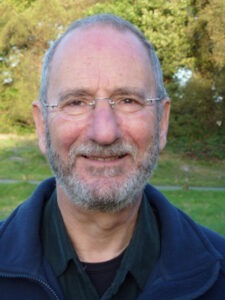
Richard Sylvester Transcript: Illusion of Separation, No Path, and the Ordinary Miracle
Key Takeaways
- Non-duality is the seeing through the dream of separation and the sense of being a separate person.
- Awakening is described as a-causal and not something that can be learned through effort or concepts.
- Spiritual practices can be useful, but they do not guarantee realization and may not cause it.
- After awakening, the grip of past and future weakens and life becomes simpler and more immediate.
- Relative skills and practical functioning can remain, even as identification with a personal self collapses.
Questions This Interview Explores
- What is non-dual awakening or seeing through the sense of separation?
- Does spiritual practice cause awakening or make it more likely?
- How does awakening change the sense of time, memory, and the past and future?
- Can ordinary life continue after the sense of self falls away?
Full transcript, edited for readability
👁️ Seeing Through Separation
Rick: Welcome to Buddha at the Gas Pump. My name is Rick Archer, and my guest this week is Richard Sylvester, who lives in the UK. Second guest in a row from the UK. And Richard, I would suppose, would define himself as a teacher or speaker on non-duality. We’ll let him define himself directly in more detail. He was a student of Tony Parsons and many other spiritual influences over the years, but I don’t want to speak for Richard because he has his own distinct way of expressing things. I’ve listened to him for about four or five hours over the last week, and I’ve really been looking forward to this conversation. So thanks, Richard, for this opportunity.
Richard: Thank you.
Rick: So, I gathered from listening to you that you’re not real crazy about going into minute details about your own personal story—all the various spiritual trips that you went on over the years—because you don’t seem to feel that those have a tremendously close causal relationship with your current state. But perhaps you could indulge us a little bit by going into some of that. But we don’t have to start with that if you don’t want to. If you’d rather, we could start with just sort of a statement or expression of how you like to— You know, if you had 10 minutes with somebody on a train, what would you like to say to them if they asked you some kind of probing question about your take on life?
Richard: I usually try to avoid talking about non-duality to passing strangers on trains unless they really seem passionately interested. Let me start maybe with trying to express in a very, very brief way what I feel the seeing of non-duality means. The seeing of non-duality to me— It’s very simple. It’s simply the seeing through the dream of separation. It’s simply seeing that there is no separation. And that this, of course, can be a tremendous shock when it happens. But it’s the seeing that however many years apparently the person has been alive—30, 40, 50, 60 years, it doesn’t matter—there’s been a sense of an independent person there living within a world, if you like, living within an external world, living a life, making choices, having autonomy, having independence. And for me what the seeing of non-duality is about is simply seeing through all of that.
Simply seeing that all of that is a kind of dream. A kind of hypnosis, we might almost say. And as I’ve said, it can be quite a shock when that’s seen through and it’s realized that this whole sense of being an individual person that’s so familiar—so familiar that it’s hardly even noticed while it’s there—suddenly it can be gone.
It’s simply the seeing through the dream of separation.
Rick: And I know from listening to audios of you that that indeed is what you underwent. And was it a shock for you when it happened?
Richard: It was—
Rick: You mentioned the word “shock” a couple of times.
Richard: It was a shock for me. I think if you listen to or read other individuals’ descriptions, sometimes it’s even more of a shock. I’ve read descriptions or I’ve come across descriptions where it’s been such a shock that when it’s happened really all the person’s been able to do after that is perhaps sit on a bench for two years, looking at the horizon and going, “Wow!” So it wasn’t that extreme for me. But yeah, it is pretty shocking to see that this person that’s so familiar to us is as it were—I mean one of the ways I put this is that it’s a complete non-necessity. It’s suddenly seen that everything— Well, I’ll put it this way: Everything can go on without there being a person there and indeed it’s suddenly seen that actually everything is going on and always has been going on without a person there.
Rick: People who talk about this often use the passive voice, you know, they say, “It’s suddenly seen,” rather than, “I suddenly saw,” because I suppose that’s a more appropriate terminology because “I suddenly saw” makes it sound like there’s a person who saw it and that’s exactly what you’re trying to make clear is not the case.
Richard: Language is very difficult because of course language is determinately dualistic and my view is that no matter how much we try to talk in non-dual language it’s completely impossible to do that so why bother? So it’s probably best just to use language that feels comfortable.
Rick: Yeah.
Richard: And occasionally, not very often, I’ve come across people who write about this who almost torture language in an attempt never, for example, never to use a first person pronoun. It’s a bit silly really. So anyway, we’ll just try and make conversation and make it as clear as possible. But of course what you just described is of course absolutely right that when, if you like, when the person is seen through, there’s no one there seeing through it. This is a tremendous paradox. So we can’t really say that I, Richard, saw through separation. Nobody has ever seen through separation because when a separation is seen through, there’s nobody there doing that.
Rick: Right. But I’m sure when you go to a restaurant and the waitress comes up and says, “May I take your order?” you don’t say, “Well, there is really no me whose order can be taken and neither is there any you. In fact, there’s no restaurant.” You’d probably get thrown out on your knee.
Richard: I tried that for about a month. I got banned from every restaurant. No, no, no, no, no. As I say, language—we have to make language work so it’s easier just to say things in a conventional way that people will understand. But, I mean, let’s not gloss over the fact that in a way what we’re talking about here is not just difficult to talk about, it is actually impossible to talk about. So all the words written about non-duality, all the words spoken about non-duality, and I have to confess I’ve written and spoken quite a few of these words myself, in a sense they’re all words around non-duality. None of them can possibly get non-duality itself.
Rick: And I would say that’s true of almost any experience. I mean, how do you describe the color red to a blind man?
Richard: Yeah. Absolutely.
Rick: What can you say?
Richard: Absolutely. Yeah. And I don’t know if we’re going to come onto this later but I will just throw this in now: It’s also why, personally, I don’t have any time for teachings around this and I don’t have much time for knowledge around this because to me, if you like, this is something which is either tasted or felt or seen, or it’s not. And that’s all there is to it. And so to kind of theorize around it, or to theorize about it, it’s a bit like discussing the chemical constituents of an orange without ever having tasted an orange.
Rick: Yeah.
Richard: So it is exactly like that. Yes. This is seen or it’s not seen. And in a way, in a way that’s an end to it.
It’s a bit like discussing the chemical constituents of an orange without ever having tasted an orange.
🧘 Practice, Cause, and Effect
Rick: And yet you do give seminars and write books and stuff. And are you doing that in the hope, perhaps, that those who attend or who read the books are— it’s going to facilitate a seeing for them, or are you just doing it to entertain people? I mean, what is your motivation if it’s really so random as you make it sound?
Richard: It’s certainly not in any hope that anything I say or write might bring about anything. Absolutely not. In a way, one answer I could give to that question is simply if I’m giving a talk, then giving a talk is simply what’s happening. If I’m writing a book, then writing a book is simply what’s happening. There really isn’t any agenda here. Writing books, giving talks, can sometimes be fun. If you want to think of that as an agenda, then that’s fine. But all my professional life, I was a lecturer. I was a professional communicator, if you like, for many years. So it’s just kind of natural for this character to write about this and to speak about it. Sometimes for other people where this is seen, there’s a different character and there’s no impulse at all to communicate about it. Having said that, I would say it is fun.
And I think there is something which, at some particular point, may draw some of us magnetically to this communication. There was a long period of time— although I spent many, many years on what might be called a variety of spiritual and psychotherapeutic paths— there was a long period of time where I had no interest in non-duality whatsoever. And then suddenly there came a time where non-duality hooked me, if you like. Now that’s a mystery. I can’t explain it. It’s one of many things which is unknowable. But that’s what happened. So for some of us, non-duality hooks us magnetically and then there’s an energy that wants to be around this communication. One of the metaphors about this I most like—and quote perhaps too often—is this wonderful metaphor of our head being in the tiger’s mouth.
If non-duality hooks us, then our head is in the tiger’s mouth, and then there is nothing to be done other than to wait and see whether the tiger may bite our head off or not.
If non-duality hooks us, then our head is in the tiger’s mouth.
Rick: There’s a saying which I heard, which is I think attributed to Zen—I don’t know if it’s from Zen or what it’s from—but the saying is that— let’s just use the word “enlightenment” here for the sake of convenience— that enlightenment may be an accident, but spiritual practice makes you accident-prone.
Richard: I’ve heard that.
Rick: And while I was listening to your talks, I heard you often say that—I heard you often diminish the significance of spiritual practice and assert that it probably has no bearing on one’s eventual realization or awakening. And I’d like to, in a friendly way, beg to differ with you on that and just see where it gets us. See what sort of discussion it stimulates. I mean, would you really say that it would make no difference in terms of one’s eventual awakening whether a person meditated a couple of days, a couple of times a day, for several decades or knocked back a few whiskeys a couple of times a day for a few decades? I mean, wouldn’t the latter tend to have an influence on the brain and nervous system which would diminish the likelihood of realization?
I mean, isn’t any experience— our discussion right now, or the taste of food, or the realization of non-duality— in some way dependent upon the neurophysiology? And aren’t certain spiritual practices con— effective, let’s say, in fine-tuning the neurophysiology so as to make this realization more likely?
Richard: Well, I’d say in let’s call it the world of duality, there is cause and effect. That’s obvious. If I knock back a lot of alcohol for many years, I may get cirrhosis of the liver. The problem with what we’re talking about here, let’s give it the word “awakening” or “liberation” or “seeing through separation,” the problem with that is that it is outside the world of duality and therefore a-causal. And I think there have been examples, one or two— one of them in particular quite well known— as somebody who knocked back extraordinary amounts of alcohol for a very long time and then suddenly there was awakening.
Rick: Sailor Bob and Wayne Liquorman both come to mind.
Richard: Well, there you go. There’s two at least. And there’s been a little bit of research— I’m not going to quote this with too much rigor because I don’t know a huge amount about it— but there’s been a little bit of research into— it’s so difficult to put this into words— let’s say into individuals where separation has been seen through to see if there was any kind of common thread in the background, in the life that had apparently been lived by that person up to that point. And certainly it seems to me the evidence is very, very poor. There just wasn’t any evidence that a high— a statistically significant number of these people had been meditating or even standing on mountain peaks in beautiful sunsets. There’s just no correlation. I think this is—I want to say I think this is a tremendous challenge to the mind. The mind really does not like what I’m saying.
And my mind doesn’t like it any more than anybody else’s does because the mind does live in a world of cause and effect. And the mind also lives in a world where there’s a kind of natural justice or fairness where if you put effort into something you get a reward for it. So, for example, if I spend 15 years assiduously learning French, at the end of those 15 years I can expect to be pretty good at French. So the mind says, “Well if I spend 15 years or 30 years learning liberation, then after 30 years there should be liberation.” But unfortunately you can’t learn liberation. It doesn’t work like that. The mind has absolutely no purchase here. Concepts have no purchase here. Understanding has no purchase here. I feel almost embarrassed— almost embarrassed to be saying this because, as I say, my logical being and my mind don’t like this any more than anybody else’s does.
And there we are, you see, there we are. Somebody who’s never even heard the word “meditation” might be going up an escalator in a department store and suddenly there’s nobody there. Suddenly there’s just going up an escalator in a department store, and in a way that’s— in a very fundamental way that’s all we’re talking about here. All we’re talking about here is seeing that there doesn’t need to be a person for there to be a going up an escalator in a department store or for there to be anything else happening.
Somebody who’s never even heard the word “meditation” might be going up an escalator in a department store and suddenly there’s nobody there.
Rick: Yeah. No, I mean, I agree, it happens. And of the 67 or 68 people I’ve interviewed so far, there have been one or two who had no spiritual inclinations whatsoever and one morning they woke up and things were really starting to cook. But those statistics differ with that research you cited. I don’t know where they got their figures. In my own experience, you know, hanging around spiritually inclined people for the last 40 some-odd years, I do see a fairly high incidence of people having what we would call a genuine realization or awakening or whatever, which in my own unscientific way seems to be much higher than you’re going to find in the general population of people who aren’t interested in such things.
Richard: Okay, can I say one or, if I can remember it, two more things about that?
Rick: Sure.
Richard: One of the things I’d say is that in a very fundamental way I want to suggest that what we’re talking about— although it’s a very, very natural question and people ask it all the time at talks that I give— I want to suggest that in a way it doesn’t matter, because what happens happens. And if there is an interest in somebody, if you like, if there is a magnetism towards some kind of spiritual practice, or hanging out with non-duality teachers or something like that, if that’s there, that will probably happen. It won’t definitely happen, because the bus might be late or something, but it will probably happen. If there’s an inclination to hang out in bars and drink lots of vodka, then that will probably happen. So in a sense—I mean, it’s it’s— this maybe sounds fantastically simplistic—but in a sense, what happens happens.
And there isn’t— We have the sense that we are a person who’s in control of that: that I can choose to sit at the feet of my guru and be devoted for 20 years halfway up the Himalayas or I can sit in a bar and drink vodka for 20 years. We have a very, very strong sense that we are the causer or the chooser of that happening. And that is just— I’m almost inclined to call it an illusion, which is a word I don’t use very often, but let me call it an appearance instead. So in a sense, however strongly we may feel we are choosing to sit at the feet of the guru, or to sit in a bar in Boston, actually that is just happening.
Rick: Okay.
Richard: And then there may be the seeing of liberation at the feet of the guru, or in the bar in Boston, or there may not. And again, that’s just happening. And the other thing I wanted to say is that in a sense what we’re talking about also belongs to an enormous area called the unknowable. And I think one of the fundamental things that happens, if we’re honest, when this is seen— when separation is seen through— it is a plunge into an enormous let me call it an abyss of not knowing stuff. Now, many years ago when I was younger, I knew quite a bit of stuff. And then I set out on spiritual paths and learnt to meditate and started studying philosophy and reading Buddhist books and things like that. And then I knew more and more and more and more. And by the time I first walked up the hill in Hampstead to listen to a talk by Tony Parsons, I knew an enormous amount.
This is a kind of natural trajectory of a person through life. We accumulate knowledge as it were. Now, when this is seen through— when separation is seen through and it’s realized there is no person, all of that knowledge gets blown out of the water and there is a plunge into a complete not knowing. And in a way all of these questions then become irrelevant partly because it’s seen that there is no real answer to these questions. These are questions that are asked by the mind and no real answer exists. Let me put it like that.
It is a plunge into an enormous abyss of not knowing stuff.
Rick: Yeah.
Richard: And suddenly, when the sense of person collapses, I think also what happens is there is a loss of interest in these questions because when the sense of person collapses, there is a very much stronger sense then, if you like, of just living day-to-day. Living a simple life day-to-day with nobody living that life.
Rick: And when you say that all the knowledge sort of collapses, I’m sure you don’t mean that if you’re a heart surgeon you’re going to forget how to do heart surgery and just—
Richard: No, absolutely not.
Rick: —you know, relative skills— You still know how to drive a car, play tennis, or whatever you do, but you’re just saying that the certainty with which we grip onto concepts and beliefs gets blown apart, are you not?
Richard: Absolutely. Blown apart. And also becomes rather irrelevant. Yes, I mean, I’ve said also that memory tends to get blown but not in the sense of senile dementia. In other words, autobiographical memory, and indeed memory of how to carry out heart surgery if that was there, remains. But the energy of memory disappears, if you like. The energy goes out—I mean, memory is to do with the past obviously—and the energy goes out of the past so it becomes insignificant. So this person can still find their house. They don’t forget their address—
Rick: Sure.
Richard: —but the tendency of the person to dwell on the past and to dwell on memory is just blown out of the water.
Rick: Yeah, I think maybe another way of saying it might be that the conditioned conditioning quality of activity is diminished to the point where you’re more spontaneous, living in the moment, you’re not— you’re not sort of impelled by deeply ingrained habits or impressions that— Is that what you’re saying?
Richard: Well, those wouldn’t be my words—
Rick: I’m just trying to—
Richard: —but we could discuss. I mean, let me use a metaphor here. It’s the sort of metaphor that came to me quite a while ago. It’s like, for most people, the past is three-dimensional. It has a lot of reality to it. And not everybody but the average person tends to spend quite a lot of time in the past.
Rick: Yeah.
Richard: And it has a reality to it. It’s like we can run around in the past. It really can seem tremendously real. And even, it seems to me, just one instant of seeing through separation and all of that can collapse and that three-dimensional memory becomes two-dimensional. So the energy disappears out of it and instead of this kind of very real landscape of the past that might seem very attractive to the person, there’s just a sort of two-dimensional image, which doesn’t have very much—which has very little energy to it. I mean it’s a metaphor when I say it becomes two-dimensional.
Rick: You don’t really mean two-dimensional.
Richard: I don’t really mean two-dimensional. What I mean is that the kind of— The pulls of the past, if you like, the attraction of the past, it just disappears.
Rick: And perhaps everything you’ve just said about the past could be said as well of the future.
Richard: Absolutely.
Rick: Because a lot of people spend all their time dwelling in that, “Oh, when I get rich,” “Oh, when I get married,” “Oh, when this, when that,” and totally neglecting what they’re actually living now.
Richard: Absolutely, yes. I was going to come on and say— If you like, another way of expressing this is that time is seen through. It’s seen there is no past or future. The energy goes out of it. There is just what is. I’m reluctant even to call it “now” because even “now” is a word which makes us think of a time frame, a time reference which lasts for a period of time. There is literally just this and the past and the future are seen through. And of course the past tends to be a place of regret and guilt and nostalgia and longing for many people and the future is a place of fear and hope for many people, and so these also tend to collapse.
There is literally just this.
Rick: Which doesn’t mean you can’t make plane reservations but it just means that you’re not sort of vesting your fulfillment in something which is completely non-existent, namely—
Richard: Well, you may become more efficient and effective at making plane reservations if you’re not ringing up the airplane company with a burden of guilt from the past and a burden of hope or fear for the future. That’s absolutely true, yeah. So, whatever it is that’s left—and it’s difficult to give a name to what’s left—it may kind of work more efficiently. Who knows?
Rick: Yeah.
Richard: It’s nothing certain. I mean one of the things I say about— well, let’s call it liberation, whatever we want to call it— one of the things I say is there are absolutely no necessary implications. There are tendencies for the life that’s lived, if you like, after this event to change in certain ways but they are only tendencies.
Rick: Right. And it’s going to be different for different people.
Richard: And it’s going to be different for different character. Absolutely. Yeah.
📚 Stories, Teachers, and the Ordinary Miracle
Rick: You often use—and non-duality teachers in general often use—the phrase “seen through,” and I like that phrase. But if we take that a bit— look into it a bit— generally the more opaque something is, the more difficult it is to see through. The more transparent it is, the more easy it is to see through, I mean, in terms of like a glass or a filter of some kind. And what I would suggest—and you’ll have fun with this—is that certain personalities or certain personality structures are more opaque than others. If a person is a paranoid schizophrenic, for instance really twisted, having all kinds of psychological problems, the likelihood of their being able to see through a filter like that seems to me much less than someone who is psychologically healthy. I mean, of course, these are generalizations.
And by the same token, and this gets me back to a point I was making earlier: It seems to me I don’t have the tendency to dismiss all spiritual practices as unrelated to realization even though I fully acknowledge that that which is realized is beyond all causality. But it seems to me that the very purpose of spiritual practices is to, as it were, to make the experiencer more transparent, less opaque, so that the probability of making that leap, so to speak, from being a person to a non-person, is increased.
What do you say to that?
Richard: Well, we’re back in the world of cause and effect there, of course. So, the first thing I’ll say is I don’t buy that! The second thing I’ll say is I think that many spiritual practices and psychotherapeutic practices—and more and more spiritual and psychotherapeutic practices kind of borrow from each other as well— can be incredibly useful to a person. Absolutely wonderful for a person. I think some of them, by the way, are actually very damaging to a person as well and best avoided. But many of them are great. I spent 30 years meditating and doing many other spiritual and psychotherapeutic practices. Absolutely wonderful. Nothing to do with liberation, but nevertheless— Nothing to do with liberation because liberation is acausal. But nonetheless absolutely wonderful.
This thing about opaqueness—I mean, again, in terms of the paranoid schizophrenic or the psychotic or the psychopath, all I will say to that is that the mind loves to kind of speculate about this and theorize about it. Of course. It’s what the mind does. All I would say to that is that belongs to the unknowable. But what you said about— if I can kind of take your comments off in the direction I’d like to take them in— what you said about opaqueness. It reminded me of a metaphor. I mean I often use it but it’s a very traditional metaphor. It’s a very obvious metaphor which is that the person, if you like, sees reality through a veil or through a glass darkly as St. Paul put it. And when I’m asked to sum up non-duality or non-separation as simply as I can, the simplest thing that I can say is that in non-separation what is seen is “This is it.
This is absolutely it.” And that, in a sense, relates to what we were talking about about the past and the future. No past, no future, this is it. But the phrase that seems really important to add to that is that in non-separation, it’s seen that, “This is it and this is sufficient.” This is enough. There doesn’t need to be anything else. I mean, another way of putting this, which I love— It’s not my phrase, but I love it. It’s a little bit flowery and ornate— is that it’s then seen that this is already the miracle that we’re looking for. The ordinary is absolutely extraordinary, and the ordinary is the miracle that we have always been looking for. And that’s why, if you like, when separation is seen through, all searching stops. Searching stops because it’s realized that there’s nothing to search for, because this has always been that which we are searching for.
This is it and this is sufficient.
Rick: Absolutely, I have no argument with that. It’s very well said. But if I may— Go ahead.
Richard: Sorry. What I wanted to add to that simply to that is that, in a way, the reason why, if you like, for the searching person, for the person who feels separated and who is searching, the reason why the everyday and the ordinary is not seen as the stunning miracle that it actually is is because the person acts like a veil. It’s like the person is looking at the everyday through the veil of separation and it makes it kind of muddy because that veil of separation carries all the person’s neurosis and all their fears and hopes and anxieties and guilts, all the stuff that we’ve been mentioning already a little bit. And so it’s hardly surprising that if the everyday is experienced through that kind of crust, if you like, of neurosis and separation, that it isn’t going to seem very exciting.
I mean another way of putting this if you like is that for the separated person, what they experience, if you like, of the everyday, of the ordinary, is not in a way what this actually is but what they’re experiencing is their own projections, or a great deal of it is their own projections.
Rick: Exactly, yeah.
Richard: So it’s not a— It shouldn’t be a surprise that, if you like, that we find life— ordinary life— dull and look for something else. And it shouldn’t be a surprise that if that sense of separation falls away taking with it, hopefully, at least some if not all of that neurosis, that then it’s kind of like, it’s stunning, and we throw up our hands and we go, “Well, this is just amazing,” which may explain why there are these stories of people who basically just sit around for a couple of years afterwards unable really to do very much other than gasp.
Rick: Yeah, that’s what happened to Eckhart Tolle and Byron Katie, both. But what I’m suggesting is that that veil of separation, as you just implied, can be very thick. It can be very opaque. And there can be many, many, many layers of conditioning which are going to make it very difficult, if not impossible, for a person to just turn on a dime and say, “Oh yeah, now I see through it. No problem. It’s all done. Over with.”
Richard: Can I say, I really want to say the person can’t turn on a dime. In a sense what I want to say is the person can’t do anything about this. The person in a way is the problem. But the person is in a way also, the person is an— When the sense of separation disappears, the person is seen to be, if you like, an unreal construct and an unreal construct cannot disassemble itself. I mean, I have a strong feeling—I mean I’m enjoying this conversation, but I have a very strong feeling that by the end of it we’ll probably still be disagreeing about this point which is absolutely fine. But, you know, this is what I will sit here and assert, that an unreal construct cannot disassemble itself whether on a dime or whether through 30 years of assiduous self-inquiry.
Rick: Okay. No. We probably still will be having this disagreement but I am very much enjoying having it and it’s a friendly disagreement. And these are things that I dwell on a lot because I interview a lot of people some of whom have your way of putting things and these are sincere doubts or questions or ways of thinking that I have and I’m not just going to sweep them under the rug and pretend I don’t have them. So if I can have this conversation with you, who knows? By the end of the conversation I may be seeing things exactly the way you are because I’m open to the possibility that I’m mistaken and that my very way of sort of dwelling on these perspectives is keeping me from a greater degree of clarity.
But, one— If I could encapsulate what I often sense when I hear non-duality teachers talking, is that— well, and I know what you are going to say to this— but that a description is being used as a prescription. And I know what you are going to say which is that you are not prescribing anything because you don’t feel like the person can deconstruct themselves so you are not offering a formula or a prescription that anyone can use to get out of their dilemma. And I guess my only difference with you there is that I would disagree with your previous statement that there is nothing that an illusory person can do to deconstruct themselves. It’s sort of like a person standing in a big mud puddle, let’s say. And he says, “How do I get out of this mud puddle?” And someone off at the edge of the mud puddle says, “Take a step.” And he says, “Why take a step?
You are asking me to put my foot in the mud again.” He says, “Just take a step, you know, and keep doing that.” And eventually you get to the edge of the mud puddle and you are out. So it takes a thorn to remove a thorn. And I realize that from the ultimate perspective, spiritual practices are absurd. They don’t make any difference. From the perspective of the sun, it doesn’t matter whether the clouds are cleared away or the clouds are there. The sun is always shining. But from the perspective of being on the other side of the clouds, it makes a big difference whether the clouds are cleared away. And again, metaphors break down. This has its limitations, I know. But I would suggest that it’s not as unrelated as you might think it is that you practice spiritual disciplines for 30 some odd years prior to this realization.
I mean, as you say, maybe people who are destined to have this realization are attracted to spiritual disciplines rather than hanging out in bars and maybe there is no causal connection. I’ve just wrapped myself up into a corner but go ahead and respond to what I just said, if you would.
Richard: I thought I already—
Rick: You have, but so have I.
Richard: I thought I already had for the last 20 minutes.
Rick: I know, and so have I. I’m just kind of going at it from different angles, you know?
Richard: All right, let me see if I can say something now without just repeating simply what I’ve already said.
Rick: You can repeat—
Richard: I think stories of becoming, stories of evolution, stories of spiritual evolution or psychological evolution are incredibly attractive. There are many, many, many of them. Many, many of them are completely contradictory. In other words, you can really take your pick. You can find a teaching and follow it devotedly for 20 years until you come across exactly the opposite teaching. You can find a guru who tells you that you must want enlightenment more than life itself, and there are many stories in the traditions about this, “You must want enlightenment more than life itself,” and that’s absolutely fine until you come across a guru who says you have to give up wanting enlightenment entirely. Yeah. There are many, many, many stories and what—and as I say, many of them mutually contradictory.
What happens: We want a story, we crave a story, we feel separate, we feel as if we’re suffering, we want a solution. We find, if you like, we find a story which is let’s say which resonates with us or which is attractive to us and we start pouring our energy into it. And so we then turn this story into something very real. It could be anything. It could be a story about working towards liberation. It could be the story of Freudian psychoanalysis. It could be the story of Christianity and being saved through the love of Jesus. It really doesn’t matter. We come across a story and we make it real by projecting, if you like, we project our energy into it, and it becomes fantastically real. Then we start hanging out with other people who also buy the same story, and it becomes more and more real, and eventually our whole life is revolving around it.
It’s not just a path, it’s also become kind of our social life as well, if you like. And some of these stories become so popular that we start building buildings around them, temples around them. Again, it might be a church, it might be a temple to psychoanalysis. And, if you like, what I’m trying to say is we start with an idea and then we put our energy into it until it becomes more and more real. We start— By the time we’ve created buildings, it’s almost impossible to see through. It’s almost impossible to see that this is actually just a story. It’s just a narrative, if you like, to make sense of. In other words, it’s a narrative to take us away from the reality of unknowing or not knowing into a kind of comforting but false knowing.
It’s just a narrative to take us away from the reality of unknowing or not knowing into a kind of comforting but false knowing.
Rick: Would you say that—
Richard: So, for somebody who’s spent 30 years studying traditional Advaita and doing the practice of traditional Advaita, it will seem incredibly compelling. The same will be true for the Tibetan Buddhist, the same will be true for the Christian, and of course the same will be true for the Jungian psychotherapist. Each of us becomes convinced, if you like, by the story which we have invested so much energy in.
Rick: So do you feel that you have any energy invested in any stories? I mean, in the non-duality world that you live in, so to speak, does it play the same game or is it beyond stories?
Richard: The same games can be played in it, of course, because non-duality is still a story. It’s absolutely—I mean, if you like, it’s an interpretation. We can’t use words about anything without creating a story. I would, however, say that non-duality is the kind of— It’s the sort of mother of all stories. It’s the one that cuts through all the other stories. It cuts through the psychological and the religious and the spiritual stories. But yes, of course it is still a story. But I think you opened that question with, “Do I have an investment in the story?”
Rick: Well, you know, you were just going on about how people do become invested in— They invest a lot of energy in their stories. You know, they build buildings and so on and so forth. And I mean, obviously, non-duality is a lot less story-laden than the Catholic Church, but would you acknowledge that within the world of non-duality teachers there’s a certain party line or certain belief structures, really?
Richard: Oh, absolutely, of course. Absolutely, yes. And maybe one day there will be non-duality churches all over the world instead of Catholic churches. I sincerely hope not but that is the way of the world. Yes, I mean, of course, there are— And maybe maybe even in my lifetime there will be the first non-duality war. Who knows? War for nonduality’s sake. I mean, this is kind of what the mind does. This is what people do. This is what the mind does. You know, there’s no reason. Non-duality in a way is no different, but in a different way it hopefully offers less purchase to these kinds of forms of madness and ego madness that tend to accrete around these stories.
But as long as there are— As long as there’s that sense of separation and that kind of often really desperate need to find meaning, if you like, to find purpose and meaning, and to find an apparent path out of the dilemma of the person, then this is going to happen, of course. People defend their corners, and of course.
Rick: Yeah, I’m sure that if I were to draw a cartoon of Tony Parsons, you wouldn’t put out a contract on my head, you know? [Laughter] ‘Cause, you know, there’s just not that fanaticism. I mean, you’re more— You’re not invested in any particular perspective.
Richard: Well, I have to say the Internet, of course, is a wonderful— It’s a wonderful tool for releasing people’s rage.
Rick: True.
Richard: I mean, I don’t go onto Internet forums and things like that, but I have one friend who does, and I mean, the effect of abuse is really quite remarkable.
Rick: I know. Even in non-duality forums.
Richard: Absolutely.
Rick: Maybe that’s what you’re referring to. But I’ve had a couple of people say, “Oh, these people who talk this way, they’re so full of shit!” They’re really steamed about anyone who doesn’t toe the non-duality, absolute fundamentalist line.
Richard: Well, there are so many different interpretations. I just had an email of a program of talks at a— I’ll call it a spiritual bookshop in London, called Watkins— and I just had an email with a program of talks. And the first one is a Roman Catholic priest who’s written a book showing, with quotations from the Bible, that Jesus was a non-duality teacher. So, well I probably shan’t be going to that talk, but—
Rick: He may have been.
Richard: —there are so many— Indeed, indeed, indeed. But there are so many angles. And meanwhile, what I would say to all of that, in a way, is, “Okay, well, this may excite us. It may interest us or not. And let’s maybe come back to, ‘This is it, and this is enough.’ A simple life.”
This is it, and this is enough.
Childlike Simplicity and Everyday Life
Rick: Well Jesus said, “In my Father’s house there are many mansions,” and to me that means something which is anathema to non-dualists, which is that there are many levels of consciousness or many levels of perspective, and that ultimately there is only one reality and there are no levels of consciousness, but insofar as we are alive and living life, then there’s the possibility of all these different perspectives and levels of consciousness. But, I mean, to quote, to touch upon your point about mystery, Jesus also said, “For the foxes have their holes and the birds have their nests, but the Son of Man has no place to lay his head,” which to me means just sort of dwelling in a state of uncertainty and yet finding that to be a state of great liberation.
Richard: Well I don’t often find myself quoting from the Bible, and I hope you won’t think this is a subject change, but I do occasionally quote, “Except ye become as little children,” And it does— “And except ye become as little children you shall not enter the kingdom,” and I do think there is something there that I like very much. I think in a way, this seeing through non-separation, in a way, is a return to a childlike state. It’s a return to the kind of the immediacy of what is and it’s a kind of turning away from the adult complications that separate us from that immediacy.
Rick: Yeah, simplicity and innocence.
Richard: Absolutely, yeah, yeah, yeah. People—I mean people sometimes ask me what I do in my day-to-day life, which is an incredibly boring topic, but all I can say to that is I lead a quiet and simple life. I walk ‘round the park and I drink coffee.
Rick: Well you sound like you’re retired, but I know people who I think if you were to talk to them you would acknowledge that they have had the sort of realization that you’re talking about, who work in factories and fly airplanes and do all kinds of rather complex things, demanding things even, raise children, and there’s no incompatibility there. Although I think maybe perhaps a simple life is somewhat more conducive to— there’s less sort of impact overwhelming you from sensory which is probably why the whole monastic traditions arose in the first place. People figured, “Well, if we can just sort of simplify and have less stuff to deal with, maybe we’ll settle into a unified state more readily.” And I’m probably really slaughtering the sort of terminology you’d prefer to use here.
Richard: Well I think any judgment that we might make about this is likely to be wrong. And as I’ve already said I’m sure that often separation is seen through but there’s never any talking about it, any communicating about it afterwards, sometime perhaps because that individual doesn’t have that kind of character. So we can never know. People sometimes ask me whether I feel that this is an occurrence that is happening more frequently at the moment, which is a kind of popular view for people to take, and my answer to that is, “Well how can we know? How can we know? Because we don’t know what has been happening. The bus that you took to work last week might have been driven by a bus driver who wasn’t there. You can’t know. You just don’t know.”
Rick: Yeah, you don’t. And people haven’t been required to tick off a box on their census form about this over the years, so we really don’t know.
Richard: No. People— And some people don’t have the character of a communicator and for other people they try talking about this, perhaps to their nearest and dearest, and they learn very quickly that that’s a mistake.
Rick: Yeah.
Richard: And it can cause great dissension in families and so forth, so sometimes this may happen for an individual and perhaps they try talking about it just once and then they don’t try again because they realize that that’s not going to be welcome.
Rick: Yeah, I was just corresponding with a good friend who lives in my town here who had— who awoke several years ago. And at first he was like, “Oh boy,” and he started talking to people and he very quickly decided not to do that anymore because he was ridiculed and scoffed at and people told him he was on an ego trip and so on. So he just said he doesn’t even want to be interviewed because he just feels like, “I’m just going to enjoy this and not draw attention to myself.”
Richard: Yeah. One of the things that Tony’s said about this, Tony Parsons, is that this ruins your life and in a very real way that is— I’ve talked to a lot of people who feel that in some very significant ways their lives have been ruined and in a sense that can even be more difficult. If you have been leading the life of a spiritual seeker and perhaps your friends have been— If you’ve been on a path and your friends are all people who are on the same path, and your social life revolves around that, your activity revolves around that, and you’ve been going to the whatever you’ve been—the group meditations and the group chanting every night of the week, and suddenly all of that’s gone, and it can be devastating. It can be absolutely devastating.
And I’ve certainly come across people who’ve been asked to leave their spiritual groups because they were no longer able to toe the party line, let’s say.
Rick: I’m one.
Richard: Well, there you go.
Rick: And I live in a community where—I know you used to practice TM many years ago.
Richard: I did.
Rick: I live in a community where Maharishi University of Management is established, and several thousand people meditate. And I’ve heard numerous stories where people have an awakening and they’re scoffed at by people who’ve been striving to have just that awakening for decades because they don’t look different. They can’t levitate. They don’t glow in the dark.
Richard: Or walk through walls.
Rick: Right. And so they pretty quickly learn to just keep their mouth shut in many cases.
Richard: Yeah, absolutely. Yes. Yeah.
✨ Ordinary Life After Awakening
Rick: I watched an interview on Conscious TV, or a show, where you and Tim Fricke and one other fellow were talking. And Tim, as you know, has this sort of both-and perspective: that on the one hand you’re not a person, and on the other hand, at the very same time, paradoxically, you are. You know, you have a life, you have kids, you have a job, and yet, again, back on to the other perspective, you don’t. And none of that is happening. I wonder if you could juxtapose your way of looking at things with Tim’s, if there’s any juxtaposition. Maybe you just have different ways of saying the same thing.
Richard: Well, all I can say to that is that, “Yes.” I mean, that life goes on. An ordinary life, usually an ordinary life, continues to be lived. Whether there’s— The only difference, if you like, is that— Let’s talk about before and after, although in a sense these are nonsense terms, but just for the sake of communication, the only difference we could say perhaps is that before it seemed like there was a person living that life, and then it’s simply seen that that life is lived. But life goes on and life goes on in its ordinariness, if you like. I mean, you— A Zen saying I quite like—you quoted a saying before—is that first mountains are mountains, then mountains aren’t mountains, and then mountains are mountains again. So, we live an ordinary life as a person, and mountains are mountains, then there may be this seeing, and everything is absolutely extraordinary, absolutely extraordinary.
So, mountains are no longer mountains, but then of course the extraordinary becomes what is lived in an everyday sense, so it becomes ordinary again. So mountains become mountains again. So, whether a person is living— Whether it’s felt that a person is living life, or whether life is simply being lived, it still goes on.
First mountains are mountains, then mountains aren’t mountains, and then mountains are mountains again.
Rick: Yeah. Do you feel like though that there is at least some faint remains of a person that makes life livable? I mean, if you whack your thumb with a hammer by accident, you know that—
Richard: I swear terribly, should I do that.
Rick: If I’m in the same room with you and you whack your thumb with a hammer, the pain is experienced there in Richard Sylvester. It’s not experienced in Rick Archer, although I may commiserate with you a bit, but you’re the one who is experiencing the pain. Is that possible without any iota of personhood?
Richard: Well, everything simply goes on as before, in a way. You know there are— There’s a physical body—I mean, I tend to call this sometimes—it sounds a bit unromantic, but never mind—I sometimes call this a “psycho-physical organism.” Yeah, so there’s a physical organism, which can register pain and, thank goodness, it can also register pleasure. There’s a character— You know there are preferences. There are character traits. There are likes and dislikes. There may be opinions and beliefs even. And there’s no particular reason why any of that should change.
Rick: But aren’t all those things together “the person?”
Richard: They’re not what I mean. I mean, they may well be what some philosophers of self mean by the person, but they’re not what I mean by the person. What I mean by the person is the sense of separation. It’s the sense of contraction. So, the sense that I exist here as a contracted being in an external world which I move around in and have to negotiate with. So, when I say the sense of person goes, what I mean is that sense of separation, if you like, that sense of contracted energy expands and that sense of separation disappears. Now, what is left may be everything else. It may be. There is a tendency, I’ve noticed— I’ve noticed in both myself and in other people that I’ve talked to— there is a tendency that when that energy of contraction goes into expansion, there’s a tendency for at least some, and maybe quite a lot of, neurosis to disappear.
So, if you like, the character that’s left may be, hopefully, less neurotic than the person was before. But apart from that, you know, characteristics, likes, dislikes, preferences—all of that simply goes on. Why not? You know, if the person enjoyed country walks before, why should that which is left afterwards not enjoy country walks? Probably they’ll enjoy country walks more because they won’t be carrying a lot of neurotic baggage on the country walk.
Rick: So, would it be fair to say, in attempting to describe—
Richard: Can I say one more thing?
Rick: Sure.
Richard: Because I was reading a little thing on the web two or three days ago about the jivanmukti, which is not something I know very much about, but it did bring a thought to my mind, which I think has some relevance. We set up these stories of becoming. Stories, if you like, about how I will eventually escape from whatever my misery is as a person because usually it’s not recognized that the core misery is the misery of separation. So we set up these stories, and one of the ways we do this— It must be so obvious both in religions, in spiritual paths, also in psychological and psychotherapeutic paths as well— is that we create an ideal of a being which we might one day become. Whether it’s a Buddha, a jivanmukti, somebody who has undergone their final psychoanalysis—it doesn’t really matter.
But it’s like— This is, if you like, one of the constant habits of our minds that we will project outside of ourselves an idealized version, an impossibly idealized version, of what it can be like to be a human being, let’s say. And in a way, this is great because now we’ve given ourselves meaning and purpose and hope for life. Because now my life can be about reaching that ideal. And because it’s an impossible ideal, it can last me all my life. There’s no danger that it will ever be achieved, and then I’ll suddenly be confronted with hopelessness again. So I think we have to be very wary of these stories. These stories are created out of our own dis-ease or unease with ourselves as a means of giving ourselves hope and giving ourselves a path, in a way, the main purpose of which is that it should never be achieved—
Rick: Yeah. I know—
Richard: —because as soon as it’s achieved, it’s failed in its purpose.
As soon as it’s achieved, it’s failed in its purpose.
Rick: Yeah, there’s a spiritual teacher named Francis Lucille, whom you probably know, and someone quoted him recently as saying that the problem with the progressive path is that people never feel they can reach the goal of it. They never feel they’re good enough for whatever the goal may be. But he also said in the same breath, the problem with the direct path is that people often consider themselves enlightened when they’re not.
Richard: Okay, okay. I feel like I want to put in two things there. First, the problem with this conversation is I reject all talk of paths completely and the other thing is I also reject all talk of enlightenment. It’s not a word that I’ve ever used. I think it has far too much baggage around it.
Rick: It has a lot of baggage, absolutely. What you were saying a minute ago about the jivanmukta— Whoever coined that term, in all fairness to him or her, may not have really meant by it what many people have imbued it with. It’s simply a term which means liberation—
Richard: Sure. Sure.
Rick: —which is essentially what you were just talking about, liberation as opposed to constriction. But people sort of glorify a lot of these terms and make them impossibly inaccessible, as you were just saying. And say, “Okay, if you’re really a jivanmukta, you should be able to hover three feet off the ground. And you should be able to do all this stuff.” They attach all sorts of baggage to it and, as you say, make it unreachable. Whereas really it’s just a very simple, natural condition which many have reached, if you want to use the word “reached.”
Richard: But we love to set up these ideals. It doesn’t have to be in the area of spiritual, religious, or psychological life. It can be in other areas as well. But we love to set up these ideals.
Rick: Oh yeah, I mean look at all the hoopla that went into President Obama before he became president. People expected him to just sort of change the world overnight or something and then everybody’s disappointed because he couldn’t do it. So now, what was I going to ask you? Ah, here it is. Do you have anything to add before I fire another question at you?
Richard: No, my mind’s just gone blank. You fire away.
Rick: Good. Good. Okay. That’s a good condition to be in. You know, you were saying earlier about appreciation of mystery. And I agree with that. In fact, I’ll send you a song by Iris DeMent called “Let the Mystery Be,” which I sent to Tim Fricke the other day and he loved it. And if you’re really true to that orientation, then it really is difficult to form a conviction about anything. And I confess that I am not true to it to that extent because I do have convictions about things, or at least, if not convictions, then just beliefs or perspectives that I favor because they make sense to me in light of everything I’ve thought about and everything I’ve experienced, they somehow resonate.
But I’m certainly open to the possibility that they might be turned on their head next week and I will not— I’ll say, “Oh, how silly I was to think that way.” But in the course of our discussion so far, I don’t mean to sound accusatory, but you definitely have certain points— emphasized certain things— like definitely it’s this way or it’s that way, or spiritual practices are totally unrelated to realization which to me doesn’t sound like a complete embrace of the mystery of life. It seems more like, “Okay, well, this is the way it looks to me and therefore it’s the way it must be.”
Richard: Can I add one more thing though? I would also say that none of that has any importance whatsoever. I really do think it’s important to add, paradoxically it’s important to add, that none of that has any importance whatsoever.
Rick: Yeah. Well, I love the word paradox, and so in light of—in keeping with—in the spirit of that word, I would agree with you and yet disagree with you, paradoxically, because if you say to a room full of people that, “Well, from where I sit, spiritual practice is totally irrelevant,” then it’s going to tend to have the effect of diminishing their motivation to do it which might seem fine to you but to me it’s like a guy standing on a mountaintop saying, “Okay, here’s the view from the mountaintop. It’s really great. By the way, you can stop climbing because the view from the mountaintop is like this.” But people halfway down the mountain, that’s not a relevant instruction for them. It may be when they reach the summit, if they’re deeply in the habit of climbing, you might say, “Hey, cool it. You don’t need to climb anymore. This is it. This is the summit.
This is as good as it gets.” But for someone who’s still climbing— again, a metaphor is a metaphor and it has its limitations— that it’s not helpful to shout down a description of your immediate surroundings, unless it’s perhaps inspiring. It’s more—
Richard: I want to say two things at this point. One is, I don’t— I think that it’s something about— I wouldn’t confer that kind of power of anything, say to have any influence on anybody else.
Rick: It does though. People listen to you and Tony Parsons and all these people, and in many cases they try to put on the clothing of non-duality without actually having had the realization. And it can definitely influence their behavior, their orientation. You know what I mean? Have you seen that? Or does that not make sense?
Richard: It doesn’t make that much sense to me. And again, in a way, I feel like from where you’re coming from, that’s kind of meaningful and important. And you said something I wanted to pick up on a few phrases back and I’ve forgotten exactly what it was, but it was—
Rick: Something about the mountain metaphor?
Richard: Something about the— No, no, no, something about being helpful. And I mean, there is no intention here to be helpful.
Rick: Okay.
Richard: There is no intention here to be helpful.
Rick: Would you care to elaborate on that?
Richard: Well, there isn’t really anything to elaborate. I’m kind of fairly suspicious of people who want to be helpful.
Rick: I mean, you’re helpful in other— If you were walking down the street and a little kid fell off his bicycle, you would sort of help him?
Richard: Well that’s sort of— Well, there may be an impulse there, and I might pick him up and dust him down indeed, but that’s not what I’m talking about here. You see, I mean, we talked previously about agendas. And if I’m trying to be helpful, then that’s an agenda. And there isn’t that agenda here.
Rick: I’ll tell you a little story, a very brief story. You know that the Amma? The hugging saint who goes around hugging millions of people? She does all these huge humanitarian projects, especially in India, you know, building homes for the tsunami victims and helping prostitutes and lepers and widows and all this stuff. Hospitals. And one of her senior swamis said to her one time, “Amma, what more can we do to help the world?” And she said, “What world?” To me, that story implies that she very well knows that ultimately the whole thing is just— There is no world, it’s an illusion. There is no one who can help anyone. We’re all the same person, as it were. But on the other hand, paradoxically, she has this mighty drive to help people. And I think the two can coexist.
Richard: Of course they can coexist. You know, there is the char— Whatever character is there is there, and whatever happens happens. I’m just saying you made some reference to talking to people about non-duality and saying this and that, and I just wanted to make it clear that there isn’t an agenda to help people when that’s going on here.
Rick: So are you just saying that the ritual—
Richard: It’s something that either happens or it doesn’t happen. At the moment it does happen occasionally, and if you wanted— if you asked me why I do it, well I could kind of give the non-duality answer and say, “I’m not doing it,” and so forth. But if you wanted to push me and say, “Well, why are you doing it?” the only answer I could come up with is, “Well, it’s kind of fun. If it’s there it’s there and it’s kind of fun.” And if that wasn’t happening, something else would be happening, and that might be kind of fun too. I don’t know.
Rick: So you’re just saying that the Richard character is wired such that there’s not this drive to help but somebody else with a non-dual realization might have different wiring. Is that what you’re saying?
Richard: I would say that when it comes to what we’re talking about here— I’m not talking about picking somebody up and dusting them down after they’ve fallen off their bike— but in terms of what we’re talking about here, about non-duality, what’s seen here is there is no help. There is no one to be helped. There is no one to help. There’s no possibility of help. Help doesn’t even come into it. But if in the meantime life configures itself, if you like, as a group of people sitting in a room in London, and Richard sitting there giving a talk on non-duality, that’s kind of fun, you know, I enjoy doing that. And if that wasn’t happening, something else would be happening.
Maybe I might be walking around my local park, and there’s no difference in the sig— I really want— From where I’m coming from, I really want to stress this: There is no difference in the significance of those two possibilities or many other possibilities that could arise. Richard sitting in a room talking about non-duality. Richard walking around a park and drinking a cup of coffee at his favorite café. There’s no difference in significance because neither of them have any significance.
There is no difference in significance because neither of them have any significance.
Loss, Preference, and the End of a Life
Rick: Is there a difference in living life as it is now lived and the way it was lived 20 years ago?
Richard: Yes. Absolutely.
Rick: What’s that difference?
Richard: There’s a great deal less neuroticism now. And as life was lived 20 years ago there was a constant searching because as life was lived 20 years ago there was a constant sense of separation. Now that wasn’t recognized as such. It was recognized as all sorts of other unhappinesses with life, if you like. But life was— So if you like, 20 years ago this was never enough. What I’m saying is this is it and this is enough. When this is seen without the person looking at it, it’s seen to be enough. It doesn’t have to be the saving of the planet.
Rick: No.
Richard: It doesn’t have to be the guiding of a non-existent people to enlightenment. When this is seen as it is this is enough. So 20 years ago this was never seen to be enough because that’s what it’s like to be a separated person. This separated person carried quite a lot of neuroticism 20 years ago.
Rick: And you certainly wouldn’t trade, if you— go back to that. This is— Life is—
Richard: This is a dangerous question because this is a question that kind of starts banging—
Rick: I’m not saying you could trade or anything. I’m just hypothetically saying that life is now being lived there in Turnbridge, or whatever it’s called, for this Richard character, is preferable. It’s more fun.
Richard: This is the question I usually try to avoid answering in meetings, and somebody eventually nails my head to the wall and falls to the pause.
Rick: But what I’m getting at, in a sneaky, lawyeristic sort of way, is that just your life has been enhanced. And—
Richard: No, my life hasn’t been enhanced.
Rick: I know, I know. Terminology is hopelessly inadequate.
Richard: I know, I know. I don’t mean to be pedantic, but I think in this case it’s not just about terminology so I’m going to give myself the luxury of saying this. My life has not been enhanced. I don’t have a life. You don’t have a life. Nobody has a life. But as somebody finally nailed me down with this question in a meeting, “Would you prefer— Which is preferred?” Yes, this is preferred. I have to put my hand up and say, “This is preferred,” because— but there’s also a huge loss. I’m not the first person to say, “Well, let’s call it liberation if we must.” Liberation is not about gaining anything. It’s about losing something. And it may be about not just losing something, but losing a great deal, in a way, your whole life. So there is a huge loss as well. A loss of all the stories. A loss of all the purpose. A loss of all the wonderfully meaningful things that this individual used to do.
So meaningful meditating and following the guru, and all the wonderful psychotherapeutic work—all of which was good, by the way. None of which is regretted. But all of that sense of living life meaningfully— it’s gone. And what is left, if you like, is walking around the park and having a cup of coffee. And maybe, in a way, having a cup of coffee for the first time ever. Looking at the tree for the first time ever, rather than looking at the person’s own projections superimposed upon the tree.
My life has not been enhanced. I don’t have a life.
Rick: Yeah, and that’s what happens in life. We grow into adolescence and we lose all our little toys that fascinated us so much as children. And we grow into adulthood and the things that we really get a kick out of in adolescence may seem trivial. Obviously I’m talking about chronological age there, but at every— If there’s a new stage in life, naturally things that belong to the old stage, that were integral to it, are not going to be there anymore.
Richard: Well this is all true and absolutely. It’s like we grow up and we no longer want to play with a jack-in-the-box, we want an electric train set. And nobody’s brought us an electric train set, and that’s jolly awful. But what we’re talking about here isn’t quite that, because what we’re talking about here is the end of a life, in a way.
Rick: But as you say—
Richard: It’s not going on to a new stage. It’s the end of a life.
Rick: It’s the end of a life, but it’s—and you’re— From your perspective at least, it’s better than being neurotic.
Richard: Who is going to sit here and say that being neurotic is better than being less neurotic?
Rick: Right. And when you give a talk or a retreat or whatever you call them, and there’s an audience full of people, I have a feeling that most of the people in that audience are sort of feeling, “Yeah, I kind of want what this guy has. I just as soon get rid of my neuroses.”
Richard: It can’t be helped, it’s the nature— And I used to go up the hill to Hampstead to listen to Tony and think that. It’s inevitable. It’s like, in a way, as long as there is that sense of separation, there is always going to be a searching and there is always going to be a longing. And the searching can take infinite number of ways and what is longed for can appear to be infinite number of things ranging from enlightenment to a sports car to who knows what. And in a sense that’s all inevitable. That is a part of what it means to be a person, to live with that sense of separation.
Rick: Yeah. Somebody— Some would say that that’s fundamentally the same drive, that there is a natural tendency to seek greater happiness. You probably heard that back in your old TM days, if you recall that phrase. And that whether that takes the form of the sports car or of liberation, it’s the same fundamental drive.
Richard: Well, I used to teach Maslow’s hierarchy of needs and it was very much in that area. And at the time that I taught it, I thought it made a lot of sense. Well, you know, in a way, for a person it does make a lot of sense. There’s nothing wrong with it.
Rick: Yeah. Okay. Well, I can be very persnickety, as you can tell, I just hammer away at certain things over and over again, but I feel like I’ve mind-melded with you to a great extent, more than I had at the beginning of the talk. I can see where you’re coming from. I do sort of feel like, even though you’ve— It’s sort of like you don’t feel a personal necessity or drive to change anybody or make them happier or improve anything. There is a— You’re kind of someone who has realized that vastness, that impersonal sort of nature of things, inevitably becomes a kind of a force of nature to facilitate that sort of clarity in others.
You know, maybe they don’t— Maybe they hide their light under a bushel and don’t say a word, like we were talking about earlier, but in the case of someone like yourself, who writes books and gives seminars, I would argue that you are having an effect, whether you want to or not. Whether you think you are or not. Whether you feel like you’re motivated to or not. You do go out and give the seminars and write the books. That takes a certain amount of motivation. And people come to them and there must be some sort of chemistry that goes on there that is actually helpful for people.
Richard: Well, in some ways it’s lovely. And I think we could ask ourselves the question, “Why does anybody go to a talk on non-duality?” And I think the answers to that— It’s a little bit like going, it’s a little bit to do with going back to that wonderful quote, “Our head being in the tiger’s mouth.” There may come a time for certain people where there is simply a resonance with this communication. There’s just a recognition that this is— You may very well disagree with this, but I’m going to say that there is a resonance with this communication and a recognition that this is the final coming home. You know, this is the ultimate.
Rick: I completely agree.
Richard: As I said earlier, this is the story. It’s still a story but it’s the story that cuts through all the other stories.
This is the story that cuts through all the other stories.
Rick: Yeah. I know.
Richard: And there is just— It’s a mystery. It’s part of the unknowable. But there may simply come a time where there is a magnetic resonance with this communication in which case that’s where the person will be unless the bus breaks down on the way.
Rick: I don’t disagree in the least. I think that you really nailed it by saying that. And I think resonance has a lot more to do with it than the words that are spoken too. I mean if you sit with a person or with a group and just go on for a weekend, there is a lot more that is conveyed in the silence than in the words in a situation like that. People don’t go home with a whole lot of new concepts that really help them out, rather they attune, to some extent, resonantially, if that’s a word, and maybe some of them actually have that shift. I mean, as you said in your own history, your shift was sort of intermittent for a while at first until it kind of stabilized and sometimes I think it takes multiple exposures or multiple tastes before the whole thing kind of steadies. In some cases that seems to be the case.
Richard: Well, okay.
Rick: I mean, didn’t you say that?
Richard: I’m going to ignore the cause and effect there of the multiple exposures that then take that, but— I was asked to read a book recently by a new writer on non-duality, an Australian chap, and he’s got something very delightful in there. I can’t remember. I wish I could remember the exact phrasing but he’s kind of addressing this thing of giving advice about this. And he says, “Well, do what you like. Have a cup of tea, go to meetings. If you like, find someone who’s awakened and hang out with them. Do what you like. It won’t make any difference.”
Rick: So saying he continues to conduct meetings and write books, you know? That’s what seems ironic to me, is all these people saying, “Don’t bother. It doesn’t make any difference, but sign up for my next course.”
Richard: Well if giving a meeting in, let’s say, London next month seems quite fun, then that may be what happens. And if people come to it, it’ll happen. And if it doesn’t happen, it doesn’t matter.
Rick: Who is that guy in Australia, by the way?
Richard: He writes under the name Rick Tam Barry, I believe. And his book has just come out recently in England, it’s called “The Telling Stones.”
Rick: Okay, just curious because my next interview was with a guy in Australia, but it’s a different guy.
Richard: Right.
Rick: All righty. Well, I feel like my nature is such that I could carry on for another hour doing this and annoying the heck out of you—
Richard: Could your audience?
Rick: Oh, who is my audience?
Richard: No, I said, “Could your audience?”
Rick: Oh, good question. Yeah, they might say, “All right, Archer, enough is enough. Leave this guy alone.” But personally, I’ve really enjoyed this and I hope you don’t feel I’ve been disrespectful or anything.
Richard: No, I enjoy the cut and thrust. I did an interview recently, a written interview with a website called Advaita.org, which is a very traditional website. The whole interview was a— It was good. It was pretty touchy. I think at one point the interviewer actually said, “Oh, come off it, Richard.” No, I enjoy it. I do think—I think one of the things—I think perhaps a slight problem—I mean the kind of line you’ve been pursuing fairly doggedly throughout this interview, I think it’s a very natural one. It’s very understandable why a lot of these interviews go down these paths. But there’s another part of it. Other things get lost, can get lost within that, and I wouldn’t want them to get lost.
I do think—I don’t know whether I’m quoting or misquoting, I’m never quite sure, but one of the things I kind of remember reading in Nisargadatta, and I might be misremembering it, is “Don’t you see this is already the miracle? This is already the miracle for which you’re searching.” And I think that is something I would like to stress much more than these kind of dissensions or disagreements about whether there’s a path or no path, and things like that.
Don’t you see this is already the miracle?
Rick: Yeah. Yeah. And in a sense, in terms of the essence of what you’ve been saying, I have no disagreement whatsoever. I think you’re totally on the money. But taking your Nisargadatta quote as an example, he would say something like that then he would turn around and have a nice, rousing bhajan session with the folks who happen to be there.
Richard: Which is lovely, lovely. I spent a significant part of my life meditating in groups and doing wonderful chantings, and so I loved it, loved it, loved it. Chanting is great.
Rick: Yeah, if it— Whatever floats your boat, as they say.
Richard: Well, exactly. Chanting is great if you find it great. It’s very enjoyable if you find it enjoyable. And if not, maybe it’s hanging out in a bar.
Rick: Yeah, different strokes for different folks.
Richard: There’s no reason, of course, why you shouldn’t do both.
Rick: Yeah, some people do. Okay, is there any final— Did anything kind of get lost in the shuffle? You said a second ago maybe something can get lost when you’re having this sort of debate type of conversation. Is there anything you haven’t had a chance to express that I—
Richard: Probably masses of stuff but it’s not going to come to me.
Rick: And maybe I should close in saying that I fully acknowledge that, who knows, a year from now I might be singing exactly the same song you’re singing and might have completely dropped this whole perspective that I’ve been hammering away at here. I’m open to that possibility. I don’t consider my degree of clarity to have reached the pinnacle of possibilities here. I’m just sort of going as honestly as I can by seeing things the way I see them but trying not to be dogmatic about it. Trying to be sort of inquisitive, open-minded, and recognizing that I might totally change my perspective when the opportunity presents itself. You think? My wife just came into the room and she says, “You take yourself too seriously.” At least I think so. She said, “I have headphones on.”
Richard: What does the dog say about this all?
Rick: The dog just wants to go for a walk.
Richard: Yes, you see, I think that’s the secret. I mean, people talk about—I don’t want to labor this—but people people—I can’t remember if it was in TM, you know, they had this concept, I think it was, the different levels of consciousness, and one of them was God-consciousness.
Rick: Yes, it was.
Richard: I think what we’re talking about here is dog-consciousness. Dogs are just— This is it for dogs. And they’re always up for whatever this is and they just get on with this.
What we’re talking about here is dog-consciousness.
Rick: It reminds me of the one about, “What does the agnostic, insomniac, dyslexic do? He stays up all night wondering if there’s a dog.” All right, Richard, so on that profound note, we can perhaps draw this to a close. I really appreciate the opportunity to have spoken to you. I find it very stimulating and enlivening, and I hope others will enjoy this conversation as well. As I always say at the end of these interviews, if you are listening to this in some way that you’re not aware of the fact that there is a site called bathgap.com, which is an acronym for Buddha at the Gas Pump, go there and you’ll find all the interviews that have been conducted. You can sign up for an email to be notified when new ones are conducted. There are discussions that take place in each interview’s little sub-section so some discussions around this interview may occur.
There’s a podcast you can sign up for if you like to listen to things on your iPod, as I do. My next interview, as planned, is with a fellow named Vishrant, who lives in Perth, Australia, Western Australia. He’s in France right now, but he’ll be back on time for the interview, which I’ll conduct on Thursday. Thank you very much for watching or listening, and we’ll see you next week.
[Music]
 Apple Podcasts
 Spotify
 YouTube