Key Takeaways
- Life supports sincere seeking with timely people, books, and events.
- The mind-made need for control often blocks deeper guidance.
- The heart is the deepest essence of being and the source of love.
- Growing into maturity means becoming both an individual and part of the whole.
- Mistakes and suffering can expose false patterns and open the way to truth.
Questions This Interview Explores
- How can I tell whether I am living from ego or from a deeper self?
- What does it mean to live from the heart rather than the mind?
- How do life, love, and intelligence seem to guide spiritual growth?
- Why do suffering and mistakes sometimes lead people to awakening?
Full transcript, edited for readability
Introduction and background
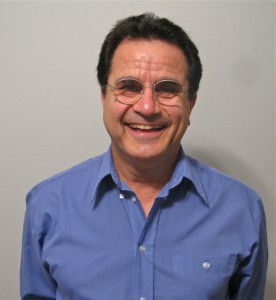
Rick: Welcome to Buddha at the Gas Pump. My name is Rick Archer and my guest this week is Mehrdad Mizani. Welcome, Mehrdad.
Mehrdad: Thank you. Good to be here.
Rick: Yeah. And Mehrdad was recommended well over a year ago by an old friend of mine whom I knew back in the early 70s and, you know, she was really raving about you and saying you’re a wonderful guy and all that. And so I listened to some of your YouTube recordings and found them to be very delightful and then, you know, in that I’m inundated with requests to interview people and recommendations and so on, it wasn’t until just recently that I finally thought, “Darn it, I’ve got to invite Mehrdad and just, you know, do it. It’s been too long that I’ve kept him waiting.” So I might say to anyone who’s listening who’s been requested an interview or recommended an interview, please bear with me. I only do one a week and I receive invitations and recommendations every day and it’s hard to prioritize them but I’ll get to everyone eventually.
Mehrdad: I think you did great. You’ve been great.
Rick: Okay, good. All is well and wisely put.
Mehrdad: Yeah.
Rick: Good. So why don’t we start by just having you tell us a little bit about yourself.
Mehrdad: What would you like to know?
Rick: Well, you know, a lot of times when you speak, when I interview someone, they have a kind of a teaching, you know, stuff they like to say to people. And if you just start right out with that, people think, “Well, what are this guy’s credentials? How is it that he’s able to say, is there any sort of authority or experience behind his words or has he just read a few good books?”
Mehrdad: Yes, yes. Well, authority I don’t know but experience for sure.
Rick: Okay, good.
Mehrdad: Where should I start?
Rick: Well, are you from, where are you from, Iran?
Mehrdad: Yes.
Rick: Okay. Do you know Ellie Roozdar that I interviewed? Very lovely lady. She lives up on Long Island and I’ve interviewed her twice. She’s also from Iran.
Mehrdad: Yeah, I saw both of them.
Rick: Oh, good.
Mehrdad: Yes. I was born in Iran and at this moment maybe I don’t go so much detail into my childhood experiences.
Rick: Just whatever you think is really germane to the conversation here.
Mehrdad: Okay. The events of my childhood definitely had a strong impact on me and it somehow put me on a path to find answers, to find out why the events happened the way they did. And my education has been just a normal education. I went to the music school and graduated from the music school, got my diploma. I played classical music and modern music both in the symphony orchestra and rock bands and so on.
Rick: Oh, cool. Guitar?
Mehrdad: Piano.
Rick: Piano, okay.
Mehrdad: Yes. And then during this whole time I was constantly searching. It was almost like out of my control just to find out more and more answers. And it was all related actually to my childhood. So, even though the events were not so pleasant or ideal, but for some reason I’m grateful that they happened. So, it led me to find the answers. And of course like everyone else I wanted to find out why things happened. Why am I here? Why are we here? Who are we? Who am I? And then in a course of search I came across a lot of answers and finally, I realized that this thing that is called truth that everyone is looking for, trying to find, has always existed. We just come to situations in our lives that we look for them and eventually we discover.
So, therefore it is nothing that is invented, but it is just discovered and based on everyone’s personal experience, it is explained in a little bit maybe different words. But at the root all the truth that has ever been spoken by anyone, old and new, is all the same at the very foundation of who we are, why we are here, and what is the reason that we should be connected to each other. So, I don’t know if this is enough about me, or do you have any more questions, details?
Rick: Well, had you moved over to the US by that time or were you still in Iran?
Mehrdad: I left Iran in 1974 and I went to Europe. I was in Europe for about 10 years. I traveled in Europe, I was in England, Germany, France. Then I moved to United States in 1985. So, I have been here for a while.
🛤️ Searching, study, and synchronicity
Rick: I spent 3 months in Iran myself, just before the Shah left. I was with a meditation group and we were trying to create peace in the atmosphere by all meditating together in groups. It was a wild experience. So, you came to the conclusion that everything, all the great mystery traditions and truth speakers throughout the world are essentially, ultimately saying the same thing. Was that kind of a philosophical insight or had you been doing some kind of practices or something to give some experiential verification to that idea?
Mehrdad: I did a lot of study and I also made many, many mistakes in my life. In fact, sometimes I thought I am the kind of person that I have to make all the mistakes and there is no more mistakes to be made. So, I learned a lot from my own mistakes, about my perspective, about myself, about people, relationships. As I said, I did study, I learned through reading a lot of books, traveling, conversations with people. I think more than anything else, now when I look back, I can see that there is this beautiful accommodating energy that exists in life, that for the ones who begin to search, whether consciously or unconsciously, there is a lot of support. Things happen, people you meet, events will happen, books appear, so to speak, and then you read them.
And then there are, for my special need, for my special search, then I would find answers and conclusions in the different places that would help me along the way to clarify things.
There is this beautiful accommodating energy that exists in life.
Rick: That’s a nice point. I have spoken to people who have literally had books fall off the shelf in book stores, they will be walking down the aisle and plop! A book will fall off, and it will be exactly what they need.
Mehrdad: So, that’s true. I am now so glad to see the things that a lot of times people say, “Oh, what a coincidence,” or, “It was a miracle, it was magic.” Now I have no doubt that actually the real life, the life, is all full of magic and miracle. These coincidences are actually every moment, as long as I am in line with it, as long as I am in tune with it, so to speak.
Rick: Yeah, well it kind of points to an underlying principle, doesn’t it? If these things are not coincidence, then who or what is actually orchestrating things such that we find the right book or meet the right person? There seems to be some larger intelligence that is cognizant of our motivation. And if we somehow begin to seek, then circumstances begin to organize themselves. At first we might not think about that, but after a while you think, “Whoa, what is this intelligence that is helping me out here?” And some people interpret it as a guardian angel or whatever, but it really seems to be much more omniscient than that.
Mehrdad: That is true, that is true. One thing I realized about this whole course that there were things in me, habits, systems of thoughts, technically we can call it programs, that I began to see that they were dysfunctional, they were simply wrong. My perspectives, behavior, and I can put them all together as like a series of habits that has been unconsciously established due to the events and experiences, right or wrong. But to me it was right and to me it made sense, and I was going with this wrong program for a long time. And habits. So, the more I became free of those, somehow the very life that I was, because my simple conclusion is that we are all expression, manifestation of this power that is called life, whatever name. God is one name, intelligence is another name. Whatever name.
But there is a life which is undeniable, that is sustaining you and I and entire universe and everything, in such a magnificent way. Every book that we pick up about the function of our own body or the universe or the things around us, it is just like after reading one or two pages, you can’t help to wonder, how? The way our heart works, the way we breathe, the way we can see and hear, it is far more magical than we can ever even imagine. So, it is true that this is all one connecting principle, and I found that the fundamental nature is giving, accommodating, providing, and based on that comes all these things that we call help. Something like that.
Now I have no doubt that actually the real life, the life, is all full of magic and miracle.
Rick: Yeah, so let me clarify what you just said. The giving, providing bit, are you saying that by virtue of you giving and providing, then help is reciprocated, or are you just saying that that fundamental nature of life, whatever you want to call it, has a giving tendency?
Mehrdad: Exactly, when I become more free of my own mind-made, constructed perspective of life, the more I become free of those, the more I become in tune, or synchronized, and then I will be able to receive and accept those, so I don’t need to be so much in control. There is another thing I realized, that in a mind-made life, I have to be in control, otherwise things fall apart, whereas when I let go, then I can see that a lot of things just fall into the right place. It is not so easy to describe this, but it is something that when you experience, and everybody experiences this, just maybe more or less.
Rick: I was just going to say the very same thing. I think people can understand that, because we all do, at least most everybody, I am sure there is a certain spectrum of the population that wouldn’t even get what you are saying, but anyone who is reasonably awake does experience just what you are saying, it is an interesting point.
Mehrdad: Yeah, and for some people it might happen because they reach the end of the line. Last night I was with a group of people and talking about this very thing. I think we were watching the movie “Peaceful Warrior,” which brings this point out that someone goes with their own habits and mind-made thoughts and perspectives and standards of reference, until it doesn’t work anymore. And sometimes it actually comes to a destructive point, brings us completely to a stand still, or causes an illness, or fall badly. At that point some people then say, maybe there is another way. Maybe my thoughts and habits and perspectives are not correct, because the weight of the wrong eventually will bring its own path down. No wrong can go for long, eventually it will fall down by its own weight.
Rick: Yeah, no wrong, you are saying W-R-O-N-G.
Mehrdad: Yes. Wrong.
No wrong can go for long, eventually it will fall down by its own weight.
🎵 Individuality, the whole, and the heart
Rick: Well there is a lot we could unpack in what you just said, there are a lot of implications to that whole thing. I mean, it goes to a very deep point, doesn’t it, where there is this… On the one hand we kind of perceive ourselves as being an individual, and to a certain extent we need to perceive ourselves as being an individual in order to function in the world, but then that gets sort of magnified out of proportion, to the point where we are kind of like… I am sure there are all sorts of myths and stories in antiquity about this, to the point where we are kind of going it alone, like Moby Dick comes to mind, just fighting against the powers of nature, and the more we do that, as you just said, the more difficult life becomes, and at a certain point, nature beats us down, and we think, ok, I have got to find a deeper…
Mehrdad: This is very interesting. It reminds me about the point I was thinking a couple of days ago. I was reading a poem. This point that you just mentioned is almost like, imagine the human body, it’s, I don’t know, 100 trillion cells, or less, but each of the cells, individually, they function perfectly by themselves, as an individual cell. But at the same time, they have this life connection to all the rest, and it’s very crucial to be first functional, perfectly as an individual, but not totally centered on the individual. Once that purpose is fulfilled, then to be one with everything else. And, in a medical term, if something like that happens, and then the cell becomes too individualistic, that’s when the cancer happens.
It is very crucial to be first functional, perfectly as an individual, but not totally centered on the individual.
Rick: Exactly, yeah.
Mehrdad: Somebody, when a being completely starts functioning based on a different order, purpose, way of being, and so on, in a society it can happen like that also, this is very much similar.
Rick: Yeah, and the cancer is not only killing the host organism, but it’s killing itself ultimately, due to its narrow mindedness and selfishness, if we can anthropomorphize it.
Mehrdad: It’s funny.
Rick: Yeah, so how do we achieve the balance? There’s a natural tendency for the wave to be isolated as a wave, and yet there’s this kind of deeper motivation to realize our status as the ocean. How do we achieve the balance between those two and integrate them, and perhaps get to the point where we can comfortably live the paradox?
Mehrdad: That’s an excellent point. My thought about that is that, how to first become an individual, fulfilled individual being, in order to be able to become productive, and with a consciousness of the whole. If the consciousness develops only centered on me, that’s a cancerous being, but the consciousness of the whole is a crucial thing. One of the conclusions I came across, based on my childhood, was basically, when we grow up, it’s not only our physical body that grows, which actually grows automatically, just we eat and drink and breathe and we need warmth and light and so on. But there’s something else inside of us that needs to grow. That is our very essence, the very life that we are, and that’s what I call heart. And one of the reasons that I came across that, to find out that essentially we are heart, is in these few sentences that I became interested in.
One was that the expression, “I love you,” is such an emotionally expressive and wonderful thing to say and hear. And then I realized that when you add the word heart to it, it suddenly takes it to a completely different dimension. So when you say for example, “I love you with all my heart,” then I became a little bit curious, what is this that when you say “with all my heart,” what do we really mean? And finally I realized that, if I tell someone “I love you with all my heart,” it means that I love you with all that I am. I mean nothing is held back, no reservation, everything. So that simply means that all that I am is basically expressed through this word, heart. That’s why I came to call our very essential being, heart. And then more and more it became more clear that why the things that develop in the heart are so crucial in our relationships with each other.
And this was the heart that finally I realized is a point that needs to grow more than anything else. And the development of the heart of course is depending on a loving energy, or kind energy, that we receive since we were born, initially from our parents, which plays a very important role, and then as we grow up as siblings, it helps us to relate to and be a more confident and stronger being. And when we enter into marriage with our spouse, that experience again, it nourishes us. And also when we become parents, the essence that grows inside of us, when we look at the nature of it, we can see we come from a point of being absolutely self-centered as far as wanting and receiving love, so to speak, to the point that ultimately the goal is that we become unconditional in giving that love, which is somehow known as parental love.
So to come in from a completely self-centered child level to the level of parent, which is unconditional love, these experiences that we go through matter a lot. So to answer your question, this is a long answer, when we go through this situation, it helps us a lot to become that very individual that we are supposed to be. I remember when I was studying philosophies and religious books, one of the things that was eye-catching was I was reading the Old Testament, and in it there was a saying from God to human beings, the first thing was, “Be fruitful.” And I thought about the “be fruitful” a lot for a long time, what does “be fruitful” mean? And that helped so much to find out, actually why are we here?
Because when I looked at the rest of the creation, everything around, I found out that everything exists as a seed level, and perfectly contains all its nature and everything that it needs, but then when it grows in the right condition, it comes to the point that it becomes fruitful, like an apple seed, which is very insignificant looking things when you compare it to the tree. So human beings are so much like that. There is a seed inside of us that I call heart, that needs to grow to come to the point of becoming fruitful.
Rick: So I have a few thoughts on that. First of all, you use the word “essence” in relation to heart, and we speak of artichoke hearts and celery hearts and things like that, so that is the essence of that vegetable, so that is a common usage of the term. But of course people also think of the heart, either physical or emotional, when they hear the word “heart.” So are you somehow mixing that connotation in, or are you going more to an even deeper level of pure consciousness or pure being or something as being the ultimate essence of what we are?
Mehrdad: Yes, and the reason I am saying that is because when we look at all the different aspects of our relationships as human beings, we find we come to the conclusion that emotional aspects play the most important role, in other words, emotional aspects are the most important aspects of the relationships. If we have an intellectual relationship, conversations or political or social or financial or whatever, and the emotional aspect is missing, then something terribly is missing, the very bonding element is missing. That is why a lot of separations happen, because the emotional thing is not there. That is why I call it a very essence, a very being, the heart which is the source of all these emotions that are playing the most important role.
Rick: So if you could boil it down as fundamentally as possible, are you saying that some sort of emotional field is our ultimate essence, or does it go deeper than that? Are there levels to heart? And at the very, very, very deepest level, what is heart?
Mehrdad: The reason that is a little bit unclear is because the heart or life or essence, actually the life, that is what I am referring to as the heart, but in order to discover that and allow that to manifest or to develop, we have to become clear on thoughts and perspectives that have been made in our minds through the course of our life. So yes, I do mean actually the deepest, of course not the physical pump, which is also called heart, but the very essence of our being, like the example I said, “I love you with all my heart,” or “You broke my heart,” you know. “Broke my heart” is such a deep level compared to “I am disappointed,” you know, it is a different thing. So, for me when I say “heart,” I really mean who I am, the “I” being.
Rick: Okay, well like for instance a few minutes ago we were talking about how a person, they start seeking and then all these things begin to support them and come their way, which implies a much more cosmic kind of intelligence that is governing them. As a matter of fact, as I am looking at you here on my monitor, I see a picture of many galaxies that I downloaded from NASA, and you see this vast, vast, vast scope of the universe, all of it is just swimming in an ocean of that life that we referred to earlier, that sort of pure essence of life. So when I think of the essence, that is kind of what I think of, the sort of universal consciousness, universal intelligence in which the whole universe is sustained and contained, and when you speak of emotions and so on, it seems very individuated, and so I have a hard time understanding that as the ultimate essence.
Mehrdad: So, how about let’s just imagine that even the essence of all that magnificence that you just expressed, including the consciousness, is also heart.
Rick: Yeah, maybe with a big capital H. Yeah, and then we are individual expressions of that, which actually contains the wholeness, like a hologram, every little bit of it contains the whole image. So that intelligence which is so vast and contains the universe is as much in every of our cells as it is in every galaxy. I don’t mean to put words in your mouth, but I am just kind of playing with these ideas with you.
Mehrdad: I just heard your dog in the back. Oh yeah, that’s going to happen. In fact, a guy sent in a donation the other day, and he said, “You can use this to buy a dog door if you want to.”
You know, say for example, if one thing that came to my mind as you were making that comment was this religious expression of referring to God as love, because love really is the most, by far, powerful of all things, and it’s true, I believe in that 100%. Of course there is consciousness, of course there is intelligence, there is will, purpose, order, principles, reasons, connections, they all exist. But I believe that those are all expressions of this fundamental energy field that is essentially emotional, and the easiest thing to refer to by name is heart.
Rick: That’s interesting. So you would say that, you know, you just rattled off a bunch of qualities, intelligence, consciousness, and so on. You are saying that that intelligence or consciousness which is universal, which contains and gives rise to and dissolves all the whole universes, is essentially emotional in that it has the quality of love.
Mehrdad: Yeah. Say for example, if we take ourselves, human beings, as an image or expression, manifestation of that very life, then we look at ourselves, then we can see that we have those attributes and qualities as well. But then, the deepest of all these, comes back again with “with all my heart” thing.
Rick: So you just said, man is made in the image of God, that’s essentially what you just said.
Mehrdad: In a religious form.
Rick: In a religious expression.
Mehrdad: In a religious expression. Now in a scientific expression, we are manifestation of the very life that bubbles inside of us, not only you and I and everybody around, but the entire universe is sustained, even scientifically, by the same energy and same principles, same physics, the way that the cells are made and functions of different things, the atoms, it’s all one thing, whether we bring the stone from moon to here and analyze it, it’s the same structure as the stone that we have here by the ocean, or in your backyard. So, there is this oneness in everything.
Love really is the most, by far, powerful of all things.
Choice, responsibility, and service
Rick: Yeah. This is kind of a subtle train of thought that I am leading along here, which I think is going ok. And we’ve talked about heart, we’ve talked about essence, and you mentioned earlier the need to really fully become an individual in order to, I think that’s the phrase you used, or fully develop as an individual, in order to really appreciate this, I guess. And so one thing I would ask is, can one fully develop as an individual without recourse to this deeper dimension? It’s not like, ok, first I am going to fully develop as an individual, then I will be qualified to get into this deeper dimension, don’t the two really have to go hand in hand, the development of both, or rather, the appreciation of the deeper dimension, kind of provides a foundation for the full blossoming of the individual?
Mehrdad: You know, the reason that we talk about these things now, you and I, and also such conversations exist thousands of times, maybe right now all around the world between people, and it happened millions of times, more throughout the history, is because we are in search of actually going back, of becoming the very being that we are supposed to be. When we look around in the nature, we see everything functioning so harmoniously, and in connection with each other. There is something different in human beings, that maybe is called choice, or free will, that when it is being misused, which apparently is and has been by studying the human history. We can see we have derailed, so to speak, we have come a wrong way for a long time, and so the reason I am saying is that we are now trying to find the way back.
That’s why we are having a conversation and analyzing things and trying to find deeper things, but in reality, a human being is designed so that, if everything functions correctly, we actually become those individuals who are actually in harmony and oneness with everyone else, and with the nature around us.
Rick: Well, that’s a big “if” though. As a matter of fact, I wrote down the word “choice” about 10 minutes ago, and now you just said it, because you were talking about how a little baby is born, and according to how much love he receives from his parents, and how supportive the environment is, so he develops accordingly, but everybody has shortcomings in that department, and if we wanted to, we could just always blame our parents or whatever for our faults or our limitations, but then, by that token, our kids can blame us. So it seems that at a certain point, choice needs to grow, and one can begin to steer the course of one’s life regardless of what the upbringing was.
Mehrdad: Exactly, because I came to the conclusion that nobody is at fault, whether our parents or grandparents, it’s just like everybody did the best they could, as much as they could, that is true. So, you are right, there is no need to blame, but at one point, hopefully we come to the point of choosing not to blame, and then looking inward to find out what it is that needs to become clear, and what answers it is that we can find. Because if we are, and this is actually a reality, that we are the expression and manifestation of the life, the life does function inside of us, so there is a way to connect to that. There is a way to connect to that if we get the obstacles out of the way.
Rick: Ok, let’s talk about that, what is that way and how do we get the obstacles out of the way?
Mehrdad: Obstacles first are these mind-constructed perspectives of who I am, who you are, who are we, how we should connect to each other, how we should treat each other. And so, if you look at the way we treat each other, for example, whether now or all throughout human history, we can see that we see two different ways that people treated each other. One was based on self-centeredness, and the result of it was, a lot of times, if not all, destructive. One was trying to control, which was no good, and another one was to be in a selfless way, and giving, even though maybe it hasn’t been received rightly by the people on the other side, but it always works better. And this is one of the lessons we can learn from the life and the nature around us, that everything that exists, exists for the sake of a higher purpose.
So, by that maybe we can come to a conclusion that maybe the best way of living and being is an unselfish way of life, living for the sake of others, and this we can find in all the teachings, enlightened teachings, but the reason for that is that it actually unites us with everything and everyone, if we take our mind off of ourselves. To a certain degree, of course, you and I are responsible for ourselves. I cannot expect you to take care of me or pay for me when I am grown up and adult. As a baby, yes, but later on, no. So, we have certain responsibility as an individual towards ourselves to maintain ourselves and all that, that is enough. But after that, to be one and harmonious for the sake of others, that’s why service to others becomes an important way of life.
Maybe the best way of living and being is an unselfish way of life, living for the sake of others.
Rick: Yeah, I was thinking as you were saying that, again the example of the baby. The baby has to be completely in a position of taking, he is not in a position to give at that stage, and later on he grows to a mature human being and, potentially at least, is in a position to serve and help and so on. But many people don’t shift into that mode, they are still very much in a taking mentality, and the whole world situation is evidence of that, the environmental disasters and everything else. So, I guess I am always looking for the practical, how do we actually, I mean, is it just by talking about it and people listen and hopefully they change their attitudes? Or is there… How are we going to get the world to turn itself around, or at least, the world may be too big, how would you get an individual to shift around to more of a giving mentality?
Mehrdad: Well, a lot of points. You know, you started from the baby. This is a very good point, because one of my observations was that, you said that baby grows and comes to the point of maturity and starts giving and all that.
Rick: Potentially.
Mehrdad: Yes, potentially. That is the point. Because this actually indicates that there are two kinds of maturity, internal and external. Externally we grow, we become mature as well, but the point is whether we are mature internally.
Rick: Right.
Mehrdad: That’s why you can see people at the higher age of 20, 30, 50, 60, whatever. In some aspects they behave in a way that you see in a six-month old or two-year old. That aspect of being self-centered and wanting. It’s a “me me me me” kind of thing. So, that was the point I was trying to bring before, that it’s this emotional development inside, that I came to the conclusion that is a standard of maturity.
Rick: Yeah.
Mehrdad: So, the maturity is a more emotional maturity than a physical maturity.
Rick: Sure, I mean, look at something that is very much in the news right now, that girl from Pakistan, Malala, who is 14 years old and she is more mature than the vast majority of adults, trying to promote education for women and everything. And then, look at the guy who shot her, think of his level of emotional maturity. He is probably three times her age. But again, it comes down to, well, how do we develop Malalas? What’s the lever or the mechanism through which this could be developed? I mean, I’m sure a lot of educators ask the same questions when they have a classroom full of kids who’ve had miserable upbringings and they are all misbehaving and going on to commit crimes and go to jail.
Mehrdad: This is a good point because I did teach for several years, so I was in touch with people, children, at a young age from first to sixth grade, and this point came out. Then I could reflect back on my own life. My suggestion to this, since I am very much, evidently after this point, centered on the heart and the development of the heart and emotional development and maturity, is that even if I didn’t go through the correct ideal course of emotional nourishment through my life, the important point here is to realize that, even if I would have gone through that, the person that I would become would be a manifestation of the person who is able to be with people and treat people, relate to people, in different positions that we go emotionally through. In other words, if there is a requirement at the time for me to be in a position of a child, emotionally, I should be able to do that.
If there are times that it is required for me to be a brother, or in a parent, like a father position, in a relationship with people, because these things happen all the time, when we look emotionally into the nature of our relationships with each other, we can see that we go through these emotions. Our relationship with humanity is basically that of siblings and parent and child. This goes all the time. So if I would have gone through the correct path, I would be able to manifest that ideally with everyone around, and that would be called mature. Now, I didn’t, so how do I fix that now?
My conclusion is that to actually practice that, even though if I didn’t have the foundation enough, for me to realize, they say for example, if I meet you for the first time in a gas station somewhere, and then we have a conversation, or in the store, or in a party somewhere, and when we are having a conversation, if we have full attention with both ears and both eyes, to listen and to observe people, we begin to actually feel and hear the emotions that are coming from the person. Through those emotions, the more we become humble, and then observe that, it puts us in a position to realize, who am I with this person at this moment?
Say for example, if there is a need for me to be parental, it needs to be a sibling, or to be a child, this will establish an emotional relationship, far deeper and more important than an intellectual conversation, or social conversation, or political, or financial, any. At the depth of our conversation, there should always be this emotional connection. Those emotional connections, whether it is friendly, or in a deeper level, as sibling, child, parent, this will help actually to nourish what hasn’t been nourished inside of us. That’s actually how I worked on myself, and it worked. I suggested it to many people, and it worked for them, too. And it’s constantly, I’m hearing testimonies from my friends, that actually it does work. It makes life more peaceful, and growing happens, maturity happens, connections happen, forgiveness happens.
The maturity is a more emotional maturity than a physical maturity.
Emotional maturity in daily life
Rick: Ok, so what you are saying, let me just repeat it to you, so I can make sure that I’ve understood it correctly. You’re saying that you worked on yourself, and you have advised others successfully to work on themselves, by learning to be, culturing the ability to be, adaptable to whomever you were dealing with, whether it’s a child, or a peer, or someone that you might approach with respect, or whatever. But you are not locked into one strata, you are able to flow and adapt yourself to the needs of the situation at hand, and that that has been a conscious choice, and by practicing that, you have cultured and developed that ability, and that has enabled you to grow into a more complete multidimensional human being. Is that correct assessment of what you said?
Mehrdad: Perfect. What you said is basically the emotional thing, because we can be very highly intellectual, very bright, very intelligent person in our conversation and all that, but then that is not necessarily a foundation by itself, as a one bonding good relationship, if the emotions that are required are not there. A simple example that comes to my mind, for example, this is a little bit sensitive issue, but like in a marital relationship. People get married and so on. Now, during the marriage life, we can all experience and see that we are not always in a position, so to speak, of husband and wife. There are times that happen in life, because our very essence and heart is constantly growing, is ever growing element, therefore life brings all these circumstances for us to develop this heart.
That’s why, when we are relating to people, we come to these positions all the time, we come to these realms, these positions of the emotions and heart. So my experience was that, with my wife, that we are not always just a husband and wife. There are times that we are actually like a mother-son. There are situations in life happens, that is a mother-son relationship, or father-daughter relationship, or brother and sister relationship. And these are important, because this is a constant nourishment and constant development of our very being, which is an ever growing, ever expanding thing. Now, how that would happen depends on our ability of being able to be a child, being able to be a brother or sister, husband, wife, or father, or mother, when life requires.
When that situation or scenario so to speak happens, and then is a time to function, when is a time to function as a mother and son, are we able to be a child? My realization was that I wasn’t able. Why? Because when I went through the school of life, in first grade, which was a childhood, elementary school, which was a childhood, if I didn’t have experience enough to know how to be a child, I did not graduate from childhood, I did not graduate from a level of sibling. So those experiences in the school of life prepare us how to relate to others, and I believe that the most important aspect of our relationships with each other is how we treat each other emotionally. If that is correct, then everything works out well. This example that you said about this girl, this 14-year-old girl, and the man who shot her, so, something terribly was missing in their heart level.
Rick: At least in his heart level, the guy who shot her.
Mehrdad: Her heart, it was perfect, it was a heart of embracing everyone, oneness with everyone, and the other heart, even though there was a lot of logical reasons that he might have in his own mind, why he did the crime, like all the other criminals, but the heart is in the wrong place. So, it is not so much the intellect and reason and the politics and finance and all that, it is how mature the heart is, because then we will be able to actually see, hear, feel, from the heart. And if you don’t see from the heart, if you don’t hear from the heart, you are actually blind and deaf. If you only see through the intellect or power or money or whatever, you are blind and deaf.
If you don’t see from the heart, if you don’t hear from the heart, you are actually blind and deaf.
Oneness, technology, and the world situation
Rick: Yeah, so it all comes back to, again, how do we evolve as a species so that the majority of us function through the heart, which I think you would agree would solve a lot of the environmental and economic and political problems that dominate the news headlines. How does it become more of a mainstream thing? And maybe it is happening automatically. Maybe that divine intelligence or whatever that we spoke about in the beginning is just orchestrating a big change in the world and we are just along for the ride. But we like to think that maybe we can do our best to cooperate and facilitate, and not just be carried along passively in the stream, but really move it on.
Mehrdad: Yes, that design exists. As you can see, it functions all around us. The only place it doesn’t function is in us.
Rick: Well, it does, but there is a blockage.
Mehrdad: Basically it does, but then because of our choice, or because of the way we think, our perspectives and all that, we have come to the point of making such a mess. Look at the history of the humanity and look at today’s world. But this is the situation now, which to me is almost like the end of the sickness. Sickness starts with a small cough and then it develops more and more and more, you get fever, I am sorry, you throw up, and all that. But the worse it becomes, it actually gets close to its end as well. We all have experienced when we were sick.
So as a body of humanity, it seems like we are going towards that as well, and especially with the advance of the communications, the internet, that the oneness that is happening externally in the world, is an indication of that we are also internally getting close to the point of realizing that some of the standards of reference that we have been keeping up, whether it is racial, or religious, or philosophical, or whatever, that divides us, are basically not right. Anything that divides us in nature is not right, because we have so much in common, our interests are common, we depend on each other, our very happiness depends on each other, which is the deepest desire in all of us. We destroy the very source of our own happiness by mistreating each other.
So, we are coming to that point, but we have to wake up to something, this free choice that we have, this free will that we have, we can exercise it now, as a whole rather than self, individual, and this will assist this original design of oneness, that is actually, as you said, is taking place now.
Rick: Yeah, I think you are right, I think the technological oneness is a symptom of a deeper oneness that is dawning, and it also feeds back and helps to accelerate the rise of that deeper oneness. Like the conversation we are having, we couldn’t have this without this technology, and then thousands of people all over the world will watch this, and so it is kind of a self-reinforcing feedback loop that is going on.
Mehrdad: Yeah, and it is very helpful.
Rick: We just hope that, I mean the metaphor you used of the disease, sometimes you don’t get over the disease, it gets worse and worse and then you die, so let’s just hope that in this case the disease that we see in the world is not going to be the death of us, but we will get over it, as people like to predict with 2012 and we will move into a much brighter age.
Mehrdad: You know, this brought me to a thought of energy. Sometime ago I came to realize how fundamental energy is, and how real energy is, even though it is an invisible thing, so it is not in our consciousness every day and so on, but energy is, say for example, everything that we think is an energy form, and it creates energy, everything we say creates an energy, even though we don’t see it, but it does, and it is timeless, energy, also the things we do. So, here comes the very important point. We can see now, despite all the wrong things, destructive things that are going on in the world, but also this great move of right, enlightenment, oneness so to speak, is also happening in the world. It is amazing, sometimes in my email I receive things from people, and it is circulating all around the world, with really deep wise words, and people become very moved by it.
The reason they become moved by it, because it makes sense to them, and it is all actually at the core, it brings us towards unity, towards oneness. This is also happening. So we are producing a lot of energy, also in a constructive way, and I think this balance of energy that we are producing, is the one that will cause the change. So I can see far more now, even despite of all the visible destructive wrong things, at the essence, and fundamentally far more powerful energy of good is rising. It is not yet visible until it suddenly shows.
The energy of good is rising. It is not yet visible until it suddenly shows.
Rick: Yeah, there are some interesting thoughts on that. I mean, one thing is that if you heat up a pan of water, nothing much seems to be happening until it gets to actually 212 degrees Fahrenheit, and then all of a sudden there is a phase transition and it boils, and turns to steam, but it could be at 210 or 211, and it looks pretty much like the same as 150, but when it gets to that phase transition point, poof!
Mehrdad: Absolutely.
Rick: There is a big change.
Mehrdad: This is a perfect example.
Rick: And there is another thought, which is that, based on what you said, is that, which is cause for optimism, for me anyway, which is that subtler is more powerful. I mean in this pen, on this level is a certain amount of energy, I could drop it and it would have an effect, but on the molecular level, if I burned it, there would be more energy released, on the atomic level more energy released, and they say that in just a thing the size of the tip of your pinky, on the level of the vacuum state, there is more energy than in the entire manifest universe. So, the kind of energy you and I are talking about here is more subtle, and therefore hopefully much more influential than the more gross, obvious forms of energy and influence that we see around us.
Mehrdad: Yes, and is actually as powerful, if not more. Say for example, if you look at the power of words. The words that have been spoken hundreds or thousands of years ago, if they were true, time could not dissolve them, and they are powerful today and life changing. Is that amazing? I mean somebody said, thousands of years ago, simple sentences, and now people who are hearing it now, suddenly it makes sense and it changes them. Of course it happens through the intellectual understanding sometimes, but the energy of the truth that exists in them is timeless. Millions of other sentences and words and conversations have happened throughout history that no one remembers. Not that they were wrong, but some wrong ones definitely don’t stand the test of time, so to speak. But that energy is very powerful, I believe actually in that energy.
And the first point that you mentioned about optimism, is a very important thing, because it creates this attitude of never giving up, because what is the giving up? End of anything, whatever it is you do, if you give up, that’s the end of it. But the stories, all throughout human history, tell us over and over and over again, that if you don’t give up, almost the 11th hour, something magically happens that changes the whole thing around. Whether the true stories or even the fictional stories, it all tries to develop this attitude of not giving up, and it works.
If you don’t give up, almost the 11th hour, something magically happens that changes the whole thing around.
✨ Persistence, priorities, and knowing the self
Rick: Yeah. There are so many children’s stories in that vein, like “The Little Engine that Could,’ or “Horton Hatches The Egg,” a Dr. Seuss story. The elephant says, “I meant what I said and I said what I meant. An elephant’s faithful one hundred percent.” And he sits on the egg until eventually it hatches.
Mehrdad: Yeah, and all the great people who actually came to the same conclusion, to realize that the attitude of can or cannot, impacts us to the great degree, that there are sayings like, I don’t know if it was Henry Ford or someone, a lot of people say the same thing, that whether you think you can or can’t, you are right. And it’s true, because it develops a different attitude and energy in us, that makes the things more works or fail.
Rick: That’s a good point, and with regard to spirituality, sometimes these principles are popularized with regard to material accomplishments, you know, “I believe I can get this shiny new car”, but with regard to spirituality, which most of the people listening to this show are interested in, I think it’s a good thing to have in mind, which is that if you are persistent and continue on, it will bear fruit. You needn’t get discouraged.
Mehrdad: Absolutely, and it has been even, both philosophically and religiously, and through the experience, have been emphasized all the time. When you were saying that, it reminded me of the story or the sentence that Jesus was talking about, that if you set your priorities right, it’s all a matter of priority. If you focus too much on getting and having, and material and all that, then that becomes the focus of life. But if you focus on becoming who we are, which is actually more magnificent than everything we can ever accumulate, then for some reason all those things shall be added on to you.
Rick: Exactly.
Mehrdad: Look at the lilies, look at the birds, and so on. It’s just like everything is provided, but it’s just a matter of which path we walk, what focus, the priority. As far as the material and so on, it is a matter of ownership. There is no problem to having a material, all this wonderful material exists all around us for all humanity. The only thing that becomes wrong is when the ownership changes, whether we own the material or material owns us. Somebody owns the car or somebody is owned by the car. In other words, when we define ourselves through what we have and who we are, how we look and so on, that’s when the path goes wrong.
Rick: Yeah, there is an even deeper implication. There is something in the Bhagavad Gita talking about the authorship of action, and it’s said that those who assume, who take themselves to be the actor, are like a thief, because they are taking possession of something which doesn’t actually belong to them. That in fact, there is a deeper principle which we have been referring to throughout this interview, which is the real engine behind our activity. And it’s come up again and again as we have spoken, that if we have this rigid, calcified grip on my way or the highway, then it causes all kinds of friction and problems. But if we can relax and recognize that there is a deeper something or other that is conducting affairs, then life becomes much more smooth and harmonious.
Mehrdad: Yes. You know, this old saying of all the people who reach any level of enlightenment, has always been this “know thyself,” because there is a secret in there, the key to everything is in there, because if I am the manifestation of life, like I can say, I am essentially life. When I was born and all the potentials and everything that is physically, externally and internally, functions in me, that is the most crucial thing to discover. Once I discover that, then I discover everything. In another words, if I know who I am, I know who you are. Because you and I are the same life, even though we manifest in a different way, like two different flowers, or trees, or whatever, but essential life that is inside of us, the fundamental principles of existence, is the same. So, to know who I am, this is to know who you are, know yourself, is actually very important.
And as we were talking at the beginning, the biggest obstacles to know who I am, which is the life, is my own thoughts and habits that have been generated, because of the events and experiences that I have been through. So, to be able to focus on them and observe them, to clarify, to get rid of some of them, comes a way to actually become the life, know who I am, and I believe everything will change from then on.
Rick: And if you don’t know who you are, how can you know anything? You say, I know the pen, but I don’t know who I am, so therefore, who knows the pen, what is the pen? It can’t really be appreciated if the knower isn’t known.
Mehrdad: If I know myself, I know you; if I don’t know myself, what do I really know? A lot of maybe intellectual information, but time proved over and over again, that that’s not enough.
Rick: Now, if we say that false ideas and false notions and so on, are the impediment to knowing who we are, or are obscuring the knowledge of who we are, then again the question comes, how do you get rid of all that stuff and how many layers of it are there? You might get rid of a few layers and think, well I am done, but then how many more layers are there beneath that, which have yet to be cleared away?
Mehrdad: You are right, there are definitely many layers, because for some of us it started from very childhood.
Rick: Or previous lives even, if we believe in that.
Mehrdad: There are layers, that is true, but the most important thing is actually to start. Because the moment we start and we start becoming free from even layer number 1, or second or third or fourth level and so on, that in itself gives us such an encouragement, and more importantly a different perspective of seeing. I am completely amazed at how much we can see and hear differently from a perspective of, as I call heart, or original being. Because it is possible to actually look and not see all there is to be seen, it is possible to listen and not hear all there is to be heard.
Rick: Not only possible, it is inevitable.
Mehrdad: Yes, but say for example, a lot of time in a conversation or being in an event with people and so on, because one of the important elements for us to be able to become united and one with everything around us, is for us to be present. And the importance of being present is simply in the fact that the life, the life that I am an expression of, happens only in this world. It happens. What happened and what is going to happen is not what is happening. So, a few minutes ago, or 10, 15, 20 minutes ago we started a conversation and it was just as real as now. Maybe another 5, 10, 20 minutes or whatever we talk and that would be also as real as now, but this is the life, because life is not what happened, what is going to happen, life is what is happening, what is. That is why it is so important for me also to be present when life is happening.
When life is happening, if my mind takes me to the back in the future, then I am not here. Therefore, I really can’t see. My senses will not even function 100%. I kind of see, kind of hear, but I cannot describe, I have to say, “Excuse me, what did you say?” Could you repeat again? Sometimes it also happens even if I am present.
Rick: John Lennon said, “Life is what happens to you while you’re busy making other plans.”
Mehrdad: Perfect.
Rick: But of course on this theme of not fully perceiving everything that is here, there is a certain practical limitation to that. We wouldn’t want to perceive every aspect of the electromagnetic spectrum or something, we would be overwhelmed, or hear every frequency that exists, we would be overwhelmed. So there is a certain limitation that is natural to being a human being, but in another sense, and perhaps you can expound on this, there are unnecessary and artificial limitations. Those are desirable limitations that I just referred to, but there is a kind of undesirable limitation that we want to get cleared away.
Mehrdad: Exactly. That’s why sometimes I have been in a situation, in a group, that someone said something, and people made a comment about it, and then somebody made a comment about it, that almost like everybody was amazed, because it showed the level of, the depth of seeing and hearing what that person expressed. So that’s maybe something to do with maturity, with the presence, with being 100% attentive, being free from the self, and completely in serving, or being involved with, what is happening. Yeah, you are right, we can deepen that level constantly, and that would impact our relationships over and over again. In fact, that is what causes our relationship to grow closer to each other.
Rick: I think it is worth bringing in the word appreciation here, you know, one can be very attentive to the details of a situation on a physical level, but the dimension for growth is in terms of deeper and deeper appreciation, and that can reach really sublime levels.
Mehrdad: That’s right, so glad you brought this up. Appreciation, the gratitude, that is very true. I recently came to realize that actually gratitude is a source of happiness. Simply, the way we look at things, and the more we are grateful, and there are so much to be grateful about, it is just like countless, and if the less grateful we are, the more unhappy we are, so appreciation is very important. Of course you know that, but you brought it up, it is very important.
Rick: And I would say not just gratitude, like we are going to have Thanksgiving in a few days, and people will be, “Oh, thank you for the food, and thank you for our nice house, and our nice family,” and all that stuff. But even walking down the street, look at a bug on the sidewalk or something, there can be a level of appreciation of that, that perception, that can go very deep.
Mehrdad: And even the fact that I can actually walk down the street, that I can look and see, because I came across people who actually from some accident lost their sight, and suddenly the priorities were set straight, and then they were expressing the fact that I am willing to give anything, everything to be able to see again. So just to be in an appreciative mood that I can see, I can see you, and I still can see you. And I can hear. These things function, you are right, this is like a fundamental joy. There is a word for it, bliss, being, the life that is functioning in itself is such an incredible magic, so I can walk, I can see, I can breathe, I can look at the trees, I can look at the bug, as you said, recognize it.
Rick: Some people say that the self-realization we have been talking about becomes a foundation for the growth of appreciation that we are now discussing, that once you know who you are, then you can really begin to get a deeper sense of what all this is, and then naturally you begin to wonder, who or what is responsible for all this? I love the art, I would like to meet the artist.
Mehrdad: That is true, absolutely true, that is very important, the more we get to know ourselves, who we really are, and the word you said was, we begin to wonder, and that wonderment would be the state of being, because the word wonderful simply means full of wonder. So when we look around and say, “This is wonderful,” we can say it with a deeper and deeper level, the more we actually see the wonder in everything. And that is what really life is. And the artist is that life. For example, I talk throughout the years, in conversations, sometimes very heated conversations, about the hot subject of…
Rick: Heart subject of what did you say?
Mehrdad: Hot.
Rick: HOT.
Mehrdad: Hot subject of God. You know, people say I believe, I don’t believe, I believe, I don’t believe. This has been going on for thousands of years. I think it is far more important to find out, beside the beliefs and images that we have about God, to find out what is it that we are referring to as God. God in English language, three letter word, G-O-D, is just a name, but it is amazing the images that it has created, because of whatever reasons, there are millions of reasons, in the minds of billions and billions of people, in a way of belief and disbelief, love or even hate. But if you look at what it is we are referring to, my conclusion was that actually, it is the life itself, and not yours and mine and the life that we see around us, but that invisible energy and source that sustains everything, that has all the characteristics in it.
This “artist” word that you said was very interesting. I am a musician. I listen to Beethoven. Of course, I don’t know Beethoven. I heard of Beethoven and so on, but there is no way for me to personally meet Beethoven. But when I study his work, then I begin to actually see the invisible being of Beethoven in his work. That is why works of Beethoven and Mozart, or Haydn or Chopin, they are so different from each other, or any artist, Van Gogh or Monet, they are different, because they are the expression of their invisible nature. And when you study, there are people who actually listen to the music, and exactly say who it is written by, to that degree, because they got to know the being inside.
So for the artist of life, we have ourselves and everything around us to study and find out the fundamental principles and reasons and the laws that exist and function in us, it is basically the expression of that. In a religious way, it is expressed through being made in the image of. It is like the work of Beethoven is made in the image of Beethoven, or the paintings of Van Gogh are an image of Van Gogh, even though he is long gone. So we can find the artist, but again the path of this goes back to the knowing the self. This self is the key, that being inside is the key to knowing, of everything.
The word wonderful simply means full of wonder.
✨ God, the artist, and the self
Rick: That’s beautiful. I am tempted to end it here, because I don’t know if we can do better than what you just said, it was so sublime, although it is a joy to always continue.
Mehrdad: It is so beautiful, because we actually bounce off each other, and this is the best way of conversation. We talk, we learn from each other, we stimulate each other’s life inside, and things come out. We can sit down and talk for hours, endlessly, because there is really no end, when we enter into the path of life, who we are, in that oneness, there is endlessness. It is so beautiful, I am very grateful to this conversation we had.
Rick: One other thought I had when you were talking about the debates you’ve had with people who either believe or don’t believe in God, and stuff like that, it reminds me of two guys, they found a restaurant menu, and they start arguing over whether this food really exists or not, and so on and so forth, where they could actually walk in the door of the restaurant and see if it is there, and actually taste it. So, people sometimes ask me, “What do you believe?” and I might say, “I believe this and that,” but it is really, in the same breath I have to say, it is really not that important what I believe, what is important is what is experienced, because beliefs, they are just kind of the crust on the surface.
Mehrdad: Yes, and they can change, instantly sometimes. But when I realized… I realized later on that I have been searching for something very deep, in me, my “I,” God, and that’s why I started studying things, reading things, religious books, philosophical books, all kinds of books, by all writers. My conclusion finally came to this point that it is important to know God, and in search of God, I came to realize that it is true, there is a being, there is a force, there is a power that created everything. I didn’t create myself. And one thing that helped me very much was that, in order to find out why I am here, it is very important for me to find the maker, because of the simple fact that the purpose of any created being is determined by its creator, not by itself.
Even though I was going around and seeing all around me, we just go around and make purpose for ourselves, this is why I am here, this is why I am here, and so on, and so on, but the real purpose is determined and made by the maker, the creator. So when I say life, I mean literally the greatest power, the greatest creative power that is constantly even creative. Everything around us is constantly functioning, we still breathe, we give up carbon dioxide, and the trees pick that up and give us oxygen, and we breathe oxygen. This is just a drop in the ocean of the magnificence and the magic of life, the functions of our body, our interactions. We eat the food, some energy of it stays in us, and sustains us. What is in the design of that food, fruits and vegetables, and so on, is so one with us, that is constantly nourished. You know what I am trying to say?
This magnificent thing, life, which is very easy for me to call God, and it is not a belief system anymore, it is actually knowing, seeing, experiencing it every moment, of every day, in every cell of the body.
Rick: And when you make a point like that, it is tempting for me to zoom the lens way out, and have the perspective that we are God, having this conversation. You and I, Mehrdad and Rick, we are like sense organs of the infinite, through which that infinite intelligence is enjoying interacting within itself. There is a verse somewhere, I think it is in the Gita, or maybe somewhere else, where Lord Krishna says, “Curving back on myself, I create again and again.” So there is this self-interacting dynamic going on within this intelligence, or God, or whatever we want to call it, that creates this manifest universe, and we are just like little tentacles, little sense organs of that, thinking ourselves to be individuals, and in some sense we are, but ultimately we are that universal intelligence, just entertaining itself, within itself.
Mehrdad: Yeah, I often thought about this. This comes a little bit to the quest for, why are we here? And in search of that, I came, in a religious studies, I came across this sentence, that it says, “God said, let’s create man in our own image.” So I read that for many years, and at one point suddenly it became a mystery, because in other studies that I have, I realized that the God being does not have an image, and in fact it is forbidden to make an image. So an imageless being created man in his own image.
Rick: Who knows what the original word in that scripture was that is being translated as image, there must be some deeper significance to that.
Mehrdad: Right, so, from what I know, after this point, is that there is something in our very essence, of course it is not a physical thing, that is an image, but it is a very essence, it is a very core of our being, that reflects something, and that is true with everything that exists. Everything that exists is an image of life. Stone, a grain of sand, a flower, everything that exists, up to human being, with all these potentials and capabilities. It is not to boast about it, to be arrogant about it, but human being is a very incredible being, very incredible piece of creation, when you objectively look at this being with all these capabilities of thinking, and creativity, which is a result of having a freedom to choose. You can see that all the other animals, they live exactly in a way that is already programmed in them. They function perfectly, and harmoniously.
But human beings can think, human beings can design houses in a different way, otherwise we would all be living like in an ant or a bee hive, all the same. So, this potential that exists in human beings is not only the physical ability, but also the internal abilities of what we are capable of, and it comes back again to the heart. One thing that I wanted to conclude with the heart that I wanted to say before, is that, in that point of fruitfulness, the example of the apple seed, that contains everything that it needs, everything.
All it needs is the right circumstances, to be planted in a good soil, to be taken care of, to have water, to have light, to have warmth, and it grows and grows and grows, finally it comes to the point of becoming a tree, and then fruits comes out, all that was in that little thing, it was there, it doesn’t need any change, any addition, it is all perfectly there. So human being is very much like that. When a human child is born, he is very much like that apple seed, it just needs that environment, ideal environment, which is of course physically is important, but more importantly emotional, if the emotional taking care of, the warmth and the light and the energy, instills something that seed grows inside, which is like the heart, that grows, when the heart comes to the point of maturity, is the point of being fruitful. And what are the fruits of the heart?
The fruits of the heart are all the virtues, the virtues that we know are good, the virtues that we consciously try to act upon. Being kind, being sympathy, having sympathy or empathy or understanding, or giving and caring, and all the rest of the virtues, those are actually already embedded in our being, in the seed that is heart. So when the heart does grow, then it becomes fruitful, and when it is fruitful, then the virtues comes out automatically, and when we sum up all the virtues together, we come to this thing called love, because love is literally the expression of all the virtues. So that’s why it is so important for us to actually grow artistically, our emotional body grows.
Everything that exists is an image of life.
🎵 Healing the heart and the power of kindness
Rick: And if someone listening to this thinks, oh dear, I had an alcoholic father, or I was abused as a child, or I didn’t get the kind of, my teacher used to beat me, or whatever, they shouldn’t be disheartened, because as we have been saying, all that can be repaired, all that can be overcome.
Mehrdad: Absolutely, because I can identify with that, not maybe at that extreme scenario, but I understand what that is, to go through the situations of having emptiness, inside of the chambers of our heart, so to speak, having pain even. But it is possible, once we realize, ok, that’s the situation, that’s the reality, that’s what it is. Now, the way out is that if I continue on the path of the heart, as if even I was growing up ideally, even if I was growing up ideally, still my relationship with others would be within this emotional realms of siblings and parent and child.
So, if I didn’t, path remains the same, that means that if you and I meet somewhere for the first time, and start having a conversation, we can have a conversation on any topic, whether it is a business, or politics, or finance, or whatever, but the most important thing is that, are we aware that at that moment, from a life perspective, we need to have this emotional connection with each other, because it is possible to actually live for hours, days, weeks, months, and years, without the emotional connection to people, and being very happy with the external relationships, social relationships, intellectual, but not actually opening the heart, and connecting in a heart level. I am completely convinced that if I am not in a heart relationship with people, I am not alive.
Of course, I am physically alive, I am still able to talk and walk and have a conversation, but the life, which also has heart as its essence, is not happening in me. So, therefore, it is my choice, my decision to actually remain in the chambers, or in the realms of emotional relationship with people, all the time. So, I can have, and the interesting thing about it is that it is not even age related, because I can meet somebody half age as me, younger than me, much younger, half my age, and then, still in the course of our conversation, those changing of position still happens. I have experience with that even when my child was 10 years old, or 12 years old. There are times that actually, there are situations that require for them to do something parental to me.
So, if I am able at that moment to actually be on a receiving of that, then a true emotional relationship has been established, therefore nourishment happens. So, it is the heart that actually needs to be nourished. That example you said about somebody who is listening, they say, “I have been through abusive situations, so is there any hope for me?” Yes, there is. If we consciously put ourselves, open ourselves, which is sometimes not very easy, because the more pain we have, the closer we are, the less we dare to open up, because of one more pain, I can’t take anymore. That was the very reason we initially closed, because the pain was too much. But there is no other way.
And I promise that the result, the fruit, the experiences are far more rewarding, because in one of the songs that my partner and I wrote together, called “Home of Love,” this point is that a drop of love can actually, is more powerful than a ton of pain and ache, a drop of real true love. So, one true experience suddenly brings life into the being. There is hope, I can do it again.
Rick: Yeah. That’s nice. There is a thought that comes to mind, which is that if a person is sort of constricted, then there is no capacity to dissolve the hurt and the pain and so on that is there. It is like trying to take a handful of mud and drop it in a glass of water. There is really no place for it to dissolve. But if that constriction can somehow be relaxed and they can be kind of more ocean-like, then you drop a handful of mud in an ocean and poof, it is gone. And you were saying about how, when we really develop, or rather, you were saying about how all these virtues just kind of begin to overflow and express themselves at a certain stage of our unfoldment. It is like, you know, we could use the analogy of, we have this bank account with millions of dollars in it or something, but we are living on the street as a pauper because we don’t have access to the bank account.
And at some point we make that connection and begin to withdraw money and we are no longer a pauper. So we are all like that, we are all these multi-millionaires in this sense. And you know there is that little phrase from the 23rd Psalm, “My cup runneth over.” It is like at a certain point the fullness just gets to be full enough so that it just spontaneously overflows.
Mehrdad: Point of no return. It is like when that seed reached a point, I mean it goes, I don’t know exactly how many years does it take for an apple seed to come to bear fruit, but during that whatever amount of time, something is happening, something is developing and maturing and maturing, bringing the point of sudden opening, that the cup runneth over, because it is a point of no return, it is not possible to actually withhold. Apple tree cannot say, “No fruit this year!”
Rick: No soup for you!
Mehrdad: It happens in human beings the same way exactly, because when the heart reaches that point of maturity, it is exactly like that seed. When it has the correct nourishment, that is important, because even the apple seed can never become an apple tree if the circumstances are not correct, if there is not enough water or warmth or light, those are important for human beings the same.
Rick: So one point we can possibly make, leading toward a conclusion, is that the circumstances these days are very conducive to this kind of unfoldment we have been talking about. There are so many opportunities now. First of all, we don’t have to live from hand to mouth, fighting for our very survival, as many people in the world unfortunately still do, but as cultures throughout antiquity have had to do. We have the leisure to explore this kind of thing and to dedicate ourselves to study and practice and whatever we are drawn to do. But secondly, there is so much available by way of wisdom through the internet, through teachers all over the place. I mean, if you have the motivation to pursue this, it is like kid in a candy store now, compared to what it might have been somewhere in the past.
Mehrdad: Yeah, and people like you. That example that you said before about the mud and a cup of water and ocean, the more people are realizing their true potential being, their behavior towards other people will also change. So, every person who is so solidly closed, and is not capable of actually opening up, a lot of time that opening up happens by the continuous treatment of others.
Rick: Exposure to others.
Mehrdad: In a kind way, yes.
Rick: Yeah, yeah.
Mehrdad: And that hard layer becomes softer and softer, because that is the power of the energy of true love. A true expression of love that comes in somehow, and loosens and loosens that thick crust around. In fact, even though the crust may not be open, but the energy of love can go through that and reach the person’s essence. But sometimes the person right away doesn’t open up, but it takes a lot more nourishment in order for a trust to be established. One example I used to use was a dry land, a desert. If you pour water in it, it goes down, and you don’t see any difference, you pour more and more and more, it goes down, but it is not going to waste, that is the important thing.
Rick: Right, it is saturating the ground.
Mehrdad: From the bottom up.
Rick: Right.
Mehrdad: So, this layer of child inside of us, that is mostly the most hurt one, because during the childhood, we don’t have so much of the logic or ability to think. How does the child relate to the world? Purely through emotions only, absolute trust and innocence, and it is emotion. Therefore is the most impressionable time of all times. If something is told over and over to a child, it has much more possibility to make an impression, it is like printed in the being of the person. Then later on, because later on you can think and analyze, if somebody tells you constantly you are in a negative way, so and so and so, if you are a child, you are much more prone to believe it after a while, and that belief remains, and sometimes acts and dominates everything that we say and do. But later on, if somebody tells you so and so, and you think about it, no, that is not true. You can think.
But the child doesn’t think, doesn’t have a logic, that is why a lot of the roots of our behavior are there, in that very first stage. So that is why for us it is important to go back to that level of the childhood, and it is not so easy because it is very difficult to trust, that is why the crust is so thick around. But the more people are kinder towards each other, even a drop of love here and there, it never goes to waste, and a smile to someone, a good morning to someone, “Have a great day,” to someone, and another smile, continued by a smile, it makes a difference because it injects that energy of kindness, which is a virtue of love. And it matters, it really does matter, even though we might not see.
Sometimes you are driving in the middle of a highway and you are kind to someone, and you anticipate that this person wants to turn, and you slow down, instead of going fast, and then the person comes and looks at you with gratitude, and you look with a smile. At that moment, life happens, and you never know, maybe that person’s mood changed towards better, someone maybe was suicidal, who knows, you know.
Rick: I have heard actual stories like that, where someone was contemplating suicide, and someone just behaved very kindly towards them, and it made the difference, and they changed their mind.
Mehrdad: It matters. Every thought, every word, every action matters.
A drop of love can actually, is more powerful than a ton of pain and ache.
Karma, oneness, and practical kindness
Rick: Yeah, and if we believe in the Law of Karma, then it all comes back to us, too. Not that that’s why we act kindly, but as you sow, so shall you reap.
Mehrdad: Exactly, this is something that I realized so deeply recently, that it is to do with the oneness principle. If we think that we are separated from each other, then we do things towards each other, not realizing that you did harm to someone, but the truth is that we are connected to each other. So, at certain point of human history, people realized that it is good to do good.
Rick: “Ask not for whom the bell tolls,” you know. “No man is an island.”
Mehrdad: Many, many centuries, thousands of years of human experience, the golden rule develops in all the cultures, and the philosophies and religions of the world, that simply says, do unto others as you like them to do unto you. If you start even applying this principle, tomorrow we are going to have far better world. Ultimately to that is to realize that because of the oneness principle, whatever I do, I do to myself.
Rick: You are doing it to yourself, yeah.
Mehrdad: Because we are one, and that’s why probably the old wisdom of whatever goes around comes around. You reap what you sow. This is the meaning, because we are one. So if we live with this consciousness that whatever I do, to anything, not even anybody, to anything, I am actually doing it to myself, is a great motivation to actually do constantly good.
Rick: And I think even having that understanding helps, because it’s true, and if you do have the understanding, you can sort of intuit that truth to whatever degree of clarity. It doesn’t have to be 100% clear, but you say things like you just said, and because it is true, it actually resonates intuitively with people. There is a kind of a feeling like, yes, I know this.
Mehrdad: This is because we have the same heart.
Rick: Yeah, yeah.
Mehrdad: The energy of heart inside of us is the same, that’s why it is recognizable. It is the most deepest recognizable thing, even through a look. That’s how important. You are sitting in your car, somebody is parked in their car, and you do an act of kindness, and you smile with your eyes even, and it goes to the place where it is supposed to go, it is right the way recognized, the act of kindness, loving expression of virtues, because that’s our very meaning. It gets instantly, it absorbs it and realize it, record it instantly. It is another encouragement, as you said, to do good.
Rick: To use the analogy of the cancer cells again, the cancer cells are out for me, me, me, me, and they are kind of killing the host organism, but there are other cells in the body, which are like scavenger cells, and white blood cells, and so on, that they just dissolve within themselves impurities and get rid of them.
Mehrdad: That’s the force of good, to come and help, and we all can be that, and there are far more of that in the world, because one person in a thousand can do a loud wrong thing, and it seems it is showing, but the good is actually normally not loud, it is just good. So, there are far more good people and good energy, by far, in the world, and it is getting better every day.
Whatever I do, to anything, I am actually doing it to myself.
Closing remarks and contact information
Rick: That’s good. I know you have little meetings in Maryland, where you live, and I guess you are working on a website, and you have a few videos on YouTube, but if people want to get a little bit more in touch with you, is there a way of doing that? Do you talk to people over Skype, or on the phone, or what?
Mehrdad: Yes, here I do that. Actually since I started talking to you, I became more encouraged to finish the website. A friend of mine recently helped me to make a site on Facebook, The site on Facebook, “The Way of Heart.” And also, if you go to thewayofheart.org, next to the YouTube channels. But, thanks to you, we are actually developing this now, non-stop, to put more material into this site, because I want to promote everything that is good, in any way that I can, about books, and music, and movies, and people, and events, and so on. We meet every time, on Saturdays we meet with people, and through this website, Meetup, and there is “The Way of Heart.”
Rick: So, it’s like a webinar kind of thing. In other words, people all over the country can get on to Meetup, and they can have a conversation, are you saying that?
Mehrdad: That would be good, not yet.
Rick: That’s possible, Francis Lucille does that every weekend, he has a meetup.com webinar thing, where people are seeing, and hearing, and talking, and it’s like this worldwide kind of meeting.
Mehrdad: But in a larger amount of people?
Rick: Yeah, it’s technically possible. I’ll send you some information about it, but in any case, you’re doing great stuff, and I will link to your website, such as it is, from batgap.com, and I’m sure it will be growing, and we’ll see how things develop. And let me just make a few concluding remarks for people in general. So first of all, I want to thank you very much, Mehrdad, this has been a delightful conversation. I’m sure we could go on another two hours, but I don’t know what our families would think about that. But very enjoyable, and I really hope to meet you in person one of these days and give you a big hug.
Mehrdad: Same here.
Rick: So let me just make a few concluding remarks to those who have been listening or watching. I’m actually going to make a standard recording of this and just put it at the end of all my interviews, so I don’t have to make the guests sit through it every time, but for now, I’d like to say that you’ve been watching or listening to an interview on Buddha at the Gas Pump, which is a weekly interview show. There’s a new interview posted just about every week, and if you’d like to be notified of those, you can either subscribe to the YouTube channel, if you’re watching this on YouTube, and YouTube will send you a notification, or you could go to batgap.com, and there’s a link there for signing up for an email notification. You’ll get an email whenever I post a new interview. There is also a chat group on batgap.com around each interview.
People get involved and start talking about the points that have been discussed in the interview, so feel free to participate in that. There’s also a Yahoo group called Buddha at the Gas Pump, which is less well-known, but is quite lively and active, and a bunch of people chat there. I don’t read any of this stuff because I don’t have the time, but it’s there.
Mehrdad: Very happy.
Rick: And what else? That’s just about it. As I say, I’ll be linking to Mehrdad’s website. I have a “Donate” button on batgap.com, which I appreciate people clicking every now and then. It pays the expenses of doing all this. It enabled me to go to the Science and Non-Duality Conference in California a few weeks ago, where I did a couple of interviews, which will be posted soon. So, thank you for listening or watching, and we’ll see you next week.
Mehrdad: Beautiful. Thank you.
Rick: Thanks, Mehrdad. [music] [music]
 Apple Podcasts
 Spotify
 YouTube