Jacqueline Maria Longstaff Interview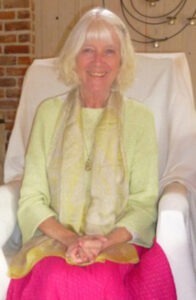
Summary
The conversation explores profound heart openings, relationship struggles, Kundalini experiences, meditation, and encounters with beings perceived as higher intelligences. It also examines how spiritual practice can include emotional healing while avoiding attachment to psychic phenomena.
Questions This Interview Explores
- How can intimate relationships become part of spiritual growth?
- How can painful emotions and past trauma be integrated into spiritual practice?
- What should spiritual seekers make of Kundalini awakenings and unusual mystical experiences?
- How can someone distinguish genuine spiritual guidance from distraction or projection?
- Why is awakening to one's true nature more important than developing psychic abilities?
Key takeaways
- Every feeling, including wounded fear, can be offered into the heart and used for healing.
- Relationships can be approached as a spiritual path rather than dismissed as worldly distractions.
- Meditation and emotional self-examination need to develop together.
- Powerful mystical experiences should not become the focus of spiritual practice.
- Seek inner awakening first; one's appropriate service will emerge from it.
- Channelled messages and psychic phenomena should be met with discernment rather than blind trust.
Transcript
Rick: Welcome to Buddha at the Gas Pump. My name is Rick Archer. Buddha at the Gas Pump is an ongoing series of interviews with spiritually awakening people. I’ve done nearly 400 of them now, and if this is new to you, you might want to go to batgap.com—B-A-T-G-A-P—and look under the Past Interviews menu, where you will find all the previous ones organized in various ways.
This show is made possible through the support of appreciative listeners and viewers. And when I say viewers, that implies there’s also an audio podcast in addition to this video you may be watching. So if you appreciate it and feel like supporting it, there is a PayPal button on every page of the site, and there’s also a donate page that offers other options to people who don’t like to use PayPal.
My guest today is Jacqueline Maria Longstaff. Jacqueline is in Denmark, and she spends a lot of her time in India, going back and forth between Denmark and India. She’s been doing that for years. I know from having read one of her books and listened to a lot of her recordings, audios, and videos that she has lived a very interesting life and has really been a spiritual seeker since early childhood.
I think that you’ll find this discussion interesting, both in terms of her personal story and in terms of the teachings and knowledge that she has gleaned through all these experiences and has offered to others for quite some time. So welcome, Jacqueline. It’s good to have you on the show.
Jacqueline: Thank you.
Rick: In your bio that you sent me, you mentioned that you began having peak experiences at an early age and that you held your first spiritual service for kids at age seven. So it might be interesting to start by telling us what one or more of these peak experiences were that you began having at an early age.
Jacqueline: Okay, Rick, let me start with the first one, because it kind of sets the scene for a theme in my life. When I was five years old, I was singing in a concert at a Sunday school, and at the same time I’d fallen madly in love, as a five-year-old, with a little five-year-old boy. His name was Melvin Baker. I still remember that.
Rick: Doesn’t sound like a very Danish name.
Jacqueline: The combination of singing for Jesus, whom I loved so much, and looking at Melvin Baker took me beyond what we would call today—it was the beginning of peak experiences. It was really, really amazing.
At seven years old, I was asked to hold a spiritual service, and that seemed extremely natural for me. I still remember standing there. I remember what I was wearing, and it just seemed very natural to offer this service for other children.
But about the peak experiences: it was very easy for me to go deeply into the heart. One of my teachings to people has always been:
There is nothing that can arise within you that cannot be put onto the altar in the heart and offered to God.
I began finding that out at a very early age.
Karmic Trauma, Love, and the Wounded Self
At the same time, I had, let’s just say, a karmic trauma in my life. This meant that whenever I fell in love, whether at five years old, 15, or whatever age, there was always a lot of fear and suffering connected with it. This became a great teaching for me, because it was only later that I realized if I could not accept every aspect of myself, including the part that was deeply wounded, I would never be whole.
At the same time, I had, let’s just say, a karmic trauma in my life. This meant that whenever I fell in love, whether at five years old, 15, or whatever age, there was always a lot of fear and suffering connected with it. This became a great teaching for me, because it was only later that I realized if I could not accept every aspect of myself, including the part that was deeply wounded, I would never be whole.
Rick: Was there fear and suffering because of experiences in this life—that when you fell in love, things didn’t always go so well, and therefore you became a little gun-shy, so to speak—or was it there from the start?
Jacqueline: I know from different ways and different sources, as well as from my own inner exploration, that it was from a previous lifetime: a very, very big shock. What I kept doing was putting myself into situations where this was triggered without knowing how to deal with it, and then beating myself up because I didn’t know what to do with it. It went on for many, many years.
Rick: Sometimes spiritual people—writers, teachers, and aspirants—brush off the whole relationship thing as being tangential or irrelevant to awakening, because it’s all maya and it’s not reflective of ultimate reality, and so on.
Obviously, relationships concern almost everyone. Most people aren’t monks, and they haven’t renounced the world; they have relationships. So it’s quite an issue, usually in spiritual circles, how to balance relationships and deal with them in the context of spiritual unfoldment and development.
Jacqueline: I actually have not had much of a split between what is spiritual and what isn’t, apart from this emotional reaction I have. Otherwise, I haven’t.
I was with Osho for just a couple of years, and I mentioned this in one of my books about relationships. I once heard Osho say something like, “The master-disciple relationship is the final game. Play it as beautifully as possible.” He didn’t say, “Don’t play it.” This is also how I deal with the subject of relationships: whatever game we’re playing, play it as beautifully as possible.
Rick: What’s that book that you wrote, Going from Relationship to Relationships, or something? What’s the title?
Jacqueline: That’s the subtitle: Relationship as a Spiritual Pathway, from Relationshit to True Relationship.
Rick: That’s pretty good.
Osho and Maharishi Mahesh Yogi were contemporaries and were actually rather critical of one another. But one point that Maharishi made about love was that individual love is concentrated universal love.
You think of someone like Jesus, or others who were said to be universally loving, and contrast that with the average person who loves some people but not others. Spiritual aspirants would probably like to be more like Jesus—to have an infinite, wide-open heart that could embrace everyone—but it’s a tricky minefield, I suppose, to go from limited expressions of love to universal love.
One thing that I think people find is that as they begin to evolve, the heart begins to open, and they do find themselves more loving. That’s probably what you were experiencing in that church when you were loving Jesus and that little boy. It makes them susceptible, I think, to falling in love with or loving people, which is great, but it can often get them into trouble. I think that is a syndrome. Have you encountered that?
Jacqueline: Yes, of course—in myself and in many other people I have worked with. But for myself, when I look back now, it was a first step.
When I was about 18, it was so huge, and I did not project that onto anyone. Instead, I became a Catholic, because I just felt there was something in the Catholic Church. I was only Catholic for about three years. Then I started arguing with the priests and in the confessionals.
But I think there was something in the Catholic Church—the devotion, lighting candles to the Virgin Mother, the Virgin Mary—that had something to do with this huge heart opening. It helped me to be able to make sense of it, because I didn’t know what to do with it.
At that point, I wasn’t projecting it onto someone else, and I feel it was a great gift to have had those three years, or whatever it was, as a Catholic. Then my attention started turning to the teachings of the East, and soon after that no form of religion held anything for me anymore.
Rick: What had you been doing at the age of 18 that triggered that heart opening, or did it just happen out of the blue?
Jacqueline: As you may have read in some of my books, I know a lot about astrology. At that time, the planet Neptune—which is totally, what you call in English, without boundaries, and is connected with compassion and unconditional love—went over Jupiter, which is also very connected with the heart, and so on.
This is what happened astrologically, and this just started arising in me. I started reading about the saints and could sit in the church where the singing was happening. But then, in going to confession and speaking with the priests, I was deeply dissatisfied, so I had to move on.
Then I don’t even remember how it happened. I just remember sitting in Uganda with books about Buddhism, Taoism, and Hinduism. After that, life took me to India. I started practicing yoga, and so on.
Rick: What did you actually experience?
Ecstatic Love and Kundalini Energy
Jacqueline: I experienced this warmth. It was almost like an explosion—so much love, and I didn’t know what to do with it. I’d go into the church and light a candle. I would sing and go into ecstasy, but it was so huge. My whole body was shaking. It was a huge energetic experience, and I just did my best.
I was actually studying to become a teacher at that time, so I was trying to do my studies—not very well at all, because there was so much else going on. But I happened to get a teaching degree and move on.
When I actually got to Africa, something else started happening. As I said, I’d never felt a split between the spiritual and non-spiritual—not really. When I got to Africa, I loved being with the African people.
In the evenings, I used to go down through the banana plantations to the bar, where all the prostitutes and people used to dance to Congolese music. It was the Congolese music that grabbed me, and I could dance for hours and hours and hours. I was releasing something.
Looking back, I can see that the Kundalini was also starting to be affected. There was always something in my life that helped me to deal with this energetically and then move on. After some years, I found myself at the ashram in Pune for a couple of years.
Rick: A huge heart opening like you experienced was probably an awakening of the heart chakra, probably due to some rising energy that had come up and enlivened that chakra. It’s interesting to think of it that way, and it could almost be used as a model for understanding various types or flavors of awakening. Sometimes people have a sort of mind awakening that can be very vast and clear, but rather dry emotionally. Others can have a huge heart awakening like that. There are all sorts of different permutations and combinations.
Jacqueline: Yes, and when I actually got to India and met Osho, I remember a therapist there asking me what enlightenment was. I found myself saying something to him that just came, and he said, “Well, if you already know, why aren’t you doing it?”
With that opening, so much happened where I suddenly understood things without knowing where the understanding came from. Then something else happened in Pune.
Jacqueline: I had a great fear when I was in love—of losing the man I was in love with. You probably know about Pune in the ’70s. People were always changing partners.
Rick: Right. It was quite a scene.
Jacqueline: My fear was totally stimulated. I had a boyfriend at the time who was very unfaithful.
Rick: Was he in Pune also?
Jacqueline: And I guess I needed this.
Rick: He was there in Pune also?
Jacqueline: Yes.
Rick: Aha.
Jacqueline: My fear was triggered all the time, and I was always keeping an eye on him. One night, we came out of the ashram, and there were all these beautiful women around. Suddenly, a woman walked up to me. She lived in the same hotel I lived in, and there had always been an attraction between us. She put her hand on my shoulder, and I just turned around and followed her.
I even forgot my boyfriend was there, along with all these beautiful women. I followed this woman, and we walked in silence back to the hotel where we stayed. When we got there, she went into her room, and I went into mine. I sat down. I just managed to sit down, and suddenly I was sucked out through the top of my head and was flying through the cosmos, with this very powerful voice saying, “We have been waiting for you.” This was the beginning of many contacts.
There was no fear. When I came back in again, I managed to lie on my bed, and I was just awake all night, buzzing with energy. After that, it was like everything Osho spoke about, I understood totally, without knowing where that came from.
Psychic Phenomena and the Work of Awakening
Then I had manifestations in my living room here in Copenhagen some months later, and this went on quite a while. Afterwards, I felt like I was being tuned up for the work I was here to do. I did not try to cultivate this, because I knew, according to the teachings, that psychic phenomena could be a great distraction, and I really wanted to awaken to my true nature. So I kind of left it alone, but I was later told by somebody in Denmark what had actually happened.
Rick: I always found it ironic that Osho called all these people sannyasins when there was really such a relationship scene going on there. It kind of, in my estimation, cheapened the term sannyasin, and I think maybe other people looked at it that way too. What do you think?
Jacqueline: I understand you, and it certainly could. It triggered many people, but there were also those, myself included, who did anything we had to do to awaken. It was like I opened myself to any experience that I felt was going to help me awaken to what I perceived Osho had awakened to.
I know that in the therapy groups at that time, many things happened that wouldn’t be allowed today. I know many people who went to therapy in Pune in the ’70s and later had to go into therapy in their home countries to deal with the traumas they got from their therapy.
My experience was that we were willing to do anything to awaken. When I look back at what Osho did, I felt it was a time of great experimentation. I don’t feel all of it was successful, but there was one thing I felt was a great gift for me: those few years in the Osho Ashram.
The meditative energy was very, very powerful, and we also had to take part in the therapy groups. We had to work on ourselves. For me, this combination—the fact that we were forced to go deeply into our stuff, along with the possibility of going deep into meditation—was very important.
Those two things together made a difference, because if you only go into meditation, people can go up here into the upper chakras, think they’re totally enlightened, and close down to the rest of the stuff. We had to deal with all of it. At the same time, having a more meditative consciousness meant it was easier not to get stuck in the traumas that came up.
Rick: Yeah, so it sounds like there was perhaps less spiritual bypassing than there might have been, and has been, in some other situations.
Jacqueline: Yes, definitely. I felt it was a gift.
I actually started my meditation with TM. Then I went to a very powerful yoga school in Scandinavia for yoga and meditation. But there was a special gift there for me at that time in Pune. Osho wasn’t really my guru. I went there because I was in love with a man who was an Osho disciple, but when I got there, I met one of Osho’s older disciples who was really my guru.
Rick: Swami Devadas?
Jacqueline: Yes, from Sweden.
Contact with other-dimensional beings
Rick: You mentioned that you went to your room and got drawn up out into the cosmos, and some being said, “We’ve been waiting for you,” or something. You mentioned in your notes that you experienced powerful connections with interdimensional beings as preparation for your future work.
Jacqueline: The next very big connection was in my living room in Copenhagen, after I’d been in Pune. There was a very high energy there because I was meditating constantly.
One evening, I was just sitting there, and I felt the energy rising in a way I hadn’t experienced before. I could hear it, and then the next thing I knew, my whole body was totally paralyzed. I couldn’t move a muscle.
Then the chakras and the meridians—it was like the chakras were spinning like Catherine wheels, I think you call them.
Rick: Pinwheels.
Jacqueline: And the energy was whooshing up and down the meridians. I was paralyzed, and I could see my dining table. Slowly, two beautiful beings manifested. One was very big, and the other was smaller. It was like they were made of gems, like colored precious stones.
Rick: Gems, like gems.
Jacqueline: I had the feeling that if I could put my hand out, my hand would go right through them. I couldn’t move a muscle, but what really got me was the love energy coming from them. It was so powerful. Even though I couldn’t move, I felt no fear. They were just beaming this love energy at me.
Then, slowly, they dissolved, they demanifested, and slowly, I could move again.
What happened almost every night for a couple of weeks was that I was paralyzed again. The spinning started, along with the energy activation, but I didn’t see the beings again. It was almost as if it wasn’t needed.
About six months later, I went to see a well-known clairvoyant here in Denmark. I just wanted to ask, “How is it going with my spiritual practice?” This was my focus. He did a very good reading, and as I was about to leave, he said, “Jacqueline, sit down again. I’m being told something’s happened to you, and you haven’t understood it properly.”
I explained that things had happened, but I didn’t want them to get in the way of my sadhana, my spiritual practice. He said, “That’s totally fine. Don’t let it get in the way, but you need to know for later. You have been contacted by higher-dimensional beings or space intelligence, whatever people call it. You’ve been contacted for a very special reason, and you just need to know because you’re here to do something when you’re much, much older, far out in your life.”
I will be 70 this year, so I guess in some people’s eyes that would be old. But he said, “You just need to know, and don’t let it interfere with your spiritual practice.” Again, I had this expansion of consciousness, this understanding, and the energy pouring through me became more and more powerful.
Rick: In the New Age world, sometimes people get really carried away with channeling and angels and all this stuff, to the point where it becomes a distraction. But we don’t want to throw the baby out with the bathwater. Neither indulge nor be afraid. There does seem to be some intervention, oversight, blessings, or something by higher intelligences that are instrumental in helping to facilitate individual and collective evolution.
Jacqueline: With channeling, I didn’t know in the ’70s, when I was in India, that there was even a New Age movement. I saw that later on, back in Denmark in the ’80s.
One thing I used to say to people about channeling was, “Don’t worry. If it’s your dharma to be a channel, life will show you.” Have you heard of this pretend Swami, Swami Beyondananda?
Rick: Oh, yeah. He was at the SAND conference the last couple of years—the Science and Non-duality Conference. I met him and all.
Jacqueline: I’d love to meet him.
Rick: Funny guy.
Jacqueline: He said about channeling something like, “Enlightenment is not a bureaucracy, so you don’t have to go through channels,” and I really like that.
Rick: Another friend of mine said, “Just because you’re dead doesn’t mean you’re smart,” so don’t necessarily take something that’s being channeled as being some really special thing. There can be a lot of coloration from the individual personality. Even if there’s something genuine to it, it can really get distorted as it goes through the lens of the channeler.
Jacqueline: Whatever subjects I deal with, my teaching really is a bit like in the Bible: “Seek first the kingdom of heaven.” What I mean by that is, seek first the inner awakening. Wake up to your true nature, and then whatever you’re meant to do in the world, you will do it.
Some people won’t do very much; they will just hold a frequency. Others will be quite active in the world. We all have different dharmas.
Rick: We want the horse to be before the cart. We want the awakening to be established. So, on that note, you had this big heart awakening when you were 18, and you eventually ended up spending three years in Osho’s ashram. Is there a time in your life that you can say, “Okay, this is when the awakening finally happened”?
The Unity of Self and Other
There were a couple of things. One of the most profound experiences I had was sitting at the Osho ashram in the music group. I just sat down on the floor, and there was a little girl, a very little girl, sitting opposite me. We just looked at each other, and that was so profound. It was simply that she was there, I was here, and it was all just one. Nothing special; it just was as it was. That was huge for me.
Jacqueline: There were a couple of things. One of the most profound experiences I had was sitting at the Osho ashram in the music group. I just sat down on the floor, and there was a little girl, a very little girl, sitting opposite me. We just looked at each other, and that was so profound. It was simply that she was there, I was here, and it was all just one. Nothing special; it just was as it was. That was huge for me.
Then there was another time. I had Singing Hearts Center in Copenhagen for many years, and I wasn’t totally resting in what I was awakening to. There was still something. I remember I agreed to invite another teacher to the center, and I was making arrangements for her to come and share her satsang with us. Suddenly, it was as if my mind went a bit crazy: “What are you doing? You’re bringing her here to give her satsang in your center with your people.”
I thought, “My people? Who do I think I am?” I just sat down in the middle of the group room and closed my eyes. It was a spontaneous inquiry. I went inside, and I wanted to find this Jacqueline who was so important and so special that nobody must come along and take anything away from her. I went inside to find this one, and the more I looked, the more absurd it was. There wasn’t anybody there.
This was a very, very big turning point. Then other things happened along the way. I was holding satsang, and I’d been teaching people since the late seventies in one way or another. Suddenly, I realized one day that it had all just come together, without really knowing what the final realization was.
Rick: For some people there is a big “aha” after which everything has changed, and for other people it’s more like it sneaks up like a thief in the night. You couldn’t mark it on a calendar. It’s just that, at a certain point, you realize there’s a continuity here, an abiding realization. You don’t know when it started, but it just continues on.
Jacqueline: Yeah, that’s how it was for me.
Rick: So what prompted you to finally leave Osho’s ashram?
Jacqueline: I went to Osho’s ashram because of the man I was in love with, and I received so much there. But I also started to find—and I met Devadas, who was my guru—that I felt the sannyasin world to be very restrictive.
There were certain things I wanted to do. I also wanted to study the esoteric teachings. I spent seven years doing that by correspondence with an esoteric school in London. There were things I wanted to do that didn’t fit in with the rules, and I just had to let that go.
So I wrote a fine letter and sent my mala back—the pearls back. I never heard from anyone, but I finished it off in the best way I could. Actually, just before that happened, Osho was appearing in my dreams wearing different-colored clothes and telling me to leave it behind. But I waited some months before I acted on it, in case it was just my mind. But it wasn’t.
Jacqueline: My guru, Devadas, actually said something to me like that, because I was with him when I had another big realization. He said to me, “Now it’s your job to go out and share this with other people. You can’t be sitting here with me all the time.”
Rick: Is he still alive?
Jacqueline: Yes, he’s very old now, and his health isn’t so good, but we connect. He has a lovely partner looking after him.
Rick: In 1979, you began guiding others and holding courses, retreats, and satsangs in many countries. Was that after Devadas said that it was time for you to get out and start teaching?
Jacqueline: It was around that time. I used different tools. I was also a teacher, and I used to teach people how to work with others in spiritual unfoldment through healing massage. I made my own form of spiritual psychology.
What I realized, and what other people came to me for, was that whatever tool I used, it was always about awakening, and it was about the energy transmission. As I always say:
It’s the energy that does the work.
Rick: Transmission from you to them, or transmission from…? So it’s been your experience, and is perhaps still your experience, that you have that gift of transmitting. People sit in your presence, and something is enlivened.
Jacqueline: Yes, that’s a big part of my work with people. Whatever theme I work with—whether it’s going from relationship to relationship or some other theme—whatever I hold, I put it in the structure of a meditation retreat, where there’s morning meditation, silent sittings, and then teachings around the theme that I’m presenting.
I also see the value of people being able to go deeply into the silence and deep into the center of the heart. For me, it was this deep silence in the center where the true self was most easily able to reveal itself.
Rick: Here’s a quote from your book. You said, “You cannot change the tendencies you have—negativity, for instance—but you can create enough inner space so the negativity can just be there, and in that space something happens. This is called transcendence.”
I’ve often used the analogy of a glass of water. If you wanted to dissolve a handful of mud in it, you could put the mud in, but it would just totally muddy up the water. If you had an ocean and put a handful of mud in it, there would be enough capacity in the ocean to dissolve that mud without itself becoming muddied—although we’re testing that limit these days as a species.
Jacqueline: That’s a beautiful analogy. One of the things that was always very easy for me in my spiritual journey, and for which I was very grateful, was opening up to spaciousness. It was very easy. I even have meditation retreats that I call “Spaciousness.”
Rick: Did you ever go through a drug phase when you were a teenager, or did you manage to bypass that?
Jacqueline: I didn’t go through a drug-addict phase.
Rick: No, marijuana, LSD, that kind of thing.
Jacqueline: My first wedding cake—I got married once in Uganda—was made with 50 percent my own marijuana and 50 percent chocolate.
Rick: Pretty good.
Jacqueline: Whenever I did anything, like a little LSD or magic mushrooms, it was always in a spiritual setting. I never just took anything. I would always ask the I Ching, “Is this okay to do today?” I would have a guide, or I would guide somebody else. I did it in a very pure space.
But then I knew the time had come—this was maybe around 1980—to totally leave all of that alone, and that I had to realize it myself.
Rick: The reason I ask is that when you said you’d always had a natural ability to slip into vastness or spaciousness, that was what first gave me a big taste of it: various psychedelics and so on in my youth.
When I finally decided, after only about a year of such use, to give it up and learn to meditate, it was as if I knew the territory. Meditation was obviously a much purer and more wholesome way of contacting it, but I just dropped like a stone into that unboundedness. It was familiar; I knew what it was.
Jacqueline: Even before that, with the Catholic experience and so on, I would go into these huge, spacious places. When I did take anything ceremonially for a couple of years, I never once had a negative experience. It was always very beautiful and spacious, and I came safely back into the body again. So I was very blessed in that way.
Rick: Aside from drug use and that sort of thing, when you had these spacious experiences naturally, did you sometimes have a little bit of a hard time getting your feet back on the ground? Some people can become very spacey when they’re having a lot of those experiences, and it takes some doing to integrate them.
Jacqueline: I guess I had experiences like that, and people would often call me spacey. But, to be honest, Rick, I just felt they didn’t understand me. I know that in many people’s eyes I was spacey, but I was grounded in my own way.
I remember my second husband and I were once sitting with a healer, and the healer said to him, “You are grounded like an elephant. Jacqueline, she’s grounded like a bird. A bird knows where to land and then fly off again.”
I remember once walking through the town here in Copenhagen, where I didn’t really have a sense of a physical body. I realized that most people did have a much better sense of a physical body, but it wasn’t an issue. I can manage pretty well in the physical world, and always have been able to, but in some people’s eyes they thought I was very spacey.
Rick: There are a lot of people—and a lot of teachers these days—who talk about embodiment and integration. It seems that, as a spiritual culture, a lot of people went through a phase of absolute or spacious orientation and then discovered, “Wait a minute, I still have a body and I still have a life. I’ve got to somehow have a job, I have kids, and I have to somehow integrate this into the real world.”
Jacqueline: Very early on, I started having very regular massages. I’ve met some of the most amazing massage therapists in the world, and I actually trained to be a masseur. I used to train people to use massage as a tool for spiritual unfoldment.
I also used to dance. Even in my programs now, every day we dance—some kind of dancing meditation. As a friend of mine once said, “All this beautiful energy—you have to have something to put it in.”
So I do my best to keep people grounded and in the body, while also knowing that obviously we’re not this body. We’re not anything that comes and goes. But I just feel it’s good to look after the body as well as possible.
Rick: You know the old saying: “The body is the temple of the soul.”
Jacqueline: Exactly.
Rick: A lot of these points you’re making should seem obvious, but I always hear examples of people who neglect them. I heard a story from, I believe, David Godman, who mentioned that he met this guy who was in India and had an infection on his leg. The man kept saying, “It’s only the body. The body’s not real,” and so on. He kept refusing medical attention, and finally it got to the point where he was going to have to have his leg amputated if he didn’t do something. He finally did.
I think it’s a valuable understanding to have that the body is the vehicle through which enlightenment is gained. If we don’t have a body, there’s no question of enlightenment, or if we’ve damaged it in some way.
Jacqueline: I remember sitting in one of the therapy groups once in Pune and hearing a young woman talk about something that was going on in the body. The therapist actually said to her, “It’s just the physical body,” and I felt, “Hmm, that’s not so good.”
🩺 Plant medicines and caution
Rick: There’s a lot of popularity these days around ayahuasca, entheogens, and so on. People need to approach that cautiously, because the body is a very delicate, refined instrument. If you don’t really know what you’re doing, or if the person supervising what you’re doing doesn’t really know, you can screw things up. There’s a young woman in our town who did that and has never been the same since. It’s been years now, and she’s in bad shape. So, safety first.
Jacqueline: This has to do with the sacred plant medicines. Quite many years ago, I had something wrong with my intestines. A man who was also interested in my cosmic airport vision took me with him to Ecuador to try this plant medicine. I did it several times, and it totally healed my physical body.
Later on, after the initial sessions, I was also shown that using something like ayahuasca carefully with people who are working with the death process can be a great tool. If you could watch your mind on ayahuasca, you could watch it going through the death process. I do a lot of work with the death process.
Rick: Yeah, we’ll be talking about that.
Jacqueline: I invited a very fine shaman whom I totally trusted to do a few ayahuasca sessions only with the people who had completed the Cosmic Airport training with me, after they’d done the session about the death process. That was very fine for most people, too. It was done in a very sacred space.
But I’ve also heard of certain people going to Africa now and doing iboga, which I believe is much more powerful than the other plant medicines. I just think people have to be very careful. You need to know the shaman, and there’s also a lot of black magic going on in Africa. That’s not a judgment; it just is the way it is. I feel that people have to be very careful when they open up so powerfully and subtly, as you can do with the plant medicines.
Rick: In Peru it’s become something of a tourist industry. Everybody and his brother is getting into it because there’s so much money to be made. On the other hand, here in the U.S., Johns Hopkins, a prestigious institute in Baltimore, is doing research with psilocybin to help drug addicts and so on. Various people are using ayahuasca for that, too, because there’s this huge opioid epidemic in the U.S.
So it has very promising aspects, but it needs to be taken very seriously, with a huge note of caution. I don’t mind us spending a few minutes on this, because we might say something that would save somebody from a very serious, life-damaging event.
Jacqueline: Exactly. I was very cautious about this, but ayahuasca showed me the benefits of using it in connection with the death process. The people I was working with were people I knew very well—those in the training groups. I said to them, “I don’t ever want anybody to get the impression that I’m using drugs or asking you to use drugs as a way to enlightenment. We’re using this in a very, very special way.”
I trusted those people who were with me. We did it in three different groups, for the three different Cosmic Airport trainings, and I trusted them not to go out saying, “Oh, Jacqueline’s doing ayahuasca,” and so on, because it wasn’t like that.
I see the benefits of it, but people have to be very, very careful. There must be shamans there, and I would say therapists also, who could deal with anything that came up, because it can be such a powerful tool.
Rick: A question came in from Dan in London, who asks, “There’s been a lot of discussion of spaciousness, but in my experience, space manifests in consciousness itself, which is beyond. It seems that consciousness itself is unknowable by the physiology, but only things that arise out of it when one is open—for example, spaciousness, compassion, and so on. What do you think about this? This is something I’m struggling with.”
Using Spaciousness Without Getting Lost in Emptiness
I would say, Dan, that anything we can talk about is arising in consciousness, including spaciousness. As I said, for me it was very useful to be able to open up to these experiences of spaciousness, but it’s very important not to get lost in emptiness. You can get stuck if you suddenly see something as the goal when it isn’t. There are tools along the way.
Jacqueline: I would say, Dan, that anything we can talk about is arising in consciousness, including spaciousness. As I said, for me it was very useful to be able to open up to these experiences of spaciousness, but it’s very important not to get lost in emptiness. You can get stuck if you suddenly see something as the goal when it isn’t. There are tools along the way.
I also see people getting lost in “It’s all an illusion.”
Rick: That’s a big one.
Jacqueline: In a way, it is an illusion, because whatever the mind projects on reality comes and goes. It’s an illusion. But of course, everything arises in consciousness.
This is why people often ask me, “Is a teacher or a guru needed?” I would say there are no rules, but for most people, they do need the support of somebody who’s traveled the pathway and who also understands where you can get stuck.
Rick: What I find useful in this context is the avoidance of absolute judgments and statements. On the guru question, some people say, “You need a guru.” Some people say, “The guru principle is absolute; you don’t need a guru.” It’s much more nuanced than that. It’s a much more individual consideration.
Regarding the idea of illusion, my friend Timothy Conway has a sort of three-layer model. He says, “There’s a level on which nothing ever happened. Everything that appears to have happened is an illusion. There’s a level on which things are happening and everything is perfect just as it is—the Holocaust, anything; it’s all divine play, perfect just as it is. And there’s another level on which we have problems and need to deal with them. The Holocaust was terrible, and we should never let anything like that happen again.”
You don’t just brush things like that off, saying it’s all divine or it never happened. This sort of multilevel, paradoxical embrace of the full range of life is a nice antidote to absolute statements that box you into one particular perspective or another.
Jacqueline: There are no rules. I would never say you have to have a guru or you have to meditate. But I know from my experience that most people need a guide along the way for part of the journey, and that most people really receive great benefit from meditation.
I also always ask people to be aware of the difference between techniques that help bring you to the meditative state and being in a meditative state. Ultimately, there are no rules.
One thing I really enjoy today is that there are so many different types of teachers. When people are mature enough, they can look at all the different teachers and teachings and know what is needed and what is suitable for them at this point in time.
I would never say to anybody, “If you go to someone else, don’t come back to me.” I see it as a sign of maturity when people know where they need to go to get what they need to receive.
Rick: A question came in from Joshua in Portland, Oregon, related to something you said earlier. You used the phrase, “The energy does all the work,” and he wanted you to elaborate on that in relation to awakening.
Jacqueline: It’s something I started saying years ago because this was my experience. There can be fine teachings and fine exercises people can do, but it’s as if the energy—a high-vibrating energy—really brings everything up to the surface and clears away what needs to be cleared away.
When I went to the Osho Ashram, I was just sitting in the energy field while Osho was giving his lectures, with perhaps thousands of people sitting there. It was also through my own connection with Devadas, because we spent a lot of time together, alone. We would walk and walk, and we would sit and drink tea. He would make vegetable soup, and he was very good at that. He had no other siddhis, just vegetable soup.
Rick: That’s an important one. I think Patanjali mentions that as the most significant siddhi.
Jacqueline: Suddenly something would happen, and we would both go quiet. We would just sit there. We weren’t looking into each other’s eyes. We would stop in the moment and go quiet.
Anything that arose in that space, I knew not to touch it, not to cultivate it, not to try to push it away, and not to try to embrace it. It was like this neti-neti, neither this nor that. Just leave everything alone.
The energy became so powerful, and I knew it was the energy that was opening me to an understanding of what truth was. It was moving, lifting, and opening the patterns, releasing the patterns, whatever. It just became my reality, or my knowing of how much can be done in a powerful energy field.
That’s what I would say. If you’re sitting with a very large group of people who are all meditating together, the energy is enhanced, and it can be much easier for people to go more deeply into meditation, especially in the beginning, than they could if they were sitting alone.
So I work very much with group energies, creating silent spaces and just guiding people: Don’t touch anything. Whatever comes, just let it be.
Rick: One time I was meditating in a group of 8,000, and you couldn’t help but meditate. Slipping into the transcendent in a group that size was really palpable.
Jacqueline: It’s the same kind of thing that happens at a sacred site. It’s like a vortex. Where I have the ashram in India, by the sacred hill Arunachala, it’s such a powerful energy field. It’s a real gift for people to come on meditation retreat in a place like that because the energy is already doing the work.
Rick: Energy field, I think that’s the operative phrase, and what it implies is that we’re not just talking about some physiological energy inside our bodies. We’re talking about a ubiquitous field that one can immerse oneself in, soak it up like a sponge, or have it enlivened within oneself by virtue of that field. Conversely, there are fields of very negative energy that one could hang out in, and that wouldn’t be so helpful.
Jacqueline: One of the things I often have done with people in the training groups is give them a topic for discussion, with people sitting in smaller groups. But I always ask them to tune in energetically first, in silence, then open their eyes and see who wants to speak. Nobody interrupts or comes with comments or asks questions. They just let the person speak, and then the next one will go, and then the next one. This really enhances the field. It’s like the whole field supports people in bringing up what is deepest or most important for them. It kind of bypasses the censorship of the mind.
Humanity’s evolution and the Cosmic Airport
Rick: A question came in from Matt in Los Angeles. He said, “Do you think the Earth and humanity are growing towards something, some state of being, or are we just meant to be living our lives the best we can and whatever will be will be? I’m wondering if awakening is for a greater purpose, or if it’s just for us to help us live good lives.” Many people feel that the ambient energy field of the planet itself is rising. As they say, “A rising tide lifts all boats,” so maybe you could comment on that.
Jacqueline: As far as humanity is concerned, I definitely see us evolving and going somewhere, evolving to a higher state of consciousness. By that I mean also a higher vibration, because what you see happening on the planet today is simply a reflection of the collective consciousness of humanity. Obviously, when we start lifting the consciousness on this planet, then the reality that we create is going to be of a much higher vibration and is going to be much more supportive of awakening.
I have often said, just as a joke, but still, if we lived in a more enlightened society, when a baby is born, it would come out of the womb waving its horoscope, and the whole family group would gather around and look: “What is this child’s potential? What is he or she here to learn and to heal?” Everybody would do their very best to help the child become all that it could become.
This is kind of where I see us going. I see us moving in spirals, not going around in a circle—the end of the Kali Yuga and finally the Sat Yuga and another Kali Yuga. I’ve seen inside that that is not what’s happening. We are moving upwards in spirals.
Rick: There are ages, and the Kali Yuga is said to be 432,000 years long. We’re only 5,000 years into it, and it’s the worst one. But Yogananda’s master, Sri Yukteswar, had a whole different explanation of it. It’s much shorter, and we’re actually heading into a more positive yuga already.
One thing I’m noticing with this ambient increase in collective consciousness is that some people are having spontaneous awakenings and kundalini risings who have no interest in such matters.
Jacqueline: I would say it definitely is happening, and I just feel it’s wonderful that there are so many different types of teachers and guides today. Guru, if you want to use this expression, simply means the dispeller of darkness, helping people to see their true nature. But there are so many different types of people on this planet. There has to be something for everyone, and there is.
Rick: That’s one of the underlying premises of this show. I wouldn’t expect everybody in the world to gravitate toward any one person that I interview. It’s like a smorgasbord. Not that we should be dilettantes and not take anything seriously and just dabble along, but different strokes for different folks.
The name of your website is cosmicairport.com, and you had this experience through which you evolved this whole notion of a cosmic airport. I think we should devote some time to discussing that.
Jacqueline: Many years ago I woke up one morning and was just lying in bed with my eyes closed, and I saw an airport. When I looked, I could see the arrival lounge, transit and departures. When I looked more closely, I could see there weren’t any airplanes.
In the arrival lounge, it was a place where women could come and birth their babies consciously and in a very powerful energy field, to help bring in the soul coming into incarnation as untraumatized as possible. In this lifetime, my own birth took three days and three nights, so I know what a birth trauma is and how much it can affect the whole life.
Then I saw the departure lounge. Again, there were no airplanes, but it was where people were leaving the body, departing, and where people were being assisted in leaving the body in the highest vibration possible for them.
Then the transit lounge was for everybody else in transit through life. It was a place of awakening, maybe like an ashram, but the whole point in the transit lounge was that there was a huge focus of energy. There was like a temple or something in the middle of it where people sat in powerful meditation.
From that, there might be meditation retreats happening, healing groups, or teachings on relationships or how to bring up children. There were also cafés and shops and movie places, but the whole thing was happening in this powerful vibration.
When I looked, the whole airport started pulsating. It was like a Buddha field, a real cosmic energy, and I began calling it the cosmic airport. I also had a feeling that one day there would be a physical cosmic airport, but that it was far out in the future.
Originally, I thought maybe the ashram in India would be the first cosmic airport, but it’s very difficult doing things in India. Some of my Indian students are making a training center for my cosmic airport teachings in the Pune area, with nothing to do with the ashram. There’s also a big project, hopefully on its way in Brazil, on some very sacred land. Other people have also shown interest in creating smaller cosmic airports in different parts of the world.
Rick: Obviously, it’s something that’s going to have to be decentralized, because people are being born, living and dying everywhere. But I imagine these teaching centers could be places where people could be trained to have the right perspective on it, and then they could fan out and help provide that everywhere else.
Jacqueline: Two of my students are having some of my teachings on birthing translated into three different Indian languages, because what some of the women go through in India in the birthing situation is very terrible for them.
Rick: Now, obviously, at least with birthing and dying, it would necessarily involve some kind of medical knowledge.
Jacqueline: Yes, but that’s not my job. My job would be more about overseeing the teachings and helping people to hold the energy. We will need doctors and nurses and midwives. These are huge projects. It’s not something one person can do all of that.
I met Ram Dass once at the baggage check-in in Phoenix, and we talked a little bit together because he’s done beautiful work also with death and dying. When these ideas and this inspiration come to us, they don’t only come to one person.
Rick: Some cultures have it all worked out to a science. The Tibetan Book of the Dead—they’ve given tremendous attention to this kind of thing.
Jacqueline: I’ve studied the Tibetan Book of the Dead. It’s not something I use much in my training groups because the Tibetan Book of the Dead was really written for Buddhist monks who had a certain way of viewing reality, and they had certain very specific tools for working with whatever could arise in the death process.
I found that for some people, especially Westerners, it can be a bit scary if they just start reading the Tibetan Book of the Dead without having that background.
Rick: The notion that we don’t die when the body dies, which of course is a perennial wisdom of a number of traditions and very explicit in the Vedic tradition, could be a huge relief for people, don’t you think?
Jacqueline: Yes, and this is why I like people to go out with the teachings on the level they are on, wherever they can be useful. I’ve often said, if we can clear the fear of death on this planet, we will clear up a big chunk of the astral planes, because I’m finding, as I go to many countries in the world with my work, that I often see people who have meditated for a long time, been on a spiritual pathway, and been working with themselves in therapy, where there is still a fear of death.
It’s quite deep, and if you go totally deeply into meditation, then I would suggest the fear of death would disappear, because you know you’re not the body. But I’m just happy that these teachings are so widely available for people from so many different sources, because there still is a great fear of death.
Rick: Woody Allen said, “I don’t mind dying, I just don’t want to be there when it happens.”
Jacqueline: That’s right.
Rick: A couple of weeks ago I had a conversation with a Buddhist teacher whom I liked a lot—a brilliant guy who had done years of meditation—and we had this whole conversation about reincarnation and whether there’s something retained when the body dies that bears any semblance to you, that could actually take another body and continue making progress.
He just didn’t buy into that whole perspective, and we debated it back and forth. Maybe that’s more of a Buddhist thing, but even—I don’t know, I’m confused about it because the Buddhists talk about reincarnation, but then they say there’s no self whatsoever, so I don’t know what’s supposed to reincarnate if there isn’t.
Jacqueline: For most people, when they’re incarnated in the physical body, there’s a real identification with the role playing through them, and the idea that they might not exist anymore might be very scary. But the way I see reincarnation, it’s not Jacqueline Maria Longstaff coming back as Jacqueline Maria Longstaff to play a Buddhist monk or something.
When the body drops, we’re all part of the collective energy field, and we talk about the vasanas and the tendencies if you look at Vedanta. There is something nonphysical that exists, and I would say that, going through the death process, it acts like a magnet, attracting physical tendencies and emotional and mental tendencies for another incarnation. This is how I see it happening.
Rick: Somewhere in the Vedic tradition it says that the last thought at the time of death determines the quality or nature of your next life, and that the quality of that last thought is very much determined by everything you’ve done in life. It sort of gets congealed into that final thought or impression, and that’s your send-off.
Jacqueline: I don’t see it quite like thinking of a particular object and coming back as that object. I feel it’s more the vibrational quality of what you leave with.
If you leave with a lot of hatred or a lot of fear, those tendencies will be there. This is why, in the training groups, people meditatively practice imagining that they’re leaving the physical body and opening up in spaciousness, being able to let go of any wish for anything, and to be really free.
People have to be willing also to let go of the parts of the personality that they really like. It’s not just getting rid of the so-called negative stuff. People have to be able to release their attachments to the parts of the personality that they enjoy. So we prepare in that way in the training groups.
Rick: You provide specific instruction or practices to let people—it’s almost like a dress rehearsal for the dying process, right? So you learn to surrender and let go of everything.
Meditation and an Awakened Death
Exactly. One of the greatest tools for that is real meditation. I don’t mean doing a meditative exercise or meditating on colors for the chakras; those are exercises. I mean really going deeply into meditation, where absolutely anything that arises, you just don’t touch it. That is the most profound practice for what you might call an awakened death.
Jacqueline: Exactly. One of the greatest tools for that is real meditation. I don’t mean doing a meditative exercise or meditating on colors for the chakras; those are exercises. I mean really going deeply into meditation, where absolutely anything that arises, you just don’t touch it. That is the most profound practice for what you might call an awakened death.
I believe that Osho even said something like, “If you’ve had one moment of meditation, you are preparing for your death process.” He didn’t mean sitting chanting Om or something; he meant a moment of real meditation.
Rick: Real transcendence.
Jacqueline: Real transcendence, yes.
Rick: Let’s talk about Arunachala, and how you climbed it at the Millennium, and how you have this five-acre ashram there in India.
Jacqueline: Right at the end of the old Millennium, I thought my days in India were over, and suddenly I kept hearing this song about Arunachala. I felt Arunachala calling me in meditation, and I had this inner knowing that I had to be on top of Arunachala going into the new Millennium.
It was very inconvenient for me because I had a lot to do in Denmark, but I managed to get an air ticket and arrived in Tiruvannamalai, where this mountain, Arunachala, is, just 48 hours before the New Year. People told me there was no way I could be on top of Arunachala all night.
I was sitting in the restaurant and heard a young couple speaking Danish. I went over to them and told them why I had come to India, and they were very sweet. They said they felt it was their wake-up call, and they promised to get me to the top of Arunachala before the sun went down on the Millennium. And we did.
We managed to get to the top, and as I was going up the mountain, I knew that the new Millennium was dawning in New Zealand, so I started chanting the Gayatri Mantra to New Zealanders and so on. I was on the mountain all night, just chanting the Gayatri.
The next day I slid down the mountain again and went to bed. Then it happened that I went back there, and I was told about some land that was free. A foundation got that land for me so I could make the ashram, and that was in 2003.
The ashram happened, and that hasn’t been easy. It’s not easy doing things in India, but many, many people have been to me there. I’ve let go of the idea of that ashram being a Cosmic Airport, but I am there a few months every year, and it’s a very powerful energy field to be in at Arunachala.
At the ashram, I’ve done a lot of work with children from the village. I support children with their school fees and things like this, and I’ve also done a lot of work with young adults, because some of the young adults who’ve got one foot in the village and the other foot in the ashrams find it very difficult.
So I do quite a bit of work with them—teachings and discussions, but also working with them energetically, with blessings and so on. That’s what I do in India when I’m there.
Rick: What happens when you’re not there? The ashram sits there for nine months, and things happen in it, or what?
Jacqueline: No, it’s open all year, but it gets very, very hot there. It’s 47 degrees today, I think. I have young people who look after it, and they’ve got a life there and a job all year round. Some Indian people come and do yoga retreats there when I’m not there, and something’s happening almost all of the year.
🕊️ Spiritual activism and discerning truth
Rick: Your Skype message says, “In times of great change it is the few who will make a difference, but usually they are the ones who are ridiculed, yet both are expressions of the one.” I thought I’d read that out since you chose it.
Jacqueline: I chose that message because I know a lot of people, myself included, who have been ridiculed sometimes because of the work we’re doing and the things we speak about. I have friends also who are activists, and some of them are very high profile. They have really been ridiculed because what they are sharing with people is too much for many people right now to hold in their awareness.
But I just wanted to remind people that it’s all part of the oneness: those who are being ridiculed and those who ridicule. It’s all part of the oneness. This drama we see unfolding at this point in time is actually quite amazing.
We’ve talked about many things today, so I’m going to say one thing. Can I be a bit rude?
Rick: Oh, sure.
Jacqueline: Funny rude. We do need people who are willing to look at what’s happening in the world, but without getting lost in it. I often say what we need on the planet today is:
Systems busters with hearts—light workers with balls.
Not just light workers who don’t want to touch anything that seems negative, but we need both. The systems busters with hearts won’t forget the oneness.
Rick: Back in the late sixties and early seventies, there was a greater polarity between the spiritual types and the activists. The spiritual types would think the activists were superficial, and the activists would think the spiritual types were just dreamers sitting on their butts, not accomplishing anything.
But these days, spiritual types have become much more involved in various types of sacred activism, and activists have realized that there needs to be a spiritual depth to their activism, or else they’re going to end up perpetuating the same problems they’re fighting against.
Jacqueline: I have great respect for Kimberly and Foster Gamble and the Thrive movement. I connected with some of these Thrive people at a conference, and people I know very well have also been working with Foster Gamble and Kimberly.
Rick: There’s a lot of people who talk about all kinds of so-called conspiracy theories, what’s really happening in the world, and things like that. I think that’s just another area where we have to be discriminating. I’ve seen a certain mentality among people who buy into that kind of thing, where they don’t discriminate. They’ve never met a conspiracy theory they don’t like.
You really have to recognize that there is more going on than meets the eye, but on the other hand, not everything that you hear on alternative news outlets and so on is true. You really have to put your own thinking cap on.
Jacqueline: One of the things I say to my students is, if you want to know truth—and it can be inner truth or the truth of what’s happening in the world—you must have no sacred cows. If you’ve got a sacred cow to protect, and it can be, “My guru is better than your guru,” or any of these sacred cows people can have, then you’re not open to truth.
I’ve also seen this with some people working with what we call a conspiracy. Their sacred cow can be that every bit of information that comes up about the conspiracy has to be true. It’s not. It’s really not.
🕊️ Witnessing and spiritual maturity
Rick: There’s one thing that came up in a number of your writings where you were speaking about witnessing, and it made me want to ask the question about being established in or as the witness versus trying to witness. The way you wrote it made it sound a little bit like witnessing is something we should make an effort to do, whereas I see it, experience it, and think of it more as a natural condition that develops, and you don’t have to try to do it any more than you try to breathe.
Jacqueline: I totally agree with you, actually. But in the beginning, when people are getting into witnessing, it’s not that easy; it doesn’t come as naturally.
Witnessing, I would say, in the beginning, is about being able to just take a little step back and look at the movie that’s playing out through you, look at the role that’s playing through you. Then the witnessing becomes deeper and more and more natural. But that’s quite a place to get to for somebody—to remain in touch with the witnessing consciousness whatever is happening.
There’s a long way to go from the first step to just being in it in a natural way, but that is the goal, you could say.
Rick: The goal is not necessarily always the means to the goal, and sometimes the two are confused. Witnessing is a natural phenomenon when the Self has been realized, because it’s pure silence.
That silence, at a certain stage, may contrast with the activity of running through an airport or having a conversation or doing whatever you’re doing. There’s a sense that nothing’s happening: “I’m not doing anything. I just reside in and as this silence while all this chaos is going on quite independent of me.”
But that’s a natural condition, whereas there can be a tendency to divide the mind and perhaps weaken mind-body coordination if one is making a conscious effort to be detached or to stand back from one’s experience.
Jacqueline: One has to start somewhere. For some people, the idea of not being attached to what is happening or what is playing through them is quite far away from them.
Roberto Assagioli, who put together psychosynthesis therapy, would always write on the board, “This is not the truth.” He meant it’s not the absolute truth.
He worked with people with subpersonalities, different aspects of the personality, and taught them to see those aspects like different instruments in an orchestra. Instead of just being taken over by anger or taken over by this or by that, he would get people to practice being the conductor, with the baton: “Okay, I’ve heard from you. Sit down. Now it’s your turn to play.”
This is obviously not the goal of meditation, but it was a way of helping people to accept every aspect of themselves and to see that, in some way, they have a kind of choice to observe something and not to let that pattern keep running the show all the time.
Then he would take people deeper and deeper until he had them in the witnessing, in witnessing consciousness.
Rick: There’s something to cultivating the ability to catch a thought before it really gains momentum, to catch it near its source. It’s like being able to get to the source of a river. At that point, there’s not much force or momentum, and with just a little bit of a shift, you can send the river off in a different direction.
So it’s like, if one can be established there—which I think the Gita calls “resolute intellect”—then, with just the slightest intention, one can check the tendency to say something inappropriate or do something inappropriate.
Jacqueline: As you were talking, it came to me also—the idea of spontaneity. Some people say, “I love to be spontaneous.” I’m all for spontaneity, but the highest form of nirvana in some traditions is called sahaja, the sahaja experience.
Getting to the place where one is totally spontaneous without anybody having any idea about being spontaneous—it’s like spontaneity playing through this vehicle.
Very often, people who say they’re spontaneous just say what they want when they want to, with no awareness of any consequence.
Rick: They’re being indiscriminate, reckless, and unconscious. Don Juan Matus, who is Castaneda’s teacher in those books, said, “A warrior has time only for his impeccability.”
He was very much into not acting unconsciously to any degree. He did all kinds of wonderful, spontaneous, humorous things, but he was very much into not acting unconsciously.
Jacqueline: Impeccability. I love that, just the feel of that.
Rick: Through lots of meditation, a deep silence gets established. It remains without you having to think about it; it’s just there. You must have the spontaneous experience of witnessing because that deep silence is there regardless of whatever’s happening.
Jacqueline: That’s right. I’m seeing today that more and more people I’ve watched on their pathway are getting to this place of just being able to witness, not getting pulled in.
It’s taken years of practice. I’m seeing the response of certain of my students when something very difficult happens in their life. Whereas before there would have been quite a drama out of it, they’re able to step back and also acknowledge any feeling that might be there, but not take it as the truth of who they are.
There is, I would say, this huge awakening going on.
The collective shadow and social change
Rick: There’s a point in your book Kaleidoscope at which you said, “The shadow is always brought to the surface before transformation can take place.” I think it has relevance both to us individually and collectively, and I was wondering if you could address that—especially the collective, what’s going on in the world today, and how we might understand what’s going on as shadows being brought to the surface in order for transformation to take place.
Jacqueline: I often say:
Only when you can embrace yourself can you embrace the universe.
I just feel this work with the individual shadow is so important. But now, as I see it, we have the collective shadow rising to the surface very powerfully.
Embracing the Collective Shadow
The very first book I wrote was called The Last Waltz, and it was about the enlightened consciousness embracing the collective shadow. What I said is, we need people—with as much awareness as possible—as we move through these difficult times now, to be able to embrace what is coming up without perpetuating the turmoil and the chaos. The more of us who can stand centered when things arise, the better it is going to be.
We see the collective shadow now, and astrologically we’ve had almost three years of Pluto squaring Uranus. Pluto is death and rebirth. It’s bringing up the whole hierarchical structure, and Uranus in Aries is wanting to set the people free. But they’re in a square aspect, which means there is a real battle going on here. The more people who can stay centered and not go into judgment as the collective shadow surfaces, the better.
I’ve often said to people, I feel some people are here not to do a great job in the world outwardly, but simply to hold the highest vibration. That really is my feeling: just enough people holding a high vibration as we go through these difficult times.
Rick: Do you have a sense of how things are going to unfold over the next decade or two? If you were a betting person, would you place your money on things turning out okay after a certain amount of turmoil?
Jacqueline: What I feel needs to happen is the control system on the planet has to be dismantled. I was in America in November, the night of the election, and my heart was with Bernie Sanders.
Rick: Right, mine too. I met him, actually.
Jacqueline: I was sitting watching the TV, and Trump won, and I felt such a joy. It was not personal. It was nothing to do with me. I felt such a joy that this had happened.
I was not a lover of Clinton or Trump, but I felt, collectively, such a lightness, such a joy. The next day when I woke up, I could hear Leonard Cohen singing, “There is a crack, a crack in everything. That’s how the light gets in.”
I said to people, “If Hillary Clinton had got in, there would have been no crack. Now Trump has come in. Let’s see how this is going to play itself out, but at least there’s a crack,” because all of this stuff has to be brought to the surface.
I know we don’t go into all the details of this on this program, and I just feel that the more people who can be in their hearts and hold a high vibration, the more we will help to steady the collective energy fields, and also the astral fields, as we go through this transition.
When it’s going to be over, I don’t know. Some of us are already living kind of in a golden age, in a way. It’s to do with your awareness, your level of awareness. And for some people, the suffering and the trauma and the drama are very real.
I could never stand in front of somebody going through some of the things people are going through and say, “Oh, it’s all just an illusion,” because the suffering is real.
Rick: No, it’s unkind.
Jacqueline: We just do what we can in the moment. I tell people, give the best you can in the moment and don’t be attached to the outcome.
Rick: That’s good advice. I often wonder about the mechanics through which entrenched and powerful structures are going to be brought down, if they are, and what sort of upheaval that might cause.
Jacqueline: This is why I put so much focus on the heart. I also do heart energy transmissions to help people come deeper into the heart, because the heart isn’t going to judge. The heart accepts, and it can stand strong in the face of whatever is happening.
It’s probably going to take some time, but there’s also stuff happening that makes me feel there could maybe be a very big change coming very soon. But who knows? I could be wrong. I’m just holding it all as best I can.
Rick: Yep, just enjoy the movie and order some popcorn.
Here’s a question that came in from Florence from New York City. She asks:
You mentioned something in passing during this interview. You said something like, “People need to discover who they are first, and then a direction in life will emerge.” I have had many experiences over 20 years, and I’ve experienced higher states of consciousness that sound like a BatGap interview. However, returning to “who I am” has never happened. I’m so frustrated, and I can’t seem to find help with this, and it’s not from lack of trying. Can you comment on it? I’m 57. Maybe I should just retire from trying and wait for my next life.
Jacqueline: What I meant when I said that, when we were talking about the contacts I had and the phenomena, was to always put your awakening first, and then the dharma will show itself. But in a way, they kind of go hand in hand.
What is it that this lady is giving up on? I lost your voice a little bit at one point.
Rick: She feels like she’s been trying for so long, and she’s feeling like she’s never really gotten established in the Self, or in self-realization and who she is. She feels frustrated. It’s like she’s still looking for something that she hasn’t found.
Jacqueline: The first thing I would like to say in response to this—and this might not be the case with this person—is that it is really important not to be attached to any experience one has had. I’m sure this lady probably knows that, but in a way, awakening is very, very simple.
You remember when I talked about sitting opposite the little girl years and years ago? She was just there, and I was just here, and that was just it.
Maybe if this person could almost stop struggling—I don’t want to say stop the search, but many teachers would say this—if she could just each day sit in the heart, with the breath in the heart, and just, with a kind of okayness, be with the role that is playing through her.
The role that is playing through her might be quite challenging compared to other people, but if people make a problem of the role that’s playing through them, they end up having a struggle. So if she could find a way just to be very okay with the fact that she’s done a lot of searching, she may still seem to get caught up in the movie. But if she could just find a way of coming into her center and watching all of this—just watching the idea that she’s disappointed or frustrated—it is actually just the mind putting a label on the role that is playing through her.
If she could just try to let go of the judgment of the mind and be with what is, with a very big okayness, that’s what I would suggest. I often see people struggling because they have an idea in the mind of where they’re meant to be going and what it should look like.
Rick: I remember reading Collision with the Infinite by Suzanne Segal. She had been a meditation teacher, and she’d been on a lot of long meditation courses. Then she drifted away from it and was living a normal life in Paris. She was pregnant and had just come from a swim at the pool. She was getting on a bus, and all of a sudden she had this huge awakening.
Even though this was probably exactly what she had learned about and read about and thought about and heard about during her years of meditation, the reality of the experience bore no resemblance to the understanding she had formed about it.
When she had that shift, she was terrified. She thought, “Oh my God, what’s this? There’s a total loss of any sense of self.” She spent about 10 years struggling and being in fear because she just didn’t have the understanding that this was actually what it was. You can have a concept of what awakening might be, and enlightenment might be, and it can be a far cry from the actual experience when it dawns.
Jacqueline: I remember this woman. All the concepts, all the ideas—they simply can get in the way.
My guru, Devadas, used to say to me:
Enlightenment is an insult to the intellect.
The intellect can have all these high ideas of what enlightenment is, and that’s not what it is.
I just hope this person who wrote in can find the time to be with what is, look at any expectation, and not make a story of it.
Rick: Sometimes enlightenment is referred to as the natural state. If it’s a natural state, then, as the Gita says, what can restraint accomplish? Why would we be struggling and straining and efforting to be in something that’s natural? Maybe it’s more a matter of relaxing into it than trying to beat down the gates.
Jacqueline: It is. But this is a tricky one, because I also see that it’s part of the journey. Somebody is sincerely on this journey to awakening. For many people, they have a goal, and this is what the journey looks like: struggling with this, trying this teacher, trying that.
This is why the heart is important, because the heart doesn’t judge. This is what the road looks like. For somebody on a journey, they will go through all of these different kinds of experiences—learning that you should let go, wanting to be enlightened, trying that, and finding that it doesn’t work.
A good sense of humor is also important, not to take oneself too seriously in all the struggles and so on, and also sharing with other travelers on the way.
Rick: Jesus said, “Seek and ye shall find,” so I think that if the intention is there, you shouldn’t give up. Just keep cultivating and favoring that intention, doing what you can. Don’t beat yourself up over it if it doesn’t seem to be happening. Just go easy on yourself, but keep that intention lively.
There is a pot of gold at the end of the rainbow, and you don’t want to just give up and become cynical.
Jacqueline: Exactly. And it’s true what you say: “Seek and you will find.” As I said, a natural part of the seeking is to sometimes get very frustrated or want to grab onto something. It’s all part of the journey.
But if the seeking wasn’t really there, there wouldn’t be the impulse. The impulse wouldn’t have matured enough for somebody to want to go beyond the personality and the role they play.
Rick: Patanjali and some other teachers say that the intensity of the seeking is actually proportional to the speed with which realization takes place.
Jacqueline: I was desperate, desperate to wake up, and it was this burning desire that people talk about, and that keeps you going through the tough times. But then there comes a point where maybe a more relaxed way of being would be more conducive.
Rick: I’m reminded of Adyashanti’s story. He was a really intense seeker, going on all these retreats and really struggling and straining, practically to the point of desperation and craziness. Finally, at a certain point, he just had this, “Oh, I give up.” When he had that sudden relaxation, he had a profound awakening.
Jacqueline: The pathway looks different for different people, but the love in the heart helps to stop the judgment of what your movie looks like, and so people are not so tough on themselves.
Rick: Is there anything one can do to cultivate that? For instance, seva—some say that doing spiritual service of some kind, even taking care of homeless dogs or anything that you feel moved to do, definitely has a cultivating effect on the heart, which smooths the path.
Jacqueline: I would say two things here. One is that it can be very useful. This is what I use with a lot of my students: part of the meditation is simply breathing in and out of the heart. I know you can’t breathe in and out of the heart, but as if you are. It just takes people deeper into that space.
Then find out what makes your heart sing. This is why I have Singing Heart Ashram. It’s not because I’m a singer, but find out what makes your heart sing and cultivate it. It can be different things for different people.
Rick: I think that’s what Joseph Campbell had in mind when he said, “Follow your bliss.”
Jacqueline: Many years ago, at the center I had in Copenhagen, I suddenly gave it a new name. I was dancing ecstatically one night, and the name Singing Heart came through. Now I have the Singing Heart Ashram in Tiruvannamalai, India, but it came from a quote I’d heard: “Don’t ask what the world needs. Instead, ask what makes your heart sing and go out and do it. What the world needs is people with hearts that sing.”
So whatever keeps your heart singing, cultivate it, and then maybe try to make the deep energetic connection with the meditation on the heart.
Rick: Buddhists have this metta meditation that helps them to cultivate loving-kindness and so on. Many people say that really works for them.
Jacqueline: Of course, and for many people, some kind of service is a great opening into the heart. Other people, not so much.
Rick: Well, I don’t necessarily want to end on the snoring dog, but maybe it’s not a bad note to end on. Is there anything that you’d like to say in conclusion, to wrap it all up and leave people with a final thought?
Jacqueline: Trust your heart, trust yourself, trust the role that’s playing through you. It all is as it is, and whenever you need help, seek it from the people around you, or a group you feel attracted to, or whoever you feel can help you with your next step on the pathway. But trust.
Rick: I think a part of that is, don’t compare yourself to others.
Jacqueline: It’s so important, and the heart doesn’t compare.
Rick: We appreciate others’ good fortune and have compassion for those whose fortune isn’t so good. But there can be this tendency to envy the person who seems to be more spiritually enlightened and has had this or that awakening or experience, and that sort of thinking goes nowhere.
Jacqueline: This is what the mind does: the mind compares, but the heart doesn’t. The heart just embraces all of it.
The heart just embraces all of it.
Rick: Good, well, that’s a good ending point.
So, thanks, Jacqueline. I’ve really enjoyed this conversation, as I thought I would. As always, I’ll be linking to your website and putting links to your books. Those who watch this interview and would like to get in touch with Jacqueline, or who may want to go to India and do a retreat at the ashram, can find the information there.
Do you also offer things online for people who aren’t into traveling?
Jacqueline: Yes, sometimes I do Skype.
Rick: Skype things, individually or collectively, or both?
Jacqueline: Mostly I’ve done them individually, but I’m starting to do them now also with small groups, especially Indian groups, because I’m not there many months of the year. But both are possible.
Rick: Okay, so there’ll be information about that on your website, I’m sure?
Jacqueline: Maybe not, but people can send an email.
Rick: Okay, good. Well, thanks.
In general, you’ve been listening to or watching an interview with Jacqueline Maria Longstaff on this show, Buddha at the Gas Pump. This is an ongoing thing; just about every week we do one. If you’d like to be notified of new ones when they’re released, you can sign up at batgap.com to receive an email about once a week.
As I mentioned in the beginning, we appreciate the support of those who feel moved to support it. There’s a PayPal button there. Also, check out the “At a Glance” menu, which summarizes every significant thing on the website.
Next week I’m going to be interviewing David Loy. I interviewed him once before, about four or five years ago, and he’s a Buddhist Zen teacher who’s very into sacred activism and environmental concerns. The week after that, it will be Shivarudra Balayogi, and on and on.
So stay tuned. Thanks for listening or watching, and we’ll see you next time. And thank you, Jacqueline. Nice—I enjoyed talking with you. Good night.
Jacqueline: Good night.
 Apple Podcasts
 Spotify
 YouTube