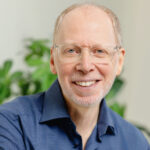
Robert Lawrence Kuhn Transcript: Consciousness, God, and the Hard Problem
Robert Lawrence Kuhn Interview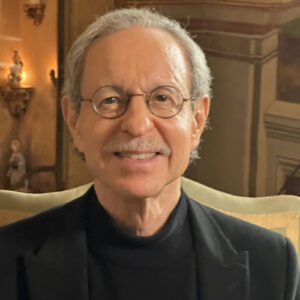
Robert: A being that can conceive of eternity should be able to attain eternity. Why would the universe create a being, unless it were overtly malevolent, make beings that can conceive of eternity and deny them that?
Rick: Welcome to Buddha at the Gas Pump. My name is Rick Archer. Buddha at the Gas Pump is an ongoing series of conversations with spiritually awakening people and about spiritual topics. We’ve done over 750 of them now, and if this is new to you and you’d like to check out previous ones, you can explore it on YouTube. But if you go to batgap.com, we have better systems of organizing all the interviews and search functions and so on. So you might find that more useful. But if you are on YouTube, please like the show if you like it, and subscribe if you would like to subscribe. That helps with YouTube’s algorithm. This whole thing is made possible through the support of appreciative listeners and viewers, so if you appreciate it and would like to help support it, there are PayPal buttons on every page of the website. My guest today is Dr. Robert Lawrence Kuhn. I’m really excited about this interview because I’ve been a big fan of his for many years. He is the creator, writer, and host of “Closer to Truth,” which was a long-running PBS television series and is now a podcast and YouTube channel. Are you still on PBS, Robert, or no?
Robert: Sure.
Rick: Oh, it’s still on there?
Robert: Yeah, this will be our finishing our 26th season on PBS stations.
Rick: Wow, I’m going to see if I can find it on there. So Robert’s show, in case you’re not familiar with it, covers a lot of the topics that BatGap covers, but many others which also fascinate me. For instance, discussions about the cosmos, cosmology, physics, philosophy of science, life, philosophy of biology, mind, consciousness, brain-mind, philosophy of mind and meaning, theism, atheism, agnosticism, global philosophy of religion, critical thinking, things like that. And if you’re a BatGap fan, you know that I’m very fascinated with the interface between science and spirituality, and a lot of his topics address that. Dr. Kuhn has, I think, packed about four lifetimes into this one. He’s the author of a comprehensive review article on the theories of consciousness called “The Landscape of Consciousness: Toward a Taxonomy of Explanations and Implications,” which I just converted to audio and listened to in its entirety. It covers over 350 theories of consciousness, and it’s now up to 400 theories, and there’s a website dedicated to it. He’s written or edited over 30 books, including “The Mystery of Existence: Why Is There Anything at All?” with John Leslie, “Closer to Truth: Challenging Current Belief,” “Closer to Truth: Science, Meaning, and the Future.” He was an investment banker and wrote a book about that. He is an expert on China and has written books about how Chinese leaders think. He is the chairman of the Kuhn Foundation. What is the Kuhn Foundation?
Robert: It’s a small family foundation that I founded in order to do contributions to areas that are very important to us, “Closer to Truth” being the most important that we were able to fund. It’s very small by international standards, but still enables us to do that. We’ve also done work in classical music. My wife is a classical music performer, and we’ve sponsored some concerts around the world.
Rick: Great. And, your academic background. You have a BA in Biology from Johns Hopkins, a PhD in Anatomy and Brain Research from UCLA, and an MBA in Management. And, to top it all off, you are an expert and avid table tennis player. You play about six hours a week.
Robert: That’s right. Avid is correct. I’m not sure expert is a good designation, but I’m trying.
Rick: Yeah. You told me before we started that you have limitations in your right eye, so you really don’t have any depth perception. Despite that, you have become a very good table tennis player. I’m sure you could beat me.
Robert: It’s a tribute to the plasticity of the human brain. I’ve been legally blind in my right eye. It’s severe keratoconus, which means the cornea is completely misshapen. Whereas my left eye, which is not terrific, but at least I can see. I see one point of light in my right eye. I’d see a hundred points of light, and it’s very distorting, but the brain filters that out, and so I don’t see. But effectively, I have zero vision in my right eye. So when I play table tennis, you just get used to other cues: a sound, a relative speed, how the other person hits. And because of that, my backhand is better than my forehand, or more consistent, because the backhand you hit in front of you, so my left eye, which I can see, I can see it. The forehand you hit on the right, so my right eye can’t see that, so my left eye has to look at that, so it’s more difficult. So that’s only one of my many problems.
Rick: My backhand in pickleball is better than my forehand too for some reason. I know what you mean because one time I remember some guy hit a shot, and it was like instantaneous because we were so close and I got it right where I wanted it. He said, “How did you do that?” I said, “I could see by your body language what you were going to do.”
Robert: Yeah, yeah, yeah. You got to know that and you don’t even think about it. And oftentimes I play better when it’s faster because you don’t have time to think. If you have time to think, you lose the thread.
Rick: Yeah. Alright, well I’m going to start with a terrifying experience of nothingness that you had when you were 12. You were away at summer camp or something like that, and you had this experience that frightened you. Describe that a little bit, and then I have some questions about it.
Robert: Sure. It was a lifetime impact. I was sleeping in a bed, I think I was 12, between 7th and 8th grade, and suddenly I had a thought that scared me. And it scared me so much that I did my best to repress it. And I did repress it. And then decades later, I was trying to remember what that was and I couldn’t. And then sometime later, maybe beginning “Closer to Truth,” I finally remembered what it was, and that is, “what if there were nothing?” And it was the old question Leibniz and Heidegger have asked, “Why is there something rather than nothing? Why is there anything at all?” And that concept has become a deep obsession. And the thought of what nothing is is very, very important because it’s important to understand what nothing means. I’ve written a paper where there are nine levels of nothing which we can discuss, but the question of existence, raw existence, has been one of the two major driving factors that led me to “Closer to Truth,” that has been a critical catalyst in my intellectual life. The other, of course, being mind and consciousness. So between those two, between raw existence and human sentience, these have been the two drivers of what I’ve done with “Closer to Truth” and intellectually broadly.
Rick: Yeah, that’s the impression I got when I heard you describe the experience, that it kick-started your quest, you know, which couldn’t merely be a scientific quest because you’re more open-minded than science usually is. You ponder things that science usually doesn’t want to touch because you want to get closer to truth and you want to expand the periphery of your investigation as widely as possible.
Robert: Yeah, I want to understand the totality of best thinking that human beings have about the nature of reality and the nature of mind. When I did that article that you referred to, which was a critical thing for me…
Rick: Summarizing the 350 theories, or the one about levels of nothing?
Robert: No, the “Landscape of consciousness.” And this is the product of a lifetime in one sense. But let me tell you this specific story, because it directly addresses your question about the boundaries of science when dealing with what many people think is a purely scientific question, which is the nature of brain-mind consciousness. So I’ve been focused on consciousness my entire life. That’s why I did a PhD in neuroscience, at that time it was called brain research at UCLA. I had been motivated by this desire to understand reality, the nature of existence, and I originally thought I would study physics or philosophy or philosophy and physics, the various programs. And then one time, I was still a teenager, I had the realization the only way we know anything, the only way we know physics, the only way we know philosophy, is through our brains. And so maybe if I studied the brain, I can have more insight into these derivative things that we use the brain for in physics, philosophy, religion, etc. And so that led me to brain research and consciousness was the a critical question. And I always had an intuition that there was more to consciousness than just the physical world that science could address. At the time, I had interest in parapsychology and had actually been invited to do a PhD in parapsychology by J.B. Rhine at Duke to show you how old I am. So I was way back and a good correspondence with him, but ultimately I decided to do neurophysiology, which bode me very well to have a very strong, very strong scientific background. But throughout my four years of doctoral program, there was zero about consciousness. I mean, it never even came up. It was not even something that even was mused about at that time. Of course, things are different today. That was in the mid-1960s when I did my doctorate. But that was a motivation. And then when I began “Closer to Truth,” mind-brain consciousness was a prime feature of it. And that was begun in the late 1990s. The first broadcast was in the year 2000, so we’re in our 26th year right now and have done literally thousands of interviews and 360 television programs on PBS stations, etc. And consciousness has been a major factor. So one day, somebody who knew about “Closer to Truth” and consciousness wrote to me that he was on the editorial board of a major scientific magazine called “Progress in Biophysics and Molecular Biology,” and he said they were planning a special issue on quantum consciousness, a scientific approach to it, and he asked me if I could write the introductory article to sort of give an overview of the field and then they would deal with their scientific articles. And I said no. And I said no because I didn’t have the time, and more than no time I was worried that it would become an obsession and how could I do it really well? And he asked me two or three more times. And by the third or fourth time after about three or four months, I realized something and I said, “This is something I should do in my life. I started with a doctorate when I was still a teenager. And then I’ve had 25 years on “Closer to the Truth.” I’ve done this my whole life. This is something I should do. And if I’m not going to do it now, I’m never going to do it. So I agreed, recognizing the huge amount of work it would be. But the truth, Rick, is that the amount of work that went into it was about 5% of what I feared it would be. It was literally 20 times more than I expected, and it became a real obsession. For about 15 months, I would write literally every night from 9 or 10 in night till 3, 4 in the morning. I have responsibilities during the day, family responsibilities health-wise that I have to take care of. So there are other things I do. So it was an absolute obsession during this time. And it continued. I mean, I had a deadline and I got an extension because I just had more and more theories. Then I submitted the first draft and of course it’s a peer review journal so it went into peer review, so I had a couple months and while I was in peer review I still continued to increase it. At that time it was in peer review it was like 55,000 words. Ultimately it became 175,000 words a year later, but that’s another story. So when I got the peer review back it was a terrific peer review, anonymous reviewer so I don’t know who she or he was, and the review said, look, this is important stuff it’s very very good stuff in terms of scientific approach. He mentioned one or two theories I left out, and so he was right, or she was right, and I included that. That was very helpful. But then the reviewer said, “Look, you have a lot of philosophical and theological theories of consciousness, and you know, that’s okay, but that’s not relevant to the readers of progress in biophysics and molecular biology. They’re not going to be interested in that, so better that you take that out and then add the scientific theories we discussed, and it’s good to go.” And I got that, and I wrote back very appreciative, saying, “I appreciate your liking what I’ve done. The suggestions you made are excellent. I’ll put those in.” One I was a little unsure of, in terms of the nature of language. I had rejected language as a theory of consciousness because I thought it was a derivative of consciousness, not a generator of consciousness. He thought it was important. I was on the fence on that. So I put it back in and have sections by Noam Chomsky, John Searle, others about the nature of language. Okay, so that’s it. But I said, “Look, I understand why you want me to take out the philosophical theories on proto-panpsychism or cosmopsychism and all the theological views from the Abrahamic religions to Hinduism and Buddhism and folk religions, which I had, African religions, Chinese religions, everybody has an opinion. I understand why you want that taken out. And if I were you, if I was reviewing this, I would reject the paper because that’s it. That’s it. I’d reject it and I understand that.” I said, “But I’m going to do this once in my life. It wasn’t my idea, but now that I’ve done it, I’m going to do this once in my life. I’m going to do it to the best of my ability, and I have to put into this paper what I believe to be the best and total thinking that humanity has thought about consciousness, and the philosophy and the theology of all these different areas must be in there. And if you don’t want to publish it, that’s fine. I understand it. I would reject it,” I said again. “But if you don’t want to publish it, that’s fine. I’ll find another publisher, or worse comes to worst, I’ll publish it myself.” And to their credit, they said, “We understand. You publish what you want,” and not a single word was cut.
Rick: Nice. Well, this is a very relevant point, I think, because there’s a certain hubris in scientific circles that our way is the only way, you know, it’s a fundamentalism kind of, and all this other stuff is woo-woo, it’s nonsense, and it’s primitive. Whereas I feel that these ancients actually had the answer to what consciousness is because they develop methodologies to experience it directly. And we can get into, we can unpack that in terms of how science functions and trying to remove any subjectivity from the process. Whereas, in the case of consciousness, ultimately you have to refine your mind-body system to become an adequate research tool, so to speak, to experience pure subjectivity or pure consciousness devoid of any coloration or alteration or distortion. And once that happens, as the traditions say, you know not only who you are, you know what the ultimate reality is, experientially, not just conceptually.
Robert: Yeah, and I deeply appreciate that view, but it’s not a view that I would espouse myself. I keep an open mind to all the different approaches, and I really mean that. And when I have done these theories, in the original paper there were about 225, then the website, by the time the website started with 350, it’s now over 400. When I do each theory, I fool myself or pretend that that’s my theory and I want to explicate that as best as I can. I want the whole world to believe this because this is the truth. Closer to truth is not closer to the truth. Anybody who calls it closer to the truth, we shut them down, say, “No, this is closer to truth. It’s a present progressive approach. We don’t have the truth.” When viewers say, “You know, you left us hanging.” I said, “Too bad. That’s my best thinking right now.” And the same is true for consciousness. But when I do each individual one, I pretend that that is the real truth and I want to get it out. And so each theory I treat at the same level. Now, you can then judge the theories by their relative powers or consistency, a whole bunch of criteria, but I did not take that approach. I took the approach that any theory that we allow, and of course there are many we don’t, they’re bizarre or absurd, and so you have to have some standard, but my standard is a lot broader, shall we say, than the typical, certainly the typical scientific approach. There are some papers that give different neurobiological theories, 22, 26, different numbers of those theories, and that’s, when they look at the world, that’s the only way to explain consciousness. I don’t do that. I take a very, very broad approach, and I expected a lot of criticism from that from the scientific community. I’ve actually gotten very little by that because of the approach that I’ve had. I approach each theory epistemologically and ontologically at the same level of intensity, to the best of my ability. And what we also try to do, we haven’t done it with every theory, but I send it, after I finish it, I send it to the theorists, you know, assuming they’re alive, themselves, and ask for feedback. And I would say about a third, I’ve now done that and I’ve gotten feedback in a few cases. Most cases, very minor and appreciative. In some cases, a handful of cases, it was a significant change. I said, “Oh, sorry, I got it wrong.” And they said, “No, no, you got it right from how I thought five years ago. You read my old papers, but now I have my new papers, so it’s changed.” And that’s fine, and that’s why our website, “Landscape of Consciousness,” is constantly updated by the theorists themselves. We want to keep very much updated. At this point, I have two major theses that I have taken to encapsulate everything I’ve done on consciousness, which is not only the paper that you saw. “A New Scientist” had a big feature on it, and several other scientific papers have come out thereafter: “Journal of Consciousness Studies,” “Current Neurology and Neuroscience.” I’ve written much more about it. But altogether, there are two big points that I try to make. Number one is that this time, well, there’s an overarching view that I should say first, and that is the whole concept of consciousness to me is the most significant existential question that humanity can ask. Because if we’re looking at the nature of reality, which many of your interviewees love to talk about, that drives our lives, it’s driven you, it’s driven me. So the nature of reality to me, consciousness is the closest we can get to a way to understand that. Now, that goes either direction. If consciousness is indeed all physical, that is a lot of points for that the world is all physical, and there is no non-physical reality, as many scientists, of course, would espouse. If consciousness isn’t something beyond the physical that we know today or beyond even any physical whatsoever, then that is a big statement about the nature of reality. So consciousness is the existential question of humanity and how it goes – physical, non-physical, the nature of the physical, the nature of the non-physical – the world, or all reality, turns on that question. Given that importance, there are two theses that I feel strongly about. Number one is that this time in our knowledge systems, understanding each of the areas, the silos that deal with consciousness, certainly experiential from the ancient traditions and modern spirituality, as you’ve wonderfully presented over the years, is one major. The scientific is another approach to it, where the scientific method has to do it. And there are many different philosophical approaches which differ significantly from the scientific and the experiential. And what I’m saying at this time, it is a big mistake to force an understanding of consciousness using any particular kind of knowing or way of knowing or approach to knowing. And so, whether it’s the experiential, the purely third-person observational experimentation, repeating science, whether it’s philosophical a priori thinking, whatever it is, ancient tradition, modern tradition, whatever it is, it’s too soon to close off any way of thinking. So that’s number one. We want to have each way of thinking and explore them in depth. That’s number one. Number two is that once you have a theory of consciousness, lots of other things that you are interested in that are critical big questions for humanity are derived from it. So questions like life after death, free will, personal identity, meaning, purpose in life or in the universe, value, the nature of value, absolute, relative, etc. AI consciousness hot in today’s world. Virtual immortality, which many Silicon Valley types think is just a few years or decades away. You can upload your first-person experience to the cloud and live virtually forever, or at least until the sun burns out. All of those different questions which people deal with. There’s whole subcultures that deal only with free will or only with personal identity. These are big areas. My point, and AI consciousness of course is the big one in today’s world. My point is that each of those questions, and we can discuss AI consciousness in particular, is directly the result of your theory of consciousness, and nobody talks about that. Because if your theory of consciousness is one way and you’re dealing with free will, they don’t articulate. And so you have to have a theory of consciousness. Now what happens, particularly in the scientific community, is that there is a theory of consciousness that is assumed, that everybody agrees upon. And the people who are absolutely sure that AI consciousness is something that will be attained at some point, AGI, and does consciousness come with artificial general intelligence? Those are very separate kinds of questions, but assume it does, then they think that that’s certain. Again, some people would say it’s five years, some people say twenty years. It’s a matter of time. But they’re assuming a particular theory of consciousness, which in general is called computational functionalism. Computation means that the brain works on a basically a digital kind of system, parallel. I mean very complicated. And functionalism being it’s a question of the function, not the substrate. So, it’s what it does, it doesn’t matter where it is, and so it’s multiply realizable. So the same function can be in silicon or in gallium arsenide as well as in neural tissue. But that’s the assumption that they’re making when they deal with the question. So I want to dig below that. So that’s the second big point. First big point is we are open to all different kinds of knowings. We’re not shutting anything off. Second is that the big questions that we ask are directly determined by your theory of consciousness.
Rick: That’s great. There’s a lot of points in there that I want to unpack with you. I’ve always, as I said, been fascinated by the interface or relationship between science and spirituality. And I think that they both can contribute to one another and that either without the other has got some gaps or some limitations. We can explore that topic.
Robert: I would just comment that it’s not reciprocal in a balanced way because people who accept the spiritual as reality, as you do and your guests do, must accept the science. The science does not have to accept the spirituality, so it’s not reciprocal. You may believe, I may believe, that there are things to understand the totality, which is why I put it in my scientific article in the “Journal of Biophysics and Molecular Biology,” these other ways of thinking, because I think they’re relevant. I’m not saying I think they’re right. I just think I think they need a seat at the table at this time. But it’s not symmetrical. In other words, many of the science say, “You need us because anything you say that contradicts science is just internally inconsistent and must be rejected, but we don’t need you.” That’s what many would say.
Rick: Yeah, they say that, and it’s not reciprocal, but I’m suggesting that it should be and that science would be better off if it were, because I think that what they are doing is putting on the horses’ blinders and excluding a whole spectrum of reality that is very much real, but that their current methodologies and tools are not capable of exploring. And there are people who have learned how to use those tools to explore those regions, and I think their knowledge is just as valid as anything science comes up with, but science is limiting itself by excluding it, ignoring it.
Robert: Some are trying to bridge that gap. There’s one aspect that we deal with called neurophenomenology. Phenomenology is the study, by Husserl originally, that it takes experience to be a category, not to be dissected away, but to really understand as a whole. It’s related to, you know, continental philosophy versus analytic Anglo-American philosophy, that phenomenology is an approach to understanding the kind of collective understanding of human sentience as opposed to dividing it into little parts and splitting it up as analytics would do. Now, neurophenomenology is a desire to subject phenomenology to scientific endeavors. It was started by Francisco Varela like 30 years ago, and individuals today have taken that up in different fashions. Michel Bitbol in France, Evan Thompson in Canada, have approached phenomenology and neurophenomenology as a way to take consciousness seriously, but still subject to scientific analysis. I would say that that’s a very good approach. I don’t think the results have fulfilled the promise. They are also, the prominent ones, are physicalists in the sense that they believe there is nothing but the physical world, even though their work seems to indicate otherwise. They take pains to maintain just a physicalist view. These are complicated questions, and I try to deal with that in the theories of consciousness. There are approaches to consciousness which get away from materialism and physicalism but still maintain its one-substance view, such as non-reductive physicalism, which still is physical, but its mental states are not reducible to physical states. Something called property dualism, which is a dualism but still only one substance. That’s substance dualism with two substances. Property dualism is that properties are real, they’re ontologically real, even though there’s only one substance. So there are ways that people try to deal with it. You know, I’ve made the, you know, the half-serious joke that people say, “Wow, you have about 400 theories. That’s ridiculous. You have so many.” And I said, “The problem is not that I have 400 theories. The problem is I have one too few.”
Rick: Or the one you’re looking for might be hidden among those 400.
Robert: Yeah, yeah, that’s a similar comment. But my point is I’m not willing to… You know, every time I give speeches or talk to groups, it’s generally a group with a position, scientific or philosophical, and in that group, I usually take the other side in each group. So if your view has a wonderful, expansive approach to spirituality, you’re going to find me in this conversation showing more on the physicalist and materialist side. And when I’m in the reverse, talking to scientists, I’m then explaining why I include these ancient traditions and theology and philosophical with them. So I’m always in the minority and people are always mischaracterizing me as supporting the other side.
Rick: Interesting. So you’re a very dexterous gadfly who just poses whatever thing you’re in. I want to compliment you on something you said earlier about how as you’re writing the paper you dove into each theory. That’s the impression I got as I was listening to it. And incidentally, if you convert your whole paper to audio, it takes about 19 hours to listen to, which I did.
Robert: Wow, I’m impressed.
Rick: Yeah, a lot of it was walking in the woods and stuff like that. I was impressed that you had, I mean, I spaced out on a lot of them. I thought, well, I don’t understand that, but I’m going on to the next one. But you obviously dove into each one and really nailed it and in your own understanding. So you must actually at this point have a better overview of the many theories of consciousness than anyone else on earth.
Robert: You know, people have said that. I kind of don’t accept that. I accept that, you know, it’s like each time I did it, I felt I understood that theory. But when I finished that theory, you know, it was pushed aside. And so it’s not like I, you know, have access to all of this as, you know, as AI would. But, you know, I have greatly enjoyed the process. It’s been very long, very hard, a great deal of work, and continues. But it’s been an exciting process and a very exhilarating one to me. I’ll tell you another story which is relevant because people think how smart I am to find all these theories because almost everybody, even professionals in the field, are seeing theories they never saw before.
Rick: Yeah, and the way to categorize them was brilliant, too. I mean, you know, point 10 and point 10.1, point 2, they’re all sort of like outlined in this logical structure.
Robert: I definitely try to do that. Yeah, but so categorization is a second point, but the point is where did all this series come from? Am I that smart or am I that knowledgeable of the world literature? And the answer is no. The answer is I had a core, and then I sent it to a couple of people early on, who I trusted, and they sent me back theories I hadn’t included so I included those. But the biggest thing happened was the publisher, the magazine is published by Elsevier and ScienceDirect, their website, it’s the first or second biggest in the world, and when the paper went through three peer reviews because I kept increasing it so much that they had to keep peer reviewing it because it changed so much. And at the third peer review, they published it like two days later and I was still working on it.
Rick: Yeah, you didn’t expect them to publish it. They kind of let the cat out of the bag.
Robert: And I panicked because people are going to think this is the final version. At that point it had 125,000 words, and it was still one-third not finished yet. I didn’t know that at the time and I knew it wasn’t finished, and I panicked. I said, “Please take it down. It’s a mistake. People are going to get the wrong first impression. They’re not going to read this paper twice. So please take it down.” They said, “We can’t do that. The rule is we publish it as peer-reviewed and done.” And I said, “You’ve got to take…” They said, “The only time we take papers down is when there’s questions of plagiarism or fraud. We take it down, people are going to think you plagiarized.” “I don’t care! Take it down! You can explain later.” So they, after about two weeks, they took it down, they put a note that said, “We hope to publish it again. If we don’t, we’ll explain why.” That was it. So it was mysterious. But what happened during that two weeks is that there were many people around the world who were either using keywords or whatever, read the paper. And I got maybe 20 emails from people who most of them would say, “Boy, what you did is great, but how stupid you are. You forgot this theory.” In some cases, I had never heard of this theory, but it was a really interesting theory. And in some cases, I had heard of it and I rejected it because it seemed so bizarre and so absurd. I didn’t want to be embarrassed to put that theory in there. But now I find that there are very smart people and groups who think that is the main theory. So I had to reconsider and put that theory in. So as a result of this feedback, I probably added 20 or 30 theories that I had either had rejected or hadn’t heard of. And that process continued and continues today. In fact, I have a backlog of about 50 theories that are mostly modest, but three or four important, that will be put into the website over the next couple of months.
Rick: Can you think of any other phenomenon about which there are so many diverse theories?
Robert: That’s a great point and consciousness seems to be, as we say, sui generis, one of a kind. For example, there’s a great debate about the nature of emergence. Emergence is an important theory of scientific structure, how the world works. You know, simple examples are the wetness of water. One molecule is not wet and you put zillions together and you can have wetness. To use continuous water, hydrogen and oxygen are two gases that you don’t…
Rick: Not water-like at all.
Robert: You can’t drink them. I mean, you can’t swim in them, take a shower.
Rick: But you create a nice explosion.
Robert: You put a couple of Hs with an oxygen, put them together and now you have water. So that’s an emergence, but, and it seems miraculous. It seems non-physical how that happened, but you can show how that happens, it has to do with the bonding angles between the molecules and get them together so you can come up with a rigorous scientific theory why the two hydrogens and one oxygen becomes water and why multiple molecules of water become wet. And so that’s called weak emergence because it’s an emergence, but it is scientifically discernible. Maybe we don’t know today, which we didn’t originally, but now we know in that case and other cases are very similar. Consciousness is the one example that might be called strong emergence. And strong emergence is the concept that it is emergent to the property, but we not only do not know how, we cannot know how. So strong emergence means that there’s something in that, that prevents knowledge from understanding how the emergent works. Now, strong emergence is controversial. Some people say it’s self-contradictory. It doesn’t exist. And I think there are valid points about that. So it’s used, strong emergence, as an example of how physicalism can still explain consciousness with strong emergence, but how is that happening without some non-physical thing? And so it’s a complex process to understand. So to answer your question, I framed it in terms of strong emergence. Consciousness seems to be the only topic that we now can specify that is potentially a strong emergent. And so it does seem to be a unique feature. Now some would deny that. We have a whole category. We can go through the categories that we have in consciousness, but under materialism there’s a subcategory of eliminativism and illusionism, which deals with the question by discarding it, by saying consciousness is an illusion or it doesn’t really exist the way we think it does. It’s very easy to ridicule this position. Very easy to ridicule it. One philosopher, he’s written publicly, Galen Strawson, has said, “This is the silliest idea that anybody in humanity has ever had.” Not just philosophers, anybody. It’s the most absurd idea, and many people say that.
Rick: What is the silliest again?
Robert: It’s eliminativism or illusionism that what we think is consciousness is a brain trick and it’s really nothing. There’s nothing there.
Rick: So that’s what Galen Strawson is saying, that it’s just a…
Robert: Strawson said that that idea that consciousness doesn’t exist…
Rick: That’s silly. I see. …is the silliest idea that humanity has ever come, because if there’s anything that we know for sure, it is that consciousness exists. His view, of course, is a panpsychic view, where he calls panpsychism the real materialism, which is a fascinating idea in its own. But consciousness to me does seem to be unique in in the universe, in existence as we know it. That’s why I have said that the nature of existence kind of turns on what consciousness really is. And that’s why it goes beyond any scientific interest or anything else but is fundamental to our understanding.
Rick: Yeah, you know, through my 58 years of meditation and studying the theories and philosophies associated with it, I’m pretty solidly in the camp that consciousness is a ubiquitous field, that it’s the sort of the rock-bottom foundation of creation, and in fact, ultimately the essential constituent of everything. There’s nothing other than it. But I’ll just get that out there in case you’re wondering. But I often use, as many others do, the analogy of a radio, obviously, or a cell phone. You know, there’s the electromagnetic field and then there’s this device that interacts with it and enables it to communicate information to us. And, you know, if you deny the existence of the electromagnetic field, if you didn’t know it existed, and you found this radio, it may be some future civilization finds a radio. What’d they do with this thing? Or a cell phone? You could take it apart, you could study it, you might eventually find, oh there’s transistors or whatever they would call them, there’s this doohickey and all these different things, but without understanding the existence of the electromagnetic field, you wouldn’t have a clue. And if you thought that, you know, this radio thing, let’s say you had a working radio and it was playing Beethoven and you thought, oh, this beautiful music is coming out of this thing and then somebody comes along and smashes it with a hammer, you think, “Oh, that’s the end of that. That doesn’t exist anymore.” But the radio station is still transmitting Beethoven just as well as it ever did. I actually heard you mention in some interview, I think you were just wearing one of your particular theory hats, that without the brain there can’t be consciousness. And when you said that, I thought, “Well, that’s like saying without the radio, there can’t be the electromagnetic field.” But the electromagnetic field has been getting along just fine, you know, throughout the history of the universe, with or without radios or cell phones.
Robert: Yes, certainly the view that has either idealism, where consciousness is the entire reality, or panpsychism, where it’s part of the fundamental existence, has been a view that has been gaining prominence among a broader group than just pure, you know, spiritual or religious ancient tradition people that have had that view forever.
Rick: So yeah who is it you said that started you did you said you start as a materialist and then you go this this this this and you end up…
Robert: Yeah I think I think it is a common expression David Chalmers puts it out. You you start out as a materialist, as a scientist, which he did and I did, and then you realize that’s not going to work for consciousness so you immediately go to it become a dualist and then you kind of deal with with dualism and how does the mental interact with the physical, you know. Descartes says the pineal gland, that’s ridiculous. How can you have non-physical things operating against physical things because there’s the closure of the physical world, the laws of physics. So dualism then doesn’t work, so you become panpsychist where consciousness is built into fundamental reality with everything else and then ultimately you go to idealism where consciousness is the fundamental and everything else is derivative of that in some way. So, you know, I think there’s a lot of fun in that and some people have made that transition. Most recently, one of the great scientists, Christof Koch, the originator with Francis Crick, in modern times, of the neural correlates of consciousness. When I first met Christof, was representing that point of view in 1990, so 35, 36 years now, put forth that view. Crick’s famous book was the astonishing hypothesis that you are your neurons, and so a very strong materialist position. Now, Cristof has moved, and now he’s, you know, has entertained seriously idealism, of consciousness is fundamental, but that’s quite rare.
Rick: So he’s not going to lose any more cases of champagne to David Chalmers. They had a bet.
Robert: Right, right, right. 25 years, whether we’ll be able to show the neural correlates of consciousness. You know, you’ll show neural correlates of consciousness, of course you do.
Rick: Sure, just the way you can take apart the radio and see what its bits are.
Robert: Yeah, I mean there are certain parts of the brain that, if you lose those parts of the brain, the AI pioneer, called consciousness a suitcase term, suitcase. And the reason he said that is people throw into the suitcase whatever they want, you know, underwear, ties, shoes, whatever they want. And that’s a mistake. And so I’m very clear when I deal with consciousness. I’m dealing with phenomenal consciousness, the sort of in a movie that we feel, the experience of what it’s like, you know, the smell of garlic cooking in olive oil, the sound of Mahler’s Second Symphony, I mean, the feel of all of that, because everything else, perception, attention, wakefulness, intelligence, all this may relate to consciousness, but that’s not the fundamental aspect of consciousness. It’s this pure awareness that we have that needs the explication because everything else, the perception, the wakefulness, has to be teased apart because it’s part of consciousness and not. Ned Block, the philosopher, talks about phenomenal consciousness, the feeling, and access consciousness, which is the content of consciousness, to differentiate between the two. So you can find parts in the reticular activating system which causes sleep and wakefulness. If that’s destroyed or has some kind of trauma, you’re unconscious and you can’t be brought back. On the other hand, you can lose half your brain in other parts and still, you know, you’ll lose functions or things, but you’ll still be totally conscious and feel that you’re you. So, you know, there’s a lot to deal with, and that’s why it’s such an enduring question and such an important question.
Rick: What I would suggest here is that, just as the movie screen exists, whether there are movies playing on it or whatever movies are playing on it, it’s the underlying screen by virtue of which the movies can be seen. And if there’s no movies playing, the screen is still there. I would say that consciousness in and of itself, what it actually is, exists just as much whether you are half asleep, totally asleep, dead, or whatever may happen to you, fully awake, and the examples you just cited, like the taste of garlic or Mahler’s symphony, those are things of which you are conscious, and by virtue of which, by virtue of consciousness, you can be conscious of, but those aren’t consciousness. Those are sort of objects of consciousness. You know, you’ve heard this a million times, I’m just stating it for the the sake of the conversation.
Robert: Yeah, sure, and that’s a very important distinction. So when I deal with theories of consciousness, I try to take out all the peripheral stuff. It’s not intelligence, perception, wakefulness, none of that. Just this fundamental awareness, not the content of it. The content of it makes us understand, gives us initial appreciation of what the awareness means, but it’s not the awareness itself. The awareness itself is pure and fundamental. I agree with that. Again, I am not willing to close off alternatives at any point.
Rick: I think that’s a great attitude, by the way. I have my druthers, you know, but I am not…
Robert: Well, I have druthers, too, but I don’t take my druthers too seriously.
Rick: Maybe I take mine more seriously than you do.
Robert: No, everybody does it, I respect that, I respect that totally. It’s just that I have avoided that. I can recount people that I know, very very smart physicists and scientists, Christof Koch I’ve mentioned, there are others, that are really first-rate scientists, thinkers I work with in the “Conscious” article, Alex Gomez-Marin, who was one of the early people I worked with when writing it, and he gave me lots of theories I didn’t know. He was very sophisticated, and created a beautiful diagram which we worked together on and has been a major factor. He was trained as a theoretical physicist, doctorate, became a neuroscientist, and then had a near-death experience which changed his orientation. And I respect that. I don’t necessarily agree with that, but I respect that. I mentioned Christof Koch, who is now moving towards idealism. Psychedelics had an impact on him and how he saw the world. Everybody has an impression. Now, what I want to push back on is I too have had an experience. So, you know, I say I don’t deal with experience. I say I don’t claim to be a consciousness practitioner. I don’t meditate. I’ve never taken psychedelics.
Rick: I’m going to pester you about that in a few minutes, but keep going.
Robert: No, that’s fine. Everybody does. But I say I play ping pong intensely for two hours, but my critics say it doesn’t count.
Rick: That’s a spiritual practice.
Robert: To me, that is. It’s focus and it’s flow. And I don’t worry about anything else. I’m just trying to get my forehand right.
Rick: The best pickleball player in the world was once a very great table tennis player, and that’s how he got his skill. Yeah, keep going, that’s a tangent.
Robert: Anyway, so I have had an experience in recent years that has slightly changed my orientation about consciousness and the unusual thing about my experience is I intuitively believe that there is more to reality than the physical world, more to reality than science can access in principle, and that consciousness has some kind of non-physical aspect or component to it. That has been my intuition, which I don’t give much credence to. I take that as one of 400 different hypotheses and don’t give any special reason to my own, but that’s way I have felt. But I’ve had an experience recently that has slightly changed that worldview to more physicalism than non-physicalism. So let me tell you a story. So it seems impossible, it seems very likely to have an experience to take you from being a physicalist to a non-physicalist. I said I have friends who’ve had that and I respect that. And every experience that people have move them to having appreciate that there may be non-physical realities. How can you have an experience where you think there are non-physical realities but to move you to where the physical reality may be all there is? Not by much but by a little bit. And it’s a story about my daughter who has given me full permission to tell the story publicly. So she didn’t get married until she was older, 44, 45, her husband’s younger. They tried to have a baby naturally. She conceived and was going to have a baby, but it was severely genetically deformed and had to have an abortion, very, very unpleasant and very difficult time when she was 46 or so. But she had frozen her eggs when she was like 34, 10 years before, 11 years before. And so they were frozen in New York and they defrosted them, tested them, and a couple, most of them were bad, a couple were called mosaics, they might have a chance. So her husband flew to New York, fertilized it in vitro, and they waited and see what happened and it grew to what’s called a blastula, which is 128 cells. And so, and they did a small genetic test, seemed okay at that point. And so then they refroze the blastula, the initial embryo. They refroze it for two years because she wanted to carry it herself. And so her body was prepared at 47, 48 with hormones, all hormones to get the right balance so she could carry it, which my wife and I were not happy about because that could affect her health. But anyway, she did. It was her choice. And when her body was deemed ready for, prepared after two years, they flew, or we had a hand carry a courier to take the frozen embryo, the 128 blastula that had been frozen for two years from New York to Los Angeles, where they unfroze it, implanted, and to make a long, long story short, my grandson is now six years old. He’s extremely social, plays table tennis, chess, and the piano. And with a doctorate in the biological sciences, I I’m still flabbergasted that that whole process could occur. And to me, it showed that there is so much potential in the physical world that it slightly moved me away from a dominant non-physical position, but not very much. I’m still a believer that there’s more to consciousness than the physical world can access, but just a little less so than I had been.
Rick: Okay, so when I heard you tell that story last week or something, my initial thought, my immediate thought was, and still is, that this is an excellent example of the fact that consciousness is not only… Well, it doesn’t really say much about whether consciousness is universal or not, but what it does say is that there is incredible intelligence orchestrating every little bit of the physical universe, anything we look at. I mean a single cell they say is more complex than the city of Tokyo and that we don’t fully understand what’s going on in there. So to my mind, I mean, put it in religious terminology, I feel like God is hiding in plain sight. And if you look closely enough anywhere there you see it. If you go out to intergalactic space there would be gamma rays and photons and things flying through which are in perfect accordance with orderly laws of nature and suggesting an intelligent orchestration of the universe. Which is so far from random billiard balls hitting each other you can’t even you know such theories that it’s all random seem absurd to me. But anyway, so that in a way imbues me with greater and greater awe and reverence for the intelligence of nature rather than shifting me toward thinking, “Oh, this material stuff is pretty cool.” It’s cool because of the intelligence orchestrating and animating it.
Robert: Yeah, and that’s a very valid position. It’s one that I would still be more sympathetic to, but the view that… I mean, this brings us into articulation between the two subjects we started with, the nature of consciousness and the nature of reality, the nature of existence per se, because what is the reality behind it? And if consciousness is the underlying field, and then you’re talking about God, that’s slightly, that’s different. Those are two different kinds of…
Rick: Well, I’m saying that consciousness is more than just plain vanilla consciousness. It actually is a field of infinite intelligence, creativity, what we would refer to as God. But the word God is so weighted with strange ideas that I don’t like to use it.
Robert: God is weighted, consciousness is weighted. We need to come up with new language. But there are, and we deal with this on “Closer To Truth,” significant tensions between pure consciousness or consciousness being fundamental and God being fundamental because classical definitions of God and certainly in the Abrahamic religions have God being the totality and a deity. God exists in its own presence and that any consciousness would be derivative of God. In some of the Eastern traditions, consciousness is more fundamental, and if there is a God, which there’s not necessarily a God, but God would be derivative of the fundamental consciousness. So that is a distinction with a big difference, although both are allied in the sense that they’re both non-physical, that there is a reality beyond the physical, they’re equal on that. But how they describe that non-physical is radically different.
Rick: Right, Swami Muktananda used to say, “God dwells within you as you,” and he didn’t mean there’s a little God inside each of us. He meant that God is omnipresent, and if you look deeply enough within yourself you’ll find him there because he’s everywhere but easiest place to find him is right here. And you know, Maharishi Mahesh Yogi has made a similar comment. He said, “God may be omnipotent, but the one thing he can’t do is remove himself from your heart because he’s also omnipresent.” And there again, that’s where you’re going to find him, for starters. And then eventually, you find him everywhere. I say him, it’s a misappropriated term, but you find it or her or him or her everywhere because it’s the essential constituent of everything.
Robert: Yeah, I mean look, these are, you know, massive topics each in their own right that can be teased apart and looked at and in the complexity because under traditional concepts of God, there are certain characteristics, omnipotent, omniscient, omnipresent, all good, all free, and then goes further that God is simple and says God has no parts. How can you have parts if you’re ultimate? So you have no parts. Does God change or is God impassable? I mean, there’s many other kinds of questions that you push forward on.
Rick: I think these could be a whole discussion for two hours.
Robert: Oh yeah, yeah, for sure. And they’re fun, and that’s what we do on “Closer to Truth.” But I think it’s very probative as well. I mean, it really… people ask me, maybe you would later, that, you know, after 25 plus years, are you, meaning me, any closer to truth after all this stuff? And when I’m asked that question, I say this. I said, “Well, let me start by giving you my wife’s answer.” So my wife and I met like 62 years ago. I was getting my PhD. She was a pianist, performing at that time at a fairly modest level, local level, and we started going together and lived together and got married, and during that time she knew I had all these questions and she wasn’t interested in that at all. She was interested in the home and the family and her piano career, and she’s performed. She performed at Carnegie Hall. You can see her on YouTube, Dora Kuhn, her performances, and she said she’s never thought about these questions at all in our 60 plus years together. I’ve thought about them every day in every way, and she says we’re still at the same place. Even though I’ve done 5,000 interviews and she’s done none and has never thought about it, we’re still at the same place we were when we met when I was 19.
Rick: Well, you’re compatible, so it must work.
Robert: But so my answer to that is that I don’t claim to have the answers, but I can tell you this, that I really deeply, deeply understand the questions and the options and the alternatives with a pleasure and a confidence that is just to me very enriching and fulfilling to understand it very deeply. We’re talking about fundamental reality and the nature of consciousness and the nature of God. Well, to me, to understand the articulation between consciousness and God is a very probative and rich subject. Also, to understand the relationship between time and God, which we do in our “Cosmos” sections and the “Meaning” sections, is very probative. Even if you don’t believe in God, it’s a stress test for what time is and how does God deal with time. So these are very deep questions, and again, I don’t claim to have an answer, but I do know the different alternatives that people give, and I can, in a sense, argue on any side of any of these issues. And that’s not because I don’t care about the answer. It’s because I really try to understand the depth of how smart, articulate, passionate people have these strongly different views. I mean, I don’t claim that I know the answer. Everybody else is stupid. I ask, you know, theists, “How come our friends here who are all atheists, scientists, are atheists?” And I do the same with the theists. We have, you know, here are some scientists who are theists. How does the atheist scientist explain that? And the, you know, both are, can’t understand. I speak to some philosophers who are materialists, and ask them about the increasing interest among philosophers in idealism and panpsychism and they’re baffled. “I can’t understand it. It makes no sense.” John Searle told me, when I asked him about panpsychism, he said, “If you’re into panpsychism or…” and this is arguably one of the most astute persons on the nature of consciousness. He was definitely a physicalist, biological naturalism was his approach, but very thoughtful on the true nature of consciousness. And he characterized panpsychism as if you’re spreading a thin layer of jam on the whole universe. That’s how he characterized panpsychism. In other words, it was incredulous to him that there were some philosophers moving towards panpsychism. And so each side has this incredulous approach to the others, and I think there’s richness in understanding the way of thinking of each side.
Rick: Yeah. I’m sure you’ve heard the blind man and the elephant analogy, you know, metaphor, that it feels like a rope to one guy, a tree trunk to another, a wall to another, and they could be quite adamant about what they believe the elephant to be, and they’re all right, actually partially. They just don’t have the total picture. I heard that Aldous Huxley once said that the greatest innovation of the scientific revolution was the development of the working hypothesis. I find that very helpful because I feel like, even though again I have my druthers, I can treat everything as a working hypothesis. I feel that some hypotheses have a lot more evidence for them and some very little. I’m almost totally positive that the earth isn’t flat, but there are people who believe that it is so they can entertain themselves with that belief until they don’t. But I think it was a very helpful development, considering that people were burned at the stake during the Middle Ages which preceded the Scientific Revolution, for believing that the stars might be other suns like our own and they might have planets around them, things like that, which was crazy.
Robert: Yeah, we’ve definitely made progress and we need to appreciate everything, but that doesn’t mean all values are equal. There are people who believe that.
Rick: Different hypotheses have different amounts of weight or empirical evidence.
Robert: Right, right. And I am very willing to admit, as theories, which I do, theories that go beyond the scientific method and way of thinking. But what I like to be sure I do, and this has to do not just with consciousness but with the questions of God, for example, or ultimate reality, that if you’re making a conclusion and have a jump, an aspect of faith or where you’re not able to prove something, I just want to specify that, and so that everybody understands the steps that we’re taking. In science, you can take every step and have one follow the other and you can see the sequence. I mean, this is obviously the epitomization is in mathematical proofs that can go on for 500 pages. Every step has to be the right step, and it’s checked meticulously and that’s the paragon. Nothing else besides mathematics can do it exactly that way, but in physics and particle physics you can get very very close to that, and then chemistry less so, and then biology, but at least you can see the steps. And when you get into the non-physical, and this has to do with all sorts of non-physical things, whether it’s the nature of consciousness or does God exist or is parapsychology and psi any substance to that? How could that work? Any of these questions, we need to see where you are jumping over a scientific way of thinking. And that to me is allowed and is perfectly fine, but I just want to be sure that we know where we’re doing that, because that will give us a better understanding of the way of thinking. Like we cannot be able to prove in a scientific sense that consciousness is the fundamental reality. It may well be, but in a scientific sense we can prove that one little nucleus in the hypothalamus is related to hunger. And if there’s a problem there or if it’s stimulated in the wrong way, the animal will eat until it dies from bursting. And if it does it another way, it’ll never eat at all and die from starvation. And so we know that that little nucleus has to do with the feeding. And we can know that for sure by these kinds of tests. We can’t know that for sure in other things that we do, but it still may be true. I just want people to be aware of the steps that are taken that ground their beliefs.
Rick: Yeah. There are several questions that came in from guests. I want to ask them in a minute, but I want to stay on this train of thought for a minute. In your most recent episode that I listened to, which was with the guy who wrote a book about whether aliens would have the same physics that we humans do. At one point, he mentioned that in order to verify or understand the most fundamental level of creation, we might need a particle accelerator. You said the size of the solar system, or he did, and you said maybe the size of a galaxy, which Will never get built. And you mentioned a few minutes ago that phenomena that are outside the realm of the scientific method, psychic things or life after death or consciousness itself, all those things. I would say, as I did in the beginning, that the scientific method has limited itself by excluding subjective technologies of consciousness or methodologies. And those are tricky because, let’s say there’s a single meditation practice, for instance, and you have a thousand people practicing it, even though that thousand people are all going to have different experiences because they all have a different instrument, so to speak, with which to experience things, and then there are a gazillion other spiritual practices. There’s so many of them so how can you standardize and systematize exploration of consciousness through subjective means the way you can with scientific instruments? It’s very difficult.
Robert: Yeah, very probing question and I would segregate it into two parts. One, which we can do, is subject people in meditation to fMRI, brain electroencephalogram, and you can see brain parts that are shutting down or accelerating during different… The famous one, of course, is different aspects of sleep. You have REM sleep, or your rapid eye movement, which is when you’re dreaming most of all, and deep sleep, and brain waves are different in different characteristics and in meditative states, which are remarkable, you can show neurophysiologically or by blood flow and in fMRI.
Rick: Brain wave coherence and all kinds of things.
Robert: Yeah, I mean you can see how the brain is working and that’s legitimate science and you can do that cross-culturally. The experience they have may be very different, but the physiological effects are the same. That’s one. To go then to the next step in terms of anything that you’re trying to prove that is non-physical, a lot of people try to do that and try to expand the scientific method to include aspects that are seemingly non-physical, and to me that’s a contradiction. To me that’s, in principle, not possible, and to try to do that is a mistake and gives wrong impression.
Rick: Doesn’t the scientific method study all kinds of things that are non-physical? I mean, if you start looking more and more microscopically, you get down to the non-physical.
Robert: I distinguish between two ways, we’re saying scientific method, there are two different approaches to the scientific method that I like to distinguish. One is the process literally of science. Which is the scientific method generally used, and that is a process of observation or experimentation, repeat, replication, and these are very complicated. Replication has been a big problem in psychology. 40% of the articles, supposedly, theories, are non-replicable. It’s also true in drug testing. So replication is critical. So experimentation, replication, replication in different labs, in different situations. Falsification, have theories that can be falsified. A big controversy in science is there are theories like string theory or multiverse theories which can’t be falsified and are not subject to observation or experimentation, therefore they’re not science. And people say, “No, it is science because it’s theoretically the product of mathematical equations, etc.” So that’s a controversy. But the scientific method is that experimentation or observation, replication, replication in different ways, falsification, that is a process, hypothesis generating, falsification, etc. That process, I argue, is susceptible to the physical world. Everything, whatever is physical, known or not known, is subject to that approach. But anything that is not that, which by definition non-physical would be, is not subject to that same approach. It’s not replicable. It can’t be falsified, but there is…
Rick: Which doesn’t mean that it doesn’t exist, it just means science can’t…
Robert: No, no, it means that it’s not classifiable according to the scientific method. The other, I said there were two approaches that I use scientific method. One is that, which is literally scientific method. I use another kind of scientific method, which I call the scientific way of thinking, which is different than the scientific method in its pure state. The scientific way of thinking says that we can admit, you’re telling me that you believe consciousness is fundamental reality. So that to me is a hypothesis or an idea. Somebody else believes in God, I want to think about that. Somebody else has views about, you know, the nature of God, whether God is a process-oriented God that kind of becomes more and more, or God is unchangeable, or God is — what does it mean for God to know everything? Omniscient? You know, these are very subtle kinds of questions. I can give you an example. What does it mean for God to know everything? God is omniscient. Well, God could know… and this I got from philosopher John Leslie, who’s a good friend, we wrote a book together on the mystery of existence. So John said that God could know the weight of an infinite number of carrots. And so, I mean, God knows infinite amount of things, but God may not know that a rutabaga exists. So that’s the distinction between knowing an infinite…
Rick: This is kind of an absurd question, but why wouldn’t he?
Robert: No, no, but it’s just trying to distinguish between knowing everything and knowing infinite. In other words, you can know infinite amount of things and still not know other things.
Rick: In the sense that in like in mathematics you could have an infinity but then you could add stuff to it that, you know.
Robert: Transfinite infinities.
Rick: Right.
Robert: Yeah. It’s just trying to explicate the nature of language when we describe things that are beyond us. And so it’s just differentiating infinite knowledge with all knowledge. All knowledge is infinitely more than an infinite amount of knowledge. And that’s… So, I mean, so these are the kinds of questions which I call a scientific way of thinking. Now, there’s no scientific test whether God can know the infinite weight of… the weight of every carrot in an infinite line or knowing that rutabaga does not exist. Scientific method couldn’t even begin to laugh at that. But a scientific way of thinking is able to articulate how those two ideas go together to give you a richer understanding of what it means for God to know everything. Another example is how can God know the future, and we have free will? And there are many different kinds of ways that that supposedly can happen. And that requires, in the way I like to think, a scientific way of thinking… To analyze what it means for God to know the future and for us to have true free will can be subject to a rigorous way of thinking in analytic philosophy, etc., but there’s no way a scientific method of observation replication can deal with that. That’s why, for example, everything in parapsychology and psi research, that’s an area that both sides are so adamant about. The believers in it are so sure that it’s absolutely right, and the critics are so sure it can’t possibly be right and dismiss the whole thing. And that’s because everything is so statistically and non-replicable in any way, and it’s so statistically weak. And why is something that supposedly is so important, if that’s the way the world is, that there’s psychic phenomena and all of this, why is it so very, very weak? And attempts to scientifically justify it never satisfy critics, never. And not because the critics are dumb, but because the evidence is so questionable and weak, and maybe it’s real. I’m uncertain about that. But what I am certain about is that if there is a non-physical aspect to psi and parapsychology, then it falls outside of the scientific methods. So to force it to be subject to the scientific method would be a contradiction. And so that’s the way I like to think in terms of things that are outside the physical world, that you believe that there are or that might be. You have to really understand where the scientific method, as it’s traditionally done, can work and where it can’t.
Rick: Yeah, so I just want to comment on what you just said, but then I want to jump right to some questions that came in, so we’ll have a little bit of an abrupt segue for a few minutes. But, you know, Dean Radin would argue that he has come up with some statistically significant findings on psi phenomenon, and that, you know, he’ll present them to a scientific journal or something, and they’ll say, “We’re not even going to look at this,” because it couldn’t be true. You’ve probably heard of the Galileo Commission with David Lorimer and Marjorie Woollacott and people like that. They named it that because the church authorities refused to look through Galileo’s telescope to see that there were moons of Jupiter, which for some reason would conflict with church doctrine. So I think there’s a certain rigidity and closed-mindedness in the scientific community to these matters. And I like the fact that, as you mentioned, people do seem to be opening up more and more. But before you get to comment on that, let me just jump into these questions here. Question number one. Jane MacDonald: “You’ve explored consciousness with many guests, also featured on BatGap. Bernardo Kastrup, Donald Hoffman, Rupert Sheldrake, Iain McGilchrist, Dean Radin, Michael James. Do their very different approaches leave you more or less confident that consciousness can be explained?”
Robert: I believe that the human capacity of thinking, you know, can be able to understand consciousness. There are people who disagree with that, that the human capacity for human cognition, human thinking, evolved, you know, to be free from predators, to reproduce for the African savannah, and therefore there’s no reason that that capacity should have anything to do with the nature of of physical and non-physical truth, and we’re only able to get a certain amount. I don’t agree with that. I think that what we’ve seen in terms of our understanding of the physical world, in terms of the beginning of the universe where we can be fairly confident that we’re back to, you know, 10 to the minus 39th second or something in terms of understanding how big it is. We have so much knowledge of how things work and are improving that I don’t think there’s a limitation in terms of understanding. Now, that said, that if consciousness is indeed non-physical, that puts an uncertainty into our capacity to understand it because it leads to a whole other realm of world where I can’t be sure we can get it. But when I see the different, the examples that you gave of the people, all of whom, you know, have been on “Closer to Truth’,” as well as on “Buddha at the Gas Pump,” and everyone who you mentioned is either a good friend or a friend. So all of that. And I luxuriate in the differences that they have and how they express consciousness. Each one has a different view of what that ultimate consciousness or reality is.
Rick: Yeah, with plenty of overlap in many cases.
Robert: Yeah, I mean the fundamental overlap is that consciousness is fundamental. And I like that, and I think all of them have interesting things to say about them, even though there are very distinct differences between them, for sure. I am not saying that I am convinced that that is the only answer to the question. I think we’ve gone through that. I think there are many ways to understand the physical world. Let me give you another example which is very impressive. One of my favorite philosophers is the philosopher Peter van Inwagen, who is a Christian philosopher long at Notre Dame, retired from Notre Dame now, From Duke, and considered one of, if not the leading, metaphysician in terms of metaphysics. He wrote the famous book, an the introduction to metaphysics, very good. Now he is, and he’s a seriously believing Christian, but he’s a materialist. And so he is a materialist about the person, but a very strong theist about reality. Now another philosopher, a kind of humanist philosopher, one of my intellectual heroes actually, is Raymond Tallis, a British fellow in the UK, a wonderful writer and thinker, was a very good physician, a neurologist, a geriatric neurologist and helped build the national healthcare system in the UK in his area of geriatric neurology, but was a real philosopher. Since he retired, he’s written books constantly. He is a complete atheist, does not believe in God, but he believes that the person is not physical. And he won’t go further than that, but he criticizes what he calls “neuromania,” that everything is neurological. He was a neurologist, and he criticized. So here you have two people who have opposite views of the nature of reality — one’s a theist, one’s an atheist — and opposite from the normal of how the relationship to reality affects the nature of the person. Most people who are physicalists believe that consciousness is entirely the product of the brain, neurologically, maybe a little quantum here and there, but entirely that. Most theists who believe in spiritual believe in an immortal soul or something. But here you have two of the, to me, most thoughtful people in the world, believe the opposite in terms of the relationships, if that’s clear. The theist believes that the person is material, the atheist believes the person is non-material. It’s exactly the opposite of the vast majority on both sides, and these are two of the best people. Now, how does the theist who believes the person is material handle the scriptures that show there’s an afterlife? How do you get an afterlife if the person is entirely material? And there’s a way, through the resurrection and how the resurrection works, the philosophical problems that people who are interested can look up. But it shows the richness of this conversation in terms of delving into these two big questions, nature of reality and the nature of consciousness.
Rick: Yeah, blind man and the elephant, everybody’s got a piece of the puzzle and each piece is valid, you know. The elephant is like a snake, it is like a tree trunk, it is like a wall. We’ve all got a glimpse. Here’s a question from Gavin Moffat in Glasgow, Scotland. “If the hard problem of consciousness remains unsolved and science cannot reduce subjective experience to purely material processes, is it intellectually defensible to continue privileging materialism as the default ontology rather than seriously entertaining the possibility that consciousness, not matter, is the primary substrate of reality.”
Robert: Look, I think that’s already occurring. It depends who you ask. The people who would disagree with the premise that we haven’t solved the hard problem, but we’ve made a lot of progress and eventually will, would reject the premise and therefore would continue materialism. There are other people…
Rick: Maybe you should tell us what the hard problem is because maybe not all my guests are familiar with it.
Robert: Sure, the hard problem is very simple. It’s existed forever but David Chalmers coined “the hard problem,” you know, 30 odd years ago. And the hard problem is this thing… The easy problem is, what in the brain relates to different things we do? The perception or the eye, you know, our seeing, how that works, the back of the brain, when I move my fingers and play the piano, like my wife does, what part of the brain works that, that’s the easy problem. It’s not easy, it’s very hard to do, but you can figure it out where in the brain finger motion is and all sorts of things like that. So that’s easy. The hard problem is, how do you take this inner experience that we have, this phenomenology, what it’s like to be the inner movie that we seem to see. In a movie, it doesn’t have to be just visual, but our whole nature of consciousness, how can those mental states be reduced or to be explained totally by physical states? That’s the hard problem. How can mental states be explained totally by physical states? And there are… Anybody who thinks that’s not possible, in principle, are already going to put consciousness as primary, which is the questioner’s approach. They’re already doing that. The people who think that the premise is wrong, that either the hard problem will be solvable by neuroscience and physics and whatever, or that the hard problem is a mistake. It’s a linguistic mistake, or it’s a trick of the brain, or it’s… Another approach is that it’s an absolute identity. David Papineau expresses this most, what I would call, brutally obvious, which I appreciate. I may not agree with the conclusion but I deeply appreciate the philosophical view because it makes it brutally clear. And the brutal clarity is, David Chalmers was famously made with the zombie argument, I can imagine somebody exactly like me doing everything, but no inner experience. You know. I could fool my wife, my kids, my psychiatrist. I don’t have one, but if I had one, I could fool my psychiatrist, my doctor, whatever, but I have no inner experience. Is that conceivable? Yeah, that’s conceivable. And so, if it’s conceivable, when I have the inner experience, it must be something else. Rick:: Yeah, robots can load dishwashers these days, but they probably have no inner experience.
Robert: Yeah, and that’s the big question about AI consciousness. So, David Papineau would say that the mistake there is assuming it’s a radical identity theory saying that the electrical impulses in your occipital cortex when you’re seeing something that is the same thing as seeing it. The two things are the same and it’s like saying, my analogy is the morning star and the evening star. You see a bright light in the evening and the morning and they’re two different stars. Well, they’re both Venus, they’re both planet Venus, but because they’re seen at different times, they have had different names. But if you remove one, if you say you destroyed the evening star, the morning star disappears. And he uses the analogy of Clark Kent in Superman or Marilyn Monroe and whatever her maiden name was, Mary Ann, whatever it was, she had a maiden name. You couldn’t have Marilyn Monroe and not have that early, there are different names for exactly the same thing. And so that’s how he would dissolve, if you were, the hard problem. It’s conceivable that you could have the thought without the neuronal activity. You can conceive of that, but you can conceive of a ball of spaghetti on Jupiter. But that doesn’t mean it exists there.
Rick: One thing I just want to throw in here, we probably shouldn’t launch, I want to get to the other questions, but the whole notion of there being a subtle body, which is what supposedly survives death and results in reincarnation and all that, but we have one while we’re alive too, and the subtle body is a mechanism through which we have all kinds of experience and potential experience, and which apparently people who have out-of-body experiences use to have experiences when they’re under anesthesia or something that are later verified. Like, you know, my uncle bought a Snickers bar from the candy machine in the hospital waiting room, and I came out of anesthesia and told him so, and that kind of thing. Obviously it’s one of many things we could discuss at length, but I just think it’s worth keeping that in mind. Yeah… let me just move right on.
Robert: Can I comment?
Rick: Yeah, please do. It’s not fair to say something and not let you comment on it.
Robert: I’m not going to let you get away with something I don’t necessarily agree with.
Rick: Okay, go for it.
Robert: And you’re doing the same to me, so we’re even.
Rick: Share my thought, now okay, next thought!
Robert: So, out-of-the-body experiences and near-death experiences are two of the core areas that some people use to generate their theories of consciousness. I respect that. I deal with that in the paper and in the website extensively. And there are different theories throughout ancient times and modern times that you’re saying about this different ethereal body or something.
Rick: Yes, “sukshma sharira” they call it in Vedanta, subtle body.
Robert: Yeah, there are. We talk about dualism, a physical and a non-physical soul or whatever, but many ways of thinking have three. A body, mind, and spirit, or a body and mind and the form of the body, perception. So there are different theories that have three aspects. And all of this is interesting philosophical thinking, but to say that there is veridical truth to that, that it’s a sign of ultimate reality, to me is a huge leap of faith. And if you want to take it, fine, I’m not saying it’s wrong, but I’m saying it’s not justifiable scientifically, and it’s important to understand the difference. Near-death experiences… a neuroscientist in Michigan, her name is Jimo Borjigin, has shown that in near-death, when mice or rats are near-death, they excrete a huge amount more serotonin in their brains. It’s early, I don’t know how robust the data is, but, you know, if that’s true, if that was true in humans, it would be like a psychedelic experience that would occur. You know, I believe very strongly that, you know, you get a real experience from psychedelics, but if I had one, I wouldn’t then think it’s related to veridical reality. I mean, if I get punched in the eye, I see stars. I mean, it’s a brain-induced situation. I’m not saying it’s wrong, but I’m saying to make the leap from what you see to what is real is a leap too far that I’m not yet willing and may never be willing to make.
Rick: Treat it as one of those working hypotheses. Personally, I think that every materialist, when he dies, is going to be surprised, hopefully pleasantly, but he’s going to say, “I’ll be darned!”
Robert: We all have the hope.
Rick: Yeah. But I want to re-emphasize that, you know, if you engage in some kind of spiritual practice for decades, this stuff becomes much more real. Now maybe you’re just training your brain to believe in a hallucination or something, but it sure doesn’t feel like that. It feels like you’re actually really beginning to reside in these subtler dimensions in addition to residing in the gross dimension, and that they are as real as the gross dimension, if not more so sometimes. And so it just, the whole thing becomes less and less speculative as you go along, at least in your own subjective experience. Whether you can prove that to anybody is another question.
Robert: Yeah, I mean, look, I would use an analogy with a dream. When you’re in a dream, you think it’s real. And, you know, every dream is, you know, is completely bizarre and absurd. You know, and I’ve had zillions of dreams and, you know, none of them ever seemed like any kind of revelation.
Rick: True.
Robert: I want to tell you this because I’ve had a residual, a continuing thought throughout my life since I’ve literally been a teenager that has driven this, and that is this thought that a being, as we are, who can conceive of eternity, of living forever or beyond, a being that can conceive of eternity should be able to attain eternity. Why is it the case that a being that can conceive of eternity… Why would the universe create a being, unless it were overtly malevolent, that the universe is a malevolent operation, make beings that can conceive of eternity and deny them that? I’ve always had that thought as an underlying thought that has driven what I’m thinking. But I also qualify that by saying I will not fool myself, because I’d like to fool myself into believing that, but I resist fooling myself.
Rick: Well, I can conceive of leaping tall buildings in a single bound, but I won’t ever achieve that probably. But on your eternity point, I think that we are capable of achieving or experiencing eternity, but I don’t mean that in a linear sense. I mean, eternity is right now. There’s an eternal field that can be merged with or tapped into and it’s a continuum which is not bound by space or time and that’s well within our capacity to experience it. It can’t be intellectualized. Well, it can be, but that doesn’t suffice.
Robert: I’m wanting more than that. I mean, the eternity I want is not just a feeling now. I want an eternity, you know, which means to live forever. Woody Allen, I think, had a famous line when people said, “Do you want to attain eternity in your work?” And he said, “I want to attain eternity in my apartment.”
Rick: Right, or by not dying.
Robert: Yeah, right.
Rick: Yeah, he also said, “I don’t mind dying. I just don’t want to be there when it happens.” Okay, let me get to the next question. This also is from Gavin in Glasgow. “Is it only because of our culture’s cradle-to-grave bias towards the belief system of materialism that most of us don’t feel in our bones that “the universe,” in quotes, is animate, alive, cyclic, and conscious at its whole system level. Science has nothing to say about what life is, consciousness is, energy is.
Robert: Yeah, look, a lot’s packed into that. First of all, I would say that there is a large part of society and thinking that is materialist and physicalist in terms of their belief system and a large part is also religious in the Abrahamic religions, in the Western world, in the Islamic world, and then Eastern religions, and Hinduism in particular. There are lots of those belief systems as well. So to say everything is material is not necessarily the case.
Rick: True, being too general.
Robert: Yeah, where you’re situated and none of this really relates to what is really real. It reflects a desire to know what’s real, but the desire and the data that people use does not necessarily lead to what is ultimately real. I’m not saying I know how that happens, but I do have a strong sense of knowing when it doesn’t happen, when the connections people make between what they believe and what is real is not as strong as they think it is.
Rick: Yeah. Incidentally, a St. Teresa of Avila quote just came to mind. I’ve often quoted her. She said, “It appears that God himself is on the journey.” So, with regard to your theme of closer to truth, it appears that, you know, if God himself is on the journey, he hasn’t arrived at some terminus point, some ultimate destination. It’s like, I think that we’re all works in progress and always will be, personally.
Robert: Yeah, and look, this is a debate within the philosophy of religion. People who are believers, how do they believe the nature of God is? The question comes down in that sphere is what is the nature of perfection? The classic definition of perfection in God is that God has always been perfect and therefore how can you get better than perfect? How can you change? So God never changes and God is impassable. God is not in time. God just exists and then created time. And then others say that growth is a perfection. and you have this great tension between, if you’re a believer in God and philosophy of religion, philosophical theology, is that which is a greater perfection? That God is perfect and can never change, because you can’t get better than perfect, or perfection is constantly growing in some sense, in some properties, or some understanding. You know, my preference would be the latter. I would like to believe that, if there is a God, that God is constantly growing and growing through experiences with the sentient creatures that God created for a universal and eternal sense of purpose. But that’s just my predilection, but I won’t fool myself.
Rick: Yeah, I agree with you. Some say that the very purpose of creation is so… God wanted to become a living reality, a living, breathing, experiencing reality, and so here we are, you and I, sense organs of the infinite, and the butterflies and the whales and everything else, all experiencing from our particular perspectives, enriching the totality of experience that we refer to as God.
Robert: Yeah, well, many different theories. The cosmologist, for instance, Paul Davies’ approach, he is a believer that consciousness is a very relevant part of understanding reality, which is very different than many of his colleagues, of course, but he’s also an atheist. He believes that a quantum understanding of the universe will enable conscious beings in the future to, through selection of quantum histories of the past, have an effect that sounds like backward causation which would be logically impossible. It sounds like that but it’s not because the past was indeterminate until it became specified by the future. It sounds circular and absurd, but my point is that it’s a view that takes consciousness seriously, as consciousness will ultimately fill the universe, but it does it without any religious connotation or without putting a non-physical reality to consciousness. It still has everything part of the physical world, but it’s through the quantum effects, the seemingly absurd nature of quantum mechanics that enables this. I’m not saying I agree with that, but I’m saying that’s another way of thinking that imbues consciousness with ultimate importance and consciousness filling the universe, but achieves it in a radically different way.
Rick: Yeah, I like some atheists a lot. I like Sam Harris, I like Michael Shermer. They’re really interesting people to listen to. I think if I were to actually speak with one of them, I might say, “Well, I don’t believe in the same God you don’t believe in,” you know? Because a lot of them, sort of like Sam Harris in his books, cherry picks all the most absurd aspects of various religions, to point out how ridiculous they all are. But there are obviously much more profound understandings of God than than those. Yeah. All right, here’s another question. This one is from Julian Jiulio in Nottingham, UK. “I’m appreciating the discussion and this is more of my reckoning than a question. I just think the intellect, that which deals wholly in rationality, can never know all this. We can still have the same ultimate attitude as we have towards true science, that is, looking to see what is and not wanting to deceive ourselves or others. And if we have the right attitude, we can get insights.”
Robert: Yeah, I’m all for it.
Rick: Yeah, here’s the part where I’m going to pick on you just a little bit. You know, you mentioned, I’ve heard you mention many times that people have tried to get you to try meditation or psychedelics, I would recommend meditation over psychedelics, although I’ve done both, arguing that if you really want to understand consciousness, you have to experience it. Can you think of any other scientific endeavor in which the researcher would not want to empirically experience the thing he is researching, if it were possible to do so, and would merely be content with intellectual understanding?
Robert: Okay, so you’re making the assumption that the consciousness that we currently have, that I currently have, is somehow less important than the consciousness in a meditative state or a psychomimetic-induced illusion, and I disagree with that.
Rick: Well, no, wait a minute, you’re assuming my assumption, okay. I don’t think it’s less important. I think it’s very important. I just think there are other dimensions which can also be explored which are also important.
Robert: Okay, but those are what I would say are… I’d start by saying, to appreciate and understand the nature of consciousness as we have it in our ordinary life to me is the most single, most strange, odd, spectacular thing in the universe that we don’t appreciate as much as we should. And that’s everything. Now if you distort that in some way by drinking alcohol or taking a psychedelic or meditating, you’ll get a different modulation of that same consciousness. And so the thing to be explained is the most common thing that we have. And to distort that or modify that in any different way is fine, but it doesn’t enhance my sense of the nature of the problem. I don’t get a richer understanding of the problem by experiencing it in a different way. What I experience now is so fundamentally strange and odd in this universe that it is more than sufficient enough.
Rick: Yeah, but the word “distort” is pejorative here. You know, let’s use the analogy of a mirror, which, let’s say, reflects the sunlight well enough and you can shine it on things and so on. But it could be cleaned and maybe reflect even more brightly. And then, if you distort it, that to me would be like putting mud on it or something. That would be alcohol or certain drugs and so on that are just going to muddy up the mirror even more and make it reflect less brightly, less clearly, less realistically. But the whole spiritual endeavor in many traditions has been to clean the mirror, to refine it, to purify it, such that it is capable of reflecting consciousness more fully and clearly than it otherwise would be reflected.
Robert: I think that’s valid. I’ve tried a little bit and I can see how ,if you cleanse your mind of all content, you would be able to appreciate pure awareness.
Rick: Wasn’t it William Blake who said something like cleaning the mirror of perception or something like that?
Robert: Yeah, and I don’t know if I’d use the cleaning analogy, but I would say that if you empty the content of consciousness, you can get a sense of what a pure awareness would be. And that is the fundamental problem. But that’s not something that I have to find. It’s something I’m intimately aware of, that I distinguish between the pure experience of what I’m seeing. I’m seeing you looking at me very quizzically and pushing back and I see the brains in my background and books and I see that content, but I also segregate that there’s this experience of being able to do that, that the content is irrelevant. And so if meditation can give you a better sense of that independent phenomenology or phenomenal consciousness, that’s great. But to me, I already have that. I already have that understanding of this, of what pure awareness is, devoid of the content. And if I had it even stronger…
Rick: Understanding or experience? Have you ever experienced pure awareness devoid of content?
Robert: I can in my mind distinguish the two.
Rick: Yeah, so you have a concept of it?
Robert: I have a concept of it. I occasionally try to do that if I can’t sleep or something and I’m thinking about a million things. I’m thinking about preparing to talk to you and, you know, reviewing my consciousness categories in case you ask me about some obscure things. So I have that in my mind now I I can’t sleep, so I try to put everything out of my mind, and I sort of have a sense of what pure awareness would be.
Rick: It’s kind of a meditative practice right there.
Robert: Yeah, it’s a meditative… but I can’t say I’m very good at it. I have a monkey mind, as they say, and monkeys running around all over the place. But I can understand what pure consciousness would be, and as I said, I have an understanding of that and a slight experience. But you know, once I have that, I’m not going to be better able to make a choice between consciousness theories than I would. In other words, if I had that pure experience, you know, for an hour or something as opposed to just seconds, I don’t think that would make me any more confident that consciousness was the ultimate reality than I do now.
Rick: Yeah, I think it might. You might begin to feel like, “Okay, these ones are just too superficial. They’re not really getting the big picture. And these ones over here seem much more aligned with what I’ve now begun to experience. And oh, geez, there must have been people for thousands of years going much deeper than I’ve gone so far. And they’ve articulated all these beautiful things in the Upanishads and places like that. And maybe they were really onto something.” So it might shift your kind of orientation.
Robert: I take that seriously, that’s why in all my work on consciousness in the last few years I insisted that that be a major part. From all the different ancient traditions and modern expressions of that, you know, Hinduism and the Upanishads and the Vedas are the earliest and most significant texts that deal with consciousness. Abrahamic religions really don’t deal with consciousness anywhere at all. They deal with God and the ultimate nature of God and that consciousness is not really mentioned as a category and is assumed that just God created it in some sense for animal creatures. And so those are very serious traditions and there are similar things in diverse traditions, in African traditions, Chinese traditions.
Rick: Yeah.
Robert: Buddhism is its own characteristic and all of that I think are valid ways to look at the great human diversity that has considered consciousness. I’m 100% for that.
Rick: Yeah. Well, you know, you have a very strong and clear intellect. And in the Vedic tradition at least, the intellectual path to God-realization, or Jnana Yoga as they call it, is considered a perfectly legitimate path and it’s not suited for everybody, but it’s in some ways considered the highest path. And if you listen to somebody like Swami Sarvapriyananda, he says, “Yes, but it’s good to supplement it with some of these other things, you know, some meditation or something, because it’ll facilitate, it’ll expedite the whole unfoldment.” But nonetheless, I mean, I’m sure that there have been people who have fully realized enlightenment, whatever, that’s a whole kettle of fish to get into defining, but without doing a meditative practice, who have just used their fine discriminative intellect to parse out the subtle levels of reality and separate the wheat from the chaff, so to speak, and understand the nature of reality.
Robert: Yeah, yeah, again I’m not saying that I’m able to do that. I am saying that I want to understand the very best thinking that humanity has in all the different categories and to understand that richly and try to organize it in some framework of the different things so you can get some sort of understanding. Any type of organization of course becomes overly simplistic but to really appreciate the total way of thinking that humanity has thought about consciousness, to me is a great endeavor that gives us great insight into the nature of humanity and the nature of reality.
Rick: Yeah, now of course there are certain scientific principles that are pretty much universally accepted. You know, the nature of gravity or Darwinian evolution and other things like that, although there are always outliers who disagree with those things. But there is a pretty large consensus about a large number of scientific topics. Do you think that we’re ever going to achieve any kind of a consensus on this consciousness thing, or do you think it’s going to remain as diverse and fragmented as it currently is? And what would it take to achieve some kind of consensus? How could that be achieved?
Robert: That’s a great question. Two neuroscientists and a philosopher, Anil Seth and…
Rick: walked into a bar and…
Robert: had a paper on the different neurobiological theories, there are 20 some odd theories, but they have a very nice comment in there and they said that in all different areas of science the more we learn the more we’re able to falsify theories and converge theories. That doesn’t mean we can prove anything but we get closer to it. Consciousness seems to be the more we’ve learned in brain research over the the many, many decades since I got my PhD, the more we’ve learned, the more theories we have, not the less, and to me that’s very telling and to me that is a signal that the that we are not going to converge.
Rick: Ever? Like a thousand years from now or some alien civilization has it all figured out?
Robert: Yeah, look some people say AI will tell us the truth or aliens will tell us the truth. You know, I am not a believer that either of those things would make much progress because of the nature… but I’m not saying that there’s no answer. I’m not saying… or that there’s a multiplicity of answers as some theories that say that all these different theories is because reality is pluralistic, that there are different kinds of realities. We all create our own reality and therefore each one of these are true in their own world, and we create our own world. So people, there’s some people who say that. I don’t believe that. I think there is one ultimate reality and that we would be able to understand it if somebody explained it to us, but because of, and because I still believe, notwithstanding my story about my daughter, that consciousness does have some non-physical aspect, I believe that it will be impossible for us in our current state to come to a consensus, because if there is something non-physical, then the scientific method will not ever be able to confirm it, ever, by matter of principle. And we don’t have any kind of tools to be able to adjudicate something in the non-physical sphere. So if consciousness, I’ll answer your question directly this way. If consciousness is physical, then I’m 100% sure at some time in the future that we will have a full theory of phenomenal consciousness – if it’s physical. I don’t think it’s very soon. People say a number of, I would say be hundreds of years, if not more, but we will be able to achieve that, if consciousness is physical. If there’s anything about it that’s not physical, then we in our current state will never be able to know for sure and come to consensus, ever, in principle. So it’s a very clear bimodal divide between whether consciousness is physical or non-physical in terms of our capacity to absolutely understand it. If it’s physical, we absolutely will at some point in the future, as will AI become conscious. If consciousness is 100% physical, then AI will become conscious at some point. If conscious is non-physical, then AI becomes a separate question. I’ve dealt with that extensively. Each theory will have its own way of approaching AI consciousness, but in terms of our coming to a consensus, we won’t be able to come to a consensus unless/until we’re in that state. And if conscious is non-physical and there’s an afterlife of some kind, if we’re in that state, I assume then we will know at that point, and you and I’ll meet, and you’ll say, “I told you so, Robert!”
Rick: It reminds me of a line from the Incredible String Band, “We’ll understand it better in the sweet by and by. All will be one, all will be one.”
Robert: All right, all right. Well, you sing better than I do, so I won’t try that.
Rick: Yeah, and in defense of what you just said, there are people in the East who have been, you know, studying consciousness for thousands of years, and they all disagree with each other still. I mean, even within Vedanta, there are a number of branches that have completely different perspectives. So it’s an elusive…
Robert: It’s more than just an anecdotal and curious thing. To me, that’s a very telling thing, that each of these areas proliferate the more you get into it. It’s like religious groups. They split and split and splinter, and they argue over what seems to an alien to be the most absurd thing. I mean, the nature of Jesus’ acclaimed incarnation, whether it was fully God and fully human at the same time or half and half. I mean, this split churches and caused wars, that specific issue. And if you go into any, it’s not just in Christianity. It’s in every single religious group you have those splits going on because there is not, you don’t have that scientific certainty. And if indeed the non-physical world is real in any sense, you’re never going to have scientific certainty on it. So that’s what we’re going to live with. And, you know, I would think, though, that, you know, that’s not a permanent condition for reality to be. It seems like it’s an unstable state that I believe, but with no proof whatsoever, and it’s a non-scientific statement, and I won’t fool myself into believing what I’m now going to say. So, with all those caveats in mind, I would believe that at some point, for some reason, we will have some kind of a transformation of some kind. The universe, life after death, some kind of transformation that will clarify things. But I’m not going to fool myself into believing that’s true.
Rick: I like that. That’s one of your mantras, “I’m not going to fool myself.” I really like that. And what you said about the splintering reminded me of The Sorcerer’s Apprentice where he chops up the broom and then he only has all these additional brooms to deal with. I also think there’s going to be some kind of grand unification, and I think it will involve a somehow a merging or collaboration between traditional spirituality and modern science. Not traditional spirituality in a very hocus-pocus mythological way, but systematic scientific approaches to exploring consciousness through subjective technologies in conjunction with objective methodologies for measuring the brain and also throwing physics in there. I mean, if we had achieved some kind of unified field theory that really unified all the fundamental forces into one thing, maybe as some physicists have speculated, we would somehow discover that the unified field and consciousness are one and the same, understood or experienced in different ways.
Robert: Yeah, and that would be sort of a panpsychic kind of approach. What you said makes sense. It’s a logical sequence of things. I just think it still falls prey to the distinction between whether ultimately it’s all physical or non-physical. And if there’s any part of consciousness that’s non-physical, the project won’t work.
Rick: Well, if you bear with me for another second, I know we’re going a bit long, but if you take anything physical like this pen and you look more and more finely at what it actually is, you get down to a point at which it’s not physical. You know, if you go deep enough, sub-sub-subatomic.
Robert: I use that term, people, I’m not sure I agree with that. You can get down to a point.
Rick: I mean, isn’t it just probability fields?
Robert: Probability fields, but that’s physical. Probability fields are physical. It’s described in physical terms. You can describe it mathematically. And so to me, that’s all physical. It’s a different kind of physical. And when I say physical, I mean physical in its completely extended state, which means subject to the scientific method. We know probabilities of, you know, in quantum mechanics we know there’s this uncertainty but we have predictability to 11 digits or something like that because it is subject to the scientific method. So if it’s subject to the scientific method I agree there will be consensus but if there’s anything that’s outside the scientific method being non-physical it will fail in principle.
Rick: Yeah. Okay, well, like everything you say can get me going again, but I feel like I should probably wrap it up out of courtesy for you and appreciation for the time you’ve spent. I really have enjoyed this tremendously.
Robert: Great to talk, Rick. I think we’ve achieved a lot. We’ve explored a lot of stuff. And to me, as I said, we have fun in doing it, and I appreciate it. We take our subject seriously, but not ourselves, but it’s really important. But I go back to, you know, even though we’re having fun and, you know, everybody’s engaged in different ideas, I do think there’s a very serious subject. It’s the most important one that humanity has.
Rick: I agree. I think it has implications in terms of our politics, our economics, our survival as a species. And, you know, I think that if we really fully understood and utilized the full potential of consciousness, we could in fact eradicate war and famine and all that other stuff.
Robert: Yeah, look, I’d like to make one final comment we haven’t talked about. I developed “Closer to Truth” purely for its knowledge and access to get the best thinking of humanity on all these different topics that we’ve talked about. Cosmos, mind, religion, meaning, life. But what I found in the last four or five years, maybe since the pandemic, as we become more on YouTube and more global, that the percentage of viewers has gone from 100% U.S. to like 40% U.S. So we have 60% around the world. And I found that people from diverse cultures that, superficially, their countries are opposed to each other: India and Pakistan, Iran and Israel, Ukraine and Russia, pick your ones. Each have people writing to “Closer to Truth,” wanting to understand the nature of consciousness or mind or whatever, and nobody mentions politics. Nobody mentions anything other than their unified interest in these topics, and that has given me a different level of sense of the world and to see that people without any, from all kinds of diversity, diversity in ethnicity, in religion, in nations, in age, in gender, everything, socioeconomic standing, education level, this group, it’s a subset of humanity, has this deep desire to understand. And they’re all similar, even though they’ll say, “Look, I come from an Islamic tradition, and here’s the thing, but I really want to learn about these other ways because the concept is so important to us.” And to me, you talked about a unification. I have seen a little unification along the importance of asking the questions that are ubiquitous to humanity as a whole and has no relationship whatsoever to national origin, race, religion, none. There’s zero correlation between these questions and our superficial designations of each other. And to me, that’s a very positive sign. I’ll tell you one more story that was one of my favorites. It was in the early episodes of “Closer to Truth,” a woman wrote in and she said, “I live in Bakersfield, California, kind of rural area. I have a wonderful husband and five terrific sons. One is a truck driver, one’s a mechanic, one runs a supermarket, and they all think I’m crazy. My five sons and my husband, I love them all. They love me, but they think I’m crazy because I ask these questions about consciousness or the universe. But what happened is my oldest grandson is 13 years old and he’s asking those questions, so he and I together secretly watch “Closer to Truth.”
Rick: That’s great.
Robert: Now, you’d never find her on any demographic. People asked me, what’s the demographic of “Closer to Truth?” You know, PhDs or religious people. I said, “Irrelevant.” What the interest is is something internal that you can’t find on a resume.
Rick: Yeah. Speaking of the pandemic, I think there’s an epidemic of awakening, both of interest in and experience of deeper spiritual values, if you want to call them that, deeper consciousness. People are popping all over the place. I mean, I’ve interviewed people who were just tying their shoes one morning, going out for a run, and all of a sudden they had this big spiritual awakening and didn’t know what happened to them. So I think there’s something in the air, something in the water perhaps, and that a rising tide lifts all boats, and that I think humanity will be, you know, 100, 200 years from now, quite indistinguishable from what it is now, not only more technologically advanced, but spiritually advanced, in the sense of spirituality that we’ve been discussing here, here, you know, just making common…well, that’s actually the purpose of the title of my thing, “Buddha at the Gas Pump.” I’m suggesting that you might be pumping gas and be standing next to a Buddha who looks like an ordinary guy, but who is spiritually awakened, and it’s becoming…it’s proliferating.
Robert: That’s good. That’s a good story, but we’re we’re not going to fool ourselves.
Rick: No, God, forbid. All right, Robert, so thank you so much. I really appreciate it. Let’s stay in touch.
Robert: I’d love to, Rick. I very much enjoyed it and all the best in your continued work.
Rick: Yes, and thank you to those who’ve been listening or watching, and if you’d like to see who we have scheduled in the coming weeks, there’s an upcoming interviews page on batgap.com. So stay tuned for the next one.
 Apple Podcasts
 Spotify
 YouTube