Summary
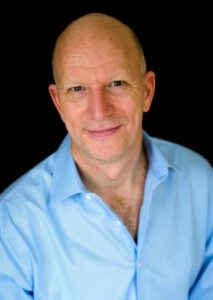
Richard Schoeller discusses mediumship, spiritual awakening, and the possibility that consciousness continues after physical death. He describes how messages from departed loved ones can support healing while emphasizing personal discernment rather than claims of absolute proof.
Questions This Interview Explores
- How can mediumship relate to spiritual awakening?
- What evidence suggests that consciousness continues after death?
- Can communication with departed loved ones help people heal grief or unfinished relationships?
- How do clairvoyance, clairaudience, and clairsentience work in mediumship?
- What are the possible explanations for experiences that seem connected to reincarnation?
Key takeaways
- Mediumship can help people find comfort and resolve unfinished emotional relationships.
- A medium can offer information, but each person must decide what it means for them.
- Spiritual growth may continue beyond physical death.
- Psychic abilities can emerge after childhood and become clearer with emotional maturity.
- Experiences of past lives may remain open to more than one interpretation.
- Mediumship became meaningful to Schoeller as a way to serve and help others.
Transcript
Rick: Welcome to Buddha at the Gas Pump. Buddha at the Gas Pump is an ongoing series of interviews with spiritually awakening people. I’ve done hundreds of them now. If this is new to you and you’d like to check out previous ones, go to batgap.com and look under the Past Interviews menu, where you’ll see all the other ones archived in various ways.
This program is made possible by the support of appreciative listeners and viewers. If you appreciate it and feel like supporting it to any degree, there is a PayPal button on every page of the site, and also a donations page that explains what to do if you don’t like PayPal. Some people don’t like it.
My guest today is Richard Schoeller. Richard is a medium, and he lives on Long Island. I was joking with him before the show that there must be something in the water out there, because there’s him, there’s John Edward, and there’s Theresa Caputo. He actually has a serious answer to that question, so I’m not going to read a long bio of Richard, because we’re going to get his bio as we go along. He’ll tell his story.
✨ Mediumship and spiritual awakening
But I want to start with a question, Richard. A friend of mine, who always gives me a hard time in a way that I actually appreciate—you know, that kind of friend, right?—said, “I see that tomorrow morning is the rendezvous with the dead. Can’t wait. You really are providing better entertainment than Netflix. Nothing to do with awakening, but fun nonetheless.”
The reason I wanted to ask you about that is that the theme of this show is conversations with spiritually awakening people, and the whole idea of enlightenment and spiritual awakening. Many people would consider mediumship, or talking with people who have passed over, as being tangential to that, not directly germane to it. And yet I know that you have a very strong spiritual core in your life as well, and it’s actually kind of what got you started with this whole medium thing. So how have you answered that question for yourself—the relevance of what you’re doing to the idea of spiritual awakening or enlightenment?
Richard: First, I’m amused. I think I’m amused because, with the experience of spiritually awakening people, we can’t discount the men and women who have passed from this life as awakening in their process.
I’ve been working as a medium now for 20 or 21 years. When people from the spirit side of life come through in a message, when I’m doing an individual session, there might be remorse in the way a relationship ended, or an understanding of each other. I don’t want to discount the men and women who have passed from this life—our family and friends—from their spiritual evolution.
I think we’re all spiritually awakening ourselves, and our family and friends who have passed from this life into the next. The process of opening to my mediumship changed the way I view the world, and also helped me to come to a better understanding of who I am, how I operate, and how I can help others to let go of some of their past, help them move through some difficulties perhaps, and hopefully move them toward a path of understanding and more awareness of self.
The process of opening to my mediumship changed the way I view the world.
Yeah, good answer. Part of the way I answered that question for myself was that, to me, spiritual awakening or evolution toward enlightenment, or whatever, is not just about realizing or cognizing one’s innermost true nature. It’s also about understanding how the universe works.
Rick: Yeah, good answer. Part of the way I answered that question for myself was that, to me, spiritual awakening or evolution toward enlightenment, or whatever, is not just about realizing or cognizing one’s innermost true nature. It’s also about understanding how the universe works.
I’ve encountered people in interviews who I feel have a pretty clear glimpse, or even an abiding appreciation, of their pure consciousness, of their true nature, but who, in my opinion, have kind of wacky ideas about how the universe works. For instance, there are some who would say that nothing happens after you die; it’s lights out, and there is no soul or person or entity who continues in any way, shape, or form.
I think your experience, and that of many, many others, belies that. Is their spiritual awakening really mature if they could harbor such a misunderstanding, if that is a misunderstanding, or be so close-minded, as Irene just added?
Richard: Now you’re speaking of people who have crossed over?
Rick: They’re talking about people who, let’s say, I’ve interviewed who are on this side, because I don’t have the ability to interview people who’ve crossed over.
Richard: Let’s set that up for another interview.
Rick: I think I could use you sometimes, you know. And who’s to say, “There is no person; therefore, there is no reincarnation, or there is no life after bodily death,” because that would imply the existence of a person? You know, that kind of attitude.
Richard: We’re bringing this to a simplistic explanation, and I am stating that it’s simplistic. I’ve told the story a thousand times. When I opened to this awareness, I was 33. I didn’t tell my parents for two years.
With my mother, when she looked at me over coffee and cake in her kitchen, she said, “What’s going on with you? You’re looking around the kitchen like there’s something else going on.” I explained to her, “I have this ability now.” Her response to that was, “I don’t believe it. When you’re dead, you’re dead.” That was her flat-out response, right? And she said, “Prove it to me.”
There are two parts to this explanation. One, I’ll tell you the story of the information that I shared with her at the time. But I want to be clear: I can’t prove, and I don’t feel any medium can prove to another person, that life continues. It’s not my job to prove to you that life continues.
I believe it’s our job as mediums to present the information and to allow you, as the client, to take the information and prove it to yourself, so to speak. Jumping back, she said, “Prove it to me,” and I said, “I’ve got your Aunt Sophie here.”
I believe it’s our job as mediums to present the information and to allow you, as the client, to take the information and prove it to yourself, so to speak. Jumping back, she said, “Prove it to me,” and I said, “I’ve got your Aunt Sophie here.”
Her aunt had died a year before I was born. I’d never met the woman. I described Sophie, and my mother discounted the photograph. She said, “You could have seen a photograph of her wearing that outfit.”
I looked at her and I said, “Your Aunt Sophie is telling me that she and Uncle Billy weren’t married.” My mother jumped up from the table in that moment and slammed her fist on the table. She said, “That’s a family secret. Who told you?”
Rick: You said Aunt Sophie.
Richard: Exactly. I just did.
Now, that was 1999. Over the course of a couple of years, my mother would start to question me. In her awareness over time, she’s come to an understanding, or at least she has some comfort in the belief that there might be something more, where she didn’t originally.
I use it as a personal experience, but that’s true for me with people who come to me for individual sessions. I can only present the information that their families are presenting, and I can’t prove it to them. Some people will walk out and discount it, pull it apart, and still feel very comforted.
But to answer your question, it feels like the proof is their coming to an understanding of this process.
Rick: Yeah. Well, proof is a very strong word, and it has a lot of finality to it. I always like to think of things that we don’t really understand fully, or that aren’t universally accepted, as being like scientific hypotheses.
There are so many things that science has gotten greater and greater confidence about over the centuries and, especially, in recent decades. But scientists themselves are reticent to use the word “proof,” because by definition, in the scientific method, anything that sort of refutes a hypothesis can disprove it.
Things are sort of accumulating evidence more and more and more, but you can never say with 100 percent certainty that such and such is so, because there can always be the possibility of refutation based upon experience. What you’re doing is adding evidence, and a lot of other scientific researchers, like you, quote-unquote, are adding evidence. There’s a pretty good body of it by now.
Richard: Yep. I agree with you. There’s a good body of evidence, and there’s good information. I understand what you’re saying about using the word “proof.” Fair assessment. But I always hope that the work we’re doing as mediums is helpful in making people’s lives easier and better.
Rick: Yeah, which is, you know, “Better Living Through Chemistry,” as that pharmaceutical company used to say. Anything that adds genuine understanding to the human assessment of our understanding of how the universe works helps to make life better.
If a large percentage of the population are running around feeling that they are only their body, and when that dies, that’s the end, that must be very frightening for them. It is not necessarily an accurate view of how the universe actually works.
Richard: Yeah, it’s fascinating, isn’t it?
Rick: Yeah, I think so.
Richard: So, what’s next?
Richard’s first experience as a medium
Rick: In terms of what’s next, let’s talk about how you got started with this whole thing. As I recall, you told the story that you were in some meditation class. Then, boom—take it from there.
Richard: Yeah. I used to be a funeral director. After 16 years of working in the funeral industry, I decided that it was time to start attending meditation classes to decompress. I also had a fascination with the spiritual realm. I can’t deny that, too, because growing up, I considered becoming a priest at one point.
Anyway, I started attending meditation classes as a way of decompressing. One night, I came home and walked into my apartment. I started to feel like I was having a heart attack because my heart started to pound and race through my chest. The room started to look like it was getting pins and needles, like a black-and-white television when it would go to snow. I was starting to see that in front of me.
With that, all four of my grandparents showed up in my bedroom. I had known them and had relationships with them for a while, into my late teens. That’s when they started to pass. My logical mind was saying, “You’re dead. I can see you. I’m on my way out.”
I was on the floor crying because I thought I was dying at age 33. After a little while, they said, “No, you’re not dying. You can just see us now.” The last thing I said to them was, “What do I do with this?” They looked at me and said, “Don’t worry. You’ll find out,” and they left.
“Don’t worry. You’ll find out.”
Rick: Now, when you say they showed up, were they like ghostly apparitions, or were they quite solid? How, in what way or form, did they show up?
Richard: They showed up where I saw them clairvoyantly. I felt them clairsentiently. They weren’t ghostly apparitions. As silly as it sounds, the way I’m seeing you right now on this Skype screen is the way I saw them.
Rick: They seemed that solid? Like if you were in the same room with them? I mean, if you and I were in the same room, we could shake hands or something. Did they seem that physical?
Richard: They seemed that solid and real to me. They were not physically manifest or physically materialized, but they were clairsentiently and clairvoyantly manifest and materialized in that way.
Rick: Okay. So they weren’t sitting on the couch in the room with you, but they were there in another dimension, every bit as real as the couch.
Richard: Right. They weren’t sitting on the couch, and they weren’t hovering in the air. They were standing in front of me.
Rick: Yeah, but just in a slightly different dimension or something.
Richard: Exactly.
Rick: Okay.
Richard: Exactly.
Rick: Yeah.
Richard: And it was. It was life-changing. It was amazing.
Rick: I can imagine.
Richard: So—
Rick: Had you ever had anything like this before in your life?
Richard: Well, no. At that point, I hadn’t recalled it. But since you’re asking the question, the same day, I told my mother. My father was sitting at the kitchen table and, God bless him, he looked at me and burst out laughing. He said, “Jesus Christ.” He said, “Promise me one thing. You won’t wear a shawl or carry a crystal ball.”
So I laughed at him. I said, “No, I have no intention of doing that.” He asked me to prove it to him, too. I described a German aunt of his who died in the 1950s. He shook his head. He said, “That’s correct. But I can imagine you saw her in a picture.”
I described how, on Sundays in the summer, he and his brothers would take a subway over to her apartment after church. She would put them on the subway and take them to Coney Island. He got very attentive. He looked at me and said, “Okay, you’ve got my attention.”
She wanted me to remind him that her favorite part was his. He said, “Okay, well, what’s that?” She was telling me about marching them into Nedicks for orange sodas and hot dogs.
Now, my father was a drill instructor in the Marines. When I told him that, for the second time in my life, I saw him cry. He said, “I never told you that.” I said, “No, your aunt’s telling me right now.”
Now, the reason for this story is to answer your question. He looked at me and he said, “Did you always have this?” Here I am, 35, sitting in the chair in the kitchen of my childhood home, and I flashed back to my bedroom. I looked at him and said, “When I was six—six or five—I used to call you both into my bedroom every night because I was seeing people walk through the walls. One night, I screamed out loud, ‘Leave me alone!’ and it stopped happening.”
So I feel, and I’ve said this many times, that the spiritual realm waited until I had enough ego strength to deal with its presence. Then it showed back up. So, to answer your question, five or six was when I had awareness of it, but I shut it down.
✨ Clairvoyance, consciousness, and healing
Rick: Yeah. I think you used a couple of the “clair” words a minute ago: clairaudience, clairvoyance, clairsentience. Obviously, that kind of thing can happen in the earthly realm as well as across the divide into the spirit realm.
In fact, people listening might be interested to know that the whole Bhagavad Gita was supposedly dictated by a clairaudient, clairvoyant person who was relating to his king, in whose court he served, what was happening on a battlefield many miles away. He wasn’t sitting in the chariot taking notes with Krishna and Arjuna; he was seeing the whole thing at a distance and relaying what was happening. So that kind of thing happens in traditional spirituality as well.
Richard: Absolutely, yeah.
Rick: But do you have anything like that in terms of just the earth plane, or is it, with you, exclusively other-side stuff?
Richard: Well, yeah. I’m not walking around in the world with my self-awareness open so that, as I’m walking down the street, I can see somebody’s relatives. But I also have moments where, because of my sensitivity, I have a sense of things.
So the answer is, yeah, it’s a little bit of both.
Rick: A little bit of both.
Richard: Yeah. But again, most of the time I’m operating in service to the people who come to see me. There are times when I have a sensitivity and awareness of things that are going on around me, and I just pay attention to it.
It’s fascinating, because if you had told me 20 or 21 years ago that I was going to be doing this with my life, I wouldn’t have believed you. I was working full-time as a funeral director, and at that point, it had been—oh God, how many years?—16 or 17 years. When I went into it, I thought I was going to do that for the rest of my life.
So the ability to use this, in hopes of, as I said before, helping and serving—it changed my life. I’ve met a lot of amazing people along the way, too, who have been spiritual teachers to me, helping me see more than just the spiritual realm and opening more awareness to consciousness.
Rick: Such as what?
Richard: Saniel and Linda Bonder, I believe. I had an amazing experience at an Institute of Noetic Sciences Transfiguration retreat with them, opening conscious awareness. It was utterly amazing. It happened in the presence of Linda. This wasn’t mediumistic, as in, “My grandma’s showing up.” This was me having an experience of conscious awareness and consciousness.
I hold both Saniel and Linda in my heart. They’re amazing people, and they helped me understand more of myself in the world, more about consciousness, and myself as connected to consciousness.
Rick: Yeah, that kind of harkens back to the question I asked you in the beginning about the relationship of this to spiritual awakening. I think Irene’s passing me a question here. Let me ask you this question, and we’ll get back to that: Do most people who need healing with a departed soul or souls—how does it help them to move on? Do you understand the question?
Richard: Yes. It’s completely—thank you for the question. I can’t qualify whether it’s most. I can tell you that a lot of people do come to me because there’s some relationship to the loss. Unfortunately, there are parents losing children due to accidental circumstances or otherwise.
I’ve gotten responses from some people by email saying that it helped to ease their grief, knowing that the relationship with their loved one hadn’t ended. But there are also some people who have come as clients with a hope for some healing to occur relationally.
Rick: Like if you didn’t get along with your father, and then he died, and you and he both feel remorseful about it, but you’re disconnected because he’s died—you can help to reconcile?
Richard: Absolutely.
Rick: You can help to reconcile.
Richard: Since you brought up fathers, let’s use the father example. I feel every child needs acknowledgment from their father, right? There have been fathers who, through their timing, personality, or circumstances, didn’t do that.
A lot of times, fathers will come through—not every father, but a lot of times they’ll come through—and acknowledge that they didn’t give the nod, acceptance, or understanding to their child. That’s helped them—and by “them,” I mean the father in the spiritual realm and the client.
Rick: Right.
Richard: So—
Rick: Incidentally, I don’t know if—I think Luna wants to get up here. Get up, Luna. No? Okay. She’s our little dog. She likes to jump up on my lap sometimes while I’m doing this. Oh, come on. All right, if you’re coming, come up. Okay, there you go. Here’s Luna.
Richard: Hi, Luna. Oh, wow.
Rick: Isn’t she cute?
Richard: Absolutely.
Rick: Okay, you just sit here and be quiet. Don’t hog all the attention, okay?
So I wanted to ask—well, first of all, I want to say, if it’s not inappropriate—I don’t know if this ever happens to you during interviews—but if something should come through regarding me, Irene, or whatever while we’re doing this, you have our permission to bring it up. I’m not sort of asking for that. I’m just saying, if it happens, that would make it very interesting. My mother was a real character, and she would have loved this whole thing.
Richard: So it’s best that you don’t tell me anything more.
Rick: Okay.
Richard: Okay. So this way—
Rick: Everybody’s mother’s a character. So I didn’t tell you anything.
Richard: But this way, it’s best that you don’t tell me details or anything about her, just in case something else comes through, all right?
Rick: Sure, okay.
Richard: Great. And I’m open to that. If she were to show up, or anyone for Irene, I’ll keep you posted.
Rick: Okay. So I just wanted to loop back a little bit to what you were saying about Saniel and Linda, just because—to put this interview in the context of this show—obviously, what you experienced with them, and what many people listening to this will understand, is that consciousness in its ground state, or simplest form, is unbounded and universal. That’s our true nature. That’s what we are.
People listening to the show are accustomed to thinking of that as something they aspire to experience in an abiding way. But, in addition to that, spiritual literature from every culture is replete with examples of people who have realized that and then unfolded all sorts of latent abilities.
The Bible, the Vedic literature, the Buddhist literature, and everything else are full of examples of people who have done that, possibly before realizing that their true nature is consciousness, or possibly afterward. I just wanted to throw that out there as something to put this in context.
Richard: So the way I perceive things—and again, I still feel like a student. I’m still in a process of understanding and learning about myself, life, and beyond, I would say—
Rick: As are we all.
Richard: Right? And in that, as awareness, having the awareness of the spiritual realm moving from this life into the next life, I don’t feel that that’s the end of our evolution as beings.
Rick: Right, yeah.
Richard: Even though a relative may come back from the spirit side of life to communicate something in the way of closing out a relationship, giving healing or comfort, expressing love, or reminding people that there’s more than this life, I believe it’s an evolutionary upward spiral. I believe that we’re all moving toward the All—the sensible being into the ground, all being at that point.
Rick: What’s your take on reincarnation?
A Civil War Reincarnation Experience
Richard: Great question. One of my early experiences, right before I opened my mediumistic awareness, was at a psychotherapeutic retreat up at the Shalom Mountain Retreat and Study Center in Livingston Manor. I was doing this retreat as a way of grieving the end of a relationship.
I went up a day early and did yoga for the first time. I had never done it before. This was back in 1995. The leader, Lawrence Stibbards, was leading the retreat at that point. He just said, “All right, breakfast will be in 10 minutes. Just sit and enjoy the music.”
So I’m sitting in this meditation room, and I close my eyes. My 1995 being comes back across the Civil War. I see a Civil War soldier, and I have this experience happen to me.
Now, again, I was in it. I opened my eyes after about 20 minutes, and a friend of mine, Ted, was sitting across from me. He said, “I don’t know where you went, but as you closed your eyes, light just started to fill the room.”
Okay, that sounded lovely. But I looked down, and my whole T-shirt had been soaked. I didn’t realize I had been crying the whole time.
The short of it was that I had this experience of a Civil War soldier. The question was, was that me in a reincarnated experience, or was it reincarnation? At that time, the woman I had left the war for was the previous partner with whom I had just ended a relationship in this experience. So I believed it was a reincarnation experience.
Now, I’ve had mediumistic teachers tell me that it was the spirit of someone who resonated with my life experience and showed me those things. I’m in a place of still weighing it out. I’m still weighing it out after 21 years.
So what’s your take on reincarnation? I’m curious.
Rick: Well, I’ll tell you in a second. But first, I want to ask you: Have you ever read Michael Newton’s books?
Richard: Michael Newton? No.
Rick: Well—
Richard: Gary—
Rick: He’s this guy who wrote two or three books. He had been a psychologist of some sort and had been doing hypnotic regressions with people. I guess he was doing past-life regressions or something. Then he started finding that people were popping into the period between lives.
Richard: Brian Weiss had done some of this also.
Rick: Yeah. So he made that his specialty. He did thousands of these hypnosis sessions where people went to the period between lives. He found a great degree of corroboration between everyone’s accounts and pretty much mapped out the whole thing. He came up with a cosmology of what happens when we die, the stages we go through between lives, and then the process of being reincarnated again.
I just thought I’d throw that in there because it’s interesting. My take on it is that it resonates with me. I have friends who say, “No, it doesn’t work that way,” and I’ve had some sort of cognition that confirmed that for me. But it appeals to me logically.
Like I was saying earlier, it’s a scientific hypothesis, like everything is for me, for which there seems to be a fair amount of evidence and logic. I’m open to it being disproven, but I kind of resonate with the notion of the soul evolving over a long span of time, and that one lifespan is not adequate for the amount of evolution that we’re capable of.
Richard: You reminded me when you said Michael Newton and started to describe his work. I’m also thinking of Brian Weiss, right? Many Lives, Many Masters is the book I have.
Yeah, and I’m glad you mentioned him. I just wrote down Michael Newton as a resource to look into. I’m fascinated by the work. I remember Brian Weiss’s books also. I’m trying to remember—
Rick: I think Michael’s books are called Life Between Lives or something like that.
Richard: That sounds familiar now. But it still fascinates me as a topic. It makes me think; it makes me wonder. At the same time, I’m still, still, still—yeah.
Rick: That’s a good add-on. I don’t think we should just cling to beliefs without any sort of evidence.
Richard: Right.
Rick: I kind of see life as one big scientific experiment where we’re forming hypotheses and then checking them out.
Richard: Right, absolutely.
Rick: Yeah. So it’s interesting that you were a funeral director. What better occupation could there be if you’re going to start getting psychic, although it might have been a little bit of a conflict of interest? It might have gotten a little too crowded in there for comfort.
Richard: Right. So, a story again. I didn’t know I was going to be a funeral director. Growing up, my father used to say to my sisters and me, “When you get into high school, I want you to think about what you’re going to do with your life.” If you went out into the workforce, he said he would help buy your first car. If you went to college, he said, “I’ll try to pay for your education.” Then, looking at me, he would say, “If you don’t know what you want to do, I’ll put you into the Marines.”
Rick: Brother.
Richard: Yeah. “Oh, brother” was right. I was clear as a kid that there was no way I wanted to be a Marine. I just didn’t. But at my grandfather’s wake, my father said to me, joking around, “Why don’t you become an undertaker? No one will ever talk back to you,” and he burst out laughing.
Rick: That’s pretty good.
Richard: But at 17, I went into funeral service and started working at the funeral home because I was fascinated. I wanted to know what happened to our souls when we died.
Rick: Right.
Richard: I also wanted to please my father. I knew he would be proud of that.
Rick: And let me guess: you became a medium, and they started talking back to you.
Working as a funeral director
Richard: So, nice. Yeah, there’s truth to that statement. But again, that was what taught me how to shut it off.
I was standing at the funeral home shortly after I opened to my ability. The woman I was about to bury was in the chapel in the casket, her physical body. My hearse driver was downstairs, and she came waltzing out. She started to sing to me, “I know you can hear me.”
Rick: Like, “I know you can hear me.”
Richard: Exactly, exactly. I was like, “Oh, no, I’m losing my mind.” So mentally, in my head, I sent back the thought, “Yeah, I can hear you, but you need to go back into the chapel.”
She said, “Well, you’ve got to tell my husband my legs don’t hurt.” So mentally, I sent the thought back to her, “I don’t know who your husband is,” because I hadn’t met the family yet.
She said, “Don’t worry, you will,” and she flashed a picture of her husband into my mind. The limousine pulled up, the limo driver opened the back door, and this gentleman stepped out.
My thought was, “I can’t say anything. I could get in trouble. This is not my scope of business.” At the end of the funeral, she was standing next to me the whole time. She said, “Tell him.”
All I said to him, as I was saying goodbye, was, “I bet your wife’s legs don’t hurt anymore.” Then the man started sobbing. He said, “That’s what caused the most pain right before she died.”
I looked at him and said, “She’s in a much better place.” I shook his hand, went to the hearse, and said, “I can’t do this.” I was afraid they would tell the manager and I would lose my job. This wasn’t really my appropriate scope of practice.
Learning to Shut Off Mediumistic Perception
So I learned how to shut it off while I was working. I didn’t want to walk in and start preparing the deceased body for viewing and have them standing next to me, talking to me about their life. Irene’s laughing, but it’s true.
There were even times when I’d walk in and see the person who was about to be buried after I had opened to my ability. I would just mentally say, “I can’t do this.”
I’ll give you one more example, though. I was in Manhattan, having lunch with a friend. I was walking on the Upper West Side when, I’ll just say, a famous movie actress who had passed away said to me, “You’ve got to take a left here.”
She was in spirit. I was standing at the corner after having lunch, walking back downtown, and I mentally said, “I can’t do that.” She said, “My husband’s going to walk out of the door. You have to tell my husband I’m okay.”
Here’s this famous movie actress, and her husband is a famous movie actor. He lives on the Upper West Side. She was telling me where he lived. I mentally sent the thought back, “I’d love to help you, but it’s not my job. If your husband wants to know you’re okay, put the people who know me, who know you, into his life to talk about you. If he comes to me, then I’ll tell him.”
So the point is learning—
Rick: So did it happen that way?
Richard: It didn’t, to be honest with you. But I’ve been fortunate enough to have other experiences where some fascinating people in history have come through. Let me hold that thought for a quick second.
Rick: Okay, don’t forget to come back to it. It sounds interesting.
Richard: Thank you. I promise I won’t. The point of that is, again, yes, I want to be of service. But unless somebody walks up to me and sits down with me for an appointment or something, that’s the service I’m meant to provide. I don’t feel it’s my job to walk up to people—
Rick: Get in their face, you know? Yeah. Teresa Caputo does that all the time. She’ll be in a laundromat or a restaurant, and she’ll walk up to somebody and say, “Well, I happen to be a medium, and somebody is coming through.” But it’s obviously staged because there are cameras there, so I’m not sure exactly what’s going on with that.
Richard: I would tend to think that’s the way her program presents it. We’ve seen her program about three times now, and that is the way she presents her program. I tend to think that’s the way she operates in the world. If that’s her way of operating, that’s her way of operating.
But I’m pretty clear that, with my experiences, unless you come to me, I want to live in the world with you, hang out with you, and not with all of your deceased relatives.
Jumping back to the other part of that story, I was sitting in England, doing a reading for a client, when all of a sudden I had this person of note in history walk in. My personal side went, “Wow.” I was thinking mentally, “Wow, this is really crazy.”
The gentleman said, “Tell her I said hello.” I said, “Okay. I have a man here who wants me to say hello.” She said, “Okay, who is it?”
I said, “Before I tell you who it is, he’s telling me that he used to sit with your father and discuss the war.”
She said, “My father was very high up in the war effort and in politics.”
I said, “Well, I have Winston Churchill here.” She looked at me and said, “Yes, he was an uncle. Not a blood uncle, but he was an uncle to us. He would spend dinners at my home discussing the war with my father.”
Rick: It’s funny. When you said “famous person,” I thought Winston Churchill for some reason.
Richard: There you go.
We’re on the same wavelength right now. But the point of that story is that it was fascinating. There had to be a connection. Winston Churchill wouldn’t just show up for me.
Rick: Right.
Richard: Because he was related to the woman and had an important story to tell her, it ultimately made sense to her.
Developing mediumistic sensitivity
Rick: Here’s a question from my friend Francis Bennett, who’s been on BatGap a number of times. She says:
Since childhood, I have experienced any number of contacts with and communications from beings in other dimensions, such as angels, devas, and even demons. I’ve never directly experienced any contact with departed loved ones outside of dreams. For someone with the ability to see into other dimensions already, is there some way of developing or cultivating an ability to communicate with departed loved ones, apart from consulting a medium?
Richard: Yes, they don’t necessarily have to consult with a medium. If they sit in classes for mediumistic development—Francis Bennett, you said?
Rick: Yes, Francis.
Richard: First, say thank you to Francis for the questions.
Rick: She’s listening, so yeah.
Richard: Thank you, Francis. Great. In relation to devas and angels and so forth, there are different rates of vibration in the spiritual realm. Let’s use the example of angels or spirit guides, who are at a much higher rate of evolution and vibration.
In connecting with the spiritual realm, let’s just use the expression of “Mom” or “Dad.” There’s a slower rate of vibration with Mom or Dad. As we move up into the spiritual realm, the rate of vibration increases. So, using a spirit guide, we’re dealing with a higher rate of vibration.
To answer her question, if she were to sit in a class—or not a class, but if she went to take classes on mediumistic development—she would be able to discern the difference between the energies that she’s experiencing and feeling.
Rick: Can you skip energy levels? Could you jump to experiencing a higher level without having experienced the intermediary levels?
Richard: Some people, yes. Some people have no problem going out and experiencing angels, and some people go to angelic guides, and some people can sense devas at their different rates of vibration. But as a medium, for me, it is about going through a rate of vibration.
Before I tell the story quickly, when I first went to a spiritualist church here on Long Island, the medium got up, and it was my first time there. The medium said to me, “Oh, I’ve got a spirit guide with you,” and he gave me information. It was fascinating. But I thought to myself, before I can believe in a spirit guide, so to speak, I need some foundation. I need some understanding. This is all in my own mind, so tell me about my grandmother who had passed. Give me something more solid that I can understand before I’m able to accept something about something I don’t fully understand yet. So, do you understand where I’m coming from?
Rick: Yeah.
Richard: So the point of this, with Francis’s question, is that I’m thrilled for her that she can sense angels and devas and so forth. Different rate of vibration. If she sits with a medium in a mediumistic development class, they’ll help her be able to get to a certain rate of vibration. But yes, to answer your question, people can skip the level. Some people just go out easily into the ether.
Rick: Yeah. I’ll tell you a funny story about Francis. When she first told me about this ability, we were at a Science of Non-Duality conference in California, and she said to me that she was routinely seeing beings around people, kind of attending to them in some way. She didn’t know what they were doing, but just saw them as a matter of fact.
Then we were at the San Francisco airport preparing to fly home, and we were in an elevator. I kind of whispered, “Anybody in this elevator?” She didn’t say anything. We got off the elevator, and she said, “They just came to me and said, ‘Don’t tell people about us. If they’re meant to see us, they’ll see us.’”
Richard: Beautiful. That’s great.
Rick: Here’s a question from Irene.
Irene: Assuming this has been your experience on occasion, do you have any theories as to why, in some readings, no one comes through? Does this indicate anything about those souls or about the person receiving the reading?
Richard: Thank you, Irene. There are times when, in my experience, I can’t read for somebody. I’ve been clear, and I’ve said it out loud to the client. I’ll say, “Look, I’m sorry. It’s lovely to meet you, but I’m not able to connect for you.” There are times when I can’t say that no soul has come through. It just may be that I’m not able to read for the client. But it’s not for a lack of having a connection to some family members.
Now I’m going to switch this around, though. There has been an experience where some people have said, “Any time I’ve gotten a reading, my sister hasn’t shown up, and she’s been deceased for 22 years,” or whatever. That’s just a made-up story, but people have said that a certain person has never shown up.
That goes to my understanding at this point. One, they may choose not to. Two, they may have an active choice that they’re evolving their spirit and don’t feel the desire or need to communicate something through. Or they may not be in that realm. Well, I’m saying the same thing in a different way: they may not be in that realm of communication.
That goes to my understanding at this point. One, they may choose not to. Two, they may have an active choice that they’re evolving their spirit and don’t feel the desire or need to communicate something through. Or they may not be in that realm. Well, I’m saying the same thing in a different way: they may not be in that realm of communication.
Rick: Yes. I mean, obviously, souls don’t always hang around in a place where they could be available for communication, right? They may have reincarnated, or they may have moved on to some higher realm, so they’re no longer in the kind of way station where they’re in touch with Earth. Would that be true?
Richard: Yeah. In fact, one of my colleagues, Bill Coller—
Rick: Oh, yeah, I listened to a thing you guys did.
Richard: Yeah, Bill. He lives in Switzerland, and he’s a Scottish medium. He talked about the second death, or the second passing, so to speak. I think that was the language used, but even in the spiritual realm, moving from this place onward, so to speak. It makes perfect sense to me that, again, if we’re evolving our spirit or if we’re evolving our soul, we may move on and not be present to communication.
Rick: Yeah. I’ve had other people say to me that time isn’t linear, and that one may have actually reincarnated already, yet still, simultaneously—in some way, all our lives are simultaneous because time isn’t as linear as it seems to us—you could actually be communicating with someone on the other side who has already reincarnated. Does that make sense to you?
Richard: My experience is different in that I agree with you 100 percent that time is not linear. I’m fascinated because one of my teachers from the spirit side of life, who works with me and the group that I have at home here for higher consciousness, has talked about wanting to talk to us about time, how time folds in on itself, and how it is nonlinear. So we’re all still waiting for that teacher to have that talk. That’s a side note.
In relation to somebody reincarnating or not, I don’t feel that the person may have reincarnated, but I don’t feel that the person communicating from the spirit side of life is reincarnated, because their soul, their essence, their presence, is so relevant and present to the communication process.
Let’s use your dad for a moment. Your dad has passed into spirit, let’s say. If your father were coming through in a reading, your father is present. But what some of the teachers have talked about is that the soul is a multifaceted aspect. It’s much larger than that. So the presence of your dad is present in the reading; he is fully present. However, the larger part of the soul may have reincarnated, an aspect of itself back here.
Rick: I think I do. I don’t know whether it was Michael Newton or who, but I remember someone saying that a portion of your soul can incarnate while the rest of it can still be on some higher realm, or that it might even bifurcate and be occupying a couple of different lives at the same time.
In the Ramayana, Rama—well, that’s a little different, because they’re supposed to be avatars—but Rama was said to be this percentage of incarnation, and then his brother that much, and then the other two brothers this much: different portions of the same being incarnating to different degrees in different bodies simultaneously.
We’re getting very esoteric here.
Richard: Right.
Rick: I have no idea how all—
Richard: Right. Again, I’m basing this on experiences with teachers who have pointed this out as potential or possible. But my experience as a medium is that Dad’s here. Dad’s in spirit. Dad has not reincarnated.
One more thought, though, if I may, going back to your experience. One of the other things that gives me comfort at this point is something I read and felt affirmed by: if there is reincarnation, I’m going to use your dad or my grandmother as examples, they’re not going to reincarnate until everyone they’ve known and loved has met them in the spiritual realm.
That made me feel comforted, because if I were to pass and my grandmother weren’t there, I would have missed seeing my grandmother. So it gave me a sense of comfort. But again, when I pass, I will probably learn more about reincarnation and the aspect of reincarnation, if there is such a thing. Or, you know, was I wrong? Did Grandma, in fact, reincarnate?
Rick: My attitude would be, let’s say with my mother, “Hey, I’d love to see you, but if you really need to reincarnate, if it’s time for you to do that, don’t wait around. I’ll be fine. You’ll be fine. Don’t let it hang you up.”
But this is all kind of fun and speculative. It’s fun to play with ideas and ponder what might be.
Richard: Yeah, and you’re correct. It is esoteric. It is speculative. We’ll see. I’ll find out when I cross over, and I’m in no rush for that.
Rick: Yeah, stick around a while. Here’s a question from Dan in London. He asks, “Do people who pass gain a wider awareness, a refined sensibility, more compassion, and more consciousness? As a child, I always intuitively felt that people who died gained a much wider perspective. Is this true?”
Richard: Yes, each to his own understanding, though. We have the potential to expand our awareness. Thank you, Dan, by the way, for the question. We have the potential in the spiritual realm to expand our awareness and our understanding of self, and to have more compassion toward self. Yes, it is a process of spiritual growth. And yet there are people in the spiritual realm who, each to his own understanding—is the best way I can say it—everyone does it in their own right.
Rick: To their own perspective.
Richard: Exactly.
Rick: So they don’t become Socrates all of a sudden or something.
Richard: Exactly. When I explain to clients, if an opinion comes through from the spiritual realm—let’s say Grandma shows up and is giving an opinion—remember, it’s still an opinion. It’s still an understanding of where she is at this point. Take it, contemplate it, but don’t abdicate your own thought process over Grandma’s opinion.
Just because you’re dead doesn’t mean you’re smart.
Rick: Yeah. In other words, just because you’re dead doesn’t mean you’re smart.
Richard: Exactly. Thanks very much.
Rick: You can use that if you want.
Richard: I will. That really summed it up in a much easier, more direct way.
Rick: I have another question, and feel free to interrupt me if I’m interrupting you, because we’re just firing back and forth here. When you were still a funeral director and you started picking up on these people, were people ever sort of freaked out at the prospect of being put into the crematorium or into the ground? Having so recently died, were they still attached to their body and a little bit upset about that prospect?
Richard: No, I didn’t have any experience of that. I did not have any experience of anyone being freaked out, or anyone being fully attached to their body and expressing anything, because I just didn’t have it. It wasn’t a part of my experience with anyone.
I remember preparing one gentleman, and it was 2:30 in the morning. I had removed him, and he had come with me. Again, this was early on in my mediumistic experience. I just said to him, “I can’t have you standing here while I’m doing the preparation.”
He just said, “But I’m fascinated by it.” I said, “As long as you don’t interrupt me or say anything, you can witness. But please don’t engage me in conversation, because I can’t—I don’t wish to do this.” And he honored that. But no, nobody freaked out over it.
Rick: That’s interesting. The guy I interviewed last week, Michael Speight—he lives in Utah—said that he was once going by a Mormon cemetery. He has subtle perceptions also, and he perceived an extraordinary number of souls kind of hanging around.
Apparently, his understanding was that in that religion there’s the idea that, at some point, you’re going to be resurrected bodily in your original body. So people were sort of attached to hanging around in anticipation of that. Does that resonate with your understanding of things? Have you seen people sort of doing that, where they’re attached to the physical form?
Richard: I can’t say no to your question. For me, that shows that they’re still connected to their earthly experience, their understanding of resurrection, and their religious experience. But every soul has the ability to move on right upon death, and so I can’t say no, because I have witnessed it—not to any great extent.
I understand what Michael was saying. Upon death, we are immediately in the spiritual realm, and that is a choice that the person, or those persons, are making. It’s an active choice that they’re making.
Rick: Have you ever communicated with people who, while they were alive, had been adamantly sure that there is no life after death? And then they die, and they’re pleasantly surprised?
Richard: Yes. More than once in a reading, I’ve looked at somebody and said, “Oh, your father, your mother, your brother, or whomever the communicator was, would think I’m full of baloney,” or, “They would not believe in what I’m doing.”
I’ve even had the privilege, as the medium, of expressing a specific conversation in front of a fireplace between a father and his son. I remember the son looking at me and saying, “We had this conversation.” The reason they were in front of the fireplace was that his hospital bed was in the den by the fireplace.
He said, “My father said, ‘This is it. When I’m gone, I’m gone.’” To hear him bring me back to the fireplace in the den, recounting this conversation and saying that there’s something more, gave me more hope and a belief that there is something more.
He said he always believed—the son always believed—more than the father did. But it gave him even greater comfort knowing that Dad was talking about the den, the fireplace, and the conversation.
Rick: On the point of being able to turn on and shut down this ability, I’ve become friends with Bruce Joel Rubin, whom I interviewed a few years ago and who was the screenwriter for the movie Ghost. He got the Oscar for that.
He says that these days he’s very open. He’ll walk down the street in New York City or somewhere, and he’ll just spontaneously see people’s chakras, see all kinds of subtle things, and heal people as they go by on the sidewalk—even people who are behind him, whom he can’t see with his physical eyes.
It’s just happening as a sort of automatic function. It’s not something that he has tried to do, or is intentionally doing, or anything. It’s just that he’s serving as an instrument in that way.
This is a little bit tangential to what you do and what you’ve experienced, but I think it relates, because in a way he’s saying that he’s got something going on that is out of the ordinary, that he didn’t intentionally turn on or shut down, but that doesn’t interfere with his life. He feels like he’s serving a useful purpose through it. So, relating that to what you do, would you elaborate on what I just said?
Richard: First, I think it’s fantastic that he can walk in the world and be in that space of service. I think that’s fantastic. And yet, for me, specifically in the communication process, I don’t want to be walking into the local Starbucks to get a cup of tea and have the young lady next to me have her grandmother show up and start talking to me.
It’s not that I don’t want to serve the spiritual realm. Of course, I’m in service. But there’s a time and a place, and the experience of the individual relational communication process needs to start with your desire for it to happen, not mine. Do you understand what I mean?
Rick: That kind of reminds me of when we go shopping locally, and everybody wants to come up to me and talk about BatGap. Irene is saying, “Would you tell them to bug off? We’re trying to shop.”
Richard: Right. Absolutely. If you’re sitting at a restaurant having dinner with Irene, you want to sit and enjoy the dinner. It’s not that you don’t want to be of service.
I tried to remember who it was recently. Oh, I was in L.A. visiting my sister, and one of her friends said to me, “If you get anything, let me know.” I smiled and said, “If I open myself up and anyone shows up, I’ll let you know,” which was a nice way of saying, “I’m not open right now. I’ve got the do-not-disturb sign on.”
So, anyway, I understand what Irene said, too, about BatGap. You’re in service, you’re doing great work, and you still want to be present to your life in this process.
But I also admire what you said about your friend, because for him, he’s clear that he’s doing it in a way that feels nonintrusive to his life.
Rick: Yeah, and maybe he could shut it down if he wanted to, but it’s just sort of a default mode these days, apparently.
Richard: Right. That’s great for him. It works for him.
Rick: I’m sure there are times when it does shut down—driving in the car, shaving, or whatever. There must be times when it’s just totally not appropriate, and other times when it won’t interfere, so it just happens. I don’t know.
A lot of people say that they reach a certain state where they really are on automatic, and there’s not a whole lot of personal manipulation of their experience. It’s like they just function in ways that they never would have been able to figure out with their rational mind, but as if they’ve become a tool of the Divine, and the Divine knows how to orchestrate their life.
Richard: Absolutely. I’m also affirmed in knowing that I am a tool for the spiritual realm. I am an instrument of the Divine in the aspect of doing healing work and in the aspect of doing mediumistic work.
The spiritual realm knows when to work with me for that to happen, and I think that’s important. I really feel it’s important. Well, I’m repeating myself.
Rick: That was good. Like any tool or instrument—an automobile, or whatever else—it needs to rest and it needs repair. You don’t just drive it into the ground. As Ecclesiastes said, there’s a season for everything. There’s a time for that.
Richard: Absolutely. Everything under—
Rick: Yeah, “Turn, turn, turn.”
Richard: Exactly.
Rick: Here’s a song. Here’s a question from Elizabeth in the U.S. She asked:
One of your stories brought to mind my own father’s passing when I was seven years old. At the wake, all my relatives gathered around his dead body in the casket. I clearly felt his presence hovering near the ceiling at the back of the room. Though this felt confusing to my mind, from a deeper place I was absolutely certain that my father was no longer in that body. So my question is: Do you think it’s valuable to teach children about these sorts of things?
Richard: I think our children have a much more sensitive understanding of spiritual things before they become socialized in the world.
That being said, I do feel that each parent should do what is appropriate for them with regard to their children. But in an overall context, I feel it’s important to teach children an understanding of life and passing, and not to shut them down.
If you have sensitive children who convey these things, pay attention, become more aware, and talk to them about it. It’s important, because mediumship, as I practice it, is a small aspect of being whole. Ultimately, I want to evolve my soul and spirit to be all that it can be in this life.
If we hold that out for even our children—if we want them to grow and be all that they can be in the world—then educating them on all things, in whatever way is appropriate to the parents, is something I’m in favor of.
Rick: The thought that came to my mind when I asked Elizabeth’s question is that it’s important not to unteach children. The kids are teaching us about this, if we let them. They’re into Harry Potter.
Many people I’ve spoken with and interviewed have had all kinds of beautiful, subtle experiences when they were children. They were often taught that they were just overly imaginative, and they were discouraged and shut down.
Then they got into adolescence and felt it slipping away from them, and it was very painful. Maybe when they got into their twenties, they started opening it up again. But perhaps it never needs to shut down if we are more understanding and appreciative of what kids are capable of.
Richard: I’d like to believe, and I feel, that the generations that are coming—the younger generations—are much more sensitive and much more intuitive. They have much more access to the presence of the All, of the Infinite Intelligence, of Source.
I think that, as parents, more often than not, our children teach us more than we teach them. Again, anything we can do to help evolve their soul and spirit, then I’m all for it.
Mediumship as a latent human ability
Rick: Okay, I’m momentarily lost for questions, which is unusual for me. My mind just kind of—
Richard: Okay, well—
Rick: What do we have to say that I haven’t been bringing up or asking that kind of excites you?
Richard: One of the things you said a moment ago, though, when we were talking about the children, brought to mind a simple story.
I’ve had some parents contact me and ask, “Can I sit with their daughter or their son?” I have sat with some teenagers with their parents present. They’ve said, “My son was experiencing someone in his room the other night, and we don’t know who it is.”
I sat down with them, and I had a sense that it was the woman’s grandfather. I said to her, “Did he describe your grandfather?” She said, “Yes, he did.” I said, “So why weren’t you believing him?” She said, “Because I couldn’t see it.”
I said, “I understand that. But I’m here to mention to you that your grandfather is here. He’s telling me it was him in the room.”
That mother was able to walk out with her son and say, “Wow, so you do have a connection.” The son was able to walk out saying, “At least I’m not imagining this. I’m not making this up.”
I was able to give them some simple understanding as to what was happening—enough that they could work with it or not. I even suggested to the young man, “You don’t have to do this.” He said, “I don’t want to shut it off, but I don’t want to work with it actively.”
So, again, I gave him some simple guidance to learn how to deal with his sensitivity, and I gave the mother an understanding of what was occurring, enough that she could now listen to her son in another way. That felt very rewarding. But anyway.
Rick: I know that you believe everybody has the sort of ability that you have in a latent form, and that it could potentially be developed. Can you envision a society in which the sorts of things you do are the norm? Or do you think it would still be more of a specialized thing, like not everybody is a concert pianist, not everybody is a great baseball player, and that kind of thing?
Richard: I’m inclined to, similar to what you’ve said, feel that everybody has this ability, and everyone can be open and connected to spirit, or God, or source, or infinite intelligence. I’d like to believe that as we evolve, we could move to a society where that is the norm.
But I also agree with you: in students, some will learn how to be a concert pianist and some will learn how to play “Chopsticks.” Not everyone has the same depth of sensitivity, but it can be nurtured. It can be encouraged and well nurtured, encouraged to grow, and help them understand that not everyone is going to be able to do it fluidly.
Rick: Yeah, but you actually teach classes in which people learn how to do this. I imagine that some people take to it better than others, as would be the case with any kind of class, right?
Richard: Right, absolutely. As with any instrument, the medium—your being as the instrument, your nervous system—is the pathway that information moves through. The spiritual realms use you as the instrument, your nervous system as a way of conveying information. You can feel something clairsentiently, see something clairvoyantly, or hear something clairaudiently.
By sitting with students and giving them some direction and understanding about what’s happening with them while it’s happening, and giving them exercises, I try to help encourage them to grow in their ability, become better at what they’re sensing, and validate what they’re sensing. That allows them to say, “Oh, okay, so I’m not making this up from a mental place. This is really happening.”
Rick: Yeah. Are there any little things that pretty much everyone experiences but doesn’t pay any special attention to because they think it’s just—let me get more specific—let’s say we daydream, and we might be thinking about our mother, our father, or somebody like that. Do you feel that in cases like that, it’s very often an actual communication that we’re just dismissing as a daydream or as a little train of thought going through our mind? And that if we got a little bit more tuned in, it would turn into something more substantial?
Richard: Yes and no. Thanks for asking. There are times where—well, dream time alone, not daydreaming, but dream time alone—because of our level of sensitivity, because our mind has quieted, and because we’re in an innocent state—
Rick: An innocent, more innocent state.
Richard: Exactly. I’ve said more than once over time, “Your father showed up in a dream.” “Yes, he has.” “Your mother showed up in a dream.” “Yes, yes.”
So the spiritual realm, I know, can use that space, that opening, in order to give us a sense of reassurance and comfort.
So yes, even in daydreams, there are moments where you see—it’s tricky. There have been moments where I feel like I’ve just sort of let go of my mind, and I’m in a daydream sort of mind.
Recently, a friend of mine in Florida passed away, two and a half months ago. I was driving to get some lunch, and I was in this sort of light, daydreaming mind when she made her presence known to me. It’s not usual that I get visits for myself, because I’m in service to others. But when she showed up, it was like she just said, “I want to make sure you know I’m okay.” The usual confirmation of her being okay, not suffering with pain anymore, and moving on.
The point of that story is that it was a moment where I was driving the car. I wasn’t fully in mediumistic mode; I was in a light daydream space, and I was clear that she was communicating through to me. I do feel that’s true for many people—that in our experience of daydreaming, or light awareness, or a slight unconscious awareness, a daydream state, Mom may show up. Mom may just give you a sense of presence or a reminder.
Rick: Yeah. Do you ever have people come through who say they’re not okay? Like in The Sixth Sense, you know, there were people who were kind of troubled who were coming through to that little kid. Or you hear about poltergeists or disturbed souls and that kind of thing. Is it a safe assumption to say that once you get on the other side, everything is hunky-dory? Or are there people over there who are confused and in need of some kind of therapy or something?
Richard: Yeah, it’s a great question. My experience has been yes. There have been people who have passed who—recently, I was with a woman whose husband had passed from a heart attack. He said that in the moment he passed, he was having a “What the heck?” moment. Why was he there and not with his family?
Not everybody passes into heaven with a choir of angels, and not everyone has this exquisite moment, but they do acclimate and adjust. There have been moments where people have come back and said, “Yeah, my passing was not easy, but everything went well.”
In those moments, they’ve also taken it a step further to say, “Even though it wasn’t easy, my grandmother—my mother’s mother, who was my favorite grandmother—was there to help me adjust immediately. As soon as I passed, she was standing at my side.” Or it was their father.
So, to answer your question, not everybody has an easy passing and an experience in your realm that is, “Wow, oh my God, this is exquisite.” There have been some people who have crossed over who have been like, “What am I doing here?” But every one of those people has shared through their experience that there’s always been somebody there to meet them, greet them, and guide them.
Every one of those people has shared through their experience that there’s always been somebody there to meet them, greet them, and guide them.
Rick: There’s like a reception committee kind of thing.
Richard: Absolutely.
Rick: Along a similar line, if a person dies suddenly and unexpectedly, can there tend to be more confusion when they reach the other side than if they have seen it coming for months at a time?
Richard: There is no simple answer to that one. Again, it’s each to their own. Every person is different, based on their spiritual belief, their belief in life after death, their dying experience, and many different factors. There’s no simple response to that.
There have been people who have had long illnesses who have come back and said it was as easy as slipping off an article of clothing. There have been people who have come back and said, “Oh my God, it was difficult.” And then there have been people who have come back and said, “If I had known it was that easy, I would have done it sooner.”
Rick: Another question. Obviously, if someone is in a really good state while alive—very clear and somewhat enlightened, whatever we want to define that term as, really coherent and knowing themselves, with not a lot of confusion—when they pass over, it must be a different situation than if somebody is a drug addict, living a miserable, confused life, and dies of an overdose or something.
Richard: I can’t equate the two in this moment, because I have had people who unfortunately overdosed who have said it’s been sublime. So I can’t equate them in any way. I’ve had some experiences, irrespective of the circumstance. And again, that’s not a blanket statement for all.
I’ve had the privilege of sitting with some teachers whose teachers have come through and talked about conscious death, and about how they consciously let go of themselves. They’ve had conscious dying experiences where it has been sublime.
I’ve had the privilege of sitting with some teachers whose teachers have come through and talked about conscious death, and about how they consciously let go of themselves. They’ve had conscious dying experiences where it has been sublime.
I’ve been fortunate enough, as the medium, when they’ve described that, to be able to experience it with them, because they’re trying to give me the feeling in order to convey it to the client. That’s been exquisite.
Also, I had the privilege of being with an elderly woman who was taking me through her death process. Her family—literally her children and grandchildren—were all present with her as she was dying. They were singing; I don’t remember the song, but it was a Christian song. They were holding the space for her.
She talked about what it was like as her husband was standing next to her from the spirit side of life, helping her to cross over.
So I want to sum this up in a simplistic way, if I may. Everyone who has passed has somebody who greets them to reassure and assist them. Irrespective of circumstance, there have been people who have unfortunately overdosed, who have had difficult experiences, and who have had amazing experiences. But everyone seems to come through with reassurances that they are okay and that somebody was there to greet them.
I’ve had experiences with men and women who have tried to take me through, or who have taken me through, their death process, where both family on this side and family on the other side have assisted them. And then I’ve had the privilege of sitting with some teachers whose teachers would come through. Their teachers described conscious dying, which was exquisite.
Rick: Yeah. It reminds me of when Steve Jobs died. They say that his last words were, “Oh, wow. Oh, wow. Oh, wow.”
Richard: It makes me contemplate my own situation. Again, I’m not looking to pass right away, but it makes me contemplate: What can I do in this life to make the physical departure from this life easier? I’m not rushing it.
Rick: But I imagine that if you live well, you’ll die well.
Richard: Well, when the teacher I was describing came through for the teacher I was reading for, the bliss that I experienced in his conscious departure—who wouldn’t want to feel that?
Rick: Yeah, yeah. They say in the Vedic tradition that your last thought at the time of death determines the quality or nature of your next life. And that last thought is sort of the distillation of everything you’ve experienced and done—the deep impressions, everything you’ve done in this life.
✨ Maharishi Mahesh Yogi and conscious awareness
Richard: I had the privilege, if I may share a side note from my personal experience, of when I opened to conscious awareness with Saniel and Linda. I was at this retreat, and I did not know at the time who Maharishi Mahesh Yogi was.
Rick: He was my teacher for many years.
Richard: Oh, wow. Well, I met him in the process of becoming consciously aware with Saniel and Linda.
Rick: You mean you met him after he had died, and you met him from the other side? Tell us about that, please. That’ll be interesting. He wasn’t even Saniel and Linda’s teacher, but there are many people who were his students who are into Waking Down and Trillium.
Richard: This was my experience, simply put. I said to Linda at the time, “I have this gentleman standing next to me.” I described him, and she said, “That’s fine.”
I felt him. Everything below my head felt like white light, and she said, “Just stay with the feeling.” I said, “All of a sudden, I feel everything but my brain being white light.” And I heard this gentleman say to me, “Stay with it,” as well.
All of a sudden, I don’t know if you remember the ashtrays in cars in the 1960s—
Rick: No, but I know how they were. You’d pull it out, okay.
Richard: Exactly. My mother was a smoker when we were kids. I said to her, “My brain feels like an ashtray full of cigarette ashes.” And I heard this man say to me, “Stay with it.”
All of a sudden, I literally felt everything disappear, and my whole being was white light. He said, “Now you understand consciousness,” and—I’m paraphrasing the language—he said, “You’re swimming in the field of all possibilities,” or something like that.
Rick: Yeah, that was one of his favorite phrases. Yeah.
Richard: I never knew the man, never met the man, never studied the man. So, as I’m walking from this experience to meet my husband, John, for lunch—he was at the same retreat—he said, “I was the one with the Beatles.” So I get—
Rick: The Beatles. John was—oh, Marcy said that. Okay, I got you. Okay. All right.
Richard: So I don’t know who this guy is. Yeah. I walk in, and John looks at me. He’s like, “What’s happened?” I said, “I have this conscious awareness, this awakening, and I’m getting giddy and giggling.” And with this, I said, “John, who was the guy with the Beatles?” He said, “Oh, that’s Maharishi Mahesh Yogi.”
John was in TM also; he studied under him. “I’ve met him once.” So I immediately pull out my iPad, I Google, and the image that comes up is the man that I’ve been seeing the whole time.
Rick: Hmm, that’s really cool.
Richard: So it was mind-bending, mind-blowing.
Rick: So now we get the long hair, the beard, and the whole deal.
Richard: The white outfit, even—the necklace. Yeah. And I just thanked him for his presence.
But the point of this is, again, that was a personal, mediumistic experience for myself. And it blew my mind because, again, it got me to understand that there’s so much more. There is so much more.
As a medium in the world, I’m here to help, to try to prove and help you gain comfort, solace, and understanding that the relationship you have with your mom or your grandma or your dad continues. Even the dogs and cats that you love who have crossed over—they show up.
But also, in my journey as a person who’s working with spirituality and understanding myself, I’ve had experiences that have blown my mind. And I feel deeply grateful. Even in the work that I’m doing now—I’m sorry, am I going to be—
Rick: You are going great. In fact, I just want to say, you said you wanted it to end after an hour and a half. I don’t want to keep you overtime, so you just let us know when you run out of time, and we’ll wrap it up. But I’m loving this.
Richard: All right, great, because I feel like I’ve just had a pot of coffee, and I’m like, “All right, here we go.”
Rick: I don’t want to impose or whatever. Yeah, okay, continue.
Richard: Okay. So, simply put, what evolved from this is some of the work that John and I are doing on a personal level with a few people. We have this very small, intimate group of friends of ours, and we work toward trying to evolve and expand our awareness into the spiritual realm.
But that’s for me, for personal self-growth. That’s not what I’m doing for the public. But it’s also helping me. The point of this is, by accessing that state of being, or that ground, it’s helping me become a little bit clearer with the mediumistic information that I’m receiving when Dad shows up or when Grandma shows up.
Rick: Yeah, that’s great. It’s fascinating.
Richard: And, sorry—
Rick: No, no, that’s good. Keep going. Do not let me stifle you.
Richard: Okay. So it’s fascinating because, again, this is from a teacher that I didn’t know. But when I think about it, it makes perfect sense. I said before, in discussing Winston Churchill, that there had to be a connection.
Well, John was the one who was trying to get me to work with this waking-down process and understand it more and become more involved. It was his thing, and it was a way that we could share something together.
So the fact that, at that time when I had that awareness, this man showed up as Maharishi Yogi—it makes sense because John had a connection. And John was the first to help me get to this place.
Rick: Yeah. And I just wanted to add that “Stay with it” would have been something he would have said. If a person was reporting an experience—let’s say they had a tightness in their head or something during meditation—he would have said, “Stay with it. Feel it. Don’t try to avoid it or just do an end run around it. Just stay with it and feel it, and it’ll dissolve.”
Richard: Fascinating, fascinating. So, again, the point of that whole thing was that some of the personal work that I do on the side is also helping me to access more information when it comes to the mediumistic work.
Rick: So, again, let me know when you’re out of time, and we’ll wrap it up, because I don’t want to overextend our welcome. But another question just came in from Australia, from a fellow named Bruce, and you kind of just addressed this with the Maharishi story, but maybe you can elaborate on something.
He says, “It seems like mostly you connect with deceased relatives or friends. What about connections with spirit guides, ascended masters, archangels, et cetera? Do wisdom beings like this appear to offer guidance to people you are reading for?”
Richard: Okay, so again, another great question. And thank you—you said Bruce, from Australia. Thanks, Bruce.
So, again, as a medium—and I’m always doing this as a medium—it’s about helping to prove continuity of life by giving information about Grandma and Grandpa, helping someone in their mind to then move forward.
But in my experience, privately, there have been teachers who have shown up in the work that I’m doing. I did just address it with the Maharishi experience: It was an attempt to try to help me understand more in my own development and growth as a medium.
But for a client, when I’m reading individually for a client, it really is about the relatives who have passed. I’m very clean and clear about that. That is the work that I’m here to do.
Rick: Yeah, because that’s why you’re there with them.
Richard: Right. Right.
Rick: And that’s why they’re there with you.
Richard: But in my personal experience, I have had teachers such as Maharishi at that time, and I have a guide who works with me on aspects of my mediumistic development that are of a different nature.
He specifically lived here on this planet. He has come to know me and has worked with me mediumistically to help expand my awareness, and he is a spirit teacher. But, again, purpose-specific.
Rick: I’ve interviewed some channelers. In fact, one of my most popular interviews was with a guy named Darryl Anka, who channeled someone named Bashar. Have you ever had much experience with that sort of thing? Not necessarily personally, but by watching or listening to them? And how would you distinguish between what you do and what they do?
Richard: Esther Hicks? Esther, right, right—well known. I love what she does. I’m fascinated. I’ve listened to some of the recordings of Abraham coming through. I’ve taken in information. I have friends who work with spiritual teachers and will go into a trance state to bring through those teachers.
I listen to it. I pay attention to it. And in my own work, I’m evolving toward that place as well. But I keep that more for the intimacy of my own awareness and knowledge. I find it fascinating.
But I always look for the practical in the process. I always look for the information that makes sense. When it’s esoteric, I question it. When it’s broad, I question it.
I find, again, Esther Hicks and Abraham really fascinating and very encouraging. Her work and his work have helped expand my awareness as well.
A physical-mediumship experience
Rick: Nice. Yeah. Okay.
Richard: So, are there any other questions?
Rick: Well, not a question at the moment, but I thought maybe if you had some juicy little stories you’d like to end with, or a story, or anything that you’d like to leave people with, it would make a memorable impression. We could do that. Otherwise, we can just conclude.
But there are probably some really cool stories that you always like to tell that you haven’t had a chance to tell—stories that will just kind of blow people’s minds.
Richard: Yeah. Give me a second to access one.
Rick: Yeah, right.
Richard: I mentioned Winston Churchill.
Rick: Yeah.
Richard: So I went to see this medium in England. This is personal; this is a story that happened to me. I went to see this medium in England, and he’s a physical-phenomena medium. He’s pretty amazing.
And in the physical sense—it’s funny, because I’m—
Rick: I’m glad you’re telling this, because you’re going to explain to us what a physical-phenomena medium is. I’m not sure I know.
Richard: Okay. Yeah. And I’m getting a little emotional with the thoughts of what happened. It was pretty amazing.
So, a physical-phenomena medium is different from a mental medium. A mental medium is what you see, as you’ve mentioned—people such as John Edward or Caputo, or myself. What we do is say, “I’ve got your mother here,” describe her, and so forth.
A physical medium is a medium who consciously and cooperatively goes into a trance state to allow for a teacher to step forward from the spirit side of life and allow physical phenomena to occur in a séance room.
Rick: Like Edgar Cayce or something?
Richard: Well, Edgar Cayce would go into a trance, but a physical medium in history—let’s use Helen Duncan. She was a physical medium. Daniel Dunglas Home was a physical medium.
Helen Duncan, being a very famous British physical medium, would have materialization and physical phenomena occur in her séance room.
So, to give you a small sense of what a physical medium is, in this physical-phenomena séance, this medium materialized the hand of a spirit teacher, and four people sitting around were able to shake the hand of this spirit guide. I witnessed the physical materialization in front of my eyes.
And a number of people got this beautiful message from the guide who worked with him. When I left, it was a magnificent experience, but on a personal note, I felt my own disappointment because I didn’t get to shake the hand.
So I go to the airport the next day. I’m in Heathrow Airport, flying home, and unfortunately, while I was in London, my mother-in-law had just passed. They were waiting for me to come home so they could have the wake.
All of a sudden, I’m sitting in the airport lounge at Heathrow, and I hear the voice of the physical medium’s guide. She comes walking in—I can see her clairvoyantly—and she says to me, “Hello, darling. I know you were disappointed last night.”
I’m thinking, “Oh, my God.” I’m sitting in Heathrow and smiling, and there’s this gentleman sitting across from me, looking at me like, “Why are you smiling?”
She said, “We don’t want you to be disappointed.” So I’m embarrassed, and mentally I send the thought back to her: “Oh, well, I wasn’t disappointed.”
And she said, “Yes, you were, dear.” And I’m like, “Oh, God, the jig is up. She caught me.”
She says, “Well, we don’t want you to leave England disappointed.” And she said, “But you already know this information. We went to the people who needed the proof last night.”
So mentally, I send back, “Of course I know.” I’m embarrassed.
She said, “Well, no worries.” And with that, she said, “We have a gift.”
Now, this is three days after my mother-in-law’s passing. Her guide—my mother-in-law—steps forward. She says, “Richard, I don’t know who these nice people are, but they asked me to come with them.”
She said, “Now I know why they’re here.” And she relayed to me a message to bring back to her children, with whom we were going to be together at the wake.
I’m sitting in Heathrow at this point, tears rolling down my face, eyes open. The man across from me is looking at me like I’m crazy. I’d like to—
Rick: Call security.
Richard: Even in a moment when I’m trying not to be disappointed in myself, the spiritual realm shows up again with another experience and gives me the gift of being able to bring back a comforting message—hopefully a comforting message—to my husband and his sisters on their mother’s, my mother-in-law’s, passing. So it was a pretty amazing experience.
There’s even been—well, even with my own dad. When he passed, I mentally sent a thought out to the spiritual realm: “I don’t want to see him. I need time to grieve.” Simply put, three days after his passing, right before I was heading down to my parents’ home to finish up some photographic work with my sisters and my mom, I was sitting at a traffic light. My father showed up in the car next to me, and I just started crying. He said, “I just wanted you to know I was okay.”
I had been carrying the grief for three days across my chest. Then my grandmother showed up behind me. “Move forward,” she said. “We’ve got him. Don’t worry.” Now, I know all of this. I deal with this. And he even said, “I needed to let you know.” But as they left the car, the grief that I had been holding on to for those three days went out of the car with them.
“Move forward. We’ve got him. Don’t worry.”
Rick: Nice.
Richard: Yeah, it’s pretty amazing what the spiritual realm will do.
Rick: Yeah. So you don’t live a dull life.
Richard: Absolutely not.
Rick: A lot of interesting stuff going on all the time.
Richard: I deeply appreciate you and Irene setting up this interview, and I’ve enjoyed my time with you, Rick. Thanks.
Connecting with Richard
Rick: Likewise. Before we close, let people know how they can connect with you and what you have to offer.
Richard: First, simply put, if people are interested in a teaching experience, the International Spiritualist Federation—the ISF, isf.tickets.com—is going to be doing a weeklong event in August in Stony Point, New York, and I’ll be teaching there.
My friends and colleagues Sharon Siubis and Bill Coller have the Inner Spiritual Center in New Jersey, where I teach, so people are welcome to look up the Inner Spiritual Center.
If they’re looking for spiritualist churches in their area, the National Spiritualist Association of Churches, the NSAC.org website, has a directory they can click on.
Rick: Do you have all this on your website, links to these things?
Richard: If they go to my website and then go to the media page or links page, they’ll be able to access all this information.
Rick: Okay. And your website is?
Richard: SacredMessages.com.
Rick: Sacred Messages. I’ll be linking to that from your page on BatGap. And Irene’s asking something.
Irene: It appears that your readings are only in person. Is that correct, Richard?
Richard: Great question, Irene. Ninety to ninety-five percent, yes, but I do offer readings over the phone and Skype.
Rick: I mean, do you have a preference, or do most people just end up doing it in person?
Richard: Most people end up doing it in person.
Rick: But you’re happy to do it over the phone or Skype?
Richard: I’m more than capable and happy to do it over the phone or Skype.
Rick: Do it. What’s your batting average?
Richard: I haven’t picked up a bat since I was in fourth grade. Maybe I’m being a smart aleck.
In my experience, I’ve had to turn some clients away. I’ve been honest with them and said, “I can’t read for you.” But the way I look at it is, right now I’m booking December. That tells me that people hear about me and want to try to sit with me.
If I’m able to read for them, I’m conscious—and I should say, I’m conscious; of course I’m conscious—but I’m a front-end state to them. If I can’t, I’ll let them know.
Rick: And do you sometimes think you can, and then nothing comes through?
Richard: Yeah, there are times when I make the appointment, or my assistant has made the appointment, and I’m like, “Oh, great.” Then, when they sit down, I haven’t been able to connect for them. That’s happened. But that’s infrequent.
Rick: Okay.
Richard: I have some testimonials on my website because I try to let my clients speak about my work. It feels a little awkward to speak about my own work, but I love what I do. I love serving the spiritual realm. For me, the most important thing is that I do the best that I can for the people who come through from the spirit side of life.
Rick: Great. Well, that’s a good little concluding point.
Richard: Thanks.
Rick: So let me just make a real quick wrap-up point or two here. I really appreciate talking with you, Richard. It’s been a lot of fun. I must admit, in the beginning I was thinking, “How am I going to talk to a medium? Does that really fit into BatGap?” But I really enjoyed this. It’s been a lot of fun.
Richard: Thank you. Thank you very much. I’ve enjoyed it, too.
Rick: Yeah. And for those listening or watching, you probably realize that this is an ongoing series. Go to BatGap.com and check out the menus. You’ll see everything there is to see. You can listen as an audio podcast, sign up to be notified by email whenever there’s a new one posted, and so on.
If you’re watching this on YouTube and you haven’t subscribed to the BatGap YouTube channel, I’d appreciate it if you’d click the little Subscribe button. It helps in terms of the support I get from YouTube if I have a lot of subscribers.
Thanks for listening or watching, and we’ll see you for the next one—and hopefully many more. Thank you again, Richard. Thank you. All righty. Have a good whatever.
Richard: You do the same.
 Apple Podcasts
 Spotify
 YouTube