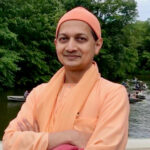
Khen Rinpoche Tsetan Interview
Rick: Welcome to Buddha at the Gas Pump. My name is Rick Archer and my guest today is Khen Rinpoche Tsetan, who is Abbot of the Tashi Lhunpo Monastery in Bylakuppe, in southern India. And I have managed to connect with… Excuse me, sir, in addressing you do I refer to you as Khen or as Rinpoche, or what single word can I use?
Rinpoche: Rinpoche would be better.
Rick: Rinpoche, okay. I can manage to connect with Rinpoche through my friend, Dana Sawyer, whom I interviewed about a month ago. And Dana is actually sitting in the room on this interview in case there’s any need for a little bit of help with translation. And also Dana is very much involved with Rinpoche’s activities which I’m about to read in a little bio that Dana sent to me. So let me read this first. Khen Rinpoche Geshe Kachen Lobzang Tsetan is Abbot of the Tashi Lhunpo Monastery in Bylakuppe, in southern India. He is a Tibetan Buddhist monk from Ladakh, India, who has lived and taught in the United States for more than 15 years. He began his monastic life at age seven in Stok, his family village. At age thirteen he joined the Stok Monastery to study and memorize Buddhist scriptures. In 1952, when he was sixteen years old, he walked with his father from Ladakh to Shigatse, Tibet, to enter the famous Tashi Lhunpo Monastery. The 800-mile trek took them over two months to complete. Khen Rinpoche Tsetan received his novice monk vows there and studied Buddhist philosophy at the monastery’s Skilkhang College with many prominent Tibetan scholars. His dream was to receive the Geshe degree in Buddhist philosophy, similar in level to that of the Western PhD. This dream was deferred for him when the Chinese government intensified their policy of cultural genocide on occupied Tibet in The daily public humiliation and torture of monks by Chinese officials and the mass destruction of the monasteries and colleges made it impossible to continue the pursuit of this degree in Tibet. He was forced to return to his homeland of Ladakh in 1960. Once back in the village of his birth, he studied tantric practices and joined the School of Buddhist Philosophy in Choglamsar, where he studied for seven years. Due to the fact that the Buddhist tradition in Ladakh is dependent on the Tibetan lineage of teachers to transmit and bestow higher Buddhist degrees, it was necessary for him to leave Ladakh again in 1970 in pursuit of the Geshe training. This time he went to Varanasi, India where many high lamas in exile had resettled and built new monastic colleges. There he received his Shastra degree, the equivalent of a bachelor’s. Afterwards he felt the responsibility to return to Stok and contribute to his community through teaching. From 1974 to 1978 he taught high school in Ladakh. Then he met with a special invitation to come to the United States to teach at the first Tibetan Buddhist learning center in America, Labsum Shedrub Ling in Washington, New Jersey. He went in hopes of learning English and completing his Geshe degree studies. He accomplished both and in 1984 he returned to the Drepung Monastery for commencement. Since that time, Khen Rinpoche Tsetan has been living and teaching in the US from October to June and returning to Ladakh during the summer months to oversee activities at the Siddhartha School/ Choskor Stok School he founded in 1996. While in the States, he has divided his time between Maine and New York City, with additional teaching trips to Amherst, Massachusetts and other areas of the U.S. In 1996, shortly after founding the Siddhartha School in Stok, His Holiness the Dalai Lama appointed then Geshe Tsetan to be the abbot of the new Tashi Lhunpo Monastery in India. This was a great honor for him, and one that was humbly set aside so that he could devote himself completely to the Siddhartha School. The Dalai Lama gave his blessings and support. However, in 2005, His Holiness the Dalai Lama again asked Geshe Tsetan to accept the Abbot position. And in July 2005, he was installed as Khenchen, or head Abbot, of the Tashi Lhunpo Monastery in Bylakuppe, in southern India. His title became Khen Rinpoche Geshe Kachen Lobzang Tsetan, and he has assumed new responsibilities, overseeing the Tashi Lhunpo Monastery in exile. Since summer 2005 he has worked ceaselessly to fulfill the charge of increasing the number of monks at Tashi Lhunpo, the poorest of the Tibetan monasteries in exile, and of raising funds for their support. My first question is not going to be as long as what I just read, but it will be a little bit long and then after that I won’t ask such long ones. But here’s my first question. The other night I interviewed a guy whose main emphasis or focus was that the world is an illusion and that we’re all just dreamers in the dream, and that there really are no people or human beings, there are just dream characters and what we really are is something other than that. And all suffering is due to our mistaking ourselves as being real entities as opposed to just dream characters. And he got this idea, this philosophy, from reading extensively from the books of Wei Wu Wei, who was a British philosopher who studied Buddhism extensively and apparently distilled the whole Buddhist teaching down into what he considered to be its essence and wrote these books. And there was something troubling me throughout the whole interview and I didn’t quite put my finger on it until towards the end, and that was that, if someone has read some books fifty times over, as this guy had with Wei Wu Wei’s book, one can become very indoctrinated with certain ideas. But there’s a distinction between ideas and experience. And towards the end of this interview I began to ask the guy, “What is your actual experience? You have a clear understanding of this concept that maybe the world is illusory and we’re all dreamers, but is that your day-to-day, genuine experience if you’re going through the supermarket or driving your car, is that your experience or is it just a concept?” So in the Christian tradition we have great people who rise to heights of administrative authority, let’s say, but then we also have the mystics. And ultimately Buddha was not an administrator, he was a mystic, he was someone who was primarily interested in experience, not in mere ideas. He wanted to really get to the heart of what life was about and live that in an experiential way. So, in your own life, I just spent five minutes reading a list of all the things you’ve done, and the places you’ve gone, and the schools you’ve administered and so on. But what I’m really interested in is, what has been the fruit of all of this study in your heart of hearts, in your innermost experience, in the way you perceive and live life from moment to moment?
Rinpoche: Very good question, long question.
Rick: I told you it was going to be long.
Rinpoche: I don’t know if you remember or not. You were saying that there is a man talking about illusion. This, you know, suffering is illusion and life is illusion. I want to add another word. Life and suffering, everything is _like_ an illusion.
Rick: It’s what illusion?
Rinpoche: Like an illusion.
Rick: Like an illusion.
Rinpoche: Like an illusion.
Rick: L-I-K-E. Like an illusion.
Rinpoche: Like.
Rick: Okay. In other words, it’s not an illusion, but it’s like an illusion? Is that what you’re saying?
Rinpoche: Like an illusion is different. Illusion is nothing. Like an illusion, then everything has some essence, some existence, no?
Rick: Yes.
Rinpoche: If illusion, then you cannot get the result, cause and effect. Looks like an illusion but have something there, essence. That you and me are talking. If both of us are like an illusion, we cannot talk. Both of us are like an illusion. But they are kind of in an inherent existence. Not having solid identity, me and you, that’s going to be like an illusion.
Rick: Dana, would you just clarify what he just said? I’m not used to his accent yet, and maybe my listeners could use just a little bit of clarification.
Dana: Yeah, sure. Where he’s going with that is, if we say that everything is an illusion in an absolute sense, then there’s no sense of doing anything or getting up in the morning. But what he’s saying is, from his perspective, that everything exists, but when he says it doesn’t have inherent existence, svabhava is the Sanskrit term for that, that it doesn’t have… All things in the relative world are relative things, so they’re made up of causes and conditions. So they exist, but they merely exist. They don’t exist in an absolute sense. We’ll all, you know, become compost at some point, and all relative things are relative. And so that’s what he’s saying, is that sometimes people project an absolute essence onto themselves. You know, there’s a little Rick Archer in the brain of Rick Archer that’s running the show. And so what he’s saying is, that part of things is an illusion. The idea that things have an absolute or inherent existence on the level of the relative, that’s what Buddhists see as an illusion, that we create a lot of pain for ourselves by projecting characteristics on the relative world that the relative world actually doesn’t have.
Rick: Okay so another way of saying it might be that it’s not that the world is an illusion, But that our perception of it, or our perspective on it, is illusory or mistaken.
Rinpoche: Yeah, yeah, our own mind can say, created those things.
Rick: Right.
Rinpoche: Now if you add the qualities, then good or bad will be created, added the qualities, then not able to see the true nature of the phenomena.
Rick: Right. Yeah. So, we overlay all sorts of perspectives or qualities on things and then we therefore obscure or cover over their true nature.
Rinpoche: Right, right, right.
Dana: Yeah, you’ve got it there. It’s not that things don’t exist, it’s that they don’t exist in the way that we think they do.
Rick: Right, right. So then, in that sense, enlightenment would be, what, stripping away all of the false perceptions and coming to the point where we see the world as it truly is?
Rinpoche: Right, right, yeah. The enlightenment which is the … moves all this … get out from all this obscuration because the obscuration is obstacles. So there comes the … but enlightenment actually the … we call the seed of the mind. Seed of mind is the enlightenment. Yes, the mind itself is, the nature of the mind is pure, clear, luminous, but the illusions cover the pure mind. Through practice you can remove those, then eventually the mind becomes pure, clear, luminous. That’s the main key to practice the teachings.
Rick: Yes, sort of like a movie screen where there’s a movie showing on it and it covers up the screen so you can’t see the screen anymore. So enlightenment might be, in that analogy, being able to appreciate the non-changing screen even though there’s movies playing or whatever. So this thing that I read described you as having undergone a lot of study in different places. Was that study primarily intellectual, where you’re reading a lot of scriptures and discussing them and trying to understand their meaning? Or was there a lot of spiritual practice, such as meditation, which didn’t so much involve the intellect?
Rinpoche: We have to check that on both, because there are two ways to study. One we call the analytical way, another is stabilization meditation. Analytical way, you learn all these sources. Now good, bad, for instance, what is anger? What is the cause of anger? How can you remove the anger? That’s kind of the analytical.
Rick: Anger, yeah.
Rinpoche: So analytically you try to find the anger. Once you get the source of the anger, the nature of the anger, then you contemplate it. Anger. Now, yes, the anger is just created by my mind. Anger doesn’t have its own or not independent nature. So then you hold that the anger is changeable. So how can I change the anger? Then you apply law. How do you get angry? You get anger toward your enemy. Those who you don’t like, like an enemy, even in things you don’t like, you get angry, you know? That anger, it is in our own mind. If, let’s say, you kick your foot on the table, you get angry. That anger, the table doesn’t have this holding the anger. You are mistakenly, you kick the table, then you get angry because your own fault.
Rick: (laughing)
Rinpoche: I was hanging from the table.
Rick: Yeah. It reminds me of something I did when I was a little kid. One time my mother was trying to open a mayonnaise jar and she hurt her wrist and I got angry at the mayonnaise jar and I picked it up and smashed it on the floor so we had glass and mayonnaise all over the place.
Rinpoche: Yes, it’s a … mayonnaise jar throwing, it doesn’t solve the problems.
Rick: So she had a hurt wrist and a mess all over the floor. So for instance, when you were a student and you would take a particular point like this, for instance, anger, so there would be some intellectual study about what is the cause of anger, what is the source of anger, how to end anger and so on and so forth, but as I understand it, you weren’t just thinking intellectually, you were doing practices of meditation and perhaps other practices to really root out the tendency to even become angry in the first place, is that correct?
Rinpoche: Yeah, yeah, yeah. If you’re angry, you just say, let’s say, ignoring the anger, anger not going to go away.
Rick: Right. You’re just sweeping it under the rug, so to speak.
Rinpoche: Under the rug, no. So then you learn where the root is coming from.
Rick: Right.
Rinpoche: And from the root you have to dig up, you know, kill away. Then, later you don’t have to suffer among the control of anger.
Rick: Right.
Rinpoche: What you can do, how can you stop the which you call now the anger? Maybe anger coming from ignorance. You’re not able to see the real problem. You hit the table, you get angry because you are under the control of ignorance. Therefore you get angry at the table. Table is nothing, you know. It doesn’t have any intention to harm you.
Rick: Sure.
Rinpoche: So our anger is timing. So then, how you practice? Yeah, that’s my own fault. I’m not really careful. Then first of all, you know, I’m, you know, it hurt my foot, you know, kicking. The second I get angry, the anger again mentally I will suffer. So the ignorance causes me to suffer not only physically, mentally. Therefore anger not good. What is the best then? Then you apply love. Right? Love. You love, then you don’t have any enemy.
Rick: And so that’s sometimes easier said than done for people. You know, I mean, especially it’s harder with people than it is with tables, because people are much more challenging to deal with. So in the case of your own spiritual practice, what sort of practices would you have done as a student, as a monk, to cultivate love as opposed to anger in a particular circumstance or any circumstances?
Rinpoche: More than, let’s say, for I get angry with you.
Rick: Uh-huh.
Rinpoche: Okay? Then I use my tool to knock down your nose.
Rick: Right. [laughter] You’d need a big tool for that. [laughter]
Rinpoche: So you get angry with me, right?
Rick: Uh-huh.
Rinpoche: You don’t get angry with this tool.
Rick: Right.
Rinpoche: Why you can’t get angry with the tool?
Rick: Because you were the one controlling the tool.
Rinpoche: Oh, that’s what we were talking about, how can we practice. Now, you know the tool doesn’t have any control to break my nose.
Rick: Right.
Rinpoche: The person. Then same like the person and the tool don’t have any, you know, same, the person is same. The person doesn’t have any choice. Now, he or she is under the control of anger or jealousy or attachment or depression or, you know, ignorance. So, real cause is not the person, not the truth. Real cause is his or her ego or the anger or ignorance. That you have learned. Then you learn, oh, this person really become like the truth. I’m foolish to get angry with a person. A person, my best friend, he or she is giving me a great opportunity to practice my patience. He is giving, really pointing me, I have a problem, holding the problem target. He or she is giving me a great opportunity to remove, give you a normal to suffer, not bother. Then you learn how to move away the target, what you are holding. That message receiving, then you become more peaceful, calm, understand, yes, not his or her fault. It’s my own ego problem, my anger problem.
Rick: So what specifically did you learn or practice that enabled you to do that? In other words, what teaching were you taught or what practice did you practice to be able to kind of internalize things like that and not put the blame on external people or circumstances? Meditation practice, for instance?
Rinpoche: Yeah, meditation practice and study practice. One of the Indian masters called Shantideva, he said, if something is changeable, you don’t have to worry about it. Something is not changeable, what’s the use of worrying about it? Does that make sense?
Rick: Yeah.
Rinpoche: If you can’t change it, you don’t have to worry about it.
Rick: Right.
Rinpoche: Not change it, but worry is getting angry and that won’t solve the problem.
Rick: It’s like the Alcoholics Pledge, if you’ve ever heard that. Give me the, what is it, the… I won’t do justice to it, but it’s being able to tell the difference between the things you can change and the things you can’t. And you know, learning to sort of change the things you can, accept the things you can’t, and have the wisdom to know the difference.
Rinpoche: In Buddhist case, nothing we can find which is not able to change, you know. You can change, you know. Everything is changeable. Like we call the impermanent phenomena are changeable. Anger is changeable. Depression is changeable. Crazy things are changeable. But what you need, you have to learn how to apply the integral.
Dana: On one level, Rick, he’s really saying that practice is every minute of every day.
Rick: Right.
Dana: Because the meditation on one level is, okay, I’m out in the world and there are things that challenge me and there are things that want to solicit my anger, or greed, or desire, or whichever. They’re called kleshas, these afflictive emotions. And so you have the most to learn from your enemy, is what he’s trying to say, because the enemy is the person that’s causing your anger to rise, but it’s your own mind that’s making the anger and causing you to see that life situation as a problem rather than an opportunity to do practice and find that peaceful center. So on one level it’s a continuous practice every day, but they also do a kind of equanimity.
Rinpoche: Yeah, equanimity, we have like a friend, enemy, strangers. Those are, doesn’t exist other side. All the mind created the enemy, friend, ignorance. No, strangers.
Rick: Strangers.
Dana: Strangers are people we just have no feeling about one way or the other in this particular way of looking at things.
Rinpoche: So how you created the friend, those who helpful for yourself and for your family, your country, your people, we label them like a friend. And those who not affect you or what you’re doing, not the opposite way. They criticize you, they yell you, they scold you. Then for them we live like an enemy, right? Who bother me, you know, enemy. And those who not bother, not helping, we just ignore them. Ignore, call stranger. But the stranger, the enemy, friends, all, not there. Our mind created.
Rick: Right.
Rinpoche: Now, let’s say, if they are there, then everyone sees my enemy, everyone sees the enemy. But his or her other friend sees them as the best friend.
Rick: Yeah. I seem to recall the Dalai Lama having referred to the Chinese as “my friend, the enemy.” [laughter]
Dana: This will make clear why he said that.
Rinpoche: Yeah, that Dalai Lama doesn’t look… but the Chinese see him as an enemy, but doesn’t treat them like an enemy.
Rick: Right. And, based on what you said a little while ago, he probably sees them as being an evolutionary practice, in a way, being able to deal with them and yet retain patience and compassion, and retain his, you know, not lose his humanity even if they are losing theirs.
Rinpoche: Yeah, yeah, yeah. So there one has to do the equanimity, that you have to give up something, many things, when you really become able to look at them equally. What you have to give toward your friend, you have to give up the attachment. Attachment causing between our friend and ourself.
Rick: Right.
Rinpoche: That keeps our friend very closely, very not long term. The attachment, some attachment desire, you know, you desire God and you don’t have the attachment. The friend, listen, if you give up the attachment, then your friend become very close and best friend. So you don’t have to worry, you have to give up the friend. The friend becomes more close, more touchable. Then, other side…
Dana: Just one second. So what he’s saying there, that old saying, “If you love someone, let them go.” He’s saying that we don’t let go of our friend, but we let go of the kind of attachment to them, the dependence on them, that would cause us to hate them if they left us, that we have to let go of that.
Rick: Right.
Dana: Yeah.
Rinpoche: Then the enemy, enemy, we don’t mean you don’t have enemy. We all, I have enemy, but what you have to give up for enemy, enemy you have to give up the anger.
Rick: Right.
Rinpoche: Anger give up, the anger may cause a problem, not the person causing problem. Then the stranger thinking, no? Stranger? You’re not stranger always, no. Stranger can become a friend, can become, you know, an enemy. That, what you have to give up there, give up the ignorance.
Rick: Right.
Rinpoche: The stranger, the cause of ignorance, attachment, anger. That cause us problem, that cause the world problem, everything problem, causing the main source of the problem is ignorance, there is ignorance.
Rick: Someone said the best way to kill an enemy is to make him your friend, you know, then he is no longer an enemy.
Dana: So they actually do a kind of visualization, meditation practice, where they are learning to see these three categories of beings, colored by anger, colored by attachment, colored by ignorance, to see them all as equal, and equal in the sense that they’re all human beings on a journey towards awakening and that we can see them all with love, that when the mind is clear and luminous then it has compassion for all beings. So that is an actual complex meditation practice that they do to cultivate the mind, to purify of those kleshas, so that it doesn’t see things incorrectly, which is how he would define illusion, is that seeing things with the eyes of ignorance.
Rick: Right.
Rinpoche: One way you can give up this attachment and anger, and the ignorance, by thinking you want happiness, I want happiness, no difference, right?
Rick: Right.
Rinpoche: Our enemy wants happiness, friend wants happiness, stranger wants happiness. They are no different from me and you and our friend, our enemy, our stranger. They are similar. I don’t want to suffer, you don’t want to suffer. Then other, our enemy, friend, no judgment, doesn’t want to suffer. That can, then we learn, we don’t want to suffer, therefore I have to give up this cause of suffering. Then another way, in Buddhist way, all enemy not necessarily become always your enemy. Enemy can become your best friend.
Rick: Right.
Rinpoche: Strangers are not necessarily always being your stranger. You can become best friend. Friends are not necessarily always being as a friend. A friend can become enemy. But this you learn, these are changeable. Therefore I have to live in the world with peace, with love, just learn how to love all other sentient beings.
Rick: Would you say that this is, we are talking a lot about this, would you say that this is kind of a central predominant aspect of your practice and your teaching or have we just kind of stumbled on to one particular aspect and there are many others we could be talking about, as well?
Rinpoche: It can be both. It can be both. Other things come, but actually it’s going to cover everything. You really are able to look at all sentient beings like your mother, like your best friend, then you don’t have any problem about anger, about attachment, about ignorance, you love it. Then the world becomes peaceful for you.
Rick: And do you find that this has been actually the outcome for most of the people that you are associated with? Have they successfully done this? Or is it sort of an ideal that people are all striving to and achieving to one degree or another?
Rinpoche: Not ideal, it’s actually, you know, you follow the step, you can achieve that.
Rick: Okay, good.
Rinpoche: Ideal, we are not doing like the others do who would completely believe in, you know, that, really.
Rick: Yeah, it’s really a living experience.
Rinpoche: Yeah, you can explain yourself, think of yourself. For instance, you spend your life with the anger, now you go to bed, the bed is not soft. No. And, full of anger, you get to order the best food, the delicious food, and food is not tasty, right? You’re full of anger, you go to visit your friend, the conversation not pleasant. Because of the anger. But you go with the love, in a peaceful mind, go to bed, although your bed is not soft, you feel comfortable, you can go to sleep very peacefully, cheerfully. If you order food, well, they’re not too delicious, but you can feel the taste is delicious. You know? You go to love the people, the conversation is not cheerful, not pleasant, but you feel, “Oh, wonderful, just seeing these meetings, people who are so… makes me really, really happy.” So, just key-holding our own… our own self, our self-holding the keys. Make good or make bad, depends on our own motivation, how we are looking.
Rick: Yeah, that’s a very important point. Because so many people think that they need to change the outer world in order to be happy, but what you’re saying is that, what you really need to change is your inner world, the way you see things, and then whatever the circumstances, things will be better.
Rinpoche: Yeah, in Buddha’s case, Buddha didn’t have to change the world.
Rick: No, he changed himself.
Rinpoche: Change himself, what he did? He did under the Buddhistic practice of love. By practicing love he reached enlightenment. If he doesn’t practice the love, he tries to change the world, he doesn’t have any opportunity to become Buddha. The same, you know, we have that instinct. If we try to change the world, the world we cannot change, you know. We don’t have time, we don’t have ability, that’s how to change ourselves is very easy. Therefore, one, you know, the Indian master Shantideva said, you know, his illustration said, he said, “Don’t try to cover the world with leather.” If you don’t want to bother, just have a nice shoe.
Rick: Right, right.
Rinpoche: That’s how you could cover the world.
Rick: Good analogy.
Rinpoche: Yeah.
Rick: You brought up the Buddha, speaking of Buddha. I meant to ask you at the beginning of this show, I don’t know if you caught it, but the name of this show that I do is Buddha at the Gas Pump. The implication of that term is that there are many people in the world today who are waking up to spiritual realizations that were once considered to be rare and the exclusive province of very special beings who would only come once in a thousand years or something. And I meant to say, I hope you don’t take offense at this term, being a Buddhist. I actually had one Buddhist email me and say, “Buddha was a god, how dare you say Buddha at the Gas Pump? You should stop using that name.” But the whole idea behind the name is just that Buddha was, as I understand it, a man, and that many men and women today are actually beginning to have spiritual awakenings that Buddha would have appreciated, that he would have considered significant. And I think some of these awakenings, I think there are degrees of awakening, but many people are experiencing really what Buddha would have called nirvana. And it seems to be permanent and stable for these people. It’s not just a momentary thing that they lose, it’s perpetual. So I just wanted to say that, in case you were wondering about why I called this Buddha the Gas Pump.
Rinpoche: That’s not a problem, it depends on your motivation. If you have pure motivation and you say gas pump, no problem. With that man job, he leads the Sengen meetings. If he sings, you know, the girls come, some were talking, many people like to happy, pleasure, that’s good, then you’re fulfilling Buddha’s wishes.
Rick: Yeah.
Rinpoche: Not necessary to, if you say, “Buddha, you stupid,” he might get angry? More false. He’s not going to make Buddha stupid.
Rick: Well, I wouldn’t say that.
Rinpoche: For example, you get rid of it, you don’t talk on it. It’s fine, there’s no problem. It depends on the person who is really thinking how can I make the people to understand the message, forget and so on. It’s fine.
Dana: One thing it really conveys, Rick, is that, in the Buddhist world, in all forms of Buddhism, there’s the idea that ultimately we don’t want to worship Buddha, ultimately we want to become the Buddha that we are inherently. That idea is that, you know, not so much to be constantly bowing down, bowing down, bowing down, but to ultimately raise ourselves to the level of a Buddha, of a living Buddha. And I have to tell you one quick funny joke. We were doing a teaching recently and I told this story. About maybe four years ago, five years ago, just before Christmas, Khen Rinpoche and I were up in northern Maine in a very small little town and we stopped at a gas pump. And it was just before Christmas time and very snowy, because it’s northern Maine, and very rural, so the gas pump swipe card thing didn’t work, and I had to go in to pay. I looked out and Rinpoche had gotten out of the car and was washing my windshields for me and a crowd of people grew there. Eight or ten people stopped what they were doing to see this very unusual-looking person.
Rick: Yeah.
Dana: Then Rinpoche kind of made a little show out of it. They seemed to be enjoying themselves so he got playing around with washing the windows. After we got in the car and we’re leaving, he said, “Why are they looking?” And I said, “Well, they’ve never seen anybody that looks like you, all dressed in red.” And he said, “No, maybe they think it’s Santa Claus.” And I said, “No, Santa Claus has long hair and a big, you know, beard.” And he said, “Well, maybe global-warming Santa.”
Rick: Santa Claus is fat, too.
Dana: Yeah, it was a Buddha at the gas pump.
Rick: That’s funny. That’s funny, you should have taken a picture, Dana, I could have used it for my logo thing. In fact, I had a little trouble finding a Buddha that I could fit with a gas pump and use the thing. So, in light of what you just said though, Dana, it seems to me, from what little I know of Buddhism, that Buddha’s primary motivation or ultimate motivation was to enable people to attain nirvana, to attain liberation. Again, I don’t know much about Buddhism, so I don’t know how much he spoke about being able to love everyone and becoming a better person and culturing moral values and so on, behavioral refinement. But I do know that Nirvana was central to his teaching, that people should attain liberation, but I haven’t heard you talk about that very much yet, I don’t think. So, what is your own experience with regard to that point, and also your experience with regard to your fellow monks and students? Do you find that many people are actually attaining Nirvana?
Rinpoche: I cannot say, but we can, you know, if many people attain nirvana, in that case I have to be a master above. But I can tell you, yes, many people practicing, many attain nirvana, not only nirvana, but the enlightenment become Buddha. Many scholars, many many ancient, we have the history who reach in one lifetime, enlightenment. Then also at present we think, His Holiness the Dalai Lama are not living without cause, you know. Many other scholars, we have now get it practitioner those all, yes, but I can, if any ask me, “Do you know them really enlightenment?”, I do not know, but there yeah we believe now those are, because we all we can tell each beings have different level mind or mentally, you know, some very works with them What is that? Knowledgeable, some little, some practitioner or so. So that judging physical, you know, the activities and the practice, you can tell this person get little higher. So that’s the way we judge, but actually, in reality in Buddhism, not important to someone get enlightened or not, you know, not to know or not, and important ourselves. We change ourselves, get higher or not. That’s the challenge. So the main, I want to tell the Buddhist, the main goal, there are three goals. One we call the omniscience, become Buddha. Second we call the liberation, not to get out from the samsara. Third we call the freedom, in a high status, means to escape the suffering of lower realms.
Rick: To suffering of what?
Rinpoche: Lower realms.
Dana: Lower realms.
Rick: Lower realms. To escape the suffering of lower realms. I see.
Rinpoche: Like an animal, hungry ghost, helping, that’s going to get smaller. Then you get better. Then you can escape the suffering of samsara.
Rick: Okay, so those three goals again were to… omniscience, liberation, and escaping the suffering, essentially.
Rinpoche: High status, we call it the high status.
Rick: High status.
Rinpoche: Yeah.
Dana: That goes… What he’s saying here is that when people are first practicing, then their motivation can mostly be that they want to live in the realm of rebirth in a more comfortable way. They’re not motivated to reach liberation, they just want a more cushy existence.
Rick: They want to make more money and lower their blood pressure.
Dana: Exactly. Or just get away from the unseemly parts of life. But then they get a clearer vision of what the project is, then they start thinking, okay, I don’t want to take rebirth at all. Whether it’s nice or not nice, I would like to reach liberation. You know, enlightenment will bring liberation, and so that’s what I want. But then, at the highest level, from a Mahayana Buddhist perspective, is the practitioner who’s trying to reach enlightenment, but not just so they can end their own suffering or transcend rebirth, but for the benefit of all sentient beings, that they’re trying to, out of love and compassion. And that’s, for them, the highest status of enlightenment, is to not simply know the ultimate truth of being, but to put oneself in a position to help others make that same realization. I love it.
Rick: Yeah, it seems to me it would stand to reason that that sequence would take place, because as you move from the individual to the universal, then the so-called individual begins to become a better and better reflector of the universal intelligence and to serve its purposes more, and ultimately its purposes are much broader than just the individual. You become more of a tool of God, so to speak, or a tool of the Divine, rather than just a sort of all about me, me, me.
Dana: Right, that’s exactly how he sees it.
Rick: Yeah, so in your experience then, you mentioned ancient people throughout history who had attained this. In your experience of today, do you know many living people who have gone through these stages that you and Dana just talked about, and who could be said to be living in a state of liberation and freedom from samskara?
Rinpoche: Yeah.
Rick: Fairly common in your experience?
Rinpoche: I cannot say my experience, I can say very common. We call it in this way, look at, if you really learn how to live in the world, the world become for you as a paradise.
Rick: Paradise, right.
Rinpoche: Paradise. If you don’t know how to live in a simple way, in enlightened way, then even this another, paradise becomes a world of problems.
Rick: Do you feel that living like this and having this realization is possible for people who have children and have jobs and are living very much involved in the world or is it more something for monks?
Rinpoche: No, no, no, equal for everyone, men, women, monks, nuns, everyone. Like one of the, I cannot translate, one verse says, “If you know how to practice the spiritual path, you can become enlightened, even you become a householder. If you don’t know how to practice, then even you spend your entire life in a cave, you become like a woodchopper. (Laughter) Although you kept your head shaved and changed the dress, then you don’t want to see other things, but you’re letting your mind wander all over the world, then useless. This thing is important to keep in your mind. Then he gives an example, who lives in a household, like in Tibetan, called the Marpa, a great teacher, Marpa Rosa, translator. He is a three children father, have a wife, but he has become the great teacher in Tibet. He also reached enlightenment, called the Lama Marpa. Now the Lama Marpa and the Indian, others, king and others, yogis who are not monks but they get reach enlightenment.
Rick: Yeah.
Dana: Talking back about in his experience and say, well not in my experience, what he means there is that, if he’s going to judge the enlightenment of other people, their level of attainment, he would have to be higher than them to judge it on the basis of personal experience. So that’s what he’s interpreting, what you mean by personal experience.
Rick: Yeah, and you’re not making any claims to be higher or to be in any particular state, obviously. In fact, I think I would have a hard time getting you to admit to whatever state you are in.
Dana: Good luck on that.
Rick: So, in a monastery, for instance, when you have students who are doing a lot of meditation and a lot of practice and some of those students begin to become more advanced and begin to have spiritual awakenings, significant shifts in their awareness or in their experience, do you typically have people in a position of authority, perhaps yourself, who is able to… that student is able to come to them and say, “Hey, I’m experiencing this, you know, what does it mean? Am I enlightened?” And then you can sort of say, “Well, nice start, but you’ve got more to go.” Give some kind of evaluation of their condition.
Rinpoche: That, yeah, that’s correct. The student and the teacher relationship is very close. The teacher there for the student if he or she have some experience, share the experience with the teacher, then the teacher has the qualities then he or she can tell this is right or wrong, if something wrong, he or she can tell it’s wrong. Very good, you are getting there, close to now better improvement, need this and give more instruction.
Rick: Right. I don’t know about in the Buddhist tradition, but I know in the Indian tradition there has been a lot of trouble, in the sense that gurus who apparently become very highly enlightened, then either in India or when they come to the West, they start meeting beautiful young women and there’s a lot of money around and very often they begin getting caught up in scandals and problems and so on. I don’t know what this means. Perhaps it means that their enlightenment was lopsided. There was, in one dimension, very much developed but they had neglected to look at other areas and develop other areas of maturity and of their personality and of their behavioral ethics and so on. Would you care to comment on that whole phenomenon?
Rinpoche: Yes, yes. It clearly shows that even enlightenment, but running after the beautiful young woman and running after the money, that shows they’re not real enlightened beings.
Rick: Yeah, or you know, I mean I imagine you acknowledge that there could be stages of enlightenment and that perhaps one could achieve a certain level of development and maybe even think that that was the final level and yet it wasn’t.
Rinpoche: That is not, this world is not to show this level. Even you reach a level, you cannot show it doesn’t work in the world. You have to become like an ordinary person. Stage is inside, not show outside.
Rick: Right.
Rinpoche: So, you say, let’s say, I am, the stage is, reached this one. If you reach the enlightenment, you don’t have to go there to “I reached the enlightenment, come to me,” and that’s no problem. But that doesn’t help for me, if I don’t believe you, you reached enlightenment. I don’t believe you, you’re not going to work for me, me and because i don’t have the it would be a bit inside you know you’re Buddha.
Rick: Dana, would you clarify that?
Dana: Yeah, one of the things that he’s saying here is that you know the true master doesn’t seek ‘he saw or she saw that.’ The person who is going out and beating a drum and saying, “Look how great I am, look how brilliant my insight is, you really want to come study with me,” that’s not the real teacher. The real teacher uh… their own inner being is so well developed that… you know, the stages of development are inside the person, so people will be drawn to them simply because of that insight, so the person who is trying to call a lot of attention to themself isn’t… That itself is inherently a mark of lack of ultimate development.
Rick: Right, in other words people are just going to start to flock around if the person actually has genuine attainment, they’re going to start attracting people like moths to a flame or something, if they’ve got that genuine realization.
Dana: Well, if the discernment on the part of the student is good. I don’t know if it would be a giant crowd because a lot of times what attracts us to gurus are actually weaknesses of theirs, instead of strengths. We get enamored of their physical beauty and we think, “Oh, my teacher is so handsome,” or you know what I’m saying? What I’m saying is that the real practitioner starts to gain a level of clarity of mind and so they realize, “Oh wow, some people might be overlooking this person who is the Buddha at the gas pump.”
Rick: But it could be a crowd. I mean, the Buddha attracted a fairly large crowd for his day, you know, without any television or radio he became quite renowned and attracted a lot of students, just because of his… and I’m sure he wasn’t putting up posters, but just because of his status, people recognized that and began to flock around him.
Dana: In fact, he didn’t even want to teach at first. He didn’t want to teach, but yes, they’re not mutually exclusive. A great teacher could draw a crowd, I guess.
Rinpoche: The thing this way maybe, example maybe, if the teacher real true enlightenment you don’t have to advertise.
Rick: Right.
Rinpoche: Okay? Let’s say the roses, okay? The roses grow in the mud and on the top of, top of thorn. The blooming there not affected by the mud and not affected by the thorn but blooming there, then the roses doesn’t have to go all place to place to find the bees.
Rick: Good point.
Rinpoche: Yeah, the bees come, notice that they are growing, not the beautiful roses, they have smell, so all direction bees come to get the suck this rose’s smell. They’re similar the roses also in the teacher who’s living in the samsara is like a the rose is born in the mud.
Rick: Right.
Rinpoche: Then, there the corner like the teacher you can see some kind of tough love, but not. Mine is like the flowers, roses, that they have to learn.
Rick: And that kind of comes back to what we were saying a minute ago, which is if a teacher is truly enlightened in the full sense of the word, then they’re not going to get caught up in scandalous behavior. I mean, even if they’re in the midst of all kinds of people and all kinds of temptations, those things will be seen with an even eye and they won’t feel drawn to indulge in them.
Dana: Yeah, that’s exactly right. So, you know, there can be some experience of samadhi or there can be some level of emotional development, but is it… From the Buddhist perspective, there’s the perfection of what are called, well, paramitas means perfections. So, when a person has perfected wisdom, prajna, perfected karuna, compassion, and on and on through these six, then that would be their ultimate measure of awakening, full awakening, Buddhahood.
Rick: I really like that idea because in the West today there’s a tendency to apply McDonald’s marketing tactics to the idea of enlightenment. In other words, people want things fast and they want things easy and they want things simple. And so people will have some sort of awakening and they’re very quick to assume that that’s it, that’s what all this fuss about enlightenment has been, I’ve got it, my search is over, I have nothing further to develop, practices are irrelevant for me and even for others, nobody needs to follow teachers or gurus, this is all there is to it. There’s a lot of talk like this these days. To me, to my understanding, the person is shortchanging themselves and they’re misleading others, because there’s a huge range of potential development in so many different facets of life. Take one thing alone, compassion. How compassionate can a person become? It doesn’t do justice to the term enlightenment to just attach it to some sort of inner awakening which could be completely devoid of a fuller development of one’s qualities as a human being. That was much too long of a statement. I’m starting to do the teaching and I wanted to hear it from you, but perhaps you could comment on what I just said.
Dana: You can say it better.
Rick: Well I speak English as my native language.
Dana: The way he sees it too, is that, you know, confused graduation from elementary school for PhD.
Rick: Yeah.
Dana: There’s lots of directions that growth could go in, I mean, what was your major in college, you know?
Rick: Right.
Dana: Even inside the Buddhist world there can be people who are experts on philosophy and people who are experts on arts and human growth has a wide spectrum of areas for development. So to sort of camp out on, you know, to confuse the base camp for the summit would be a mistake.
Rick: Yeah.
Dana: We’ve got maybe about a minute or two left. So maybe ten more minutes?
Rick: Sure.
Dana: Something you really would like to ask, Khen Rinpoche?
Rinpoche: Well, I would add that not only the fault of the teacher, we have our own responsibility to judge the teacher. The teacher who you follow, has the qualities what you need or not. In quality you see that the problem is the teacher’s problem, not your problem.
Rick: So are you saying that it’s really the student has a responsibility to choose the teacher wisely?
Rinpoche: Yes.
Rick: To use discrimination.
Rinpoche: Yeah, you just judge it, your quality, they have or not. If you just say, “Oh, some of them, he or she is a great teacher, not good.” Then you listen, then you think, then you go to listen his or her speech, then slowly you can judge, then you become a student, good. And now you just go there, then three days you become enlightened, then after four days you get angry! [laughter]
Rick: Yeah.
Rinpoche: That’s what we call, in our day, we call it “hairy renunciation.”
Dana: They call it what?
Rinpoche: Hairy, hairy, hairy, hairy renunciation.
Dana: Hairy.
Rick: Why do you call it that? Oh, in other words, because they haven’t shaved their heads, so to speak.
Rinpoche: No, no, no. Somebody really, really, really, really, you know, cool off, you know. Then after the bath, forget.
Rick: Dana, would you clarify that?
Dana: What do you say that makes your hair stand on end, that you get so excited, you know, or what we used to call bliss ninnies, basically.
Rick: I see, I see.
Dana: That’s somebody’s “hairy renunciation,” very excited and you feel like you’re awakened and you’re premature…
Rick: Claim to enlightenment, right.
Dana: Premature immaculation. (Laughing)
Rick: Did you just make that phrase up?
Dana: I don’t think I did. I don’t know where that came from.
Rick: That’s a good one.
Dana: You know, I can’t remember the source of these things.
Rick: Premature immaculation, excellent.
Rick: Excellent. I don’t know if Rinpoche understands the joke.
Dana: He’s enjoying the laughter.
Rick: So actually on this note, I think it’s an important one and it would be well worth spending our remaining minutes talking about it. This whole notion of discrimination on the spiritual path, how important has that been on your path and in your school and in in your tradition, to really learn to think critically and to not merely take things on faith but to judge teachers and teachings and so on with a clear mind and an impartial vision? That’s a question. That’s a question.
Dana: You’re exactly right. The individual, as they grow, has to learn how to discriminate what is best for their growth and make clear judgments about their teacher and the teachings, to the point where they’ll often debate points of Buddhist philosophy to test each other’s understanding. Are you really understanding this or are you mood-making? And so they will have public debates with each other. And Rinpoche, the Geshe degree is… his Geshe degree is in philosophy, so a very good understanding of the teachings themselves on the intellectual level, also.
Rick: And are teachers themselves humble, in the sense that they are open to scrutiny and criticism and you know if you have a doubt about the teacher you can tell the teacher I have this doubt about you, without getting in trouble and so on?
Rinpoche: Sure, that is the way completely open. The teacher is very happy if you got a lot of criticism.
Rick: So people aren’t so in awe of the teacher that they’re afraid to say, “Wait a minute, you did this and I don’t understand it and isn’t that wrong?” And so on and so forth.
Rinpoche: That’s teacher challenge. That makes the teacher happy. You have a lot of challenge, you know. Then he’s happy. Then he has the opportunity to bring out his real knowledge. He shares with the student.
Rick: Yeah.
Rinpoche: We have in neither. Here, you consider if you question, second question, you’re in the country here, you know, being rude, you know. So it’s making… But our case, the more your question comes, the more you get a deeper understanding, deeper answer.
Rick: Yeah.
Rinpoche: It’s good, you know. So this teacher, men sitting there, because you help the student to get the right knowledge without mistaken.
Rick: Good. Now, do Westerners actually study with you when you come to the United States? Do you have a circle of students that, you know, you train and you study with and you teach things to? Or do you mainly just give lectures when you’re over here and your real body of students is back in the monastery in India?
Rinpoche: I have some here too, you know, also lecture. It’s not just only lecture, it’s actually giving a spiritual message, how to live in the world with peace, love, compassion, change, being, so just, you know. So I don’t have to consider this my particular, something mine. He lives there after them.
Rick: Right. So Dana, would you clarify?
Dana: Yeah, so he is, there’s a small sangha here in Maine, for instance, that people take refuge vows. You know, when you become a Buddhist in his culture, it isn’t what I call “Borders Buddhism,” where you go to the bookstore and you read three books by Alan Watts and now you call yourself a Buddhist. In his tradition you have to take Diksha, initiation, and so people formally take refuge vows and Bodhisattva vows with him and he teaches them how to meditate and has interviews with them about how it’s going and, yeah, and so he does teach in the United States on both coasts and then of course at least once, usually twice a year, he’s back at his monastery where there are hundreds of monks that are seeing him as the primary teacher in his particular lineage, which is the same lineage as the Dalai Lama.
Rick: Right. So if someone listening to this wanted to actually come and study with him, they could do that. They could come to Maine or they could go to the West Coast and actually sit in a sangha and get some instruction like that.
Dana: Yeah.
Rick: Yeah, okay.
Dana: Yeah, why not?
Rick: Good. So, I’m sorry, go ahead.
Dana: Tashi Lhunpo has a website and people could go to that or they could go to the website of the school he started, the Siddhartha School. And those two websites always have information about his teaching schedule and when he’s in the United States, and where he’s lecturing.
Rick: Yeah, and I’ll put a link to those. Why don’t you send me links to whatever you want me to link to, and I’ll put those on batgap.com and people can go there and check it out and get involved if they want to. And also of course you have this school, the Siddhartha School, which is in India or Ladakh?
Rinpoche: Ladakh in India.
Rick: I see, Ladakh is part of India, right?
Rinpoche: Yeah.
Rick: Yeah. And you know, that school needs support, so if people want to familiarize themselves with that and if they feel inspired to donate, they could do that and there will be information on your website on how to do that also.
Rinpoche: Yeah, we have both girls and boys.
Rick: Right.
Rinpoche: Not just in monk, only boys, girls, nuns.
Rick: Yes.
Dana: It’s a, the school is quite wonderful in the sense that it is training students in the things that we think of in the West, you know, reading and writing and languages and chemistry and mathematics. But it has a real focus on creating a strong sense of respect for their traditional culture and the value of their traditional culture. And in a sense as a way of buttressing their confidence to resist the temptations of westernization, that they can feel proud of their Himalayan culture and they live sustainably and we’re not close to that. Really a fantastic place, you know, kind of a little Shangri-La, Ladakh. They call it “Little Tibet,” but you really get to see in the people’s lives what the quality of these teachings can do for an entire community.
Rick: That’s great. All right, well thank you. This has really been an honor and a pleasure, and it’s good connecting with you, too, again, Dana, if somewhat vicariously. So this has been Buddha at the Gas Pump. The website to find all this is batgap.com and then there are links to the videos on Facebook and YouTube and it can also be listened to as a podcast. And we’ve done nearly 50 of these interviews now and we’ll continue to do them, so please come check out batgap.com. You can listen to as many of them as you like. So I’ve been speaking with Khen Rinpoche Geshe Kachan Lobzang Tsetan. And I really appreciate having had the honor. It’s really been enjoyable. Thank you very much, sir.
Rinpoche: Thank you. Thank you very much. I’m very honored to meet you, too.
Rick: Well, the honor is mine.
 Apple Podcasts
 Spotify
 YouTube