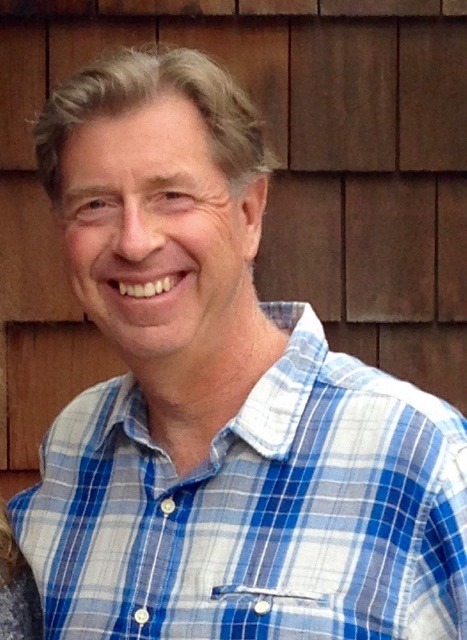
Summary
John Astin describes his movement from political activism and intensive meditation toward a more inclusive understanding of nonduality. The discussion explores whether spiritual practice is necessary, how seeking can obscure what is already present, and why accepting ordinary experience does not rule out further growth.
Questions This Interview Explores
- Is long-term meditation necessary for spiritual awakening?
- How can I recognize what I am seeking as already present?
- How can spiritual practice include human desires and emotions rather than suppressing them?
- How can I accept difficult experiences without giving up on personal or spiritual growth?
Key takeaways
- Inner transformation is essential if outer activism is to create lasting change.
- Meditation can be valuable even when it feels difficult or unrewarding.
- The seeker is looking for what is already aware of the seeking.
- Reality does not have to appear in a special form to be fully present.
- Suffering grows when we resist the experience that is already happening.
- Accepting the present does not prevent change, development, or deeper understanding.
Transcript
Rick: Welcome to Buddha at the Gas Pump. My name is Rick Archer. Buddha at the Gas Pump is an ongoing series of interviews with spiritually awakening people. I say that because this may be the first one you’ve watched, although most viewers have watched many. But if it is your first, feel free to go to batgap.com, B-A-T-G-A-P, and check out the past interviews menu, where you’ll find 320-something previous ones, all categorized in various ways.
You’ll also see a donate button there on the site, which we very much appreciate people clicking on if they feel moved to do so, because it supports this whole project and enables us to keep it going.
My guest today is John Astin. John is the author of three collections of poetic and prose reflections on the non-dual nature of reality: Too Intimate for Words , This Is Always Enough , and Searching for Rain in a Monsoon . He is presently at work on a new book, It’s Not What You Think It Is: Reflections on the Inconceivable Nature of Reality.
Along with his writing and teaching, John is also a singer, songwriter, and recording artist who, since 1987, has produced seven CDs of original spiritual contemplative music, including his most recent release, What We’ve Always Been. John is a musician, and he sings and plays guitar. He’s released a number of CDs of his songs.
So, in the course of this conversation, we may segue into a song, which we’ll splice in later on in post-production, so that we won’t be introducing it, but we’ll just cut to a song that probably pertains to something we’ve just been talking about. So, if we do that, don’t be surprised. Enjoy the song, and then our conversation will continue.
In addition to his writing and music, John also holds a PhD in health psychology and is an internationally acclaimed scholar in the field of mind-body medicine, his research focusing on the applications of meditative contemplative practices in psychology and health care. John’s website is johnastin.com, A-S-T-I-N. So, John, you’re kind of a Renaissance man or something.
John: That’s probably a good way to put it.
Rick: Yeah, a finger in many pies.
John: Yes, I’m a dabbler.
Rick: Yeah, but not a dilettante.
John: Hopefully not, but maybe sometimes.
Rick: Yeah, for the non-English-speaking viewers, a dilettante means a superficial dabbler, but John’s a deep dabbler.
John: Sounds good.
Rick: Yeah.
John: I seem to have a lot of diverse interests, even if they seem connected within myself, so it keeps life interesting.
Rick: Yeah, it does. I’m kind of like that too, although I’m sort of fanatical about this spiritual stuff.
John: I’m kind of with you there.
Rick: Yeah, that’s the hub of the wheel.
John: Yeah.
Rick: So, let’s cover it all, John. Usually it’s good to start with some kind of chronology, you know, of how you first got interested in spirituality and what some of your major milestones were. Do you think that might be a good place to start?
John: Sure, happy to say a little bit about that. I was raised very non-religiously and thought of myself as an atheist as a teenager. I remember getting into arguments with my brother at the time, who had become a born-again Christian.
Rick: Oh, brother.
John: My younger brother, although he didn’t end up remaining in that for more than a couple of years. But I felt pretty convinced that I just had kind of a materialistic view of life, and the notions of God seemed not to answer the question.
I remember getting into some of these arguments with believers, and they would talk about, “Well, you know, God created everything,” and my response was often, “Well, what created God?” Somehow, that felt like a cop-out answer. In some respects, I still feel the same way, but it doesn’t actually answer the question: Where did it all begin?
So I went to college at Berkeley initially and wanted to change the world. I was very politically active, and that was really my focus.
A very life-altering conversation happened with a friend, a fellow political activist. We were sitting outside, and I had become disenchanted with what I was observing in a lot of political activism. It felt like people were not walking the talk, in the sense of speaking a lot about harmony, connection, love, and healing the world, but there was a lot of anger, vitriol, and posturing. Something was not connecting for me there, and I felt sort of disenchanted with that.
So I was speaking with my friend, and she said, “Well, John, they don’t understand—most people don’t understand something very fundamental, which is that the real transformation happens within ourselves.” I had never really thought of that in my 19 years of life, and that one little phrase sort of went off like a time bomb in my head.
The real transformation happens within ourselves.
I think it played a major role in setting me on this journey of self-exploration and self-discovery. I had a good friend with whom I’ve had this very kind of parallel journey, and we started having conversations and tracking one another’s experiences and investigations. Both of us, at about the same time, happened upon Eastern religions and meditation.
Really, I didn’t seek any of that out. It was as if it just sort of came into my field, and I became very interested and passionate about it. My major introduction into that whole world was Yogananda’s teachings.
Rick: Incidentally, just before we get off the activism thing, you’re probably aware of this, but these days spiritual activism is becoming a sort of buzzword. People like Andrew Harvey and Adam Bucko, among others, are putting their money where their mouth is in terms of feeling that their activism and spirituality should be applied in some kind of meaningful way in the world.
I was a little older than you, I think, but back in the day, in the late ’60s and early ’70s, I was meditating, and there were these activists marching against the Vietnam War and stuff. I perceived what you perceived, which was that there was a lot of anger and egotism and so on, and I thought, “You know, they’re not going to create world peace. They need to become peaceful within themselves.”
But I’m sure they were thinking of me, if they were aware of me at all, “He’s not going to accomplish anything sitting on his butt.” But these days, there are people who feel that you really need to have both in order for it to be effective.
John: Yeah, no, I mean, that makes a lot of sense. I think particularly if you’re drawn to being much more politically and socially engaged in those kinds of areas.
So, yeah, I got introduced to Yogananda’s teachings and was just completely enamored with the whole world of yoga and meditation, and I dove headfirst. I became a student of his. He had a course passed on, but I was really a serious student.
It became such a focus, and I guess an obsession in a sense—I was meditating for hours every day—that I felt inside myself that I had to pursue these other interests. I had dropped out of college by this point to pursue these other interests, which I felt were not getting fed in university studies.
Rick: Did you find that Yogananda’s meditation, as you were practicing it, was gratifying enough to absorb your attention for hours at a time? It sounds like you must have really been getting into it, because if you weren’t, it wouldn’t have been hard to sit there that long.
John: It was very hard to sit there that long.
Rick: Was it?
John: Yeah. Probably we’ll touch on it in other ways too, but in some respects I didn’t really care for meditation that much, even though I felt I was finding benefits from it.
I would have periodic moments of what I would call breakthrough understandings and a sense of peace and bliss, but most of the time it was pretty difficult. I struggled with concentration. Even when I took up other practices later on that had a kind of concentration or mind-control element to them, I found that I kept doing them, I think, as much out of some sense that I had to do this in order to realize what I wanted to realize, more than thinking, “Wow, I really love this. I can’t wait for the next meditation.”
It was rarely that way. I have friends who are like that; they can’t wait to go and sit for 12 hours a day. I’m not one of those people.
Rick: I’m kind of like that, but it’s not 12.
John: That’s a little too long.
Rick: Right. I have done that, but these days it’s more like less than that.
John: Yeah. So I thought that’s all I wanted was that, and it felt very single-pointed. I toyed very seriously with becoming a monk within his order, which I thought I had lost all desire for anything else—for relationship, for children, for sex, the whole nine yards.
That turned out to not really be the case. It was revealed shortly thereafter when I decided not to become a monk and fell in love very quickly after that. I was like, “Oh, I guess I’m not done with that very human thing.”
By staying involved with Yogananda’s teachings, I ended up leaving that whole world. The whole question of how I stepped away from different teachings that I became involved with is kind of a whole thing unto itself. But suffice it to say that I experienced an aspect of the yoga tradition as it was taught within his tradition, his teaching, that felt somewhat repressive, somewhat suppressive of our humanness.
You’re familiar with yoga traditions. I heard it as very much a kind of—you know, the lower chakras, or the lower energies—these very human longings and desires—are somehow, well, nothing short of evil and need to be risen above and transcended. At first I was attracted to that, and then I started to feel something wasn’t quite integrated about it.
I also wanted to teach meditation because I thought it was beneficial, and as much as I may have struggled with it, I also saw the value of it. I couldn’t do that within the context of his teachings, so I ended up gravitating toward more of a mindfulness, kind of Buddhist orientation.
I was also becoming aware at the same time, having returned to school and wanting to study meditation, since that’s what I was most interested in, that some of these mindfulness practices were starting to garner a lot of attention among researchers. That all kind of coincided with my eventually going to graduate school and starting to do research on meditation at that time.
I also felt something within that kind of Buddhist, Vipassana, mindfulness tradition. It felt much more embracing of the whole of us—the whole thing, all of our humanness—and not sort of leaving any of it to the side. So that was very attractive to me. It felt truer somehow.
Recognizing what was already here
So I continued to be pretty devoted to meditation. I started studying it academically, doing research on it, and, of course, within all the contemplative traditions, there’s this very strong non-dual theme. I mean, it’s there. I saw it in Yogananda, particularly in some of his writings, but his path was also a very devotional one that had a strong kind of dualistic feel to it as well.
But I always loved that non-dual piece. In some sense, I clearly didn’t completely get it experientially—what that was all about.
Ken Wilber had become kind of an intellectual mentor, and I got to know him. I was one of the founders of his Integral Institute way back in the ’90s. Ken, at the time, was speaking very highly of this guy Andrew Cohen, and I’d never heard of him. But I really respected Ken a lot, so I said, “Let me check this guy out.”
I started reading some of his stuff, and something about it was very compelling. I went on a retreat with him in 2000, and that was a very sort of watershed moment for me in my own journey of maturation and development.
I think it was a five-day retreat, and very early on, there was actually a very cool kind of way that this happened. I don’t know. These things, I don’t think they can really be explained in rational terms necessarily. It was just good timing, I guess—grace, whatever, some combination.
I was sitting in this meditation, and he had shared something earlier about something that his teacher, Papaji, had said to him. Andrew had come back to see him in India, and he said to Andrew, “I’m so happy that you found the friend that you’ll never see.” That’s what Papaji said to Andrew.
I was like, “Wow, that’s kind of a trippy thing to say. So happy you found the friend you’ll never see.” All of a sudden, I understood what that meant: that I could never see this because it was what was looking.
Rick: Right. It was just like something went off inside me in that moment, and I recognized that, wow, I’d been spending—God, now it had been … I think that was 2000. I was like 40, early 40s. I’d been slogging away for years, meditating and doing practices and chanting and trying to realize.
It’s a familiar story that you’ve heard many of your guests share, I’m sure, in one form or another, but that discovery that I was what I had been looking for was really shocking. It was hard to describe, but it was interesting. It had a very emotional impact at a certain level, which was the sense of this kind of bittersweetness: that I’d been looking for what I’d been doing, looking for so long and so hard, struggling, grasping, seeking for this, and all along it was what I was.
That discovery that I was what I had been looking for was really shocking.
It was like, holy shit. It was just mind-blowing.
Looking back now, do you feel like all that struggling and seeking was a waste of time, or do you feel like somehow, in a paradoxical way, it actually brought you to the point where you could sort of see what had been there all along?
I’m kind of inclined to see it the first way. You talk to people who have meditated for 30 years and then all of a sudden have this awakening, and then they say, “Oh, you don’t need to meditate. Just be awakened,” or something. I was thinking, “No, man, it had to do with what you’ve been doing for 30 years,” even though it takes a thorn to remove a thorn. It might not make sense from your current perspective, but it had an effect.
John: Yeah. Well, clearly, everything that we’ve ever experienced has shaped something about how we are now. So I can’t even look back at anything, even things I can now look at and go, “Well, that wasn’t very wise,” and say, “That’s all shaped me.”
So I’m not going to question whether somehow I was wasting my time, because I don’t believe that. That being said, I do think it’s a very open question right now for me, and even within the whole field of contemplative studies: Can you take people who are, call them meditation-naive, who haven’t been doing a lot of practice and training of awareness, if you will, and introduce them more directly and more immediately to these things?
Rick: Yeah, maybe you can. Are you familiar with Jeffrey Martin? You know what Jeffrey Martin is up to?
John: Yeah, I know Jeffrey.
Rick: Yeah, he would probably concur with what you just said.
John: Yeah, I mean, that’s my sense. My intuition is that, at least for some people, there’s going to be a natural openness there that doesn’t require years and years and years of kind of banging their head against the wall.
But I don’t know. The ways in which people come to discover what they discover—there is no formula. I think that’s just a myth.
Rick: Yeah. Well, there are some people who aren’t even looking for it. They’re just walking down the street or eating breakfast or something, and all of a sudden this big shift happens, and they think, “What is this?”
John: Yeah. I’ve been writing about this recently because it feels really central. My observations of myself and many other people suggest that this is a fundamental misunderstanding that we continue to fall prey to in our experience until it starts to wear away.
The event that happened on that particular retreat felt quite spectacular. It wasn’t showy in the sense of phenomena, because I don’t seem to be wired that way. But it felt very special, very profound, and incredibly meaningful—more meaningful than anything. So it was very big in that sense, and it was so moving to me that I was literally weeping for a couple of days. I couldn’t stop. I was just so moved by it.
But then here’s a very interesting thing that happened after that, which I think I’m still getting. Here was this big moment, and then, a couple of days later, I was sitting in another meditation session. It had already been recognized that this is it—literally, this is it. And I was sitting there meditating, with this sense that the oldest, most familiar feeling in me was grasping, which is the best way to describe it. I was looking for something other than this. That’s what I was doing, and I could feel it. I could feel the pain of it.
It was interesting because it was this whole sort of nondual thing. There was nothing about God or devotion happening in my experience or in this retreat. But the next thing that happened was something I’d never really experienced before and have never experienced afterward, which was a voice. The voice said to me, right in the middle of grasping, “Isn’t this enough?”
Isn’t this enough?
It felt like reality speaking to me. Then the voice went on and said, “Can you feel how much grace there is in this, just as it is?” I immediately broke down again, and I saw the fool’s errand I was on: looking for it to look a particular way. I think that was the crux of the understanding.
Through all of my subsequent experiences and involvement with different teachers and teachings, it’s been a process of wearing away at this idea that the truth, God, reality, spirit, or whatever you want to call it, looks a certain way.
When I listen to other people who are attending teachings or satsangs, or speaking to me in one form or another, that tends to be at the root of the question. It’s, “It couldn’t be this particular moment of discomfort or confusion. Get me out of this,” or, “Get me out of this…”
It could be in a very conventional sense, not even a spiritual-satsang-type person, but just somebody who wants to feel better in their life psychologically, mentally, or emotionally. It’s, “I don’t want to experience what I’m experiencing. It’s uncomfortable.”
With a spiritual seeker, it gets even more complicated in some ways, because there’s this whole architecture, this superstructure of, “Not only is this uncomfortable, but it’s definitely not an enlightened state, and it’s definitely not divine.”
So there’s this additional overlay, which leads to moving in opposition to our own experience—which, by any other name, is suffering.
[Music]
I have no more ideas anymore about God or the Absolute. And if you want to talk with me, then ask me whether I know. All I want to know is, have you noticed that something, something is here, my friend? All I want to know is, have you noticed?
I have no more ideas about God or the Absolute. I have no more ideas anymore about God or the Absolute. And if you want to talk with me, let us meet where there are no obstructions, ’cause all I want to know is, have you noticed that something, something is here, my friend?
All I want to know is, have you noticed that something, something is here, my friend? I have no more ideas about God or the Absolute. Only the mystery is here.
I have no more ideas anymore about God or the Absolute. I have no more ideas about God or the Absolute. I have no more ideas about God or the Absolute. I have no more ideas about God or the Absolute. I have no more ideas about God or the Absolute.
It’s only the mystery. It’s only the mystery. It’s not to see. Only the mystery is here. It’s only the mystery. It’s only the mystery. It’s not to see. Only the mystery is here.
The mystery of ordinary experience
Rick: Yeah. I mean, I guess maybe the ordinary person goes by the “life sucks, then you die” philosophy. Or, as I saw in some cartoon, these two dung beetles were in a bar—the dung beetle bar, right? There’s a dung beetle sitting there drinking his drink, and the bartender is a dung beetle. The guy sitting there drinking his drink says, “So is this all there is, Louis? Eat shit and die?”
John: Yeah, but I would say that there’s a paradoxical issue here. On the one hand, yeah, you don’t want to be constantly looking for something other than what you’re experiencing. You need to settle into and accept the present as it is.
But on the other hand, that is not to say that it couldn’t get better. There’s some Zen saying: “You’re all perfect just as you are, but you could all use improvement.”
I do talk to people, and I’m sure you do too, who argue, “Hey, everyday ordinary perception—that’s it. Don’t look for anything more. Just accept that.” I find that discouraging. I would find that discouraging if I believed it, because I realize, both intellectually and through my own experience, that there is more, and there will always be more.
I’ve read in your writing something about an ever-deepening appreciation. But on the other hand, if you’re not loving what is, to use Byron Katie’s term, then you’re not accepting the foundation upon which that more may actually develop. What do you think about all that?
Rick: Yeah, no, I mean, the other side of the paradox, of course, is that if there’s something deeper, more subtle, more fulfilling, more awakened—all the different versions of that—it can’t be found in anything other than this.
So that’s obviously the value of saying you don’t have anything but this. Now, I think what might make that depressing or discouraging has everything to do with how we’re defining “this.” I think that’s really important.
If I look at my own process, let’s say we have an experience that feels very profound, and people will often call that an awakening in these circles. Then, of course, that fades, because that’s the nature of phenomena. Just like that, everything fades. But some part of us wants to recapture that because of how it felt—whether it was blissful, liberating, or had all the different dimensions of it.
John: And that’s natural.
Rick: It’s natural. That effort to try to have some experience that feels good at a more conventional level—we want to try to hold on to it in some way, sustain it. Or, if we’ve spiritualized it as being more awakened or more enlightened, we also want to hold on to that. But it’s a similar dynamic, right? It simply can’t be done.
I’m interested in reality, and I look at reality and see that reality slips away in every instant.
John: That’s one way of looking at it. Otherwise, reality continues to be here in every instant. That’s another way.
Rick: Right, which is the same thing. In a sense, it’s just constantly morphing and taking different shapes. That seems to be its nature. No two instants seem to repeat.
John: No. But there is an understanding of an underlying continuum that doesn’t morph and change. It may not even be perceived as underlying; it may be perceived as predominant.
Rick: You know, this is an interesting question, John. That is not my experience. My experience is that there’s not some realm where everything is impermanent and changing, and then some sort of underlying realm that’s changeless. This is classically how it’s framed: the changeless awakeness or awareness that is somehow knowing all of that change. That’s not my sense of it.
John: But right now, you and I are talking, our bodies are changing, our words are changing, the furnace is going on and off, and this and that—but we’re aware, we’re aware, we’re aware. There’s a continuous awareness that doesn’t oscillate or fluctuate, regardless of the changing things that change.
Not only are we aware, but that even puts it into personal terms. One way of putting it is to imagine that awareness is like a tone that’s been playing all your life, this “mmm” in the background or something. After a while, you’d tune it out because there wouldn’t be any point in listening to it. But if you ever chose to do so, you’d say, “Oh yeah, there’s the tone, still playing.”
Of course, that’s just a metaphor. But it’s that by virtue of which we’re able to hear each other and see each other and so on. That doesn’t change, even though the hearing and the seeing may come and go. Yeah?
Rick: I don’t know. It’s interesting, because there are even traditions—and I don’t think we have to reference traditions necessarily—that speak about there being no awareness without phenomena. It’s phenomena that reveal the nature of awareness. That’s how awareness is known: by what it is illuminating.
From that standpoint, what we call awareness is paradoxical, in a sense, because everything is morphing and changing, and for me, what is constant is that something is here.
John: And that something is…
Rick: And what is here is constantly changing. But the continuity is—you could call it presence, but I wouldn’t call it awareness necessarily. I would just say that something is here. What’s here is inconceivable and takes an infinite, diverse number of forms, shapes, colors, and textures, but it’s here.
John: Fair enough. We could debate whether it actually may be awareness. We could reference physics and say, “Okay, there’s all this changing stuff, but you boil it down to the molecular, atomic, and subatomic levels, and then there’s this sort of underlying vacuum state or unified field, something out of which all those things are said to arise. It’s a continuum, even though those things might assume different forms as they transmute into one another.”
There are physicists who argue that that unified field actually is consciousness or awareness. Probably the vast majority would argue that it isn’t, but anyway, that’s just something to play with.
Rick: Here’s where that’s not just idle intellectual speculation, but potentially relevant to people who are exploring these things. There is a tendency—and I’ve been involved with what people would call more awareness-based teachings—to reify awareness as something.
Everything else is not a thing, but awareness is a thing. In the sense that if it has constancy, that suggests thingness; it suggests a kind of substantiality to it. That’s what makes it… Does that make sense?
John: Yeah, I hear you, and I think you can look at it that way, but it’s sort of a contradiction in terms, because we usually reserve the word “thing” for things that have physical substance to them, and we’re not saying that awareness does. But people who would argue the way you just described would probably say, “Well, this actually doesn’t have any ultimate reality because it’s changing and one day it won’t exist, but that which is awareness will always exist.” What is it that the Gita says? “The unreal has no being, the real never ceases to be.”
Rick: Right, the real never ceases to be, but the real is forever changing. And that’s what I meant by “something is always here.” That’s the being, something … this is the presence of whatever this is.
John: Okay, if the real is always changing, let’s keep playing with this because this is fun. If the real is always changing, what is the real made of? That which is always changing, what is it made of, if we boil it down to more and more fundamental levels of …
Rick: That’s a million-dollar question. That is the question. And to me, the answer to that is, it’s the ultimate koan and it has no answer. And that is that we never get to the bottom of what it is. We never arrive at … To me, both whether we’re talking … because I’m also a scientist, whether we’re talking science or we’re talking contemplative spirituality, we have as humans a search for ultimacy, it would seem.
John: It’s really getting to the bottom of what it is.
Rick: If we’re talking about the real creation here and the actual reality of the world we live in, then, taking this cup as an example, a hundred years ago this cup didn’t exist, and a hundred years from now it may not exist. But the atoms that comprise it existed; they’ve been around for billions of years, so maybe the atoms are more permanent than the ceramic, relatively. And those atoms, what are they if you boil them down more deeply, more fundamentally? And if you keep going as far as one can conceivably go, even if perhaps physics doesn’t have the instrumentation to do so, do you not arrive at something which doesn’t change or which is a continuum, an eternal continuum, which gives rise to apparent changing forms and phenomena, but which in and of itself couldn’t change, wouldn’t change, doesn’t?
John: Well, I think it’s … remember my earlier comment about the God explanation being a cop-out? We’re kind of touching on a very similar thing, which is, we may give it whatever name we want, but can we actually reduce reality scientifically or spiritually to the final answer, to what it actually is, like the fundament? What is it at its root?
Putting science aside, because I’m not a physicist, and they certainly haven’t arrived at the final conclusion, my deepest hunch is they never will get to the bottom, because that’s what makes infinity infinity: You never get to the bottom of what it is. It’s unfathomable.
That’s what makes infinity infinity: You never get to the bottom of what it is.
And if we look at our actual experience, which is what I’m most interested in with respect to our conversation, that’s what I find—the only thing to explore, really, is our own experience, as far as I can tell, because that’s what we’ve got. There’s nothing else. And if we explore our experience, speaking from my own standpoint, I never get to the bottom of what it is experientially.
And so I never land, like, “Now I’ve landed and I’ve finally arrived at what it actually is as something definite.” And we as humans, because we have this thing, the mind and reason, and it seems understandable, like it should sort of make sense in some kind of nice, neat, tidy way—here it is, I’ve got the framework that tells me what it actually is—but we see this, of course, throughout the history of the traditions too: this very strong theme of the inconceivable, indescribable, unresolvable nature of reality, that we actually never do get to the bottom of it.
And that’s what’s so amazing about it to me. That’s what’s actually so liberating about it, because you can’t pin it down. You can’t say what it actually is.
Rick: But you can be what it actually is. In fact, you are what it actually is.
John: Right, you just don’t know exactly what that is because it’s not definable. It’s open-ended.
Rick: Because it’s beyond the intellect, beyond the senses, beyond the mind, beyond the words, and all that stuff. Just the way we describe it, you can’t know what it actually is. It’s indescribable, and so on, because what we’re saying here, what we’re saying when we say that is, “Well, there are no thoughts or words or anything which can do justice to it, or which can contain it, or which can be … one can only be it.”
John: Right. And what’s extraordinary about that, Rick, for me—the more I look into this and think about its implications for us as humans, kind of often feeling like we’re stuck in our lives and struggling in one form or another—is that inconceivability and indescribability doesn’t merely apply to these esoteric realms, but it applies to every dimension of our human experience.
Rick: Absolutely. I mean, try describing to me the color red.
John: Exactly. We have a name for it, right? Which is an incredible aspect of the intelligence of the universe—that it can see. And here’s one way to understand it: It’s pattern recognition of some kind. We’re recognizing … I don’t know what it is exactly that we’re recognizing, but here it is. And the names and concepts that we have for all of this stuff that’s within us and surrounding us—instantaneously, it’s all right here, right? We know what these things are. We have concepts to describe them and make sense of all of this patterning.
But if we actually look a little bit more closely at what it is we have this name for, whether it’s red, or a human being on a computer screen, or the taste of an apple, or whatever …
Rick: Everything.
John: If we look a little more closely, we realize that the concepts that we use to kind of organize these patterns of whatever … are they patterns of information or energy? I don’t know what they actually are. But whatever it is that we’re beholding and seeing forming itself as patterns that we then give concepts and names to, when we look more closely—color is an amazing thing. It’s like, well, what is it? We look up in the sky on a clear day and we have a name for this thing; it’s called blue. But the name, the concept, tells us virtually nothing about what it actually is experientially.
So we actually go into what that actually is, and it’s just unfathomable, isn’t it? What that is actually … and what’s so, to me, just mind-blowing is how this is the case with everything we experience. And yet language is so powerful, and conceptualization is so powerful and facile, in the sense of, “Oh yeah, I know what all these things are because I’ve got categories to place them in,” right?
Rick: Yeah. As a species, as a society, we agree upon certain concepts and terms so we can function.
I mean, we all agree what red is, and we know how to all stop at stoplights.
John: Right, so it has some kind of functional utility, for sure.
Rick: Yeah, and that’s because most of us experience red, unless we’re colorblind. And even then we would know, “Okay, it’s the top light,” so we have a concept of top, and yellow is the middle one. But I think the significance of this for our conversation is, what if the experience of pure consciousness, or whatever we want to call it, were as common as the experience of red in our society? Then we might have more readily agreed-upon terminology for it.
In fact, I mean, you look at the Vedic civilization, or perhaps even Buddhist civilizations, and enough people were experiencing that stuff and talking about it all the time that they actually have a lot of words for it, and words to sort of define the various nuanced differences between types of experience of it. Much as the Inuit people have 30 words for snow, you know?
John: Right. Well, what if the experience of what you’re calling pure consciousness or pure awareness or whatever is equal to the experience of looking at the color red?
Rick: What do you mean, equal?
John: You know, the Dzogchen teacher Longchenpa—he’s just one of the most beautiful articulators of that tradition—would sometimes talk about the equalness and evenness of everything. I never really understood exactly what that meant, but something about it felt … had some ring of truth.
So the experience of red is equal to the experience of pure consciousness or any other experience in the sense of its inconceivable, infinite nature. What it is, there’s a word that characterizes some aspect of it in a very crude, overgeneralized way, like every word does, every concept. But what that experience actually is is bottomless infinity.
And that’s true whether it’s the most blissful moment of inseparability you experience on retreat or wherever, to the moment of complete confusion and chaos reigning supreme in your consciousness. And in that sense they’re equal, in the sense of their infinite nature, their inconceivable nature.
And that turns out to be incredibly important. I can say a little bit about this; we can get into talking about the psychology piece of this. But that, to me, holds the keys to our freedom ultimately—that understanding.
Investigating anxiety and suffering
Rick: To that I would say that if you’re in a state of confusion and chaos, you’re probably not going to be appreciating the infinite quality of everything. But I think it’s possible to implicate a state of being, a state of functioning, in which throughout your normal everyday experience you do apprehend and appreciate the infinite nature of everything, because that’s what everything actually is, is comprised of—this sort of infinite stuff, so to speak, the non-stuff of consciousness or being, or whatever you want to call it.
And I don’t claim to do this, but I have friends who do, who say that as they walk down the street or eat their lunch or whatever, everything is appreciated in terms of pure consciousness, in terms of the self, primarily, predominantly. Secondarily, it’s appreciated as mashed potatoes or trees or whatever.
John: Right, right.
Rick: But really, that’s their sort of ordinary, everyday way of living. But again, to say that somebody who’s in a mental hospital or something, utterly confused and psychotic, that you could actually say to them, “Hey, this is freedom too,” it’s not going to do them much good.
John: Well, no, no, no, I wasn’t suggesting that.
Rick: Well, just to take an extreme example of confusion.
John: Sure. Yeah, no, no, no. It seems that for most of us it requires a little bit of looking, a little bit of experiential exploration, to actually … because again, as I was saying, because of the nature of language and conceptualization, we’ve sort of formulated conclusions about what things are.
We’ve already … most people would say, “I know what these things are,” and they feel that way because they have a kind of familiarity with something, and they have a way of framing it and categorizing it.
Rick: You mean everyday things like trees and cars and stuff like that?
John: Yeah, everything. Any human experience, but yes, everyday things as well. And so I’m talking about a kind of deconstructive inquiry in the sense of, “Let’s actually take a look.” Like, if you think you know what this is, look again. Let’s look a little bit more carefully.
I’ll tell you a kind of story as it relates to psychology, and it’s one of the hats that I wear. I teach a graduate school class called “Evidence-Based Approaches to Therapy.” It’s about looking at these different schools of therapy, psychotherapy, and counseling and understanding—I’m teaching people about the state of the science regarding the effectiveness of these different approaches. So, a little bit about the approach and the theory behind it.
I talk in the class a lot about the example of the blind man and the elephant. I say, “These different schools of thought—cognitive behavioral therapy, psychodynamic therapy, and the mindfulness tradition—are each, in a sense, looking at reality from a particular perspective. It’s the kind of map that that theory is bringing to reality, and they’re understanding the client very much in terms of the framework that they bring to it, right?”
So we look at the evidence, and basically, if you look at the evidence of psychotherapy research, including drugs that are used, or pharmacology, it’s sobering. After 50 or 100 years of scientific psychology and psychiatry, our capacity to really liberate people from the things that distress them in their lives in some kind of enduring way is very poor—very poor.
Even the best evidence-based methods that science would say are the most effective methods help some people to some degree, but many people … they’re not very effective. At the end of the semester, I ask the students, “So, let’s explore this a little bit. Why do you think that might be the case? What are we missing? Are we missing something fundamental about our understanding of human psychology?”
People come up with some interesting ideas, and then that’s when I save what we’re talking about for the very end of the class. I say, “Look, just try this on as a hypothesis. I’m not saying this is the way it is, but…”
Basically, what I say to them is, “It’s a curious thing. We, as human beings, are obviously very fascinated by studying the things in the world and, like we were speaking about earlier, getting to the bottom of what they are. So the chemist is diving into chemicals to explore them, the neuroscientist is looking at the brain and trying to get to the basis of neural functioning, and the physicist is looking at quantum realities and, again, trying to understand what this is made of, right?”
And I said, “What’s interesting,” I said to my class, “is that, as humans, we haven’t, it would seem for the most part, applied a similar sort of curiosity to our own experience.”
I said, “Let’s take anxiety.” Lots of people go to therapy to deal with anxiety. Then we come up with all these treatments and measure anxiety, but throughout this whole process, neither the client, the therapist, nor the scientist studying these methods has really asked this fundamental question: What is anxiety?
What is it? Not as an intellectual question, like, “Well, it’s the neural firings in the amygdala,” which is cool—we can explore a question like that through those means—but I’m asking it much more as a first-person kind of inquiry. As an experience, what is it? In the same way that we would say, “What’s the table made of?” Fundamentally, what is the experience of anxiety made of?
Because, in a way, we’ve skipped over the most important question. We’re trying to solve a problem about something that we don’t even know what it is yet, but we’ve assumed that we know what it is. We have a very general sense of, “It’s painful, I don’t like it, it’s uncomfortable, and I want to experience something else,” which is very natural.
But my very strong sense of this is that freedom comes from actually investigating what it’s made of experientially. What we discover is that it isn’t what we thought it was. It’s much, much more. It transcends what we think it is, and it turns out to be—it’s God. It’s made of infinity. It’s made of … whatever. It’s made of reality.
That’s not something you can say what it actually is, because it’s infinite, but that turns out to be incredibly liberating. You realize there’s not something … It’s really the basis of emptiness teachings: We discover that things don’t have the kind of substantiality that we are labeling and conceptualizing them as having.
Rick: Well, if you take that leap, of course, then you can immediately reduce everything down to God or to the infinite. It might also be good to have a few way stations on the way to fill in the gaps.
John: Tell me about that. What do you think about that?
Rick: To take anxiety as an example, the neurophysiologist might say, “Well, it’s certain chemicals,” and the psychologist might say, “Well, it has to do with your upbringing as a child,” or something. In spiritual circles, the Upanishads say, “All fear is born of duality,” if we want to equate fear with anxiety.
That kind of brings it into our ball court here, which is that if we are experiencing fear or anxiety, it’s because we’re functioning dualistically. If we could sort of transcend the subject-object split and experience or know the unity of things, like you were saying—it’s all God—then the anxiety hopefully would dissolve.
But you can’t just do that intellectually. It’s kind of a cop-out to just say, “Oh, it’s just God,” and meanwhile you go on feeling anxious.
John: Right. But if you actually … you could break it down, including spiritual teachings, into two camps, if you will. I don’t necessarily think of it this way, and they’re not necessarily mutually exclusive.
One is, in either subtle or not-so-subtle ways, still seeing a state like anxiety or fear as a problem that must be solved. The spiritual teachings are going to solve it transcendentally by realizing some dimension that’s not afraid, let’s say, or getting to the root of it. If it’s a dualistic understanding that’s giving rise to fear and anxiety, whatever. But it’s still actually seeing that particular expression of reality, for lack of a better word, as a problem that needs to be solved.
You and I are using language, of course, and we’re bringing perspectives to bear upon a reality that can’t actually be contained in any of our language or perspective, so let’s just lay that out there. What you’re describing is a particular perspective that can certainly benefit people.
But there’s another perspective that I’m sharing, which is considering that what we typically think of as problems that we have to solve, either medically, psychologically, or spiritually, may not actually be the problems we imagine them to be. In large part, we are defining those problems into existence by the way in which we conceive of those things to be.
If you start to look at something like anxiety—a great example—and you start to actually see what it is, it doesn’t hold together. It’s an abstraction, actually. It’s an abstract thing. There’s no such thing as anxiety. It’s an abstraction. As an experience, it’s tangible, but the deeper we go into what it actually is experientially, the more we discover how open it actually is, how open-ended it is, and how undefinable it actually is.
The more we explore that, in my own experience and in working with other people, the more people begin to discover a sense of freedom in the midst of that, rather than freedom apart from or transcendent of those experiences.
Rick: Yeah.
John: Does that make sense?
Rick: Yeah, it does. Let me throw a few points back at you.
John: Yeah, yeah, of course.
Rick: The way you just phrased it was that it doesn’t actually exist as you think it does. How did you say that? It doesn’t actually…
John: It’s not what we imagine it is.
Rick: Not what we imagine it is. But nothing is as…
John: In fact, it’s inconceivable, and this is true of everything, of course.
Rick: Yeah.
John: So the notion that I am stuck in anxiety—that aspect of that conceptualized framework of myself being stuck in some state of mind—all of those are abstractions.
Because when investigated, each one of those breaks down or opens up and is discovered to utterly transcend what we imagine it to be. So the transcendent doesn’t lie outside of the afflictive state of mind in some space of dispassionate awareness. It’s actually in the belly of the beast.
The transcendent doesn’t lie outside of the afflictive state of mind. It’s in the belly of the beast.
The beast itself is made of, you know, call it whatever you will—natural perfection, reality, God. It’s made of infinity. It’s made of the inconceivable reality itself. What else could it be made of?
Rick: Yeah, I agree with that, and I think I’m cool with what you’re saying. It’s just that I’m a little … Not that the truth hinges upon what I think.
John: But any questions you have about it are fantastic, because that’s good. I’m interested to hear whatever about it strikes you as maybe not quite understandable—not understandable, but maybe not practical. I’m very open. I’m just laying out my own experience, and I have a strong sense of the utility of this for people in their day-to-day lives. It’s not an abstraction.
Rick: Well, that would be the key word for me: “utility.” Also, I have a caution about dumbing down awakening or enlightenment. You hear people saying, “Oh, you can be enlightened and still be angry and depressed and a total screw-up,” and all that stuff, and I think, “Well, you’re really not doing justice to the idea of what it’s supposed to be.”
I don’t even use the word because I feel like there are so few examples of it in this world. Most people are making good progress, but they’re … I kind of reserve that for a more superlative degree of development.
But I would hope—and maybe you’re saying this when you mention the word “utility”—that spiritual development, however we want to define it, would dissipate at least the predominance of experiences of anxiety and fear and other negative traits. Traditionally, it’s characterized as doing that.
John: Right.
Rick: Because, again, you mentioned the word “utility,” or “utilitarian.” I think there’s a practical value to this stuff.
John: Totally.
Rick: And it should actually make one happier in life and make life go more successfully and smoothly. It shouldn’t just be some pie-in-the-sky thing where you’re still a jerk, you know? Or you’re still miserable, or whatever.
John: Right. To use an extreme example, people who recognize what I’m describing here are not likely to be flying airplanes into buildings and blowing people up, right? And there’s a reason for that.
Maybe that might be a good example, because that’s a classic example of fixating on a particular map of reality and imagining it to be true, which is the essence of dogma, right?
Rick: Yeah, and I think you addressed that nicely in your Searching for Rain in a Monsoon book. In fact, I took some notes on that: fixation and fundamentalism, and the assumption that we know the truth and all that, is very dangerous.
John: Your question is a good one, Rick, about how this rolls out in a person’s life. The paradox here is that, as someone matures as a human being—if you want to take it out of esoteric language—and they just develop themselves, they develop greater awareness, greater sensitivity, greater awakening, clarity, and wisdom, you would expect them to tend to be less reactive, less fixated on their own ideas and points of view, less defensive, less conflictual, and less fearful. All of that makes complete sense.
But the radical proposition—and it’s not my own; it’s shared by other people, teachers, and traditions as well—is that we don’t get to freedom from fear by making an end run around it. We actually discover it right in the middle of whatever is happening, right?
Rick: Yeah.
John: Because it’s right there. So it isn’t necessarily, “Oh yeah, well, anything goes,” although, in a sense, anything does go, because reality could show up in any number of ways. Then it’s always a question of, in the moment that it’s showing up and appearing however it’s appearing, what’s our understanding of it? What’s our engagement with it? That’s just a moment-by-moment thing, in my sense of it. Whatever we may have realized a moment ago, two weeks ago, or a month ago is, in a certain sense, irrelevant to what’s actually happening right now. Where are we defaulting? Where are we going back to as our own understanding?
Rick: Is this related to what you were just saying?
John: Yeah, unless you had another question.
Rick: Well, I was going to throw something in, but if this is related, keep going.
John: No, no, no, go ahead. I can bring this up later.
Rick: I was just going to say that, relating to my own experience, if I’m meditating, let’s say—and this could also apply to the waking state—if I’m experiencing some emotional discomfort or physical discomfort or something, my attitude is not to try to do an end run around it and get to the transcendent, but to dwell right on it and kind of go to the heart of it. Usually, you find that it does dissipate.
I also wanted to bring in Ken Wilber, since you mentioned him earlier. He says, “Well, there’s waking up, but there’s also cleaning up and growing up,” and he has this idea of lines of development, and that one can have these various lines of development—emotional, intellectual, consciousness, and so on—get a little bit out of correlation with one another, or greatly out of correlation with one another.
John: We have many examples of this.
Rick: Yeah, yeah, we do.
John: And ourselves as well, probably.
Rick: Right.
John: I think that the one thing that we’re talking about is experience, and that’s really what I’m inviting us and other people to explore: What is the nature of our experience, actually? Because that’s what we’ve got.
We are walking around, running around in our lives, really assuming that we know what things are, and we’re not necessarily stopping to question that. It turns out that stopping to question it, in my sense of it, is a really exciting and remarkable exploration. It’s awe-inspiring to actually look into our own experience and begin to discover that things are way beyond what we think they actually are.
In some of my recent writings, I keep finding myself returning to the map and the territory, that language, or to any of our conceptual frameworks for making sense of our experience, the world, or other people. They’re just that: they’re like a map of that territory.
Let’s say I have a map of who you are. I’m your partner, and I have a working model of who you are at some level. This is all very implicit; it’s not very explicit, right? But my map of you, my concepts of who you are—which are based on a lot of my experiences of you, of course—couldn’t hope to capture what you actually are, just like a map of New York couldn’t hope to capture what New York actually is. Not even close.
Rick: No.
John: Think about this experience. If you were to describe what’s going on here, you might say, “Two guys are having a conversation about the nature of reality over this thing called Skype, and they’re using a computer.” That’s a basic shorthand way of explaining what’s actually happening. But what’s actually happening is unbelievable, isn’t it?
Rick: Oh, yeah.
John: I mean, think about the infinite array of phenomena taking place in the midst of what I just described.
Rick: Oh, yeah.
John: From sensations to memory, consciousness, thoughts, feelings, subtle sensations and energies, and things that we don’t even have words to describe. All of that is happening. Each instant is so information-dense, so packed with … right? It’s just …
Rick: Yeah. It gives me goosebumps to hear you say that. I think about this all the time. Look at your finger. It has billions of cells in it, each one of them, not to mention all the structural, anatomical, nervous, venous, and other systems in it. Each one of those cells is more complex than Tokyo, in all of its detail. It’s self-repairing and self-replicating, and that’s just your finger.
It goes on and on throughout the entire universe. Every cubic centimeter of it is packed with unimaginable complexity and intelligence. We just saunter along without even thinking about this stuff. We take it for granted, because I suppose it wouldn’t do us much practical good to think about it all the time. But when you do pause to think, it’s awe-inspiring.
John: Well, maybe it is awe-inspiring. You talk about that as if it may feel like some sort of luxury or something, but maybe that’s an incredible practicality.
If that kind of investigation—which can be very light and playful—doesn’t need to be heavy-handed or onerous, with us slogging away at it or making it overly dramatic, but can be a playful investigation into what’s here experientially, then that’s practical. Of course, that includes the circumstances within which we find ourselves, what you might call the external world.
The fact that it’s even here and appearing is awe-inspiring. That’s pretty practical to me, because it gives rise to a felt sense that human beings deeply aspire to touch in their lives. That’s pretty damn practical to me.
Rick: This, to me, is where God comes in. If you consider what we’re actually talking about here, we’re talking about a display of intelligence that is vast beyond imagining, continuing to orchestrate this amazing thing, and having done so for all eternity, probably, throughout all conceivable space and time.
It completely permeates and interpenetrates us. We are that, ultimately and essentially. So that sense just grows and grows and grows. Who was it? I think Albert Einstein said that if you’re not continually in a state of awe, then you’re not paying attention.
John: Right, you’re not paying attention. To me, it lights me up. It excites me with a kind of ecstatic exploration.
There’s also the contemplation of it at a more mental level, which is beautiful. A scientist might be investigating the hundred trillion neural connections in the brain. Come on, that’s unthinkable, right?
But even at the experiential level, think about the sense of touch and what’s actually happening there. You touch your friend or your lover, you feel what’s actually there, and you go into that. It’s a whole universe inside of that. Literally, there’s a whole universe inside of that.
I’m laughing because I’m thinking about a conversation I had with a client. I was doing a Skype session with her, and she was struggling with some different emotional states. I was speaking kind of like you and I are speaking right now, and she said, “It sounds like you’re on some sort of drug or something. You’re describing reality like a bio-oxygen or something.”
I just laughed because I hadn’t taken any drugs for the last 40 years. I wrote this little piece about it called “Reality, the Greatest Drug,” because it’s a total, 24/7 acid trip. I mean, if you actually…
Rick: Well, we’re full of drugs, you know. It’s by virtue of chemicals that we’re able to have this conversation, in part.
John: No, and maybe that’s part of what the substances do. I don’t actually know this in terms of the biochemistry or neuroscience, but I have a sense that they’re simply opening up something.
In a sense, they’re revealing the information density and the ways in which we, for seemingly utilitarian reasons, censor out so much of the richness of the ocean of data that we’re swimming in—the experiential phenomena. It’s as if that censoring apparatus, perhaps through some of these substances, gets quieted a little bit, enough so that we start to touch into how much is actually here of a subtler nature.
We’re just overlooking it because of the overlay of ideas: “Yeah, yeah, I know what that is. That’s a tree.” Or, “Really? Take another look.” I mean, it’s quite something.
Rick: There’s a lot of threads to this conversation that we could pursue. Just on the censoring one, if you ever took acid back in the old days—which you probably did—obviously, you wouldn’t want that to go on perpetually. You’re happy to have it shut down after a while.
But I think one way of looking at spiritual development is that it builds in us the capacity to be more and more and more uncensored, or less closed down. If you were somehow able to pop from where you were 40 years ago to where you are now, it would probably be too much.
There’s a verse, or a chapter, in the Gita where Arjuna begs Lord Krishna to show him his divine form. Basically, he’s asking for omniscience. Lord Krishna first says, “No, you can’t handle it.” Arjuna pleads, and then Krishna says, “Okay, here you go.” Arjuna spends pretty much the rest of the chapter begging him to take it away.
John: He wants to see it.
Rick: He wants to see his divine form, but then it’s just way too much.
I think it’s interesting to consider that we can build the inner strength, capacity, or whatever it is to be open to a huge range of phenomena and integrate that with practical, everyday life. It makes life a lot more interesting than if we’re all shut down.
John: Yeah, absolutely. And I think that, in keeping with what some people call the direct-path kinds of teachings, for me, when I was more in a kind of awareness model, I found it much more powerful to help people recognize that awareness is already present, that this is already a functioning thing that you don’t have to contrive, cultivate, or create.
I would say, in the same sense, this sensitivity to these subtler, non-conceptual dimensions of experience is also happening. In fact, it’s happening all the time. Here’s a simple example: you and I are processing this conversation. There’s a processing of the conversation and the use of language, conceptualization, and understanding one another—presumably understanding what’s being said—and that is all occurring completely non-consciously.
There’s no intentionality, really, or very little, if any. We don’t know how we’re formulating concepts. We don’t have access to how that process is actually occurring. That, to me, is the point. I don’t have to create that intelligence. That intelligence is already operating. I can simply recognize that it is operating, and the recognition of it—like the way it works with attention—is that what we recognize tends to come alive.
So we’re recognizing these dimensions of ourselves that aren’t typically being noticed and recognized.
Rick: Yeah, but we’ve spent a lifetime…
John: Absolutely.
Rick: True, but we’ve spent decades playing with concepts and practicing using words to express them, and so on and so forth. We wouldn’t have been able to have this conversation 40 or 50 years ago, at least not the way we’re having it.
You’re a musician, and I’m reminded that, at a professional level, the conductor of the New York Philharmonic, when he listens to an orchestra, hears all kinds of things that I wouldn’t hear because he has the training and has cultivated the capacity over the course of his lifetime to have that sort of appreciation.
So I think this is also true of what we’re talking about in terms of perception and the experience of life. It is what it is, obviously, but there’s also a vast range of potential for cultivating a deeper appreciation of it.
John: Absolutely, absolutely.
Rick: Okay. I guess we’re on the same page.
John: By the way, just a little bit ago, your image was starting to freeze a little bit. I don’t know if it was a problem on your end or my end.
Rick: I think your bandwidth is a little choked up there. I’m on fiber optics, so I have no end of bandwidth, but we’re okay.
John: It’s probably me.
Rick: It would have recorded my side of the conversation anyway, because I’m doing that independently of Skype.
📚 Authority and spiritual teachers
So let’s see, let me just double-check my notes here from you. In the meanwhile, feel free to bring up anything that you feel like you want to bring up related to our conversation, or maybe something we haven’t even pursued yet. Do you want to do that before I start looking at notes?
John: One of the things that I wanted to touch on, which I was going to say something about earlier and was even going to begin our conversation with, I’ll bring up now, an hour and a half into it.
I started to share some of my spiritual journey, and I stopped quite a ways back. I’ve been both directly involved with, and also an observer of, people engaged with different teachers and teachings. I think a question that is really worthy of people’s exploration is the question of authority, and how we do this in these circles, in these worlds that you and I are in and have conversations within, without even thinking sometimes about who it is we reference as authoritative voices in the world of spirituality and consciousness exploration.
But why do we do that? It’s a really interesting question, and we do it, as I said, often without even thinking. People have a certain stature, whether they’re various exemplars from traditional religions, like Jesus or Krishna, more contemporary esoteric teachers like Ramana or Nisargadatta, or living teachers as well.
The same process goes on when we start to study with a teacher. I’ll share a story with you that happened as I was transitioning from stepping away from Andrew’s teaching. I met Adya and became close with him, both as a friend and as a mentor.
He said maybe the most important thing he ever said to me, in a private conversation. He said, “John, no matter how many spiritual authority figures we appeal to, we always come back to the aloneness of our own experience. That is the ultimate authority. It’s our own experience. It can’t be anything else. That’s all we have.”
Our own experience is the ultimate authority.
As far as I can tell, as I was saying throughout our conversation, it’s useful for people to consider this. One observation that I’ve made—and I’ve seen it, and I feel that it’s just whatever grace, dispositional wiring, karma, or whatever it is—is that I have a tendency not to quickly turn authority over to another voice, even one that many people perceive as a spiritual authority.
That doesn’t mean that I’m not open to being mentored by them in profound ways. But my observation has been that people frequently do turn themselves over to the authority of the teacher, and I think it’s highly problematic.
I think it’s a really interesting question why it is that we do that and seemingly do it so easily. We see the same thing in traditional religion. People are just ceding authority to the Pope or to Muhammad, or pick your favorite authority figure. But what’s that based on?
We are the ones granting them the authority, but we never really stop to consider that. You’re giving them the authority, right? It’s not like it’s just there. So we are the ultimate holders of that authority, but we give it over to the other and turn our… It’s just a perplexing kind of thing to me.
Rick: There’s a phrase that Tammy Simon uses, “Sounds True,” when she does her interviews. In her mellifluous voice, she says, “Sounds True, your trusted partner on the spiritual path.” That’s a nice phrase: “trusted partner.”
There’s a certain trust and respect. Transfer this to the issue of teachers, and yet there’s a sort of partnership, a sort of friendship. “Mitra,” I believe, in Sanskrit means “friend,” and so it kind of helps to undercut the hierarchical dichotomy that often creeps in.
But that is not to say that we should eschew all teachers or anything.
John: No, no, no.
Rick: Because we couldn’t even get through high school if we did that. There has to be a recognition that some people know more than us about certain things in whatever field of endeavor. But obviously, there have been so many unhealthy situations on the spiritual scene that, as you say, it’s an important thing to take a look at.
John: Yeah, and I think, as it relates to our discussion about experience and what experience is, that kind of inquiry I’m speaking about is relevant.
I wrote something the other day about this. In a sense, if you think about conceptualizing, there’s an analogy here, I think, with the teacher as an authority about reality. In a sense, with our interpretive mechanisms interpreting reality, we’re telling reality what it is through those interpretations.
It’s natural. In fact, if we make it impersonal, which it ultimately is, this is the intelligence of the universe doing the interpreting. We wouldn’t even know how to begin to formulate these conceptual frameworks to describe reality. The intelligence of nature is doing that.
But there’s an alternative, which is what I’ve been sharing about: What if we let experience tell us what it is, in a sense? What it is is beyond what we imagine it is, as we’ve been saying, and beyond what we conceive it to be, because we can’t conceive of it. It’s beyond our capacity to conceive of it.
So that invitation I’ve been speaking about—looking at the nature of our experiences—is another way to understand what I’m saying. Let your experience be the authority. What is it?
Rick: It does. It reminds me of something Maharishi Mahesh Yogi once said. A reporter asked him how many followers he had, and he said, “I don’t have any followers. Everyone follows their own experience.”
Of course, he kind of violated that later on, but that was the point he was trying to make: ultimately, it’s your own experience that should be the acid test of whether any teacher or teaching is worth spending time with.
John: And the acid test of what’s real, actually. If you say the only reality is the reality of our experience, then there’s only one thing to investigate, which is that domain of experience. Call it a field of experience or a wall-less room of experience or whatever. It’s this vast, boundless field of experiencing.
There is no other reality than that, until there is one, and that will be a new field of experiencing. So that’s the thing to investigate.
To me, the best teachings and teachers are the ones that are really directing us to that. They’re directing us not to … This has been one of the reasons I’ve stepped away from many of the teachings and teachers I’ve been involved with. Despite getting a lot from my involvement, I found a tendency—which is an old story—for the teaching to develop its own framework for making sense of reality.
It’s a teaching tool, in part, but before too long, that framework starts to become the object of devotion, rather than the inconceivable territory that the map is trying to illuminate.
That’s how you end up with religion and dogma, and in more contemporary terms, teachings that are either cult-like in nature or bordering on that. A framework becomes central, along with the personality of the teacher and ideas about the fantastic or supernatural nature of the teacher.
To me, maybe those have their own benefits, but more often than not, I don’t think they actually liberate people to investigate the nature of their own experience.
Devotion, transmission, and the danger of idealization
Rick: There’s a tricky thing here, and I was just listening to Adyashanti talk about it the other day. It’s natural, at a certain stage of our development, for devotion to begin to blossom. Devotion likes to have a point of focus. It’s not just an abstract sort of feeling; it wants to focus on something.
Adyashanti was mentioning Shankara writing wonderful devotional poetry, and of course there’s Ramana with Arunachala, and Nisargadatta singing bhajans and doing pujas and all that stuff. So all the nondual giants had a devotional nature to them. But the question is, if the devotion is focused on a living teacher, does the teacher have the capacity to handle it without it going to their heads, without it becoming an unhealthy thing for their students?
There’s a very popular teacher these days—I guess I won’t mention his name—but I’ve heard that people are prostrating at his feet and even kissing his feet and so on. I’m thinking, “Uh-oh, is this thing going off track? Is that really healthy? Does he have the capacity to allow that, or should he allow that, without it becoming—going off on a tangent?”
So it’s a delicate issue. I think it’s something that has to be considered on the spiritual scene because, again, I think the blossoming of devotion and love is an inevitable stage in one’s development, and it needs a channel of expression, but it just has to be healthy.
John: I wonder why. Let’s say it’s a natural … There’s something about the movement of devotion, and I think it’s related to what we were speaking about earlier around this sense of awe and just complete bowing in the face of the inconceivable intelligence of the universe.
I have a sense of that, particularly in certain moments where there is a sense of falling in love with that which is, of course, what’s giving rise to everything. Clearly, what else could it be?
But I’ve never quite understood why—what would be the value of directing that towards a single human being? There are certainly schools of thought that say that it’s not only beneficial but even a requirement in some sort of guru yoga. But my observation, at least, has been that it’s a distraction from the heart of the matter, which is, “What is this?”
Not, “Can I imagine that someone has greater access to it than I do somehow and continue to believe that?” It’s like, “This is fundamentally about us discovering what we are, not worshipping it in the form of some other and imagining that they have somehow…”
That’s not to diminish the value of mentoring and being taught, because I don’t mean to imply that at all, but those feel like different things somehow. And I think that kind of worship of the teacher has a lot of staying power. I see it keep happening even in very educated contemporary Western culture. There’s a strong draw to it.
I actually believe—here’s my own hunch about this, Rick, because I’m just exploring this for myself—what’s at the root of that? Here’s one piece of it: Remember how earlier we were talking about the big experiences, and how we tend to associate that with liberation, with freedom, with God—the really big ones?
Then we feel like, “Well, somehow this isn’t quite that,” like this ordinary moment of having a conversation. I was talking with someone the other day about this teacher, and their focus was all about this amazing transmission that they could get from this teacher and how that made them feel so extraordinary.
To me, that’s really to miss the point. That is not the point. The point is not to have extraordinary experiences, unless those extraordinary experiences—the real extraordinary experiences, in my mind—are the ones that reveal the extraordinary nature of all experience. That’s the experience to have.
And that can sometimes feel very extraordinary, to recognize that. But then there you are. It’s the old “chop wood, carry water.” It sounds so ridiculous, but it’s like—it’s one hundred percent, right? Like we’ve been saying all along, it’s one hundred percent in each and every momentary, instantaneous flashing of reality. It’s just this. It’s always just this.
Rick: Yeah, it is. And since you mentioned transmission, I wouldn’t totally dismiss the value of that either. You always have to play devil’s advocate with every point that comes up because there’s always the other side to it.
For instance, you see a picture of Amma over my shoulder, and a point she made one time is that it’s valuable to be in the presence of an enlightened person. It’s like if there’s a sort of brightly burning log and you have another log and you want to get it burning, put it close to the burning log and it’ll catch.
So there’s definitely something to that. Adyashanti has his retreats, and a lot of people say they wake up in his presence, with the people in the room all kind of creating a collective consciousness that is conducive to waking up.
I’ll let you respond to that in a second, but I also just want to throw in, regarding the devotional thing, a question. Let me just ask it in a general sense.
John: Yeah.
Rick: Is it possible for the heart to be really full of love and just overflowing without it wanting to take a particular focus or a particular channel?
I can think of so many examples where it has taken, and does take, a particular focus. I can’t think of too many where it doesn’t. Even great sages—they’re always prostrating to a mountain or to their guru or to somebody. They kind of choose a point of focus for their devotion. So, two points there.
John: It brings me back to an experience I had many years ago. I won’t name the teacher, but I was invited to sing at a satsang for a very well-known teacher in a lineage. It was happening in someone’s home, and all the devotees were just…
I was not a devotee, but I was invited to perform there. The devotees were really buzzing around. They were so excited that the guru was coming to their home, and all the preparations were being made. First of all, right off the bat, there’s something about that that I just don’t grok. I don’t understand it.
Rick: Have you ever been in a phase when you were that way?
John: No. I mean, I’ve been involved with teachings where that was definitely happening. And I never quite … To me, it seemed like missing the point somehow.
Rick: Yeah, I mean, I’ve been there and done that myself, but it’s like, “Okay, moved on.”
John: But there are different forms that this can take, too, around surrendering one’s authority. This is a more extreme example, but here it’s to answer your question about the direction—directing that energy of devotion.
They were certainly directing it towards her. I remember I made the terrible mistake, unbeknownst to me, of using the bathroom that was being reserved for the guru.
Rick: Oh, yeah.
John: They had already cleaned it, and they literally went back in the bathroom and cleaned it again, spending another half an hour in there after I had used it.
It sounds ridiculous, but it speaks to this sort of belief in the specialness of this one that we’ve elevated. In a sense, there are two sides to it. It’s accurate in the sense that they are worthy of the ultimate respect and devotion, just as everyone else is, right?
That was the piece that made me think, “Why are you not treating everybody who walks in the door the way you’re treating her?”
Rick: That’s a good point. I mean, you see situations where people are all gaga over the teacher, and yet they’re treating everybody else like crap. Or just not … I mean, we’re supposed to see God in all beings, right? Ideally.
I would say that that kind of respect and appreciation shouldn’t be reserved just for the special teacher, although there might be something special about your relationship with the teacher, just as there would be with your wife. But you should treat everyone with the kind of decency with which you’d want to be treated, and compassion.
John: I’ve had experiences—you asked if I’ve been involved in those kinds of relationships with teachers—where I felt such a sense of gratitude for the relationship and what I had been learning from them that I just broke down and shed tears of gratitude for their presence and their life.
So I’m actually pretty wired to be quite devotional in a certain way, but it’s just not as a follower, in a sense.
Rick: Yeah, I got you. And that’s good.
John: It’s really more a question of what that piece of us that … Audrey once said something about, “We keep putting it out there until we’re willing to see where it actually is.” That sounds simplistic, but I think it’s really profound because that’s what we are. That’s what we are through and through and through and through and through.
It’s all about just growing in the appreciation of that—the impossibility of being anything other than the absolute reality, that we can’t be anything other than that.
That doesn’t diminish the fact that there are people in our lives who can help us discover that, because that’s what teachers hopefully are all about in the end.
Rick: Let’s take a quick break.
[Music]
There’s nothing I can do to bring you closer,
Nothing I can do to bring you near.
‘Cause everything I seek is always present,
Everything I seek is always here.
There’s nothing I can do to brighten this awareness,
Nothing I can do to make it clear.
It’s already shining so brilliantly,
Illuminating all that’s here.
So how can I grow closer to you
When you are this thing I call me?
There’s nothing I can do to bring you closer,
Nothing I can do to bring you near.
‘Cause everything I seek is always present,
Everything I seek is always here.
There’s nothing I can do to brighten this awareness,
Nothing I can do to make it clear.
It’s already shining so brilliantly,
Illuminating all that’s here.
So how can I grow closer to you
When you are this thing I call me?
How can I grow closer to you
When you are this thing I call me?
So how can I grow closer to you
When you are this thing I call me?
How can I grow closer to you
When you are this thing I call me?
How can I grow closer to you
When you are this thing I call me?
How can I grow closer to you
When you are this thing I call me?
🛤️ Questioning spiritual dramatization
John: I was just reflecting on this conversation we’re having about the special beings and the attraction that we have to them. I think it ties into some sort of romantic ideals that we have around—you see it in the spiritual literature—these extraordinary beings doing miracles, and those who also often go to incredible lengths of discipline to realize what they’ve realized, whether they’re sitting in retreats for years and years.
This is a newer sense that I’m intuiting, and I’ve shared a little bit of this with people. People seem to find this helpful in some ways, so I’ll share it here. I wrote a piece recently about what I call the over-dramatization of the spiritual path and how I don’t see that as often being very helpful. I just wanted to read a little piece, if that’s okay.
Rick: Yeah, sure.
John: Just one section.
So I say, “It sounds so dramatic, doesn’t it, to give up everything for the sake of truth?” You kind of like… are you willing to… You hear teachers talk like this, and it stimulates something. I think it ties into beliefs that we have: that’s what they’ve done, and that’s how they’ve managed to become so enlightened—they’ve sacrificed it all for the truth.
It sounds very dramatic, and I’m just raising the question as to whether that’s… We talked before about how much utility that perspective actually has for us, and I’m questioning that. It sounds so dramatic, doesn’t it, to give up everything for the sake of truth—all our desires, all our beliefs, all our control?
The question is, is it really true? Must everything be given up or let go in such an absolute and dramatic fashion in order for profound transformation to occur? What if all this dramatizing, romanticizing, and absolutizing of the spiritual path wasn’t necessary? What if we didn’t need to surrender anything or everything? What if it wasn’t necessary or even possible to give up all beliefs, to stop thinking, interpreting, and conceptualizing, or to surrender the ego into the fires of truth?
Could it be that it’s possible, even more effective, to engage in spiritual practice and inquiry without this dramatic sense of urgency and seriousness, but instead come to it in much more of the spirit of lighthearted curiosity and playfulness? Could it be that the overly romanticized do-or-die mentality—“I must surrender and die to the separate self at all costs”—is precisely what perpetuates the sense that we are, in fact, bound, stuck, separate selves in the first place?
Rick: Yeah, well, those are all interesting questions, possibly rhetorical. I could probably give my opinion about every single point that you made there, but if I were to do so, I would do so in a both-and, nuanced kind of way, because there are arguments to be made on both sides, if there are many sides perhaps, and different ways of interpreting all those different questions.
There are also different interpretations of what it means to give everything up. You might give everything up in a very real sense and yet still have the nice house and the nice car and everything else, and yet you might be more actually renounced than some guy living in a cave. So…
John: Well, if reality is all that there is, then does it actually make sense that you would have to give up anything to recognize what you are? That doesn’t even make logical sense.
Rick: Yeah, again, there’s—
John: You are it, with all your warts and the whole nine yards. Now, does the recognition of that transform the human being in some profound ways in the way that they move in the world? I’m not denying that for one second.
So, to your earlier question, that could easily sound like a nihilistic, “You can do whatever. You can be a total fool, acting in ways that create suffering,” and that’s not what I’m talking about. But as the entry point into discovering… we have… It’s built into so many of the ways teachings are talked about and formulated, and the way people engage with them, this sense that truth or God or reality is something that I enter and then can exit. That’s really how it tends to be.
What if we’re clearly entering and exiting experience as fast as I can snap my fingers, or faster, but as far as I can tell, the only thing we are entering and exiting is reality? So there is no entering or exiting. We are always that. We’re always this, and there isn’t anything but this.
There is no entering or exiting. We are always that. We’re always this.
The recognition of that, of course, can bring such profound gifts into one’s life: greater ease and greater relaxation, less fear, more openness, and less… So yes, those are byproducts of recognizing that.
But if we fall into what I was really speaking to with this overdramatization, it sets up this kind of opposed framework: “Well, if we’re not surrendering at all, if we’re not dying to the ego, if we’re not really giving it all up with full 100 percent, I’m going to stay awake and sustain this. If we don’t come at it with that sort of warrior-like spirit somehow, we’re going to miss the boat.”
But meanwhile, we’re in the boat. There is no missing the boat. We’re in the boat.
Rick: Again, it’s all so nuanced and paradoxical, but I’ll give you an example of giving—
John: To be sure, I’m not denying that.
Rick: And there’s the question of which is the cart and which is the horse. For instance, I took quite a lot of drugs for a year or so before I learned to meditate, and some people might… It might be said, “Oh, well, you really have to give up that sort of thing—drugs—in order to get spiritual in a serious way.”
Well, in my case, when I learned to meditate, I totally lost the desire for drugs because I found that it was providing probably what I had been looking for with drugs, but in a very wholesome way, and my life totally turned around. So I didn’t feel like I had given up anything. I had just lost interest in something because I had found something that interested me more.
I think the whole thing of renunciation—if you force somebody to give something up but you don’t provide something better—they’re going to be unfulfilled, and it’s going to be a strain. Or if you impose that upon yourself, thinking, “I’m giving up relationships and I’m giving up money,” but you don’t really have anything to fill the void, you’re not going to last very long, or you’re just not going to be very happy.
But you can begin to fill the void, so to speak, without giving things up. Then certain things might drop off because they’re no longer needed. They were artificially providing something that you’ve actually begun to genuinely have without the need for the crutch.
John: For sure. It came out of some sense of lack that we imagined we possessed, and we discover that we don’t. And yeah, absolutely.
But again, in that example, the letting go, if you want to call it that, is simply a symptom of discovering that we don’t have to hold on to a lot of the things we imagined we had to hold on to.
Rick: I was going to say, your point about zeal, and I think there’s… Again, it’s always this both-and kind of thing. There’s a place for zeal if you’re feeling zealous. Even Patañjali, in the Yoga Sutras, said that those with vehement intensity realize the most quickly.
But I’ve seen so many people try to be that way, strain, and end up cracking up or snapping back to the other extreme or something like that.
John: And Rick, all I’m really doing is—I’m not saying that that’s not a legitimate way to approach it. Don’t get me wrong. What I’m questioning is just what the supposed authority figure, Patañjali, said: that that’s the way to do it. Essentially, that’s what he’s saying.
We hear that, and it comes from a supposed authority figure, and we take these things on. I’m just this voice—I’m kind of, in this way, as long as I can remember, being a little bit of a renegade, just in the sense of saying, you know, what was the old bumper sticker? “Question reality.” But in this case, question authority, right?
So don’t question reality; question authority that tells you how reality is, or should look, or be. Reality looks like it looks, and it has its own intelligence and its own way.
This is, of course, I think, also one of the problems with cookie-cutter approaches to human growth and maturation, or enlightenment, if you want to use that word. It’s a problematic word. But we’re so utterly unique, you know, in a very incredible way. It makes sense that we would find our own way, in a way that is like no one else’s way.
Rick: Yeah. No, I’m totally with you.
John: But I think it’s important for you to make sure that what I’m saying isn’t somehow misinterpreted as meaning that if one feels that fire of zeal and earnestness, they shouldn’t just totally go for it in that kind of way, because that’s awesome if that’s how you’re inclined.
All I’m saying is that it may not be a requirement, and maybe in some cases it could function as something that perpetuates a sense that there’s something wrong with me—which is, you know, maybe one of the fundamental delusions: the belief that there’s something wrong.
Rick: And I think it’s good to remember that every day is life, you know, and we don’t want to pass over the present for some glorious future.
Also, you remember that quote from the Buddha where he says, “Don’t believe something because somebody else says it, or even if I say it.” You have to go by your own judgment, your own experience. So I think that’s good advice.
John: Yeah, do the experiment. Check it out for yourself. Don’t take anybody’s word for it. Sadly, my observation of a great deal of Buddhism is that there’s a lot of deference to authority, and it doesn’t always take that particular piece of it to heart, but it is what it is.
Rick: Well, I’m glad you brought up the word “experiment,” because I think that spiritual practice, spiritual progress, or whatever, should ultimately be regarded as a scientific endeavor, a scientific experiment.
In science, you don’t just believe something because some guy said it’s true; you check it out for yourself. We respect certain scientists—Newton and Einstein and so on—but that doesn’t make them infallible. Maybe we’ve learned a lot since those guys lived.
So I think it’s really healthy to take an experiential, experimental, rigorous approach to spiritual progress.
Maps, uncertainty, and the nature of reality
Rick: I just want to add one thing. You were talking earlier about whether science could ever discover ultimate reality. I think that ultimate reality can be discovered, can be known, and can be lived, but we have to look at what kind of scientific instrument we’re going to use to discover it.
I would argue, if you watch my talk from the Science and Nonduality Conference, that the human nervous system is the ultimate scientific instrument. It’s far more sophisticated than the Large Hadron Collider or the Hubble Telescope or anything. If we know how to use it, we can discover all sorts of things that contemporary science, with its instruments, hasn’t even come close to discovering.
John: Well, that same body-mind mechanism—you know, whatever, for lack of a better word—is what’s creating the scientific instruments anyway.
Rick: It is, yeah.
John: So clearly, that’s where the juice is: in that intelligence. And of course, the intelligence just seems to be here. It’s not something that we appear to have created somehow, in the same way that we might have made a computer.
Rick: Right. Okay, I’m going to look at some notes here from what you wrote, just to see if there are any little things I want to pick up on.
I’ll just riff on a few things that I picked up from Searching for Rain in a Monsoon. “Let this not be a one-time discovery, but an ongoing, ever-deepening realization in your life.” I’m just going to read a few things that you said in that book, and you can interrupt if you’d like to riff on those a little bit.
John: I’ll say one thing about that. To me, it connects directly with all that we’ve been discussing around this quest for ultimacy about what this is. The notion of having sort of found out what it is and kind of foreclosing, like we figured it out, to me just doesn’t comport with my own experience.
It feels endless, it feels bottomless, it’s infinite, so it just makes intuitive sense and real living sense that the discovery of what’s the nature of reality is unending and inexhaustible. Anything else feels like a pretense somehow, of a kind of arrogance, like, “Oh yeah, I figured it out.” Really? Come on. I mean, I can’t seem to adopt that point of view.
Rick: Right, and Adya said that too, and if he said it, it must be right, right? I’m just kidding.
John: There you go, spiritual authority. Here’s another one: What we call reality is really an interpretation the organism is rendering upon whatever is being experienced. You already kind of covered that one quite a bit.
Rick: We’re all filters.
John: And like many things, if there’s something valuable to that, which my sense of it is, it sums up a lot of what I say, there’s no end to what the implications of that actually are for our lives, because so much of our lives are driven and dictated by our definitions and our quick-and-dirty sort of sense of, “Yeah, I kind of know what’s going on here. I got a handle on this, because I’ve got language, and language is amazing at giving me that quick-and-dirty kind of caricature of what things are, but it’s just that. It’s not really telling me what they actually are.”
So that one sentence, I could live with that one inquiry, and in a sense do, in a wonderful sort of never-endingly entertaining way. I mean, there’s no end to the entertainment of that exploration. What’s actually going on here? It’s way more than we think.
Here’s another one: “By allowing the river of experience to move and flow as it does, a flow we’re really powerless to stop anyway, we increasingly discover an ease and comfort that is naturally present and available within and as the flow of experiencing itself.” And then a little bit later on, I think you said, “Life is naturally at rest.”
Yeah, it’s not fighting with itself, because it is itself, so it can’t fight with itself. Even when it’s seemingly fighting with itself in apparent opposition to one of its expressions, it’s really not, because it’s still that expression in that moment.
So yeah, at a very human level, attempting to kind of alter the flow of experiences, it just doesn’t work very well as a method for gaining well-being. It tends not to work well at all. Even if we’ve been trying for generations to do that as human beings, to sort of manipulate our way into a better state of mind, it turns out to not be necessary because the present state of mind is really amazing. You don’t need to have another one, even though you will have another one in the next instant.
Rick: You will, yeah. Guaranteed.
There’s a principle in physics called the law of least action, which is that in natural phenomena, such as an acorn falling out of a tree or even throwing a ball or something like that, it takes, out of all the infinite number of courses or paths it could take, the most efficient one.
And so if we can get ourselves functioning from that level at which nature itself functions, then I think our life is going to take on that quality of maximum, optimum effortlessness and least possible expenditure of energy.
And that kind of relates to another point you made here: “Relax mind and body completely.” That’s easier said than done, I would say, because the mind and body, they get all keyed up and conditioned. Let’s say you just sit and close your eyes and sit in a chair. You notice that, “Oh, my mind is still cooking along here, my body feels kind of agitated.” Maybe you can relax it to a certain extent, but to me, to my mind, complete relaxation would be like you’re going into samadhi and there’s no mental activity and the body is in a state of deep, deep stillness.
John: I would probably reword that maybe now in a way. I think it … because my understanding of when I say “relax body-mind completely,” and that’s sort of an old instruction anyway in certain traditions, is that we tend to think of contemplative practice as going from state A to state B.
So state A is one of turmoil or tension or agitation, and I’m going to go to state B, where it’s more relaxed. So you hear an instruction like that, and it’s like, “I’m going to definitely get from where I presently am to something that’s more relaxed.” Wow, you even said completely. Well, it’s definitely not completely, so it’s a bit of a setup.
And so I would say, rather, to make no effort to try to have experience be other than it is. That feels more … because something like agitation, when left as it is, changes that experience, often dramatically, and it’s recognized to be part of the flow of existence itself. It’s recognized, and you begin to discover more of its transcendental, inconceivable nature.
So it’s not trying to get to relaxation, it’s just leaving things as they are.
Rick: Yeah, that’s really good, and actually that was the next point of yours that I jotted down here, which is, you said, “Much of the internal suffering we experience stems from our efforts to try to escape what is arising.”
And I would actually extend that to meditation as well. There are many different ways to meditate, but to my mind, in my experience, if they involve trying to get your experience to be something other than it is at that moment, then you’re struggling, you’re straining, you’re interjecting some effort which is only going to impede the purpose for which you sat down.
John: Right, right. Yeah, and it suddenly reinforces that sort of fundamental innocent misunderstanding that the fulfillment and satisfaction we’re searching for lies somewhere other than right here.
Rick: I would recommend people listen to this. On Adya’s website, there’s some really nice free videos or audios you can download about a natural way of meditating that he describes. I think it’s spot on.
Embracing uncertainty, I think we’ve touched upon that a fair amount, although we’ve both been expressing opinions with not total uncertainty here. But it’s always good to take everything with a grain of salt.
John: When Socrates said, “The only thing I know is that I don’t know anything,” that was apparently Socrates, so that’s pretty much about where I’m at these days. At least not anything definitive.
I know all sorts of things. I have knowledge about this, that, and the other thing, but it’s provisional.
Rick: Yeah, provisional. You don’t want to be adamant about it.
John: Partial.
Rick: No, I mean …
John: Absolutely sure. Well, yeah, because that knowledge is yet another map, an interpreted map, and as we said, the map is not the territory; it never can be. The territory always outstrips the map in terms of its complexity and richness and subtlety and dimensionality, and that just seems to be the way it is.
Reality can’t be put into a box, as much as we might endeavor to do it.
Rick: Yeah, I think it’s a natural tendency to try to.
John: Absolutely. It seems to be; we’re doing it. And I don’t think we actually have to shut off that mechanism, by the way, nor do I think we can—the interpretive map-making, model-building mechanism of consciousness.
Because A, I don’t think we can, and B, it has its own utility, and C, we can recognize that the map is like the map of New York and the city of New York. We don’t have to throw the map away to recognize that the map doesn’t capture what it’s actually portraying.
And so you don’t have to discard the map. You can keep using the maps to whatever extent you find them useful, but recognize that they’re just barely touching on what’s actually here.
Rick: Yeah, hold them loosely.
John: Hold them very loosely, and that has a lot of practical application in life too, in terms of speaking to other people and sharing perspectives.
We talked about the world and the crazy state that the world seems to be in. I mean, you can boil a lot of it down to people adopting rigid perspectives and being unwilling to recognize the partial nature of those perspectives.
Rick: Boy, isn’t that true? Politics, religion, all those things. And even the search for reality.
John: My map’s better than your map.
Rick: Yeah, really. I was chuckling earlier because we were talking about God and the immense intelligence governing everything, and I started to laugh because I was thinking about these materialists who say that the world is—the universe is this mechanistic thing and that there’s no meaning or purpose to it, and it’s all just a random chance occurrence and all that.
I think, “God, how can they think that?” And they’re so adamant about it, and so dismissive of anybody who tries to attribute any kind of intelligence to what’s actually going on.
John: Yeah, I know. Even if it was mechanistic in that sense, our actual experience of it seems to be anything but that. So, who knows?
It’s like, even if consciousness is being produced by the brain—which I don’t happen to think is very likely—but let’s say that somehow it’s materialistic and the firing of neurons gives rise to qualia. I don’t know how that would work, but let’s say that it does.
It doesn’t take one thing away from the qualia. The qualia continues to be astounding, inconceivable, really, for me, kind of blissful to feel the qualia, because it’s so rich and so without end.
Vulnerability and invulnerability
Rick: Maybe this is a point we can end on, another thing I jotted down that you wrote. You said, “In allowing ourselves to be totally vulnerable, we come to find a profound invulnerability, the discovery that experiences cannot harm us because they are not separate from us.”
John: Yeah, that’s amazing. That’s amazing to feel that sense of phenomena like these difficult states of mind that we spoke about earlier, that many people struggle with. We have this sense—the framework is one that’s set up as the perceived and the perceiver—and to actually look at that and see what’s the actuality of it.
And the actuality of it, of course, is that you can’t really find a clear dividing line between what we would think of as the one perceiving these phenomena and the phenomena being perceived. It’s much more a sense of experiencing, I think, is the best way to put it.
And to see these states as expressions of life, expressions of us as life, rather than as things that we’re feeling at the mercy of or victimized by, completely turns it all upside down on its head.
In allowing ourselves to be totally vulnerable, we come to find a profound invulnerability.
[Music]
Out beyond ideas of right and wrong, There is a field where I will meet you. Out beyond ideas of right and wrong, There is a field where I will meet you. When the soul lays down in the grass, The world’s too full to talk about. When the soul lays down in the grass, The phrase “each other” doesn’t make any sense. Out beyond ideas of right and wrong, There is a field where I will meet you. Out beyond ideas of right and wrong, There is a field where I will meet you. When the soul lays down in the grass, The world’s too full to talk about. When the soul lays down in the grass, The phrase “each other” doesn’t make any sense.
[Music]
Closing thoughts
Rick: Thanks, John. This has really been a great conversation. I think we could go on and on. You’re a very interesting guy to talk to. And as always, I’ll be creating a page on BatGap dedicated to this particular interview, and on that page we’ll have links to your website and to your books on Amazon and so on. So people can go there and follow the links if they want to find out more about you.
And I presume—you mentioned you do a Skype session with someone—so you do Skype sessions?
John: Yeah, I find working individually—I think I’m not going to say more potent, but I think it can just be very helpful, more clarifying, and it can sometimes happen more in group settings. But just to have that kind of individual ability to inquire into a person’s experience and understanding, yeah, I find them very rich.
Rick: Good. Do you also do group things? Like, do you have retreats or anything like that sometimes, or give satsangs?
John: You know, I have some in the past, and I’ve been feeling some pull to do more recently. I feel like I’ve been cooking for a long time and feel myself having come into some way. I mean, I’m always endeavoring to find the simplest, least esoteric, most accessible ways to communicate about this stuff, because I sometimes have found teachings to be filled with lots of difficult-to-access jargon and language.
And so I don’t feel like I’ve arrived at the optimal way to communicate about what can’t ultimately be spoken of very well. But I keep sort of trying and feel like a strong compulsion, almost, to try to do that.
But it feels to me like I just have a kind of sense that I actually have more to share than I have before, and so maybe there’s a pull to start to teach more. So we’ll see.
Rick: Yeah. So do you have some kind of sign-up thing on your website where people can be notified by email?
John: Yeah, people can find me and be in touch with me directly via email through the website.
Rick: Okay, great. All right, well, thanks. So thank you to those who’ve been listening or watching. As I mentioned in the beginning, this is an ongoing series, so go to www.batgap.com to check out all the previous ones, to be notified by email of each new one as it’s posted, to sign up for the audio podcast if you wish, to donate if you wish, and explore the website. There’s some good stuff there.
And we’ll be continuing to do this, so see you next time.
John: Thanks, Rick. It was a pleasure talking with you.
Rick: Thank you, John. Yeah, it was really fun.
John: Yeah, enjoyed it.
[Music]
 Apple Podcasts
 Spotify
 YouTube