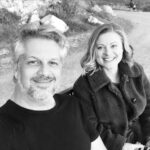
George Thompson Transcript: Tai Chi, Daoism, and Internal Family Systems
George: Master Gu describes Tai Chi as powerful, peaceful, and beautiful. Powerful comes from the martial art culture. You develop strong legs, strong balance. Peaceful: It’s a moving meditation. Like yoga, you move with the breath. And then beautiful: It’s like a dance, an art form. It’s a way that you get to express your creative, inherent potential.
Rick: Welcome to Buddha at the Gas Pump. My name is Rick Archer. Buddha at the Gas Pump, if this is new to you, is an ongoing series of conversations with spiritually awakening people. We’ve done nearly 750 of them now, and if you’d like to check out previous ones, go to batgap.com and look under the interviews menu, where you’ll see them organized in various ways. This program is made possible through the support of appreciative listeners and viewers, so if you appreciate it and would like to help support it, no obligation to do so, but it keeps us going. There are PayPal buttons on every page of the website and a page suggesting alternatives to PayPal. And also one way you can support it is just if you like the video, click like. If you would like to subscribe, do that. And those likes and subscribes tweak the algorithms so YouTube brings it to more people. My guest today is George Thompson. George is a filmmaker, a teacher, and a founder of something called Balance Is Possible, which we’ll be talking about. And when I say George is a filmmaker, he really is a filmmaker. I’ve watched four of his films in the last few days, and they’re lovely. They’re just really well done. They’re beautifully edited, beautifully shot, funny, very personal. You feel like you get to know George when you watch these videos. What George is about, primarily – and he’ll elaborate at length – is Tai Chi and Taoism. And the videos explain that in great detail. He has a 15-person team now. 15 full-time people or just 15 volunteers here and there?
George: Full-time, and then 7 other people that we work with.
Rick: That’s great, fantastic. And you guys are on a mission to inspire balance for people and the planet, which is a wonderful mission. Your videos have been viewed by over 25 million people and endorsed by renowned changemakers, including Dr. Jane Goodall, Louis Schwartzberg, Tara Brock, Stephen Fry, and many more. So you study for years in the Wudang Mountains of China, and you have a nice balance in your presentation between blending ancient wisdom with modern science, which I always love. I love that interface between science and spirituality. I think it’s really important. And you translate all this into fun, practical tools for overcoming the challenges of modern life. The first video I watched, you discussed how you started out feeling kind of anxious and maybe burned out, maybe depressed. You couldn’t figure out what you were going to do with your life. And then somehow you ended up going to these mountains in China, to this little teaching school. How in the heck did you find that place and go all the way from England to China on some kind of motivation that you were heading for what you would want to find?
George: Beautiful. Well, great to be in conversation with you, Rick. I’m excited to adventure with you. And yeah, how did I start this journey? Yeah, it’s been quite the journey. Nine years ago now, I was confused and anxious, having left education. And I really didn’t know how to relate to the voices in my head that gave me pain and judged me, and I shamed myself in various ways and I really was searching for peace. I’d entered into the big bad real world and I was anxious and hurting, beating myself up, thinking I was uniquely messed up, finding life difficult, finding the shame around, “I’ve been given so much, can I really be this anxious?” and not being able to talk about how I felt. And that was really the catalyst. I knew something needed to change. I’d never done any martial arts before, but at university I saw a video of some monks doing some backflips, and I wrote in my diary, “Go join a Kung Fu monastery.” It was as arbitrary as that. And so when I reached this crisis after university, I thought, “Hey, I’m going to do it. I’m going to try doing the spiritual stuff. I’m going to try and meditate, try Kung Fu.” And so I adventured to China, to the Wudang Mountains, which is this awesome collection of temples and monasteries and Kung Fu schools and Tai Chi schools. I went up to a monastery, the Purple Cloud Temple – big courtyard, swirly roofs. There’s a monk sweeping the floor. I go up to her, I say, “Ni hao, Kung Fu.” She doesn’t understand what I’m saying. She just shoos me away. I then try another monk who’s carrying tea. I say, “Ni hao, Kung Fu.”
Rick: Ni hao means, Do you teach it?
George: Ni hao: hello, just hello, hi.
Rick: Oh, I see.
George: Yeah – “you good,” ni = you; how = good. I spoke no Chinese at the time and literally, that’s all I said. I tried this with some other monks, I wasn’t getting anywhere. I later find that this wasn’t even a Kung Fu monastery to begin with. It was a academic female-only Taoist monastery and foreigners weren’t allowed. There wasn’t even a man in sight, let alone a foreign English man. So I had done my research very badly. But then I turned to plan B. If I can’t learn in a monastery I’m going to learn in a Kung Fu school. So using Google Translate I asked the locals, Can you take me to a Kung Fu school? And they ended up taking me to a Tai Chi school. And in my ignorance I thought ,Tai Chi -isn’t that for older people? But I tried it, fell in love with it, found meditation, found Taoist philosophy, and I’ve been on the way ever since. It changed my life and I’ve dedicated my life to sharing what I’ve learned.
Rick: That’s great. If people watch your films, which I will provide a link to on your BatGap page – and which I highly recommend they do – I think they’ll have the impression that I had, which is that this teacher you found – just his face – is a good advertisement for what he teaches. It just radiates a lot of happiness and wisdom and confidence and, you know, nice guy – you get the impression. Someone you would want to associate with and study with.
George: What I love about Master Gu is his joy. He has a childlike sense of awe and wonder. Just to give you one funny example: We’d be maybe having breakfast in the morning, and then every so often by surprise he would get his boiled egg and instead of cutting it open he’d bash it on his forehead and then unpeel it. And that was just the Tai Chi master doing silly things like that.
Rick: That’s funny. So I think most people watching this will have seen people doing Tai Chi. I’ve seen them here in town and obviously on the Internet and everything. And what I’d like to understand from you is what the mechanics are of it that makes it so transformative. You know, in my own case I’ve been doing sitting meditation for a long time, which is different. I also do yoga, but how is it that going through these motions that you do when you do Tai Chi transforms you, which it obviously does?
George: Hmm. Master Gu describes Tai Chi as powerful, peaceful, and beautiful. Powerful comes from the martial art culture. You develop strong legs, strong balance. Peaceful, it’s a moving meditation. Like yoga, you move with the breath. And then beautiful, it’s like a dance, an art form. It’s a way that you get to express your creative inherent potential. And like another one of my Tai Chi masters, Chungliang Al Huang says, You never repeat Tai Chi moves, because every time it’s just very subtly different and you are a subtly different person every time you come back to your Tai Chi. So it’s about really connecting with the aliveness of this energetic being that we are. As we move in presence with the breath and strength, expressing ourselves creatively, we tap into the intelligence and wisdom of the body and in so doing gain energy.
Rick: Nice, I like that phrase “intelligence and wisdom of the body.” There’s definitely a lot of that in the body and a lot of people not only don’t tap into it but they seriously thwart it by doing things or imbibing things that dull and interfere with the intelligence of the body.
George: Yeah it’s like as Alan Watts says, “I lost my mind and came to my senses.” So yeah, for me and many people, we’re disembodied, and this is how my journey started. Yeah, I exercised and tried to eat healthily but I didn’t realize that the body was a teacher, a friend, a refuge, has wisdom. And the re-embodiment – we get this from meditation, to know that we’re just not only our thoughts. And then [with] Tai Chi we get to move in presence. We then come into knowing: Wow, there’s so much more wisdom and intelligence available to me.
Rick: I’m curious about that thing you said about you don’t exactly do the same Tai Chi move twice. It reminds me of that Zen saying about you can never step into the same river twice, you know, because the river is always flowing and changing. Now are there standard moves that have names to them? You do this move, do that move and you would know what to do, but you just improvise somewhat? Or is there a certain amount of spontaneity and extemporaneous movement when you do the movements?
George: Certainly depends on your teacher and the approach. So I have learned with two masters and they have different approaches. So with Master Gu in the Wudang style, certainly form is important and so you learn Tai Chi forms. So for example the Tai Chi 28 form: 28 moves and you’ll spend, supposedly… This move, which is called Lou Xi Ao Bu, which is the old man pushes and brushes, if you do that a thousand times, according to the Tai Chi culture you will become enlightened.
Rick: Have you done it a thousand times?
George: Probably over my life but not in a row.
Rick: Oh, is that what they’re saying, you have to do a thousand times in a row to get enlightened?
George: Yes, it’s like the Buddha meditating under the Bodhi tree for 40 days. You gotta do Lu Shi A Bu a thousand times and then you reach
Rick: Jeez, you should give it a try, you might get enlightened. [Laughter] I’ll give it a try.
George: Yeah, if that’s the one outcome for our dear viewers and listeners is try that a thousand times. I’ve said that a lot and I’ve never tried it. Maybe I just need to commit one Sunday afternoon.
Rick: Pencil it into the schedule: Okay – Sunday: Get enlightened. [Laughter]
George: So there are specific forms and certainly alignment is important. And yet for me – and actually Master Gu differs from me in how we approach Tai Chi – is that there’s then a place beyond the form where it’s in the body now, all these moves that have taken many months to learn, and then it’s play and improvising and allowing the creative life force to flow through. So it’s the both-and. Yes, there is the form and learning the specifics, but then it’s also letting go and enjoying.
Rick: Yeah, I think probably if people haven’t done this but they’ve maybe danced or done a sport like tennis or something, they’ve found that such activities can actually enhance and deepen mind-body coordination. You know, athletes talk about being in the zone and how their athletics actually becomes a kind of spiritual practice, where they feel like they’re not even doing anything, it’s all just happening very spontaneously and they’re able to do things that they wouldn’t be able to do if they just tried to intellectualize about it.
George: Exactly, it’s exactly the same thing. So yeah, it’s amazing. It takes months to learn a Tai Chi form and then eventually the whole thing just flows out of you and you’re just present. It’s a very powerful reminder of the intuitive as opposed to cognitive wisdom of the nervous system.
Rick: How do the people in your tradition define enlightenment? Because you use the word – “You do this a thousand times you’ll get enlightened.” Do you feel like either of your teachers is enlightened and how would you or they define it?
George: So I would contrast Buddhism and Taoism and the importance put on enlightenment. There is something similar that we’ll talk about but really Qi cultivation, energy cultivation, is the core of the Taoist and Tai Chi path. Raising our energy through these practices, cultivating our life force energy. So as opposed to enlightened/not enlightened, it’s more Qi or less Qi. That’s the sort of the yardstick that you can judge your spiritual growth by. There is talk about when your Jing Qi Shen – your physical body; and then the Qi and your breath; and your mind and spirit – are so aligned and you’ve done so much refinement that then you can transcend the physical form and have superpowers and, you know, the siddhis. And one example is flying. So there is a temple, the South Cliff Temple in the Wudang Mountains, where there is an incense burner on the edge of a cliff and there is now a barrier around this incense burner because for hundreds and hundreds of years the spiritual warriors would reach such a stage of their cultivation that they felt that they had reached the Enlightenment ,where they had transcended the physical, and so they had the power to fly. So what they’d do is light the incense and then jump off the cliff, hoping that they would be carried by the clouds. But instead they turned into jam, strawberry jam at the bottom of the cliff. And so the Communists in the 1950s put a fence around this incense burner to stop the martial artists jumping off.
Rick: Probably a good idea. Did any of them ever fly or was it all splat every time?
George: Well the stories say yes but you know it’s hard to fact-check.
Rick: Yeah I think I’d want to sort of test it without a cliff just to make sure I really could do it, you know. Maybe jump off a step on the stairs and see if you could fly that much.
George: Yeah, that would be a safer way of doing it but maybe that’s then you doubting your spiritual cultivation. You need full commitment, just jump off the cliff and back yourself.
Rick: Yeah, well so much for doubt. Maybe doubt has its wisdom.
George: Hmm, I believe so. So that’s an example of the idea of cultivation but certainly there’s the idea of waking up from the illusion of the egoic mind and separation. So very similar oneness, non-duality ideas that we reach in our meditation practice, but less emphasis on enlightenment being the final stage.
Rick: I’ve listened to the Tao Te Ching a couple of times recently, including yesterday. Tim Freak has a nice rendition of it out that I listened to. And I’ve studied Vedanta – Advaita Vedanta – quite a bit and I feel there’s a lot of similarity and overlap in many ways. It’s a beautiful book. I mean you could listen to or read that every day and always get something new. There’s so many different verses that just jump right out at you. I guess Lao Tzu wrote that book. Is your lineage descended from him, do you think?
George: Yeah, so for those that don’t know, Tao Te Ching is the foundational text of Taoism, supposedly written by Lao Tzu ,which translates as “old teacher,” in 500 600 BC. And it’s interesting, the spiritual mountains of China – basically all of the Taoist mountains – have a Lao Tzu temple. Lao Tzu’s story was that he was a librarian in a king’s court and developed a lot of wisdom and then was sick of all the politics and decided to leave. And on his journey somehow he visited all of the Taoist mountains before he left, which if you look at the map it’s like his route must have been very convoluted to leave the Chinese Empire. But each spiritual mountain wants to claim Lao Tzu visited our mountain. So for example the Wudang Mountains has a Lao Tzu temple. Master Gu and I have practiced there. And there is a definite sense of reverence for the text. But if you were to look, there’s an important distinction between religious Taoism and philosophical Taoism. Religious Taoism includes the worship of deities and a lot of the shamanic traditions that already existed. Philosophical Taoism is a term that actually later emerged in Chinese history. Lao Tzu didn’t call himself a Taoist, but Lao Tzu and his philosophy is under that umbrella and there is just that non-dual understanding. I like to say I’m exploring Tao without the -ism. Taoism is a beautiful gift from ancient China to help us understand the way, the way of nature, the way being the Tao. That’s the direct translation for it.
Rick: Yeah, I understand that during your confused teenage angst stage that we already talked about, you would have defined yourself perhaps as an atheist and you’ve now moved to something like panpsychism perhaps, and you actually have a whole video about trying to figure out what consciousness is, and you went away to to the wilds of Scotland to live in a cabin and work on that problem. Maybe you could describe your evolution from atheism to whatever your view of God or consciousness now is.
George: Yeah, beautiful question. You know, so long as we’ve been human and had language to ask questions, we’ve asked the big questions. Who am I? What am I a part of? Where did we come from? Is the universe intelligent? Is there a God? And I see science as a religion, as a myth, as a way of understanding our relationship, our spirituality to the cosmos in the same way that Christianity or Taoism or any school of thought is. And so my journey… I was kind of brought up Christian. I did go to school, but I rejected it when Jesus didn’t pick up my prayers to heal my dad’s back. I was like, this isn’t working, my transactional relationship with the divine. And then I went to atheism, kind of early Sam Harris’s and the new atheism of religion as just a story, yeah, exactly. Stories made up in order to soothe the curious mind, but require dogma and leaps of faith that aren’t scientific. Then I found Taoism, and what I loved about Taoism is that it didn’t ask me to believe anything. It just pointed out observations of nature and literally the opening line of the Tao Te Ching is “The Tao that can be named is not the eternal Tao.” So literally the book called the Tao – the classical book of the Tao and its power – the opening line says “We don’t know what the Tao is and if somebody names it, they’re wrong.” I love that humility. And yet that is a spirituality, is a form of understanding my relationship to the cosmos, because it’s saying who you are and what you are a part of is so much bigger than the thinking mind can possibly contain in words and concepts. That very embracing of mystery and not-knowing is a form of relationship. So now I am certain of the mystery. I am confident that I don’t know and that relationship with the unknown and the mystery is actually a resource that supports me because I have that little thinking mind that, you know, is scared about what’s happening in the world and wants to find a life partner and has been single for a long time. I. want to work out all of these things in my life to go right. And for me my spiritual connection of Taoism, my understanding of God… we could talk about consciousness as just as a starting point and embracing and a celebration of the mystery.
Rick: Yeah that’s nice. I mean there’s so many people in so many religions who cling to certainty and are adamant about the rightness of their particular perspective. And think how many hundreds of millions of people have been murdered because of that attitude, all the various religious wars. But when you really think and experience deeply enough, I think it does culture humility and you realize that the whole thing is just so vast and incomprehensible. Even though you can gain a certain confidence by dwelling in the essence of things as the essence of things, you are by no means omniscient or omnipotent. Don’t try jumping off cliffs. And humility, I think it’s a really good spiritual quality. I forget who it was – some British author – said that consistency is the hobgoblin of little minds. And the same can be said of certainty.
George: I love that. And a quote from Zhuangzi, who’s a second foundational thinker of Taoism, who tells his philosophy through story: He talks about the autumn floods. So the Yangtze River would flood its banks every year, causing loads of devastation. And there was an autumn flood. And the flood was so extensive that you couldn’t see, you couldn’t make out a cow from one side of the river Yangtze to the other. That’s how wide the Yangtze was. And the river god was delighted. He said, “Look how big I am! I am as far as the eye can see. I surely am the biggest body of water in the whole universe.” And so the river god was delighted, singing and dancing, going down the river, very proud of his size. And then he reached the sea, and he looked out and he saw water as far as the eye could see And he was down crested. “How could I be so arrogant to imagine that I was the biggest body of water in the land?” And to this the sea god said “Yeah, it’s true that in weeks and weeks of floods that I do not raise and in weeks and weeks of drought, I do not go down. Yes. I am surely a big body of water. But there are many big bodies of water bigger than I. You and I, my dear friend, we are like grains of rice in a huge rice store, or a pebble sitting on Mount Tai. Why is it human beings squabble over such small things? Man is made to sit quietly and discover the truth within.”
Rick: That’s great. That reminds me of a beautiful video, which I’ve mentioned in several interviews, by Carl Sagan, the astronomer, called Pale Blue Dot. And there’s a photo of the Earth taken by the Voyager spacecraft from somewhere way out in the solar system. All you can see is this little pale blue dot. And Sagan just gives this beautiful commentary about all the blood that’s been shed and all this fighting and squabbling over some tiny little pixel on that pale blue dot. And people think they’re so great because they’ve captured this little territory or whatever. And he goes on to say, “Well, this is all we’ve got. I mean, this is spaceship Earth, and if we screw it up, no one else is coming to save us.” So I love that. I love astronomy, actually. It kind of keeps things in perspective. I have like 800 photos of galaxies and stuff that rotate as my screensaver, to kind of keep things in perspective.
George: Yeah, and I love Carl Sagan, a deep inspiration for me. I’m a filmmaker and Cosmos has totally inspired my work. And my contribution is not just the astrophysics, but the workings of the mind and consciousness and peace and nonviolence. And to make a documentary series on the story of humanity and our potential for peace. And that astronomical – astrological and astronomical – perspective is so important. Just something I read today is that there’s an estimated two trillion galaxies.
Rick: Yeah that’s the low end, it could be more. [Laughter]
George: You can’t even fathom it.
Rick: Right. And a galaxy itself… you know, it takes a hundred thousand years for light to go across our little galaxy. And even if there’s even one intelligent species in each galaxy, that’s two trillion civilizations right there. And they find these days that with the latest telescopes almost all stars have planets orbiting them. Planets are common. And so, even if one in a hundred stars has intelligent life on one of its planets, then Boom!, the numbers just become incomprehensible.
George: Amazing. And the story of life on planet Earth only took a few hundred million years out of the four-and-a-half billion years that Earth has been around. [It] only took a few hundred million years for life to get going. These are the earliest fossil records that we have. So it just seems that, given how exuberant life is on our planet – so abundant, so beautiful, so creative – it does to me seem like just creative life force and consciousness is part of the very fabric of the universe.
Rick: Yeah, which is how all this scientific talk actually inspires, you could say, religious or spiritual awe or reverence. I sometimes say that it’s hard to understand how any scientist or doctor or anybody who’s really studying nature deeply could be an atheist, because they’re looking at this miracle, you know, and understanding it better than most of us understand it. They’re seeing something which could not possibly be happening by chance and it’s not some mere mechanism. I was reading about Descartes. You want to hear joke? So Descartes is sitting in a Parisian cafe and the waitress comes up to him and says, “Monsieur Descartes, would you like another coffee?” And he says, “I think not,” and he disappears. [Laughter] Get it?
George: Nice. I like that.
Rick: For those who didn’t get it, it’s because Descartes said, “I think, therefore I am.” So if he doesn’t think, he disappears. You have a joke, did you say?
George: Let me think, do I have a joke? I’ll get back to you on that. I’ll see if I can weave one in. What I like about your energy, Rick, is that you laugh, and I think it’s super important. Like, every spiritual teacher worth their salt is having fun because it’s like there is the cosmic joke of, you know, we come into this embodiment from the infinite mystery and then we take it very seriously and we create ego stories about how either we’re messed up or we’re superior, and the whole thing is constructed in the human mind. Which is beautiful. And, you know, once we have the awareness ,we can relax into it ,but once we have the awareness surely a light smile and laughing at ourselves is a natural consequence of true understanding.
Rick: Yeah. There’s a verse – and I think it’s in the Gita – which says that contact with Brahman is infinite joy. And so I think a spiritual person should be joyful, not by trying to be joyful, but there should be a natural joy if they’ve really attained something significant. And you often see that depicted in Zen pictures. Well, some of them look like total grouches, but others are like, “Woo! We’re having fun here.” They’re just joyous.
George: I’ve got a fun joke for you. So there is a group of monks and they are very, very diligent. This monastery has been open for hundreds of years and these monks, they meditate eight hours a day, they have the same rice meal every day, they haven’t had sex, they’re celibate, and yeah, they are very, very diligent. And one day, the monks are inscribing the teachings. They have these wooden carvings that they put onto the walls, and every 40, 50 years they replace the wood carvings because they wear out. A monk is inscribing the teachings, and he thinks for a moment, “Well, sometimes I make a mistake. And what if, since we’ve been doing this hundreds of years, we have made some significant mistakes?” And the head monk, the abbot, says, “You know, that’s a good point. Maybe we should go down and check the originals, which are kept safe in the basement.” So the head monk goes down into the basement and he’s not seen for hours. People are beginning to worry, is he okay? Eventually the monk goes down to go see if the abbot’s okay, and the abbot is there hitting his head against a pillar going, “No, no, no, no!” And the monk’s like, “What happened? What happened? Are you OK?” And the abbot said, “It was celeBRATE! It was celeBRATE!”
Rick: Right, not celibate. I knew that one was coming. There are variations on that joke. But on that point, you mentioned a little while ago that part of the practice that you do is amassing chi or conserving chi, letting it kind of accumulate. And the reason celibacy is there in a bunch of traditions is that it’s often considered that sex depletes prana or chi or vital energy or whatever you want to call it. So how does Tai Chi deal with that issue and that understanding?
George: Yeah, for men, semen retention is part of the path and that release of that energy versus keeping it inside and keeping that energy within. But there’s also – like Tantra in the Hindu tradition – there is a whole beautiful tradition in the Taoist path of sex and intimacy being a path to unity, and chi and unity with the divine, and chi and energy. Supposedly the rule goes is that if the woman – and this is in heterosexual connections – if the woman climaxes before the man, then the man receives the female energy. If the man climaxes before the woman climaxes, then the woman receives the energy. So she needs to finish first in order for there to be an exchange. So that’s quite a fun… Yeah, so there’s lots of actually Tantric practices of intimacy as a way to gain energy. On the other hand, there is also – say for example, in the monasteries – celibacy is one of the commitments that you make, and the idea of the retreat is part of the Taoist path. So you simplify, and you don’t distract from your spiritual focus. And so, where I am is in the seasons of… I love being by myself. I love my own practice. And then also I’m exploring Tantra and I’m exploring the spiritual dimensions of intimacy. And as Ram Dass says, “Think you’re enlightened, go spend a weekend with your parents.” So for me the deeper spiritual work, or for me the more nourishing spiritual work, is in relationship, and intimacy being part of that.
Rick: Okay, good. Thank you for that. We talked a bit about your interest in science and ancient spirituality. As I understand it from looking at your stuff, you also weave together Taoist ideas with modern psychology and something called internal family systems, inner parts work. Is that correct? And how do you see these frameworks complementing each other?
George: Yeah. So from the spiritual perspective and understanding the nature of consciousness, thoughts and feelings arise within awareness. We create our stories from thoughts that coalesce into beliefs and then the stories that make up who we are. In meditation we observe and identify with the field of awareness: Okay, these thoughts are just arising and passing. The challenge with just staying with meditation is that you can be observing the same patterns for decades. So a limiting belief of, you know, “I’m not worthy of love”- okay, just observe it, it’s not me. Come back to the present moment, observe it, it’s not me. Come back. You can just be doing that time and time again. Parts work, instead of just observation, invites INvestigation – to go use that thought, that challenging emotion, that challenging thought as a trailhead to see who’s there, like, why is that thought there? This is shadow work or ,you know, Jungian shadow work. For me a part is a pattern of thoughts and feelings. So if I follow that line of thinking – so let’s make it personal to me: Something that has been coming up less and less, but if I need to be meditating an hour or two hours a day or else I’m not in integrity with being a meditation teacher – that’s a thought that comes up.
Rick: Oh, that’s just a thought. You’re not saying you really believe that, you’re just saying that it might be a thought you have.
George: Exactly. So that’s a thought I have. Okay, so let’s just see where that thought takes me. So I then on my therapeutic journey find that there’s a part of me, which I have now called the Taskmaster, who’s my inner disciplinarian, my inner perfectionist. I found he’s a samurai and he wears immaculate clothing, meditates two hours a day, perfectly vegan and demands a lot from me. And he’s creating these thoughts of: “If you aren’t in full alignment in every aspect of your life, you’re a fraud and you’re out of integrity.” So beneath the harshness that those thoughts can present is a beautiful intention for integrity and for high standards, which I’m really grateful for the Taskmaster as being part of me. But then once I really get to, in parts work and internal family systems, understand the story – so, you know, my dad’s harshness and his desire for workaholism, there’s lots of beautiful parts to my dad, but also he gave me that energy – once the Taskmaster saw that, it’s like, Oh you’re just playing out the conditioning you got from your dad. And I asked the Taskmaster, Do you want to be that harsh to me? And the Taskmaster says No. And now over time that thinking has softened. So that’s one micro example of the power of investigation. Observation is great, foundational, the power of meditation – but what happens when you go and investigate? Why is this thinking there and who’s there? Which parts are there?
Rick: There’s a whole theme in Vedanta about identification and how ordinarily we are overshadowed by or identify with our thoughts and our perceptions, and we have to learn eventually to distinguish between pure consciousness and the objects – like the movie screen versus the movies that play upon it. And I think what you’re saying is that there’s some significance to the movies themselves, not just that they overshadow the screen, but that the movies can tell us – here I’m using the metaphor – they can tell us something. So if you have some particular thought about your dad or something else, there might be some learning to explore with that particular thought. When I was teaching meditation, I would sometimes say to people, “Just treat all thoughts as if they’re in Japanese.” Doesn’t matter what they mean. Come back to the mantra, whatever, transcend. But you’re kind of giving more credence or importance to the contents of the mind that bubble up because that can be fuel for investigation.
George: Totally, and both things are true. I think there’s an important stage of the journey. Yeah, the thoughts are Japanese. Just see that these are energy and you don’t need to believe them and not every thought is true, and just stay in the presence. But we do need to navigate our lives and we’ve been given this big, beautiful, thinking brain in order to help us navigate life. And if on the spiritual journey we create a duality of “thinking = bad “and “presence = good” then we’re actually separating ourselves from one of the great gifts of being a human being. Thinking helps us navigate. Thinking also is the product of our genetics, our parenting, our society, our free choices and then chaos. And these patterns of thinking are what help us navigate the world. So it can be that somebody does deep meditation, goes to a monastery and easily rests in awareness, but as Ram Dass says, he goes back to [his] parents and is just triggered and angry and reactive. And why is that? Because there’s a part, a pattern of thought and feeling that was triggered by mum and dad. So that observation alone actually isn’t helping to fully shine the light of love, shine the light of loving awareness and presence to all the patterns. So it does take investigation and there is logic and reason to why the parts work in the way that they do. Once we understand these parts, then we can navigate our lives with more skill.
Rick: Yeah. I won’t go into a big diatribe about this because I’ve done it so many times, but there are so many teachers who seem so impressive in various ways – often teachers from the East, but sometimes just Western teachers – who really seem to have some kind of profound awakening, and yet when you pull back the curtain – you know, Wizard of Oz-style – you discover that there’s all kinds of misbehavior taking place. They are really acting out of line in various ways – sexual predation and so on. And so you wonder perhaps on the point we’re discussing whether their whole practice and upbringing, perhaps in a monastery or whatever, tended to just dismiss thoughts and any kind of psychological quirks that you might be harboring and just focus on your practice or focus on pure consciousness or whatever. And so you’ve developed in yourself a serious case of spiritual bypassing where you’ve gained significant development in some way, but you’re really quite stunted in other ways. And that can be a formula for a lot of trouble if you step into a position of responsibility as a teacher.
George: Absolutely. Yeah, yeah. And that’s definitely bringing this awareness back. Like the retreat is so important. But for me, I want to live in the world, and I’m an activist, I’m an advocate for our potential to live in balance and I want to engage in the world of politics and media, and that may not be what everyone wants to do, but for me it’s stepping in to the world and the challenge and the crunchiness of being a human being. If we just sit in the monastery, there can be profound sources of presence that are valuable in themselves and an inspiration for other people to achieve that. For me, I feel that more challenging spiritual work is to bring that presence into everyday living.
Rick: Yeah, very important. Some people are wired to be monks, and that’s really what they’re wired to be, but the vast majority of people are not. Unfortunately, maybe, a lot of the custodians of spiritual traditions have been monks, and so the whole teaching has been slanted from a monastic perspective, and it can in some ways not be as useful for householders as it might be, or it might even incline householders to be somewhat reclusive and therefore less effective as householders. Kind of treating everything as illusion: Oh my children, they’re just an illusion.
George: Yeah there’s a Taoist story on that, of when a teacher’s son dies, he’s crying over his son passing and then his students say “You taught us that everything’s an illusion -why you’re crying?” and he says “But my son was such a beautiful illusion.”
Rick: Nice. Yeah that’s good. I interviewed Swami Sarvapriyananda a week ago or a a little bit more – actually, it was back in December – and I prodded him on this point a little bit because, you know, he’s a monk and the Advaita tradition as he presents it kind of relegates God to a subsidiary role, it almost seemed to me. You know, Brahman is the ultimate reality. Brahman contains within it the quality of maya, and as a function of the quality of maya the personal aspect of God emerges and then orchestrates the universe. But the whole point of this universe is to get enlightened and get off the wheel of reincarnation as quickly as possible and just go back to being Brahman, as if the whole thing is some kind of cruel joke – that you have to go through all this suffering, but if you really play your cards right, you’ll get out of it soon enough. And I used to feel that way, but now I kind of feel more like it’s really a divine play. And actually Swami Vivekananda in Swami Sarvapriyananda’s lineage had the Bodhisattva attitude that I’ll keep coming back as long as there are suffering beings in the universe, I don’t care how many times. So, I don’t know, I just feel like there’s something wonderful and – we were talking earlier about mystery – something mysterious and magical and sublime and divine about creation itself. There’s a bumper sticker that says, “If you’re not in awe, you’re not paying attention.” So there’s something awe-inspiring, and one can participate in that mystery, in that awe of creation, as an instrument of the divine, rather than seeing creation as something to escape from as soon as possible.
George: Totally, yeah. I love that and I deeply resonate with that. For me it’s also the embodiment piece. Those philosophies can be quite heady. It’s like, okay, there’s a spiritual realm to transcend to and to escape this crunchy kind of sinful existence. And the Tai Chi journey is bringing the energy down from the head into the body and to feel the sensitivity and vibrancy that is the truth of our being. And then by extension the body of the earth is surely spiritual. All of it is spiritual. And there’s a classic story from Taoism that you I’m sure will know: the three vinegar tasters. This is a great one. So there’s a big vat of vinegar and there’s three men sitting around the vinegar. And it’s not any ordinary men, it’s three of the great philosophers of the East – Confucius, Buddha and Lao Tzu. Confucius takes a sip of the vinegar and he’s got a frown on his face. The vinegar representing life, and life is sour by its nature. And so in order to overcome the sourness and the greed and the ignorance of human nature and nature more generally in life, you needed to read the right books, you needed to wear the right clothing, you needed to meditate with the mat exactly in the way you’re supposed to, to become an esteemed gentleman, and then in that alignment and cultivation, then life becomes good. Only then can you smile. [Laughter]
Rick: Is that the way Confucius was in his personality or teaching?
George: [Laughs] Well, it’s a Taoist story so you know it’s always your own team. Then you got the Buddha, and the Buddha takes a sip of the vinegar and he tries not to react. Just not craving after not drinking the vinegar, no aversion to drinking the vinegar, just indifference, non-attachment. For him, life was suffering, or had the potential for suffering, but suffering comes from our attachment and our clinging or aversion to the way things are. And so if he didn’t react, then life would be okay. And then if he did that well enough, then he could transcend and leave the wheel of samsara and reach nirvana and enlightenment. Then there was the final person, Lao Tzu, the founder of Taoism indeed. And he took a sip of the vinegar and he had a great big, beautiful smile on his face. And you wonder, how could Lao Tzu have a great big, beautiful smile if he was having this really sour vinegar? And Lao Tzu said, “Well, the nature of the vinegar is to be sour. And so if I was to have a frown after that, it would show I didn’t understand anything about nature and the Tao and the way. And so I have a smile of full reverence and enjoyment and a wow to the way life is. And so that is how I can keep having sip after sip of vinegar with a great big, beautiful smile.”
Rick: I think he surreptitiously took a spoonful of honey between each sip of vinegars But the other guys didn’t see him do that. [Laughter]
George: Spiritual charlatan, yeah, yeah. Yeah. Surprise.
Rick: Yeah, that’s good. Of course there are spiritual philosophies that basically say it’s all suffering. Even the good stuff is suffering because it ends, you know, it changes. But, I don’t know, maybe there’s truth to that. But life isn’t just vinegar, you know, life is a joy. It certainly can be. Here on this earth, firstly there’s people’s subjective experience, which can have them in hell even if they’re in opulent surroundings, or in heaven in impoverished surroundings. But then there are the objective surroundings themselves, which range from really beautiful to horrific. And there’s two main variables. And there are stories of people like Etty Hillesum, who maintained quite a spiritual perspective in Auschwitz or whichever concentration camp she was in. And you know, there are wealthy, comfortable people who commit suicide or make a mess of their lives.
George: Yeah, yeah. For me, it does just come back to the enjoyment. A phrase I love from Taoism is, “Stop asking why, start saying wow.”
Rick: Yeah, that’s good.
George: Yeah, because it’s like the thinking mind is trying to work it all out and that’s beautiful because that’s what the thinking mind does, but there’s a point at which you just enjoy it. I could give you my equation of why I think the universe is love.
Rick: So please do, yes, what’s your equation?
George: So it is often claimed in spiritual traditions that the universe is love or God is all loving. [Sings] What is love… I don’t know, but I feel love when I’m in connection, so I could say that love equals connection. And we see in the universe [that] everything is connected, so the universe equals connection.So if love equals connection, universe equals connection, therefore universe equals love. So what does that tangibly mean? What does that mean, given there’s so much suffering and children having cancer and war and all of these things? Another metaphor I love is the importance of resistance. So if you have a big river and it’s flowing really widely, the undulations are very small, almost non-existent, until there’s a big rock and the rock is that resistance, which means that then a pattern is formed – the water needs to flow over the rock. From the unity of the flow of energy comes differentiation and pattern. And so that’s a metaphor for how resistance, there is just this infinite connection of everything in the universe, somehow resistance arises – and I haven’t philosophically worked that bit out. Maybe because the universe wants to express itself and wants to individuate so it can experience itself. That resistance then leads to individuation. But as we then separate from unity, there is pain. In the same way that birthing, leaving the womb, is a trauma for the child – crying, leaving the warmth and safety of unity with its mother. In the same way, [with] all the the ten thousand things, the myriad diversification of the cosmos, there is a pain in that coming into form.
Rick: In Hinduism, specifically the Gita and probably other scriptures, they have this idea of the three gunas – Sattva, Rajas and Tamas. Sattva is purity and just creation, creativity. Rajas is just motion, energy, activity. A rajasic person would be someone who is just, like, speedy, you know. Go go go go go. Tamas is dullness. A tamasic person would be like a couch potato, lying around in a stupor all the time. But it’s said you need all these three things to kind of counterbalance each other, and on the spiritual path you do move toward more Sattva, but you still need a little Rajas and Tamas in order to function as a human being. You couldn’t be, probably, in a human body and be all Sattva.
George: Hmm.
Rick: Does that relate to what you were saying?
George: Yeah I’m thinking of the cosmic mischief and the need for that chaos. It’s like the yin-yang, the unity between order and chaos. The yin-yang line is that beautiful S-curve between the two. Because if the universe was pure order, then there’d be no creativity, there’d be no innovation, there’d be no diversity. If it was pure chaos, then we wouldn’t be able to function. So between the two, life flows.
Rick: Yeah, and then you have the little white dot in the black part and the black dot in the white part.
George: Yeah, and they can transform. Change is the only thing we can rely on.
Rick: I’ve often heard that there’s a Chinese character for chaos which contains the word “opportunity” in it or something. You know what I mean?
George: Yeah, so the word “crisis,” “wei ji.” So “wei” means danger, “ji” means opportunity, and the characters are crossroads. So yeah, crisis is where danger has the opening for opportunity.
Rick: Yeah, and some people – even in recent conversations I’ve had with people – they’re saying, “What is going on in the world? It just seems to be getting worse and worse. I thought we were supposed to be moving into a more enlightened age.” And I’m thinking, well yeah, this chaos in the world IS indicative of the fact that we are moving into a more enlightened age. It’s symptomatic of very fundamental changes taking place and a lot of stuff has to bubble up and be exposed and purged and reconciled and so on in order for us to really transform things fundamentally.
George: Yeah. For water to transform into steam requires pressure. So it’s the force of constriction which leads to transformation. For me, I think the Taoist view in life is cyclical, it’s not necessarily directional. So I don’t necessarily believe that we’re destined for healing on this planet. It’s like the question of two trillion galaxies and hundreds of billions of stars. Well, if there’s all of this and life came about on earth so early, where are all the aliens at, if civilization or life is so abundant and there’s so many planets? And as Carl Sagan says, it could be that just as you develop high technology you destroy yourself. It’s very few civilizations that work out. So, nonetheless, I am a prisoner for hope, prisoner of hope, as Jesus says. I choose hope. And a quote I love is, “Hope is not a state of the world, it’s a state of mind, where we work towards something that’s valuable in itself, not just because it’s likely to happen.”
Rick: Yeah. Well, speaking of the boiling water, when water does turn to steam, that point is called a phase transition in physics. And there are many examples of phase transitions where something converts to an entirely different state. And there tends to be a lot of chaos at the point of phase transitions, like the bubbling of water. So we might be undergoing a phase transition in society. But I think society, perhaps, can be both cyclical and progressive. It progresses through cycles. Doesn’t mean we’re repeating the same old thing. We’re not necessarily going to go back to the Middle Ages and start burning people at the stake or whatever. We can perhaps be learning through all these gyrations that we go through, and it appears that we are.
George: Yeah. And I like to think about them as hairpin turns. It’s like, Wait I’m back where I started. No ,you’re just just slightly above on the mountain path. Don’t worry. It may look like you’re back, but there is progress.
Rick: I’ve driven in Switzerland. There are roads like that, switchbacks up and up and up and up. And hiked in the mountains.
George: We’re in a switchback.
Rick: Yeah, good. You do your Tai Chi thing – I’ve watched videos of you doing it – it’s really nice looking. You’ve also mentioned meditation. Do you do a seated meditation in addition to your moving kind of practice? And if so, what particular benefits does each one offer that the other doesn’t, if that is the case?
George: Yeah, my morning practice is MMA, and it’s not mixed martial arts. It’s move, meditate, affirm. So I move in the morning and I do Qigong or Tai Chi or I dance or I do press-ups and then I do seated meditation. I still believe seated meditation… it’s just less variables. Standing meditation is popular in the Taoist path, but for me to drop into stillness, I believe seated meditation is the most powerful and direct route to that. I love Adyashanti’s teachings to rest in effortless presence, no effort, not trying. It’s very in keeping with Wu Wei, the key teaching of non-action that comes from Taoism. So my practice is around 20 minutes of movement, 30 minutes of seated practice, and then I speak out affirmations, some of the energy that I’m calling in for the day. Then there is later in the day movement practices and Tai Chi and Qigong. And I’d say for me yoga and flexibility and mobility is the foundation of my Tai Chi. So I have a strong flexible body and then Tai Chi is how I get to express that strong flexible body. Seated meditation is how I can develop the presence so that then when I go to my Tai Chi then I’m really in the movement and I’m present. Now for some people it may be that seated meditation, because of the agitation of their mind, is actually not as kind as doing movement. So actually Qi Gong[vs qigong?] and Tai Chi can be the starting point for people. I found in my journey that they complement each other beautifully and they feed into each other.
Rick: Yeah, in the same way that yoga and seated meditation can do. You could do 20-30 minutes of yoga and then some breathing exercise like pranayama and then start to meditate, and your whole nervous system will be primed for a deeper meditation.
George: Mmm exactly.
Rick: Yeah. So when you do your seated meditation specifically in your practice, what do you do? Focus on the breathing or what are you doing?
George: Yeah. One powerful breathing technique from the Taoist canon, and I’m sure you’ve explored it for yourself as well – it’s intuitive and I guess most meditators get to it – the Taoist call it Taoist true breathing. So it’s breathing so slowly that you can barely perceive the breath coming in and out. You’re not holding the breath, there’s natural pauses, and eventually – while I start by inviting that breath, slowing the breath so much – eventually I release control of the breath and that breath stays. And it’s taken me years to get to that level. So I start my meditations by slowing the breath down, deeply slowing the breath and then body scan, just to tune into the field of awareness, sounds, and then opening up completely, letting go of the meditator, letting go of meditation, letting go of any particular anchor, and just to rest in choiceless awareness. That’s where I do most of my meditation.
Rick: Sounds good. Some of these things are the cart and not the horse. In other words, sometimes you might find you’re not paying any attention to your breath, but you realize that you haven’t breathed for about a minute. Maybe there’s a sudden deep breath because you haven’t been breathing. But, you know, unlike carts and horses, but like tables, you can pull any one leg and the other legs come. So whatever works, you know.
George: Yeah, exactly.
Rick: So in your What is Consciousness? film, which is another good one – I didn’t realize Scotland was so wild, it’s like you’re in the Himalayas or something up there. Wow.
George: Scotland’s phenomenal. So few people realize how gorgeous those mountains are. They really are.
Rick: And I mean, you can easily freeze to death up there. It’s pretty austere. You’re up there with your ice axe and you’re, you’re…. [makes hiking motions]
George: And for the Scotland… for the Consciousness film, I climbed up a mountain, having not told anyone where I was going. And if I had slipped and injured myself, me not coming back for Christmas would be when people found out. Yeah, probably not a good idea.
Rick: Not a good idea. Yeah, I mean, if you break an ankle or something you could be… Anyway, so you isolated yourself in a Scottish cabin or climbed up in the mountains to, you know, tackle the hardest question in philosophy: What is consciousness? What kind of progress did you make on that?
George: Great, great question. Yeah, it’s the great mystery. How is it that we’re thinking and feeling and we live on a planet with millions of species and they all have their own wildly different ways of experiencing their lives. What is consciousness? How did it come about? And the film explores three main approaches to understanding consciousness. The first is materialism ,which dominates our world and science and technology ,which says that matter is unconscious and through the process of evolution the matter came together and through natural selection became more and more complex and eventually consciousness was evolved in order to help nervous systems and organisms navigate the world. So previously it was just automatic processing that came about randomly and then consciousness emerged to help more complex organisms navigate their lives. Then theory two is the more spiritual way of looking at life – the dualistic approach – which is to say that there’s a spiritual realm that then inspires matter. So matter is unconscious and the spiritual energy flows into it. So the spirit resides within the body or there’s another dimension of spiritual energy that comes into the physical. The challenge with both those materialisms is, how does unconscious matter create conscious experience? And given that the trees are intelligent and they respond to life and they learn and they are creative, and every animal has a different way of relating to the universe, how is it that all of this unconscious matter created all of this intelligence and consciousness? It’s called the hard problem of consciousness. The leap from unconscious to conscious. How did it happen? Not explained. Dualism actually has a similar challenge which is, how is it that unconscious matter… how does consciousness come into it? It’s the magician and the machine problem. So that if I do the robot, as I do in the film, [gestures] is there from the immaterial realm a little voice saying “Do the robot” that my unconscious body then responds to? The film concludes that, for me, a more reasonable understanding of consciousness is that we don’t need to assume that matter is unconscious. Instead we can say that everything is energy and we don’t need to distinguish between consciousness and matter. Consciousness is an inseparable aspect of energy, which then helps explain why life started so early on the planet, why there’s millions of plants and animals that are intelligent and experiencing. And it gives us a deep sense of unity – that we don’t need to see the earth as dead and unintelligent, nor do we need to see the spiritual realm as something separate from the earth. And so panpsychism – “pan” meaning all, “psychism” being mind – makes a lot of sense for me as a way of understanding our relationship to the cosmos and consciousness.
Rick: There was a debate over 25 years ago between David Chalmers, who came up with the phrase “hard problem of consciousness,” and Christof Koch, who probably still is a materialist. They didn’t resolve it, but they made a bet. I think it was Christof Koch who offered that, “Well, let’s have this debate again in 25 years, and if we haven’t figured out how matter creates consciousness, I’ll give you a case of champagne, and if we have figured it out, you have to give me a case of champagne.” So 25 years later, somebody reminded them that they had made this little bet and they had another get-together. And sure enough, Christof Koch, the materialist, had to give David Chalmers the champagne. But he said, “Let’s meet again in 25 years. We’re really going to get it by then.” So this is called “promissory materialism,” you know: just over the next horizon we’re gonna get this. But still they have no idea how material matter, which is a redundant phrase, gives rise to consciousness.
George: Yeah, it’s an assumption and it’s an act of faith and surely the not-knowing makes more sense. And then if we stay in the not-knowing, given the amount of diversity of life and [that] we are conscious, then how did that come about? It makes more sense that consciousness is an inseparable part of the universe.
Rick: Yeah, so panpsychism. Now there’s another term which is panentheism and there’s a slight twist on that, which is evolutionary panentheism, and the idea with that is that it’s not that everything has consciousness to some extent or that consciousness is a part of the universe, it’s that everything actually IS consciousness, if you boil it right down to its most fundamental nature, and that its material expression, the material expressions of consciousness – the whole universe being a vast array of material expressions – all reflect consciousness to some degree. They are consciousness, but in a manifest sense, they reflect it. So, you know, a dog more than an amoeba, maybe an elephant more than a dog, a human being more than an elephant. This is presumptuous, but let’s say it works that way. What do you think about that? And does Taoism take a stand on this issue?
George: A famous phrase from the Tao Te Ching is “The Dao is like a great river, flows to the left and the right. It flows through all things and yet asks for nothing in return.” So they have an organismic view of the universe, (I used to never be able to say it. I got it right that time) where there’s no hierarchy, so there’s not the divine in a separate realm to the physical. The universe is like an organism spontaneously arising. The very word for nature in Chinese is “ziran,” “zi” meaning self, “ran” means so. So it’s “zi ran” – self, so. So nature is that which comes into being by itself. The very spontaneity of nature captured in their language. So that unity makes a lot of sense. And as the energy of the universe has become more and more complex, natural selection is clearly part of how it works. But rather than it being unconscious material, there’s subtly aware energy that then has a natural creativity that then has become more complex over time. And for me, instead of [the idea that] we have more than an elephant, which I guess is true in the sense of the complexity of our experience – there’s all these thoughts and images that arise within ours – there are probably images arising in the brain of an elephant, but not the thinking in language or advanced language. I like to think about it [as] instead of a spectrum, it’s a field. And each field has a little mountain, so one mountain being the mountain of an elephant. Elephant consciousness has its own characteristics in the field of consciousness. Then human consciousness has this rising peak and so rather than a spectrum on one dimension, it’s a field.
Rick: Have you ever listened to any of Rupert Sheldrake’s stuff?
George: Yeah, I’ve had tea with him.
Rick: Oh nice. Yeah, he has his morphogenetic fields theory, where they would be in like an elephant field and an ostrich field and a human field and you know just different fundamental expressions of consciousness that are perhaps not the most fundamental because that would be one unified field perhaps, but just a little bit more manifest fields that pertain to different life forms and so on, if I understand him correctly. Is that your understanding of what he says?
George: I haven’t fully understood his ideas, but yeah – the idea that an organism has a memory, there’s a kind of intuitive knowing beyond just the genetic coding of how an organism expresses itself.
Rick: Yeah, and there’s things about how certain knowledge gained by one generation of a species shows up later on, even if there’s no genetic connection between the lifeforms. Maybe they’re in Africa instead of Asia and yet certain knowledge or abilities show up as if transmitted by that field. Okay good. So why don’t you have the last word. Talk a little bit about what Balance is Possible has to offer and how people listening to this, no matter where they live in the world, might be able to get involved in it and what involvement might mean in terms of time commitment or whatever. Whatever you want to say to people.
George: Yeah, well I loved our conversation, sensed all this knowledge and wisdom in you, which is really beautiful, and it’s been fun – the playfulness and the joy. And so I’m wishing our viewers and listeners just peace and energy on their journey, and balance is possible. This is the mission that me and my team are on. And just this knowing that change is possible, balance is possible when we do the work and we get support on the journey. And if people want to find out more what I’m doing, I create films on YouTube. Check out the channel George Thompson. I also hold in-person transformational retreats in the UK. I do leadership coaching as well. And then there is Taoist Wellness Online, which is now the world’s biggest Tai Chi school. And if you want to learn with Master Guru and myself, I really invite you to be a student, and there’s so much more depth that we can support you to get to.
Rick: Good. So I’ll put links to all that on your Batgap page and when you look at that, if you feel like there’s anything missing that I should have added, just let me know and I’ll add it.
George: Beautiful.
Rick: Okay, George, well, thanks. Good meeting you. Keep up the good work. How old are you now? I am 30.
Rick: 30. All right. Well, you’ll be doing this for the next 60 years at least. [both laughing]
George: Keep going.
Rick: God willing.
George: Yeah, yeah. All right. I’m grateful for you, thank you. Great to be in space with you.
Rick: Thank you, George.
George: Enjoyed our conversation.
Rick: Yes, me too. Thanks to those who’ve been listening or watching, and we’ll see you for the next one.
 Apple Podcasts
 Spotify
 YouTube