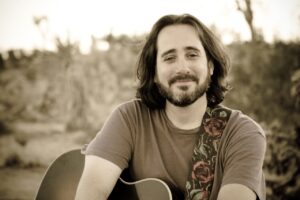
Summary
David Newman describes a spiritual path that moved through yoga, devotion, kirtan, and an unexpected encounter with Neem Karoli Baba. He also explores a frightening nondual awakening, the years of purification and integration that followed, and how such experiences can lead toward service.
Questions This Interview Explores
- How can a spiritual awakening become frightening rather than blissful?
- How can someone integrate a sudden experience of ego dissolution?
- What role can devotion, chanting, and spiritual teachers play in awakening?
- How can people distinguish spiritual transformation from mental illness or personal crisis?
Key takeaways
- Awakening may arrive unexpectedly and challenge everything a person assumes is real.
- A profound glimpse of truth can take years to integrate into ordinary life.
- Fear can arise when the separate self feels it is being dismantled.
- Devotion and chanting can open profound experiences of unity.
- Surrender allows a deeper intelligence to guide the course of life.
- Spiritual insight finds its fullest expression through serving and feeding others.
Transcript
Rick: Welcome to Buddha at the Gas Pump. My name is Rick Archer. Buddha at the Gas Pump is an ongoing series of interviews with spiritually awakening people. There have been over 360 of them now, and if this is new to you and you’d like to check out other ones, go to www.batgap.com, B-A-T-G-A-P, and look under the past interviews menus. There are quite a few different ways that we have them organized and categorized.
This program, this show, is made possible by the support of generous listeners and viewers, and we very much appreciate those who have supported it. If you feel like supporting it, there’s a PayPal button on the right-hand side of every page.
My guest today is David Newman. David is speaking to us from Philadelphia. He is a musician, but has been a number of other things in his life, and we’ll be talking about that. He has a very interesting story. I read his book like one and a half times, because I read it through and then I thought, “Wow, this is interesting. I want to read it some more again,” and so I did.
David has been almost a professional tennis player, almost a lawyer, almost several things, but these days he’s a full-time professional musician, I guess we could say, but in a spiritual sense, in the vein of Krishna Das and Wah and people like that. I guess, would that be a fair characterization, David?
David: Sounds good to me, Rick, yeah. I think your dog agrees.
Rick: Yeah, the dog agrees. The dog’s outside. If you were in the room we’d have to interrupt this, but I think we’re just going to go with it. There must be a squirrel on the fence.
David: Right on.
Rick: Yeah, this is not the Oprah show.
David: No, it’s not.
Rick: So, David, I clipped little bits from your book as I was reading it, and I’ll use these as sort of reminder points of things to ask you, but here’s the first thing I clipped. You said, “My search for truth began with my very first reflective moment when I was six years old. I looked down at my body and asked, ‘Where do I come from? Who am I?’” Do you want to start with that?
David: Sure. You know, it’s a strange phenomenon when I look back into my past and reflect upon those things that stuck. Many things have not, but there are those isolated incidents or moments in my past long ago that never left me, and that was one of them.
I remember being in my bedroom and just looking down at my leg and thinking, “What is this? Where did it—where did I come from? What a great mystery that I find myself here.” And I also remember just having no explanation. There it is, there it was.
And by the way, Rick, it’s not something that I reflected upon often, though I knew it was in my memory bank and it jumped back at me when I was writing the book, in terms of when I was digging back into my past to try to see the thread of how my path of self-inquiry, how far back it went. And that was the first moment. That was the beginning of it, in terms of what I could find.
Rick: That’s neat. A lot of people I talk to came into this life in a really nice state. You know, they look back on their childhood and they remember being in unity consciousness or seeing divine beings and things like that. Then, as life kind of proceeded to kick them this way and that, they began to lose that, sometimes quite painfully, and then by the time I’ve talked to them, they have somehow rediscovered it and gotten back on it.
So, did you go through a thing like that, where you had this sort of spiritual sense of things when you were very young and then you lost it?
David: Well, to some degree. I don’t think I would say I can remember having a spiritual sense of things, but I can remember having a sense of ease.
My brother invited me over to his house to bring my daughter, who is five years old, to look at old family movies that I had never seen. There was me at her age, running around in a Superman outfit, climbing trees, and I was reminded of the joy that I embodied at that age.
From tennis and law to yoga
Rick: Yeah, yeah. All right, so skipping ahead, your parents were very successful people. Your mother became a judge, right? And what was it your father did? I forgot.
David: He was a plastic surgeon.
Rick: Oh, that’s right. He was a doctor, a surgeon, living in the Philadelphia suburbs, and they dragged you in to learn TM when you were a young teenager, right around the time that I happened to be the chairman of the Philadelphia TM Center, but you were out in the suburbs someplace.
David: That’s amazing.
Rick: Yeah, funny coincidence. I did that just for a couple of months and then I went over to Switzerland and stayed for a few years. But I guess maybe your parents were meditators? Is that why they thought to do that?
David: They weren’t necessarily meditators. Like everybody else, they were looking for some peace in their lives, and back at that time, which, as we discussed earlier, was in the early 1970s, TM was in vogue. Everyone was doing it.
So my parents were into things like psychotherapy and bringing the family to therapy together, and they thought this could be another tool to just have a harmonious flow within the family. So they took me and my brother—all four of us went to be initiated in TM.
And as I wrote in my book, I ended up utilizing that method for some time, but what I distinctly remember was my brother and I just holding back our laughter when we watched the videos of Maharishi Mahesh Yogi. It was just funny to us at that age.
Rick: Yeah, he was often called the “Giggling Guru” because he’d be giggling a lot, and he had this sort of high-pitched voice, and it took a little getting used to.
David: Yeah, well, maybe that was the purpose. We were giggling too. I remember us sort of pinching each other to get each other to stop so our parents wouldn’t get upset with us.
Rick: He probably wouldn’t have minded. So you were into sports. You became quite a successful tennis player, but you had a bit of a temper. You tended to be the John McEnroe of amateur tennis in your area, as I understand it.
David: Yeah, back then it was Jimmy Connors. Jimmy Connors was my hero.
Rick: Yeah, but you were a bit of a powder keg, throwing rackets and swearing and freaking out.
David: I was.
Rick: What snapped you out of the tennis phase? I forget.
David: Being 13 and having a bar mitzvah, and my uncle Mark, who was a bluegrass musician—now a lawyer and bluegrass musician—dropping an electric guitar into my hands.
Even when I played tennis, I strummed my tennis racket, but then when I actually had a guitar and started playing that, I put the tennis racket down, and that was pretty much the end of it.
Rick: Yeah, interesting. Do you still like bluegrass? You probably like all kinds of music.
David: I like all kinds of music, but I do, and I go see him play when he plays in the area.
Rick: Yeah, that’s great. Nickel Creek, Alison Krauss—I love those people.
David: Yeah, Alison Krauss, that’s my wife’s favorite.
Rick: Yeah. Okay, and then, let’s see what happened. Then somehow or other, I guess you figured you weren’t going to make it professionally as a musician, or maybe you thought you would, but you thought law school might be a good thing to have under your belt as well.
David: Yeah, you know, that phase after I finished college, I went to Los Angeles to be an aspiring songwriter. I ended up working in the music industry on the other side, as a music publisher, for a few years. Then I looked at myself and my future and thought I didn’t want to end up a music industry executive living in Los Angeles when I was this age, and so I thought, you know, what’s the next move?
I just decided that it was to go to law school.
Rick: Yeah, and you actually sort of enjoyed that?
David: To some degree. I was just telling somebody recently, the first year was terrifying, the second year less so, and the third year was loads of fun. So, yeah, I enjoyed the experience of law school, partially because it really engaged a certain mental process, which it continues to serve me.
It was through law school, through the stress of law school, that I found yoga and intensified my yoga practice. So I lived in New York City at that time, and I look upon those memories fondly.
Rick: That’s great. I mean, it’s a tribute to your flexibility or something, I would say, because if I ever read a legal document of any kind, my eyes glaze over within about 30 seconds. Being able to actually get through law school, I always marvel at people who could do a thing like that.
David: Yeah, I look back and ask myself the same question, and that is, “How did I do that?” I remember seeing an interview with Bob Dylan talking about his early material, songs that he wrote, and this was later in his life. He said, “You know, those songs I wrote back then, I can’t do that now. I could do it then, but I don’t have the wherewithal.”
I kind of feel that way now. If you threw me in a law school class in my current incarnation, it would be tough.
Rick: Yeah, it’s funny. If you were into Vedic astrology, which I am only very tangentially—I don’t really understand it—but they talk about very different phases that one might go through in life, according to how the planets are configured and so on.
It is interesting to see sometimes, in the hands of someone who really knows what they’re doing, that some big shift happens in a person’s life. They might even predict it ahead of time and say, “Well, January of 2017, you’re going into such and such, and don’t expect things to be the same thereafter.” And sure enough, big changes take place. We kind of go through different incarnations within one incarnation.
David: Yeah, my nephew is now a Jyotish Vedic astrologer, and they’re called “dashas.” I shifted into my Venus dasha, which is good for what I do in terms of music, but yeah, very much so.
Rick: That’s cool. And the reason I’m going through all this stuff is that some people might say, “All right, well, let’s get to the meat of it. Where’s the spiritual awakening story?” But I always feel like it’s sort of good to give a background of the person’s life, in most cases, because people in some cases tend to put people who’ve had spiritual awakenings on a pedestal of some sort and say, “Well, that’s fine for them, but I’m just an ordinary schmuck, you know, and it couldn’t happen to me.”
Part of my initial motivation in starting this show was to show, to demonstrate, to display that spiritual awakenings happen to all kinds of people who live ordinary lives. So we’re just kind of going through some of the ordinary stuff here to lay a foundation for what happened next.
David: I appreciate that, and that’s why I included it in my book, for the exact same reason. As a note, one just becomes an awakened ordinary schmuck, so I just felt like I’d add that in there.
Neem Karoli Baba and the call to kirtan
Rick: Yeah. Okay, so let’s see. You went to law school and then you had this big thing in 2010: hit by a lightning-bolt vision of your own absence, terrifying inner visions. I guess you had already been doing some spiritual practice by that point, right? Yoga—you actually became a yoga teacher of some sort.
David: Yeah, for many years. I had opened a yoga school in Philadelphia in 1992. I had been teaching—
Rick: Oh, right, so 18 years before that, then.
David: 18 years, and I had been traveling singing kirtan since about 2003, so for seven years, maybe even a little prior to that. So I wasn’t new to the path when that came upon me, so to speak.
Rick: Is there an interesting story around how you came to be a traveling kirtan singer?
David: Well, I don’t know if it’s interesting, but I’ll share it. I was teaching yoga and operating a yoga center, and I was exposed to the kirtan wallahs who had been with Neem Karoli Baba: Bhagavan Das, Krishna Das, Jai Uttal, and others. Years before, I had been exposed to kirtan in law school. I had gone to Kripalu and studied with Amrit Desai, and I had gotten Shaktipat from Gurumayi in South Fallsburg, where they sang kirtan.
I had been exposed to it, but when I was operating my yoga center, I had the opportunity to bring these sort of current, modern-day Western kirtan singers to offer programs, and so I was exposed to them. As a result, it became clear to me that, as a spiritual seeker and as a musician, this was a meaningful possibility for me.
Then, several years later, I had a visitation from their guru, who became my guru on the inner planes, Neem Karoli Baba. As a result of that relationship, there was just a lot of grace in my life that translated as musical inspiration and an orientation toward singing kirtan. Soon after that experience, I found myself devoting more and more of my life to chanting and writing music. Before I knew it, I started recording and traveling, and here I am.
Rick: Nice. Let’s talk about that visitation.
David: Yeah, I was moving into a new apartment, and I had always been someone who loved learning about the great saints, particularly the Indian saints. I used to love gazing at their pictures as a spiritual practice, reading biographies about them, and just holding the pages open to their images and gazing at them.
When I was moving into a new place, I asked my sister-in-law, who is an artist, to paint me a painting of any one of those gurus because I didn’t feel like I had a guru at that point. So she came over to my apartment and leafed through all the books. There was a stack of books on my dresser. As she was going through them, she picked up Miracle of Love and opened it to a smiling image of Neem Karoli Baba. She turned to me and said, “I’ve never seen a face that embodies this much joy. I have to paint this being’s face.”
Many months went by, and I would hear from her every now and then. She would tell me about all these miraculous moments she was having while painting this painting. When I finally saw it, I was astounded at how big, beautiful, colorful, and vibrant it was. I remember looking at it for the first time and thinking that it was made of nectar as opposed to paint.
I took it home, put it on my wall, and went into meditation. He came to me for the first time with these words: “I manifested this painting for you because I want to be this big in your life.” From then on, the waters parted, and I began to really walk the path of bhakti yoga. For those who are watching, there’s the painting.
I manifested this painting for you because I want to be this big in your life.
Rick: We can see it even without you moving. It’s sitting there on your shoulder like a giant cosmic parrot.
David: Yeah, exactly. The nature of the relationship has changed. His form used to be more important to me than it is now. Now, it’s essentially an interconnection, but it was through his guidance that I’ve become a singer of kirtan and a musician.
Music was something I always loved, Rick, but at that particular point in my life, when that tidal wave of inspiration came, it was a great surprise to me because I didn’t consciously decide that I was going to pursue this path. It was one of those moments in life where it felt that this path pursued me.
Rick: Yeah, I love those things. If life is blessed, as many of our lives are, it’s like you couldn’t have designed it this well. If you had had to make all the choices, you would have made all kinds of wrong choices and ended up doing something far inferior.
It’s sort of like nature knows best, in a way, how to organize things. If you somehow manage to surrender to that, then wonderful things can happen.
David: Yeah, I feel that. Back then, I was in my early 30s, and now I’m in my early 50s. It’s nice to have those demonstrations for now, when I’m reminded by letting go and allowing that intelligence to live my life rather than me doing it from here.
Rick: Yeah, yeah. What do you make of the whole visitation thing? I’ve heard so many stories, many from people I’ve interviewed, of visitations such as you had, where Neem Karoli Baba or Ramana Maharshi or various Buddhist sages or something will come to people. Clear as a bell, it doesn’t seem to be imaginary. It wasn’t anticipated; it wasn’t conjured up, as though they were trying to have a vision or something. Just all of a sudden, bang.
Sometimes, with their eyes wide open while walking down the street, they’ll have some such thing. So, what do you think is really going on with that?
David: It’s such a great mystery. During that time of my development, when Neem Karoli Baba came to me, these visitations were happening all the time in meditations and dreams.
Rick: With him?
David: With him. Since then, the nature of those visitations, for the most part, doesn’t happen in that way. But his presence—and how a being who’s not embodied can visit somebody living outside Philadelphia in the 1990s—I have no rational explanation for it.
But there’s perhaps, again using the best words I can, some karmic connection there. At a certain point in a person’s development, the medicine that they need is some sort of direct communion, so to speak. Back then, that was really important to me. I don’t think I would have gotten it any other way.
Rick: Yeah. What is it W. C. Fields has on his tombstone? I think it’s, “All things considered, I’d rather be in Philadelphia.”
David: Yeah, exactly, right.
Rick: So, I suppose you can only speculate, and I can only speculate, but do you think that someone like Neem Karoli Baba—or Jesus, for that matter, whom many people have visions of—or all these others, such as Ramana Maharshi, have sort of assumed the role of an ascended master, and that their essence, who they actually were in some relative sense, is still dwelling in some realm and interceding in human affairs? Or do you think there’s some other mechanism to this thing?
David: I would speculate similarly to what you just did. For me, there’s that story of Neem Karoli Baba. When he was embodied and living in northern India, people would travel from all over the world and say, “Maharaji, how do I get enlightened?”
His response was not what they wanted to hear. His response was pretty much always, “Serve people and feed people,” and then he would say, “Ciao,” which means, “Okay, time to leave.”
For me, at least, my translation of why a great being would want to impress upon another soul in that way is that they have an agenda, and the agenda is to relieve the suffering of humanity. Somehow, they know which strings and buttons to push in terms of energizing souls like myself to be of the greatest possible service within the course of, say, my lifetime. That would be my understanding of it.
Rick: Yeah, so you’re implying that they actually, rather than melting into the absolute like a drop of water into the ocean, retain some sort of functional existence on some subtle realm and help to guide the course of human events from there. Is that what you’re saying?
David: My sense is yes, exactly.
✨ The lightning-bolt awakening
Rick: Okay. So that may bring us to, skipping over lots of little details, the 2010 lightning bolt.
David: Sure.
Rick: Let’s talk about that.
David: Well, I remember distinctly. Again, as I mentioned, I had been singing and traveling, singing kirtan, for seven or eight years at that point. Most of my unitive moments happened within the realm of bhakti and kirtan, which is kind of a dualistic practice in the sense that one expresses his or her devotion for the greater whole in a particular form.
Much of my unitive experience happened in the realm of kirtan, through joy and sometimes even bliss. I was totally unprepared for something that shattered me in this way because the unitive moment that arose one evening—I got up out of bed, walked a few feet into the bathroom, and then, bam, it hit me.
It shattered me because it was a unitive expression that was the total opposite of joy. It was terrorizing. At least, that was how I responded to it, because it appeared that everything I knew to be real was an ephemeral and dreamlike illusion. Everything that was in my realm of existence was there, except there was no focal point and there was no me.
Not only was it terrifying in the moment, but it instigated a kind of unraveling in which I went through months of very difficult experiences. It kind of went on for three years, but the first six months, and in particular the first three months, were extremely difficult, to the point where it was hard for me even to function. It shook something loose in me.
Rick: The actual lightning bolt, like most lightning bolts, was very brief, right? I mean, it was just a few seconds, maybe, but then somehow…
David: At the most.
Rick: Yeah, but then something got uncorked or loosened up or something.
David: Exactly. Again, sort of being a bhakta, this was out of my realm of experience. It completely took me by surprise.
Rick: Yeah. In retrospect now, having really gone through it all and gotten out of the difficult phase of it, what do you understand the mechanics to have been of exactly what happened to you then?
David: The way I describe it is that what was revealed to me was my own, for lack of a better phrase, nonexistence in relationship to the whole. Whatever egocentric, separative mechanism was in place was horrified by it because what was required of it was a complete unraveling. But at that moment, it didn’t have the wherewithal, the impulse, the desire, or the willingness to let go.
It was three years before the awakening took place. What I often say is that it took me three years to relax into or integrate a moment of truth.
It took me three years to relax into or integrate a moment of truth.
Rick: Yeah, I would say that that moment of truth, that lightning bolt, precipitated a housecleaning phase, where a lot of stuff had to be cleared out in order for a more mature awakening to dawn. Would you agree?
David: Most definitely, yeah.
Rick: If we’re moving toward an understanding of subtle physiology and chakras and nadis and all that stuff, it might possibly be explainable in those terms: There was some energetic shift on some subtle level, and then some chakra woke up or something. All kinds of purification had to take place for the physiology to really adapt to that newfound level of functioning.
David: Yeah, exactly. Some would call it a kundalini awakening. For whatever reason, those words have never been at the top of my list for describing it, but it’s very well a relevant description because certainly there was a pipe-cleaning feeling, where things just had to be cleaned and cleared out.
Rick: Yeah, a lot of people go through stuff like this, and it’s good for them to hear stories like this. Sometimes it’s much more dramatic, severe, and scary than anything you actually went through. Some people are really, really incapacitated for years at a time.
David: I met a woman in New York City who went through what I went through in a few months over the course of 20 years.
Rick: In other words, it dragged on for 20 years for her?
David: Yeah.
Rick: Yeah, and people get in touch with me from time to time who are really going through it. I wish there were a better understanding of this kind of thing in the helping professions—spiritual psychologists, so to speak—who could really appreciate what people are going through and not necessarily just reach for the Thorazine, but really help people through it and facilitate and smooth out these dark nights of the soul.
David: Very much, Rick. When I travel and give workshops, I always speak about this phase of my development as a means to let people know that there’s nothing wrong, that they’re not going crazy, and that this is part of their journey. People are often so relieved to hear that. Just to hear me share what I went through is meaningful to them.
Rick: Yeah, yeah. It comes up often in these interviews, and I just feel a concern for people who are going through that stuff, some of whom even express suicidal tendencies and so on, just because it’s so unbearable. I really wish that the helping professions understood this better. We’ll probably move into a phase in our society where they do mature into more effectiveness in dealing with such things, but it’s really in its infancy still, I think.
David: I agree, very much so. So much of what I feel in relationship to this part of my life is that the support I needed showed up for me, and I know that’s not always the case. I was on tour with a child psychiatrist, a woman who was married to the man we were staying with, who was telling me, “When teens come in now, there is no talk therapy. They just go right to medication.” That made my heart heavy.
Rick: Yeah, and when you read about the percentage of young people who are medicated in various ways, it’s scary. It’s like the drug profession is making a killing, but at what cost to the youth?
David: Absolutely.
Rick: Of course, I don’t mean to imply that all psychological disturbances and whatnot are some kind of spiritual thing. Probably the majority of them are not.
David: Some of them have a spiritual component as well, which could be helpful in terms of responding to the whole picture.
Rick: Yeah. Another thing that’s worth mentioning—it’s a little bit tangential—but meditation, TM, and other kinds of meditation are being used in schools and prisons and places like that, where there’s a lot of stress and a lot of trouble, and sometimes with dramatically beneficial effects. So it’s nice to see that happening.
David: Very much so.
Surviving the dark night
Rick: Okay, so we’re going to move through this whole rough period you experienced after that thing, which lasted about three years. Tell us about some of the details of that roughness without dragging it out too much. You were having these terrifying thoughts and felt negative things, wanting to kill people or something. What was wrong?
David: Yeah, that’s exactly right. I just saw myself doing these heinous things—really troubling visions—and the inquiry was, “Could I do such a thing?” It scared me to my very core. I was so shaken up. The depth of these arisings was quite dramatic in the days following that moment.
I didn’t know what to do. I could hardly function. I was just lying down, shaking, and breathing through the intensity of these visions. I had an idea to call a dear friend and mentor of mine, somebody who’s been on your show. That was Bruce Rubin. I had heard him mention somebody he knew, a man named Bart Marshall.
Rick: Who was also on my show.
David: Yeah, an awakened being. His name just kept popping up in my mind: “Get in touch with Bart Marshall.” So I called Bruce and said, “Bruce, I’ve just had this really traumatic internal experience, and I’m really in need of support. Could you put me together with Bart?”
It just so happened, Rick, that less than a week after this took place, I was set to go on tour down south, in North Carolina, Tennessee, and Georgia. Bruce brought it to my attention that Bart lived in Raleigh, North Carolina, which was one of my stops on the tour.
Bart came to my concert that night, and then we walked back to my cabin. He was my lifeline. He recognized what was happening within me, reflected it back to me fearlessly, and became the person to guide me—one of the people to guide me—through this tunnel.
Rick: Yeah, it was kind of delightful reading your book and reading about all these people I’ve interviewed who were instrumental in your life—Paul Hedderman, Gary Weber, and all these people. It’s like we’re one little family in a way.
David: Yeah, it was like Spirit just brought this little team together. It was Paul Hedderman, Bruce Rubin, Bart Marshall, and Gary Weber. It was just a team that showed up to kind of birth me through this process, and it’s incredible.
One of the things I want to mention, Rick, is that in the bhakti path, self-inquiry isn’t, say, the main entrée. Certainly, non-duality, or Advaita, was just way over there. So when this shock to my system came forward, it thrust me into spontaneous self-inquiry.
It wasn’t as if I said, “I’m going to go to a satsang,” or “I’m going to read a book by Nisargadatta Maharaj.” That was completely not part of my paradigm. I was singing to Krishna and Radha and Sita and Ram and Durga and Hanuman. When this came forward, I had this clear vision of who I wasn’t, and so the inquiry just arose: “If I’m not who I thought I was, then who am I?”
It was completely not premeditated. It was just not part of my path at that point. It was like here was one side of the coin, which is bhakti yoga, and let’s say here was the other side of the coin, which is jnana yoga. I was focused here, and then grace just went, “Okay, now we’re going to look at this.”
Rick: Yeah. I want to talk to you about the whole bhakti-versus-jnana thing. That’s a whole topic we can discuss. But since we’ve just been talking about you getting through a very difficult period, maybe this would be a good point at which to insert a song.
For those listening, we’re going to insert two or three different music videos of David’s during this interview. For those who are listening live, you won’t see them, but in the final thing, after post-production, we’ll have them in there. I was thinking maybe this would be a good point at which to insert “Stay Strong,” and you could introduce it by telling us a little bit about it.
David: Yeah, that’s a great idea, Rick. “Stay Strong” is a song—one of the three or four songs that were given to me in my sleep. I wish they all came in my sleep, but they don’t. This one did. I was at Omega…
Rick: Yesterday it came to Paul McCartney in his sleep, and at first he was naming it something like “Scrambled Eggs” or “Ham and Eggs” or something.
David: Yeah, I actually heard that. I didn’t have any lyrics for it. I just had the melody and the energy of the song. I was at Omega Institute for a weekend with my wife. We didn’t have a daughter at that time. The song came to me, and I literally ran into the bathroom with my phone and sang it into my phone. Over the course of the next few days, I started to put words to it, which eventually became, “Stay strong, keep your faith alive.”
What I’ve ultimately found is that the songs that come to me in my sleep somehow have some intelligence behind them that wants me to do something special with those songs. I just had one recently.
When I wrote this song, I had an idea. The idea was, what if we did a kind of “We Are the World”-type video, but instead of all the Stevie Wonders and Elton Johns of the world, we brought together all the kirtan singers and devotional musicians and did something together in that way?
That was right at the time when there was the big Gulf oil spill. It wasn’t a spill—it was when there was a puncture and the oil was leaking into the Gulf. I had been introduced to the COO from Global Green USA, which is an environmental organization that was working on that cleanup down in New Orleans.
I just had all these messages and all these dots come together, so I decided to invite many different singers, like Krishna Das, Jai Uttal, Donna De Lory, and Wah, to name a few. We were all going to be at this festival called Bhakti Fest, so we set up a makeshift recording studio and a film studio in our cabin at Bhakti Fest.
We had everybody come in. I recorded the song in Philadelphia, brought the tracks to Joshua Tree, and had everybody come in. We filmed everybody singing their parts, and then in post-production we put it all together. We released the song, “Stay Strong,” and this collaborative video. Then we donated all the proceeds to Global Green to help clean up New Orleans and the Gulf region.
It was an absolutely graced project, and it’s one of those projects that I continue to this day to get emails and messages about on YouTube, saying that it uplifted someone’s day.
Rick: Great, so let’s play it.
David and Friends:Stay Strong
May the grace of God bless man and every woman in this land Stay strong, keep your faith alive Whatever comes to meet us, you know the darkness won’t defeat us Stay strong, keep your faith alive Some say the end is coming, set our souls a-running, but I say Stay strong, keep your faith alive Let all come together, take care of each other Stay strong, keep your faith alive Raise your hands in the air Stay strong, keep your faith alive Take a stand, say a prayer Stay strong, keep your faith alive Hand in hand, side by side, with arms open wide Stay strong, keep your faith alive Help others find the way, bring heaven here today Stay strong, keep your faith alive Raise your hands in the air Stay strong, keep your faith alive Take a stand, say a prayer Stay strong, keep your faith alive At times like this, we need to remember what is real Stay strong, keep your faith alive United in our quest to spread love and happiness Stay strong, keep your faith alive Raise your hands in the air Stay strong, keep your faith alive Take a stand, say a prayer Stay strong, keep your faith alive Hey Rama Rama bolo, he Rama Rama bolo, he Rama Rama bolo, Sita Ram Hey Rama Rama bolo, he Rama Rama bolo, he Rama Rama bolo, Sita Ram Hey Rama Rama bolo, he Rama Rama bolo, he Rama Rama bolo, Sita Ram Raise your hands in the air Stay strong, keep your faith alive Lend a hand, say a prayer Stay strong, keep your faith alive
Rick: That was great. I loved that song. It was very inspiring. I love that “We Are the World.” There’s another one—it wasn’t “We Are the World”—that you can see. There are several versions of it. They’ve done a number of songs where they have people all over the world, in Africa and India, adding in… What are those called?
David: Oh, “Something for Change?”
Rick: Yeah, “Playing for Change.”
David: “Playing for Change,” yeah.
Rick: Those are great.
David: There was also that film, “One Giant Leap,” I think, that has a similar kind of approach, if you haven’t seen that.
Rick: Yeah. If people haven’t seen—well, those are two things to Google. If you haven’t seen the “Playing for Change” songs, you might love them.
Bhakti and jnana as two sides of one coin
Okay, so we were talking about bhakti versus self-inquiry, versus the kind of oneness or non-duality thing. As I understand it, this has actually been a debate or point of contention in some people’s minds going back thousands of years: those who wish to stay separate from God in order to worship God, and those who wish to just merge and become one.
Who was it who said, “I’d rather taste sugar than be sugar”?
David: Ramakrishna.
Rick: Ramakrishna.
David: Yeah, that’s a great quote.
Rick: Yeah, and Maharishi Mahesh Yogi actually commented on that once. He said, “It’s really none of our business. It’s really up to the person for whom it actually becomes a relevant issue at that point. They can decide.”
So, in his mind at least, both options were viable. But come to think of it, I’ve never actually heard a story of a respected non-dual sage such as Shankara, Ramana Maharshi, or Nisargadatta who wasn’t also devotional.
David: A bhakti, yeah.
Rick: Yeah, so it’s not really an either/or choice.
David: Yeah, you know, I just had this funny image when you said, “Bhakti versus jnana.” I just saw a boxing ring, with jnana in one corner and bhakti in the other corner. “Who’s going to win?”
For me, it’s not a versus thing. Again, I sort of describe them as being two sides of the same coin. There’s a great quote I like to use in relationship to this dialogue, and that is at the end of the Ramayana, when Hanuman is sitting in front of Lord Rama on one knee and Rama says to Hanuman, “Who are you?” And Hanuman says, “When I forget myself, I am your servant. When I remember myself, I am you.”
When I forget myself, I am your servant. When I remember myself, I am you.
For me, there certainly has not been, as a result of the shift that took place in my being, any kind of tension between my devotional nature and my oneness with the greater whole. They just seem to be perfectly integrated in some way.
Interestingly, when I wrote my book, The Timebound Traveler, my editor at Nonduality Press was somebody who had been a bhajan singer and whose teacher had said, “Okay, stop singing bhajans, and now I want you to study Advaita.” Then she had a nondual awakening.
When I started working with her, she told me that she had always hoped that somebody would come along with a book that somehow integrated those two paths. She was really excited to work with me, and on the back cover of the book she ultimately felt that The Timebound Traveler would be a book that would help people heal those two orientations or parts of themselves.
In a lot of ways, Rick, when I presented that book, it was much more focused on my nondual awakening than my bhakti path. One of her comments was, “Hey, David, I appreciate your story about your awakening, but I want more bhakti.” So the book kind of became this dance between that sense of—if you look at some of the real, sort of, I don’t know, fundamental bhakti paths, the notion of merging is a total no-no.
Perhaps in the Advaita paths, I don’t know, perhaps the notion of maintaining a sense of separation to experience the sweetness of devotion is a no-no. But these two parts of creation are constantly playing themselves out in my world and in my life.
Rick: Shankara said, “The intellect imagines duality for the sake of devotion.”
David: Yeah, yeah. And I believe it was Rumi who said, “Seek the beloved your whole life, knowing that the beloved is within you.” And there it is. It’s a non-answerable dynamic tension, the fact that we can experience ourselves as one and also as dual. For me, it’s a great mystery, and it’s also a great joy.
Rick: Do you happen to remember that Nisargadatta quote?
David: It’s in my book, actually. “On one side there’s this, and on the other side there’s this, and my whole life swings between those two.” Is that the one?
Rick: Yeah, that’s the one. I don’t have it memorized, so I don’t want to—most people have probably heard it, but it basically speaks to this point: There’s really no conflict or irreconcilable paradox between oneness and devotion to God and so on. They’re just different dimensions of a larger perspective that one can play within if one has that capacity developed.
David: Yeah, you know that story when a student of Nisargadatta Maharaj says, “You’re awakened, you’re enlightened. Why do you every morning light a candle to your Guru?” I mean, what’s the point of lighting a candle, a light to his image? And his response was, “I can’t come up with a reason not to.”
Rick: Yeah, and Papaji, when he was quite old and becoming physically infirm, lamented the fact that he was incapable of prostrating himself fully on the floor in front of the picture of Ramana Maharshi in his room. So anyway, it’s—
David: In my own life, Rick, there are moments when that duality is just not present for me, and then there are difficult moments where I call out to Neem Karoli Baba and say, “Hey, please, I need some guidance here. Which direction should I go?” The relationship is still intact in the same way that a child leaves the home of his or her parent, but the relationship is still intact, and the respect is still intact.
Rick: Yeah, you know, I think one way of looking at it and understanding it is that we have different faculties, different organs of experience, so to speak. We have the intellect, we have the heart, we have the senses, we have all these different things.
Take the example of a lawyer, let’s say, since you went to law school. When he’s in his law office working all day, he’s probably not using his heart too much; he’s using his intellect. When he comes home and starts playing with his young children, all his law training goes out the window and he just becomes more childlike. He’s in his heart. So it’s just that different faculties come to the foreground according to the circumstances.
David: Yeah, I resonate with that. And I think there’s great joy in pretending to be separate. I mean, we couldn’t be having this dialogue if we weren’t.
Rick: We couldn’t stick a spoon in our mouth if we didn’t have some sense of distinction.
David: Yeah, exactly.
Rick: And I think these sages, like Shankara, when he said, “The intellect imagines duality for the sake of devotion,” were implying that there’s something really sweet about devotion, something really worth experiencing and not to be missed. Without it, the realization might be rather dry.
David: Most definitely. Awakening wasn’t what I thought it would be prior to becoming a seeker, because for me, the nonattachment has given rise to a much richer experience of my humanity, my feelings, my senses, everything.
✨ Awakening and the end of seeking
Rick: Okay, so you just alluded to your awakening, so let’s get back to that. You had this lightning bolt in 2010, then three years later that—I don’t know if it—I seem to recall you said it wasn’t something you could have marked on the calendar, but you eased into a much more resolved state that you would refer to as awakened.
David: It was definitely a moment in time. I remember being—yeah, it was a moment in time, but it was affirmed in some unusual way for me, which I’ll share with you.
Toward the end of that three years, I was really plagued by a tremendous, fiery desire to drop the old self. It was like it had become like listening to nails scratching on a chalkboard all the time. I was carrying around with me this sense of false identity, but I couldn’t shake it.
That brought about a tremendous pressure within my being. It wasn’t the kind of terrorizing, fear-based, monumental, intense manifestation of earlier in the journey. This was just a weight that I was carrying around with me. I felt tremendously burdened and frustrated.
In the last week of this particular part of my journey, I remember calling Bart Marshall on the phone. I said, “Bart, I just don’t think I can take this anymore. I want it so badly. I want to let go so badly. I want to be birthed into this new consciousness so badly. However, I know that the desire for it and the wanting of it is the very thing that’s preventing me from it.”
I felt like I was in this Catch-22, where there were two parts of myself that were just grinding against each other painfully. When I communicated to Bart how much I wanted this, I’ll never forget this—and I wrote this in my book—he so sweetly responded by saying, very simply, “You can’t help but want it.”
“You want it until you don’t want it” was the message I took. I felt that the intensity of the desire would progressively dwindle off to the point where the awakening itself revealed itself and the wanting sort of trickled off.
In the heat of my desire for it—and this probably happened, I’m speculating now, less than a week after that conversation with Bart—I was just walking down the street after lunch with my wife and my mother-in-law, and it just changed.
Rick: Just poof.
David: Poof. The intensity of the heaviness and the burden and the looking for it just went away. It was gone. I looked to my left—gone. Looked to my right—gone. What I was carrying was not there anymore.
I always say it was a moment of grace, because I realized at the end that there was nothing I could do. There was no effort I could make, no strategy I could come up with, no dial I could turn to make it happen. There was some intelligence that, at that moment, said, “Okay, take it. Go on.”
Rick: Another chakra popped.
David: Another chakra popped.
The post—I guess if you want to use the word “affirmation”—that came a few days later. Bruce Rubin and I had had the idea to create this musical together called Awakened. I drove up to his house in upstate New York, along with this Broadway producer, a man named Nick Demos, who had done a Broadway show called Memphis.
The three of us were at Bruce’s house having a conversation about the musical. From Bruce’s perspective, I was just communicating some of the ideas about the musical from a very personal perspective. It was an incredibly subtle moment where Bruce had a pad and paper, and we were all writing down ideas for this musical.
He just lowered his chin. He had his reading glasses off, and he pulled them down and looked up at me. He said, “Did something happen to you?” And then I responded simply, “Yes.” At that moment, whatever had shifted—just for lack of a better description—locked into place.
There was no effort I could make, no strategy I could come up with, no dial I could turn to make it happen.
Rick: Incidentally, for those who may not know this, Bruce, whom I interviewed a year or so ago, was the screenwriter for the movie Ghost, with Patrick Swayze and Demi Moore, and a number of other movies. But he was best known for Ghost.
I just want to comment about the intensity of desire. A lot of sages—I think Anandamayi Ma said this, and many others have said it—that the desire for God is itself the way to God. So I think a lot of respected authorities don’t devalue or dismiss or in any way say there’s anything wrong with having an intense desire for realization.
Think of the Buddha. He was like, “Enlightenment or bust.” A lot of people, if you read their spiritual biographies, have this burning desire for enlightenment. In fact, Patanjali, in the Yoga Sutras, talks about yogis having mild, medium, or intense desire for realization. He said the yogis who have the most vehement intensity are, he would consider, the best off in terms of their likelihood of awakening. So I know in some circles this is put down or dismissed, but I would disagree.
David: Yeah, absolutely. It was just so intensely painful that I wanted to shake it off. It felt like unrequited love. Why won’t this person pay attention to me? It had that quality to it.
My intensity of desire for it definitely, as a result of that lightning bolt, got turbocharged. There were times when it felt like, because I had seen the truth, I had so much fear around it that I was just living with a phantom around me. What I had believed to be concrete was now revealed as being ephemeral, but I kept it around anyway. That was a great challenge. I felt like death was just looking over my shoulder at all times.
Rick: Death of the ego, perhaps.
David: Death of the ego, yeah.
Rick: Yeah, yeah.
David: I finished my book, Rick, with that quote by Joseph Campbell: “The thing in the dark cave that we fear the most ultimately brings us the greatest reward.” Within those three years, that’s how I characterized that three-year journey.
Rick: I often think of breaking the sound barrier as a good metaphor for awakening, if you read The Right Stuff by whoever wrote that. When Chuck Yeager first broke the sound barrier, they didn’t really know what was going to happen when somebody broke the sound barrier. He was flying this test plane and, as he approached the sound barrier, there was a lot of turbulence and the stick was jiggling in his hand as he was trying to fly the plane. Then, when he finally broke through, it was like, “Ahhh,” and it just became smooth. So there’s this sort of intensity and turbulence that builds up just prior to major spiritual breakthroughs, it seems.
David: And that said, it’s non-what’s-the-word. Once you break the sound barrier, it’s just not a big deal. It’s not the big deal that the ego had made it prior to. It would be like waking up in the morning and saying, “Oh my God, I’ve woken up.” You just wake up, and that’s that. It’s sort of nondescript in that way.
Rick: Right, so it’s natural. It’s not like you’re walking around with your jaw hanging open all the time at the amazingness of it, right?
David: Well, you’re walking around with your jaw dropped in terms of the relief.
Rick: Yeah, yeah.
David: That’s what you’re amazed at.
Rick: But that’s another thing: we acclimate. Initially, there can be this huge relief, huge bliss, and everything else, and then, after a while, it’s like you get used to it.
David: Definitely. Definitely, yeah.
Rick: I think that’s true. I’ve heard Zen masters and all talk about many degrees of awakening that are possible, and that people go through, and so on. I’m not really in a position to categorize them all, but I think that that’s a kind of universal experience of acclimatization, getting used to things.
In the state that we normally function in now, it may seem to be ordinary and we’re accustomed to it, but if we were to somehow shift to this from where we were 30 years ago, it would be like incredible bliss. We wouldn’t be able to walk.
David: Yeah, that’s really interesting to think about it that way. I never quite have, but that’s cool.
Rick: And conversely, if we were to shift from this to where we were 30 years ago, we would be in agony, even though 30 years ago we were okay.
David: Yeah, right, right. Back then we were fine, right.
Rick: So it’s sort of a grace-of-God kind of thing that we grow accustomed to whatever state we’re in.
David: Very much so, yeah.
Rick: Life wouldn’t be livable otherwise.
David: And I feel like the shift that took place—I even now hesitate to call it whatever, whether it’s awakening or enlightenment—there was definitely something that changed in a significant, foundational way. Now there’s a different kind of evolution taking place, but it’s not colored by seeking.
Rick: Yeah. I’m going to loop back a little bit.
David: Sure. Well, actually, what you just said is really good. It’s not colored by seeking. Let’s elaborate on that. There’s an evolution taking place, but it’s not colored by seeking. Go ahead and say more if you’d like.
Yeah, you know, when I teach and share, what I try to do is, rather than naming what took place within me, I try to describe the nature of then and now, or what it was that changed within me.
When I wrote the book, I mean, going back to those days of TM, I remember that early on I became a spiritual seeker, and I became identified with the idea of being a spiritual seeker, as I was looking for something. My whole life up until that moment was very much characterized by an identification with seeking something spiritually.
In that moment, if I was to say the top thing on my list of what shifted in that moment, it would be that the whole notion of seeking became outdated. It became irrelevant. The revealing of life just comes forward, and I’m not looking for it in time. Although I am part of a time-space continuum, I’m not looking for it to happen at some point in the future or in some other way than it’s happening now.
I’m evolving and learning all the time, but the nature of it is not in looking. It’s not like that for me anymore. I don’t have that. Whatever that was isn’t there.
The whole notion of seeking became outdated. It became irrelevant.
Rick: If you were to talk to somebody who is seeking, which you probably do, actually, in the course of your life, would you tell them to stop seeking? What would you tell them?
David: I would go back to those moments before things changed for me. I love Bart Marshall’s way of describing awakening: something happened. I like the simplicity of that description.
If somebody asked me, my response to that would be, “Intensify the seeking.” Like I said, intensify the desire to find what you’re looking for. I don’t think you can tell somebody who’s seeking to stop seeking. Seeking stops when it stops. It’s not an effort that a person can just say, “Okay, right now I’m going to stop seeking,” and then it goes away. I would never give somebody that guidance.
I would say, “Seek with all your heart and soul.” Whatever it is you’re looking for, put it at the top of your list and yearn for it and long for it with all your being.
But it is a bait and switch. It’s not as if, at some point, the seeker receives the fruit of that endeavor by saying, “Okay, now I found it, and now I, as a seeker, have it.” The whole paradigm of being a seeker falls away, so there’s no medal given to you at the end of your journey as a seeker.
So I tend to bring that to seekers’ attention: it’s not what you think it is, and don’t think that your seeking is going to be confirmed or satisfied as a result of some pinnacle experience that now makes you a seeker who has found.
So I may potentially bring that to their attention, but I think the longing, particularly coming from the bhakti tradition, and the yearning for whatever it is you feel is going to make you whole, is par for the course. It’s just to intensify that. Ultimately, you realize that it’s not going to fulfill you, but until you know that, you don’t…
Rick: I don’t know how apt this is, but a simple analogy for the seeking thing might be that you don’t tell a hungry person to stop being hungry.
David: Exactly.
Rick: You don’t just say, “Give it up, don’t be hungry, it’s silly,” or some such thing. But after they’ve eaten, then they’re not hungry anymore, and it’s like the hunger is taken care of by the fulfillment of the food.
So I would say that someone like yourself who has undergone a shift, and the seeking energy fell away, has some kind of fulfillment that abides now, which wasn’t there before, which you naturally sought when it wasn’t there.
It’s natural to want greater happiness, greater contentment, self-awareness, whatever. And when that has been realized, then it’s like turning a light on in a dark room. You don’t have to try to get rid of the darkness; it’s replaced by a light and is no longer found.
David: Well said, yeah, exactly. Paul Hedderman says, “If somebody believes their house to be on fire, you bring them water,” another way of saying it from another perspective.
Yeah, very much. It’s important to honor people where they’re at in their journey, and there’s something elegant and beautiful about where they’re at as well.
Rick: It’s interesting… go ahead.
David: Yeah, no, I was just going to say, when I look back on it and I’m supporting people on that journey, two things come up for me. One is definitely compassion, and the other is humor, because when it breaks, there is a quality of humor to it: you took something so seriously that wasn’t even really there.
It’s somewhat funny, but it’s not funny to the person struggling with it. Yeah, it’s like the old rope-and-snake analogy. If a person is terrified of the snake, and their heart is pounding, and they’re trying to get away from the snake, and so on and so forth, then in a way there’s something funny about that because it’s really only a rope. But to the person who thinks it’s a snake, it’s very real and very much a concern.
And when they see that it’s a rope, they’ll laugh.
Rick: Then they’ll laugh, yeah, once their heart sort of settles down.
David: Yeah, but I know when I was in the depth of the intensity of the longing, if somebody had reflected back to me that it was actually funny, I wouldn’t have been able to see that. There was nothing funny about it.
✨ Devotion after awakening
Rick: Yeah. It’s kind of interesting when you read the ancient texts about devotional characters such as Hanuman, such as Radha and the gopis, and so on. I don’t know what their state was supposed to have been in terms of self-realization, but they seemed to be pretty powerful beings. I mean, Hanuman was flying around carrying mountains and stuff.
David: Not bad.
Rick: Yeah, and yet they had still this ardency about them, this sort of—well, you know, maybe it wasn’t based on any… Let’s get into this a little bit.
One is seeking based on an emptiness, a longing, a desire for something out of—we’re really suffering, actually. And another is kind of ecstatic devotion, maybe not based on weakness or emptiness or lack. It’s based on a fullness and a foundation of strength that these people, or monkeys as the case may be, had achieved. But it could be quite a different animal between those two different things.
David: Yeah, that’s well put. You know, for me, it is a whole different paradigm of practicing bhakti yoga. Prior to this, for me, it was trying to fulfill a certain emptiness within myself, and now I would characterize it as a celebration.
A great metaphor to use is somebody who is single and looking for a partner because they think the partner is going to bring them the happiness that they don’t have, as opposed to somebody really being strong within themselves and saying, “Hey, I’d like to share this with another person.” Then the relationship doesn’t come forward as a means of addressing lack. Again, I’ll use the word “celebration”: it comes forward as a celebration of the two joining as one.
And even when I sing and chant, my bhakti has become that. I sing as a celebration. You think there’s this unitive principle that has the potential to express itself in infinite ways, and this being that I look at when I wake up in the morning is one of those infinite ways. Then I get to experience that and behold the beauty of that in those other souls that come into my world.
And so there is just a beauty with it. I used to wonder, when I woke up, “Will I still have a sense of devotion? Will I still want to be a kirtan singer? Will I still want to sit in front of this image of my guru? Will I still want to sing to Krishna or sing to Kali?”
What I ultimately found was that, as a separative being, in my uniqueness there is a devotional nature, so that devotional nature continues to express itself. But it expresses itself more in the way that you described earlier, not from a place of lack but from a place of fullness.
And it’s wonderful, it’s rich. People ask me about my life. It’s rich because there are just so many hues and chords and colors and textures to behold every moment of every day.
Rick: Yeah, your friend Shyamdas said, “After enlightenment comes devotion.”
David: Yeah, yeah, he always would say that. He would say, “Yeah, first you’re enlightened and then devotion comes.”
Rick: Maharishi used to say that a small pond can’t rise up in big tidal waves. If it does so, if it tries to do so, it’ll just stir up the mud at the bottom. But an ocean can rise up in huge, powerful waves without stirring up any mud. So he said we have to become an ocean—in other words, realize the Self—and then, on that foundation, that’s the beginning of significant possibility for devotion.
David: Yeah, Rick, I find devotion to really come from a place of vulnerability, sensitivity, and receptivity, and I have found that knowing oneself creates a kind of strength that allows you to be receptive and sensitive in a fearless way.
Rick: That’s beautiful. Yeah, so would you say along those lines that, not knowing oneself, you have to remain guarded and protected, whereas knowing oneself, you can kind of relax and just let it all flow?
David: Yeah, and you let it all flow. Sometimes I’m a musician, I’m an artist, so sometimes that shows up as, “I just played a great set and I feel tremendously confident in what I’m doing,” and in other moments I’m in the studio and the song’s not going well and I feel a tremendous sense of insecurity about my art.
And so you’re not having to defend or prop up a sense of identity that’s fixed. You’re just allowing whatever is to arise, and it can be great joy, it can be great pain, it can be great release, it can be great holding on, it can be insecurity, it can be confidence—it’s everything. I wrote about it in my book; it enables you just to say yes to all of it.
And I often reflect upon post-awakening because it opens up a whole new door. I haven’t gotten to the point where I feel moved to write about it, but it certainly doesn’t end. It opens up something new. I remember Bart Marshall saying he got an email from somebody, and in the subject line of the email it said, “Awakened, now what?”
And it’s very rich, it’s very rich to not be bound to an identity. It gives you tremendous flexibility to experience so much more.
Rick: My wife Irene has a question here. She said, “Amma once said, ‘Crying to God for five minutes is equal to one hour of meditation. If tears are not coming by themselves, try to cry by thinking, “Why am I not able to cry?” Try to develop devotion.’”
It seems like—that was the quote from Amma, then Irene’s question—it seems like music is a very good method to develop devotion since it involves so much of the heart or feelings. Are there other methods that David is aware of, or does he feel devotion is either there or it’s not?
David: In other words, is the question different ways to instigate that sense of…
Rick: Yeah, can it be evoked? So, obviously, kirtan is one. You get in a kirtan situation and you really start to move with it.
David: Yeah, that’s why I say my job description—if you’ve either fallen asleep, cried, or danced ecstatically, I’ve done my job well. And certainly music and kirtan do evoke what Irene was talking about, that sense of what I call “bhakti”—tears.
But now I experience it in many different ways, and I would answer that question by saying I can’t necessarily say that I would—how would I say it?—recommend a particular technique, because in my current embodiment that bhakti comes forward in many different ways. But it typically comes forward as a result of an absence of self in moments of deep stillness.
I’ll give you an example. I could just be sitting in the morning, reading a book, drinking a cup of coffee, or looking out my window at the trees swaying in the wind, and suddenly just this sense of awe will come upon me and tears will come.
I have a five-year-old daughter, and so I can recommend that for anybody who wants to experience bhakti, because that’s been the greatest bhakti. I’ll just be playing with her, or she’ll be singing in the back of the car, and I’ll just catch a glance of her, maybe from her profile, or my eyes will just look into her eyes for a moment, and then the wonders of the universe will just come streaming through and the tears will come.
I was sitting, lying on the couch a couple of days ago, and my nephew, who’s a Hasidic Jew now, sat at the piano and just wanted to share with me some Hebrew prayers and some melodies on the piano. I was just lying down, and suddenly—although I am Jewish, that’s not my path, though it is his—it wasn’t even the music. It was just the depths of his passion for his path and his desire to communicate the essence of that feeling to me, as I beheld the beauty of his relationship to Judaism. The tears came.
And so for me, it’s never anymore really calculated in terms of a practice or a technique. It’s just in those moments of letting myself get still and quiet and letting my heart be vulnerable that those tears come forward.
God as the present moment
Rick: A lot of people who talk of nonduality and who have awakenings and so on don’t talk a lot about God. Some do—I mean, Ramana often referred to God and so on—but then there are some teachers, sages, and saints who speak of God-consciousness as a definite development that we may eventually undergo, where we really come to know God intimately, probably by realizing our essential identity with God.
Although there’s also the whole issue of actually experiencing God to some degree of separation, like devotion to Krishna, seeing Krishna’s form, sort of a personal God kind of thing. But for you, all this devotional singing all these years was to some form of God, and yet you weren’t necessarily experiencing the divinity or divinities that you were singing to. It wasn’t a concrete experience; it was more of a feeling and so on.
But at this stage, and in light of your comment a few minutes ago about post-awakening further development, what is your thought about God and the possibility of actually experiencing God in some way, much more clearly and richly, rather than just having God be a sort of intuitive notion, but really something much more vivid and even concrete?
David: Yeah, beautiful question. Well, a couple of things are coming forward. One is remembering Shyamdas, whom you mentioned before, who was a great bhakti yogi who died a few years back. He said, “Hey, in the English language there’s one word for God, and that’s God.” He said, “In Sanskrit there’s like thousands and thousands and thousands of names for the different manifestations and nuances.”
And I would say that that is true. What I just described—the sweetness of the beholding and the richness of the present moment—is, if I had to, how I would define God.
And I do hearken back to Neem Karoli Baba, whom we’ve talked about. He didn’t give lectures, he didn’t write books, he didn’t even sing kirtan. He fed people and just exuded this loving presence that people felt drawn to, and they enjoyed being in his presence for that reason.
But one of the things that he said that sort of stuck, in terms of a quote from Neem Karoli Baba, was, “It’s better to see God in everything than to try and figure it out.”
It’s better to see God in everything than to try and figure it out.
And so, for me, to quantize God in one form or one experience wouldn’t be something that I necessarily gravitate toward. For me, God is the experience of the present moment as it’s constantly revealing itself and evolving itself.
For me, it’s an experiential manifestation, and it’s simultaneously timeless, because one of the things I shared about my awakening is that, prior to awakening, the individual awareness is constantly identifying with things out there to try and bind itself to. When the shift takes place, that awareness kind of retracts back into the spacious awareness that doesn’t drift. It doesn’t go back and forth; it clicks into place, for lack of a better description, and it just remains there, and it’s invitational by nature.
So for me, God is really a verb. It’s the spacious awareness, and then it’s everything that’s arising and receding from that awareness. So it would be very hard for me to communicate my relationship to the word “God” as of now. I just wouldn’t be able to do it.
Rick: Yeah, well, I often say this, but I just want to say it again, and that is that just because we don’t experience something doesn’t mean it’s not there.
And we go through life, la-di-da, doing this, doing that, but if we actually think about for a moment what science tells us about what’s actually going on in front of our eyes, it’s pretty amazing. I mentioned the last couple of weeks that in a single grain of sand there are more atoms than there are stars in the entire universe that we know of, and there are a hundred trillion cells in the human body, and each cell is as complex as Tokyo.
So there’s this amazing dance of life going on that, if we actually don’t take it for granted and think about it for a moment, displays unfathomably vast intelligence. And there’s a word, panentheism, which means that the Divine, or God, or Divine Intelligence completely permeates everything and really is everything. There’s nothing other than that kind of operating within itself and orchestrating everything.
And yet we don’t ordinarily perceive life that way; we just sort of go along. But I’m wondering about the potential of perceiving life that way and actually, in one’s ordinary day-to-day activities, being not only established in the self, or pure awareness, or sort of an unmanifest phase or dimension of life, but through the senses, through the intellect, through all of our experiential capacity as a human being, being appreciative, fully appreciative, of the miracle that is all around us and within us.
And that, to me, would be God, God-consciousness, or something.
David: Very much. That was beautiful, and I very much resonate with that.
When I do share through my teachings, one of the first things I say about the nature of awakening is that it’s not an experience, because so much, from the paradigm of the seeker, one is looking for a spiritual experience and then comparing everything to it as not being spiritual.
So when the shift takes place and the nature of the awareness is experiential, then all experience—everything that you were talking about, everything that comes through in the intellect, in the emotions, in body sensations, the comings and goings, the textures of life—it’s all one infinite spiritual experience, because you’re not comparing it to something that the mind has categorized as spiritual. So it all becomes God in that regard.
And to me, that’s the higher paradigm of practicing bhakti yoga.
✨ Music as a vehicle for awakening
Rick: So we’re going to stick in a few more songs in this interview. Is there anything that comes to mind that we have been talking about that would warrant a particular song?
David: Yeah, I wrote an entire album that is sort of centered around my awakening, and a lot of the songs that were written, as I recall, were written prior to the breakthrough that I had.
And it was a really amazing process, because a lot of the songs I wrote were written from the awake perspective. However, I was still sort of struggling with it; I was still wrestling with it.
One of the things I found and have really enjoyed as part of my spiritual path, in terms of being an artist, is that a lot of the times, through the songs or the poems that you write, you’re sort of foretelling where your consciousness is going to be at some point in the future, because the art, the inspiration, is already there, but you are not.
And so a lot of the songs that I wrote on Love Is Awake are kind of about that, so writing those songs really helped me in a lot of ways.
One of the songs I wrote was called “Shift,” and rather than making it totally a personal song, I wrote that song about the shift that’s taking place on our planet—environmentally, globally, socially, and also personally. I kind of wrapped it all up into a song and called it “Shift.”
The chorus of that song goes:
A shift in perspective, in the collective, A shift in consciousness, A shift in direction and in perception, Do you feel the shift?
And then we made a video using a bunch of footage from the Occupy movement, and so it would be a great time to share that song.
Rick: Great, let’s play that now.
David Newman and Friends:“Shift”
I feel a shift, I feel a shift, I feel a shift, I feel a shift I feel a shift from fear to love, the dream we’ve all dreamed of A shift from suffering to joy, in a world we won’t destroy A shift from perspective, in the collective, a shift in consciousness A shift in direction, and in perception, do you feel like this? I feel a shift, I feel a shift, I feel a shift, I feel a shift I feel a shift from division and grief, to caring for all those in need A shift from destruction and war, to a peace that will endure A shift from perspective, in the collective, a shift in consciousness A shift in direction, and in perception, do you feel like this? I feel a shift, I feel a shift, I feel a shift, I feel a shift I feel a shift from injustice and lies, to a conscience that won’t compromise A shift from the shackles that bind to a freedom for all mankind A shift from perspective, in the collective, a shift in consciousness A shift in direction, and in perception, do you feel like this? I feel a shift, I feel a shift, I feel a shift, I feel a shift… Purnamada purnamidam, purnat purnamudachyate Purnasya purnamadaya purnamevavashisyate
Rick: As someone who’s kind of out there interacting with the spiritual community, you may be more tuned in to the shift that is taking place than people whose primary source of information is the six o’clock news. So, are you optimistic and hopeful, given the interactions you’ve been having with spiritually inclined people around the country and around the world? And do you see an evolution of that? Is it a lot better now than it was 15 years ago?
David: Yeah. There’s definitely a discrepancy between what I watch on the news and see being reported and the bhakti yoga bubble that I live in, because that’s what I do. I’m invited to play at festivals, conferences, yoga centers, and yoga schools, and it is a bit of a buffered world.
All that said, I feel like, let’s call that a tent of beings who are really looking to make a positive difference in the world and within themselves. I have seen that community grow and grow and grow. Exactly how that will influence the greater whole, I don’t know, and I don’t think about it that much because, ultimately, it’s out of my control.
I know that I can do what I do within myself and affect and share what I have to give with others. There are so many people who are deeply enthusiastic to share what they’ve found with others, and it’s like a baton; it just keeps on spreading out.
I also don’t feel 52, but I am 52, which means I’m now starting to see some of this. My godson is a Vedic astrologer—my nephew—and I was just at a festival called Love Light. My little guy, whom I’ve known since he was born, is now sitting at a booth doing Vedic astrology readings. He was booked the entire time. People would come from his booth and say, “Oh, my God, your nephew’s incredible.”
My perception of him is changing. I have other people in my life whom I’ve known since they were younger, and now they’re out there teaching yoga, being spiritual life coaches, being healers, or being meditation teachers. It’s deeply gratifying to see that there’s a groundswell of beings.
I came to this somewhat early on in life, but a lot of these kids started from birth being exposed to kirtan, meditation, and things of that nature. It’s just in their being and in their cells.
What I’m driving at is that I’m very hopeful, and I do get to see how things are growing. Take a festival like Love Light or Bhakti Fest: you have four or five thousand people coming to share with you. You have people expressing kirtan as folk rock, R&B, jazz, rap, and traditional music. You have a dissemination of this vibration that’s really rolling out into the world.
Exactly how it will merge with the overall gestalt consciousness of our planet is definitely positive. What exactly that means, I don’t have a crystal ball, but amen.
Rick: Do you know Chris Grosso?
David: The name sounds incredibly familiar.
Rick: I’ve interviewed him. He’s friends with Adam Bucko and others whom I’ve interviewed, and he has some kind of hip-hop spiritual thing going.
David: I think I’ve been exposed to him because his name sounds familiar.
Rick: Yeah, he lives up in Connecticut. Well, I mean, you know as well as I do, perhaps better than no man is an island. We’re not isolated, and our influence isn’t limited to the people with whom we directly interact, but it permeates, pervades, and radiates out through the field to the whole world.
Personally, I think that this growing interest you described in this sort of thing isn’t just limited to what sociologists might understand as its influence, but is radiating out and enlivening the world consciousness, and that all sorts of shifts, changes, and upliftment will be taking place.
It’s both the chicken and the egg here. It’s both cause and effect. The fact that it’s becoming more popular is because the field is getting livelier. The more people who get on board and participate in it, the livelier the field gets.
David: Yeah, exactly. As a musician, I don’t always necessarily get to have direct contact with the people who are listening to and being affected by the music that I make. But I was teaching at Esalen last year, and a woman came up to me and said, “I am a medical doctor, and I work in an emergency room. The way I find my sustenance and peace is by listening to your music on the car ride from home to the hospital.”
Speaking about the younger generation, I was just having lunch with a younger friend of mine. She’s a yoga teacher, and she said, “Do you know this person?” I said, “I’m aware of him because he’s the president of Live Nation, which is the largest concert-promoting company in the entire world.”
She said, “Well, you know, I’m teaching him yoga now. The other morning, during my private yoga session, I gave him a dharma talk, and he was really receptive to it.”
What happens is that you have all these healers, teachers, and musicians affecting people who aren’t necessarily the ones coming to the festivals. They’re getting it in some way, and they’re bringing it into corporate settings, and hopefully into political settings and industry, in ways that we are totally unaware of.
In November, I’m doing a two-week tour with this foundation called the Call and Response Foundation. Its whole mission is to bring chanting and mantra music to places that wouldn’t ordinarily be exposed to it. We’re doing a two-week tour of prisons, psychiatric hospitals, hospice centers, and recovery centers. That’s the whole point.
I’m not the only one doing this. There are people teaching yoga, and you mentioned this, I believe, in the beginning of our interview: children being taught meditation. There’s definitely an infiltration that’s happening. No man is an island, as you said, and what I’m really finding is that this sense of community is becoming so deeply important.
You look at some gurus who have left, and they haven’t really left successors, like Swami Satchidananda. Akash Ma Jaya didn’t leave a successor. A lot of it has become about us as a community taking these teachings, which have now become rooted in us, and, as a community, bringing them into the world.
Rick: Thich Nhat Hanh said, “The next Buddha is the Sangha.” Or he said, “Maybe the Sangha.” That does seem to be this egalitarian thing going on—less hierarchical—where there’s just this groundswell of awakening, and people are enlivening each other.
I remember when I was a kid, I saw this science show on TV where they had all these mousetraps set up in a room, with ping-pong balls on each mousetrap. It was meant to demonstrate nuclear fusion or fission. They set off one of the mousetraps, and the ping-pong ball set off adjacent mousetraps. The whole thing just kept going.
I think there’s some kind of mousetrap-ping-pong-ball effect going on in the world with this whole spiritual thing.
David: It is. What’s interesting is that there are so many people really…
I’ll tell you, Rick, right when I wrote my book, Timebound Traveler, I literally wrote it in five days. I hardly slept or ate. I’m not much of a writer in that way, but it was a story that wanted to be told. I was basically at my computer for almost 20 hours a day.
I wrote the book, and I decided I wanted to call it Timebound Traveler. Then this tag phrase came to me because it really communicated the nature of what I was writing. The tagline of the book was, “How my journey as a seeker came to an end.”
As I was basically done writing, I thought, “That’s a really bold statement to put on the cover of a book.” I very rarely watch TV. We have a TV in our basement—it’s one of those old box TVs. I was so in a zone from writing that I thought, “I need to put on the television set. That’s what I need.”
I walked into the basement, put on the TV, and there was Barbara Walters interviewing Carlos Santana, just at that moment. Moments later, he was talking about spirituality and where the world is at now, and the Woodstock generation, or whatever—you know, all his peers.
He said to her, “We were seekers, but we’ve become finders.” It was perfect. It was a synchronicity—a total synchronicity.
So many in this younger generation aren’t looking in the same way that we were. I’ve never gotten into saying that one person is awake and another person isn’t. I’ve never engaged in that; it’s never been part of my thing. Whether they’re awake or not, they carry something. These younger generations have a knowing that they walk with, and they’re bringing it forward.
What I’ve noticed within them is that, rather than necessarily having a guru, they’re there for each other, and they learn by sharing notes with each other. That’s how they’re bringing it forward.
It’s really nice for me now to be somewhat of an elder. I’ll continue to become more of an elder, but seeing these younger generations making such a huge change and difference in the world—that’s what makes me very, very hopeful.
Service in prisons, hospitals, and hospices
Rick: Yeah, me too. And it’s a topic I do like to bring up from time to time because, personally, I’ve been at this since I was 18 years old, and I’m 66 now. The sort of changed-the-world-forever spirit of the ’60s is still very much in my blood.
I like to put in this note of optimism because I think, just as we were talking earlier about people who are going through intense stuff being encouraged to know that there’s help, and that something good might be happening—that there’s a light at the end of the tunnel—I think people who are potentially depressed about the world situation could use some encouragement too.
I’ve heard people talk about global warming and say they just want to commit suicide because they feel we’re all doomed, and we’re all going to die. I really think that there’s a very clear potential, if not almost the likelihood, of a much brighter outcome. How it’s specifically going to come about, and what technologies are going to manifest to make it possible to reverse the dangerous trends that we see in the world, we don’t know.
But I’m getting a little long-winded here. I think that, for instance, Elon Musk is a meditator.
He’s building the world’s biggest factory in Nevada, which is going to build these batteries, and he’s going really big into solar production, aspiring to get us off oil. He has the capability to actually do it. That’s just one example.
I think that as consciousness rises, potential technologies will come forward that may have seemed impossible to us. Some of today’s technology seemed impossible 30 years ago, and these developments could really turn things around. Within our lifetimes, we could see a very bright and beautiful world.
David: Yeah. I think that’s the real medicine of awakened consciousness. Another one of my favorite Ramana Maharshi quotes is, “Don’t try to cover the world in leather; just put on a pair of shoes.”
In my tradition, having a relationship with Neem Karoli Baba, it’s not just about devotion. It’s about utilizing devotion—or, I would say, stillness—as a means to really find clarity as to what your unique individual service to humanity is.
Rather than speculating that global warming is going to doom us, and that we don’t know what the future holds, in a lot of ways that’s a great distraction. I think a greater use of our energies and our life force is to really find that sense of clarity, devotion, stillness, and quiet, and to find out: How is it that you’re here to be an agent of change?
How does that look? Paul Hedderman says, “What is your seat assignment?” Your seat assignment, your dharma, doesn’t come from someone else telling you. It comes as a result of an inner prompting.
I think the more people we have living in that state of stillness and meditative clarity, rooted in that sense of devotion, the more helpers there are going to be to effectuate greater change on the planet.
Rick: Yeah. Some of those helpers may be vendors of solar technologies, while others may be strictly spiritual. To each his own.
David: Well, exactly. They could be a kirtan singer or the CEO of a company. What does it matter, as long as their heart is in the right place and they have that intention?
Rick: Okay. Is there anything we haven’t covered that you feel you’d like to throw in here for people to know about you? Anything else, either in terms of your own experience, your own life, philosophical insights, or in terms of what you’re doing or planning?
You mentioned your thing in November, where you’ll be going into prisons, mental hospitals, hospices, and things like that. I think you’ve already done some of that. What has your experience been in those places?
David: You can imagine. Particularly sharing mantras and music in a prison, I literally, to this day, have not received a more grateful, enthusiastic group of people than I did when playing in a prison.
The light on inmates’ faces when they have an opportunity just to be vulnerable, to sing, listen, and receive the gift of the practice—it’s extraordinary.
Also, with the younger generations, I was on tour in Atlanta several months ago and went into a psychiatric ward. The kids didn’t live there, but they spent lots of time there—teens who were having psychiatric issues. They came and chanted with me and listened while I gave a little mini-Dharma talk.
It’s incredible. It’s so deeply gratifying, and it makes you sad in a certain way because you realize in those moments that if these children, or if these inmates, were exposed to something like this on a regular basis—if this were part of their curriculum, part of their therapy, part of their nourishment, or part of their growth—it would make for a very different society than the one we live in.
So it’s incredibly gratifying. I just wish there could be more of it within the system.
In all these situations, typically what happens is that you have an administrator who is somehow sympathetic to spirituality. They say, “Yeah, come on in and sing kirtan in prison,” or, “Come on in and give a talk about meditation to my children.” But in some of those places, it’s simply not welcome. So there’s just the hope that there will be more of that.
Rick: Well, maybe somebody listening to this might be in a position to help introduce it. You could go in there.
David: And let me say this, Rick, because we’re actually arranging the tour right now. The woman Jen, from the Call and Response Foundation, has a lot of venues. It’s a two-week tour that she’s already booking, but we’re open to more.
If anybody knows of hospice care centers, rehabilitation and recovery centers, psychiatric facilities, or prisons along the East Coast that may be interested, have them get in touch with me, or with whoever is appropriate. We can add them to our list of stops.
Rick: Veterans’ homes come to mind also.
David: Veterans too, yeah, very much so.
Rick: We’re recording this at the end of August 2016. So if you’re listening to this in two years, still get in touch with David, because I’m sure he’ll be up to something good then. But get in touch immediately if this is something you could help with.
✨ Is awakening an experience?
Here’s a question that came in from Dan—it looks like Robinson—in Ottawa. It might be Din; it might be a typo. Dan or Din, in Ottawa, Canada, writes:
David just said awakening is not an experience. But for me, it is a very crisp experience. It’s the experience of being aware of my thoughts and of being a separate somebody who exists in time and space, as opposed to being totally identified with those thoughts. I would be interested in his comment on this.
David: Yeah, thank you, Dan or Din, for the question. Awakening itself—the reason I say it isn’t an experience is very simple: experiences come and go.
I remember I was offering a talk at a yoga festival in Floyd, Virginia, and somebody said, “Well, you know, I was speaking about the shift in consciousness that is not subject to going in the other direction, that it’s consistently present.”
I said—I don’t know how this came forward—“It’s like putting eggs in a cake. Once you bake the cake, the eggs are gone forever.” How do you know that? You just know that you’re not going to get the eggs back in the shell. It’s the nature of the thing itself.
A lot of times, people will say something like this to me, and it can happen often in a kirtan setting, because you go to kirtan and have this pinnacle, climactic experience where you’re feeling tremendous bliss. Then suddenly you walk out the door, and the next morning your leg hurts and your boss yells at you. You say, “Well, I lost that experience. I somehow have to get it back,” and you’re back on that dualistic treadmill.
For me, when a shift took place, there was something that arose that isn’t experiential by nature because I’m not in relationship to it. That’s the only thing it gives rise to. I said this earlier in the discussion: It gives rise to a much richer and wider spectrum of experience, but the thing itself is not experiential because I’m not in relationship with it. It doesn’t come and go. I can’t hold on to it, and I can’t let go of it.
That’s my way of communicating the nature of the thing itself in a way that will deprogram the seeker from thinking that somehow they’re going to find that pinnacle experience—that expansive moment in meditation, or that blissful joy in kirtan—and suddenly be able to hold it in their arms forever.
It’s not that. That’s what I mean when I say it’s not experiential. But I would agree with you in the sense that it does give rise to infinite possibilities in regard to experience. It makes those experiences—because nothing is sticking, everything is just flowing through, coming and going—give rise to a greater sense of sensory experience as a human being.
Rick: A greater capacity for depth of experience, perhaps, or clarity of experience, or fullness of experience.
David: Yeah, capacity would be a good word.
Rick: Ramana was famous for always saying that which comes and goes isn’t it. Someone would come to him—Papaji, for instance—and talk about his experiences with Krishna, and Ramana would say, “Well, is he here now?” The answer was no. “Then that’s not what it is.” It’s not something that comes and goes.
There’s that verse in the Gita: “The unreal has no being; the real never ceases to be.” What we’re talking about here is the real, and it never ceases to be.
One more thing I’ll throw in: Ken Wilber talks about states and stages, another way of explaining it. States have a less stable implication—there’s a state of bliss here, a state of sadness there, and those things come and go. Stages can change, so you can go from one stage to the next, but they tend to be more stable.
David: Exactly. That’s the distinction I was drawing.
Closing reflections
Rick: Good. Okay. I think we’ll have you take us out with a song, but let’s just make a few concluding remarks. You can make some concluding remarks, if you have any to begin with.
David: I feel a lot of gratitude for the invitation. I’ve really enjoyed our discussion. It’s been affirming and enjoyable, and that’s that.
For all those who are watching live, and who will watch it sometime in the future, thanks for being a part of this. I appreciate it. I feel like we’ve covered a lot of interesting ground.
Rick: I think we have. I want to say thanks to Irene too, because she chooses the guests and schedules the guests. She kept bringing you up. She said she kept looking at your website and saying, “I like this guy. He’s pretty cool. You should interview him.”
I’m really glad that she found you. I guess a few people recommended you, and that’s how it came to her attention.
David: Irene and I have had a few communications, so thank you. I really appreciate it.
Rick: David says thank you.
David: Thank you.
Rick: She’s shrugging her shoulders. Okay, so let me just make some concluding remarks. So this, as I mentioned in the beginning, is an ongoing series, as most of you know. And I intend to keep doing it for the rest of my functional life. As things look now, hopefully that will be long. There are 360 of them, or 365, or something so far.
And so, if you go to the Past Interviews menu under batgap.com, you’ll find them organized in several different ways. This also exists as an audio podcast. So if you’d like to listen while you’re commuting or something, you can subscribe to that on iTunes or Stitcher.
And, incidentally, it’s actually helpful for its popularity on iTunes, Stitcher, and things like that if you leave a little review. So if you can figure out how to do that and say, “Hey, I liked this podcast,” give it five stars or whatever, or “This podcast sucks,” give it one star—whatever you feel motivated to do. If you leave something on there, somehow the search engine value of iTunes takes notice more readily and brings it to more people’s attention. So that’s just a little something.
As I mentioned in the beginning, this is made possible by the support of appreciative listeners. So if you feel like supporting it, there’s the Donate button on batgap.com.
And I always like to mention checking out the menus on BatGap, because there are some things there that I don’t feel like saying every time I do an interview. But if you poke around, you’ll find them, and you might find them useful or interesting.
So, thanks. And thanks to you again, David. I’ve really enjoyed this conversation.
David: Me too, Rick. And I would like to conclude by just sharing—are we going to end with another video?
Rick: You can say whatever you want to say now and then set it up, and we’ll play that video.
David: Okay. Because one thing I wanted to mention was that prayer is an interesting word. So many people give different meanings to prayer, whether we’re praying to someone or something else, or whether it’s just residing in the stillness of being and engaging somebody we love who’s going through a difficult time, whatever.
But I always find, and I continue to find, that the prayerful state that comes forward in my being is a texture that’s deeply important to me in my journey. And it’s a way for me to care for others in my life, particularly when I’m not with them in the physical sense.
I wrote a song some years ago because a very dear friend of mine, a very gifted guitar player, was very sick and ended up passing. He died at a young age of cancer. And when I was really feeling for him, I wrote a song called Thinking of You.
It’s a song that I play live often as a means to invite the group to pray for others in their lives. And it’s also one of my most popular pieces, and a piece of music that really seems to stir people and touch them in their hearts.
And I made a video of it with my wife, Mira, and daughter, Tulsi, in it. We shot it with a beautiful director in California, and I thought that could be a sweet way to end our talk. This song is called Thinking of You.
Rick: Great. Well, thanks. Let’s play that now.
David Newman and Friends:Thinking of You
Open your heart, let the light of the world shine through you. The greatest of joy is to see you in me and me in you. Be bold, be free, be beautiful. Believe, be love, be true to you. As far and wide, remember there’s someone who’s thinking of you. We’re all thinking of you. Be bold, be free, be beautiful. Believe, be love, be true to you. As far and wide, remember there’s someone who’s thinking of you. We’re all thinking of you. Be bold, be free, be beautiful. Believe, be love, be true to you. As far and wide, remember there’s someone who’s thinking of you. We’re all thinking of you. Shri Krishna Govinda Hare Murare, He Natha Narayana Vasudeva… Be bold, be free, be beautiful. Believe, be love, be true to you. As far and wide, remember there’s someone who’s thinking of you. We’re all thinking of you. Be bold, be free, be beautiful. Believe…
 Apple Podcasts
 Spotify
 YouTube