The Moment Everything Shifted – Sue Berkey – Transcript
Summary:
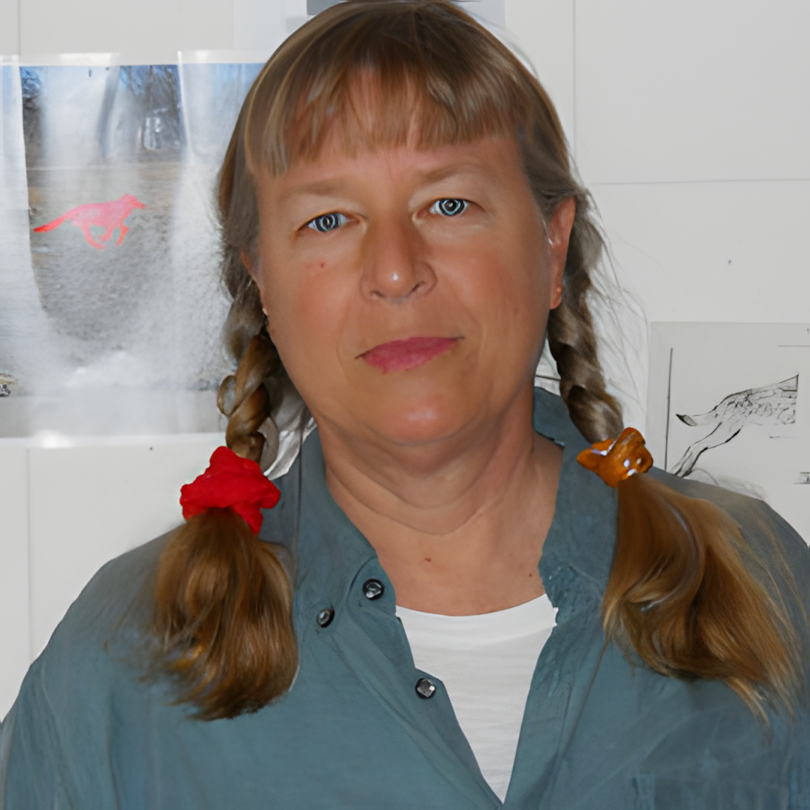
- Guest Background: Sue Berkey is a yoga teacher, rebirther, artist, and single mother living in Fairfield, Iowa for 26+ years
- Awakening Moment: Her spiritual awakening occurred while watching/reading Adi Da, who said “nothing happened” when he got enlightened—this simple statement triggered a profound shift in her understanding
- Core Realization: She discovered she’s the master and creator of her own experiences, never a victim of circumstances or others’ words
- Emotional Liberation: Through rebirthing (a specific pranayama/breathwork technique), she learned to feel suppressed emotions rather than stuff them, accessing the “Akashic records” of personal memory
- Current State: Describes feeling complete wholeness, deep contentment, and permanent stability—nothing can shake her inner peace, yet she remains highly ambitious with creative and teaching goals
- Teaching Philosophy: Takes students to their edge in yoga to help them observe their patterns of wanting to quit, blame, or get angry—spiritual practice through discomfort
- Universal Perspective: Emphasizes that enlightenment isn’t exclusive to any tradition, religion, or practice—”show me your love” regardless of path
Key Takeaways
- True Freedom Comes From Feeling, Not Suppressing: Sue’s rebirthing practice taught her that emotional liberation requires walking into uncomfortable feelings rather than avoiding them. By feeling everything fully—anger, sadness, fear—without letting it “stick,” she achieved lasting inner peace.
- Contentment and Ambition Can Coexist: Sue dispels the myth that spiritual awakening leads to passivity. She feels complete contentment while maintaining huge artistic and teaching ambitions, describing this combination as “incredibly powerful.”
- Spiritual Awakening Is About Self-Worthiness, Not Specialness: The shift happened when she stopped thinking she wasn’t enlightened. Rather than feeling special, she feels more ordinary than ever—and finds this deeply relieving.
- No Single Path Has a Monopoly on Truth: Sue emphasizes that Christianity, Buddhism, yoga, rebirthing—all paths have equal validity. Her motto: “I don’t care how you’re getting there, show me your love.”
- Comfort Zones Are the Enemy of Growth: Whether through challenging yoga poses or emotional breathwork, Sue’s practice centers on deliberately leaving comfort zones. She learned from Adi Da that “you cannot surround yourself with comforts and expect it to work.”
Full interview, edited for readability:
Rick: Welcome again to Buddha at the Gas Pump, the show where we talk about spiritual awakenings with people who have actually had them. As I sometimes do, I’d like to make a little commentary before I introduce my guest more thoroughly, my guest being Sue Berkey. And my name again is Rick Archer. My thought for this week is, was triggered by an encounter I had with a friend in the local grocery store. She said to me, “How is your show going? Where you interview people who think they’re enlightened?” Which was her implicit way of saying that my guests are self-deluded. And I said, “Oh, you know, it’s going well and all that.” And after a few more mildly disparaging comments, she asked if I would like to borrow some DVDs of some interviews that a friend of ours did with enlightened people in India. And that struck me as ironic later on when I thought about it, because I think there’s an underlying assumption in our culture, our Western culture, that enlightenment is an Eastern thing, an Indian thing. And I would like to suggest that it is no more Eastern or Indian than gravity is English, or radiation is French, or general relativity theory is German, or whatever nationality Einstein was. That it’s a universal thing, which is simply a matter of experiencing our essential nature, which is consciousness. And that consciousness is not exclusive to any particular culture or locale. And that in fact, it’s not even a human thing. In this vast universe, there must be all sorts of life forms or beings who are having that very same experience in their own way. So if a person wants to adopt an Indian name or wear Indian clothes or something like that, that’s fine, it’s fun. But it has nothing to do with enlightenment or awakening. And even though the Indian culture is perhaps more explicit about enlightenment, has it more in their literature, and perhaps can show more examples of it, it’s not an Indian thing. And people in the West are just as capable of experiencing it as people in the East. So that’s my little commentary for tonight. So again, my guest tonight is Sue Berkey, who has been living in Fairfield for many years. I’d like to start by just having you introduce yourself, Sue, and what you do, and what your interests are, just relative sorts of things. You’re an artist, I know.
Sue: Should I talk to you or the camera?
Rick: Whatever’s comfortable. You can go back and forth. We’re just having a conversation. I was just doing a monologue, so I was looking at the camera, but mostly we’ll be talking to each other.
Sue: Well, I’ve lived in Fairfield for–I don’t know if it’s 26 or 27 years now– quite happily. I have found that I actually don’t prefer to travel away, that I’m completely content here, and in fact I find traveling to be way less comfortable than just putzing around my glorious life here. So I teach yoga, Hatha yoga. I have for 15 years. I think I was Fairfield’s first full-time yoga teacher. There were a couple before me, but they weren’t full-time teachers. I’m also an artist, and I am a rebirther, single mother, and a house renovator.
Rick: Let me ask you about a couple of those things. First of all, in terms of your being an artist, those of you who live in Fairfield and who are watching this may have seen those stars made out of hay bales up on the trail north of the reservoir. Sue made those. In fact, if you do a Google search for “Sue Berkey hay bale stars,” you’ll find them quite easily online. You can take a look. So what other kinds of art do you do?
Sue: I have an MFA in filmmaking and sculpture, so I’ve made quite a few films, sculpture, a little bit of painting and drawing. I think sculpture is my first love.
Rick: And what is a rebirther? I should know that, but I actually don’t.
Sue: Hmm. Well, in a nutshell, rebirthing is a pranayama– Which is a breathing exercise. –a breathing exercise, a very specific one, that is considered to be the key of the Akashic records, the Akashic records being the entire memory storehouse of an individual’s life. And this pranayama will– It moves away your– the way that you suppress things, and so it causes you to feel stuff that you’ve not been willing to feel, and it can be extremely healing. And it’s called rebirthing because often people have memories of their own birth and the conclusions that they drew about life right then, and how those unconscious underlying thoughts have been governing their entire life since that point in time. So that particular point of birth is really critical, huh, in terms of the impressions that you gather at that moment and can kind of set the course of your life?
Sue: Yeah. They say that the earliest impressions are the strongest, and so you just keep building. You know, the deepest ones come first, the next deepest ones come later, and it goes like that. So the ones that are the deepest and the most governing, I would say, in a life are very, very early on. But it can be the moments of conception, anything that happened in gestation.
Rick: Past lives?
Sue: Yeah, it can be.
Rick: I was born by Caesarian. Did I get off easy?
Sue: No, actually. There’s a whole chapter written on Caesarian births, and very often people that were born that way are looking to other people to save them.
Rick: Ah, interesting. Because they didn’t do it their own way.
Sue: That’s right. And so that’s a very, very frequent repeating pattern in Caesarian births. But not absolute.
Rick: Right. Nothing is absolute, except the absolute. Huh. Well, that’s interesting. During the course of our conversation, if you want to refer back to that at some point, if it pertains to something we’re talking about, feel free. Anything more you want to say about that right now?
Sue: No, it’s quite vast, actually.
Rick: I like the whole idea of feeling things more deeply. I’m kind of finding that myself, just in my regular meditation these days, that it often seems to be all about feeling stuff, sometimes uncomfortable stuff, and then finding that over the course of the hour, whatever, it gets neutralized or purged, and I feel all kind of free and clear at the end of each one. It didn’t used to be that way, but it’s more so now. So, Sue and I first talked about the possibility of doing this interview a couple of months ago when we ran into each other at a local coffee shop, and I mentioned to a mutual friend of ours, or actually our mutual friend already knew I was doing this show, so we were talking about it, and Sue said, “Well, you could interview me.” And I said, “Okay.” And, you know, obviously the implication was there that you’ve had some sort of spiritual awakening, and were amenable to being interviewed. So perhaps we could start by just having you describe the nature of your spiritual awakening, in whatever terms are most meaningful to you.
Sue’s Awakening: When Nothing Happened
Sue: Well, as I told you over the phone the other night, I was… I forget if I was reading a book or if I was listening to Adi Da speak on a videotape, but it’s irrelevant, because his point was, he was talking about when he got enlightened, and he said that he was walking to the grocery store and nothing happened. And when he said that, I woke up like I never have before, and I just, I got it. I completely got it. And I thought, “Oh my God, it’s that simple. It’s absolutely that simple. And all I have to do is be okay with that. But then it’s more than that, too, and I realized that living as the master and creator of my own experiences, from moment to moment, hour to hour, day to day, forever, is that, that I’m never a victim of anybody else’s words or any other circumstance in my life, and that I can absolutely choose how I want to experience anything. It’s pretty cool.
Oh my God, it’s that simple. It’s absolutely that simple. And all I have to do is be okay with that.
Rick: Let’s unpack some of that a little bit. Now the average person who… Well, the average person is probably not listening to this show.
Sue: Yes, they are.
Rick: Many people might listen to that statement of, “I was walking to the grocery store and nothing happened,” and think, “Well, what the heck is that supposed to mean?” Because obviously he was walking to the grocery store, so that was happening. But in some sense he’s saying that nothing was happening, despite the fact that he was walking and cars were probably going by and stuff like that. In terms of your experience, how would you explain that paradox?
Sue: Yes, there’s no judgments in me anymore. It’s like I feel like I live in a super fluid world where people do what they do, and they do everything. I think I’ve been witnessed… I’ve never seen a murder, but I’ve seen so many different kinds of human behavior, and I don’t judge it anymore. I feel like nothing is going to stick to me or change me or bring me down, or even bring me up. I’m the one.
Rick: Do you vote?
Sue: I do vote. Whoa, here we go.
Rick: I can relate to what you’re saying, but I find myself still getting a little steamed up about certain political points or environmental points. I have this really good friend who has been my friend for decades, and he’s kind of off on the conservative end of the spectrum, and I tend to be on the liberal end of the spectrum, and we have these discussions back and forth. And I love the guy, but if you get me going on Rush Limbaugh or something like that, I definitely feel like I’m being somewhat judgmental. I mean, I have opinions. On the other hand, I can see how that is also a valid perspective in the grander scheme of things. It takes all types to make a world. Is that the kind of thing you’re talking about? If somebody flips you the bird in traffic, do you feel any kind of visceral reaction, or do you think, “Oh, that’s fine”?
Sue: I think it could be any response whatsoever, but it doesn’t stick to me.
Rick: It doesn’t stick.
Sue: I let myself have the entire range of feelings. I think that’s part of being a real human being. So if I feel like I’m mad at them, then I just have a little madness, but I don’t get all serious about it.
If I feel like I’m mad at them, then I just have a little madness, but I don’t get all serious about it.
Rick: So the sense in which you don’t judge, then, would be that you don’t hold a grudge, you don’t dwell on judgments. You might make… I mean, obviously you like this kind of ice cream more than that kind of ice cream. You have opinions about things and preferences, but you don’t… It’s not obsessive. It’s not an attachment. Is that what you’re saying?
Sue: Yeah, although I’m very interested in human liberation.
Rick: In the spiritual sense?
Sue: No, economic sense and emotional sense. I mean, as a rebirther, part of what I’ve devoted my life to is helping people liberate their feelings, which I think our culture specializes in stuffing.
Rick: Yeah.
Sue: So… Hmm. Economic liberation is really tricky, because even though I live in a capitalist system, I’m not a capitalist. I don’t have any employees that I pay less than I make, and I don’t… I’m not a profit… for-profit organization. But I also see that because there are systems in our culture, like our health care system, no matter how enlightened a person wants to be, if you don’t have the money to get your teeth fixed by the dentist, then what are you going to do? I mean, you can… It’s a tricky balance between spiritual freedom and then economic realities.
Rick: Yeah. And it’s a tricky balance also between spiritual freedom or enlightenment or awakening, or whatever we want to call it, and all the various political or economic theories that one might ascribe to. You know, like my friend, my conservative friend, he’s been meditating for 40 years, so he has tremendous, beautiful spiritual experiences. He may be on the verge of awakening, if he’s not already. But he’s kind of a hard-line conservative. The guy I interviewed last week here, Stephen Winn, runs a fairly big company with a lot of employees that he pays less than himself. He doesn’t seem to contradict his spiritual state. So I’m just kind of getting on this just so as not to allow you to suggest perhaps that a particular political attitude or economic philosophy is correlated with level of spiritual development. You wouldn’t say that, would you?
Sue: No.
Rick: Didn’t think so.
Sue: I had this conversation the other day with somebody, you know, the classic thing of, “Well, if you’re sitting in prison, but you feel enlightened, are you completely free?” And I think not.
Rick: I would say yes and no. Because I think a person could be in prison, in fact I can think of two books written by guys who achieved spiritual awakening in prison, who are probably a lot more free in the more meaningful sense than people who are out hiking in the mountains or something, or doing the usual things we do. But obviously, 200% of life, it’s nice to be free on both levels.
Sue: That’s right.
Rick: You wouldn’t choose to be in prison necessarily.
Sue: Right. Although, there is the whole philosophy that anyone who’s in there has chosen to be in there. I don’t know that I believe that one anymore, I can tell you that. That’s another huge new age point that I think needs to be flushed out more by people.
Rick: So that gets back to one of the things you said earlier, that you feel like you’re the master of your own destiny, that whatever happens to you is of your choosing. Would you say that even if you got some kind of serious disease or something, that that would have been of your choosing?
Sue: Yeah, you know, it’s hard to know that. I’ve been close to several people who have gotten cancer and died, and they didn’t think they were choosing it. And I don’t know that we could ever know that. How could we know? I don’t know. How do we know for sure whether someone has manifested that, albeit unconsciously?
Rick: Yeah. I read these interesting books by a guy named Michael Newton. You may have read them, “Journey of Souls” and “Destiny of Souls.” But his whole thing was hypnotizing people to go back to the period between lives, as opposed to earlier in this life or something, or even past lives, to go between lives. And he’s found this tremendous correlation between what everybody says, and he’s hypnotized hundreds, if not thousands of people. And they’ve mapped it out quite in concordance with one another as to what we go through during that period. And one of the points he made was that we do choose, we sort of sign up for traumatic circumstances that might befall us in life, like he gave the story of a young girl who fell out of a carriage when she was young, and the wheels ran over her legs, and she was crippled for life. But she remembered when she was hypnotized, not the same girl, this girl who had then been reborn into another life, she remembered that she had signed up for that, because it taught her certain lessons that she needed to learn, and so on. It all seems a little bit philosophical, but who knows, maybe it works that way.
Sue: Yeah. I’ve had a couple of really clear past life memories, really clear, like almost unmistakable, where I got really deep insights into some of the circumstances in my life right now, and how they’re serving me. It’s really interesting.
Rick: Can you give some specifics?
Sue: I think I’d rather not right now, but real clear.
Rick: Good. I guess in a way it depends on how you … I mean, if a person feels as you do, that you’re the master of your destiny and so on, then you’d be more on the free will side of that argument than the determinism side. And it kind of implies that the universe isn’t mechanistic or cold and uncaring, that there’s a sort of intelligence governing everything.
Sue: I don’t know how caring it is. Things happen, and then I think we’re free to interpret it any way that we want to. And so I actually feel like no matter what, whatever happens, I cannot lose. I can’t lose. I know that.
Rick: Can’t lose.
Sue: Anything. Anything.
Rick: Would another way of saying that be that whatever happens to you, whether you live to be a hundred or die tomorrow, or stay healthy or get sick or whatever, there’s a certain kind of evolutionary direction to your existence, and that all these events, however they might unfold, are in service of that?
Sue: Yeah. Well, I already feel complete wholeness, and nothing could take it away. Nothing could take even a chunk of it away.
Rick: Describe that complete wholeness, if you can.
Sue: Deep contentment. I like myself. Nobody can ever take it away, and I don’t think it will ever get significantly challenged. I just feel like it’s stabilized permanently.
Rick: How long have you felt that way?
Sue: Years.
Rick: And it never fluctuates or gets perturbed?
Sue: Maybe a tiny little bit. Just tiny. Then I come right back to feeling absolutely okay. When’s the last time you remember feeling scared?
Sue: Oh, boy.
Rick: Frightened?
Sue: Quite a while ago.
Rick: This might seem like a strange question, but I sometimes play mind games with myself about this very point, because I tend to feel that way also, but maybe I’m perturbed a little bit more than you are. But I wonder, “What if I went through what Christ had to go through?” Or, “What if somebody dangled me from the Golden Gate Bridge by my ankles?” How would I react to an extreme circumstance like that? Would I lose it? Or would I still maintain some of this wholeness? I don’t know. It’s like we lead cushy lives, sort of, so far.
Sue: I don’t.
Rick: Don’t you?
Sue: Oh, no.
Rick: Oh, okay.
Sue: You do?
Rick: Cushy enough. I mean, by comparison with a lot of people in the world, I consider myself very fortunate. If I won the lottery, I probably wouldn’t be doing what I’m doing right, in terms of my employment and all that kind of stuff. But, nonetheless, I feel very grateful for my life and the circumstances of it.
Sue: Yeah. Well, one of the things that I also learned from Adi Da, I don’t know why I’m quoting him so much, except that some of his points are so perfect. He said that you cannot surround yourself with comforts and expect it to work.
Rick: Expect it to make you happy, you mean?
Sue: Yeah, to work for you, to empower you and make you feel fulfilled, or anything.
Rick: Right. The Johnson & Johnson heiress just died and was living a very unhappy life for a long time. They’ve been talking all about it on the news, and look what Tiger Woods has been going through.
Sue: Yeah. So, it’s like, I get that.
Rick: Yeah.
Sue: And in my teaching of yoga, the whole point of my classes and the style that I teach is to bring somebody right up to that place where they feel like they’re dangling by their ankles from the Golden Gate Bridge.
Rick: How does yoga do that?
Sue: Certain poses that you hold longer than you think you can, and you get to find out and take a look at the part of you that wants to quit, that wants to make the teacher wrong, that wants to blame somebody else, that wants to just get pissed off, or whatever. And so, I’ve made an absolute spiritual practice out of taking myself out of my comfort zone.
Rick: Interesting. And what other ways have you done that?
Sue: Rebirthing definitely does that.
Rick: Doing your own rebirthing.
Sue: Yep.
Sue: And you have to feel what you don’t really want to feel.
Rick: Right.
Sue: And I have walked into those fires so many times that I am not afraid anymore to feel anything.
I am not afraid anymore to feel anything.
Rick: That’s great.
Sue: And look at anything. And I know how to relax in the face of it all. All of it.
Rick: It occurs to me that this walking into those fires has… this sort of invincibility has been the outcome of your having done that.
Sue: Absolutely.
Walking Into Fire: Facing Suppressed Emotions
Rick: Because obviously if we’re stuffing a lot of stuff, then we’re quite vulnerable, because anything can upset the apple cart.
Sue: Yes, exactly.
Rick: But if we work through all that stuff, what is there to…
Sue: Be afraid of.
Rick: Yeah.
Sue: It’s like I’ve watched hundreds of rebirthing clients face the deepest fears and the biggest ghoulies you could imagine, and I’ve witnessed it. And so I’ve done it inside myself. I’ve watched hundreds, hundreds of people experience the darkest, grossest, most messy…
Rick: Really? And just breathing exercises brought that up?
Rick: Wow, that’s interesting. I think you’ll probably get some more rebirthing clients here after this. That’s very interesting. Before you…oh, incidentally, I just keep asking questions as they occur to me, but if anything comes to your mind that you’d like to say that is not pertinent to some question I happen to be asking, just come out with it and we’ll proceed. But it just occurred to me to ask that you had that turning point when you were watching the Adi Da tape or reading the book, and he said about walking into the store and nothing happened, and that was a big watershed moment for you. But before that, what had your spiritual practice been?
Sue: I don’t remember.
Rick: TM or…?
Sue: Very little TM in my life. Hatha yoga definitely has taken more time. I don’t consider rebirthing a spiritual practice.
Rick: You had already been doing that.
Sue: Oh yeah, for a long time. And now that I look back on my life, I consider cheerleading to have been a spiritual practice. I consider absolutely being a single mother was probably, heads and tails, the most spiritual practice ever. Ever.
Rick: Very challenging.
Sue: Oh my God.
Sue: Challenging but absolutely exquisite.
Sue: He’s 21.
Rick: 21 now. That’s Luke, right?
Sue: That’s Luke.
Rick: One kid?
Sue: One kid.
Rick: And when did it first dawn on you that what you were doing in life, whatever you were doing, was actually a spiritual thing? That you had a spiritual goal?
Sue: As a child.
Rick: Did it? How young?
Sue: I was very, very consciously, spiritually focused as a child. I remember being like six years old, and I told my parents that I wanted to go to church every Sunday.
Rick: Far cry from me. [laughter] My mother had to drag me kicking and screaming every Sunday.
Sue: And I remember that, and I remember even on our family vacations, I wanted perfect attendance in my Sunday school class, and so I said, “On our vacations, I’m only going with you if we can go to church.” While we’re in Florida. [laughter] And I remember that it was actually the highlight of our vacation, going to one church.
Rick: Interesting.
Sue: Because I have this, not just a theory, but I’ve observed a lot of my friends and other people going on vacation, and it’s not usually what it’s cranked up to be. But I remember going to church that one Sunday, and how happy my family got, and how friendly the people were in that church. And I’m not saying I’m a Christian or a churchgoer now, because I’m not, but I just remember how happy my family was that day, because of that.
Rick: And so you were how old then?
Sue: Six.
Rick: And then you proceeded along, and you became a cheerleader. [laughter]
Sue: I realized this too, that was as close to yoga as I could get back in the ’60s. So that was as much yoga as I could get.
Rick: And then what was your first explicitly spiritual practice that you discovered?
Sue: Hatha yoga.
Rick: Hatha yoga.
Sue: First year in college, there was a free yoga class, and I loved it.
Sue: I never missed it.
Rick: That’s great.
Rick: And so you did that. Where was this?
Sue: That was at Kent State University.
Rick: Oh brother.
Rick: Were you there during the whole
Sue: No, I came the year after.
Rick: And so we’re talking early ’70s, and you went along, and then you learned TM at some point?
Sue: Yeah, I learned TM.
Rick: Did you learn that at Kent State?
Sue: No. In Philadelphia.
Rick: Philadelphia? I taught there for a while.
Rick: And so your experience with TM wasn’t particularly remarkable, or you enjoyed it?
Sue: Occasionally it was a bit remarkable, but I knew pretty quickly actually that it didn’t– I didn’t feel as joyful and as liberated during and after it as I did with hatha yoga. And I feel really lucky that I was never one of those people that had to go through all this guilt and this huge withdrawal practice, where people think that something’s wrong with them if that’s not their path. And I never went through that. I just allowed myself to do what I– I trusted myself. What was working for me was hatha yoga and rebirthing.
Rick: That’s good. You’re probably the first person I’ve interviewed out of the six or seven I’ve done that haven’t had a predominantly TM background, although several of the people I’ve interviewed recently have kind of branched off into other things. But I’m glad, because just as I was saying in the beginning that enlightenment isn’t an Indian thing, it’s also not a TM thing specifically.
Sue: It’s not a yoga thing.
Rick: It’s not a yoga thing. I mean, there are many different ways up the mountain, so to speak. And sometimes people in every spiritual group have a tendency to think that theirs is the best and perhaps even the only way, and so on. And I hope one thing this show will do is dispel that notion, help to dispel it.
Sue: I want to say right now that what I do, I know, is just one possibility. And I think the TM movement is wonderful for people who it works for.
Sue: I have complete respect for that.
Rick: Yeah, me too.
Rick: I mean, I still meditate. I’ve been meditating since 1968, and it works for me. Although I’m not actually in the TM movement anymore.
Sue: I always like to say, “I don’t care what you’re doing, show me your love.”
Rick: That’s a good one.
Sue: I don’t care how you’re getting there, I don’t care what you think, I don’t care what you read, show me your love.
I don’t care how you’re getting there, I don’t care what you think, I don’t care what you read, show me your love.
Rick: My wife often says something like that. She just says that, in her opinion, the acid test of spiritual development is how compassionate you are, what you’re doing for people, things like that. So that’s good. I think Christ probably said things similar to that, didn’t he?
Sue: I’m sure.
Counsel for the Dying: Forgiveness and Gratitude
Rick: There’s quotes from the Bible that are rattling around in the back of my head. This point moved you a lot, you’re kind of coming to tears. Why is it that this point moves you so much?
Sue: Because.
Rick: That’s a good enough answer.
Rick: I used to have a list of questions that people had mailed in, but I got kind of tired of asking them every week. But a question that somebody sent in just this past week, and she said, “Ask your next guest this question, will you?”
Sue: Oh, good answer.
Rick: I think I know how you’re going to answer it.
Rick: Would you like a Kleenex?
Sue: Okay.
Rick: Brian will bring one. She lives in Australia, and we’ll be sending her discs of this show, because she lives so far out in the boondocks that she can’t even watch YouTube, because she doesn’t have a good enough internet connection. A friend of hers was just diagnosed with brain cancer, and may not live too long. And she said, “Will you please ask your next guest about death?” Whatever they might have to say about death, particularly perhaps the sort of thing that might be reassuring to somebody who’s facing it.
Sue: Right. I would just say to somebody who’s dying, I would say, forgive everybody you can. Clean up any unfinished communication with anyone. Erase your chalkboard before you check out, and express as much gratitude as you possibly can. And let go. Let it take off.
Erase your chalkboard before you check out, and express as much gratitude as you possibly can. And let go. Let it take off.
Rick: You’re a spiritual teacher in a sense. You’re a yoga teacher, you’re a rebirthing teacher. Have you ever counseled people, or been with people in the process of dying?
Sue: Yeah.
Rick: And how have you been able to facilitate their transition?
Sue: It just depends what they’re stuck on.
Rick: So you’ve kind of helped them get unstuck from certain things, and makes it easier for them?
Sue: Usually I think most people postpone forgiveness. It’s a great thing to clean up.
Rick: Yeah. A number of friends have said to me that when some mother or loved one was dying, their personality changed a lot in the last couple of weeks.
Rick: Yeah, they just started to glow.
Sue: Yeah, and also love.
Rick: Interesting. I wonder if that’s kind of a natural process, that as you get closer to death, you start to get less bound by the things that gripped you in life, and you begin to see the bigger picture naturally.
Sue: I’m sure it forces the issue. You come way out of your comfort zone. And that’s why if they could have had any kind of a practice before they came to that, that had put them at a similar kind of edge, but death wasn’t imminent, then they could have opened their heart way before that, and their entire life, the quality of their whole life experience would have been up-leveled so much more.
Rick: And you’re alluding to rebirthing, perhaps, or any practice which does that.
Sue: Anything. Anything that would bring somebody out of their comfort zone now, because people get so locked up and so small, so fearful.
Rick: Yeah, it’s interesting. Christ referred to somehow gaining your life by losing it. I don’t know the exact quote, but it’s like, in a sense, that’s what you’re referring to. You lose all the things that define your life in a rigid sense by no longer being obsessed or attached by them, and yet in doing that you find your life. The things which defined your life were not it, actually, and when those lose their grip, then you wake up to something much more valuable, kind of the Jack and the Beanstalk principle or something.
Sue: I think most people are waiting. Waiting.
Rick: Why are they waiting?
The Trap of Waiting for Perfect Circumstances
Sue: They have their own reasons, but I think most people are waiting until something, something, whatever their something is, would happen in order for them to feel fantastic or feel really like themselves or really safe or really capable of giving what they really always wanted to give. I believe that probably most people die feeling un-given.
Rick: Feeling like they haven’t fulfilled their purpose?
Sue: Yeah, and they haven’t given all that they could have given.
Yeah, and they haven’t given all that they could have given.
Rick: Well, it’s interesting, because most people, if you ask them what they’re waiting for, they’re waiting for a better job, they’re waiting for a better partner,
Sue: Better house, more money, blah, blah, blah.
Rick: Better house, better car, better this, better that.
Rick: What you said towards the beginning of the interview is that you felt complete, irrespective of any of those things. That’s not quite how you put it.
Rick: Content?
Sue: Content, yeah.
Sue: Another great teacher I’ve spent quite a bit of time with is Panditji,
Sue: and he says to people,
Rick: That’s Sri Sri Ravi Shankar?
Sue: Yeah, he says out to his groups, he’ll say, “Well, if you think you’re going to be happier if you get a divorce, or if you think you’re going to be happier if you get married, or if you think you’re going to be happier when you get that house you want to buy,” he said, “You’re wrong. You’re wrong.”
Rick: Sometimes people are. They get into the right marriage, or out of the wrong marriage.
Sue: Well, it’s an internal thing.
Rick: It is, ultimately.
Sue: And that’s what he’s talking about, his ultimates. And it’s like, if you can’t be happy right now, or liberate yourself from something that you perceive as binding you, do it without damaging any other person or yourself, then you’re wrong, because it’s not going to happen if you change your circumstances.
Rick: Yeah.
Sue: And it’s not.
Rick: Well, you also said earlier that you don’t feel any great need to travel and get out of town. A lot of people get a little stir-crazy here in Fairfield, this little town, not much happening, and so on, they feel like, “I’ve got to get out of here.” Or another thing that happens is winter comes on, and people start getting depressed, “Oh, God, another Iowa winter.” We’re having a doozy of an Iowa winter right now. And I’m sure you would say that your contentment is independent of those variations.
Sue: That’s why I don’t need to travel.
Rick: You could probably live in Siberia, or Ecuador.
Sue: I feel that way. I do feel that way.
Rick: Yeah, that’s good. And it’s a simple point, but I think it’s often overlooked, that if your fulfillment is dependent upon the weather, you’re in big trouble.
Sue: Most people are.
Rick: Yeah.
Sue: Or if it’s dependent on living near mountains, or living near the ocean.
Rick: Or having X amount of money, or being married to such and such.
Sue: That’s right.
Rick: It’s like those things are always going to change.
Sue: That’s right.
Rick: And the thing that I think we’re talking about here doesn’t change.
Rick: I try to put myself in the mind of viewers, and bring up, since we’re not equipped at this point to take questions live, which I hope someday we will be, I wonder if, a thought occurs to me that someone might ask, “Well, aren’t you just maybe very well adjusted psychologically or something?” Or maybe you just don’t have the same intensity of aspiration that some people might have. You’re content with very little. But I happen to be, speaking as a typical viewer, I have a lot of ambition. I really want to achieve such and such, or do such and such. And so what you’re saying doesn’t quite work for me. I wouldn’t want to be content. It almost seems like it has deprived you of motivation.
Sue: Oh, are you kidding? I’m probably the most ambitious person I know.
Rick: Talk about that a little bit, because I want to dispel that impression if it has arisen in anyone’s mind.
Sue: No one believe that. No, I feel like, in a sense, I feel like my life is just starting.
Rick: In what sense?
Sue: Because I have huge goals as an artist, and as a healer, and as a teacher.
Rick: Talk about them.
Sue: Well, I want to make more outdoor installation sculptures, and I want to make them in other countries, and I want to make them in cities.
Rick: With different things.
Sue: Absolutely. And I just really want to let that just explode in my life. I feel like my gift has gotten bigger, my capacity to give has gotten so huge, and I want to touch more people with my actions and my manifestations.
Rick: So now you mentioned three things. You mentioned the art, the healing, and teaching.
Sue: And healing.
Rick: Let’s touch on those other two as well.
Contentment Without Losing Ambition
Sue: Well, people always ask me to come and teach yoga where they live, and I would like to do more of that too, and let them organize a group of people for me to come to and teach. And I always do healing work with people, so I know that I would do that no matter where I go. But for some reason right now, the sculpture is just coming up so loud and clear. Like, I just bought this building this summer, and I’ve renovated it, and then the biggest room of it is going to be my art studio. And I’ve got pieces that I’ve already seen that need to get made.
Rick: Are you going to be working in metal and stuff?
Sue: Different kinds of materials. And I have huge ambition. I think the combination of feeling content and hugely ambitious is incredibly powerful. I love it.
Rick: I’m glad you’re saying that. It bears repeating. The combination of feeling content and hugely ambitious. And that’s a paradoxical combination. Ordinarily, people feel like really ambitious people have a kind of unfulfilled craving that drives them, and really content people are just going to kind of sit around and chill.
Sue: No, that’s not me.
Rick: Yeah, sit on the beach. So I’m glad that you’re saying that. And in fact, another friend of mine has this objection to the whole concept of enlightenment or awakening, or whatever you want to call it.
Sue: I do too, in a way.
Rick: Yeah, I mean the words are heavily laden with connotations, and I hate to use them, but you’ve got to refer to it as something.
Sue: Yeah, right.
Rick: Her objection is that it deprives you of your personality. There’s a lot of talk in spiritual literature about killing the ego, or destroying the ego, or transcending the ego, or having it melt into the universal cosmic awareness, or something like that. And some people, my friend included, just take umbrage with that. They feel that the ego is what makes us who we are, makes us unique, distinct, makes life interesting. And if enlightenment means becoming some kind of an amorphous blob, then…
Sue: Who wants it?
Rick: Yeah, really.
Sue: Yeah. I love my personality. I’m aware that some people don’t, but I really like it.
Rick: You don’t like theirs or yours?
Sue: Mine. But I like mine, and I don’t want to lose my personality, and I don’t want other people to lose theirs either. But I also realize that it’s just like the surface of my energy, and it’s pretty much irrelevant, but there it is. I don’t think I can get rid of it.
Rick: Well, do you feel like your personality… how has your personality been influenced by your inner development?
Sue: I don’t think it’s changed at all.
Rick: If you went to your high school reunion, people would figure you’re pretty much the same way.
Sue: Oh yeah, no question.
Rick: Would you say that perhaps your inner development has breathed even more life into your personality, made it kind of less constrained, less repressed?
Sue: Yes. And I think it’s liberated my emotional body, and that’s foundational to a personality, I think.
Rick: And liberating your emotional body means you’ve been able to be more loving and compassionate.
Sue: And angry.
Rick: And angry. Or whatever.
Sue: And sad.
Rick: Okay, whatever emotions.
Sue: The whole range. The entire range of emotions is available to me at any moment.
Rick: How about the really negative ones? Jealousy, hatred?
Sue: Oh sure, I love all of them.
Rick: Yeah? Oh yeah. You don’t have to have all of them.
Rick: But again, they’re like passing clouds, right?
Sue: Yeah, they just breathe on through.
Rick: I mean, some people will hold grudges for years.
Sue: Oh, it’s so deadly.
Rick: I have a friend who has a grudge with his next door neighbor. And for years I’ve been hearing about how horrible his next door neighbor is. Do you find yourself being incapable of that kind of…?
Sue: Absolutely. We’ll never live like that.
Rick: Right.
Sue: It’s so deadly. It takes so much energy to maintain something like that. Oh God, it’s painful. So painful.
Rick: So is there anybody in Fairfield that you feel uncomfortable running into because of some past experience you’ve had with them?
Sue: Occasionally that comes up. Occasionally it does. But I like to call that person and actually talk to them. I like to clean it up as fast as I can. Own whatever I can from my part of it. See if we can’t go deeper and then let it go.
Rick: I had a thing with a guy who I’d done some work for him and there was some disagreement about it and he stopped payment on a check and I got really angry at him and yelled at him on the phone. And for several years after that whenever we saw each other around town, I was like, “Hmm.” And finally one day I was in Walmart and I saw him a little bit a ways away and I walked up to him and said, “Look, we both live in the same town and we see each other all the time. And I don’t know who was right and who was wrong in that circumstance but let’s put it behind us and be friends.” So we just gave each other this big hug. And ever since then it’s like, “Hey, how are you? It’s so good to see you.”
Sue: I love stuff like that. If everyone did that, if everyone just cleaned it up as they went, we’d be so much freer.
Rick: Yeah, I mean I feel like I got freed by that. I mean it’s not like we hang out together or anything. But I was the one who was experiencing something distasteful. I don’t know what he was experiencing but every time I saw him there was discomfort in me. And it feels really good to have the opposite emotion come up whenever I see him now.
Rick: Yeah, exactly.
Sue: In the rebirthing world, people talk about who can tell the highest truth the fastest.
Rick: How does that work? Can you give an example?
Sue: Well, like you and that guy. Who between the two of you could quickly go to a higher place of love faster. It’s like, “Let’s get this, let’s go.”
Rick: It took us a few years.
Sue: Yeah, see that’s a really long time.
Rick: Yeah, but we weren’t working at it.
Who Can Tell the Highest Truth Fastest
Sue: Yeah, but still you endured it. On some level you endured it and so did he. And in the rebirthing world everyone tries to get over it fast.
Rick: That’s good.
Sue: Get over it fast, get over it fast.
Rick: I guess if… What if the other person isn’t holding up their end of the bargain?
Sue: You can’t do anything about it. You can try from your side. You do as much as you can from your side. And then if they can’t, then you forgive them. And you feel compassion.
Rick: And kind of move on.
Sue: Yeah, you go your way because you can’t go with them.
Rick: There’s something in, I think, Patanjali or Shankara said, I can’t remember which, ancient Indian teachers, what was it, “Love for the virtuous, “or friendliness toward the virtuous, “compassion for the suffering, “and indifference toward the wicked.” Like if they’re going to be persistently wicked or evil in their behavior, then don’t hate them, but just be kind of… move on.
Sue: Yeah, that makes complete sense. It’s a beautiful practice. Really beautiful.
Rick: And so when you teach yoga and rebirthing and stuff like that, do you actually talk about this kind of stuff?
Sue: Absolutely.
Rick: And do it?
Sue: Uh-huh.
Rick: Good. So you’re not just teaching exercise, postures and stuff, you’re going into all these kinds of things.
Sue: You ask any of my students. I talk a lot during the class. I’m always pontificating at some point or other.
Rick: That’s great.
Sue: It’s fun. It’s really fun.
Rick: Have any of your students experienced what, would they be candidates for my show, having gone through your rebirthing or yoga classes, have people experienced some kind of profound awakenings that seem to be abiding?
Sue: I can give you a list.
Rick: Give me some names, please. In contrast with that, I’ve talked to people around town, and if anybody’s watching this who is not familiar with Fairfield, Iowa, which is where we’re located, it’s a small town in the Midwest, obviously Iowa, where out of a population of 10 or 11,000, there are probably 3 or 4,000 people who are meditating or doing yoga or a lot of them are doing transcendental meditation. There’s a university here dedicated based on that. It’s a rather unusual place. I don’t know if there’s any place quite like it where such a high percentage of the population is dedicated to spiritual practices like this. But among these people, I’ve met a number who have given up on it, who have become disillusioned. They meditated maybe for decades, and then they sort of felt like, “Well, I’m not getting any place anymore.” Some have even gone back to drinking or drugs or something like that. I think that’s kind of sad. One person in particular that I mentioned this show to and that people were having these experiences was kind of startled and quite inspired by the possibility that, indeed, people were realizing the goal that they had set for themselves when they embarked on this whole thing long ago. And still, as I mentioned with that other example earlier, there’s skepticism. Somehow, ordinary folks that you run into around town on a daily basis, if you’re not having the experience they’re having, it’s hard to imagine that they’re having it or what they’re having. And there’s a tendency to dismiss people who make any sort of claims of spiritual awakening as being egotistical or deluded or so on. I’m kind of rambling on like this just because it’s a theme. It’s one of the things that motivated me to do this show, to demonstrate that a lot of people are really waking up to some marvelous things. And I think that there’s a contagion with it, and that the more people who do wake up in this way, there’ll be a kind of a domino effect more and more, both around in our vicinity and in the world. I think the domino effect is happening. There’s stuff going on all over the world that certainly wasn’t happening in the 1950s.
Sue: I think that being enlightened, and I really don’t like those words either, but it’s a matter of self-worthiness. And it’s like you have to stop thinking that you aren’t that.
Rick: My guest last week said that his awakening happened one day when he was driving down I-80 through Iowa City, and he was sort of thinking, “Am I ever going to get enlightened? I’ve been doing this for so long, whatever.” And then he thought, “What if I just let go of the thought that I’m not enlightened?” And as soon as he had that thought, kaboom! This deep peace descended upon him and never left.
Sue: The people that would ever doubt somebody else would doubt anybody who says they’re enlightened to some extent or other. They would just be looking at Maharishi and going, “Really?” They’d be looking at Jesus going, “Are you sure? Do I believe that?” It’s inside them. And if they would let their heart just open up and empty out and be clear, they would look at somebody and they would see that person’s enlightenment rather than how they’re not enlightened. Do you know what I’m saying? It’s all the self.
Rick: But that reminds me of a point that you made when we first met in that coffee shop. I said something like, “I can’t really judge whether somebody is awake or not, or enlightened or not.” And you said, “Sure you can.” And I said, “No, I can’t.” And I still maintain that maybe I can sort of judge, talking to you or talking to various people, or even determining who I’m going to have on this show, I kind of get a feeling like, “Okay, this person will be good and this person not so much.” But I don’t feel like I can judge in any sort of definitive way or with any great degree of certainty, because it’s such a subjective thing. It’s not like there’s some kind of mark on a person’s forehead that indicates, at least not to my perception. What do you say to that?
Sue: I think if you can’t be the judge, who could?
Rick: I think that…
Sue: Who would you trust if they said, “Well, that person is, and that person isn’t, and that person is.” Would you trust anyone who said that?
Rick: I take anything anybody says with a grain of salt, although I consider some people more qualified than myself in that respect. For instance, now you with your rebirthing. I don’t know anything about rebirthing, and I would be a lousy rebirther at this point. I could perhaps train and become a good one, and really work with people and help them a lot. But I don’t have the qualifications at the moment. And there are people like, for instance, Amma, who in my experience is able to really zone in on a person and determine stuff that I would never pick up on just by a brief encounter with them. In a few seconds she can get a very detailed picture and respond accordingly. So we’re all at different levels of development, and as far as I can tell there are degrees of clarity and various capabilities. We each have what we have, and we each contribute to the puzzle with our own little piece. So do you still think that I should be able to assert that I can judge a person, whether somebody else is awake or not? Or do you get my point?
Sue: I get your point ultimately, but I think that you will be able to. Oh sure, I can agree to that. I might be able to fly through the air at some point too, unassisted.
Sue: No, I don’t believe that.
Rick: I think people have. Christ probably walked on water. It could be anecdotal, but it probably happened. Anyway, we’re getting a little bit off on a tangent here. Actually, this comes back to something I sometimes mention on these shows, which is that from my level of understanding there are in fact levels. There are degrees of awakening, and many people experience themselves going through stages, or having some discovery, and then two weeks later you talk to them and they’ve had another one, which they hadn’t seen the first time, and then another one, and then breakthrough after breakthrough like that. Has that been your experience, or do you feel like you’ve just been in the same place?
Sue: It doesn’t happen in chunks like that for me. It happens more like a rheostat than an on/off switch?
Sue: I guess so.
Rick: You know what a rheostat is?
Sue: Yeah.
Rick: Where you kind of turn a light up gradually by degrees. But do you feel like light is being turned up?
Sue: I feel like it’s been up.
Rick: Can it get any upper?
Sue: I don’t know.
Rick: You must feel like your life is progressing in certain ways, growing.
Sue: I feel like my life is perfect and has been perfect for a long time.
I feel like my life is perfect and has been perfect for a long time.
Rick: Yeah, but we’ve been talking about paradox here, and can’t something be perfect and yet get better? I mean, mathematics tells us you can have infinity, but you can add something to it.
Sue: , yeah. What I like to say is, “Well, I’ll have a different perfect life. It’ll just be differently perfect.”
Rick: But you wouldn’t call it better perfect?
Sue: I don’t think it could get better. I feel like it’s as good as it gets. The characters might change. The setting might change. The activity, specific activity might change. But I feel like I’ve got it.
Rick: So external things not only might change, but will change because they always do.
Sue: Absolutely. And I make them. In my life, I stir my pot a lot. I’ve moved more than anybody in Fairfield. All my friends say, “Okay, I don’t know where you live now.” I’m like, “I don’t either.”
Rick: But in terms of internal stuff, I mean, sure, external is always going to change, but in terms of your internal perspective on the external, your perceptual ability, your clarity of awareness, all that kind of stuff, does that always stay just as it is, or does it seem to be getting gradually more enhanced?
Sue: Well, let’s see. I think that my experience is that compassion in me always gets deeper and deeper, which is really beautiful. Oh, boy. It’s such an incredible thing to feel compassion. I sometimes just like to sit in it.
Rick: Just kind of bask.
Sue: Bask in compassion. And it does seem to be getting bigger and less sticky, too. It’s just like a given, and it’s not like it’s so special and I get to bestow it on somebody. It’s not that. I just feel it. And a few minutes ago you said you felt sad that some people in this town have kind of lost their spiritual path. I would never feel sad if somebody stopped doing something and was doing something else, because one thing I’ve really learned is that I absolutely do not know what anybody else should do.
Rick: That’s good.
Sue: That’s always a mistake.
Rick: I don’t know if I actually felt sad, but it was more like… I guess it spurred me to want to… And I’ve always been an obnoxious proselytizer, you know, and I’ve kind of managed to channel it into more constructive directions. But it prompted me to want to do something about it, to spread the word a little bit that there is a kind of a vibrant spiritual awakening that’s very much underway. And whether or not a person wants to do anything with that, or whether it changes their attitude or dispels their skepticism, I really don’t care. But it’s nice to… There’s been almost a stigma around here about claiming to have undergone any sort of awakening. And a number of people that I want to interview have so far been reluctant to do so because they’re afraid of being recognized as special or unusual or anything like that. And it’s just a matter of what we’re accustomed to, what’s common. And if everyone is much more spiritually awake, then you tell somebody that it’s happened to you, and they’ll say, “Oh, that’s nice. What else is new?” It shouldn’t be a big deal.
Sue: I mean, I certainly don’t feel more special. If anything, and absolutely truly, I feel more ordinary than ever. And it’s such a relief. Oh my God. It’s so hard to think that you need to be special. It’s so… God, it’s such a suffering.
I feel more ordinary than ever. And it’s such a relief. Oh my God. It’s so hard to think that you need to be special.
Rick: I used the word “special” didn’t I?
Sue: Yeah.
Rick: I’m learning to be more precise with my terminology because all these words have implications which I don’t necessarily mean. In fact, I was just trying to make the point that it’s not special, it’s common. But… I don’t know.
Sue: Yeah. I’ve really noticed in my life that the people that seem the most comfortable in themselves, just in the simplest way, are the most compelling people to me. Like, I just… I’m interested in them.
Rick: Yeah.
Sue: Because that’s all to me. That seems like everything. When somebody finally just relaxes in their own skin, it’s a huge accomplishment.
Rick: Yeah.
Sue: It is no small thing. It’s nothing. It’s nothing. And yet it’s everything. It’s so beautiful.
Rick: I remember a friend of mine telling me years and years ago, I was teaching her teacher training course where she learned to become a TM teacher. And she was telling me this… this was like 1974. And she was telling me this story about when she had first met Maharishi a few years earlier. And she said that all of her friends said, “Oh man, wait till you see him. It’s awesome. He’s so powerful. He comes into the room and it’s like, ‘Whoa!'” And she said, “He came and walked up on stage and she thought, ‘He’s just such a simple man. He’s so natural. He’s just a simple, natural man.'” I’ve only remembered that story.
Sue: Yeah.
Rick: Because he was pretty impressive, actually. But on the other hand, there was a great relaxation and ease and simplicity about him.
Sue: I read a biography of Georgia O’Keeffe this summer, and one of the most pointed things in the whole big book that has stayed with me was one of her closest friends said that her greatest gift was her comfort with herself. I thought, “Oh, that’s beautiful.”
The Relief of Feeling Ordinary
Rick: And again, I think that probably relates to what you do with rebirthing. It’s like, how can you be comfortable with yourself if you’ve got all these uncomfortable things locked up?
Sue: Yeah, that you’re not feeling.
Rick: That you’re not feeling. They’re all kind of, you know, mushing around down there, trying to get out, causing trouble. And you’re saying, “Stay put, kid. I’m trying to do stuff here. Leave me alone.”
Sue: Right.
Rick: And you work through that stuff. It must be a great relief.
Sue: Oh, God. Oh, yeah. It’s amazing. Yeah. Maybe you want to try rebirthing.
Rick: Yeah, it sounds interesting. I had an experience one time that was the most transformational experience I ever had in any one moment, although there’s been a lot of transformation over the years. But it happened during my sleep, actually. I had this really intense dream. And in the dream, there were other people or beings in the room who were putting me through this purification process in the dream. And then when I came up out of it, I felt like I was coming from the bottom of the ocean. There was such a depth that I came up out of. And I woke up with, on the one hand, feeling this infinite relief, like I’d just been released from the tightest grip that I could imagine. And my whole body was drenched in sweat because I’d been through such an intense thing. And this tremendous gratitude poured into me as a result of this. And I just felt very profoundly different for days afterwards. But perhaps people experience that kind of stuff with rebirth. That’s why I brought it up. I wasn’t rebirthing, but it just happened to me.
Sue: That kind of stuff. It’s so incredible.
Rick: How long does … well, maybe we shouldn’t get into that. I was going to say, how much breathing stuff do you have to … how do you do that? Do you want to talk about that at all?
Sue: I’d rather not do that right now because it’s got …
Rick: It might take us off the track.
Sue: Yeah, but it is very interesting. It’s very interesting.
Rick: I’m sure there are books about it and things people can learn.
Sue: Yeah, Google it.
Rick: Alright, well, one other question I heard. A lot of people, when they talk about having had a spiritual awakening, they describe that they feel like, rather than themselves being in the world anymore, they feel like the world is within them. That somehow their self-concept has expanded to include everything, such that when they look at things, they actually see an aspect of themselves. Does that characterize your experience?
Sue: Absolutely.
Rick: Interesting. Did it become that way more or less immediately after you had that initial awakening, or did it grow into that?
Sue: I think it grew into that.
Rick: It grew into it?
Sue: Uh-huh.
Rick: And again, your growth has been kind of incremental as opposed to big jumps.
Sue: I think so.
Rick: There’s a group here in town called “Waking Down,” you’ve probably heard of it, and they have the term “oozer,” to refer to people that ooze into their spiritual growth
Rick: as opposed to big dramatic
Sue: gushers.
Rick: Did they say gushers?
Sue: No, I’m just making that up.
Rick: Oh, that’s a good one. I think I’ll keep that in mind. I’ll use that.
Sue: I’ve just always been open to many different teachers. I’d probably say I’ve had six to eight main spiritual teachers, and they’re all from different traditions.
Rick: Have you had them sequentially or sometimes simultaneously?
Sue: Simultaneously sometimes.
Rick: That’s interesting because some teachers argue that you should dig one deep well rather than a lot of shallow wells.
Sue: I’ve always heard that, and it’s just never what happened for me. I always gave myself permission to follow my curiosity. It’s served me well.
Rick: And I would not say that you’re a dilettante. You haven’t just been superficially dabbling and this, that, and the other thing. You really seem to have gotten something out of your thing, whatever you’ve done.
Rick: That’s good. Okay, well, is there anything else that you’d like to bring up that we haven’t talked about? Are you going to think of something when you get home that you wish you’d said?
No Group Has the Corner on Spiritual Truth
Sue: Give me a moment here. Well, something that keeps running through my mind since you spoke about a half an hour ago when you were talking about the town of 10,000 here and how there’s 2,000 or 3,000 people that are doing yoga and meditation. But there’s 7,000 other people here, and a lot of them have spiritual paths too. A lot of them are Christian-based, and some are other-based too. I no longer see any difference anymore between that and what I’ve done or what you’ve done. It’s like I said before, I don’t care how you’re getting there, show me your love.
Rick: That’s a really good point, because I think that there tends to be a little snobbery sometimes.
Sue: Oh, it’s terrible, from both, from Christians and Jewish people and Muslims and Confucianists and Buddhists and yoga and rebirthers. It’s like awful. It’s awful. Because nobody has the corner on that market, and they never will. And it’s nice to drop it, to stop thinking that whatever your group is, is the best. It’s not true. It’s not true.
Rick: It’s a very good point. And I think it bears repeating often. Yeah, often. That’s one thing I love about Panditji, is he built a temple in India. There’s a pillar going around the circle, and every major religion in the world has its own pillar at his temple. And that’s beautiful. That’s an acknowledgment of everyone’s path, and the validity of all of them, equally.
Rick: Ramakrishna did something like that too. I think he, as I recall, I read a book about him. He was an Indian saint that lived in the 1800s. He went through the practices and rituals and observances of every major religion, and explored each one in depth. It was very universal and all-embracing. Personally, I think that the founder of every religion probably felt as you feel, and as you’re speaking here, but followers tend to garble the founder’s message.
Rick: And there’s a kind of a human tendency to want to feel that I’m the best, or
Sue: my thing is the best,
Rick: or my group is the best, or my team is the best.
Sue: We’re winning. You’re not.
Rick: Because if this isn’t the best that I’m doing, then why am I doing it? Maybe I should be doing something else, and that’s the best. But if you take a step back, you realize, alright, different strokes for different folks, it’s like the family stone. And each thing has its own validity, each thing has its own value.
Sue: And beauty.
Rick: And beauty, and whatnot. We’re all in the same boat. We just happen to be in different places on the boat, but the whole boat is moving along. Well, it’s a very relevant point these days, with all this terrorism and all this stuff, and all this conflict in the Middle East, and even here in the US, all kinds of strife and divisions that seem to be largely based in, “My dog’s better than your dog” kind of attitude. That’s an old commercial from, you may not remember it.
Sue: I don’t watch TV.
Rick: Well, maybe we’ve elaborated on that point a little bit more than we need to, but maybe that would be a good point to end on.
Sue: Sure.
Rick: Let’s go forth with compassion.
Rick: And an open mind.
Sue: Thank you for being so open-minded.
Rick: Yeah, thank you for coming. I’m glad you decided to do it.
Sue: Thank you.
Rick: And give me that list of your students.
Sue: I will, OK.
Rick: All right, so that’s it for this week. We will have a flood of uploads to YouTube very soon, I’m told, and hopefully also a flood of these shows being aired on FPAC, Fairfield Public Access TV station. At the end of this and every show, there will be some titles which will be on the screen for a while, so that you can copy things down if you like, with references to a blog, a YouTube channel, a Facebook page, an email address that you can contact me to send in questions, and a bunch of other things. I’m trying to use all the social media and build this thing up into something. There’s a chat group, actually, where I haven’t been able to keep up with it. There are now 500 emails in this folder for this chat group, the Buddha at the Gas Pump chat group, where people are talking about all of this stuff. So there are all kinds of opportunities to participate in the show. One of these days, we’ll be able to interview guests remotely, using Skype or something, and we also may at some point have it become a live show where you can call in questions. But until then, if you do have questions, you’ll see an email address on the closing credits that you can send them into, and I’ll ask them of future guests. So thank you very much for watching, and we’ll see you next time.
 Apple Podcasts
 Spotify
 YouTube