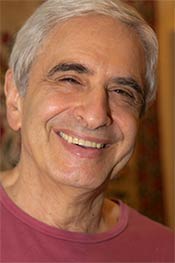
Stuart Perrin Transcript: The Plane Crash, Rudi, and Spiritual Training
Key Takeaways
- Spiritual growth requires real need, will, and training, not just interest or belief.
- The heart opens fastest through gratitude, and that openness must be sustained daily.
- The mind and breath can be trained as instruments for inner balance and awareness.
- Awakening is not a one-time event; it must be lived and renewed every day.
- Life itself is the guru, and every experience can teach consciousness and humility.
Questions This Interview Explores
- How can spiritual practice become a real transformation rather than just an idea?
- What are the essential tools for opening the heart and quieting the mind?
- Why is a consistent practice important on the spiritual path?
- How can someone tell the difference between real awakening and spiritual ego?
Full transcript, edited for readability
❤️ Meeting Rudi and the Plane Crash
Rick: Welcome to Buddha at the Gas Pump. My name is Rick Archer, and my guest this week is Stuart Perrin. Stuart is an American spiritual master of Kundalini Yoga, who has been quietly teaching small groups of students around the world for the last 39 years, and is a direct disciple of Swami Rudrananda, more commonly known as Rudi. Stuart studied six years with Rudi. In 1973, Rudi died in an airplane crash, and Stuart was one of three survivors. Stuart wrote this book, which I enjoyed reading, entitled Rudi, the Final Moments . He has also written about ten other books. What I found interesting about this book is, we know from the outset that there is going to be a plane crash and Rudi is going to die, so there is no suspense in that sense, but throughout the book you segue back and forth between the progress of the flight and reminiscences about your life with Rudi.
So there is suspense, because you are wondering, “How is this plane going to crash?” And then you are kind of dipping into these deep philosophical considerations at the same time. So it was a very enjoyable reading and very well written. And you know, the reason I invited you, although I probably would have invited you eventually anyway, but kind of bumped you up in the queue, is that my friend Avram—I don’t know if he goes by that name with you—but I have known him for quite a while and he has been a seeker for decades. He has done all kinds of meditation, he has been to India, he has lived in Amma’s ashram, and he always felt completely stuck, felt like he wasn’t getting any place.
And so he emailed me some months ago and said, “Wow, I have started studying with this guy and I am really making progress.” I thought, “Holy mackerel, if this guy can get through to Avram, he must have something.” So anyway, thanks. That was a bit of a long-winded introduction, but I appreciate the opportunity to speak with you.
Stuart: Well, it is my pleasure to be here, to share with you whatever I can share, and hopefully it will help somebody.
Rick: I think it will. We have a number of similarities, you and I, actually, aside from our 1960s indulgences and the legal consequences of that, and learning meditation at a fairly early age and so on. But I actually also had a spiritual mentor and friend whom I admired very much, who was killed in a small plane crash, just like that, a four-seater. In that case, I wasn’t in the plane and all four people were killed, but it was a real shock, and a great loss to all those who loved him, so I thought that was a little bit ironic.
Stuart: Incredible, huh? I didn’t know any of that. I don’t know who that is.
Rick: His name was Joe Clark and he was a leader in the TM movement, and he was in a small plane checking out some land in North Carolina. And like in your situation, the pilot was very inexperienced. It was like one of his first flights after receiving his training, and he didn’t know what he was doing, and he lost control of the plane and it crashed and burned.
Stuart: Yeah. To me it was quite a transformative experience, going through that plane crash, coming out of it. And I always look, when I get up in the morning and shave, I look at myself in the mirror and I say, “You know, you’re a living miracle, Stuart. Every day of your life is something that you have to treasure, every moment of your life, because who hits a mountain at 125 miles an hour and walks away?”
“You know, you’re a living miracle, Stuart.”
Rick: Yeah, I was surprised that anybody lived actually, or even that Rudi died and you lived, because you were in the front seat and he was in the back. It seems like that would have been a safer position.
Stuart: Well, it really wasn’t that. It was another thing. Rudi put his life inside everybody else in the plane. They were all his students, and he transferred his soul force into me. And I was holding his hand the moment the plane hit the mountain, and I felt this staggering energy come from him into me. I was knocked unconscious, and when I woke up, I realized that the pilot told me that Rudi had died. And the incredible thing about it is, and this might sound strange to people, but I never felt he was gone. I still, to this day, don’t feel he’s gone. I feel he lives in my heart. He has always been in my heart. He was in my heart before I met him, he was in my heart while I studied with him, and he hasn’t left until this day.
And I looked at him, and when I realized he was gone, my first thought was, “Well, first of all, thank you for taking me with you at this last moment of your life.” I couldn’t think of a greater blessing, you know, to be offered the opportunity to be there the second that your teacher takes samadhi. And I said, “Now, Stuart, you will find out what you have learned in the last six years.” You know, what he taught you, can you apply it to your life, can you transfer it to other people, can you use it to teach and raise the consciousness of other people? And his training was remarkable. I mean, that’s basically what my book is about. What it really is about, other than that airplane crash, is how spiritual teachings are passed on from generation to generation. And his training was remarkable, and he always told me, he said, “Look, you know, you’re here to build your connection with God.
You know, you’re not here to worship me. You’re here to learn from me how to do this, how to develop a system inside yourself that is strong enough to connect with this higher force of energy in the universe. And when I go, I don’t want you dragging me back here. I want you to have your own unique and extraordinary connection with God and continue your work in the world. And if you continue your work in the world, it will keep me from having to reincarnate and do this nonsense over again.” So, he really trained me in that. He put me through six years of an extraordinarily rigorous training. And it was, you know, I used to scream and yell, and I hated it, and I couldn’t take it, and I was always there to get more. But of course, I realized I had no other choice in life but to learn this.
And he also understood something, that the need in myself was so deep to have a spiritual life that he could impart this kind of training with me. And he told me this all the time. He said, “Look,” he said, “You know,” he said, “I know what I’m putting you through, but I also know you’re going to survive it because your need to have a spiritual life is strong enough to be able to go through this and get what you need.” And I learned going through it that probably the single most difficult thing in the world is, you know, building a connection with God, higher energy, whatever one wants to call it. You know, because you’re up against only one person, and that’s yourself. On the other side of all of us is spiritual enlightenment. In fact, I would say every human being is spiritually enlightened.
The only thing that’s missing is consciousness, and how to do it, and how to develop themselves so they can not only live in the world, but they can be free of the world at exactly the same time.
🧘 Chakras, Need, and the Tools of Practice
Rick: Yeah, when you say that we’re all spiritually enlightened, I presume what you’re saying is that we all have that innate wisdom or radiance within us. It’s just a matter of connecting to it. It’s like we’ve all got a billion-dollar bank account, but most of us are walking around paupers. We haven’t discovered the bank key that was …
Stuart: That’s really true. We all have chakras. Everybody has a chakra system. Everybody has a mind. Everybody has breath. We all have the tools to develop this chakra system. This chakra system is a direct link between us and spiritual enlightenment. Now, the problem is that chakras are like psychic muscles, and if you don’t work them and develop them and build inside yourself the foundation, learn to open the heart, learn to get your mind quiet, learn to take all the chaos inside and transform it into harmony and balance. If you don’t know how to do this, you’re left with the chaos. You’re left with the ego. You’re left with your ideas of what’s right and wrong, opinions, and you’re left with all of that confusion, which keeps you from ever allowing the wisdom of the universe to come into you and nurture you as a human being.
“We all have the tools to develop this chakra system.”
Rick: Yeah, so I wrote down a note when I was reading your book, and I don’t remember whether this was something you said in your book or something that inspired me, but you were talking about spiritual maturity, and you spoke of working for years to fine-tune my instrument. There’s always work to be done. So, I guess you would agree, and you pretty much just said that our nervous system is like an instrument, which is like if you use a telescope to see a distant star, you use this instrument of the nervous system to find God. That’s its function.
Stuart: But one has to know how to do it. You see, the problem in life with most people is that they don’t have any training. And people say, “Yes, I want a spiritual life.” Well, I broke it down to five fundamental elements. First thing is you need to have a spiritual life. You have to have the need to do it.
Rick: The desire.
Stuart: The need is really the engine that runs the whole thing.
Rick: Right.
Stuart: Because once you tap that need to have a spiritual life in yourself, you’ll do whatever is required.
Rick: You might say everybody has the need, but not everybody recognizes the need.
Stuart: Exactly.
Rick: Not everybody has the desire, or at least not explicitly.
Stuart: Or not everybody can confront that need, because that need will force you to do. I mean, it’s like, for instance, the story of Milarepa and Marpa. You know that story?
Rick: Sure. Where he’s building the house and tearing it down.
Stuart: Yeah, 13 houses. I mean, his need to get a spiritual life was so strong that he would build and tear down 13 houses. And when he was finished, what could have been left of his ego? He became the poet saint of Tibet. Well, in the modern world there are other ways of doing this, but that need has to be real. If it’s not real in somebody and they haven’t tapped it and are willing to follow that need, then there is always an excuse why they’re not going to do it. “I’m this, I’m that. I’ve got a party, a date, this, that. I’ve got a blah, blah, blah. You know, my uncle, my aunt, my grandfather, my …” you know?
Rick: Yeah, the Yoga Sutras have this thing about, you know, yogis can be classified as mild, medium, and intense. And then I think within each of those three categories there are further categories until you have the most vehement intense. And Patanjali correlates that with the speed with which one is going to become enlightened, you know?
Stuart: Oh yeah, I agree. I mean, even in the Bible, you know, I’m not a biblical scholar, but Christ said, “Let the dead follow the dead. Follow me to life.” It was extraordinary. When I first read that, it almost knocked me off my chair. I said, “How can he say something like that?” And then you discover as you start doing spiritual practice that it’s really true. Why mingle with this lack of consciousness in the world if you can follow somebody that can guide you to your spiritual enlightenment? Well, if the need is real in somebody, they will follow that person. You know, and the second element to this is the will to do it. You know, having the will to truly use the tools that we’re born with. You know, we have a will to make money, to get in relationships, to accumulate untold objects, and this and that in our life.
Yet, you know, success and all this stuff that this will is poured into, but the will to have a spiritual life means that we have to learn how to use the object, the things we’re born with, you know, in order to develop the chemistry inside ourselves that will give us a spiritual life. So, to take that external will and begin to internalize it, this is literally transforming things we have to change from the day we were born. Because everything in life is out there. We have to make success, this, that, everything is out there. Very few people talk about the inner and using the will. And, of course, you know, once you start using the will that way, then you have the tools that you can use, and they become clear. One of them is gratitude. You understand? Because gratitude is the fastest way to open the heart.
And if the heart is closed in a human being, I don’t care how much knowledge you have of the great cosmos and the arcane, you know, it’s nonsense. You know, I mean, you have to learn to live in the now, in the present, in the moment, and nobody’s going to live in the moment if their heart is closed. So, we’ve got to learn. So, gratitude, simple gratitude is the fastest way to learn to open the heart. In the heart is joy, love, you know, happiness, the highest language of God on the earth. But we have to get in there. And we not only have to get in there, we have to sustain it. So, it can’t be done every three months or every six months, but it’s a continuous openness that goes on day after day after day after day. How did…
Rick: Oh, go ahead. I’m sorry.
Stuart: And you have the other tools, which are the mind and the breath. You know, the mind is the strongest instrument we have. It’s also making everybody crazy. It’s a voice that never shuts up. It has all the answers and none of the answers. It gets us into every kind of conceivable trouble that the universe can provide for us. You know, and we are drained by this energy. You know, somebody who spends eight hours just thinking will be more drained of energy than somebody that spends eight hours digging a ditch. The mind eats us alive. We have no power to use the mind consciously. So, part of meditation practice is learning to use the mind. It becomes a surgical instrument that you can use inside yourself to open the very foundation of your being. And the second element, the second tool we’re born with is breath. Breath is life. Every time we inhale, we take in life.
Every time we exhale, we let go of a part of ourselves. So, even the Hindus have a mantra called “So Hum”. You know, you inhale, it’s “So I am”. Hum is that. I am one with the universe. So, every time people are praying 24 hours a day and they don’t even know it. Every inhalation. And then when you learn to use the mind to build the center of balance in yourself, and you learn to use the breath to strengthen the chakra system, you are bringing life into the chakra system and using the breath, which is life, the I am, which is life, to open, expand, and develop the heart center, the foundation center, get the mind quiet, and get yourself attuned to being consciously connected to this higher force of energy in the universe. And what do we want? Basically, you know, hovering above us, Rick, hovering above us are all the energies of the universe wanting to provide us with wisdom, knowledge.
They’re just there waiting for us to open. And the only reason we don’t receive it is we’re not open. But once you use the tools to get yourself open, all of that knowledge, that wisdom comes, and it begins to guide your life instead of the ego, the mind, all the stuff guiding your life. This higher energy begins, and it transforms itself into something extraordinary, which is compassion. Which is basically the highest level of Tibetan Buddhist teachings, you know? And I’m not a Tibetan Buddhist, you know? But I was given a training in wisdom and compassion by a very great Tibetan Rinpoche, you know, years ago, you know? But anyway, this is what I teach. This is what I teach people when they come. This is why Stephen, or Avram, as you know him, you know? He comes and he works on himself, and he says, “I’ve never heard this before.” He said, “I’ve never, this is unbelievable.
You mean there’s a chakra where I can get balance?” “Where I can transform my craziness into harmony and found it?” I said, “Yes, Stephen, go down there and do it. Learn how to get centered in the chakra right below the navel.” “There’s a chakra in my heart, if I open it?” Yeah, gratitude. And you, by building this system, you get strong enough inside to sustain this. So it’s not just knowledge of it, but it becomes a living reality. It becomes so much a part of your life. It’s like Ram Dass said, “Be here now.” And you can’t be here now if your heart is closed. You know, I once wrote in a book years ago that the only successful people on earth are happy people. And I really believe this, you know, because you find a happy person, you find an enlightened person. And to find a happy person is like finding the Holy Grail, you know?
For every 50,000 rich people you might find one happy person living on the earth, you know?
“Gratitude is the fastest way to open the heart.”
Rick: Yeah, and of course I think you’re referring to a fairly superlative degree of happiness, because a lot of people would say, “Yeah, I’m a happy person,” but that’s not what you’re talking about.
Stuart: I’m talking about what they call ananda, that opening of the heart.
Rick: Right, inner bliss.
Stuart: No, it’s like Rudi was that way. That’s why I stayed with him, you know? He was like a stick of incense.
Rick: Yeah.
Stuart: He had so much fire inside him, and yet it came out with his sweetness and his love and his compassion. And the fire in him transformed all of his tension into the energy of compassion, and he was able to give that to the people that studied with him. And I found that that’s what it’s about, you know?
🧘 Practice, Training, and Spiritual Ego
Rick: Yeah. So you’re obviously very much of a practice sort of guy, which is fine with me. I mean, I’ve been doing a practice for decades, and I actually had somebody email me recently and say, “Why do you have such emphasis on practice?” Because there’s a sort of a current in contemporary spirituality which is anti-practice, you know, give up the search, and if you engage in a practice you’re only going to reinforce the notion that there is a person who’s doing the practice, and so on and so forth. And my answer to her was just that it’s worked for me from day one, you know, very profoundly, and I’m just kind of going with my own experience, you know?
Stuart: Exactly, and I look at it another way. If they want to become a neurosurgeon, right? If they don’t get training, they’re very dangerous. If they want to become a plumber, if they don’t get training, they’re very dangerous. If they want to become anything, an artist, a musician, you’ve got to get training. You have to master the craft. The craft of spirituality is mastering the chakra system, mastering the mind, mastering the breath, and learning to use these elements to develop the chakra. And until you develop that craft, understand, once you develop the craft, the search is over. There’s no more religion.
Rick: Why do you think that so many people these days—and I don’t know how aware of it you are, but I’m fairly aware of it because I interview all these people—why do you think that so many people have this dismissive attitude toward practice?
Stuart: Look, it’s easy. I don’t need it. It’s easy.
Rick: Right.
Stuart: You know, I know. A lot of spiritual—I hate to, I don’t want to get on your people—but a lot of spiritual teachings are based on a lot of ego. Spiritual ego is probably the worst of it, you know? I know. Rick, years ago I realized I don’t know anything. I don’t know anything.
“I realized I don’t know anything.”
Rick: Yeah.
Stuart: Life—Rudi told me years ago, I was living in his ashram in New York, and I was on my way to Texas to teach an ashram that he was running down there. And he said to me, “If anybody ever asks you who the guru is, you tell them the guru is life.” And it took me 20 years to understand that, working on myself. That I am here to learn to get strong enough to allow life to be my guru. All facets of it—the good, the bad, the indifferent, and the ugly—it’s here to teach me. But how do you do this unless you have the system inside that’s strong enough to do it?
Rick: Yeah, I think a lot of people just want to take a shortcut. I interviewed a very delightful man about a month ago named Francis Bennett, who was a Trappist monk for decades and had a profound awakening in the monastery and recently came out. But after the interview he became very popular all of a sudden, and he sent me an email recently in which he said, “I’m still getting 40 or 50 emails a day from people asking me questions,” and whom I guess maybe had a momentary glimpse into Absolute Reality, or at least a clear conceptual grasp of it, and then it fades and disappears. But many of these people cherish a memory of this experience and form conceptual, philosophical beliefs around the memory. They then try to convince anyone who will listen that they are fully enlightened.
Stuart: You know the people I’ve met like that?
Rick: Yeah, and if he questions or challenges them, they become very defensive and try to prove to me that they are more awake than I am, and so on and so forth.
Stuart: I can’t tell you how many people who tell me about their Kundalini experiences they had 25 years ago, and you look at them and they are shriveled, and their eyes are dull, and they can’t … But they talk about this great awakening that happened to them 25 years ago. And awakening, look, awakening is something that has to happen every day. Every day. We all live right at the center of God’s creation. And the only thing that’s missing is consciousness. And if we don’t work on ourselves, we are not going to be even conscious of the fact that we do live at the center of God’s … it’s God’s playground. All that’s missing is human consciousness. Now, I didn’t know this 20 years ago, 30 years ago. But through years of training, years of working on myself, I began to realize I don’t need religion. I don’t need dogma, doctrine, I don’t need to chant the name of God 80 billion times.
I, Stuart Perrin, am living right in the center of God’s creation. And I had the chemistry inside to be able to open to this thing and say, “Look, it’s his playground, it’s not mine. I’m a visitor here.” So don’t mess it up. Love people, open to people. And when you do this, you begin to realize that life itself is the temple. Not some church on a corner or a synagogue or a temple. Life itself becomes the temple. And everything that you see every day of your life is teaching you how to get closer and closer to your spiritual enlightenment. You know, it’s like Buddha at the gas pump. You know, I mean, basically, we’ve got to gas ourselves up with energy in order to be conscious of the fact that we as human beings are living here directly at the center of all God’s creation. And all that’s missing is our consciousness.
And if we don’t build that consciousness in ourselves, it will always be missing. And I don’t care what kind of an image somebody has of themselves and who they think they are and the great words that come out of them and the wisdom. It’s all nonsense, unless somebody says, “What do I know about life? Teach me.”
“Awakening is something that has to happen every day.”
📚 Teachers, Humility, and the Guru Is Life
Rick: Yeah, I found it amusing that you said on one of the recordings I was listening to that you stopped making teachers at a certain point, because every time you made a teacher, their egos went bananas, you know, and they just became very puffed up and went to their heads.
Stuart: That’s true. They gave me more trouble than anybody I ever studied with. And some of them went through it and became remarkable.
Rick: So they passed through their egotistical phase. They went through that thing of how puffed up they were, this and that, and all, I had to deal with that, you know. And then they became remarkable beings, also today, giving life to people. So it’s worth it, you know.
It’s a pitfall. I mean, it’s a pitfall that happens to teachers, both famous and unknown, where all of a sudden you start getting all this energy and attention and love from people, and you’re not free of ego, and boy, the ego just gloms onto that. I’ll tell you what solved that to me. Day one, after I taught my first meditation class in Rudi’s atrium, they were all expecting—he made me a teacher at a card game, at a poker game. It was really true. We were playing poker. Class was in 15 minutes. He hit me in the ribs. I picked up my card, hit me in the ribs and said, “How would you like to teach the class today?” He said, “Rudi, you always do this to me.” So I went and took a shower, and I went down. There were 100 people sitting there waiting for Rudi, and Stuart shows up, right? And I sit down on the altar and I taught the class.
And after the class he came up to me and he said, “Stuart, next year at Big Indian,” he said, “First I’ll teach, then you’ll teach, then we’ll show cartoons.”
What’s Big India?
Stuart: The restaurant that he had was running back in the early ’70s.
Rick: Oh, in Texas or someplace?
Stuart: No, no, it was in Big Indian, New York.
Rick: Oh, okay.
Stuart: But he said, “Then we’ll show cartoons,” and I realized I could be replaced by Bugs Bunny, you know? And it made me realize, “Stuart, don’t ever for a second think that you are doing this. You are doing this. It’s only going to work if you get out of the way.”
“It’s only going to work if you get out of the way.”
Rick: Yeah, that’s an interesting point. Well, this is related anyway. You often use the word “working on yourself,” and yet I also heard you say many times that when you sit down to meditate, the first sentiment you instill in your consciousness is, “I am nothing.” So, there seems to be a little bit of a paradox there. If one is nothing, then who is working on whom, if you’re working on yourself?
Stuart: Rick, you never become completely nothing. It’s a slow, gradual process of learning to use the tools you’re born with to develop the capacity to get less and less of you and more and more of spirit. And this goes on the rest of a person’s life. And this, to me, is what enlightenment is all about. You spend your life growing, every day of your life, and you never take your life for granted and think, “I have arrived.” As soon as I hear people tell me they’re enlightened, I almost always walk in the opposite direction. An enlightened person doesn’t know they’re enlightened. They just live in the world. They live in the world.
Rick: So do you think Buddha didn’t know he was enlightened? Shankara didn’t know he was enlightened?
Stuart: No, probably not. I probably not.
Rick: Well, actually, if we take a moment …
Stuart: He was a living expression of God’s energy on the earth. You’re enlightened, you’re a living expression of God’s energy.
Rick: Also, if we pick apart that sentence, “An enlightened person doesn’t know he is enlightened,” if we think about what enlightenment actually is, what is it? It is the awakening to universality, to universal consciousness, and somehow the living of that through an individual expression. So one becomes that. So it’s not like, “I, Joe Schmoe, am enlightened.” That’s an absurdity. It’s more like universal consciousness is living through this form.
Stuart: That’s right. You become a vehicle for universal consciousness. There’s enough nothingness inside you that you can be a vehicle for universal consciousness to manifest in the world. And then your interactions with other people is based on this universal consciousness, instead of things that are in your mind, your emotions, your ideas of what’s right or wrong, doctrines and dogma, and all this other kind of stuff.
Rick: Yeah, and some saints have actually spoken that way, like Anandamayi Ma used to refer to herself as “this body.” But of course that gets a little tedious if you’re trying to live in normal society and you start talking that way.
Stuart: But if life is your teacher, then it’s never tedious, because life will be constantly presenting you with opportunities to grow and get closer and closer to God and higher energy and enlightenment.
Rick: Well, by “tedious” I just meant the convoluted way of speaking that some people adopt in order to try to reference the fact that they’re not merely an individual. They sort of use strange grammar and so on, which is unnecessary, I believe.
Stuart: Yeah, I agree. You know, I can look in somebody’s eyes and I see the twinkle, and if the twinkle is there, it lets me go right into their heart. And I say, “Okay, this person has something.” I don’t care what words come out of their mouth. It’s that twinkle in their eye that allows me to just enter their heart, and then I can feel that there’s spirit living inside them. They’re not imposing ego and doing all this stuff, you know, which … So, I mean, that’s the way I look at people, you know. And it’s wonderful when you find somebody like that. You look in their eyes and there’s just this … you don’t have to say anything, it’s just a twinkle there. I mean, Ramana Maharshi had that. I’m telling you, I saw a picture of him one day in somebody’s bedroom, you know, I was staying there. I said, “This man is my teacher. I want that.” And I went to his ashram in India.
And I went there, and I’ll never forget walking to that ashram. There were all these European yogis there, all dressed in fashionable Hindu clothing. And I said, “No, I’m not here for this.” So, I went to the back of the ashram, I walked up Mount Arunachala, whatever it’s called.
Rick: Arunachala, yeah.
Stuart: And I came to a cave, and it said, “Ramana Maharshi meditated for seven years in this cave.” And I was in a very real crisis in my life. I said, “You know, Stuart, you’ve been struggling in the world and fighting this battle for so long. Maybe you should go live in a cave. Maybe you should go live in a monastery.” And I sat down in that cave, and Ramana Maharshi came. The cave was full of light. And I started doing a really deep meditation. And he told me, he said, “Your work is in the world. Your work is in the world. You’re not a mountain cave yogi. You have to be in the world.” And I just took that in. I left, and I said, I found what I needed at his ashram there in Tiruvannamalai. And when I left, I took that with me. The same thing happened, I went to Calcutta once, and I met, and I had, I was in Delhi. And I was also going through a very difficult period of my life then.
And I heard a voice say, “You’ve got to go to Ramana Maharshi, to Ramakrishna’s ashram. You’ve got to go.” And Calcutta is the last place in the world I ever wanted to go, ever, at any time. You know? I said, “You’ve got to go.” So I was with a few students of mine, and I said, “Look, I want to go to Calcutta. I have to go to, I forgot the name of it, his temple there.” And, “If you want to come, I’ll never force you to go to Calcutta. It’s really a difficult city to go to.” So they said, “Well, come.” We went, and we went to his temple. And I was sitting and working with him and Sarada Devi. Both of them were, and it was extraordinary. It transformed my life. They set up a protective shield around me that enabled me to deal with some of the most difficult things I ever had to deal with in my life. And when I left there, I felt like a completely reborn person, completely.
And I sat there and meditated for about two hours in that temple, and I left a completely reborn person. You know? So …
“Your work is in the world.”
📚 India, Tibetan Teachers, and Being Sent the Right Guide
Rick: You’ve had a lot of experiences like this. I’ve heard you mentioned many times, you know, various visions and cosmic bodyguards and ascended masters working on you. I mean, is it really quite vivid and clear visually, or is it more like a subtle sense that this is what’s happening?
Stuart: Absolutely. Ramana Maharshi and they were there. Sarada Devi, you know. I mean, my life has been a lot of experience. I can tell you the best one of all that I had.
Rick: Sure. Okay.
Stuart: In 1977, I was in India with a student of mine. And we went to Darjeeling. And I met some Tibetan lamas. I said, “I want to meet every Rinpoche in town.” So I told them. So they took us from temple to temple, going in this place and that, you know. And we met all these Rinpoches. And I didn’t feel a deep connection with most of them, you know? And then they said, “Let’s go to Sanada.” So I didn’t know where Sanada was, but we went. And there were about 150 monks sitting in the courtyard there with their robes on and prayer wheels and yapa beads and Om Mani Padme Huming it and the whole thing. So I said to one of them, who seemed to be like he was a little bit more important position, “Can we see the Rinpoche?” And they said, “No, Rinpoche is very sick. He’s not seeing anybody.” So I said to them, “Well, go ask him.” I said, “Go ask him.
Maybe he will see it.” At that time, I was living in Texas. And I said, “Look, we’ve come from Texas. It’s a long way, 9,000 miles. Maybe he’ll see us.” So we went and he came out with this really surprised expression on his face. He said, “Rinpoche will see you.” So we went into his room chambers. I brought these white katas, the scarves, and I gave him one. And we gave him two of them, one for my student. And I said, “Rinpoche, I don’t want to disturb you. I know you’re not feeling well. But if you could just for a short while just talk about Tibetan Buddhism, anything.” He went on for an hour talking about Tibetan Buddhism. When he finished, I asked him, I said, “Rinpoche, can we come back tomorrow?” He said, “Yeah.” So we left. We came back the next day. Rinpoche was now in his teaching, sitting in his robe, sitting on his bed.
The day before he was lying there, I thought he had two weeks to live, this man was staggering. I said, “Rinpoche, can you talk about Tibetan Buddhism?” He said, “Yes.” So we went on for an hour, talked about Tibetan Buddhism. I said, “Rinpoche, can we come back again tomorrow?” He said, “Please.” And this was all done through a translator. So on the way out of this monastery, a student of mine said, “Stuart, there’s a form of Tibetan Buddhism called Tummo. And it’s very similar to the meditation that we practice. It’s a very advanced form of yogic Tibetan meditation practice that they teach. It’s one of the six disciplines of Naropa, specifically the discipline of Tummo.” So I said, “I didn’t know about this, because I don’t really ever read those books, you know.” So I said to him, “Okay, now I have some ammunition.” We went back the next day.
Rinpoche was now sitting in full teaching regalia on a throne chair. We sat down at his feet, and I said, “Rinpoche, can you talk about the six disciplines of Naropa, specifically the discipline of Tummo?” We went on for three hours. This guy was dying two days before. Three hours. The translator said, “In 13 years of being in this monastery, I have never heard these teachings.” He gave, explored the entire realm of the most esoteric Tibetan spiritual teachings that you have to be in the monastery 30 years to get this. I was working and taking, and it came in as energy. I don’t even remember what he taught, and it serves me every day of my life, even 35 years later. Anyway, when he finished, he said something to me that I won’t forget.
He said when he was a young tulku, living in Tibet, and he wanted to see his Rinpoche, he said he would have to wait hours because there were so many lamas that wanted spiritual teachings. He said, “Today, I can’t find anyone to teach. I can’t find it.” It turned out to be Kala Rinpoche, one of the highest lamas in Tibetan Buddhism. I didn’t even know who it was until I found out while I was there. It was Kala Rinpoche, an extraordinary being. He said to me, “I can’t find it.” He was like a cow that needed to be milked. He needed to be milked, and he was dying. I’ll tell you the funniest thing about this story. He said to me, about 10 years later, I was giving a lecture at a yoga center in San Francisco. One of my students came up to me and said, “You’ve got to hear this.
This is incredible.” I went over to this guy who had come to the lecture, and he said to me, he was a student of Kala Rinpoche. In 1977, it was like that, ’76, ’77, he said, “Kala Rinpoche was dying, and these two seekers came from the West, and their spiritual need was so strong that it brought them back to life again.” It became a legend in their monastery, this meeting.
“If your need is real, a person’s need is real, the universe conspires.”
Rick: Cool.
Stuart: What I’m saying is, it gets back to this thing in you. If your need is real, a person’s need is real, the universe conspires. They send you Kala Rinpoche. They send you Ramana Maharshi. They send you Nityananda. They send you Rudi. When I met Rudi, I was almost ready to kill myself. It’s an incredible story how I met him. I almost read it in my book. I was almost ready to kill myself, and I walked into his story. They sent you, the universe sends you, but the need in a person has to be so real and deep that the universe can send Kala Rinpoche, Nityananda, Ramana Maharshi, Sarada Devi, Ramakrishna, and they send you teachers every day. It could be somebody walking down the street who has something important to give you, and it could be they hold the door for you, and something major that you need for your spiritual life.
Rick: Yeah, there’s that saying, “When the student is ready, the master appears,” and there’s a deeper mechanics to that, I think, in terms of just what you’re saying. I mean, there’s this intelligence in the universe that orchestrates everything, and even the advent of great, well, like you mentioned, a number of them, but great avatars and so on, who have come to earth, they come because there’s a need, there’s a demand, so to speak, and they’re just acting in accordance with that summons, you could say.
Stuart: But in our world there’s an incredible need.
Rick: Yeah, very much so.
Stuart: It’s the need that emanates out of total confusion and chaos, and people just bouncing around, not knowing … they’re like ping-pong balls bouncing off the walls, they don’t know exactly what to do. And yet, they say in the Bhagavad Gita, “Many are called and few are chosen,” and you tell them what to do, “Oh yeah, sounds great, and …” and off to the next seminar, you know?
Rick: But on the other hand, there is a plethora of teachers these days, and that’s kind of unprecedented, and there may be different degrees of quality and wisdom and enlightenment in all these teachers, but somehow it seems to be appropriate, because it’s happening, that there are just so many teachers all over the place, each with their own coterie of students.
Stuart: I have no problems with that.
Rick: Yeah, me neither. I mean, it’s like different strokes for different folks, you know?
Stuart: That’s right, everybody is attracted to exactly where they have to be, and I have no problems with that.
Rick: And if a teacher isn’t an ultimate teacher, and few are, if any, then a person might move on after a few years. But just because first grade or second grade isn’t all there is to learn in education, doesn’t mean there’s anything wrong with them; they are stepping stones to third and fourth grade.
Stuart: And I agree with this, you know? I absolutely agree 100% with that. I am not the ultimate for everybody.
Rick: I don’t know if anybody is the ultimate for anybody, you know?
Stuart: Nobody is.
Rick: I mean, obviously some people stay with a teacher all their lives, and they are completely devoted to them, and that’s fine, but if anyone claims that such and such a teacher is the best teacher in the world, and is offering the ultimate teaching, I’m just a little suspicious.
Stuart: Yeah, I agree.
Rick: Because it’s very much an individual consideration of what’s appropriate for each person. Like for instance, Avram, our friend Avram. Amma is an incredible being and is impacting the lives of millions of people, off the charts awesome, but Avram needed to be with you to get some practical teaching that would actually help him in a way that apparently Amma wasn’t able to.
Stuart: Exactly, exactly. And he’ll probably move on someday from me to somebody else, which is just alright, you know?
Rick: As long as the person doesn’t become a dilettante, you know, and just kind of keep hopping all over the place without taking anything seriously.
Stuart: That’s true. To me there are two things in life that really never work. One is promiscuity and the other one is purity. [Laughter] They really are the same energy, you know, in a different form, and they don’t work.
“I am not the ultimate for everybody.”
✨ Knowing the Self, the Higher Self, and the Twinkle in the Eye
Rick: They’re on either side of the same, different poles on the same magnet or something. Interesting. Let’s see, what next? At a certain point you were talking on your tapes of “know thyself” and you said, “well that’s garbage,” but I think what was originally meant by that phrase is not the self that’s infinitely complex and messed up and complicated that will never sort it all out, but really the deeper, higher self. That’s the self that we’re being admonished to know in that famous phrase. Wouldn’t you agree to that?
Stuart: Yeah, of course.
Rick: I mean, we go on kind of sorting through the details of our lives, you know, ad infinitum, but we never get to know ourselves that way.
Stuart: But you know, but you … look, I don’t know what I know. I know that if I open inside, the universe provides me with wisdom.
Rick: Yeah.
Stuart: And I don’t know how that wisdom is going to come to me on any given day.
Rick: Right.
Stuart: So I think it’s more have the security in yourself, the balance in yourself, you know, the openness inside to allow the universe, wisdom, life to teach you. And then you don’t have to know yourself. It’s really opening to receive the teachings of life. And every day you’re a different being; it’s a different energy that comes, that teaches you. And you have the security not to have to conceptualize it and put it in little boxes and make it this way or that way, but you learn from what the universe has to teach. So I think if that’s what “know thyself” is, then I’m all for it.
Rick: Well, you know, on the one hand, sure, every day we’re a different being, but wouldn’t you agree that ultimately what spirituality is all about is discovering that Being with a capital “B” which is never different, you know, which is kind of the rock-solid foundation of it all and the essence of each of us?
Stuart: Yes, I agree. That’s transcendental, and that encompasses everything. You know, I agree.
Rick: I had this guy I interviewed a couple of months ago who said, “There isn’t an inch of daylight between me and Ramana Maharshi,” and I was trying to figure out what in the heck he was talking about, because from my perspective there was quite a bit of daylight. But if he’s speaking of the Absolute Self, then sure, but you could say the same thing of a mosquito. There isn’t an inch of daylight between the soul of a mosquito and that which Ramana Maharshi is essentially, but the whole game, really, is to learn to embody that wisdom, not just to realize it in the abstract, but to manifest it.
Stuart: You know, Rudi taught that you absorb the teachings of your guru so that you can have your own independent connection with Spirit. The work of a disciple is to free the teacher. Now, if there’s not an inch of room between one and Ramana Maharshi, you’re keeping Ramana Maharshi locked in the world. You know? And it’s also, I think, almost delusional. You know, we have to be able to receive the teachings of our guru so that we can then have our connection with God, and then the guru will leave, and then that teaching is transmitted from generation to generation that way. So, Rudi always told me, “Look, you can be a fifth-rate Rudi, or you can be a first-rate Stuart. Just get the teachings. Learn how to get your teachings.
Learn how to open and have your independent connection with Spirit, then the universe will guide you to do the best that you can possibly do in this world, in service to higher energy in the universe.” That’s what he taught me, and he said, “Don’t be me.” He said, “Look, when I leave here, don’t cry. Don’t wish me to come back. Just do your work. Do your inner work. Build your connection with God.” And I know, you know, he told me he was going to live to 84 years old.
Rick: Yeah, which I calculated would have been right about now, I think.
Stuart: Yeah, he died at 45 years old, you know, and nobody expected it. Everybody assumed that Rudi was going to be around forever, but he always told me, because I spent a lot of time with him. You know, he said, “Do your work, Stuart. Get your training. Get your training.” He said, “I’m not going to be here forever. Get your training.”
“The work of a disciple is to free the teacher.”
Rudi, Muktananda, and the Lineage
Rick: So Rudi was actually a disciple of, originally a disciple of Nityananda, wasn’t he, who was Muktananda’s guru? So Rudi somehow went to India and discovered Nityananda way back before Muktananda even made him famous, I presume.
Stuart: Yeah. He brought Muktananda to the United States.
Rick: Rudi brought Muktananda to the United States?
Stuart: Yeah, he was the reason Muktananda ever came to the United States. Our ashram in New York put together all the funds, everything, and we brought Muktananda and his entire coterie to the United States.
Rick: Wow. So Rudi already, by that time had become … I guess Nityananda had died and Rudi had become a disciple of Muktananda, right?
Stuart: Rudi met Nityananda once.
Rick: Oh, okay. I didn’t realize that. Yeah, he was on his way to New Zealand.
Rudi was?
Stuart: To study something called Pak Subuh. Huh. And when he came to India, a friend of his said, on his way to India, he went through India, and he had given up his business, he had given up everything in America, because some psychic had told him something that would happen to him if he stayed here, you know? And he was on his way to New Zealand to do Pak Sabud, and when he was in India, he was in Bombay. And one of his friends said, “You’ve got to meet this teacher, this guru, who lives in Ganeshpuri. You have to meet him.” And Rudi said to him, “Okay.” So he went out there, and he said, when he was within a mile of Nityananda’s ashram, all of the tension, all of the craziness, everything disappeared. And as he got closer and closer, all the answers came to him about not going to New Zealand, about going back to … the same thing that happened to me with Ramana Maharshi, you know?
Going back to America, and doing and continuing your work, and building what you’re doing there. So he met Nityananda, and Nityananda became his root guru, because Nityananda basically saved his life. You know, transformed all of that stuff into life-giving energy in him.
Rick: Just in one meeting?
Stuart: One meeting. And then he went back again, and Nityananda had taken his samadhi. He had passed on. So then he became a disciple of Muktananda, you know, and he spent 13 years studying with Muktananda.
Rick: I once went to Muktananda’s ashram in New York in, I think, 1976, and they had a little program and chanting and meditation, and the atmosphere there was so profound, I went into such a deep meditation that they actually had to kind of jar me and get me to move later on, because everyone was starting to move around the room and I was still sitting in the middle of it. But it was a very profound influence.
Stuart: Yeah, I met Muktananda when he first came here, but he wasn’t my root guru. I knew that he was my root guru, and I had that decision when he was here, and I knew that I had to stay with Rudi, because he was my root guru. Although I had very deep experiences with Muktananda.
Rick: Throughout the book you never actually mention Muktananda’s name, you always just refer to him as “Baba.” Was there a specific reason, like copyright reasons, or some such thing that you didn’t want to mention Muktananda’s name?
Stuart: I just didn’t want to get involved. I just wanted to keep it as subtle as I could.
Rick: Okay, I knew who you were talking about, because I kind of knew the story.
Stuart: That was not an easy relationship, Rudi’s relationship with Muktananda. I can’t go into that. You know, Rudi’s not here, he couldn’t go into that.
Rick: Yeah, I won’t ask you questions about it if you can’t go into it.
Stuart: I can’t, but it was …
Rick: Well, I mean, was it difficult in the same sense that your relationship with Rudi was difficult, because Rudi was really putting you through the wringer?
Stuart: Yeah, but Rudi did it with compassion, with love. He did it with … again, I can’t talk about it.
Rick: All right, I won’t press you on that count. You did mention in the book at one point that Muktananda had asked Rudi to be celibate, which of course implies that Rudi hadn’t been celibate before Muktananda asked him. And I have a question about this. I’ve heard these bits and snippets about Rudi over the years. I never really knew much about him until I read your book, but way back I heard that he was friends with Adi Da, who was a brother disciple of Muktananda, and Adi Da was notorious for his sexual indulgences with women. And I can’t swear on this show because it goes on our local TV station, but I heard some quote that Rudi said, “You’ll F all the women in the world, and I’ll F all the men.” Is there any legitimacy to that, or is that just some nonsense rumor? I mean, was Rudi profligate in his sexual endeavors, or was it just a normal guy?
Stuart: A normal guy, I mean, he was a normal person. I don’t want to get into Rudi’s sexuality. That’s not my reason to be here.
Rick: Okay, we don’t have to get into … I’m just kind of asking you questions.
Stuart: I don’t want to get into Adi Da’s sexuality, Rudi’s sexuality. I don’t want to get into my sexuality. I don’t want to get into any of that.
Sexual Energy and Tantra
Rick: Well, how about not anybody’s sexuality, but the issue of sexuality in general? I mean, it comes up in many different spiritual genres, many different teachers and masters advocate it. Do you feel, since we’re on the topic, that there’s any significance to it? I mean, for instance, you talk about raising Kundalini and bringing the energy up, and so on.
Stuart: Yes, I think when you learn how to use your sexual energy consciously, you become a master of Tantra. You can become a master of Tantra and never have sex with anybody. And you can become a master of Tantra through the intercourse with somebody who also has that level inside them. Because the whole purpose of sexual energy is to transform the human to the spiritual. That’s what Tantra is all about, transforming the human to the spiritual and activating Kundalini. All of that takes place in the sexual area. It’s like in Hinduism, where you have the lingam, you have the bull, lingam in the yoni, and the cobra. The bull is the energy of the third chakra, the chakra below the navel. The lingam in the yoni is the marriage of that male-female principle that takes place when energy moves through the sexuality. And that will activate Kundalini, which is the cobra.
So, sexual energy is very, very important in the development of a spiritual life. If it’s repressed, if people can’t touch it, they have to learn how to do this and to open it. It doesn’t mean that they become promiscuous, but it means that they learn how to master that energy. If you begin to master that energy, you will never treat anybody cheaply. You will never use people for sexual purposes. You won’t do it, because you understand the power of that energy, you respect it, and it’s regal, it’s noble energy. It’s essential if you want to transform all your crap into a spirit, you have to become a master of Tantra. That’s why when you see these tantric paintings, there are always gods and goddesses coupling, and miniatures. That transformation takes place in the sexual area.
Now, you can do it, as I say, through meditation, you can also do it through a very high level relationship with another human being. You’re not going to do it if you use people promiscuously.
Rick: So, what do you teach regarding all this? I mean, as a practice, are you …
Stuart: I tell people if you have a healthy sex life, use it to develop the Tantra in yourself. I tell people it’s point blank, and if you don’t have that, then use your meditation, or use both. If you have it, then use your meditation to do this.
Rick: And do you teach them actually how to use it?
Stuart: No.
Rick: No, you’re just saying, “It’s a good idea to do, but I’m not the one to teach you that.”
Stuart: “It’s a good idea to learn how to master this,” you know? I’m not going to go into somebody’s bedroom and say, “Hey, you know, do this and do that.” Yeah, what a nonsense, you know? It’s not my business, you know? You understand? I tell them, “You have to learn to master this energy.” And they never hear this from anybody, you know? I don’t get any cheap thrills telling people to do thi…
It’s just part of the evolution of consciousness.
Rick: So you don’t teach them how to master it in terms of an actual sexual relationship, but in terms of a meditative practice and raising the energy up from the chakras and all that stuff.
Stuart: That I do teach. There’s a particular technique in meditation that will do this.
Rick: Involving the attention, breathing, stuff like that.
Stuart: Using the mind, using the breath, knowing how to draw energy through the sexual area, bringing it to the base of the spine, activating kundalini—very important.
Rick: And then sublimating it and having it rise upward, is that the idea?
Stuart: Yeah.
Rick: Yeah, okay. Well, we do hear references to that a lot in spiritual literature and teachers and so on. So, what are we doing here? You used the term “spiritual cannibalism” at one point.
Stuart: Oh, Rudi used that term.
Rick: What did he mean by that?
Stuart: Well, I don’t know really. I think as far as I can tell, what he meant by that was your capacity to allow life to be your teacher, to consume the energy of life, let it teach you, let it open you. And he always said to me, “Stuart, I’m going to eat from every—life is this big smorgasbord. I want to eat from every dish on the table. I don’t want there to be anything I have to come back here for.” But you can’t eat from every dish on the table unless you eat consciously.
Rick: Right.
Stuart: Understand? So, to him it was a big smorgasbord. I think his idea of cannibalism was that. That you consume, you know? And people, it’s a funny thing, Rick, people in this world consume each other. Most relationships are about people consuming each other. They live off of each other’s energies. Now, the whole point of doing meditation is you connect with a higher source of energy, and you live off of that energy. And then you don’t have to live off of somebody else’s energy.
Rick: Right.
Stuart: So, in his very wonderful and totally askew way, he saw that as a kind of cannibalism. We’re living off of the universal energy. You know, the energy of God, Spirit, whatever you want to call it, higher energy.
Rick: Yeah, you become an energy radiator rather than an energy sucker.
Stuart: Most people, how do they live? Why do most relationships fail?
Rick: Because most people are deficient in their energy, so they’re trying to take rather than give.
Stuart: That’s right, they just keep consuming one another, you know, until finally, “Ah, I can’t take it anymore.”
Rick: Yeah, there’s that phrase in the Bible, “My cup runneth over,” you know, and the implication is that you’re so full that you’re overflowing, rather than being a sort of a net drag on the energy of your environment, you’re a net plus, a contributor.
Stuart: Exactly.
Rick: You know, interestingly in this term, what you were referring to about Rudi and the smorgasbord, there’s this term in the Vedas someplace, “Brahman is the eater of everything,” and what that means to me is that Brahman, the wholeness, totality, completely engulfs and contains all the diversity, contains everything.
Stuart: We’re all consumed by Brahman. Ultimately, everybody dies, everybody leaves here, we’re all consumed by this energy, it’s extraordinary, you know, extraordinary vision of the universe. And when you see that you’re being consumed by infinite energy in the universe, there’s no more fear of dying, there’s no more fear of stepping into the unknown, you embrace it.
“We’re all consumed by Brahman.”
Rick: You are that which cannot die. I mean, don’t you have that sense?
Stuart: Some, yeah, often.
Rick: Yeah, sure. I mean, you know, changes keep happening, the body gets older, the body is sick, the body is well, you know, this and that, but there’s something which just doesn’t change regardless of all that.
Stuart: That’s right, something doesn’t change, and that’s Brahman consuming everything, the universe.
✨ Suffering, Consciousness, and the Joy of Life
Rick: I heard you mention, I heard you quote the Buddha a number of times as having said that “Suffering is the fastest way to evolve,” and maybe it’s because you’re Jewish, you know?
Stuart: I don’t think so. I’ve never met anyone on this planet that doesn’t suffer.
Rick: Yeah.
Stuart: And it just, you know, look, all right, two things, okay? I remember once Rudi said, “You suffer like a schmuck, or you suffer consciously.” One way or another you’re going to suffer. So either you do it consciously, or you do it like a schmuck. Second thing is, I used to be in the Oriental art business, for years, I did that 25 years of my life, maybe more. And I had a painting by a very famous 19th century Zen monk, whose name I can’t remember today, but this was a long time ago. And it was a long scroll, and it was a staff on the scroll.
And it said, there was calligraphy on both sides of the staff, it said, “Those who are on the path get hit with this staff, and those who are not on the path get hit with this staff.” And it just made a lot of good common sense to me, that if you’re going to get beaten up by life, you might as well learn how to do it consciously, and use it, learn how to transform your suffering into a spiritual life. And I think that really is an incredible thing, because everybody suffers. I’ve never met anyone who doesn’t suffer on this planet. But how many people know how to take that suffering, and bring it into the chakra below the navel, and transform it into harmony and balance? How many people know how to do that? Almost nobody. And suddenly you begin to realize that you can take the things that are killing you, and they become life-giving energies, if you know how to do it.
“You suffer like a schmuck, or you suffer consciously.”
Rick: Yeah, I would have to say, in terms of my own experience, that the more I’ve developed spiritually over the years, the less I suffer. I used to be much more going against the current, crashing into the rocks, and so on, but now I’ve learned much more how to flow with the current, and not create chaos in my life so much.
Stuart: But you know, there’s always rocks and boulders in that current.
Rick: Yeah, there’s always going to be something. I stubbed my toe this morning on a bench, and it hurt.
Stuart: There’s always something that comes along that’s going to make you, “Aaahhh!” Instead of, “Well, okay, I can use that.” And also, another thing, Rick, people usually, when they suffer, they go to churches, they run to temples, they run to synagogues, they pray, they somehow are reminded that they have to get to God.
Rick: Yes. Well, that’s an interesting point, because if that’s true, that suffering is an impetus to seek God, then by the same token, perhaps, the more one finds God, the less one needs that goad, you know? And so you begin to just really enjoy and experience bliss and not so much suffering. You’re rewarded for your efforts, so to speak.
Stuart: Yeah, yeah, I agree. I agree with that. You know, you become lighter inside, you become less caught up in all the dramas of the world.
Rick: Yeah, less overshadowed, less burdened by the density of it all. You kind of have established something that isn’t touched by all that.
Stuart: It becomes what I said before, God’s playground.
Rick: Yeah, yeah.
Stuart: And you can enjoy it. You have to enjoy it.
Rick: And we meet people who we consider to be spiritual supermen, so to speak, and they’re very joyous people, you know? They don’t appear to be all full of worries and troubles, even though they might be taking on a huge load of responsibility and all, they do so in a very carefree, joyous, childlike way.
Stuart: Well, there’s a twinkle in their eye.
“It becomes God’s playground.”
Closing Reflections
Rick: Yeah, exactly.
Stuart: Okay, I think we can … do you want to cut it here, or do you want to continue?
Rick: If you wish. I mean, I have a couple more questions, but do you need to go?
Stuart: Yeah, I have to do a few things.
Rick: Okay, so I’ll let you go.
Stuart: It’s only an hour and something, you know?
Rick: Oh yeah, this is about as long as … sometimes I go over two hours, but if you’d like to leave, we’ve pretty much covered all the points.
Stuart: I like your feelings, Rick, I really appreciate it.
Rick: Oh, you’re welcome, sure.
Stuart: I enjoyed meeting you this way, you know? It’s interesting to meet somebody.
Rick: It is, I always enjoy it. Every week I get to have a conversation with some new, fascinating person, and read their book, or listen to their thing. It’s great. I think it would have driven me crazy 30 years ago, just jumping around to so many different people, but these days it’s kind of like I can tune into everybody’s trip without confusing myself.
Stuart: It’s fantastic. It’s a great service you’re doing, and thank you.
Rick: Oh, you’re welcome. Let me just make a couple of quick concluding remarks. I’ve been talking with Stuart Perrin, a spiritual teacher, primarily based on the East Coast, but he gets around. In New York. Yeah, New York. And I’ll be linking to your website, so if people want to get in touch and see what you’re all about, what kind of classes or courses or whatever you offer, they’ll be able to find that on your site. Those who may have been listening to this interview, for whom this may be the first interview they’ve listened to on this series, there are about 140 of them now, and I do a new one each week. So if you’d like to listen to more, go to www.batgap.com, and you’ll see them all listed. You can sign up for an email to be notified when each new one comes up. And if you’re listening to this on YouTube, you can also subscribe to the YouTube channel.
There is a podcast, in case you prefer to listen to things in audio. I’ve been listening to your podcast, Stuart. Very nice. And there’s also a discussion group that crops up around each interview, so people get engaged in talking about the things that have been discussed in the interview. So that’s there on www.batgap.com. You’ll see a place to enter comments and participate in the discussion. So that’s about it. Still a little bit up in the air in terms of who next week’s guest is going to be. There’s some uncertainty, but we’ll just see who it is when it happens. So thank you, Stuart.
Stuart: Thank you, Rick. I really enjoyed this.
Rick: Yeah, and thanks to those who’ve been listening or watching, and we’ll see you next time. Okay. Take care.
Stuart: Good. [Music]
 Apple Podcasts
 Spotify
 YouTube