Robert: If we can come to that realization that the divine is in and through everything, all animals, all trees, everything is alive, that there’s no separation. We talk a lot about nonduality, there’s no separation. Wherein the Buddhists talk about interconnection, we’re part of one another, deeply, not poetically, but fundamentally at the core. If I get that point across to students, we’re fundamentally interconnected. What happens to the other happens to you. You walk out of this classroom, you have that awareness, not just intellectually, but you feel it, then it could be the beginning of a change. The world can change around you.
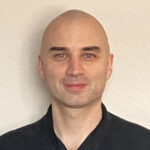
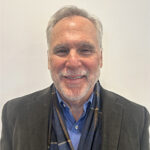
Rick: Welcome to Buddha at the Gas Pump. My name is Rick Archer. Buddha at the Gas Pump is an ongoing series of conversations with spiritually awakening people. We’ve done 750 of them now, and if you would like to check out previous ones, go to batgap.com, B-A-T-G-A-P, and look under the past interviews menu, where you’ll see them organized in various ways. This program is made possible through the support of appreciative listeners and viewers, so if you’d like to support it, please go to the website and you’ll see the options. Fifty-five years ago, I was teaching transcendental meditation in Connecticut, and I went up to a prep school called Taft in Watertown, Connecticut, and taught about 80 kids to meditate. I was 21 at the time. Today I’m going to be speaking with Dr. Robert Ganung, who is the chaplain at that prep school. And I thought it was kind of cosmic that out of all the prep schools and schools in the country, this guy should get in touch with me. ‘Cause I have a kind of a fondness for that school. It was quite an experience for me going there and teaching all these people. So Robert is my guest, and you’re going to get to know him in the next couple of hours. Robert, Taft must be a fairly liberal school to let a 21-year-old kid like me come and teach 80 kids to meditate and to have a chaplain like you who is very eclectic and interspiritual and so on.
Robert: It’s a very open-minded liberal school. Yeah, I would say. I’ve been in a couple of different prep schools, and Taft has been where I’ve felt most comfortable, and that includes my time in Hawaii, in another beautiful school. But what I love about it is I get to design my own courses. And so, 19 years I’ve been here and I’m free to design whatever I’d like to teach, and that’s usually, since I was a philosophy major in college, I do traditional philosophy, which most prep schools do, but I teach courses in Intro to Buddhism, which I call “The Influence of Buddhism in the West.” I’ve taught a course on terror in the name of God. We looked at terrorism and different cults and world religions. “Intro to Islam,” “Eastern and Western Spiritual Paths,” “AP Human Geography.” So I teach a range of courses, but I can design all of them myself. And they’re all electives for seniors, some juniors, and there’s really an incredible hunger, thirst, out there for these classes. Even though the kids at places like this, high-powered schools like this, a lot of them are going on into finance and marketing and economics and that sort of thing. I think they’re hungry for something more, the something more question.
Rick: Yeah. You and I have been around since the 60s and 70s and I think we both experienced, we’ve had private conversations prior to this interview, we both experienced that when we are the age that your students are now, something lit up in us, a quest or a thirst for deeper meaning in life and that is so typical of kids that age. And well, some, I suppose a small percentage, make that a lifelong quest. Others, you know, like I think it was Abbie Hoffman who ended up becoming a stockbroker or something. Others kind of like get into it.
Robert: Jerry Rubin, I think it was Jerry Rubin.
Rick: Jerry Rubin, right. Yeah, yeah. So I suppose one of your motivations is to get that fire really kindled in these kids so it becomes a lifelong thing, no matter what else they might pursue in their lives.
Robert: Well, I’ve had just a wonderful experience. A lot of times I’m talking about places I haven’t been to, but I’ve read a lot about. Plum Village in France where Thich Nhat Hanh’s monastery is, I finally got there about eight or nine years ago, but five or six of my students through the years have gone there before me, because we’re always reading his books in this class for the last 35 years. We’ve been reading “Peace Is Every Step” in just about every class that I’ve been in. Kids know that. Over a thousand kids know that book and the three prep schools I’ve been in. But so one student, I talk about the 88 Buddhist temples that are in Shikoku, Japan, which I haven’t been to. I’m fascinated by the pilgrimage there. And he, two years ago, spent two months after he graduated from Taft, before college, and he did all 88 temples and and send pictures back so I could show them in my class. And so when you can inspire kids like that, who come from high-powered families, but they’re gonna make a difference in the world. But they get to do some of the things I haven’t been able to afford to do or just haven’t had time ’cause we teach six days a week here and I’m a minister on Sundays in the Congregational Church. So, but that’s pretty exciting.
Rick: That’s great. You get your adventures vicariously through your students.
Robert: Yeah, but I do do a fair amount of traveling myself. And the way I do it is a congregational minister, and I’m also raised in the Episcopal Church, ordained in the United Methodist and the congregation UCC Church. I swap with ministers in different parts of the world, mostly in Western Europe. I just send letters out and to interesting places I wanna go to explore. And somebody usually gets back to me. We swap cars, we swap houses, we do the Sunday services, we get to know local people. I’m not just an American tourist. And we have this relationship. And what I find is we have some of the same books and we have some of the same ideas. Sometimes we never even meet each other. We’re just corresponding. And they’ve all been just incredible experiences. Sweden and Finland and France and British Columbia, Rome. It’s just been amazing. And it’s a way to travel on a shoestring without much money. We do the swaps, we swap cars, we trust each other, and it always works out.
Rick: That’s great. It’s cool that you’re able to sculpt your life in this way, not only with what you just said, but what you said previously about, you’re interested in a thing, you create a course on it, you know, and then you teach it.
Robert: Exactly. And then in Taft, I can travel. We’ve taken school trips to South Africa. One of my colleagues was friends with the Mandela family, so we had breakfast with some of the Mandelas. And we traveled throughout because he is an African-American, but he lived in South Africa and taught at Stellenbosch University. So we’ll take students. I went to an exploratory trip to India and a friend of mine knew the Dalai Lama and we stayed in the Dalai Lama’s sister-in-law’s house. And we just travelled around North India. I’m trying to set up a trip for Taft students, which hasn’t come to fruition yet, but you can do that sort of thing, and take these kind of educational spiritual trips with students.
Rick: Yeah. Incidentally, I should say that one of the main things we’re going to be talking about today is the intersection where inner spiritual practices meet public responsibility, where mysticism fuels justice, and where personal transformation becomes the seedbed for social change. And we’ll talk about other things as well, of course.
Robert: Yeah, sure.
Rick: I think that’s very timely and relevant. There’s so much turmoil in the world today, and I’ve long believed that what happens on the surface of life is symptomatic of forces at much deeper levels, forces in human psychology, collectively, and even in something broader than human consciousness, something more fundamental. I speak with people who bemoan the situation that we’re now in and feel depressed, like they want to leave the country or leave the planet or whatever, and I just say, “Hang in there, because you are in a position to actually contribute to a better world much more than you may realize, and you just have to find the way to do so.” So I think you can relate to that, and you’ve been trying to do that yourself now for decades.
Robert: Well, I could just start with on Sunday mornings when I do sermons, probably for almost half of my sermons, my resource is Richard Rohr. And you’ve had a lot of Richard Rohr, Cynthia Bourgeault, and James Finley on. And the contemplation and action is important, marrying the two has always been important to me. And that’s what I did my doctoral dissertation at Boston University on 35 years ago. I was thinking that the church, particularly at Boston University, is a very progressive social action seminary or theology school, and Martin Luther King got his PhD there. But we’re very action-oriented, social justice, human rights, which is important to me. But we are lacking the core spirituality. This was back in the ’80s. So I was part of City Yoga, and you’ve talked about that before, Guru Mai, and Thich Nhat Hanh, different Buddhist communities. And I thought that we need the meditative, we need the contemplative side, and we need both. Because we’ll burn out, we’ll get angry, we’ll get frustrated, if we’re acting without a deep spiritual core. So I wrote this, my thesis, basically was Thich Nhat Hanh, was like, “How can the mindfulness meditation of a Zen monk from Vietnam deepen and enrich the lives of Christians?” It took me a while, even at a progressive seminary, it took me a while to get that accepted by my advisors, but I finally got it through and finally did it. And I went to a lot of retreats with Thich Nhat Hanh when he was in New York or New England in the area and ran my own meditation classes. It was just sitting and breathing, being present, nothing too fancy, and adapted for Christians who at the time were not used to that sort of thing. So it was something new.
Rick: Yeah. New to them, perhaps, but probably not new to the original Christianity.
Robert: Right, exactly.
Rick: Exactly. Things tend to get lost over the passage of time.
Robert: I think we’re recovering that now, and that’s really fundamentally important. Like you, you’re out walking in the winter, skiing there. So every day I’m on a walk, and we have a lot of snow here, and I found a dirt road through this forest. But I’m listening, sometimes I’ll I’ll listen to a podcast, sometimes I don’t listen to anything. But I was listening. The form of Christianity that really inspires me is Celtic Christianity. It’s very rooted, very much like Native American spirituality, but I’ve been to Iona, a beautiful monastery, a couple of times on retreats, and it’s very connected to the earth. Everything is sacred. The presence of God is in everything. And I think if we can come to that realization that the divine is in and through everything, all animals, all trees, everything is alive, and that there’s no separation. You talk a lot about nonduality. There’s no separation. Wherein the Buddhists talk about interconnection. We’re part of one another deeply, not poetically, but fundamentally at the core. If I get that point across to students, we’re fundamentally interconnected. What happens to the other happens to you. If you walk out of this classroom, you have that awareness, not just intellectually, but you feel it, then it could be the beginning of a change. The world can change around you.
Rick: Yeah. What is it? “No man is an island… a part of the main.” “Ask not for whom the bell tolls, it tolls for thee.”
Robert: Yeah. John Donne had it right. Yeah. So, I think I hear from some of the people on your show, and when I’m hearing other people, I listen to different podcasts, and in the books I read, that there is a great awakening going on. People are waking up, even though there’s a lot of craziness in the world that we need to stand up and we need to get involved, do what we can to change the direction of the country, the world, but there’s this awakening that’s happening. And I’m trying to let students know, because they’re not aware. They’re in a sea of social media. And yesterday in the Buddhism class, I was trying to make the connection of the Buddha leaving his palace. You’re not leaving a palace, but your palace is the world of social media that’s conditioned you. And you’re ready to to go out and journey in the world and wake up. You don’t necessarily see a corpse, or see a sick person or a dying person and become an aesthetic, but you’re waking up. There’s something more to life than the treadmill you’ve been on, that success is all material, and financial, and status, Ivy League schools and all of these things. There’s something more. And I think they get it. I think they hear it. And then…
Rick: Yeah. A minute ago you said there’s a lot of craziness. You said people are waking up even though there’s a lot of craziness going on. It could be because a lot of craziness is going on. I mean it could be that the two are very intertwined and that there’s kind of a phase transition taking place which is very much related to the fact that there’s an upwelling of consciousness or a global awakening taking place which would not tolerate, which would not be compatible with the old structures, the old ways of doing things. If there is going to be some Age of Enlightenment, or New Age, or whatever you want to call it, there are so many things that wouldn’t fit in it that are predominant today, and they’re beginning to be shaken, you know?
Robert: Exactly.
Rick: The rug’s being pulled out from under them even though they don’t realize what the rug is.
Robert: It’s true, and I always tell students to question me, to question the text we’re reading, to question one another, and do it with reverence and respect. But ask questions and question. I don’t have all the answers, but I feel that we’re at a watershed period. You know, you talk about the ancient Axial Age that…I can’t remember the German scholar, but Karen Armstrong will talk about it a lot… of Confucius and Buddha and Lao Tzu in China and the Buddha in India, reforms in Hinduism in India, and you move over to the Zoroastrianism in Persia, and you got the great prophets of Isaiah, Ezekiel, and Jeremiah in Israel. And then you have the philosophers, the pre-Socratics, Plato, Aristotle, Socrates. This great movement that has shaped who we are 2,500 years later, but now things have fallen apart, but we’re in a new watershed period, potential with technology, with everything, to create something beautiful. But science and technology are just one wing of the bird. We need the spiritual, not religion, but the spiritual dimension. This isn’t New Age stuff, this isn’t woo-woo stuff, this is just real stuff. We need the intuitive side, the direct experience, the feminine, we need balance. Have you read, I don’t know if you’ve had Iain McGilchrist on.
Rick: I have.
Robert: Yeah, you have, yeah, I think I did watch. Just wonderful. I mean, of course his books are huge, but I don’t love the small print, but he’s brilliant. Not talking about the 90s, he says, not the 90s left brain, right brain pop psychology, but that deep, intuitive, direct experience part of interconnection, relationalism, that we see. That’s what’s happening.
Rick: Yeah, you said something a few minutes ago, I forget how you phrased it, but something about God as being a puppeteer in the sky, you didn’t use that phrase, but you know, detached from us, far from us.
Robert: There’s this saying I’ve been listening to the last few days, “creatio ex nihilo,” in the Latin, that creating out of nothing. This doctrine produced a way of thinking, not anything malicious or intentional, but over the centuries, this idea that God is somehow separate from us. The God is like the Celtic spirituality and then pre-Celtic and Christian. God is imbued, is present, in matter. Matter is part of the divine. So this body is holy. Everything physical is holy. But with that doctrine of creation out of nothing, this is where we got the idea of a separate God, divorced from us. And then it gets to the point in the 19th century where you can just dismiss the whole idea of this creator that doesn’t even exist anyhow, you know?
Rick: Yeah, and I’m thinking, I’m wondering whether perhaps either God as a separate entity, you know, lording over us from a distance or having set the whole thing up and gone off to have a picnic and ignore us, or there not being a God, anyway, whatsoever, which has kind of been the predominant attitude in the scientific community. I wonder whether the condition of our world today is symptomatic of those fundamental assumptions, and whether a better world, such as we probably both envision, would necessitate the kind of Celtic spirituality or Hindu or Buddhist spirituality in which God (well, the Buddhists don’t talk much about God,) but in which God is understood to be all-pervading, just completely saturating every iota of our being and of creation. If that were the way we generally saw God in our society, maybe we would naturally have a very different society. Like, we couldn’t do what we do to the environment if we thought that.
Robert: Exactly. Well, exactly, it’s just all connected. Once, if you see that God is imbued through, by being through matter, through everything in creation, everything becomes sacred and our relationship to things is different. Seeing the sacredness in the other. I love in philosophy, we talk about, one of my favorites is the Jewish mystic Martin Buber. I say, funny name, Martin Buber. Great Hasidic Jewish philosopher. The I-Thou, I-That relationship. And it tends to be in this kind of a capitalist society where we exploit things for profit. Most of the things we treat as an I-It, an object to be manipulated, used, exploited for our personal gain. But when we do have the I-Thou, that sacred other, whether it’s a person or some of the animals or anything in nature, an event, an experience, we have an I/thou, then he says there’s like an electrical current between those two things, that something happens really deep. It’s kind of like, I always think of Thomas Moore. I love Thomas Moore, “Care of the Soul” and “The Re-enchantment of Everyday Life.” Do you know those books? He’s a wonderful… He was a former monk, Benedictine monk, he left, got married, became a psychologist, but he is deeply spiritual and he’s written these two classics, “Care of the Soul” and “The Re-enchantment of Everyday Life.” And “Care of the Soul,” that we know is soulful experience when we have it. When we’re having a glass of wine or a cup of tea with a friend, or we see a sunset with somebody we love, we listen to a piece of music that just sets us off. We just know it. We don’t have to think about it rationally, intellectually. We know what is soulful. But I think when you have the God up there and the separateness, you lose that sense of soulfulness, connection to everything. So I tell my students every day, “How do I begin my day?” 5.30 in the morning, sit down for 20 minutes. I’ve got a little altar. I’ve got Jesus, these Greek icons. I’ve got Mother Mary. I’ve got the Medicine Buddha, the Blue Buddha. I’ve got Hanuman. I’ve got Ganesh to remove obstacles in my life. Hanuman, to be a warrior, but be the servant of Ram, as you know. Krishna. Maybe a stone from Iona, the monastery in Scotland, things like that, and flowers and incense. In just 20 minutes, I sit, and I say, “Let’s get my heart aligned with my Ishta Devata,” that would be Jesus, so I sit with Christ and Mary, and I imagine Mary, Kuan Yin, Jesus just walking with me through the day. I really do. And then I go out and walk the dog, and then I take in nature, the beauty of nature, and I’ve got my dog, and it’s beautiful, and then I’m ready for the class. I certainly don’t look at the news first. But I do look at the news. I do watch “Democracy Now!” I do want to stay in touch, and I want to be engaged. But if I don’t have that big foundation to begin the day, I’m in trouble. Then the anger and all of that thing could take over.
Rick: Yeah. Yeah, good.
Robert: And I know, last thing is, Ram Dass, you know, Ram Dass had a picture of Cap Weinberger on his altar, maybe Reagan. And I heard someone the other day, maybe it was on Phil Goldberg’s little talk, podcast, that a woman who wrote a book about Ram Dass’ life, that even toward the end there, in the first Trump administration, he put a picture of Trump on the altar next to the-
Rick: Yeah, I think I did hear Phil say that.
Robert: But so, I mean, so you don’t, I think Ram Dass had a great idea because you don’t want your heart to feel, I mean, we get angry, anger comes, I say it’s a real emotion, but you don’t want to get filled with that bitterness and that anger, ’cause that’s not gonna heal the world, it’s not where we want to be.
Rick: Yeah, I think the Dalai Lama once referred to the Chinese as “my friend, the enemy.”
Robert: Oh my! I think I’ve heard that. We just saw… So I just showed my Buddhism class, I love the movie, “Mission: Joy,” how to be joyful in a… You know this one, with the Dalai Lama and Bishop Tutu? I love Bishop Tutu and the Dalai Lama, they’re so playful and they’re so joyful, and they’re a little — I mean, they’re mischievous, and that’s great. And that’s what I mean, we need that. But this — you know, when they talk about the eight pillars of joy, what leads to joy? Joy not being happiness that comes from things outside of us, but something that comes from within. And so we have a discussion about that, and it’s really powerful, just to see the playfulness of two of the world’s great spiritual leaders from two different traditions who’ve experienced genocide in Tibet and apartheid in South Africa, and they have common experiences, and they come out of it saying, “I don’t want to hate. I want to change the world, but I don’t want to be filled with hatred. I want to maintain my joy, my happiness. I’m not going to let them take it away from me, but I’m going to be engaged in the world at the same time.”
Rick: Yeah, there’s a couple verses in the Gita. One is, “Established in yoga, perform action.” I think it’s 248. And another is, “Yoga is skill in action.” And so, by yoga, we don’t mean asanas, we mean union with the divine or with, you know, pure consciousness or whatever, as being the prerequisite or foundation for effective activity. I think you and I talked in a personal conversation about how those who want to help and change things often get burned out because they just don’t have that grounding in being, or pure consciousness, or the soul, or whatever you want to call it, which can recharge your batteries like nothing else.
Robert: Exactly. But, nevertheless, there are things that really bother me. So Thursday night I was at a local Episcopal church in Woodbury. We were talking about what to to do about ICE, but it was really a lot of singing, and there was a lot of joy. Most people were our age, you know, the late 60s, 70s, maybe 80s, and there were four ministers and a rabbi speaking. It’s a lot of joy there, but there’s a movement. This isn’t just this Episcopal Church in Woodbury, Connecticut, it’s around the country. People want a different world. And I always say in my sermons lately, we have two choices. We’ve got what’s going on in Minnesota. That’s a choice. And then we have the Buddhist monks on the 2,300-mile walk to Washington from Fort Worth. They’re presenting a very different view of what we can choose. And they’re going through MAGA country, very conservative Christian country down there. And people are coming out. By and large, people want change. I think the majority of us want a different world, and we can have it. We don’t have to have the world that we see in Minnesota.
Rick: I encourage people to watch some videos of those Buddhist monks, if they haven’t done so. I mean, they’re really inspiring people. I’ve seen these shots where, you know, some tough-looking old guy just bursts into tears when he sees things like that. It’s really moving people.
Robert: It’s really moving. I can remember – it’s in Rhinebeck, New York – the Omega Center, a week-long silent retreat with Thich Nhat Hanh. There were like 500 people, and we just walked in stillness down to a lake. And you could just hear, I mean, it was just so beautiful. We kind of entered a different level of consciousness, just slowly walking, and then we see a loon come into the lake. And it’s just like we opened something. This is what I think of mysticism, it’s not so otherworldly, you just enter, the veil is suddenly lifted, you suddenly enter a different level of consciousness, just quiet breathing, attentiveness to the beauty of nature. And with Thich Nhat Hanh, of course. Following Thich Nhat Hanh and Sister Chan Khong, you know, in silence. Last Sunday, I did my mother-in-law’s memorial service. She had a wonderful life, 92. She was a potter, and she was a peace activist. She was a Quaker, and she sang with a group called The Raging Grannies. They were all up there, in their 80s and 90s. They sing show tunes, but they change the lyrics to peace lyrics, and go to all kinds of rallies and peace things. And then she’d put quotes from John Lennon, the Buddha, Jesus, you know, other luminaries on her pottery. And it was very moving. Then she, without thinking about it, in 1982 came back from a trip to England, brought me “The Miracle of Mindfulness” by Thich Nhat Hanh and “The Monks of the Ramakrishna Order.” These two books have just been so invaluable. I’m in seminary at the time, but they changed my life, they really did. And so I’ve been on this track with Thich Nhat Hanh, and like you, with Vedanta and “Monks of Ramakrishna,” have been a huge inspiration to me. Sometimes I tell my students, these books are worth more than gold to me, with the wisdom that’s in them. But she was a inspiration in many ways, and my own mother, she was Italian-American, I had the most loving, sweet mother, hugging all my friends, cooking meals. The opposite of my dad, stiff upper lip, reserve, flat top, crew cut, military guy, played minor league baseball, tough guy, good guy. Mom was just loving. We didn’t talk about religion growing up, but she was Catholic and then we became Episcopalian. But we just had little statues of St. Joseph around, like Catholics do in the house, and a picture of Jesus. My brother and I shared a bunk bed in the room and that picture of Jesus with the halo was just right there where we could see it every night. And we’re always wondering who this guy was. Is he God or is he the son of God? We could never figure that out, But anyhow, my mother must’ve positioned it there because never in a million years did I think in high school that I would be going to seminary and theology school. Like you, I was playing sports, having a good time, concerts, playing music. And my friends, when I finally went to say, I’m going to theology school, I said, “What, you’re gonna be a geologist?” They had no idea what it was because this was an alien world to all of us, really. I said, “Yeah.” I had this professor from India, from the Punjab, and I took four courses in college, he was a Sufi, but he was Indian, he did a lot with the Bhagavad Gita and other Upanishads. And that just opened my world up, the Tao Te Ching. And then my philosophy professor said, “You might be a candidate for theology school.” I was thinking, “What the heck is that?” And so I get on this track, suddenly I’m in, and three years into this thing, and a kid on the way… and am I gonna actually take a parish? A parish minister? And I ended up being a parish minister starting out in Maine, coastal Maine, for 12 years, but knowing at the same time I wanted to teach. And so I got into the prep school world for 30 years as a chaplain teacher. People like Buechner, I don’t know if you know Fred Buechner’s stuff. He was a chaplain at Harvard Divinity School for a little while, also at Phillips Exeter Academy, and he’s written a lot of cool books. And I said, “I want to be like Fred Buechner. He’s great…” So that inspired me and I figured I could coach some sports and I got in this world and it’s been tremendous. But I never thought I’d be on this path, and I don’t think any of us think we’ll be on the path we’re on sometimes. We get hooked.
Rick: Yeah, you never know what’s going to happen. You know, when I think about religion, my history with religion was being dragged to the Congregational Church in Westport, Connecticut on Sundays, and not knowing what in the world it was all about, just getting totally bored after having had a big fight with my parents about having to go in the first place and put on a suit and tie and all that stuff. And then, you know, and then they gave up on trying to do that with me at a certain point. And then eventually I learned to meditate and I think, “Oh yeah, that’s what all that was about.” You know, this experience. Then the whole thing began to make sense. But even now I don’t feel like I belong to any particular religion, although I respect them all. I just don’t have any… and that’s just me. I don’t have a strong affinity with anyone, although perhaps more Vedanta than any other. But then I don’t even feel like… I mean, you have to remember we’re on this tiny dust mote of a planet in a vast universe with somewhere between 2 and 10 trillion galaxies, each one of which has about 100 billion stars, and almost all stars have planets around them. We know that now. So my attitude or belief is that the universe is teeming with life. There are trillions of highly evolved planets with trillions of spiritual saviors. If Jesus is Lord of this planet or whatever, which I don’t think he is exclusively, there are trillions of Jesuses all over the universe who are not called Jesus. But it’s kind of good to keep that in mind, and it doesn’t in any way conflict with any religion you might be following. I think… there’s a great quote by Carl Sagan about how people, when they’re confronted with a scientific perspective like that, they tend to get defensive. And what that perspective is really trying to do is show them that God is even greater than their conception of Him. And so they should welcome it and not fight against it.
Robert: Well, my love was astronomy in high school. I went to Boston University. We have an observatory and I took a few courses in astronomy and I was not prepared for the physics, largely because I was going to concerts having a good time. If Jerry Garcia was in town or something. I remember my astronomy teacher, Professor Papagiannis, pulling me aside, “You’re wasting your parents money,” and I it went through me like a shock. What am I doing? I just wasn’t prepared. I still have that novice love of astronomy, but that’s when I took two years off, hitched out west, worked in Wyoming and Montana with a friend that I grew up with. He was at Syracuse, I was at BU. And we worked and traveled around the country, and then we backpacked around Europe. Money that we made, because my parents were just middle class, I made it myself. I went back to school and that studied philosophy, but astronomy has always been something important to me. And I know, I sometimes say to my students, “Do you know the distance between the Earth and the Sun, roughly? Do you know it’s 93 million miles? Do you know the Moon? Do you know the order of the planets in the solar system? Do you know, if you took a spaceship across the Milky Way, it would take you a hundred thousand light years to just travel across this one?”
Rick: If you could travel at the speed of light.
Robert: If you could travel at the speed of light. And then I say two to six or ten trillion galaxies. But for me, and then there are people like Brian Swimme at the California Institute of Integral Studies, different astrophysicists, and Riz Virk at MIT, talking about parallel universes and multiverses. And to me, I say it doesn’t matter. It doesn’t matter because the dharma or what that root of the word means, that which supports. I think, the way I see it, I could be wrong, there’s a fundamental law that supports everything. How many universes, how many galaxies, how many, whatever there is, I believe the fundamental law is love. It’s fundamentally love. And I just believe that it doesn’t matter if Jesus is a different type of a Jesus or Buddha on other planets, because I think the teaching is what’s important. And you read all these things I’ve, like you, been fascinated by because I do a lot of funerals as a minister, of the near-death experience stories, and they’re incredible. And it’s about love. And my own personal spiritually transformative experiences have been just about love, that I’m tapping into something so deep that I’m feeling it, but I become love. And I know that, what do you call it, the kundalini awakening, whatever you want to define it. I feel, despite the craziness and the meanness and the wars, I still believe it’s love. And I’m millions of people.
Rick: And of course, there are different levels of love and different definitions and so on, but I don’t know if you want to elaborate, but I think we know what you mean.
Robert: Well, I think…
Rick: Nothing superficial.
Robert: That’s what I think about love. I said, love is tough because I love hamburgers, I love roller coasters, I love the beach. I’m talking about not sentimental love, but love in the, as Cornel West says, who came to Taft a couple of years ago, was wonderful, love is justice in the public square. But I think of love, and I’m trying to come up with a definition. I think it’s that love seeks the well-being of all. That’s what it is for me. The empathetic concern, empathy is about seeking the well-being of all, and all sentient beings as well as people. But it’s also engaged, like Thich Nhat Hanh’s Engaged Buddhism, it’s Christian social action in practice, to bring healing. And sometimes it gets messy. It gets like John Lewis saying you gotta “get into some good trouble.”
Rick: Yeah.
Robert: Right? And good trouble, you know, sometimes you get arrested, sometimes non-violently, you do what Gandhi did, you do what King did, you do what–
Rick: Yeah, I was just watching a movie last night about nonviolence and related things, and there was this fellow speaking, who’s about our age now, but he was, a white guy, but he was down in Selma or one of these places, sitting in a Woolworth’s with the African-American people at those lunch counter sit-ins. And they were getting spat on and beaten up and so on. And at one point, some guy came up to him and took out a switchblade and held it an inch from his chest. And he said, “You get out of this restaurant or I’m gonna shove this into your heart.” And he looked at the guy and he said, “You do what you feel is best, but just know that I’ll love you no matter what you do.” And the guy was like shocked. And then he started shaking, and then he just ran out of the restaurant.
Robert: Yeah. I think we don’t realize how powerful African-American I know there are a lot of other people involved, a lot of white people that are Jewish rabbis, but the African-American community, it’s mind-boggling. In 250 plus years of enslavement, and to come out with nonviolence, it’s just so wonderful. And the person people don’t realize, most people don’t realize… one of my all-time favorite spiritual, certainly Christians, Howard Thurman. You know Howard Thurman, Reverend Dr. Howard Thurman?
Rick: Yeah, I’ve heard talks and stuff.
Robert: He was an African-American mystic, a poet, a theologian, and he’s the person behind the nonviolent movement, beside Bayard Rustin. Thurman was invited to go see Gandhi in 1935. He met met with Gandhi, traveled India with his wife, who was also very impressive. And he met Buddhists, he met Hindus, he met Sikhs, he met many people and he traveled and he brought the nonviolent movement back to King. And people don’t know the story. So he is the pastor behind the scenes and he’s written beautiful books, like “Meditations of the Heart,” And “Jesus and the Disinherited.” And the “Meditation of the Heart” is just so rich and beautiful. His prayers, his poetry, so inspiring. So I love this man, he inspires me, because unfortunately a lot of people think of Christianity as TV evangelists or what the media reports, and it could be a very beautiful religion in the hands of people like Howard Thurman.
Rick: Sure.
Robert: Somebody that’s experienced so much lynching. Daytona, Florida in the early 1900s, it was brutal. So, but the nonviolent movement… I just don’t think there’s any other way forward, but it has to be engaged and you have to take risks, and it could be very dangerous. But I don’t think there’s any other way forward to make the changes we want to make. We still have to use it.
Rick: I’ll send you a link to this movie, I think you’ll like it. Speaking of love, as you were talking about it, I was thinking of something which I was discussing with a friend the other day, which may be a conversation starter or stopper, I’m not sure, but let me try. And that is, we were talking about the… Well, you mentioned Brian Swimme a minute ago. He’s been on the show, and he has a quote that I like, which is, “You take hydrogen and leave it alone for 13.7 billion years, and you end up with rose bushes, giraffes, and opera.”
Robert: Yeah.
Rick: And so we were talking about the second law of thermodynamics, which tends to make everything more and more disorderly. And yet, despite that, all this complexity and order and structure has arisen out of essentially hydrogen, to start with. And so there’s a force, you could say, that runs counter to the second law of thermodynamics. And I don’t think it’s considered to be one of the laws of thermodynamics, and I don’t know if science has really come to terms with it or can explain why we have such intricate order despite the general tendency for the opposite to occur. But in any case, I was thinking, well, that could be thought of as love, because what is it? It’s this force which fosters greater and greater evolution in the universe, and evolution being ultimately the ability to embody the divine. The more complex a life form is, the more fully it can embody the divine. They say man is made in the image of God, well maybe that’s what that means, that we are like little mini-gods in the sense that we possess some of the qualities of God and can be channels or conduits through which those can be expressed and shared with others. So anyway, what do you think about all of that?
Robert: Well, it reminds me of Teilhard de Chardin.
Rick: Right, exactly.
Robert: Exactly, and I was thinking you probably, I think you had Jean Houston on.
Rick: I did.
Robert: Didn’t you have?
Rick: She met him when…
Robert: when she was running down Park Avenue, 14 years old…
Rick: and she practically knocked him over!
Robert: And I think Chardin gets at that thing of evolution… of love. I don’t know how if he puts it exactly, to paraphrase him, but you know, there’s an evolution of the physical body, but there’s this evolution of consciousness and it’s love and we’re moving towards something greater. I guess he he would be one of the people. But what I like to tell students like, we’re reading, I don’t get off the topic of the scientific thing right now, but we’re reading “Siddhartha.” We’re reading Hermann Hesse’s “Siddhartha.”
Rick: That was my first spiritual book.
Robert: I read it all. I just love the book. But I say, don’t look at it as a character in a novel, unrelated to you. See yourself in the story. The story’s about you. It’s your journey. The story of Jesus is about you. It’s not a guy 2000 years ago. These are archetypal stories. The Buddha is a story about you. The Buddha’s on the road, kill the Buddha, right? The Buddha’s inside of you. It’s your story. The Buddha leaving the palace is your story. I know some way people interpret Christianity, but I really think Jesus and the Buddha are models and archetypes that we can become like them, we have that potential.
Rick: Yeah, and they all said that. They both said that. You know, “Whatsoever I do, you shall do even greater things,” and so on.
Robert: So we’re evolving toward that, I think. I think we’re evolving. So you also had on Neil Douglas-Klotz, right?
Rick: Right, the Aramaic scholar.
Robert: Yeah. I discovered him 40 years ago through Matthew Fox. Oh, my God. And Brian Swimme. These are where I discovered Matthew Fox and I went to some workshops with Matthew Fox and that was an awakening for me, original blessing rather than original sin. So important to get that idea that we’re blessed and it’s chapter one in Genesis. God creates, God is beautiful, it’s blessed. Somehow we come up in the fourth century with the doctrine of original sin with Augustine, but this is exactly what was happening in the fourth century. It was so critical because Pelagius, the Celtic theologian from Wales, and was really the opposite in many ways of Augustine talking about the original sin idea, that divine grace is to awaken what we already have within us, the divine nature, whereas more in the original sin is that there’s something we have to receive from outside, sort of, that there’s something wrong with the human condition. I fundamentally don’t agree with that, and if I had to agree with that, I wouldn’t be in ministry because that’s not my theology. People are fundamentally — this is a discussion I have almost every day for years — what is our original nature, in class? A lot of kids think we’re selfish by nature. I think, really, let’s explore that a little bit more. I think we’re fundamentally at good. The Buddha taught it, Jesus taught it, and it gets buried, that’s all. We have to bring it out of people. Create the conditions that allow it to come forth. And we’re in a system of domination and oppression, which is very hard. It suppresses. It naturally doesn’t draw out these qualities. So we have to create communities where people can come, that divine nature, that goodness can come forth because I just believe that’s fundamentally true.
Rick: Yeah. One spiritual teacher said, “God may be omnipotent, but the one thing he can’t do is remove himself from your heart because he’s also omnipresent.” And, you know, and I find science useful to give us concrete evidence of statements like that, because if you actually look at what’s happening in the inner workings of a cell, for instance, there’s some really cool videos which illustrate that. Holy mackerel, that is not random, arbitrary happenstance. There’s this incredible intelligence working in every of the trillions of cells that make up our body, and it goes deeper than that. But God can’t remove himself from our heart. Why? Because that intelligence permeates the whole universe as one solid block. You’ve heard of Indra’s Net, of course.
Robert: I love Indra’s net.
Rick: I was thinking of that this morning. In a net, you actually have knots, and then there’s gaps between the knots. But I think that’s where the metaphor falls short, because there are no gaps. Divine intelligence is just one solid, all-pervading presence, and it permeates every iota of everything, and ultimately everything is that. And so the fact that we don’t realize that means we’re kind of like paupers who’ve won the lottery and haven’t claimed the ticket yet because we all have the potential to be millionaires using that analogy.
Robert: About ten years ago I, you know, I do talks as a chaplain periodically at school. We have outside speakers but we have teachers speaking and of course I always started out after the headmaster does the opening talk. But one of my talks was, I put up a big beautiful map of the Net of Indra on the big screen, with all the jewels glittering and the interconnection. ai talked about two things. For me, there are two things that I always say. we’re all interconnected, but each jewel is uniquely, there’s a uniqueness in the way each one reflects the other. We have this indescribable uniqueness at the same time we’re all part of one another. And I don’t want to lose that sense of uniqueness that we have, because it’s just too important. Pablo Casals, the Spanish cellist, said, we teach our kids two plus two is four, the capital of France is Paris, but we don’t teach them that they are unique beings. Never before has there been a me or you or anyone in this universe before, and you’ll never be again. So you’re so fundamentally important, and you have a gift to offer. And there’s a beautiful West African, I don’t know if it’s from Ghana, one of the West African nations, maybe it’s pervasive throughout West Africa, that children, when they come into the world, they’re coming with a load of cargo and they need to unload that cargo. And I really think everyone’s coming into the world with cargo, something to offer. And I really think if you find your calling, if you find what you’re really here for, and you may have a couple of callings, it will be a blessing for you and for the world. I really think that that’s true. But a lot of times we can’t hear the inner voice, we can’t hear the calling because we’re just so focused on what our parents are telling us, institutions, teachers, coaches, peer pressure, social media, telling us what to do. We don’t listen to what we could do. And I say, a kid comes to Taft, I coached football for a while, breaks his leg, he’s coming to play football and go to college, and he’s singing in the shower, and somebody hears him singing. He says, “Hey, Tom, you’ve got a great voice.” “Oh, really?” “Yeah, you should try out for the musical. You’ve got a broken leg, you can’t play football.” “Nah!” And when he finally is convinced to try out and he goes in the musical and suddenly he discovers, wow, he’s going to some, going to college and he minors in theater. Suddenly Tom’s on a different path.
Rick: Is that a true story or are you just making that up?
Robert: I’m making that up.
Rick: Oh, okay.
Robert: But there’s a true story of a lacrosse player like that in my Buddhism class during COVID. He didn’t, he was lost. His whole life was lacrosse. You know, Connecticut kids- Because he couldn’t play lacrosse because of COVID, right? He didn’t know anything else. And now we had to think, what’s my identity? Who am I? We explore some things. Maybe take a, you know, you got, you could learn guitar, piano. You could try, maybe you’re a poet, maybe you’re an artist. Try, try some different things because life is always, doors open. When other doors close, another door opens. You had Lisa Miller on, Lisa Miller was also here at Taft. I got to know Lisa a little bit over the last few years and that door opening, one closing, one opening, the yellow door, red doors close, yellow door opens, suddenly you meet this person and then you’re on a journey. So just stay open.
Rick: Yeah, what you’re saying reminds me of “Dead Poets Society” with Robin Williams, you know, which was set in a prep school. And this poor kid, you know, his parents were browbeating him to be a, I don’t know what, some kind of businessman or something, and he wanted to be an actor. He was into the theater, you know. Beautiful movie, everyone should see it. Incredible. “Carpe diem,” seize the day.
Robert: It’s so true. I mean I think about that at Taft. It’s like a Harry Potter school. You know, there are these gates and stuff. Sometimes I’m wondering where am I because I’m thinking about some of the horrific things happening in the world, and we have a kiosk out in front of my office where kids get Starbucks delivered all hours of the day and food and they’re running out to get their food and it’s beautiful out, we’ve got a golf course, two hockey rinks, beautiful fields. Am I in the same world as what’s happening in Gaza or in Sudan or in Ukraine or anywhere else, or in Minnesota? Am I, where are we? We’re in this beautiful place, so we have this opportunity. I mean, don’t feel guilty about where you’re coming from, but it’s what you do with your life.
Rick: Feel grateful, and then try to give it back, you know.
Robert: Yeah, just cultivate in the kids. I have to find, I love teaching kids and that’s the best part of the job. I don’t like the administration things, you know, little side things, but the classroom experience, the kids really are pretty wonderful and I do see a lot of hope in the future with some of the kids I’ve taught.
Rick: For people who aren’t so familiar with Thich Nhat Hanh, and you did your dissertation on him, right? And you attended retreats with him. Can you maybe describe one moment with him, or if not a moment, some longer thing that you might like to say, but just something that kind of made an impression that never left you?
Robert: You know, I didn’t really know him personally that well. I’ve sat next to him in meditation, I’ve walked with him, but… I think somebody, I can’t remember the author, writing a heavy piece of machinery, all combined in one.” And I stood next to him, and he’s about four foot eight with his brown clogs on and brown hat…
Rick: Oh, he’s tiny.
Robert: Well, maybe he’s five feet tall. He’s not very big. Same thing, brown clogs, brown hat, everything. And he felt like all of that. He felt like a mountain, a mountain of energy. And I would say that 60 years of meditation and 60 years of engaged action, the School of Youth for Social Service in Vietnam, and all the practical things they were doing to bring an end to the war. And I just think he just embodied a power and an energy that was so real and genuine. And I could feel it, feel that presence. And we have, you talk about it a lot, that there are different gurus and teachers, and some have some questionable ethical backgrounds. And there’s no question that Thich Nhat Hahn is the real McCoy, the genuine article. That’s why he stuck with me all these years and impressed me. And I’ve probably given out a thousand books of his over the years to students and parishioners. I’m kind of evangelizing and my wife will catch me, she’ll remind me when I get off track, “Hey, what about Thich Nhat Hahn saying slow down, breathe, don’t get angry,” this or that. And I’m thinking, “Yeah, right, right, right.” So I intellectually know this stuff, but I haven’t always embodied it because I’m human. But so I think that experience of walking to the lake. I think of more than that, of Milton Academy, another prep school, when two seniors wanted to do a project on Buddhism. I said, “Go up to the monastery in South Woodstock, Vermont. There’s some Vietnamese monks up there.” And they’re going up there for a month at the monastery, because seniors would get a month off of Milton Academy to do a project. And so they went up, and they were so blessed. Their karma was so good, whatever you want to say, Thich Nhat Hanh was there. And no one else was there except nine monks and Thich Nhat Hanh. They were sitting with him in the tea room on a little pond and spending days with him. And they came back and they said they were vegetarians or vegans, and their parents were really upset. One of them was, you know… but they really had a huge impact on their life. Another student went on a retreat in China for three weeks. So it really was more of me inspiring them, I guess, or turning them on to him and them going to meet him. When I saw him once with 4,000 people in the Heinz Auditorium in Boston, you could hear a pin drop. I mean, they ring the bell, you could hear a pin drop with 4,000 people, the stillness and the quiet, and it’s so real.
Rick: Yeah, I mean, his face is beautiful. It radiates a lot of light. He’s famous for saying, “The next Buddha may be the Sangha.”
Robert: I just said that to somebody the other day. I think he’s correct. I don’t think we’re looking for any particular Messiah figure. I think it’s all of us together as we awaken, don’t you?
Rick: Yeah, that seems to be the way it’s going these days. I mean, there’s still some big famous gurus, but a lot of them have feet of clay. They’ve been morally compromised. Not all, but it’s kind of common. And I think the I/Thou, the sort of hierarchical thing where someone’s up on the stage and everybody else is sitting there thinking they could never be like them and they must be so enlightened that I could never be like that, and then doubting their own judgment when the teacher begins to go off the rails because they’re supposed to be enlightened, and what do I know? I think we’re kind of, people are growing out of that painfully and beginning to realize that we’re all in this together and that, if you put somebody on a pedestal, there’s a good chance they’re gonna fall off.
Robert: Yeah, I think that’s 100% true. One of my favorite stories about the Dalai Lama is when he was in Arizona at a huge conference. He always meets important people. Before he left, he got the people, the hotel workers, mostly Latin American, Mexican, Central American, doing cooking and cleaning, making the beds, and he made sure they all lined up outside. He did the thing with the khata, the white scarf, and he blessed them. He went down the line. He blessed each one of them, I don’t know, 50, 100 people. And those people were so important to him. And I think that’s just so genuine, so real, that a lot of these spiritual leaders can be with all the big celebrities and famous people and so forth. But to have that genuine integrity. Here at school, I say, “Students, do you look around? Many of our people preparing meals for us, working on the grounds, are from other countries. They’re from Haiti, they’re from Ecuador, they’re from Central America, they’re from Mexico. Without them, this school could not exist. They are the backbone in many ways. Treat them with dignity and respect.” Just know that we’re all interconnected that way. They’re very fundamental. See, I’ve never really cared about being enlightened so much, whatever that is. I care about compassion, and I think all religion is one thing. It’s awakening the heart of compassion. Joseph Campbell talked about this. Karen Armstrong talks about this. Awakening the heart of compassion and concern for the well-being of others. And I just want to do good work in the world with my own little life and have an impact. If I’m enlightened, I’m enlightened. I don’t know what that means. And kids say, “Are you a Buddhist? Are you a Hindu? A Christian? What are you?” I’m a Christian minister, but I just draw on teachings from like, I think Ram Dass was like this. I draw on a lot of people. I mean, the Bhagavad Gita, the Upanishads, the Buddhist sutras somedays, Sufi mystics. I’ll take a month and I’m listening to Ibn Arabi, and Rumi, and Al-Ghazali. I just get so sucked into the Sufi, it’s so beautiful. And I just drink it all in and it’s all part of my life. That’s it.
Rick: “The light is one, though the lamps be many.” Yeah, you know, I used to be, I’m kind of more like you now. I used to like be, enlightenment or bust. Life sucks and I want to get enlightened and then be out of here and never come back. And now it’s like, whatever, you know, I’m just this… It’s fun to be able to contribute in some way. And I’ll come back a thousand times if I can be of use or not at all, if that’s more useful, whatever. I just don’t care. And I actually don’t like the word enlightenment anymore. I don’t think anybody’s enlightened if enlightenment means you’ve reached the end point and there’s no further development.
Robert: Don’t you think, I always tell since I can’t prove anything. We can only know relative truths in this world, we can’t know the absolute, right? But I have this sense that we would live differently if we believe, as I believe, that we’re going on, this is a school of learning, and this earth is important, and this particular life’s deeply important, but we’re going to another existence. I don’t know what it is exactly, and we’re gonna keep learning.
Rick: Absolutely, I think that’s huge. In fact, I’m gonna be, hopefully gonna be interviewing Jeffrey Long pretty soon who’s one of the top…
Robert: I know him well. I’ve listened to him.
Rick: Yeah, yeah, one of the top NDE researchers. And I’ve interviewed… who’s that other guy? I forget. Anyway, from the University of Virginia. But…
Robert: I know both of those guys in Virginia, but I can’t think of them either.
Rick: But the thing is, I mean, if you think… I think it makes a huge difference what your philosophical understanding is. And it should be grounded in experience, otherwise it’s just a flimsy belief. But if you think that you are just this meat puppet and when this body dies, that’s the end of it, that gives you a very different perspective on life than to realize that your existence is eternal or something and this is just one small chapter in a very big book and you do the best you can in each chapter. That’s like a whole different orientation to life. And there’s so many pieces of the puzzle. I mean, reincarnation and karma and so many concepts, which if you can really understand them deeply, the world makes so much sense and everything is just so divinely orchestrated. But if you don’t have all those pieces to the puzzle, you can so easily become nihilistic and even suicidal and depressed. And life is meaningless.
Robert: I guess that’s the big problem. What I’m critical of, I’m not critical of science, but of scientism and reductionism. I think it’s one of the fundamental problems when we think life is meaningless and random, it came into being, and there’s only the matter, and consciousness is emergent and it’s not non-local. Then we run into, for me, we run into problems and it fits nicely into the capitalist system. This is the only world that exists. And then get what you can, step on the other guy, compete, and it creates a world where we just extract resources from the planet. We live very differently with that mindset.
Rick: There used to be a beer ad that said, “We only go around once in this life, so grab all the gusto you can get.”
Robert: I know. Well, I actually love sports and I love football, but thank God for the Red Zone because there are no commercials – and now they’re sneaking in commercials! But the commercials and what they’re trying to sell you, things, food that’s bad for your body, Viagra, pickup trucks, Bud Light, all this stuff.
Rick: Football’s not so good for your body either, come to think of it.
Robert: I know. But I had kids on the football team years ago and they actually say, “Mr. Ganung, we’re doing the work in Africa,” they’re asking me things about Buddhism. Here’s an African-American kid who grew up in the inner city. I got the bell of mindfulness on my cell phone, Rev G. Yeah, it’s cool. I mean, but when you can have that connection and then they’re in your classroom and you can talk about stuff. But that reduction, that whole idea of the meaningless randomness and get what you can is really troubling to me. And it’s not a criticism of these brilliant scientists. We need science. It’s not that, it’s just the reductionist view that’s really troubling.
Rick: And I would say if they really want to be a scientist, no harm in taking that as a hypothesis and investigating it, but if you’re fundamentalist about it, you’re not a scientist. You know, if you’re adamant that the brain produces consciousness or that there’s no intelligence orchestrating the universe and whatever, all these spiritual concepts that we play with, if you just dismiss those rigidly, you’re not a scientist. Scientists actually have have to be open to all possibilities.
Robert: That’s what I think, exactly. For a while I was just really into Jean Houston’s stuff and still love her. But didn’t she say we’re something like, we’re not just an ego or a dreary ego dragging around in a body, dragging around a bunch of bones, there’s something more to us. And she talks about the imaginal realm.
Rick: Right.
Robert: Connecting… And imagination in Celtic spirituality is fundamentally important. And the beautiful poetry in Ireland and Wales and in that Celtic world. Imagination, we bring things into being through imagination. We create something. And I just think we tap into this imaginal realm, what Plato’s theory of form, whatever you wanna call it, there’s something more, we can pull these things in. I know, you know, that’s all the great thing from Einstein to great artists to Mozart… the symphony will come in suddenly and then they write it down, but it comes from the moment it was…
Rick: Yeah, I mean, Mozart would get a symphony in a flash, and then he’d have to spend a couple months writing it out, but it would only take a moment to get it. And you know, before we get off of the Celtic world, I think it’s probably not coincidental that these people saw leprechauns and fairies and all this subtle stuff, and they weren’t just imagining them, they were open to that subtler realm because they were open.
Robert: Have you been to Iceland? We’ve been to Iceland a couple of times, we love it, my wife and I. We had a church in Sweden for the summer. Two times we went to Iceland and they build the roads around the gnomes or the little people like that, literally build the roads so they don’t affect them. I mean, they make fun, but they kind of believe it though. And when I live in Hawaii, they talk about the Menehune. Same thing in Kauai. I was a minister on the island of Kauai for a Japanese Hawaiian church, and it was the most beautiful experience, one of the most beautiful experiences. Just to take you on another ride here.
Rick: I’ve interviewed a bunch of people who see this stuff routinely, and I believe them. The whole notion of subtler perception is something that’s talked about, again, in all spiritual traditions. I mean, all this iconography of angels and devas and all that stuff is not just mythology. It’s based upon people’s experience.
Robert: Yeah, I think you had Lorna Byrne on, too.
Rick: Yeah, I had Lorna.
Robert: I’ve listened to her a few times on different programs. And of course, the average person, you tell them that there are angels and things like that, they’ll think you’re kind of crazy, but I don’t know why. But I think that’s changing too.
Rick: Yeah.
Robert: People are…
Rick: I think a simple way of explaining it is that the senses, like any instrument, we’ve all seen the spectrum of light and how small a percentage of it our eyes can actually see and outside of that there’s x-rays and gamma rays, all kinds of stuff that we don’t see, infrared. Well, by a similar token, there’s a spectrum of gross to subtle in creation and we’re habituated to perceiving at the gross for the most part, but our faculty to broaden that range and perceive subtler and subtler realms can be unfolded, can be developed. And a great many mystics and sages have done just that and have described what they saw.
Robert: Yeah, I totally believe it. I’m thinking about, just popped into my mind, somebody like Shackleton. I love adventure stories.
Rick: Ernest Shackleton, the sailor from Antarctica?
Robert: Yeah, Ernest Shackleton goes across…
Rick: There’s a book I read. South Georgia Island. Right?
Robert: Endurance. Endurance. Right? Wasn’t there a presence that carried him across South Georgia Island? He felt a presence, like a third, fourth person was with him. I remember that from the book. There’s a very concrete, scientific kind of explorer, British guy, but there was a presence. And what it is, there’s something more.
Rick: You know the story of Houdini? I have a good friend who’s Houdini’s great-nephew, but that’s incidental. But Houdini did this thing where the Hudson had frozen over, and he had himself chained up and put in a trunk, and the trunk was chained up and everything, and they cut a hole in the ice and dropped it in. And he was supposed to escape from all that and come up, which he did escape from it, but he failed to factor in the current. And so when he came up, he was hitting the ice, and he didn’t know where the hole was. But then he heard his mother’s voice calling him. So he just followed his mother’s voice, and it brought him to the hole where he could come up out of the ice.
Robert: Wow. That is quite a story. I don’t think I’ve heard that one before. So what is that? I think people, because of the near-death experiences, and they’re in the multi-millions now… I’m hoping to go to Seattle this year, near Seattle, for the IANDS conference.
Rick: Oh, right.
Robert: The International Association for Near-Death Studies. I think you’ve gone to that, right?
Rick: I’ve never been to that conference, but I’m well aware of it.
Robert: You go to SAND.
Rick: Yeah, they don’t have SAND anymore, but I went to about 10 of those. But anyway, IANDS is cool. I’ve interviewed people from that organization.
Robert: I’ve just listened to so many thousands of those people, and I’m just so… I mean, you can’t deny what happens to the people when they come back, this incredible change in their life that they couldn’t get with 30 years of therapy, that they’re transformed. And if they were in a high position, if it was all about profit and money and material things, and let’s face it, kind of shallow egotistical pursuits, they come back and they want to work for a nonprofit, environmental thing, ministry, social justice, social work. They wanna do something different to make a difference. How do you explain that, that transformation that happens to people? It’s just remarkable.
Rick: Yeah, they get a kind of a cosmic eye view of life as opposed to, I mean, it just breaks them out into something they can’t forget.
Robert: My own, what I got on really… it was even in the ’70s when I was exploring spiritual paths to hallucinogenics and that whole scene. I did start reading Elizabeth Kubler-Ross, and I think I read “Life After Life.” What’s his name? You’ve had him on the show. The guy, the founder.
Rick: Michael Newton.
Robert: No, the other, the doctor, he’s a philosopher and a doctor. He wrote “Life After Life” in 1975. (Aside: Dr. Raymond Moody) I can’t remember, but anyhow, I’ve listened to him a million times. I guess it’s being 70 years old. So when I started, I started exploring near-death things back in the ’70s, just a little bit. Seth Speaks, I don’t know, I was sort of a little bit on that path, and then I lost interest. About eight years ago, my brother’s brother-in-law, I call him my brother-in-law because we’re close, we all grew up together. He’s my age, but he was like 60 years old then, great shape, playing tennis, came back, took a nap, woke up, told his wife that he had this incredible dream that he was on a tractor and he’s going down a road and he’s feeling this blissful experience, seeing his uncles with him, his dogs, all the people who had died. But it was like he’s just going down a road on a tractor, and he said he just couldn’t believe how blissful he felt. At four in the morning, I got a call from my brother, saying, “I’m at Greg’s house. He just died. He’s dead on arrival. They’re putting him in the ambulance.” He had a massive heart attack. And so being the family minister, you know, nobody’s really…they get me to do the service. So two days later, we go to the cemetery, and there a huge tractor is stuck right by the grave site and the funeral director said, “You got to move that.” And the grounds people said, “No, we can’t move it. You got to do the service there. It’s stuck.” But so his wife naturally thought, “This is incredible. There’s something to this.”
Rick: He had a premonition.
Robert: Yeah, he had a premonition and he experienced it. And the two cardinals that, Luigi and Louisa, that would always come, came the next day when we were at the reception, showed up in the backyard. You could say, “Well, it’s just two cardinals. Well, it’s just a tractor.”
Rick: Cardinals meaning birds?
Robert: Birds.
Rick: Okay. You had names for him. Luigi and…
Robert: He had names for him. He loved them. And they showed up. They would periodically appear on the back porch, and they showed up after the reception. But I think the tractor thing, so it really got me seriously looking at a lot of the near-death experiences from Eben Alexander to all those people. And some of them are just incredible, remarkable stories that can’t be dismissed because many of them are doctors, many of them are scientists, many of them are atheists, a lot of them aren’t religious, weren’t spiritual at all, but something profound happened to them.
Rick: Yeah, and of course there are a lot more of them these days than there used to be because we’re able to resuscitate people a lot better than we used to be able to. But I think it’s valuable to read that stuff. YouTube videos about them are very popular. There’s some channels that specialize in NDEs and they get a lot more views than I do because I’m more eclectic. But I think it really gives people a lot of hope and inspiration and broadens your perspective. You’re just not so boxed into the perspective.
Robert: Exactly, yeah. Because I think our society, I mean, I always think, what’s the alternative to a spiritual life? What’s the alternative? Is it just profit and gain and making a lot of money and having material things and having status and wealth, I guess is that the alternative? I mean, you can have a beautiful life and be a spiritual person, do good things. It’s not a matter of not living a good life. But yet, I always just wonder why people don’t ask the deeper questions in life. Because I’ve been a philosophy teacher forever in schools. And I just say, ask the question, why? Why do we do anything the way we do it? And then if it’s a good reason, then say, yeah, that’s a great idea. But if we don’t, then the question, why are we doing, why are we organizing society in the way we do? Why do we see people who are homeless in the richest country in the history of the world and pass by them and never wonder why? You know, why couldn’t everyone have a Taft School in their backyard? Why couldn’t we focus on education, put our money in education? Why couldn’t we do these things? Why couldn’t we, if I was the leader of the world, that’s the first thing I would do is get the nine nuclear nations together and say, “This is over. We’re putting these toys aside. We’re not having nuclear weapons anymore because we have one blue planet, one little planet, and we’re eight billion of us, and we’re not getting off this for a long time. There’s nowhere else to go.”
Rick: Pale blue speck. You ever watch Carl Sagan’s “Pale Blue Speck?”
Robert: Yes, I do. When I’m meditating, sometimes I just imagine that I’m looking back at this blue pearl in space with Jesus or the Buddha, I’m just sitting there thinking, there are no boundaries, there are no nations, different countries, rivers flow, clouds flow. We’re one people, a diverse group of people. And we can get along, we can have a different world. I really believe we can have a different world. You know, who had the great experience was the astronaut Edgar Mitchell.
Rick: Edgar Mitchell, right. He started IONS because of that, right?
Robert: Yeah. It’s an incredible experience, a noetic, just that feeling that one…
Rick: So did a lot of them. Rusty Schweickart was another one. And then there was another guy that I read about just the other day who was up in the International Space Station for some months. And it just totally eradicated all sense of national boundaries and all the limited stuff that we’re conditioned into down here on Earth. He just couldn’t see the world the same way anymore.
Robert: Did you see “Overview,” that documentary, where there’s had astronauts talking about that experience called the overview effect…
Rick: Oh, I’d like to see that.
Robert: “Overview.” It’s not too long, but the overview effect is about the experience a lot of astronauts have, and people in the space shuttle, and it just transformed them. This oneness in this… Or the first one in 1968, I can’t remember, it was Apollo 8? The first picture that the human community had ever seen of the Earth.
Rick: Right. “Earthrise.”
Robert: Yeah. That picture. Yeah. That had a big effect. I put that one up 12 years ago when we did a talk to the school about that. That incredible experience. I mean, what are we doing to the planet? Wake up. Wake up.
Rick: Now, it’s worth saying, I think, that not all of us can go up in the space shuttle or the space station, and most of us don’t want to have near-death experiences because that involves almost dying and having heart attacks and stuff. But you can culture this kind of perspective through spiritual practices without having to do those other things. And anyone can. And it really does become a living reality after a while where you maintain the broad perspective despite being focused on the everyday boundaries. And that’s a key thing. I think even in terms of success in business or something like that, the successful people can maintain a broad perspective while focused on boundaries. So there must be varying ways of culturing that, but some kind of spiritual practice which works for you would be a good place to start.
Robert: Well, that works for you. One of my favorite books is Jack Kornfield’s “A Path with Heart.” I don’t know if you know that one, but there’s something in the beginning he talks about, the Don Juan. I remember reading all the Don Juan books.
Rick: I read them all.
Robert: But he talks about find a path with heart, something that resonates with you. And there are many paths. There are many paths, but find something that catches you and awakens your heart and then follow that.
Rick: Yeah, some spiritual teacher was asked, well, what’s the best spiritual practice? And he or she said, the one you do regularly. And so that would mean the one that you enjoy. It shouldn’t be a chore because you’re not going to do it regularly. It should be actually something you look forward to and that you enjoy doing and you feel better afterwards.
Robert: Yeah, I always tell, I say to kids, to students, that meditation, it’s not a panacea, it’s not a cure-all, but you wake up, it changes my day, it’s a subtle thing, but just sitting and breathing and being present, it changes the day a little bit. I’m gonna have challenges, you’re gonna have challenges, but it’s a daily thing, it’s like brushing your teeth. And it’s like lifting weights, you guys run, you work out, you don’t do it once, you do it periodically throughout the weeks because you want to stay in shape. And the same with a spiritual practice. You need to cultivate it and work on it. And over time, bucket fills drop by drop. And you don’t even realize that the bucket’s full.
Rick: And, like lifting weights, it does change the body even. I mean, they do all these studies and they do CAT scans and whatnot on long-term meditators and they find the very brain structure changes. The prefrontal cortex becomes thicker or whatever, all kinds of different things change in the brain as a result of this. So you’re kind of, you’re brain sculpting, you could say.
Robert: That’s what I love about Lisa Miller. Somebody who’s deeply, has this intuitive spiritual sense, but she’s a scientist at Columbia, a psychologist studying the brain and the effects of meditation on the brain. So how it, from a scientific perspective, there are actual changes.
Rick: Yeah.
Robert: I don’t know if you had Jon Kabat-Zinn on before.
Rick: I haven’t, no.
Robert: You know, it’s work and stress reduction and that, but I think that’s when they first started really looking at it in the late ’70s of what happens to the brain when you meditate. There are physical things that happen. If you just wanna be purely scientific about it, if you get allergic to God talk, something like that, or spirituality or certain jargon, there are physical changes that happen when you meditate.
Rick: Yeah, and you know, we were talking earlier about education and the importance of it and so on. Ideally, in a more enlightened world, this kind of stuff we’re talking about here would be integral to education at every level, appropriate to the level of education, but it would be a system in which, as people learn different disciplines, they also rise to higher states of consciousness. And so a fully educated person should be also an enlightened person, although again I don’t like that word. It’s just too much baggage. But I think part of the lopsided nature of society is that education doesn’t culture these deeper values. It’s top-heavy. It cultures the things that we can reason about and memorize, and technologies we can do with that knowledge, but it doesn’t culture these deeper values, and look at society as a result.
Robert: Well, you know, I realized my role there. For every Rev. G, (they call me Rev. G. or Bob Ganung,) they’re at all these prep schools in New England, there’s somebody like me or a couple of people like me, and we’re all doing roughly the same kind of thing and really, really interesting colleagues. And my job is… my colleagues who teach math and science and English and history, they have a different role to play that’s really important. But my role is a philosophy ethics chaplain, spiritual teacher, and I go with the ancient way of educating, education, ‘educare,’ to lead out of the darkness into the light, to bring something out of a person. That’s what I’m trying to draw out. That’s my role, the goodness, the compassion, the love, the sense of who you are, your deepest truth, your deepest identity. And that’s what the Renaissance was about, rediscovering the ancient Greek philosophy, bringing it forth, the mystic traditions. It’s in you. It’s something. Now, things are skills that you need for engineering and to become a surgeon, all that stuff you need to learn, but I’m talking about the real core of what’s in you. There’s something fundamental in you, and I’m trying to draw it out the best way I can through the different ways I teach. We always start with the bell. We always start with the meditation. I’m trying to throw a lightning bolt into their consciousnesses to explode something, to wake something up, to unmoor something, loosen something up in here. Sometimes it’s the kids you don’t even think you’re having an effect on that you are, and the other ones you think you are and you’re not. It’s just really strange. But you just do what you do. You plant the seeds. You’ll never see the harvest. I’m just planting seeds every day. See, it’s trying to awaken in them some other aspect that a lot of the society or social media might not be touching. I’m trying to bring it forth and do it in the best way I can.
Rick: If you had to give me a percentage, what percentage of kids kind of have that little light bulb go off as a result of your efforts? Maybe not your efforts, but just…
Robert: I always think when things happen that the Spirit is working through me, it’s not me.
Rick: Yeah. I’m not, yeah, that came out wrong. I don’t mean to say…
Robert: I know what you mean, but I don’t wanna think…
Rick: Bob the Savior or something.
Robert: I guess I get… I don’t want to… but I do…I love it… I do get periodic letters from kids or calls. Mr. Ganung, what was that book we read 10 years ago, by Thich Nhat Hanh? What was that meditation thing we did? I’m doing this, I have one girl, I didn’t even remember from Milton Academy, who’s now a PhD in religion and a professor at Florida State. I said, “Who is this person?” So you get these letters and people contact you, oh, they want me to do their wedding or something, because whatever… But yeah, I’m just planting seeds, but I think it’s pretty, I think it’s fairly significant. Because I think what I bring to the table for them is, I can, you know, I played football, I played hockey, I played college baseball for two years. I play rock and roll, I’ve been a guitar player for 50 years. So I can connect with them at these levels, I’m a fly fisherman, I could take kids fishing. I’ve been doing that my whole life. And then I can connect with them through the school and here, and that could have an impact on a lot of kids because I can say, “I’m just like you. I do the stuff you do.” But there’s this other aspect that’s really important to me, and I think it could be helpful to you. But the one thing I didn’t say, related to Celtic stuff, the book behind me is one of my all-time favorite books besides “Meditation: Monks of the Ramakrishna Order,” and Thich Nhat Hahn. “Anam Cara,” the Celtic “soul friend,” the Gaelic word.
Rick: A friend of mine is just reading that now. He just told me about it the other day…
Robert: John O’Donohue was exactly my my age, but he died 12 15 years ago in his sleep. The most wonderful human being, his prose is like poetry, just each page… But the one thing I remember, if you walk out the door, if I walk out the door today, we all walk the dog, and this is all, if you think it’s alive and it’s imbued with spirit and soul, and everything is alive, it’s a very different orientation than if you walk out and you think of it’s inert, it’s just stuff that’s dead. It’s a very different way of being in the world. So everything’s alive. That’s the Celtic way. That’s the way of, I think, of any good spiritual, that’s the native, many of the Native American traditions here in our own country. Same thing, everything’s alive. R
Rick:Absolutely. And that’s not just, you’re not just speaking poetically. Everything, it’s literally true that everything is alive. It’s all imbued. Didn’t Jesus say something, maybe this is in the Gospel of Thomas, that if you break open a rock, there I am.
Robert: Gospel of Thomas. Yeah.
Rick: Yeah.
Robert: Split open a rock, I’m there.
Robert: Yeah. Yeah, Exactly.
Rick: And again, you can think of it scientifically because if you look at the molecular structure of the rock, you see this amazing intelligence that’s orchestrating the little molecules and the things that bind together, the quartz or whatever. And it’s this vast intelligence that functions at every level of creation.
Robert: Just think about as kids, you know, you’re growing up in Westport, growing up in Bedford, New York, going out in the little river creek, getting out salamanders and crayfish and just some of these little creatures that are alive. And it’s just an incredible thing. I think that’s one of the fundamental problems that our spirituality needs to be embodied and we need to connect it to the earth, not some distant thing, but the everydayness of life and the everyday. I just love the word sacred, but people who are more logically minded, rational, and they a hard time with that, but I just think if we have the mindset that everything is alive, it’s sacred. I mean, it is! It’s amazing! I say, “Walk over here.” Sometimes I’m walking over and I get an idea for a class or a sermon. I pick a leaf off the tree in the fall, and I bring it into the class. Look at this. What’s happening here? This is incredible! Don’t take this — when Moses, the burning bush on Mount Sinai, this is a burning bush. These fall, autumn leaves, everything is alive, it’s burning before us, there’s a presence here. Don’t walk through it without recognizing it.
Rick: Yeah, we take things for granted, but if you actually stop to think of what you’re looking at when you’re looking at a blade of grass or a worm or something and how amazing that is and you try creating one, see how it goes. It’s, you know, everything’s a miracle.
Robert: Yeah. Yeah, we had an interesting experience this morning. We were going out to walk the dog. It was zero degrees. It snowed a few inches and we went down this big hill. I took a shortcut to get to this road and there was a car that was turning sideways. The woman couldn’t get up the hill. And we’re coming down this hill, sliding a little bit and get in there. It’s a woman, probably a young woman in her 20s from an African country. And she was going to work, do her job. She was late and she didn’t know what to do. So I never take that road. So we usually go a different way. I really feel, so we stopped. I said, “Let me try and back down the driveway and then we’ll take you around a couple of miles around to where you’re going. Tell us where it is.” And you know, she didn’t have any gas, she didn’t have any money. And so this experience, so we took her to the gas station and then we took her to where she needed to be. I backed it down, turned it around, and then she got in the car and followed us to the gas station. She was on empty, she had no gloves on, she wasn’t prepared. She’s probably, you know, in this climate, you know, if you’re in the wrong place, you get picked up by ICE. But, you know, we had this connection, and I know, my wife and I both agree, we’re just pretty regular people, but we believe God brought us there, brought us to that woman who was there and needed help. Those things happen a lot to me, maybe because I’m a minister, maybe because paying attention to things is a moral act, paying attention to what’s happening in the world around you. But we were there for a reason, because I usually don’t do that, go that way, and I did.
Rick: I can relate to that. I feel that all the time.
Robert: Yeah.
Rick: Synchronicities.
Robert: I love synchronicity. I love what Carl Jung talks about, the “mad love,” and they’re real. They really do. They’re acausal things that do happen. They’re not random. People come into your life. So I’ll try and tell students, “Listen, you walk out the door of the classroom, you might meet somebody, something happens. Pay attention. This could be an opening to some other experience, lead you.” But they’re happening a lot, and we’re just not aware of them.
Rick: Yeah, and I mean every leaf that falls, every bird that flies, it’s not something to intellectualize, but it’s all kind of like a play and display of divine intelligence. And I just don’t see anything as random or accidental. Like let’s say you’re walking down the sidewalk in Manhattan, you know, with thousands of people going past you or walking along with you or whatever, every single encounter is significant in some way. You know what I mean?
Robert: Yeah.
Rick: And there’s little influences being transmitted between all those people as they pass each other, little subtle effects taking place. And this is kind of constantly the way life functions.
Robert: I was listening to a podcast, it was a young African, he’s English, he’s black and he has this podcast, he’s very bright. And he had a woman on–
Rick: “Diary of a CEO?”
Robert: Yes, that’s it. I have listened to it, too. And he had a woman on, her name is Dr. Tara Swart. She’s Indian British and she’s a top of her game, Oxford, MIT, neuropsychiatrist, neuroscientist, brilliant, absolutely brilliant. But her husband died four years ago. She’s young, she’s like 45. When she was talking about experiences of feeling her husband’s presence and actually seeing him and talking a little bit about synchronicities and things like that. And the guy, Steven, I think his name is, he’s very skeptical, but he’s very open, but he’s skeptical and he just… he’s one of the people that just can’t this for some reason. They think, well, people say “coincidence.” If you didn’t have these things, coincidences, you know, it’s in billions of experiences, you’re gonna have… some of these things are gonna happen. But she has the background. She’s got the Oxford-MIT background. She’s brilliant, she’s articulate, and she’s seen her husband, she’s felt his presence, and it’s led her to this whole thing with the near-death experiences, and to really study what’s really happening in the brain in these things.
Rick: She sounds interesting, I’ll have to–
Robert: Tara Swart, S-W-A-R-T. You gotta look her up. I think you’d love to have her on the show. And there’s a reason to be a skeptic, of course, But skeptic means just withholding judgment from Pyrrho, the Greek philosopher. You just suspend belief; some things we can’t know. Some things are mystery and that’s okay.
Rick: Yeah, I’m not saying everybody should believe every kooky idea that comes down the pike. I mean, I was checking out this guy the other day, wondering whether I might wannt to interview him. And he was saying that the moon was created by beings from the Pleiades and in conjunction with the rings of Saturn. You know, he’s going on and on about this. Okay, forget it. I’m not going to do that one.
Robert: But yeah, I know… That’s where I come back to my favorites, Thich Nhat Hahn, the Dalai Lama, Bishop Tutu, it grounds me. But there are mysteries and life is uncertain. We don’t have all the answers and we’re not going to have them for a long time. What’s most important? Love. I’ve got four granddaughters. I love my children, loving my community, taking care of my students, doing the best, spreading as much love and compassion and be as thoughtful as I can. And that’s where I’m at, doing the best I can.
Rick: Yeah. You know, we were talking a little while ago about subtle beings, like little angels or guardian angels or whatever. And then the thing you just said about the woman whose husband died, and it reminded me of the movie “Sliding Doors,” with Gwyneth Paltrow, have you ever seen that movie? Where she’s about to get on the tube in London and the door is closed so she doesn’t get on. And then they show it again where the doors didn’t close and she got on. And then the movie kind of bifurcates into two life paths that happened, depending on whether or or not she got on the train. And our life is kind of a million different…
Robert: You know what? That’s really interesting because I haven’t seen it, but yesterday in my philosophy class, the students, they always say, Mr. Ganung, Rev G, we should watch “Sliding Doors.”
Rick: There you go, another synchronicity.
Robert: Yesterday, just yesterday, I said, okay, let me look at that. That sounds really interesting, the way you’re explaining it. I think, well, and I say, sure, why not? We’ll look at this. It’s my class, I can do what I want.
Rick: Yeah.
Robert: “Sliding Doors,” exactly. That’s exactly what we were talking about.
Rick: Cool.
Robert: That’s amazing.
Rick: Who would have thought?
Robert: And then we went on just for a few minutes about the choices you make. If I made this choice, and I mentioned Brian Greene, the astrophysicist, and that I think he had a documentary, I remember, that we could be living several different lives by choices we made in different dimensions.
Rick: Yeah.
Robert: It’s interesting to explore that anyhow, to think about the different life you could have had or might be having. I don’t know, it’s just interesting.
Rick: Yeah, and what I’m thinking on this is that we go through our lives making this choice and that choice to the best of our ability, but there’s something we might be able to call supportive nature, in which the, you know, we either get on that train or we don’t. And it’s not random, it’s not arbitrary. There’s an intelligence orchestrating the universe and there are agents or impulses of that intelligence, whether you want to call them guardian angels or whatever, who interact with us, whether or not we realize it. And they nudge us, you know, this way and that. And if we’re kind of open to their nudges, a whole different train of events could ensue in our lives that otherwise wouldn’t if we were oblivious to their nudges. And in terms of being successful in life or meeting the right person or getting the right job or whatever, one can make oneself more susceptible to things going well by culturing that quality in which we are aligned with nature’s intelligence.
Robert: I totally agree with that, with the attunement, right?
Rick: Attunement, good word.
Robert: Attunement is the word. And if you look at, not only Neil Douglas-Klotz, but there’s another guy, Dr. Errico, an Italian brother, Rocco Errico, an Aramaic scholar, he’s 85, he’s great, he’s another Aramaic scholar, and he talks about the Lord’s Prayer is seven attunements to attune us to, he’s very similar to Neil Douglas-Klotz, attuning us, it’s attuning, if you lost the entire Bible, all the Gospels, the Lord’s Prayer in itself, if you understand from the Aramaic. I memorized it in Aramaic, and I use it. I use the Aramaic now. I might be mispronouncing some words, but I’ve learned it from different people. I speak it to myself in Aramaic, and when I pray it, I don’t pray it in English. But there are seven parts of it, and it aligns us with the divine, with the Tao, with the flow, with the life force, the spirit, whatever you want to call it. And you’re right. So, you know, remember, “Abwoon,” that father-mother, right there, “Abwoon,” father-mother, masculine-feminine are contained in that word. The masculine-feminine, and getting off on another topic, we’re so out of balance with the patriarchal masculine toxicity, we need to bring back the feminine and have balance, and that’s what Celtic spirituality does. The feminine was always important. The feminine, which is the compassionate, nurturing, caring. You can be a macho guy, strong male figure, and be compassionate and sometimes cry. And, you know, it’s not the, you know, this image of what a man is in this patriarchal society is totally crazy. So we need the feminine, we need the balance. And for me, I say attuning, it’s like being a guitar player, it’s like tuning my guitar string. The weather’s hot, it’s out of tune, it’s cold, it’s out of tune. You gotta tune it every day, every time you play it. You gotta get it just right, because if you hit G chord and it’s flat, it sounds terrible, it’s sharp, it sounds terrible, we get it just right. And that’s what meditation, spiritual practice, attunes us, right?
Rick: That’s a good metaphor. You know, I mean, going through your day without having attuned yourself is like getting up and doing a concert without having bothered to tune your guitar.
Robert: I know.
Rick: The whole thing sounds lousy.
Robert: It’s true. You’re playing the same chords and everything, you’re playing the same solo, but you’re out of tune. So, but we get out of tune. I say I get out of tune. Every day I make some stupid mistakes. I’m just like you, I tell my students that. But I try and, you know, breathing, being present, coming back to yourself, this mindful awareness. Okay, I lost it back there with that guy. Okay, but I’m gonna come back to my breathing and be present. And then the last thing I wanna say is the Thich Nhat Hanh’s got this beautiful metaphor. It’s a Buddhist metaphor that we have a garden within us of seeds. And every day we’re watering seeds, seeds of joy, happiness, love, compassion, or bitterness, resentment, anger. And what are we watering? We’re gonna produce something. And so mindfulness, we’re just aware, I’m a little bit irritated, but you can transform that through breathing and this awareness. Okay, it’s okay to get angry. You’re gonna have emotions because we all have different kinds of emotions. We’re human. But what are you watering? Because whatever you water is gonna grow. And I think it’s a beautiful metaphor, the garden within, the seeds within. And you gotta weed it every day. It’s like a garden. I love the garden in Maine. We got our house, we live in Maine when we’re not here. And gardening, get the weeds out every day, but don’t throw out the weeds. The weeds just become compost for this beautiful garden. Your bad experiences, all the things that come, you don’t throw things away, you don’t destroy them. Just let it become compost and it gets something else beautiful arises.
Rick: Yeah, you know that saying, “Go with the flow.” I don’t think, is that a contemporary phrase or was that an old ’60s thing that we used to say, “Go with the flow.” But in any case-
Robert: We’ve said it, yeah.
Rick: Yeah, I don’t think that means doing whatever the heck you please and expecting things to work out well. It means actually discovering what the flow of dharma is, or the Tao, you know, and then flowing with that, you know, “row, row, row your boat gently down the stream,” you know, making sure you are actually in the stream with a little bit of gentle rowing to, you know, fine-tune it like minor adjustments on the steering wheel of a car. And then the flow of dharma carries you along in the way you would most like to go and knows well which way you should go better than you can even figure it out with your individual intellect.
Robert: Well, I think just going with the flow, it’s like not having any banks in the river. There are banks and the river flows, but through a channel, right? And it doesn’t mean just going with anything that goes. There is a structure. Right?
Rick: I’ve been through phases like that, you know, whatever, just go this way.
Robert: I think people misinterpret Joseph Campbell, “follow your bliss,” just do whatever. No.
Rick: Yes.
Robert: It doesn’t mean that. The hero’s journey, as we know, it’s not about that. It’s going the opposite way of society. It’s going… If you really listen to your calling, you’re gonna meet a dragon, and you’re gonna meet these challenges, and it’s gonna be tough. It’s not gonna be easy. But if it’s your path, it’s gonna open for you, but it’s not gonna be easy. It’s gonna be going against the grain of society. Well, the image I like is about the rivers – and, see me, a trout fisherman, I love fly fishing and being on rivers. Charlotte Joko Beck was the head of the San Diego Zen Center, beautiful older woman, white bun of hair, you know, she died some years ago, but she talked about this one metaphor of like a little eddy in the stream and we get caught in that eddy that’s spinning around and it’s collecting logs and leaves and dirt and muck. And out here there’s this beautiful stream flowing by and we’re stuck in our worries. I tell this, you know, this is good for students, anxieties, worries, stresses, things you’re worrying about that haven’t happened that they’re not going to affect you two to five years from now. Why are you so worried now? You’re stuck in this thing. You always have to remove a log, some leaves, and flow back out into that beautiful, pristine mountain stream that’s going. It’s always there, but we get stuck, we start spinning. And it’s just a good metaphor. When we start spinning with thoughts and worries, you know, and just get trapped in that cycle.
Rick: Yeah. All right, I’m gonna ask you some closing questions, just to sort of give you launch pads for profound pontification. Okay?
Robert: Okay, oh boy. Boy, I don’t know, let’s see…
Rick: Well firstly… Go ahead. What were you going to say?
Robert: I was wondering if we could talk for this long for two hours, but I guess…
Rick: Oh, yeah. You know, I mean, I’m sure we could go twice as long. We’ll have to drive across the country together sometime. I’m sure we’ll never shut up! So, firstly, where do you personally feel, still feel stretched? Like places where your teaching is ahead of your own embodiment?
Robert: Is there another way you could phrase it? Like, were you saying, “I feel challenged?”
Rick: What’s your kind of leading edge that you’ve, like, given the trajectory of your life? If you’re like me, I’m sure you’ve sort of, if you look back, you find in many areas of growth that you didn’t even realize you needed when you were stuck in them, but then you kind of grew and looked back and you think, oh my God, I behaved that way?!!
Robert: Okay, I get it. Yeah. So I think one of the great challenges, even at turning 70 in a few weeks, that my deep concern for social justice, for human rights, for those issues, and how to present those things in the most productive way to my students, to churches where I’m doing sermons, without getting really talking about emotions and anger and overly critical of things. It’s such a delicate balance. You have to be an artist to deliver a challenging sermon or a challenging class. When you really challenge the students, but you do it in love, but you don’t shy away from addressing the critical issues of our time. So, there’s this thing about gathering of people talking about what to do with ICE at this church. There was an African-American woman from Minnesota who’s a lawyer and a minister, and she was arrested in the church. You know, they disrupted that church service.
Rick: The one where Don Lemon was?
Robert: Yeah, where Don Lemon was arrested. And she said, she had five things. I can’t remember them all, but she says, “Don’t talk about peace and unity without talking about justice.” You know, how do we talk about real justice and what needs to be done, but do it in a challenging way, but do it in a loving way. So I think it’s always hard for me to, I’ve got to find that balance of how to, you know, how to challenge students, how to raise the issues without being depressing. I mean, there’s some depressing things that are happening in the in the world. I have a lot of hope for what could be, but I also know I’m realistic. We’re in some very difficult times right now.
Rick: Well, actually, you almost just answered my next question, which is, at this point in your life, what gives you genuine hope? How do you prevent yourself from becoming depressed or cynical or hopeless?
Robert: Because, well, I know some people are allergic to the term God, and it has multiple meanings. I just feel like this is God, the presence of God. This is God’s world. Henri Nouwen is one of my all-time favorite Christians. Do you know Henri Nouwen? He was a Dutch Catholic priest who taught at Harvard and Yale and got fed up You know, after that Ivy League experience, he was just sold out. Kids loved him. Everybody loved him. He went up to L’Arche Daybreak community in Toronto and lived with mentally disabled adults serving communion, and he died at 64, tragically. He wrote wonderful books, but he said, “I’m a guest in mundo dei.” I’m a guest in God’s world. This is God’s world, and it’s beyond me. Like Thomas Merton would say, we can’t solve it all. You know, we may work hard on these issues, but things may get worse. But our job is just get up every day and go to work and do the best you can and have faith. Trust. Trust in the goodness of of creation, of life, of people, beyond what I see around me, beyond what the media is feeding me. I just have to have that trust. So that trust, it’s deeper than hope. It’s that trust in the fundamental goodness of things.
Rick: Yeah. When you were in the Muktananda Gurumayi Siddha Yoga, did you ever hear that story Muktananda used to tell about everything God does is for the best?
Robert: I think I’ve heard Gurumayi say that in so many words, yeah.
Rick: It’s a cool story. Maybe I shouldn’t get into telling the whole story right now, but just that’s the catchphrase or the conclusion of it, is that everything God does is for the best, and everything that happens is… it’s all God. So I mean, that might sound harsh, you know, was the Holocaust for the best? Is Sudan for the best? But there’s a way in which you can zoom out and get a God’s eye view and realize that “All is well and wisely put,” and there will be…
Robert: I like a lot of the Christian mystics from the Middle Ages, and a lot of them women, Mechthild of Magdeburg, Hildegard of Bingen. Julian of Norwich, you know, lived in a time of the 13th century or 14th century in England with the plague, and she said, this thing she always said, “I saw that all things are made of love, and love is the ground of being.” And she said, “All things shall be well, and all shall be well, and all shall be well.” And I think, in the bigger picture, beyond what I can see, I believe that. So I live that. And I don’t know what’s gonna happen tomorrow. We could have a nuclear war. I don’t know, but I think in the big, grand picture, because it is about love, and that’s the way I see the universe, and that’s the way I see God pulsing through this universe, I see it as love. So in in the big picture… but in my daily experience, it could be tough. I’ve got people, we have an international family. My son-in-law’s from Mexico, he was DACA, he finally got a green card, but his brother’s wife is gonna be possibly deported. So this is affecting me directly, and his brother’s son, from his wife’s other marriage. It affects me personally. My son’s wife’s is from Trinidad. He was flying back the night they started bombing Venezuela at midnight. I woke up at three in the morning and saw that they were clearing the airspace. Thinking, oh, my grandchildren and my son and daughter-in-law are flying back from Trinidad right through that area. So I know that life’s tough and things happen, but I think in the big, big, big picture, “all things shall be well” in some way.
Rick: Yeah, I agree. I mean, if we don’t blow ourselves up, an asteroid could hit the planet and blow us all to bits, but in the big picture, “All is well and wisely put.” And we don’t die, nobody knows. You know, bodies die, but we don’t die.
Robert: I totally believe that, 100%. Anytime I see, I’ve had a lot of golden retrievers. When I see a golden retriever puppy in the world, could be something else that you love, I think the world’s still okay. And that beautiful little creature is walking around. And you see it in people. You meet these wonderful people in your life, and you say, “Well, there’s something moving, something happening here. That person inspires me.” You know? So, I don’t know.
Rick: Buffalo Springfield, “There’s something happening here.”
Robert: Ah, one of my favorites. I love that. I love Buffalo Springfield, and I love that song.
Rick: Okay, so closing point. Let’s say a listener of any age, but maybe in particular a young person whom you mainly deal with, has gotten inspired by this conversation and wants to do something, to begin something, and where would you recommend that they start? What would they do?
Robert: Well I, first of all, my class said, “Mr. Ganung, we want to see that video with you and Buddha at the Gas Pump.” So they’re going to want to watch this and see.
Rick: Yeah, you can play it. Hi guys!
Robert: Here I am, these wonderful students. I always, it goes back to that, it goes back to Jack Kornfield’s book, “The Path with Heart.” Find an opening, find a path with heart, something that resonates with you. I want to present you with a lot of ideas here, but stay open to a path that resonates with you, because there are many paths. But this thing we call the spiritual life, it’s real. It’s like, it’s part of who we are. We can’t get rid of it. We can’t, because it’s not going away. People think religion is going away. It’s not going away. It is fundamental to the human experience. It’s what we are. We want to quest, we want to know. For the middle of religion, ‘religare,’ it’s the ligament that connects our arm and our leg. It reunites us with the divine, with the ultimate, with reality, with Brahman, call it what you will. It’s not going away and it’s part of your life and don’t, you know, don’t ignore it. That’s probably not the best perfect clear answer, but…
Rick: It’s good, and yeah.
Robert: And being, as Aldous Huxley said at the end of his life, what was he doing, LSD or something? They gave him something…
Rick: Yeah, he did while he was dying.
Robert: He did say, but I remember he said, just all these things he experienced, this brilliant guy, I think what my advice is just be a little bit kinder. Just be a little bit kinder, some simple advice to them, to be loving kindness.
Rick: Yeah.
Robert: The Brahma Sutras or the four… Thich Nhat Hanh calls them the Four Immeasurable Minds. Loving kindness, compassion, mudita/joy, celebrate joy in the people who are doing well, and then equanimity. Be able to have that balance in your life, accept what comes, because things come, all kinds of things come. Just practice loving kindness, practice compassion. You don’t even have to go to a temple or a church or do anything. Joy, celebrate the beauty that happens to your friends, to people when they do well. And then be balanced, like the Buddhist monks that I’ve been so inspired by through my life, they have this equanimity. This is what comes. Today I’m dealing with this. This is on my plate today. Tomorrow will be another day and it’ll be beautiful, but I’m suffering today, but tomorrow will be different.
Rick: Yeah. Another little metaphor that might be helpful. Let’s say a guy is standing in the middle of a big mud puddle and he wants to figure out how to get out. And there’s somebody way out on the edge and he says, “How do I get out of here?” And the guy on the edge says, “Well, take a step.” And he said, “You’re asking me to put my foot in the mud again.” Yeah, but just take it and you’ll be one step closer to the edge, you know, and so I would say to somebody who anyone who finds the stuff we’ve been talking about interesting… Here’s my dog! Here’s Theo. Let’s just say hi.
Robert: Hi Theo!
Rick: So somebody who finds this stuff interesting, take a step. Read a book. Listen to a YouTube video, you know. Find what interests you and then that’ll kind of lead to the next breadcrumb and then gobble that up and then the next time you and you’ll be guided.
Robert: Exactly. I’ll pass certain books to students, beyond the classroom, whatever we’re doing in the curriculum, and send them a YouTube, send them this and one of your podcasts, whatever. Just this kid might really enjoy this. This might work. This other thing might work for him. This will work for her.
Rick: Yeah, and if doesn’t say if something doesn’t seem to be working then do something else.
Robert: Doesn’t click? Doesn’t click. It’s okay. I just do my best and have a sense of humor about everything and don’t take myself too seriously.
Rick: Right!
Robert: Thanks so much for having me on. I really enjoyed it and you got a great show and just some fantastic things happening and it’s been a big inspiration to me.
Rick: Well, it’s fun spending some time with you and let’s stay in touch.
Robert: Yeah, definitely. Take a walk and talk together on the phone from time to time.
Robert: Yeah, that would be fantastic. And if I have some other people that you might be interested in. There are people I’ve met, they’re really interesting people coming through these schools that are really phenomenal. So, but well, thanks so much Rick and say goodbye to your wife.
Rick: Thanks to those who’ve been listening or watching and thanks to your students and for if you watch this. And we’ll see you all for the next one. Next one is going to be this lady named Kerri Lake. And she’s kind of a horse whisperer. And she’s written a very beautiful book about how to listen like a horse. But there’s much more than that. If you’re not into horses, which I’m not either, although I like them, there’s a whole– she’s a deep person. And I’m looking forward to that conversation.
Robert: Sounds terrific.
Rick: Yeah. Thank you.
 Apple Podcasts
 Spotify
 YouTube