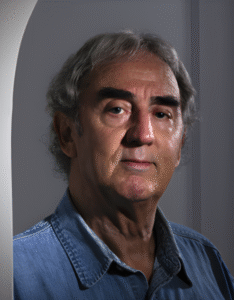
Rick Laird Transcript: Mahavishnu Orchestra, Gangaji, & the Shock of Realization
Summary
Rick Laird discusses his lifelong spiritual search alongside his career as a musician, including his experiences with meditation, gurus, and various spiritual movements. He reflects on the persistent sense of seeking and inner dis-ease that shaped both his personal and professional life.
Questions This Interview Explores
- How does a lifelong sense of seeking influence one's spiritual path?
- What is it like to explore different spiritual teachers and practices over time?
- Can success in music or career fulfill deeper spiritual longings?
- How do personal insecurities and feelings of inadequacy relate to spiritual awakening?
Key takeaways
- A sense of inner dis-ease can drive a lifelong search for meaning.
- Exposure to spiritual books and teachers can spark deep personal inquiry.
- External success does not necessarily resolve inner feelings of inadequacy.
- Trying different spiritual practices is common on the path of seeking.
- Personal demons and unresolved issues often persist despite outward achievements.
- Direct experiences with teachers can feel more impactful than impersonal methods.
Transcript
Rick: Welcome to Buddha at the Gas Pump. My name is Rick Archer and my guest this week is Rick Laird. Rick had a spiritual awakening some while back in connection with Gangaji, which we’ll talk about. I don’t know which order to put these things in, in terms of their significance, but he also used to be the bass player for the Mahavishnu Orchestra during its heyday. I think that’s really cool because I was a musician myself back in those days, late 60s, early 70s, playing drums in a local rock band. So for me, in that regard, this is like a little league guy interviewing one of the New York Yankees or something. Because you guys were really great. Did you suffer any hearing loss as a result of being in that group? Because you guys were loud. You had a reputation for being really loud.
Rick Laird: It was very loud, yes. I actually wore earplugs quite a bit.
Rick: Oh, that’s a good idea.
Rick Laird: Yes, it was very loud.
Rick: I was actually listening to some of your YouTube videos and people were raving about how good you guys were, but they said, “If you really want to get a sense of what this was like, put on headphones and turn up the volume until your ears bleed.”
Rick Laird: Yes, that’s about right.
🕊️ Mahavishnu Orchestra and Spiritual Influences
Rick: But anyway, if anyone’s curious to hear a bit of the Mahavishnu Orchestra, if you’re not familiar with them, look them up on YouTube and you’ll find all kinds of videos of them. Rick standing there with his long hair and white clothing. So, now those guys, I was somewhat familiar with them, not only in a musical context, but because I was living out in Connecticut at the time, in Fairfield County, and I think Sri Chinmoy had some kind of center out there, and at least John McLaughlin as well as Carlos Santana were into Sri Chinmoy. I don’t know about you or the other band members, but were you? Was the whole group into Sri Chinmoy or just McLaughlin mainly?
Rick Laird: It was just McLachlan. Initially, I think he was hoping that we would get involved. I was the most likely candidate, cause I had a little bit of a background as a seeker, but John was very, very committed at that time. Sri Chinmoy, I went to a couple of meetings with him in Queens. They had a little sort of urban ashram, as it were, in Queens, where all the devotees lived. I went to a couple of meetings and a meditation. He never talked in his meditations. He just sat there and kind of radiated. But I found it a little bit too extreme. He required celibacy, vegetarianism, all of those kinds of things. And John was into all that. I wasn’t personally, and the other members were not at all.
Rick: I kind of did that with my band too. I got them all meditating, all but maybe one or two who weren’t really into it. A few of them are still doing it. One of the guys actually went on to become a professional guitar player, John Stowell. I don’t know if you’ve ever heard of him.
Rick Laird: No, I haven’t, no.
Rick: He’s up in the Seattle area, I think, and he’s gained somewhat of a worldwide reputation. Anyway, so you mentioned in your bio, which I’ll post on batgap.com, that you first got bitten by the spiritual bug when somebody handed you a Krishnamurti book, was it?
Rick Laird: Yes.
Rick: Before that you hadn’t given much thought to such things?
Rick Laird: No. I was living in Sydney, Australia, and I was on my way back to England, to London. I was in a fairly messed up state. I was 21, and I was a fairly troubled youth. But my bass playing career was off to a pretty good start, and I figured I’d move to more fertile bands, so I moved to London. But just before I left, this friend of mine said, “You might want to read this book on the ship.” I took a ship, which took, I think, five weeks to go from Australia to England. So I had lots of time to read that book. And I had no idea what he was talking about, but I knew there was something there that I needed to look into. It was very clear even at that stage that, “Wow, this is deep.”
Rick: Yeah, and that was 1962, before meditation and such things really went mainstream.
Rick Laird: That’s right. I was an early adopter, as aware of Krishna, at least in my generation. So throughout the years I’ve kind of revisited Krishnamurti. I have several of his books in my library, and every now and then I will pull one out and read something. One of his sayings, “The observer is the observed,” was one of those early phrases that stuck in my mind, which I had no idea what it meant at all. It’s a little clearer now. And it’s one of those, “Oh, that’s what he meant.” But it took years and years and years to see that. So yes, that was, I would say, the beginning. So I got established in London as a bass player, and the famous jazz club called Ronnie Scott’s, which is kind of the main jazz hub in Europe at that time. And I think it was 1965, I was going to go to America. I got a scholarship to come to Boston to study music at Berklee School of Music.
And there was an ad in the subway in London for the Theosophical Society to teach meditation. And this was 1965, I guess. The Beatles were in full swing. I’m not sure if they’d reached their Maharishi stage yet.
Rick: I think that happened in about ’67 or ’68.
Rick Laird: Right. So this was kind of early on. So I signed up and it was very simply, I showed up one Sunday morning at a building in Belgravia in London, which is a very fancy neighborhood, and went into this house. I was met by an Indian gentleman very formally dressed, British style, not Indian. And we went into a room and he sat in front of me and simply gave me a mantra. Just like that. There were no other people around, there was no ceremony, no ritual. It’s just, “Bam, bam, bam, this is it. Thank you very much.”
Rick: He’d tell you what to do with it?
Rick Laird: Yes, basically, twice a day, 15 minutes to start. And that’s all there is to it. There was no, as far as I recall, there was no follow-up, “Come back and we’ll talk about it.” That was it. I think there was some very small fee involved. And that was it. But it seemed powerful at the time. Of course, one of the other problems was, I was smoking grass in a fairly hefty way in those days. So to smoke a joint and sit down and meditate was not really the right way to go, but it seemed cool at the time.
Rick: Kind of like the elephant, you know, gets in the river, washes itself off, and then gets out and throws mud on its back again.
Rick Laird: Yeah, something like that. But I guess the thing that I’ve had some time to think a little bit and contemplate what I might say, and of course I didn’t want to have a schedule, but it seems like the seeking was always there. It was always there. There was always this sense of dis-ease in my life, it was something that was not quite right.
Rick: Pretty much from the time you first read the Krishnamurti book.
Rick Laird: Exactly, even way before that. I think right back into school, I was a troublemaker in school. I was always being sent to the headmaster’s office. I went to school in Dublin, Ireland, which is where I grew up, to a Protestant grammar school. Now, the significance of that is that in Dublin, in southern Ireland, the majority of people were Roman Catholic. So being a Protestant in that environment was a little weird because I don’t know what the percentage was, probably 5% of the people’s who were Protestant.
Rick: So kids were always trying to beat you up or something?
Rick Laird: Yes, yes. Of course I had a uniform because at the grammar school I went to, we had to wear a blazer and a cap and a tie, and of course it basically screamed Protestant. So yeah, there were gangs of Catholic youths that would jump me and knock me off my bike on the way home. But yes, I was a troublemaker even then, and a bit of a rebel. So the seeking was always there. I think I was one of the early adopters of LSD too. I had my first experience in 1965.
✨ Exploring Consciousness and Perception
Rick: Yeah, that’s pretty early. I think Timothy Leary was probably getting into it at that point, but that was a bit early. You beat me in by two years.
Rick Laird: I mean, it was a very profound experience. I’m not sure I would link it to a spiritual experience as such, but it certainly was out of the realm of the norm.
Rick: Yeah, it probably showed you that the world could be very different according to how you perceived it, right? That a lot depended upon how you actually looked at the world.
Rick Laird: Yes, yes.
Everybody sees things quite differently. We’re all walking around with completely different pair of glasses on, so to speak, and yet we all assume that everybody sees things the same.
Rick: That was my first impression when I did that, was like, “Holy mackerel!” Because I had always just assumed that things pretty much were as they were, or as they appeared to be. Then all of a sudden I began seeing it from such a different perspective and I realized, “Wow, it’s all about your perspective.” I remember going into a donut shop in the morning after having been up all night tripping and seeing the ladies serving the donuts and realizing that the way they were seeing this room and this experience was so much different than the way I was seeing it. Then I realized that everybody sees things quite differently. We’re all walking around with completely different pair of glasses on, so to speak, and yet we all assume that everybody sees things the same.
Rick Laird: Exactly, yeah. But, It was a very brief experience. I didn’t particularly like it. I didn’t like the body feeling. It was kind of chemical, not something I’d want to do a lot of. I certainly couldn’t imagine playing music under the influence.
Rick: Like Pink Floyd tried to. Grateful Dead.
Rick Laird: Exactly, but smoking a J and playing was quite normal for me. There was no problem. Of course, bass players are in the back of the group. You’re not necessarily in the spotlight. I was playing the upright bass, not the bass guitar at that point. So I could stand back there and get a little buzz and just look quite normal. I had a nice suit and tie and short hair. The seeking was there. I couldn’t have even said I was a seeker. I didn’t even know that much, but in hindsight I can see that there was endless seeking, endless looking for something wrong that needs to be fixed. Not sure what it is, but something that’s not right. There was that sense behind everything. Fast forwarding, I went to Boston. I went to Berklee School of Music. That was my first experience in America. That was ’66. The Vietnam War was in full swing and getting going. It was kind of a strange time in America.
I stayed in Boston for about three years and then went out on the road with Buddy Rich, the drummer.
🎵 Life as a Professional Musician
Rick: I actually got arrested in Boston during the time when you were there, ’67 or ’68.
Rick Laird: Oh, really? You’re the one. What were you doing?
Rick: Possession of marijuana.
Rick Laird: I had one of those later, but we’ll get into that.
Rick: You were playing with Buddy Rich. That’s awesome.
Rick Laird: Playing with Buddy Rich, yeah. As far as the Mahavishnu, John and I had known each other in London in the ’60s with Brian Auger. We got along very well. I loved his guitar playing and we kind of grooved. After the Buddy Rich experience, which took me into mid-1970s, I guess.
Rick: In case anybody doesn’t know, Buddy Rich is considered to be one of the greatest drummers of all time. He and Gene Krupa were like, in that particular generation, they were like cream of the crop and often would have drum battles with each other. They were both fantastic.
Yes, they were. Things in America were getting progressively weirder. Nixon and Agnew were in the White House. Kent State happened. Of course, Woodstock happened too. There was a lot of stuff going on, a lot of protests, car burning, all that stuff. I decided I’d had enough of it. I wanted to go back to England. I just didn’t want to be here. I was like, “I don’t want to be here. I definitely don’t want to join the army.” I went back to England in early ’70. Shortly after that, McLachlan called me and said he was putting this band together in New York and would I come and join. I absolutely said yes to that. I didn’t know who was playing with him. I flew back to New York. That was the beginning of the band. That was I guess the middle of ’71 and we lasted for two and a half years. Then there was another reincarnation of the orchestra with different members.
Rick Archer: Yeah, I noticed I was looking at some clips today and there was one later on where you didn’t have Billy Cobham, you had some white guy who was playing the drums.
Rick: Yes, Narada, I think his name was. He was a disciple of Sri Chinmoy. The second group, I think, was a larger group. I think there were some violin players.
Rick Archer: Yeah, there was a woman on keyboards.
Rick: Jack Gail Moran, who became Chick Corea’s wife. But most of them were Sri Chinmoy devotees in that group. It was an incredible experience with the Mahavishnu Orchestra. We came up very fast. We had a very aggressive manager. He managed James Taylor and Cat Stevens and some other people. He was a big name lawyer, of course, in New York. He had a lot of influence. But he moved us very fast. I mean I couldn’t believe. I think within six months we were playing Carnegie Hall, which is a very fast rise. Then we were playing with, we were opening the show to big rock groups. I think we played once with the Grateful Dead. We were the opening gig.
Rick Archer: You must have been a tough act to follow.
Rick: Well, actually it was the reverse. People didn’t like us much at first. If you’re a deadhead…
Rick Archer: Yeah, then you’re in this mellow kind of folksy…
Rick: This music was the exact reverse of deadhead. It was not for the doper crowd. I was mentioning to you the other night, you asked me earlier whether I got involved with Sri Chinmoy. I didn’t actually get involved. It just wasn’t something I felt compelled to do. But I did get involved with Swami Sat Chitananda, who had a little ashram in the west side of New York called the Integral Yoga Center. There was a lot of people involved with him – Peter Max, the painter, who is a champion. I think Peter actually sponsored him and set him up in New York.
Rick Archer: I went to a Rava Shankar concert in Danbury around that time and Swami Sat Chitananda came walking in with, I think it might have been Peter Max, and somebody from the Young Rascals, and a few people like that, that I recognized.
Rick: Yeah, he was very popular, cause of course he was at Woodstock.
Rick Archer: Right
Rick: But, he was a beautiful man, he was the embodiment of everything we talk about. Beautiful man to be around. He had that look in his eyes. He was very fiery, but he was extremely, he exuded peace all the time. He was a very beautiful man to be around. He initiated my then wife and I into a different mantra, which I still remember to this day. A very beautiful ceremony, maybe about 40 or He’d bend over and he’d whisper the mantra right in your ear and then touch you on the forehead and off you go. So that was quite a profound experience. And then of course our life …
🧘 Spiritual Practices and Life on the Road
Rick Archer: Had you been meditating since you got that first mantra?
Rick: Well I actually had, yes, I used to. When I was in Boston I used to sit on the banks in Back Bay by the river, it was five minutes or so from Berkeley, the school, and I used to sit there in a half lotus position and look at the water and do my little mantra.
Rick Archer: So when you got this new one did you notice much difference in terms of the influence?
Rick: I did, I guess I did, because it was such a direct experience from Swamiji. It felt more personal and a little more lofty, should I say. The first time there was no ceremony or no sense of specialness, or it was just a little flat to be quite honest. I mean I expected something a little more colorful, should I say. But eventually we got so crazy with Mahavishnu we were on the road very intensely after that initiation with Swamiji, things took off and life became very hectic. We’d go on the road for six weeks at a time and go to Japan and the next thing you know you’re in Philadelphia and then you’re in San Francisco, life got very crazy. We were playing bigger venues, instead of two or three thousand people now it’s ten thousand, twenty thousand, you know, it got bigger. I think we did a big tour in Canada with Frank Zappa, remember Frank Zappa?
Rick Archer: Oh yeah, I saw the mothers in Greenwich Village in about 1966 or something.
Rick: Yeah, he was a very cool guy, I liked him a lot. I always imagined that he would be kind of a doper and kind of a stone kind of guy, it turned out to be the exact opposite. He was very straight.
Rick Archer: I’ve heard that about him.
Rick: Yeah, he was a very straight guy and very serious about his music.
Rick Archer: Yeah, I still listen to his stuff, I have a bunch of it.
Rick: Yeah, he was a great musician. So yeah and it ended very quickly. It’s one of those things that from the outside, you were talking about how things look to different people
Rick Archer: Yeah.
Rick: Well you know from the outside people would look at us in a kind of a spiritual way, because it was still that kind of time, you know, there were still gurus coming to America, I can’t remember some of the names, but it was still quite popular, you know. But there was a lot of conflict inside, there was a lot of conflict. I think John was quite disappointed that none of us signed up with Sri Chinmoy. So there was a lot of conflict and it actually caused us to break up in the end, sooner than we should have. But that’s just the story.
Inner Conflict and Band Breakup
Rick Archer: Incidentally, your little boy is making a lot of noise in the background.
Rick: I’m going to shut the doors.
Rick Archer: Yeah, let’s do that.
Rick: Oh, it’s my parrot
Rick Archer: Oh you’re parrot! I thought it was a boy.
Rick: Yes, I’m babysitting somebody’s parent and she gets very jealous.
Rick Archer: Well that’s funny, I thought it was a little kid.
Rick: Yeah, there’s no little kids here.
Rick Archer: I thought, well, yeah, must have married a young woman, had a kid, you know.
Rick: I have a daughter, she’s 22, she’s not here though.
Rick Archer: Okay, so yeah, you say you broke up because McLaughlin was bent out of shape, because you all didn’t get into Sri Chinmoy.
Rick: Well, there were other pressures.
Rick Archer: Other reasons, I’m sure yeah.
Rick: Lots of other reasons. The thing is, we were young, I was 30 something, the other guys were 20 something, it was some heavy testosterone going around, egos, and not much enlightenment happening.
Rick Archer: But you had a cool, you had a very enlightened name though, anyway.
Rick: A very enlightened name. John was amazing then, he was really on fire, personally, his playing was very on fire. But they were very talented musicians, all of them, the fact that they weren’t meditators aside, they were very talented musicians.
Rick Archer: So you guys broke up and that was about ’75 or so?
Rick: That was the beginning of ’74, yes. Then I found myself in New York, back again. I pretty much disconnected, life had become weird, I got divorced and stuff, so I didn’t really follow up much with Swamiji, or the meditation.
Rick Archer: But you still had that yearning, I bet.
Rick: Oh absolutely, even more than ever. Here’s one of the things I wanted to mention here, because we are talking about awakening and non-duality and stuff. Here’s an example of Samsara in action. My hero of all time, and for most serious jazz musicians, was Miles Davis. For me he was the be-all and end-all of jazz, he was the guy that many of us model our life around. There was one period with Mahavishnu, I think in ’73, we were playing at Avery Fisher Hall, which is kind of the epicenter of New York’s classical music. We were booked on a Saturday night, just us, there was no opening band or anything, it was Mahavishnu, Saturday night, Avery Fisher Hall. And it was sold out, because we were quite well known then. And I remember walking out on stage, you know, this thunderous ovation, and right there in the front row was Miles Davis.
There was that sense of fraud, “I don’t belong here, and he’s going to know, more than anyone, he’s going to know.”
Rick Archer: Ah, cool.
Rick: Well it was cool, but here’s the thing, I felt so not deserving of that. You know, it was like, “Oh my God, what am I going to do?” You know, there was that sense of fraud, “I don’t belong here, and he’s going to know, more than anyone, he’s going to know.” That was kind of in the background of all of this, what looked incredible from the front, you know, I’m talking about how it looked from my perspective.
Rick Archer: Why did you feel that? Did you feel like it was just some personal sort of lack of confidence, or was there some real sense in which you weren’t deserving, or you guys were hypocritical or some such thing?
Rick: Well I wasn’t projecting it onto the others so much, it was just my own personal demons, you know.
Rick Archer: Yeah, cause musically you were on a par with those other guys, I mean you were as good a bass player as they were drummers and guitar players.
Rick: Exactly, exactly.
Rick Archer: So just a sense of personal inadequacy or something.
Rick: Exactly, but that’s what I’m saying, it was that sense of dis-ease, and that’s just one way it manifested, there were many other ways, but that was one.
🛤️ Scientology and the Search for Relief
Rick Archer: Well Miles certainly had his share of dis-ease and personal demons and all that.
Rick: He did, he did, yeah. But I just bring that up as an example of the state, we kind of state I suppose is the right word. So after that I was in New York and things got fairly dark, you know, and then I think it was 1977 I went to Europe with Stan Getz for a brief, I think three or four weeks, and I came back and I was in a very dark space. And…
Rick Archer: Doing a lot of drugs, alcohol?
Rick: No I wasn’t actually, I didn’t drink much at all, because I couldn’t play when I drank, I learned that early on in my career. I couldn’t function well, I could smoke a joint, all right, but drinking no, I didn’t like that much. But someone mentioned Chick Corea, he was really happening, because he had this group called Return to Forever, which was kind of a fusion group, the same as Mahavishnu, in that genre.
Rick Archer: He was a keyboard player wasn’t he?
Rick: He’s a keyboard player, yes, and he had a quartet that was kind of based on the same structure as we had, you know, this fast, heavy, intense, loud, you know, all of those verbs, you know. And he was deeply into Scientology, right? And there were several people that I knew in New York who were musicians, and said, “Oh, you’ve got to do it man, it’s really the way to go.” So that’s where I went, I jumped right into it, right? I said, “Okay, this is what I need to fix my disease.”
Rick Archer: So you started holding the tin cans and whatnot?
Rick: Exactly, exactly, right. So I got quite involved with that from ’77 for about five years. Three of those years were very intense involvement. And, again, it was a seeking, it was driven by seeking. It wasn’t driven by anything else other than seeking. That disease, that sort of sense of, “I’m not enough, I need to be fixed.” “This is going to do it,” projecting all of that stuff. And I don’t want to go too much into that, but it was actually a positive experience. I mean, the one-on-one with the tin cans actually was quite beneficial in dealing with a lot of my early life stuff.
Rick Archer: Speaking of the tin cans, in case somebody doesn’t know, it’s some sort of thing like an EEG or something, which measures some kind of galvanic skin response or something. And you can use it to get some sort of feedback on what your internal state is or whatever.
Rick: Exactly, exactly. Basically, it was called the e-meter, a very sophisticated device. And it was like you and I sitting here, you would be the auditor and I would be the auditee. And you’d be watching the meter and I’d be holding the can. So I didn’t really know what response was happening. You would ask me a question and I didn’t actually need to answer it at all. The meter would give a response and I could actually say something or not. And the auditor would note the response and we would proceed from there, you see. Basically, the thing was reading the amount of charge, the amount of negative charge on an issue. And when the issue was handled properly, there would be no more reaction.
Rick Archer: I see.
Rick: See, when you took the charge off the issue, the needle would stop moving. So I went forward with that. Now, to say that that was a spiritual experience, yes, I suppose it was. And in hindsight, I would say there were many times when I was—I don’t want to use the word awakened, it’s kind of a strong word—but in hindsight, not at the time, what I understand now to be that condition was there.
Rick Archer: Yeah.
Rick: It was absolutely there.
Rick Archer: Sure.
Rick: No question about it. There were days that I felt completely like that. It was like, wow.
Rick Archer: Yeah.
Rick: But there was never any talk of those words. I don’t recall ever hearing the word enlightenment or awakened or self-realization or consciousness or any of those terms ever used.
Rick Archer: Right.
Rick: And nor was the word God ever used.
Rick Archer: Yeah. Just wasn’t in there.
Rick: It just wasn’t there. Ron L. Hubbard was it.
Rick Archer: L. Ron, yeah.
Rick: That was it.
Leaving Scientology and New Directions
Rick Archer: Incidentally, I once heard Maharishi Mahesh Yogi say that if L. Ron Hubbard had been in charge of the TM movement, it would have achieved its goals a lot sooner, or in much less time than he felt he was achieving them. He, for some reason, had a lot of respect for the man.
Rick: Well, yeah, he was an amazing organizer and yeah, definitely, probably a fully awakened person or non-person, however you want to say it. And they didn’t … I guess I left there in 1982 and they don’t have things like, “Okay, you don’t need anymore because you’re awakened now.”
Rick Archer: Right.
Rick: Right? There were levels.
Rick Archer: There’s no end to how much money you can spend and how many things you can do.
Rick: There you go.
Rick Archer: Yeah.
Rick: I could basically go on forever.
Rick Archer: Right.
Rick: And some people do. I think Chick Corea has been involved ever since.
Rick Archer: Still doing it?
Rick: Yes, as far as I know.
Rick Archer: Yeah, him and Travolta and Tom Cruise.
Rick: Exactly. That’s right.
Rick Archer: They can afford it.
Rick: They can afford it, exactly. But I kind of ran out of money. That was one reason.
Rick Archer: Yeah.
Rick: And basically, I kind of got that this business of progressive levels, there’s more to achieve, I didn’t really understand why, but I kind of knew that that wasn’t it. I kind of knew, “No, I don’t need more. I don’t need more.”
Photography and New Passions
Rick Archer: Yeah. Although I’m going to interject here. I’m getting ahead of our story a little bit, but just this morning I was listening to Gangaji being interviewed by a guy named Steven Dinan. He said, “Well, ever since your awakening,” which must have been 20 years ago or something now, “do you feel like there has been further progress?” And she said, “Oh, yes. There’s continual deepening, continual unfoldment, and there’s always so much to work out on the relative levels in terms of your relationships and your personality quirks and all that kind of stuff.” So I thought that was an interesting answer. I don’t mean to dispute what you just said, but since I know you have respect for Gangaji, I thought I’d throw that in the mix here.
Rick: Yeah, I mean, just in the context of that particular aspect, y’know, Scientology, just personally. I’m not making a statement about the organization or anything. It was just a personal thing. I just felt like it’s time to move on.
Rick Archer: Right, absolutely, sure.
Rick: And also, I was transitioning. I had another passion, which is photography, which started when I was a kid and I kind of dropped it for many years. When I was on the road with Mahavishnu in Tokyo, I bought myself some serious cameras and sort of rekindled that passion. So in 1981, I’d kind of built up a little business, as a hobby actually, while I was still playing. And I was beginning to do better and better. And what I really enjoyed was the independence. As a bass player for hire, it’s not a lot of fun, I’ve got to tell you. With a group like Mahavishnu or Stan Getz or something, that’s wonderful. But when you’re in New York and you’re just another guy on a list of 50 guys looking for work on a weekend, it’s not that much fun. For most people, I’m sure people have…
Rick Archer: Plus, if you’re in a successful group, there’s a lot of traveling and all the rigors of that life.
Rick: Yeah, all the glamour goes with it. Staying in beautiful hotels and you have limousines and backstage passes and lots of nice-looking women hanging around backstage, all that stuff. So I kind of like the independence, just being able to negotiate my own terms with clients.
Rick Archer: What kind of photography were you doing?
Rick: Well, I was doing two things. I was doing what’s called stock photography, where you create images for a library of images and they market them worldwide on your behalf. And they kind of guide you in terms of subject matter.
Rick Archer: What they need.
Rick: What they need. So you’re not really an employee, you still kind of do your own thing. And you pay your own fees and expenses and everything. And they do the marketing and we would split it 50/50. So that’s called stock photography, which I’m still involved with today.
Rick Archer: Yeah, like Comstock and those different…
Rick: Exactly. I’m with Getty Images, actually.
Rick Archer: Sure.
Rick: That’s a pretty big agency. And the other side was I was doing portraits for jazz musicians, record covers at the time, and eventually CD covers, and doing one in September for a guy called Steve Cohn in New York. So I did quite a bit of that. And I found a little niche market. My first, my wife at the time, I just got married in ’81, ’82, actually ’85, I met her in ’82, was a lawyer in New York. And she worked at one of these enormous firms, you know, where they had, I think, three or four hundred lawyers. And I found out they needed pictures, they needed a directory of all their people. So they hired me to do the headshots. And that opened a niche market that I never even knew existed. And eventually I had many, many clients in New York like that. I still have a few like that. And so I did hundreds of, I shot lawyers, that’s what I did. I shot hundreds of lawyers, I’m proud to say.
So that’s kind of what I did. And then, so I’d like to get up to the point where Gangaji enters the picture, but there’s a lot of story in between.
🕊️ Alcoholism, AA, and Spiritual Renewal
Rick Archer: You mentioned AA at one point, but I haven’t really heard about any drinking. Not that we have to, you know, wallow in that, but you know.
Rick: Well, no, but I can fast forward through it. I started drinking the day I met my wife. (laughing)
Rick Archer: Sounds like a Catskills comedian joke or something, Rodney Dangerfield.
Rick: Well, it was like a Rodney Dangerfield. He had this joke, he said, “My wife and I were happy for 25 years, and then we met.” (laughing)
Rick Archer: And I’m sure you could twist a lawyer joke or two in there too.
Rick: Yeah, yeah. So I hope my wife doesn’t hear this video, but I’m sure she won’t mind me mentioning that.
Rick Archer: Yeah, you didn’t mention her name.
Rick: Just coincidence, you know. It just kind of progressed like that. I mean, my life was going well. I was earning more and more, and we had a nice place to live on the west side of New York. And I started drinking in the evening, and it kind of progressed. And after about five years, I was drinking a lot.
Rick Archer: Wow.
Rick: Now, I wasn’t doing any drugs anymore. I stopped smoking before Scientology. That was one of the requirements, actually. You can’t do it unless you’re straight.
Rick Archer: Did you still have any kind of spiritual motivation going on in the rest of this?
Rick: Not at all.
Rick Archer: Not at all, okay. You kind of got wiped out.
Rick: Whole thing was just gone. I was a married guy with a business, making a lot of money, enjoying my life tremendously. I was really busy. I was working six days a week, and drinking. That was my spiritual seeking, was in a puddle.
Rick Archer: Your relief valve, yeah.
Rick: Right, that was my seeking. Because again, it’s all seeking. You basically drink because you have this expectancy of a better condition. I’m not going to feel as stressed out.
Rick Archer: Yeah. In other words, you don’t like the state of consciousness you’re in, you want to change it.
Rick: Exactly.
Rick Archer: You take something to change it.
Rick: Exactly, that’s right. So it was basically like that. And then I guess by 1993, I kind of realized, I used to keep a journal. I started keeping a journal in my photo studio. And the entries were, “Did it again last night,” “Drank the whole bottle,” “I said I wouldn’t and I did.” And this went on and on and on. And then one day I was photographing a jazz musician, a woman, Sheila Jordan, for a record cover, and she said, “You look a little rough.” And I said, “Yeah, I’m hungover.” And she said, “Oh, I used to drink too.” And she kind of softly introduced me to the concept of AA, which I had no real ideas about, other than what most people probably think, drunken bums.
Rick Archer: Hmm. I know enough about it to realize that it has a real spiritual dimension to it.
Rick: It does, it does. So one day I just decided that was it. I’d had enough. It was time to stop. I went to a meeting in New York and I was very surprised. It was in Midtown and it was full of very nice-looking people with suits and ties. They were actually lawyers and business people. And I was very pleasantly surprised. And from that day on I never had another drink. That was it.
Rick Archer: Do you still have – did you still have cravings for them or did it just kind of disappear?
Rick: Just went away.
Rick Archer: That’s great.
Rick: I went to meetings a lot. From that point forward I went to meetings pretty much every day.
Yeah, because I know that alcoholics always have this thing about – or the AA people at least – always have this thing of, you know, you’re always going to be an alcoholic all your life, you know. And that always seemed a little bleak to me.
Janet: Yeah, it is a little bleak. I mean, I have 17 years and about two weeks – next week actually. And, you know, I don’t go to meetings anymore. I haven’t for quite a while, but I’ve never had that urge. I’m full with it. I’m around people who drink at dinner time and nothing happens. You know, it’s just not a problem. Plus I do a lot of work, you know, like spiritual work I suppose is the right word.
🛤️ Renewed Spiritual Search: Osho, Buddhism, and Gangaji
Rick: Yeah, well that actually gets us into the next chapter of your life, I think. I mean, you did the AA thing, but then what? I mean, let’s go on.
Janet: Okay, so, you know, eventually I got divorced. Things got, you know, when you get sober you look at things like a little more clearly. Eventually I got divorced and I moved out of New York in 2003 to where I live now. It’s about an hour out of the city. And I’d started, actually started spiritual reading again after I got divorced. I kind of felt like, okay, and I think through AA too, you know. Again, AA, you know, I don’t want to get into a critical diatribe about it, but, you know, the whole thing there is the 12 steps, you know, that if you do the 12 steps and so forth, your life will be better and improved and everything like that. Well, I did the 12 steps and I didn’t really feel any better. And I wasn’t drinking and I didn’t feel like I needed to, but that same dis-ease, that same “I’m not enough, it’s not enough,” you know, was still there.
And so I started reading and I guess I stumbled upon Osho at some point. I was with a lady friend and we both discovered Osho and I absolutely loved Osho. What a beautiful man and his unique way of speaking. I don’t know if people on your site have heard him on YouTube or anything, but he’s a very unique speaker. And he had a place in New York.
Rick: Incidentally, Osho was also known by the name Rajneesh.
Janet: Rajneesh.
Rick: Yeah, Bhagavan Rajneesh.
Janet: That’s right, that center in Oregon.
Rick: Right, the notorious situation.
Janet: The notorious, exactly.
Rick: Gun-toting Sheila and all that business.
Janet: There you go. But he was a beautiful guy and I recommend people check him out on YouTube, his speaking. And he had a place in New York where you could go, I think 7 o’clock every evening they would play a video of Osho and do some of that dancing that the Osho people do. It’s kind of a meditation dance thing they do. So we did that for a while and then we kind of stumbled upon other people and again I started rereading Krishnamurti a bit. I got him a little more at this stage. I think as your suffering deepens, your personal suffering, you understand a little more. You begin to see, “Oh, that’s what they mean.” And then fast forwarding a bit to 2001, I started going to a Buddhist meeting right near my house, it was five minutes away, in August of 2001. And the next week or two weeks was when 9/11 happened.
And it was just coincidental that I happened to be going to this meeting, this Buddhist meeting. It was a small meeting led by a guy named Kadam Morton, an American guy under the tutelage of Geshe Kelsang Gyatso, a Tibetan monk who lives in America. And I loved it. I felt very comfortable there. It just seemed to make more sense to me than pretty much anything else I’d looked into. I’m not going to say I was a believer or anything or zealotic about it. At that time in my life it was a good place to be. But 9/11 happened in New York and that was a very profound time, very profound. Apart from the obvious dreadful tragedy, it was an amazing time to be in the city. There was a sense of oneness about everything.
Everyone just got into this sort of oneness feeling, everyone was on the same page for a while.
Rick: Not only that you felt but that many people were feeling?
Janet: I think many people had dropped their personal facade and everyone just got into this sort of oneness feeling, everyone was on the same page for a while.
Rick: Like there was a sort of brotherhood among everyone?
Janet: Yes, I remember riding down on my bike on the West Side Highway to the site and coming across people sitting on a bench crying, you’d stop and you’d sit down and you’d say, “Oh, I had a friend.” And you just talk, you didn’t need to know their name or who they were, you just talk about it. So that was when I began and I went there for I guess about two years until I moved out of the city out here and sort of dropped that at that point because it was difficult for me to travel into the city. And I guess as far as Gangaji, something happened two and a half years ago which had a very profound effect on me, I wouldn’t say it wasn’t necessarily a positive effect. I came home from the gym one day, I go to the gym quite a lot, and I sat down at my computer to do some work and there was this searing pain around my tailbone, like I sat down on a broken glass. I thought, “Wow, what’s that?
I must have pulled something at the gym or stretched something or did something.” Well, that began an issue which is still ongoing. And I began a whole medical search for a fix that never happened.
⛰️ Chronic Pain and Spiritual Breakthrough
Rick: Did you figure out what it was?
Janet: Well, there’s a name for it, it’s called coccydynia which is tailbone pain.
Rick: The coccyx is traumatized in some way or something?
Janet: Yes, traumatized and it’s triggered by sitting unfortunately. So you can imagine if you’re a meditator, that would cause you, imagine if you couldn’t actually sit down, how would you meditate?
Rick: Right, you’d have to do it lying down or something.
Janet: Lying down or something, standing, whatever. So it was a very distressing thing because it was chronic pain, and chronic pain after which is after three months. You were talking the other night, I was listening to you talking with James Swartz, I think it was, and you mentioned hitting your thumb with a hammer. So he was talking about the body, and your response was, “Well, it would really hurt if you whacked your thumb, you definitely feel it. You couldn’t just think your way out of it.” And the most distressing thing about it was, I mean it’s not like that so much now, but in the first period was it draws your attention to the body, chronic pain, it’s such a challenging condition.
Rick: Which is probably the purpose of it, I mean your body is saying, “I need attention.”
Janet: Yes, you need to fix this. Like driving in a car with the red light flashing on your dashboard.
Rick: Right, you need to do something.
Janet: And of course I’ve done everything that you can possibly think to do, I’ve run out of medical procedures, there’s none left.
Rick: You might want to check out the guy I interviewed last week, Gary Crowley, he sounds like he’s kind of a miracle worker with people who’ve hit a dead end with everybody else.
Janet: Oh really?
Rick: Yeah, check out his interview.
Janet: Yeah, I’ll have his book, I have that book, the first book he wrote, I’ll definitely follow up on that.
Rick: Yeah.
Janet: So anyway, after about six months of this, of trying to manage it and everything and kind of getting disgusted with doctors who didn’t seem to have a clue, I picked up this book called The Diamond in Your Pocket by Gangaji and started reading it and I’m not going to claim that there was a sudden awakening or suddenly I was there. I mean I think it happened gradually, I also think it had been happening for years and years in many different ways and I of course had no way to say, to identify what was happening or understand it, but something about the way she was describing what it is, just suddenly it was there. Oh, that’s it? Are you kidding me? After all this? Y’know, It was shocking.
Almost everybody says that, it’s like, “Oh, this has been here all along.”
Rick: That’s what they all say.
Janet: It was shocking.
Rick: Almost everybody says that, it’s like, “Oh, this has been here all along.”
Janet: This is it? Wow.
Rick: Glasses on the head syndrome.
Janet: Yeah, it’s really out there, it’s really out there because it’s kind of a nasty cosmic trick.
Rick: Well, I mean, logically speaking, if we’re talking about realizing reality, how can reality not have been here? Where is it going to go, hide in the corner someplace?
Janet: Exactly.
Rick: It’s kind of like an omnipresent thing, it’s reality. And so obviously we must be immersed in it and living it in some way, it’s just a matter of the recognition.
Janet: Exactly, and I can’t even pinpoint what page or what sentence it was, but her whole book is kind of like that, and that kind of opened the floodgates for the next year or so. I devoured books by everybody. I was always aware of Eckhart Tolle.
Rick: Yeah.
Janet: I mean, his language is not as related to Ramana Maharshi, say, as Gangaji is, via Papaji.
Rick: Doesn’t have that lineage, right.
Janet: Right, but Eckhart is, it’s the same message, essentially.
🛤️ On Seeking, Stories, and Spiritual Maturity
Rick: So that’s interesting, and on the one hand it’s kind of paradoxical, cause on the one hand you sort of found what you were looking for, and there was an end to the seeking, and on the other hand that end to the seeking precipitated a huge book reading.
Janet: Yeah, I wanted to hear what other people had to say about it, how many ways are there to talk about nothing?
Rick: Yeah, that’s kind of where I’m at. In fact, that’s how you found me. I guess you somehow connected, you were listening to Richard Miller’s things, I guess, and then you heard me on that, and so you came here and now you’ve listened to most of these. And I don’t get the sense that you’re looking for some little gem of information that’s going to do it for you, but it’s just interesting to hear everybody’s different way of expressing fundamentally the same thing.
Janet: Absolutely.
Rick: Personally, I also like being able to express it better, so the more people I listen to, the more I can articulate it.
Janet: Exactly, exactly, because in essence, I think James Swartz was saying this in one of your interviews, that all we have is language. If people are going to understand this, well, I don’t know if that’s the right word, but it’s through words, it’s not through anything else, it’s through the words. Ramana Maharshi said, “Who am I?” Those words, as inquiry. So I love that, and the thing is, in the hardcore non-duality world, stories have a bad rap. “We don’t really care about your story.” There’s nobody there to have a story anyway, but that’s nonsense, you know what I mean? Human beings love stories, we love stories.
We’re not just abstract vacuum state nothingness. On some level we are that, but you can’t get away from the fact that you are also a human being.
Rick: Well, the fact is, you just said it, we’re human beings. We’re not just abstract vacuum state nothingness. On some level we are that, but you can’t get away from the fact that you are also a human being. And that’s why I sometimes bring in my little morbid “hit your thumb with a hammer” point. In fact, I heard Adyashanti say one time, “That’s why the Zen masters use the stick. If somebody got too much into the notion of ‘I’m nobody, there’s nothing,’ whack them with a stick, and who felt that?”
Janet: That’s right. Yeah, there is a tendency in the hardcore non-duality people to dehumanize things a little bit, I think. Because life goes on, life goes on. You’ve had some great speakers on your site, by the way. I think it’s a great site and you’re really making a nice contribution there.
Rick: Oh, it’s a lot of fun.
Janet: Yeah, it’s a great resource. You live in this place, it just sounds like Shangri-La.
Rick: Yeah, yes and no. I mean, it definitely has its problems and I’m not even part of the organization anymore that is predominating here, the TM organization, but it’s a nice sort of eclectic spiritual community and there are, of course, many wonderful people in the TM organization, not knocking it, but outside of that there’s also this sort of diverse spiritual community and everyone’s been here. Gangaji has been here, Adyashanti is coming, Amaji comes every year, Mother Mira has been here, Karunamayi, I mean, just all these different teachers and saints and all. It’s kind of a stopping point on the spiritual circuit.
There are people like yourself who, I mean, there are some people who are kind of hardcore, hard line, they won’t see anything else, do anything else, and if that works for them, fine, but there are others who just sort of like to take a hybrid approach and get the blessings wherever they may come from.
✨ Degrees of Awakening and Spiritual Growth
Janet: Yeah, it’s very true, and there’s so many ways of expressing, even though we’re talking about something which obviously can’t be really expressed because it’s just not expressible in words, but nonetheless I think it’s wonderful to read Adyashanti, for example, I love his books. Do you know who John Wheeler is?
Rick: He’s a physicist, isn’t he? Or there’s another guy named John Wheeler.
Janet: John Wheeler has I think four or five books out on the subject of non-duality. He was a ..
Rick: Is he still alive?
Janet: Yes, he is, yeah.
Rick: Maybe I should interview him.
Janet: Yeah, he’d be a great guy to interview.
Rick: Yeah, I’ll put him down.
Janet: He has a website, I can’t remember it offhand, but it’s quite easy to find. He’s in his 40s I guess, and he was a seeker, a suffering seeker, you know. As all seekers actually are, right?
Rick: Right.
Janet: If you’re still seeking, you’re suffering.
Rick: Right.
Janet: So he went to see Sailor Bob Adamson in Australia, he took a trip. I think John Wheeler lives in either San Jose or somewhere like that in the West.
Rick: Actually I may have heard him when I listened to Urban Guru Cafe.
Janet: Yes, yes.
Rick: Yeah, because I listen to all those, so he’s probably on there.
Janet: He’s on there, yes. I think he did three or four interviews there. So he actually went to directly meet Sailor Bob Adamson, who was a, I guess, had studied with Nisargadatta.
Rick: Nisargadatta, yeah.
Janet: So, and John Wheeler’s books, I mean he’s very, very hardcore. I mean he just keeps hammering, you know, there’s no one there, you know. He’s very anti-story, you know. But that’s just his particular approach.
Rick: Yeah, you know, I’m actually, I feel a little trepidation about interviewing anyone who’s that hardcore in the new Advaita scene, because I feel like it’s not the whole story, but I don’t feel really qualified to argue the opposite perspective. I mean, somebody like Timothy Conway, whom I interviewed a few weeks ago, is much better equipped and he can quote all these different saints, like Ramana Maharshi and Nisargadatta himself, to contradict someone who says that that’s the whole emphasis. But I feel a little unqualified.
Janet: Yeah, well, you know, you’ve got some wonderful people there. I’ve listened to most of those people and some of them are so well educated on the subject. James Forrest was amazing. I mean, the way he talks, he’s so knowledgeable about things, and having lived in India for
Rick: And you know what I find actually in interviewing these people, like James and Chuck Hillig and some of the others, is that they’re just real down-to-earth guys. I mean, they’re chummy, friendly, unpretentious, easygoing, good sense of humor, not putting on airs of any kind. And that to me is one of the criterion of genuine spiritual development.
Janet: Yeah, well I was going to ask you about that. It’s one of those paradoxes, I guess. How do you qualify when someone claims to be awakened?
Rick: You mean in order to know whether I want to interview them or not?
Janet: Well, just in general.
Rick: In general, how would you?
Janet: In general. I mean, someone can come along and say, “Well, I had this awakening such and such,” or “I’m fully enlightened.” I can’t imagine anyone saying they’re fully enlightened; that just doesn’t work at all.
Rick: Yeah. Well, the way I do it is that, first of all, I don’t claim to be able to know, because how can I judge? I’m not a guru, I’m not a master, and even they, I wonder, sometimes may or may not know. I give people the benefit of the doubt, I take them at their word, but on the other hand, if there’s a strong aroma of ego, of self-aggrandizement or something like that, I’m wary. I also have the notion that there are many degrees of awakening, and that one can … it’s sort of like the Russian dolls, where you open them up and there’s another one inside and another one inside, and many stages, many degrees, which there is this opposition in some circles to the progressive nature of spiritual development, but I’ve really never seen an exception to it.
Even if there is some element which is always the same, like you said earlier, you realized when you had that awakening reading the Gangeji book that this thing had been there all along. And yes, that’s true, so there is something that never changes, but on the other hand, our ability to reflect that, the clarity with which we can experience it, the degree to which we can express it, all those things have, as far as I can tell, infinite room for improvement or for growth. So if someone says they’re awake or something, I say, “Great,” but I expect they will, most of them acknowledge, and if they don’t acknowledge, I expect they will eventually find that there is yet more to unfold. So that’s my perspective. I may change it, two years from now I may be talking differently, but that’s the way I see it.
Janet: Yeah, I agree with that. I think it’s more a function of just being. I don’t think there’s anything to do, I don’t think there’s really anything you can do, but I think it just evolves on its own, the same as it always has. Like you said, it’s like a Russian doll, suddenly there’s a deeper level, it goes a little deeper.
Rick: But just to counter that, that to which you give your attention grows stronger in your life. For decades you have been putting your attention on spiritual things, even though you’ve also been putting your attention on some other things, but you’ve been reading books. As someone said, spiritual awakening may be an accident, but spiritual practices make you accident prone. I’m not of the persuasion that all meditation and other spiritual practices are a lot of bunk. I think that they culture the nervous system, they refine the mind, and just make you more and more likely to have the kind of awakening we’re talking about. If you were to take two people, one of them meditates regularly, the other knocks back a pint of gin every day for 20 years, which one do you think is more likely to have a spiritual awakening?
Janet: Exactly
Rick: Not that the gin guy couldn’t have it, anything’s possible, but what’s more probable?
Janet: Well it really is a mystery, it’s such a mystery. I think I sent you an email recently about why it is that this seems to be so difficult for your average Joe Plummer type person. Tony Parsons talks about that, I listen to him, he talks about his meetings where some people just get up and leave, they hear him talking, because it just seems like such nonsense. A friend of mine gave Eckhart Tolle’s book, A New Earth, to a friend of hers who’s a very educated woman, an English teacher, and she said she read a chapter and she thought it was complete nonsense.
Rick: Yeah, well you know as the Lion and the Family Stone said, “Different strokes for different folks.” I think there has to be a certain receptivity before you can get it. I mean Christ used to say, “Cast ye not your pearls before swine,” and obviously some people totally got what he was, other people wanted to kill him and did. And as he said as he was being crucified, “Forgive them, Father, they know not what they do.” So I think it all depends on one’s ability to perceive and recognize, and what we’re talking about is actually extremely subtle.
Janet: It’s very subtle.
Rick: It’s so subtle we can’t express it in words and yet we know what we’re talking about. Most people are not accustomed to perceiving subtle things. They’re constantly bombarded with gross stimuli and you get habituated to that. Unless you somehow find a way to break that habituation and turn your attention to the subtle, you’re not going to know it’s there.
Janet: Well you know our society in general is so bombarded with messages which are the exact opposite of this. All about a person, all about “buy this drug, buy this car.”
Rick: I mean every single commercial, 75% of the commercials on TV are “ask your doctor if such and such is right for you.” I mean I’ve been to a doctor maybe twice in my life, I wouldn’t need to…
Janet: I mean the entire thing, the political system, the medical system, everything, the media, it’s all about person, about you the person. And then you get the religious extremists who go the other way. It’s no wonder so many people have a hard time even getting a hint of what we’re talking about here.
Rick: Yeah, but as Dylan said, “Something’s going on here but you don’t know what it is.” There’s definitely something afoot and as you listen to the kind of stuff that we’ve been talking about, and there’s so many cool things you can listen to these days. For instance, right now I’m listening to something called the Sacred Awakening series, and I have a link to that on batgap.com, where it’s 40 different interviews. Gangaji was one of them, Julia Butterfly Hill was another I just listened to, and all these different people. And there’s so many brilliant, wonderful people that are saying over and over again that there’s really a major shift taking place in the world.
And it may not be evident on the surface level of things, and you wonder when you see all these disasters and everything taking place you think, “How can something good be happening?” But that very well may be part of it, because the old ways are crumbling and the consequences of the wrong way of doing things are becoming more and more obvious. So I find it, I’m not at all discouraged or pessimistic, even though who knows how much hell may break loose before things have really shifted and settled out. I really do feel that something wonderful is taking place and it’s nice to feel at least that one is part of that and contributing in some small way.
🕊️ Integration and Living Spirituality
Janet: It is, and I think that’s why I emailed you a while back, because I just felt like, “Well, I’m not qualified to say anything, who am I?” But on the other hand, you do feel that urge to share, you know what I mean?
Yeah, we all do what we can do in our own way. I listen to guys like Adyashanti and I think, “Boy, I’d love to be able to do that, but boy I sure am a long way from being able to.” I could never get up in front of an audience and talk the way he talks, but I’m doing this and this is my contribution, something I can do.
It’s all good. And I think one of the most amazing things in the past couple of years was Eckhart Tolle on Oprah Winfrey, where he did a series for six weeks.
Rick: Yeah, I watched that whole thing.
Janet: Yeah, I did too. That was great, and millions of people watched that all over the world.
Rick: I actually sent a little tape in to Oprah because she recently had a thing where she was trying to recruit somebody to be on her new network and I sent a tape in proposing that we do something like this, and it got kind of lost in the shuffle. But anyway, I gave it a shot.
Janet: Yeah, that could be a great thing.
✨ Life After Awakening
Rick: So how do you feel these days? You had this awakening a few years ago reading the Gangaji book and it sort of rekindled your interest in spiritual things and you started to read things all the time. Do you feel a pervading sense of contentment or inner happiness or anything like that? Do you get depressed still and feel like you’ve kind of lost that sense of awakening or is it pretty consistent regardless of the ups and downs of life?
Janet: I would say it’s much more consistent. The initial burst when I started reading, you saw my bookshelf now, there’s probably—I probably read everything out there. At some point I just stopped doing that. I said, “I don’t need to know any more.”
Rick: But you’re still listening to stuff like my thing.
Janet: Yeah, I love listening to stuff. In fact, I’m going back to some books and finding, “You know what, I didn’t read this the first time. I missed half of it.” I don’t know why. Because it’s such powerful stuff, you can almost read the same book over and over again and get a completely different perspective.
Rick: Very true, yeah. A lot of these things.
Janet: Yeah, because it’s always fresh.
Rick: And because you’re approaching it from a new level of consciousness because you’re evolving, and so you read something a few years later and it’s like you’re at a whole different level of awareness, level of consciousness.
Janet: That’s right, and it’s not because I did anything. That’s the point here. It’s not that I personally did anything about that, it’s just it evolves.
Rick: There’s a momentum going now, yeah.
Janet: Yes. Another thing I noticed after the initial confusion, it was quite confusing. It was like, another thing I’ve noticed is that I don’t engage with thoughts nearly as much as I used to.
Rick: They don’t grip you anymore.
Janet: They don’t take me away.
Rick: Right.
Janet: It’s like, one of the things that people used to describe me when I was younger as a musician was, “Oh, that Rick, he’s preoccupied.”
Rick: Huh. You were sort of obsessive?
Janet: I was obsessive and I was lost in thought. I was lost in thought. It was all like, “Me, me, me, my, my, my, mine, me, mine.” It was like a loop that just went round and round and round. You know, it’s like samsara. Samsara just goes round and round and round.
Rick: Interesting, and now you’ve kind of broken free of that.
Janet: Well, I wouldn’t say totally, but I have my days when I feel like a sufferer.
Rick: Do you think any of this has to do with merely having matured, or do you think it’s more of a spiritual thing? You can sort of think of peers who have grown older, as you’ve grown older, but who haven’t gained this kind of inner freedom.
Janet: Yeah, Gangaji talks about it as a blessing, like a grace. It’s just kind of a lucky fluke. But I’m not sure about that, because I think, as I said through the interview, there was this dis-ease all through my life, this sense of, “It’s not right, something’s not right.”
Rick: “Seek and you shall find, knock and the dark doors shall be opened.”
Janet: Exactly. And even though you get off track, there’s nothing that’s not seeking, when you look at it. Drinking, drugs, sexing, all of that is seeking.
Rick: Someone said recently that we’re all on a spiritual path, and that meant all seven billion of us.
Janet: That’s true.
Rick: For some people it’s more explicit, but we’re all basically carried along by the same force.
Janet: Exactly, that’s right. Being is all-powerful, and it’s full of wonder and surprise, and it evolves constantly. And there’s nothing you can do about it. Like you said, you can meditate, absolutely. One of the things I do, I don’t necessarily meditate, because the sitting of course is a little … but I do, I don’t know if I’d call it a practice, but I do at least an hour of Hatha Yoga every day.
Rick: That’s great, it’s probably good for your back problem too.
Janet: It’s good for everything. I do it at the gym, and it’s a very nice little quiet space where you can put a mat out and you don’t have to listen to bombastic music. And it’s very quiet, and I have a little routine of movements. And I suppose it is a meditation, because I’m always in a nice state when I stop. It’s always like, “Oh, that’s … ” There’s more of a sense of presence, being present and less distracted.
Rick: Hatha Yoga, many yogis have gotten enlightened just through Hatha Yoga. It’s considered to be a very legitimate, traditional path.
Janet: Yeah, of course if someone watched me doing it, they’d say, “Oh, you’ve got a long way to go.” This body is almost 79 years old, so it’s not as flexible as it was. But, It’s a great thing, I’d really recommend it for anybody, for anyone. How are we doing? I haven’t even looked at the clock.
Rick: Oh, we’re coming along. So do you feel like there’s anything … I always ask this question towards the end of interviews, but do you feel like there’s anything that you were thinking we would talk about that we haven’t, because I haven’t thought to ask you or you haven’t thought to say it, or anything you’re going to think about after we hang up that you wish you would have said?
Janet: I’ll probably think of lots of things.
Rick: Anything that’s really significant to your whole story, not that we care about stories, but something that might inspire others or give them hope. I think it’s kind of interesting you’ve talked about the difficult times you’ve been through also because I just discovered last night, as a matter of fact, that a very dear friend of mine who I was on long meditation courses with back in the 70s, a spiritual guy all his life, he just kind of hit a major pothole in his life and ended up getting into drinking and drugs and he was found dead in a motel room recently from an overdose. So I think it’s interesting to hear stories of people who haven’t necessarily had a totally smooth ride to give hope to those who are going through difficulties and make them realize that it’s not going to always be this way, that the clouds will clear and things can get bright again.
It’s like John Lennon said, “Life is what happens while you’re making other plans.”
Janet: Yes, that’s absolutely true, that’s absolutely true. It’s like John Lennon said, “Life is what happens while you’re making other plans.” And that’s a very good description of what we’re talking about. I think the whole thing really is to just be present for it, whatever it is, whatever it is.
Rick: In other words, not try to escape it, not try to blot it out?
Janet: Exactly, that’s what I did most of my life, drink it away, smoke it away, sex it away, whatever. But just let it come head on, head on, and whatever that is, if you don’t resist it, it will go away. It just seems to be the way it works. And that’s about it.
Rick: As Nietzsche said, “That which doesn’t kill you makes you stronger.”
Janet: Yeah, I also wanted to mention a book that I remember reading, it just never left my mind, it was a book by Ram Dass, I think it came out in the early 70s called Be Here Now.
Rick: Be Here Now, sure.
Janet: And I’ve thought about that book, I had that book for years, and now it just seems like such an absurd statement.
Rick: He’s written another one called Still Here.
Janet: Well, the thing is, Be Here Now, there’s no way you can be anything but here and now, you know what I mean? There’s nothing else. You’re here, now. But even how do you describe now? Where’s the edge of now? We can get into semantics about now, like Eckhart’s book The Power of Now, but really even that is hard to nail down, isn’t it?
Rick: It is. I think the value of that whole now thing, from what I can gather, is that it does allow people to become more present. I forget the phrase you used five minutes ago, but just be here for it, or be with it, or something like that.
Janet: Be present.
Rick: Be present, because there is a tendency, just as we can try to escape with alcohol and drugs, we can try to escape by going into the future and the past, which you can’t really get into because they don’t exist, only this thing now exists. So I think Eckhart is really good at talking people into that state of presence.
Janet: Yes, and he’s such a wonderful speaker, like you said. It must be such a wonderful gift to be able to speak like that. And in some ways, when you listen to really good people like that, and Adyashanti, we were talking about how do you qualify being awake. Well when you hear people like that there’s really no question, because the words that are coming out of them, there’s so much truth about it.
Rick: Yeah.
Janet: You know what I mean, It’s universal, it’s not addressing your preferences or your aversions or your attachments, it’s just very clearly spoken.
Rick: And they’re able to do that because they’re obviously not locked into their own preferences or aversions or attachments. You can sort of see this broad-minded acceptance and flexibility with things. There’s a real nice quote from Maharshi that I always liked in his commentary on the Gita. He talked about humility and he said that, “Humility is the quality of not insisting that things happen any particular way.” And I think that kind of nails it, because if you are insisting that things happen some particular way, what does that mean? It means your ego is kind of congealing into this rigid little thing that is forcing things to be in a certain way, whereas the opposite of that is a relaxation of ego and allowing things to happen as they happen, and not arguing with reality, as Byron Katie would say.
It’s a relaxation, and that’s another quality of these guys like Eckhart and Adyashanti and so on, they just seem so relaxed. They’re smooth, they’re going with the flow, they’re not clashing with people or things or ideas or anything, there’s just this gentleness.
Janet: Exactly, there’s no sense of ego, there’s no sense of personhood, it’s very impersonal.
Rick: And yet they have these charming personalities at the same time.
Janet: At the same time, the thing that I love about those guys is their sense of humor, they’re always making a joke about things. Swamiji, Swami Satchitananda was like that, he was always laughing about something.
Rick: Yeah, so it’s all about paradox, I always bring that word up. But here it is, very little sense of ego, there’s no rigid personality, and yet at the same time that makes the personality even more vivid, even more lively. And being comfortable with paradox, another criterion of awakening that we’ve been talking about is being comfortable with paradox, being able to simultaneously embrace extreme opposites and somehow fit them into a larger context.
Janet: Yes, I guess it’s about being dispassionate. I think Krishnamurti in one of his later stages in life said, “I’m all right with everything.” And that kind of wraps it up.
Rick: Yep, nowhere you can be that isn’t where you’re meant to be.
Janet: Exactly, wherever that might be.
Rick: That’s from the “All You Need is Love.” So somehow an hour and a half seems to always be the magic time for these interviews and that’s about how long we’ve gone, so we can wrap it up. But this has really been fun.
Janet: Yes, I’m really grateful that you invited me on here.
Rick Archer: Yeah, well I’m glad you got in touch and I’m very appreciative of anyone who actually listens to all these things as you have been doing. Do you just listen to the audio or do you watch the videos?
Rick Laird: Just the audio usually, because it allows me to lie on the floor rather than sit on a seat. And I usually do it late at night and just listen to it all the way through.
Rick Archer: That’s great, I really like it. I appreciate that you’re doing that. So let’s conclude then. I’ve been talking with Richard Laird, or Rick Laird as he was known in Mahavishnu Orchestra days, and this has been Buddha at the Gas Pump. We have a weekly show. If you go to batgap.com, B-A-T-G-A-P, you’ll find all the other interviews archived and links to a number of different things such as chat groups and podcasts and YouTube videos and so on and so forth. This is available in a number of formats. So until next week, be here now.
 Apple Podcasts
 Spotify
 YouTube