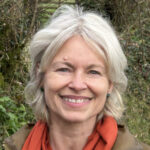
Patricia & Bill Clum Interview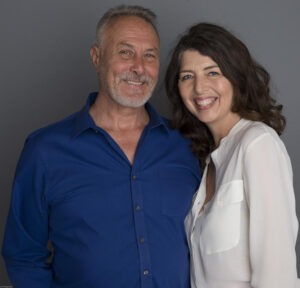
Summary
Patricia and Bill Clum describe spiritual growth as healing and integrating emotional wounds rather than bypassing them. They discuss vulnerability, protection, self-care, and practices that help people move through fear, grief, and anger into greater strength and wholeness.
Questions This Interview Explores
- How can spiritual practice help heal unresolved emotional pain and trauma?
- How can someone become vulnerable without opening themselves to further harm?
- How can seekers distinguish healthy emotional processing from dwelling on pain?
- What practices help people access inner strength and integrate difficult emotions?
Key takeaways
- Emotional protection is not bad; it can soften when a person is genuinely ready.
- Facing fear, grief, and anger can transform suffering into strength and deeper love.
- Emotional healing works best gradually, layer by layer, rather than through forced exposure.
- Movement, meditation, journaling, nature, and self-care help integrate difficult feelings.
- Spiritual growth includes learning to respond to life rather than living from victimhood.
- Effective guidance helps people become self-sufficient rather than dependent on a teacher.
Transcript
Rick: Welcome to Buddha at the Gas Pump. My name is Rick Archer. Buddha at the Gas Pump is an ongoing series of interviews with spiritually awakening people. I’ve done over 400 of them by now, and if this is new to you and you’d like to see previous ones, go to batgap.com and look under the Past Interviews menu. You’ll see all the previous ones organized in various ways.
This show is made possible by the support of appreciative listeners and viewers. If you appreciate it and feel like supporting it, there is a donate button on every page of the site, as well as a donate page that explains the reasons why in greater detail.
✨ Healing and awakening
My guests today are Patricia and Bill Clum. Before I even read anything biographical about them, I’m going to read a little something that somebody named Julie in Olympia, Washington, sent in. You probably know Julie, Patricia and Bill. She said:
Most people’s deeper awakening is obscured by emotional and mental patterns that have yet to be integrated. Patricia is one of the few teachers I know who is operating from an awakened heart, compassion in action, and really helping people to directly heal and integrate patterns.
Having read that, let me just read a bio here that explains their work in a little bit greater detail. Together, Bill and Patricia support you to build a foundation, providing tools for strength in the emotional and spiritual domains, yielding flow and freedom to be who you have come here to be.
A life of awakening is not one in which we never fall into a dark valley. It is one in which, when we fall, we have learned how to move through it. We develop emotional muscle in order to rise. This is the inner work of the soul.
Patricia and Bill guide you to that which is unhealed, exposing how these hurts and emotions rule our lives. You’re able to face yourself and learn to untangle from these aspects that have a powerful impact and influence. In the discovery of new awareness and integration, you begin to experience wholeness, embrace all emotion, let go of resistance, and live in the present moment.
With sensitivity, strength, and skill, Bill and Patricia facilitate working through levels of trauma, pain, grief, and anger in order to guide people to their own divine nature. As these wounds heal, you are able to discover the depths of self-acceptance and forgiveness.
I could ask you if that’s a pretty good introduction, but you probably wrote it, so you probably think it is, right? What would you like to say by way of comment or elaboration on that to begin with?
Patricia: Wow. When we’re sitting with people and working with people, a lot of what happens during a retreat, of course, few words can describe. What we’re witnessing is the ripple effect of a weekend and how people begin to open to new ways of being and to who they really are. So they’re not negotiating life through past hurt.
Rick: So why does that happen when somebody goes on a retreat with you?
Bill: What we’ve witnessed is that there’s a lot of protection around the heart where people have been traumatized or hurt. It could be from this lifetime or another lifetime, and those are the filters that people view life through.
When those filters—some people call it the ego, the ego mind—we see it as if it were a guardian angel. We feel there’s nothing wrong or bad about the ego; it’s also in transformation. In the place where those filters filter life, this is how we view life: through the hurt, through the pain, through the suffering. What we believe is that this work is actually the undoing of all that. When people begin to emote, when the emotional body starts moving, that’s the opening.
Rick: Regarding protection, obviously there are times when protection is appropriate. An egg needs a shell, a fetus needs a womb. We could think of many other examples, and you wouldn’t want to remove protection prematurely; it could be deadly. So how do you remove—maybe “remove” isn’t the right word—but how does one balance the necessity of protection with the desire to be unprotected and vulnerable? How does that process proceed in a way that doesn’t actually cause more wounding if one becomes prematurely vulnerable?
Patricia: That’s a really good question. The way our weekend is set up—or working with another, because we work with people one-on-one—is that the space is held, and what is revealed is ready to move into healing.
It’s an inquiry. It’s not a forcing into something, it’s not reliving an event, and it’s not an exposure of what is still, like you said, in the beauty of the protection, still needing the protection.
What we find is that when we meet people, we’ll meet with them in a one-on-one session. We’ll be in conversation, and we’ll know in the meeting, as they know, if the weekend is open and available for them. They’ll know if they’re ready to move into whatever is opening for them next.
Bill: This is something that doesn’t happen all at once. Usually, it’s for people who are really in a deep inquiry, and they may have done a lot of work that supports them in the moment they’re in. Everything has brought us to this moment.
When a layer, or that thin shell, begins to drop and the vulnerability and rawness are actually letting us know that we’re on our inward journey, what happens Friday—we call it “plowing the ground”—is that we go right into the resistance and the protection. Once people discover their own resistance and protection, they’re already beginning to release.
On Saturday, as we move into the resistance, the work comes in and this light comes in. Everything that’s not of love or light begins to surface. Then we work around the room with that. Once people face it—we face everything head-on, whether it’s fear or anger—we move into it. As we do, there’s an opening.
From Emotional Contraction to Wholeness
Sunday is the filling up. When there’s an emptying out, there’s also a filling up, moving from that place of contraction into wholeness. Wholeness supports that. We may spend a lifetime moving through layers of protection that we’re not even aware of, but when they do come into our awareness, that’s the opportunity to actually heal them.
Rick: Do the two of you feel like you’ve completed that process, or do you also still work through and release layers of protection?
Patricia: Yeah, another beautiful question. It’s never-ending and always new beginnings. It’s sort of like the wider, higher, and deeper we go, the more clearing there is for us. That is why we can hold space for another, because as we gather together as a group, we hold each other.
There’s no higher or lower, bigger or better, whatever the expression would be. We’re right there in that moment, in the breath. We’ve had people come to us and say it’s like we’re midwives. When we look in their eyes, they recognize that they can move through whatever they’re moving through into whatever’s next for them. They can trust and feel safe in that space.
Rick: Do you think that there are, or have ever been, beings on this earth who had worked through it all? Somebody like Jesus, for instance, or some of the great saints and sages. Do you think that they’ve completely unraveled all the sheaths that protect the heart and have acquired or revealed such an inner strength that they don’t need protection? Or do you think that to be a human being is to have work yet to do?
Patricia: I feel that to be a human being means we’re in constant evolution. As consciousness moves, shifts, and opens around us and in this form, there are always places where we can inquire, because we’re in physical form.
Now, when we move into nonphysical form, I haven’t spent time there yet, but my experience in the energy is that the protection isn’t needed. Here, definitely, on the planet, it keeps us in life. It keeps us grounded on the planet, and it keeps us able to engage in life and be in life all around us.
Bill: Another part of the question is that Jesus, Buddha, Gandhi, and many avatars whose names we may not even know had a willingness and surrender. They opened through the thresholds of awakening, and yes, they came in at a very high vibration. I’m sure that even in their own form, there was always something to transmute or to take a look at that wasn’t even in their awareness, right?
In the subconscious or unconscious, things move 800 or 900 times faster than the actual conscious mind. So during the weekend, when we sit still in that stillness and quiet place, all that needs to come up comes up. It floats to the surface to be healed, looked at, and transmuted back into the light. So I believe they had their own things they went through, of course.
The ripple effect
Rick: I’ve heard various sages say something to the effect that even if you work through all your own stuff completely, using whatever terminology, then you’ve got the whole world to take on. You become like a washing machine for all the trauma of the world.
Patricia: Yeah, absolutely. We see the ripple effect. It starts with us, then it moves into the family, then the community, and then global consciousness and awareness.
The consciousness we’re in right now—for instance, we’re in 2017 on the West Coast—is different from the consciousness across the ocean, where there’s a war zone, right? So we’re having this opportunity to create the shift in our own hearts so we can be that in the world.
That’s the beauty of what’s happening now on the planet: everyone’s being invited. We don’t have to feel like we don’t make a difference in what we see happening to our brothers and sisters. We can start with ourselves first. Bill, you were going to say something?
Gandhi’s Call to Become the Change
No. What really awoke me to all of this was the quote that Gandhi said: “Become the change.” It was as if it were the first time I had ever heard it. I thought, “Wow, that’s what I can do in life.” In that place of awareness, that brought awareness to me. That was my opening: becoming the change that I wanted to see in the world.
Bill: No. What really awoke me to all of this was the quote that Gandhi said: “Become the change.” It was as if it were the first time I had ever heard it. I thought, “Wow, that’s what I can do in life.” In that place of awareness, that brought awareness to me. That was my opening: becoming the change that I wanted to see in the world.
Become the change that you wanted to see in the world.
Rick: Yeah, as I see it, people don’t have a choice but to influence the world. Whatever that influence may be, we all constantly radiate an influence. There are a lot of people who are waking up these days, spiritually speaking, and obviously they’re having an influence beyond what they actually say to anybody or actually do. There’s a sort of constantly radiating or emanating influence.
Just to come back to a point I suggested, it kind of works both ways. People do feel—and maybe you can comment on this—that they take on stuff. As they become more open and develop higher consciousness, they find themselves… Well, some people comment that a lot of spiritual teachers seem to be having all kinds of health problems. Why is that? Are they taking on karma, or what’s going on? Do you have any thoughts on that?
Patricia: Yeah, absolutely. For us, I can speak for myself, because that’s what I know. As we work with people, the counterbalance is self-care. Just as much energy as I put out, I need to put back into myself. For me, that looks like having my own meditation time, writing, walking in nature, and caring for my physical body.
When my being is drained, that’s when everything stays. What happens is that, in this expression in your heart, as you’re able to hold more or be with people more, there are more people who are ready to be with you. It’s always a rechecking of self-care, and that’s actually one of our big practices with others.
The in-between retreat is really about supporting people with their self-care, so that as they move, they begin to strengthen in their heart and inner being. Other energies don’t stick to them, or they feel they can move with those energies and use them as an opening instead of something to shut them down. That’s actually what happens with the people we work with. They learn to be strong in it.
Rick: Yeah. Do you want to add to that, Bill, before I ask anything?
Bill: Well, I really believe that the core of us, or the background of us, is presence and joy. Happiness comes and goes. When the emotional body starts healing, joy becomes a strength, presence becomes a strength, and in presence, of course, there’s love.
As that emotional backdrop strengthens, when life comes at us, it could be blissful, and it may not be so blissful, but it doesn’t really matter which one comes in, because you have that groundedness in the core of your being, which is joy. That’s the emotional body we speak of, the one that builds into strength when life comes at you. You have the ability to come out of the valleys. You can.
And related to other teachers, we honor all teachers. We know that no matter who teaches what, there’s been an opening for someone, somewhere, in this collective effort on all our parts. So, the emotional body, no matter who you are, has to be looked at. That’s the place—and I’ve heard this quoted—that people will look anywhere except at the heart because it’s so uncomfortable.
The emotional body, no matter who you are, has to be looked at.
We’ve been in the mental body for a long time, so that transition from here to here is a long journey. We’re just discovering the heart.
Building inner strength
Rick: You both mentioned the word “strength” a lot in what you just said. That’s what comes to my mind when I listen to you and read some of your blog posts and things. To use another vulnerability metaphor, it’s like if you plant a sapling, you usually have to put in stakes and ropes to support it because it’s not strong enough to hold up against the wind or whatever. Eventually, it gets strong enough, and you can remove those.
As I understand it and have experienced it in my own life, there’s a deep reservoir of strength at the core of our being. If we can take recourse to that, then it strengthens the mind, body, and everything, just the way nutrients would strengthen a tree if it were planted in fertile ground. So, what methods do you use to enable people to access that inner strength, so that they can become more self-sufficient, even possibly to the point of not needing your services anymore because they’re a tree that no longer needs the stakes?
Bill: Well, that’s the purpose, actually. It’s not so much to create more students, but to teach people how to master their own emotional body so they can go out into the world and begin to give from that place. So, where it comes from for us is the willingness, the surrender, and we have one saying: “How deep is your yes?”
Rick: Sounds like a Bee Gees song, yeah.
Bill: So, in the depth of our yes, being willing to do this, we’ve gone through powerful thresholds that have brought us to the other side of the emotional body. The very thing that I resisted was actually my opening. As I followed it, it opened me into this.
The vibration that we live at, we demonstrate it, we live it, and people see that. They see the light. We walk into a room, and sometimes people just start crying. They feel safe, they feel the love, they feel whatever they’re feeling in the moment. I can’t explain exactly what they’re feeling, but we see the tears right away. They’re so ready for their hearts to open.
The very thing that I resisted was actually my opening.
Mankind has waited for a long time for love to come to the planet. That love is going to come through us.
Rick: Us meaning the collective us.
Patricia: Yes. What you were saying is accurate. They’ll come, they’ll get stronger, they’ll learn the practices, they’ll go through thresholds, and then they’ll go into the world.
What’s beautiful is that they’ll come back. They’ll go for one, two, three, or four years, and they’ll come back. They always know they can come back, and they can rest with us for a weekend. When they come back, it’s not from moving away from pain or learning how to cope with pain. It’s more just to rest. It’s like coming back home for a weekend. The door is always open.
The practices that we offer are very clear and very simple, and they’re not new to us. But what we’ve found is that when you combine them with whatever is calling you, with other practices you do, they help ground and solidify what’s moving in you.
Move the body. Walk, or if someone wants to put on music and move the body, that’s fine. When you’re feeling an energy or an emotion, move with it, move with it, move with it. One thing is that people can be quite good at meditation, yet if an emotion is moving, it’s challenging to meditate. We say, “Move first.” Move the body first, whether that’s walking, dancing, or whatever it is for you.
There’s also meditation, drinking water, journaling, and writing. In your journaling and writing, it’s an inquiry, and it becomes sort of your record book with your own opening. “Show me what I can’t see,” you’re asking your inner being, and all of that. So, those are the practices.
Rick: Is there a flip side in terms of—I know there’s the term “spiritual bypassing,” and sometimes spiritual seekers are guilty of that. They ignore or repress things, or say, “Oh, I don’t want to put my attention there,” and that kind of thing. They can get very skittish or gun-shy about life because they’re always trying to avoid anything uncomfortable.
But is there a flip side to that, where one can indulge too much in putting one’s attention on all sorts of inner muck and, in a way, exaggerate or exacerbate it? If that is true, how does one find the balance point between dwelling on this stuff, perhaps almost obsessively, and pushing it away and trying to ignore it?
Patricia: That’s a really good question. The emotional body we’re speaking of is the unintegrated body. It’s the pain body that’s out in the world. What happens is that the emotional body matures, and you feel emotion. It takes a little bit of time for that to unstick itself.
People become aware that they’re recycling that pain and getting into the muck too much. Then we walk with them, show them, and process with them so they can realize that they don’t need to spend their time there—that they can bring themselves out into a new awareness, then dip in a little bit more.
It’s never recommended to try to do it all at once. It’s layer by layer, because that’s what helps us build our strength. We’ve had clients who are very enthusiastic. It’s about allowing them to pull back a little bit and showing them from the observer aspect: “Okay, what is moving?” It’s also about remembering what has already moved in their life.
A lot of times, when we stay in that sort of yuck, as you said, we’re also not aware of how much we’ve progressed in life. We’re not really having the full image or perspective of what’s actually happening. So, that’s how we support them in coming into that perspective.
They can almost keep a record. They can say, “Oh, okay, okay, great. This still hurts a bit, but I’ve also had this happen, which is different now.”
Bill: So, a big piece of this is how we view ourselves.
Rick: You two, or people in general?
Patricia: Just people in general—human beings, how we view ourselves. And us too, of course. We can feel that we’re victims here on this planet. The victim is actually a light being beginning to heal, moving and healing the emotional body in the form of the victim.
The victim views the world as God or spirit doing something to them, and they’re not yet able to recognize that it’s an opportunity. It’s an opportunity to move from reacting to life into responding to life, seeing the world as your oyster because you’ve moved past that.
It’s healing beyond the victim, because this is the planet of awakening. This is the attitude-adjustment planet. We’re here together to really work our way, collectively and consciously, through these thresholds.
Rick: Yeah, I like that. I definitely think most people like ourselves—people who are interested in this kind of thing—are familiar and comfortable with the notion that Earth is a learning place, that we’re here to evolve and grow, and that the experiences we encounter, in the big picture, can be designed to facilitate our growth and evolution, even though they might seem unpleasant at times.
You can take extreme examples of that, and it’s a little hard to accept the point. But if you really zoom out and think of the whole universe as this big evolution machine, then ultimately everything is conducive, in one way or another, to the evolution of consciousness. At least, that’s the way I see it.
Patricia: Yeah, absolutely.
Bill: Absolutely. That’s the depth we’re being called to in our emotional body: to allow ourselves to move through these thresholds.
For example, pain, grief, and fear are some of the biggest things that humanity runs from, and yet those are the great thresholds we can move through when we’re willing to face them head-on emotionally. That’s where the heart comes in. We really start discovering the strength of our own hearts. We can do this. We can move past that.
It’s the undoing of the suffering and pain that we live in, which we think is just how it is. So, what would it be like to live beyond the pain, beyond the fear, and beyond the grief?
Even grief—for many years I thought, “God, this is so awful,” because we’ve all experienced grief somehow, and the planet will experience it one time or another. I was meditating on that, and the grief kept increasing and increasing. I was saying, “Wow, I can’t take any more of this,” but my “yes” was so strong that I was going to stay with it even if it took my life. I was going to stay with this “yes.”
There was an explosion. I call that perturbation, where the energy of spirit pushes in so hard, like into an atom, and it explodes and expands. In that place of expansion, it’s irreversible. We’ll never be back at that place again because we’ve moved through the energy of it.
The pain is the medicine.
That is the expansion, and it’s even unrecognizable at times, but it is a conscious shift that is irreversible when you move to the other side. Is fear still there? Yes. As you said earlier, there’s a good fear, there’s a healthy anger, and there’s a grief that’s healthy. What I discovered in feeling that grief was actually the depth of love I’ve held in my heart.
Rick: Is that what you were alluding to earlier when you said that your greatest challenge resulted in your biggest opening or something?
Bill: Yes.
Rick: Yeah. Was that grief specific, or was it this sort of amorphous grief that you weren’t attaching to anything in particular? Was it just this existential malaise that you were feeling?
Bill: Yes, it was just grief. There was nothing I could attach it to because I really scanned through to say, “Spirit, what is this moving in my body?” They said, “We’re just moving grief, so open to it.” And in that opening to it, it became so intense, I said, “Wow, I can’t take any more,” and then that explosion occurred and there was that opening.
I said, “Oh my God, this is what it’s like to follow the feelings of all of this. It moves us into the opening of now, where there’s more light, there’s more movement, and the vibration of wherever we move in life, people feel us.” We’ll stand in Starbucks and within 10 minutes it begins to quiet. Somebody always will come to us and talk to us or something. We carry that in life. It doesn’t even need to be in words; people just feel your presence.
Rick: Yeah, yeah. Did you want to add anything there, Patricia?
Patricia: No, I’m enjoying this.
Rick: Okay, good. It’s been my understanding—see what you guys think about this—that the mechanics of the way emotions and pent-up stuff work is that there is a physiological correlate. When we’re talking about grief and anger and all kinds of trauma and hurt and things, and there was protectiveness of the heart and all these things we’ve been discussing, we’re not just talking psychologically or emotionally; there is a physiological correlate to these.
Perhaps it could even be understood, if physiologists knew what to look for, in terms of the neurological level or something. But we ordinarily don’t feel it that way. Well, maybe we do—I mean, feel free to interrupt me. There’s usually probably a physical sensation associated with these emotions.
Would you agree that the most efficient way of resolving this stuff has something to do with tuning into that physiological basis of it, the physiological sensation, rather than sort of abstracting it into just mental or emotional states, but getting right down to the physiology?
Patricia: Absolutely. What we witness is that the emotion is stored in the body, in different places in the body.
Rick: Probably the subtle body as well as the gross body.
Absolutely, and energetic—all of them. Mind, body, same, same. So, as we’re working with energy and as it’s moving, people will feel it: tingling of the head, the soreness in the side that we put attention on and breathe with. As the anger dissolves, the side, the cramp, is gone. The heart opens. It’s all connected; every aspect of self is connected. When the heart begins to open and heal, all those things are revealed in the body for sure.
Patricia: Absolutely, and energetic—all of them. Mind, body, same, same. So, as we’re working with energy and as it’s moving, people will feel it: tingling of the head, the soreness in the side that we put attention on and breathe with. As the anger dissolves, the side, the cramp, is gone. The heart opens. It’s all connected; every aspect of self is connected. When the heart begins to open and heal, all those things are revealed in the body for sure.
Rick: Yeah, I’ve been on long meditation courses where all kinds of strange things were happening, but I went through this phase where there was this really serious pain in my shoulder. I hadn’t injured it or anything, and it just went on and on. Finally, it just dissolved, and then it felt like there was this opening or something that—
Patricia: You got it.
Rick: Yeah, and who knows how long it had been buried there? It really was from—or anything.
Bill: Yeah, absolutely, and that’s how it happens. After a while, at first, we may have things in life that seem to bring this pain, right? So, all of that. But as we clear and as we clear and as we clear, like you said, it’s like, “Okay, I feel that. It hurts. I don’t even know what it’s from.” There are no words really attached to it.
Rick: Don’t need to know.
Patricia: There’s no need to know or even want to know. It’s like the breath, the breath, the attention, the movement into movement. That’s why I mentioned at the very beginning that some of the work that we do with people can’t really be put into words, but we’ll do our best with your questions, for sure.
Rick: Yeah, one metaphor that comes to mind when I think about this kind of thing, about dissolving trauma and all, is if you had a handful of mud and you wanted to dissolve it somehow. If you just had a cup of water and you threw the mud in the cup, it wouldn’t dissolve very well, and the water would be really muddy. But if you had a bucket or a swimming pool or an ocean, the larger the quantity of water, the more easily the mud would be dissolved and just disappear.
So, that sort of relates back to what we were saying, I think, about strength. If somehow that inner strength can be enlivened to whatever extent it can, then something which could be a huge deal to dissolve, if our consciousness is just cup-like, could just be a little blip on the radar that has come and gone if our consciousness is more oceanic.
Patricia: Absolutely. And so, for myself, my experience of consciousness is love. That’s how I experience it—not the love in a storybook or even in relation, but the unconditional, just the fabric of love.
What we notice in people, and what the feedback is, is that as this is clearing for them, they’ll just notice that they’ll walk out of a bank and what used to irritate them, they actually feel the grace. They actually get into a great, connected conversation with someone at the bank, and they walk out and go, “Wow, five months ago, that would have really gotten me upset.”
That’s how it begins to demonstrate their inner work. It’s those subtleties of influence where they don’t feel, like Bill mentioned earlier, in reaction to things. They feel like they’re just there and present, holding space for whatever is happening. They fall into deep connection with another, and then something moves from that. So, it’s quite beautiful.
Rick: Do you want to say anything to that, Bill?
Bill: No, it just has to come from us. It has to come from within us. People see our work, and everybody has an experience. Whoever has sat with us has had some sort of transformative experience, and we can’t make it happen. We can’t make this happen; we can only open to it.
I really believe that the “yes” from my heart was a hard one for me to really learn, because I wanted to make it happen. I spent hundreds of thousands of dollars chasing this thing, trying to be happy, only to come back to the same point of not knowing what to do with this emotional body.
I think the demonstration is here now for us to really learn what to do with this, and how it’s really the opportunity to open to everything that we’ve come here to become and to be. It’s almost like heaven on earth beginning to open from within us.
🎵 Heaven on earth in daily life
Rick: That’s a really good point. That kind of tunes right into something I was about to ask that was bouncing off of Patricia’s statement about standing in line at the bank.
With all you’ve been through and all the work you’ve done on yourselves, do you sometimes feel like you’re living in heaven on earth? You’re living in this blissful state, and in mundane circumstances like bank lines and supermarkets and stuff, the bliss just kind of spills over and engulfs everyone you perceive, and you just feel this joy and love for people in ordinary circumstances?
Patricia: Yes, and I’ll feel vulnerable, and someone will bring me to tears just serving coffee. I’ll feel raw sometimes—all of that.
Bill: Well, here’s a good example. Were you done? I just want to make sure I didn’t interrupt you. I was in Walmart. I don’t go there very often; it just seems like a dreadful place for me to go to. Home Depot is much more fun, or Costco. But anyway, I was standing in line. I needed an ice cooler, and it was really reasonable there.
There was this lady with a cart. She had four kids hanging off it, and they were just really being awful. She was trying to get through the line, and I was standing there. People were just glaring at them, so upset with these kids and this lady. I was starting to feel the same thing, and then I heard Spirit say, “Bill, this is not who you are. Do something about this. Don’t stand here and do nothing.”
So, I walked up to the lady and said, “Hi. Wow, you’ve got your hands full here today with all these kids.” I started talking to the kids and just touching them. I said, “Is there anything I can help you with?”
“Oh no, just thank you for being so patient. This was really hard.”
I said, “No, I get that. Is there anything I can do?”
She said, “You’ve done enough already.”
When I turned around and looked at everybody, I noticed that there was a whole attitude shift in the lines when I was willing just to be in my heart and to go there. So, it’s kind of like that. That’s just one example that really stands out for me.
Rick: Yeah, that’s really nice. I was getting off a plane recently. The plane had landed, and it was taking forever for people to get off. It was hot, and everybody was tired. It was late at night; the plane had been delayed. There was some poor little girl who was just screaming, “I have to potty! I have to potty!”
Some people were feeling impatient, but most of the people were sort of saying, “Get out of the way; let her get off!” It’s almost like when there’s a natural disaster, like a big snowstorm. It brings out the best in people, and everybody starts talking to neighbors they’ve never talked to before. It brings out their humanity.
I don’t know why I told you that story, but it does bring out a point. It’s sweet, and you see that when there are big snowstorms and catastrophes or an earthquake or something. It somehow evokes the humanity in people, whereas mundane circumstances tend to numb it or suppress it. But people rise to the occasion, and it brings out their better nature.
Patricia: Yeah, absolutely. The other thing I wanted to speak into was the beauty of how the strength of my own heart—my experience—ripples into my family.
I don’t speak to my family as I’m speaking to you or to Bill. They have their lives, and I’m the youngest of five very busy professional people. And yet, when I’m with my mother and I’m with my brothers and sister, there’s this beautiful space. As I’ve moved around and become more of me—that’s what I call it—when my heart opens, I just stay in the space with them.
What comes back is that they begin to use language that I haven’t even spoken to them about. They begin to say, “My heart feels…” or, “Wow, I’m just noticing I’m feeling vulnerable today.” So, it’s kind of beautiful, that sweetness about what we were speaking of earlier: how you carry it without words, how it is you and it is your life.
Rick: Yeah, there’s a saying in India that when the mangoes are ripe, the branches bow down so it’s easy for people to pick the mangoes, and it speaks to humility.
It almost sounds like it’s not humble to speak of attuning to the level of consciousness of the people you’re interacting with, because it kind of presumes that you’re in a higher one. But what’s really meant by that example is just that someone who is really humble doesn’t think of themselves as higher or others as lower or anything. There’s just a natural ability to attune to the circumstances, and there’s sort of the range or capacity to attune to circumstances of a wide variety of types, I think.
Whereas without that range, people tend to be locked into this level and others are locked into that level. Then we have all this strife and conflict and disagreement because we just can’t—there’s no Venn diagram of overlap between our world and the other world.
Patricia: Yeah, and for myself, in my opening, in my path, if it wasn’t happening in my heart, it wasn’t happening. So, I wanted it to be that way. My life, as far as I know for sure, is that I have this one physical being here and this time to enjoy it, however my time is, however long my time is.
So, for me, what you just said is my absolutely deepest core value. I have to be able to be with everyone in my life—not that we won’t have our ups and downs, like any relationship, but to be with people in my life, to meet people where they’re at, who they are—that’s what excites me.
Bill: I really felt that when you talked about the mangoes, or whatever plant fruit that was, how the trees … humility is such an important piece, and it’s a rare commodity on the planet: true humility. I feel that collectively we could all use more of that. And I believe the thresholds—if I talk to the fear, the anger, the grief, the victim—when we’ve had the willingness to move through this and just open to that, when we move to the other side of that, just a plethora of energy opens consciously. It has a ripple effect where one person willing to do the work and say, “Yes, I do it for self first, because the love has to come from within me to another.” And so, when we do it for self first, we hold the space for maybe a hundred thousand people.
Rick: I’m listening.
Bill: Just by our willingness to say yes to the opportunity that’s right in front of us. And so, one of the things we say is, “Learn to get comfortable with the uncomfortable,” because when we sit still, like in the weekend, this energy, this subconscious mind, starts slowing down, and all these feelings that people haven’t taken the time to feel now come up and say, “God, I don’t want to feel this.” And yet, actually, the pain is the medicine. Pain is the medicine to move beyond the suffering. So, this is the medicine to bring us to the place of wholeness, and from the movement of wholeness into the place of devotion and holiness.
Rick: Yeah, I guess you could say pain is sort of the indicator. It draws our attention, right? It lets us know that there’s something that needs to be attended to. Just to take a simple example, if you put your hand on the stove, you feel pain, and it’s a good thing you do because you need to take your hand off. But then it still hurts, even after you’ve taken your hand off. So why is that? Because your hand’s not on the stove. Well, there’s an injury now that needs to be healed, and so attention on the injury is going to be more healing than ignoring it. That’s just a physical example, but obviously you’re talking about the same principle probably applying on the emotional level.
Bill: Yeah, so we begin to take a look at that which we’ve been ignoring.
Patricia: Or not even aware of, like you said, like your shoulder. Sometimes we’re not even aware of what emotion is. We mentioned earlier, in consciousness, we’ve spent a lot of time in the mental body. So, for a while, often in the beginning, there’s a thawing out. Even if we’ve been dedicated spiritually, we just haven’t known. It hasn’t come to an awareness. There’s this aspect that is still evolving in us. There’s this aspect that has the opportunity to be embraced and included in all of this.
Rick: Have you ever given much thought to, or had experiential glimpses of, the higher reaches of emotional development? I’m thinking in terms of—you hear stories of some of the great saints, like the Yoruba or others, who had these incredible hearts and were just like oceans of love and compassion. Amma is an example, sitting on the shelf behind me. It’s kind of interesting to contemplate the range of possibilities.
What you’re talking about, I don’t think is just a lifetime of dealing with pains and traumas, and it’s just going to be this sort of slog that we have to do all of our lives, working through that kind of stuff. There’s really a rainbow at the end of the path. And not just at the end—it gets brighter and brighter as we go along.
Patricia: Absolutely. It’s really good to mention this, Rick, because as we’re processing, as we’re healing, as we’re moving, remember, everyone, that we are in movement of evolution. We are, for lack of a better word in this moment, rising to an expression of open mind, divine mind, open heart, where we can be in the infinite realms, where compassion can move through every vein that’s connected to consciousness, where mercy comes in and quantifies within your physical being so you can offer that depth of healing, that depth for others, and that depth of fortitude of consciousness.
Emotional Maturity and the Wells of Consciousness
So, we do move into a maturity. We just call it emotional maturity, where we can be in that and hold that space. Each and every heart is so different, as unique as our thumbprint—each and every heart. We all have these wells that are available and just waiting for us. Whatever that well is full of is with you already. As you move through those layers of protection, of processing, all that stuff, you begin to tap into that well that’s already available and in you of consciousness.
Bill: Yeah, so getting back to that place where, in my meditation, I was feeling the grief—not related to anything, just feeling grief, maybe even global grief, identifying with all of us. In the movement, when that explosion occurred, I realized that was the depth of love that I carry within me. I was shocked. I had no idea that kind of depth was in me. It was a revealing of who I am.
As a man, I’ve been really uncomfortable. I didn’t want people to think of me as too loving, because I was afraid I wouldn’t be a man or something if I didn’t have acceptance about love. And so that brought in a deep acceptance to know this is who I am. And wow, do I feel powerful from this place. It’s something I’ve never experienced; I didn’t even think it was possible in this lifetime.
And so, what do I get from this? What I really feel is that I’m not so much getting something; what I’m receiving is freedom. Freedom and fulfillment is what I feel the end result is. I don’t even know if there is an end. It’s probably not even appropriate to use the word “end,” but on my journey, this is what’s unfolding in me; this is what’s moving. Color is different, taste is different, how I view people is different, how I view the world is different—everything shifts.
Rick: Yeah, so when you had that big awakening, it sounds like it was a watershed moment for you, and things were never the same after that.
Bill: Yes, that’s true. That’s just one of the thresholds. The deepest threshold, I believe, the crux in our humanity, is the belief in separation: that we are separate from God. That was a really long journey for me in the loneliness of that, because that’s the end result of where the mental body could only take me—to the place of loneliness. The heart was the only place, when I opened to that, saying, “Okay, I get that.” When I felt that, for a long time it was so painful, but it opened me into the place where I knew that I was no longer separate.
The deepest threshold, I believe, the crux in our humanity, is the belief in separation.
Rick: That’s nice. There’s a line in the Upanishads which goes, “Certainly all fear is born of duality,” and I think that’s kind of what you’re pointing at here. Obviously, there would be a sort of root fear if we’re separate, if we’re dual, if we’re separated from God, because we’re always vulnerable. If there’s me and other, there’s always the chance that the other can hurt me or something. But if it’s only unified, then what can hurt what?
What was I going to say? Pipe up if you have anything. Oh, here comes a question. Amanda from Tampa, Florida, asks:
What do you think about when past trauma becomes physical pain affecting the nervous system and the brain? For example, arthritic disease, fibromyalgia, anxiety, and depression. The triggers are super raw and vulnerable. Even in it, I feel like I’m supposed to go through it, not suppress it, and be in a safe, self-controlled space for healing. Thank you.
Patricia: Yeah, so we always recommend, when someone’s on the edge that Amanda’s on with her pain and her awareness that she’s been invited to go through it, to get support. Get support from someone to hold space for her, someone who is able to help move her through the process of releasing. We’re on this incredible planet together, so there’s quite a beautiful expression when we come together in that movement, the threshold Amanda’s going through. Absolutely, there’s a rebirth wanting to happen in her, a complete movement in her whole body—physical, spiritual, energetic, everything that’s moving in her now.
Bill: Yeah, and as you said earlier, the pain gets our attention. So, in the place of the pain, it’s a fearful place to be. It can be at times because we don’t know what to do with it. Then there’s the willingness to feel it, to allow it to work its way out in you, and to be with that emotional body. What’s underneath the pain? So, that’s the place to look: what’s beneath the pain that’s wanting to move?
Patricia: The emotion.
Bill: Yeah, so the emotional body is wanting to move.
Rick: Yeah, and like you were saying before, Patricia, there are various things you can do to help yourself—exercise, walking, maybe yoga, diet, all kinds of things. It’s kind of like you pull a table by any one leg and the rest of the legs come along, but maybe if you can pull several legs at once, the table is going to move even more easily. So, I imagine somebody like Amanda has already looked into a lot of things that might be helpful, but it’s just good to keep in mind that we don’t have to use just one tool. There can be a variety of things that can be helpful.
Patricia: Yes, absolutely. And for Amanda, I just want to say, you may want to journal about what emotion is there, sit with it in a kind of meditation state, and do the inquiry. See, like Bill said, if there’s emotion under the pain, it’s almost like you’re diving into a pool. Just see what emotion may be stirring there. Then there’s a release that she can move with, if it happens for her, when it happens, so she doesn’t have to try to contain it.
Rick: I just want to make a wrap-up point about that point I was making earlier about the higher reaches of emotional development, in terms of devotion and so on. There’s a thing in spiritual circles that some people say: “Oh, well, don’t be seeking some glorious future attainment, because you’ll just be forever chasing the dangling carrot. Realize that you’ve sort of got it right here.”
But, on the other hand, there are these examples of spiritual luminaries who apparently attain something quite marvelous, and I think you can balance both. Obviously, every day is life, and we don’t pass over the present for some glorious future, but it’s good to have a vision of possibilities also, and to realize that there’s a great range of potential unfoldment which can be quite wonderful as we undergo it.
Patricia: And it’s available for anyone.
Rick: Exactly.
It’s not available for a selected few. These people, the different on-earth avatars, people that hold love—that is their calling, to offer who they are to the world. And there’s a calling in each of our hearts, so it’s available for everyone.
Patricia: It’s not available for a selected few. These people, the different on-earth avatars, people that hold love—that is their calling, to offer who they are to the world. And there’s a calling in each of our hearts, so it’s available for everyone.
And what Bill said earlier, too, to maybe add a language to support people in this, is that it’s something we’re open to. So instead of reaching for it, open to it, because everything in your life happening right now, in the moment, whatever it looks like, is supporting that calling in your heart, is supporting that opening. You’re actually in an opening; you may just not recognize it as that.
Rick: Yeah, that’s great.
Bill: What we may be looking for or seeking is actually already happening in us, right at this moment.
Patricia: Yeah.
Bill: For instance, people say, “Well, I don’t believe.” Well, belief is happening anyway, regardless of what I think, what my opinion is, or how I think it should be. It’s happening anyway. Creation is continually in movement.
Rick: Yeah, and if someone were to say to me, “I don’t believe,” I would say, “You don’t need to, just experience.” This is a scientific process. If you don’t believe that an apple tastes sweet or something, then bite the apple, and that will confirm or refute whatever attitude you have about it. So, we’re talking about an experiential thing here, not just a belief or an attitude.
Patricia: Yeah, and I wanted to mention, because a lot comes with belief, the other word that often comes in is trust. In getting to know self, the depths of who you are, trust is built from there. Once we can trust our own being with our own heart and our own being, trust begins to open for us.
Rick: Yeah.
Patricia: Our mind would like to see affirmation or proof that there is trust outside of us. Trust is built from the core of our being. We build trust into life, each and every person.
Rick: And would you say that’s related to that? Maybe they don’t trust you, but after they’ve been through a world of experience, maybe they trust you more than they did the previous time because they’ve already built some experiential foundation.
Patricia: Absolutely. And we’ve had a world that’s operating at a pretty primitive state still. We have many beautiful things happening simultaneously, but there’s a lot of primitive relating.
Rick: A very contrasting world.
Patricia: Yeah. So, when we meet and we’re talking about heart space and we’re relearning the language inside of us, it takes time to have that availability, that trust, so to speak, like you just explained. What we present is that we’re building a bridge. They’re on one side, we’re on the other side, and we’re building a plank at a time. Whether it’s the weekend or later down the road, we meet in the middle with them when they meet themselves.
Yeah, like you were saying earlier, you don’t do this all in one day. There’s layer after layer after layer after layer. I think each—there are people who like to say things like, “Oh, you’re already enlightened. Just realize that and you’re done,” but I don’t think that’s realistic. I don’t think they know what they’re talking about. There’s a kind of progressive unfoldment that takes place, and each new layer is a new layer of trust and genuine experience.
Rick: Yeah, like you were saying earlier, you don’t do this all in one day. There’s layer after layer after layer after layer. I think each—there are people who like to say things like, “Oh, you’re already enlightened. Just realize that and you’re done,” but I don’t think that’s realistic. I don’t think they know what they’re talking about. There’s a kind of progressive unfoldment that takes place, and each new layer is a new layer of trust and genuine experience.
Patricia: Getting to know self. I mean, what are we here for? We’re here in this physical body, in this being, in this Patricia. I want to get to know all of this universe inside of me. I’m a tall woman—I’m six feet tall—so there’s a lot for me to get to know in here.
There’s always been a constant state of shifting, movement, change, dissolving, growing, aspects coming forward, movement, healing. So that’s the invitation for everyone.
Bill: If there was a shortcut to this, I would have found it. Let me tell you, I looked and looked and looked at so many different things. Maybe 30 years of chasing the tail, so to speak, only to come to the place of realizing that it was always here. It was always here. I just didn’t know how to access it.
Rick: Yeah, that’s a good point. What you were saying a minute ago reminded me of the point that people like Ramana Maharshi or Jesus Christ, or anybody else who’s some great, enlightened, famous dude, don’t really have anything that we don’t have. We’re just as much rooted in the Divine as they are and permeated by it, and so on. It’s just a matter of maybe they’ve become a little bit more aware of the connection.
But we all have the capacity or the potential to become aware of that connection experientially, again, not just in belief. If we have a human nervous system, we already have what it takes to become an embodiment of Divine consciousness. It’s not, like you were just saying, the province of a select few.
Patricia: Yes, absolutely. And it will always be our choice. Every day, that’s an expression of how deep is your—
Rick: Yes.
Patricia: That helps us remember not to get involved in the world. The world is quite hurried in its pacing right now. But that helps us bring it back to center and go, “Oh, right. How deep is this moment? How deep is this yes in me?”
New ways of living together
Rick: When you think about the world and see what’s going on in it, from your knowledge and experience doing what you do, and considering everything you’ve gone through in your own development, do you sort of see trends and symptoms of deeper issues?
For instance, the opioid epidemic is a big deal these days. NBC News has been doing a series on it recently and how it kills more people than any other cause now, at least in a certain age group—more than car accidents or just about anything else. Obviously, that’s a strange phenomenon. People are trying to numb out; they’re just trying to shut down, and obviously it doesn’t work too well.
Do you have any kind of sense of societal trends, both current and future—where we might be going? Do you get insights like that?
Patricia: Yeah, I often do. Here’s the thing: we’re just creatures of contraction. We’ve had to come into this human form so far away from who we are in our inner being to realize that we’ve actually been far away from it.
Now we’re moving into this availability, just like having the conversation you and I are having right in this moment. Even though we’re on this computer and you’re thousands of miles away, I feel we’re in the living room. We’re speaking, we’re connecting, we’re following this wave—what’s working with us and all the viewers who are listening or will listen.
It’s been the lack of connection, the lack of connection and the lack of knowing what to do with the pain someone’s feeling. We’re fortunate to work with beings of all ages. Younger people are coming in so bright, with so much consciousness, into a world that still wants to put them in a box.
The old systems aren’t working. We witness it everywhere in the world now, openly. Those old systems are being challenged, and yet new systems are awakening from that.
We were just at an event yesterday where a group of young families—ten of them, twelve of them—got together and bought property. They’re building and living together. They’ve got the ecosystem and their food; they do it all by council. They’ve agreed that they all come together, and one of the agreements is that they will always do transformational work. They’ll always bring in mentors, they’ll always keep working on themselves, and they’ll always come into agreement.
Everyone’s raising the children. All of them have talents that they offer. From that, a young man is working with a nonprofit where he goes and works with people, and they do clusters. They’ve done the research that twelve people together in a gathering is when you can really hear and connect with each other.
They’re building clusters and communities. A community is something like 144—I forget the numbers, so don’t quote me on that—but 144 is the maximum number of people a human being can be with before they feel disconnected. Interesting. And they’re building homes.
Rick: Twelve is the square root of 144, so it’s kind of interesting that the numbers work that way.
Bill: Yeah, and actually, people come to know each other, and it becomes a family where they’re so accountable to everything. They’ve really set up the groundwork because, together, we’re more.
These people talked for years about getting a piece of property. The property they discovered was a million dollars, and it had four homes on it. Between five of them, they came up with a down payment—$13,000 each, or whatever the figure was. They put it down on the property, created a corporation so they all pay rent to the corporation, and now they’re solarizing.
They’ve just found a way to make it work, because the average home in San Diego is around $500,000. For five of them, that would have been $2.5 million. For $13,000, they live on a ten-acre piece of property.
Patricia: And they welcome diversity. They’re from all backgrounds; they have all their different talents—the artists, the firefighter, people from all different walks of life. In this council, they come together.
They’ve committed to the connection. They’ve committed that they’re going to see it through. When the unconscious comes up, they have systems in place to support the healing of that, because it will—it’s inevitable, because we’re human beings.
Bill: It’s about connection.
Rick: Yeah, my main takeaway from this is something you said: as the old systems break down or prove totally inadequate, it’s going to result in the under-the-radar emergence of much more creative, innovative, and effective ways of doing things. It will probably take a long time before that makes the news, but this stuff is just going to crop up quite spontaneously out of the sort of vacuum that the old systems are creating.
Patricia: Yeah. If you look at our world, in most cities, look at how seniors are treated and how parenting is treated. There’s separation there from reality. People are alone, where they could be more connected together.
So, what’s growing more is that opening, that desire, that willingness to connect to deeper levels with self and others in life.
Rick: Yeah, that’s great. I have some quotes here. Feel free to bring up anything from your side that I’m not thinking to ask, but I have some notes from reading your blog posts. Who is Alex Reyes? He had some things on your blog. Is that somebody who works with you or something?
Patricia: Yeah.
Rick: He had some interesting points, and maybe I’ll just—go ahead.
Patricia: He helps us. He takes our writing and implements it, puts it on the website.
Rick: Good. Here’s something from Rumi that kind of summarizes what you’ve been saying. He said:
Your task is not to seek for love, but merely to seek and find all the barriers within yourself that you have built against it.
This is from something you wrote.
Patricia: Yeah.
Rick: That’s a good point right there. Relationships and finding love in life are very important to people, and it doesn’t often work out for people, and so on. I guess what this does is redirect the search from an outer-directed one to an inner-directed one: find what the barriers are, remove them within yourself. In other words, seek within. Then, “Seek ye first the kingdom of heaven within, and all else will be added unto thee.”
Patricia: You got it, yeah. Remember, in the very beginning we were talking about protectors? Often in relationships—we were talking about how we’re creatures of contraction—we feel into what doesn’t work first, before we become aware that there might be a different way, that something else is possible.
With relationships, a lot of relationships are still reaction-ships. It’s one protector and the other protector in communication. The aspect of self that hasn’t healed starts to direct the relationship, or reaction-ship.
So, what we find and what we offer is what you said: move into self first. Let’s release some of those barriers so you can truly be all of you in relationship, in that deep connection.
Rick: Yeah. Maharishi Mahesh Yogi used to say that relationships are based on giving, and that if two people come together both wanting to take, then nobody gets anything because both are trying to take; nobody’s giving.
But if two people come together with the capacity to give, with the intention of giving, and with no concern for what they’re going to get, then both receive, because both are giving.
Patricia: Absolutely—and receiving.
Rick: And receiving, yeah.
Patricia: The receiving is so profound and important. It’s the dance, the giving and receiving. Both of those create more opening and create that fluid energy that helps move us.
Bill: That’s the balance. It has to be equal, the giving and receiving in life. Some people are great givers, even in the conscious world, and they become exhausted because they’re so busy giving. The very thing they’re giving is the opportunity to give it to self, and that’s the receiving. We have to be able to receive in order to give, and vice versa.
Rick: Yeah, well, it’s like what Patricia was saying earlier: she needs to have her downtime, her hiking, her meditating, stuff like that to recharge her batteries. You can’t just give and give and give without recharging your batteries. So, how long have you two been together?
Patricia: Thirteen years now?
Bill: Twelve years.
Patricia: Twelve years.
Rick: And presumably you’ve been married before to other people and this and that. Just out of curiosity, how did you meet, and what are your day-to-day lives like as these teachers of having open hearts and everything? What is your experience like with each other on a daily basis?
Patricia: Well, I met Bill when I was with a friend in San Diego on vacation, because I’m from Canada. So, I met Bill, and when I met him, I felt him. At that point in my life, I had decided that I wasn’t going to be looking for a relationship. It was just, if it came, because I was really having my strong, strong path with God for me at that time. That was my number one.
When I met Bill, I recognized that in him. He also had that for himself. One thing we had in common was his horses. So, we went horseback riding, and it started to unfold. I was still living in Canada, raising my children. He was still living here, and so we went back and forth. Through that, eventually, we began to offer our work, what we offer now together. In the beginning, it wasn’t a planned effort. It kind of evolved as the work evolved.
Rick: Yeah. Do you ever have your tense moments, and how do you deal with them when those arise?
Bill: Well, we’re human beings. Sometimes we’re on the road for quite a long time.
Rick: Getting tired.
Bill: And we’ve done several workshops and sessions with people. There isn’t always that time in between to really go to the maintenance that we need. A level of anger will come up, and I’ll express it. Then I know that when I come up with that level of anger, she just looks at me like, “Where did that come from?” And I know when she’s looking at me like, “This has nothing to do with you or me. So, go take a look at it.”
I’ll take responsibility for whatever is coming up in me and look at it. Then, of course, I’ll come back to wherever we left off. We have this thing in our relationship that we call “redos.” I get to reapproach her from a different place because I’ve taken a look and said, “Oh, this is my anger. What’s happening there?” Then it’ll come to me what it is. I’ll take a look at it, and then I let it go.
Then I come back to Patricia, and I’ll say, “Hey, baby,” or, “Hey, Patricia, I’m really sorry for that. How can I make this up to you?” Because “I’m sorry” is not enough. So, I say, “What can I do to make this up to you?” And she’ll give me something to do to make it up. So, that’s one of the ways we…
Patricia: On my side, when he has this anger he’s working through, I do the practices just like I encourage people to. I breathe, I ground, I meditate, I walk, and I stay open. One of my protectors is that I withdraw. So, I do everything to stay expressed, to keep me present in the moment, no matter what is moving and what appears to be moving.
I know he’s got this. I also know with Bill that underneath the anger for him is a vulnerability and awareness, where there’s an awareness that is sort of embraced in vulnerability. Sometimes for him, as a man on his path, he still works through being in the space of vulnerability. That is still tender at times.
Rick: Sometimes when people talk about not repressing anything, not suppressing anything—express your emotions, express your anger, express whatever—how do you balance that with, let’s say, discernment and discrimination? You can have the impulse to anger and just blurt it out and create bad feelings for a few days, or you can sort of say, “I don’t really need to say that.” Then five minutes later, the whole situation has changed and everything’s fine.
Patricia: That’s a good question, because we actually support people in steering through that. Any moment that you’re hurting another or yourself, you’re getting carried away in that muck we were talking about earlier in the conversation. Any moment that you’re hurting another or hurting yourself, there’s something deeper going on, and that person in front of you is not responsible for bringing you through it. You’re responsible.
For Bill, he’ll go for a walk. I may, for myself, say, “Okay, sweetheart, I’m going to go for a walk.” Or he may say, “You know what? I’m going to go to the gym.” He knows the way that helps him work through it. Like I said, as thumbprints, everyone’s a bit different.
Part of the balance for the self is to find what supports you most deeply through each threshold. That’s, again, something we get to practice during the weekends. But really, the core of it is to find that for yourself in between the sessions, in between the weekends, so that you get strong in it, so that you get to know yourself.
Rick: Yeah, back in the… Oh, were you going to say something, Bill?
Bill: Yeah. One of my protectors has been anger. I might have been born that way; I don’t know. But my biggest learning was that anger gave me momentary power in the moment when I didn’t want to deal with or look at something. Yet underneath that shield, there was a level of sadness I didn’t want to feel.
When I finally started feeling the sadness, I was saying, “God, am I ever going to come out of this? Do I really want to feel this?” So, I followed the track of the sadness, and it brought me to the place where what helps move the anger is opening to curiosity. See, anger leaves no room for curiosity, so I opened to loving curiosity to see, “Is there another way to do this?” The protection is the anger; the opening for me was being curious.
The work as an instrument of grace
Rick: Yeah, back in the late ’60s, I was in an encounter group for a while, and I hope everybody realizes that what you’re doing is a far cry from what that was like. I don’t know… It was brutal. There were just people ripping each other to shreds in the name of honesty and openness, and sometimes very vulnerable young people were being bullied by much grosser, tougher older people. It was just very crude.
But I’ve listened to several hours of what you do, and I just want to say that I don’t get any sense of anyone being taken advantage of. Like what you just said about not harming anyone, I think that sentiment is very much functioning in your workshops. There’s a sense of just helping, healing, and supporting, not any kind of confrontational thing that anybody’s going to be confronted with or have to deal with.
Patricia: Yeah, here’s how I feel. I feel that every movement of consciousness—right? We’re in 2017, so we’re not back in the ’60s, ’70s, ’80s, or even the ’90s. There are people who are mentors from the past, people who came before us, and people who will be ahead of us. New consciousness is coming in all the time.
We don’t have to fall back on old ways. We don’t have to push in. Everything is here. If we are willing, if we feel the yes and we’re willing, it will allow it to be revealed. Everything is here for us.
Bill: Yeah, even that which you heard on the hours of tapes—our work has evolved even beyond that at this point. It’s a whole different thing. We feel that, consciously, as we connect and people come, it is actually a current, conscious update of what is moving in consciousness. We collectively create that when all of the hearts come together. There’s new consciousness that comes through that venue.
Rick: That’s an interesting statement. I find it interesting that you’re… Well, I guess this is probably true of most everyone, but I don’t hear people articulate it that often: that their work is evolving and that it’s evolving sort of like a surfer riding the wave of collective consciousness as it progresses, and perhaps it’s progressing more and more quickly. But that’s interesting, that you stay attuned to that.
Patricia: Yeah, absolutely. We may have people who, like I said, visited us seven years ago, sat with us, and then came back in, and it’s as if no time has passed. Wherever they’ve been in those seven years, they can dip back in with us. There’s never a catch-up or a feeling of separation.
That’s a good way to put it, too, because we’re moving with it. I was smiling because on the Friday night, that’s how we explain it: we’re all riding the wave together. Bill happens to have been a surfer for many years, so it’s a double meaning.
Rick: Yeah, and I imagine if they come back after seven years, if they remember what it was like seven years ago, they realize that your work has evolved since then.
Patricia: Oh, yeah, absolutely. That bridge of trust has already been built, and so they come in, and they’re what we call the popcorn. They come in and it’s boom, just as we start to speak half an hour into the event, right? Because they just have no holding back.
Rick: One thing I often heard you say during the seminar recording that I listened to is, you’d often say, “They’re telling me this,” and I got the impression you were indicating that they were sort of subtle beings that you were attuned to or channeling or hearing, getting input from, or something. What’s up with that?
Patricia: Yeah, so that’s how energy works with me. It comes in as energy. What we see is that every heart in the room has called in this opening for themselves. As we all sit together in this collective consciousness, many beings are with us in the unseen world and in the seen world.
I don’t spend a lot of time speaking of channeling or of someone who’s passed over being in the room, unless it’s pertinent to that person’s opening at that moment. I feel that people can get kind of lost there sometimes. What I’ve been asked and supported to do is really focus on the heart. So, however that opens, whatever wave I’m riding with that person, their heart opens.
Bill: Whatever wave somebody’s in, if they’re going through a huge process of fear and trauma, we’re right there with them. We feel right into the place they’re in, and as they’re weeping, we may weep with them because we feel them so deeply.
When they know there’s support there, where they’ve been and somebody else has felt it, they’re more willing to trust and to let go so they can move through it. So, we walk right through it with people. If they’re in hell, we go right there with them and help or guide them to move through it, but we’re right there with them. We don’t leave anybody behind in their experience.
We don’t leave anybody behind in their experience.
Rick: But I guess I sort of get the sense it’s a team effort, though—not just the two of you, but these subtler beings that Patricia is attuned to. Do you actually feel that sometimes? Do you feel like, okay, we’re just sort of instruments of the Divine, and there’s a much larger intelligence or intelligences guiding us, motivating us, and working through us in order for us to have the effect that we manage to be catalysts for?
Patricia: I feel that all the time. We have a structure or a container for the room, but the moment we start, we know we’re instruments. Patricia moves out of the way. She may get fed or sleep, but everything is just in the grace of God, and it’s not predicted from here, from Patricia. It’s not predicted.
I know that whatever comes is this divine, sacred moment of healing, and I know that each heart could have waited thousands of years for this healing, the core of its healing. So, without a doubt, I know I am an instrument. I surrender to it. In the beginning of my early life, I didn’t surrender so well. So, it’s taken me years of opening, surrendering, and allowing to be at the place that I am today in this moment.
Bill: What we feel is that we do 5% of the work, and God, Divinity, the intelligence does the other 95%.
We do 5% of the work, and God, Divinity, the intelligence does the other 95%.
Rick: Yeah, I kind of feel that way myself. I sort of feel like anybody who’s really doing something to serve the spiritual awakening of mankind gains a lot of support from perhaps unseen places. There’s a sort of an imperative or a motivation from divine intelligence to bring about this awakening, and anybody who wants to be on that team gets a great deal of support just by joining.
Patricia: Absolutely, and they get sort of on the fast track. So, their lives, their minds, can appear broken or not working, but we’re actually seeing it as an invitation. Actually, nothing’s working because the Divine is speaking to you so clearly, so powerfully. There are just a few filters in the way that you can’t receive it quite yet.
Rick: You mean anybody in particular who embarks on the spiritual path, or you as teachers, or what do you mean by that?
Patricia: No, I mean people that come and sit with us.
Rick: Sit with you, right.
Patricia: Yeah, so not because it’s Bill and Patricia—we don’t have that much clout—but in the mere nature of the sacredness of when we come together as a collective, as a group, and everybody’s sitting in the room, no matter how their world looks to them, they’re getting a very powerful invitation to be an instrument of evolution.
Rick: Right, yeah, that’s good, and they’re not there by accident.
Patricia: Absolutely. We have people that all of a sudden drive up, and they’re in tears and saying, “I don’t even know why I’m here, but before I knew it, I was driving here.” And then we have others that say, “I wasn’t going to come, I wasn’t going to come.” We go, “Yeah, we know. Okay, let’s ground and breathe.”
🎵 Retreats and ways to participate
Rick: So what is the range of your teaching activity? Is it just up and down the West Coast, or where do you go?
Patricia: Yeah, so we have a smaller group in Berkeley and San Francisco. We go to Olympia, Washington. We’ve been going there quite regularly. Spokane and Seattle, and we’re beginning to open in Vancouver, Washington, and we’re being asked to open in San Diego. Usually, we come to San Diego to rest, but we’re being asked now to open here, so we’ll see.
One big adventure we’re having is that we’re actually going to take a small group of 12 people to Bali.
Rick: Wow, that would be nice.
Patricia: And so that’s at the end of October. We have a friend who lives between Bali and India. She’s a healer herself, so she’s hosting us for the 12 people. It’ll be an eight-day adventure.
Rick: Is that one already signed up for, or are there openings?
Patricia: There are openings, and I’ll get that up and going by tomorrow, Monday.
Bill: We also have other openings in Canada. We’re on two islands, Victoria and Bowen Island, and we’ve just been invited to the east coast of Ottawa, Canada.
Rick: Oh, nice.
Bill: So that’s our newest opening now, on the east coast of Canada and in Vancouver.
Rick: I was up there a couple of years ago and went to Bowen to stay with a friend and did an interview there with Canella Michelle Myers. Then I went over to Vancouver Island and did a retreat with a fellow named Lauren Huff and did a couple of interviews there. There are some nice folks up there.
Bill: And—
Patricia: Yeah.
Rick: So people watching this, if they happen to live on the east coast, you also, I guess, do things over Skype and all, right?
Patricia: Over Zoom, yeah. And we offer a 20-minute call, so anybody can speak to us and we can really inquire whether what we offer will support them. They can just email us, and we can arrange it. They can tell us their name and where they’re from. I’m always curious how they heard about us, right? So, yeah.
Rick: Yeah, well, right now 115 people are hearing about you, and there’ll be many more once I put this interview up, so they can get in touch. And I’ll be linking to your website, of course, as I always do with these interviews.
Patricia: May I?
Rick: Yeah, sure.
Patricia: I just want to mention one thing. We really work with all ages. We have a woman who’s turning 90, and we’ve worked with a young teenage person, and with all cultures. People even come from religious backgrounds and still have a very devoted religious path. We work with everyone, even if you’ve never done anything like this before or have done this a long, long time. Just so people know that no one is excluded, everyone is welcome.
Rick: Do you sometimes encounter people whom you feel are more seriously troubled than you’re equipped to deal with, and do you refer them to a psychiatrist or somebody like that?
Patricia: Yeah, we have a handful of people we recommend to people. And then we actually sometimes come on as a team. So, if someone has a mental illness, they’ll have their psychiatrist, they might have a counselor on top of that, and we’ll come on as one of the team members. We work with a team. So, anyone, like I said, we’ll make sure they’re supported properly.
Rick: Great. And when you have these retreats, how many people are typically on them?
Patricia: We don’t take more than 16.
Rick: Oh, so it’s nice and small, yeah.
Patricia: Yeah, so it’s usually 14 to 16 people.
Closing reflections
Rick: Okay, great. Good. Well, I hope that’s given everybody a taste of what you’re about and what you have to offer—or a boat, as you would say from Canada. Is there anything that you feel is important that we haven’t thought to discuss in this interview?
Patricia: I feel like we’ve covered a lot. Thank you, because I’m new to interviews, so this is exciting, and I really appreciate your inquiry.
Bill: Your questions were really great. I’m not much of a person to sit and talk for an hour and a half. Questions are what really inspire me and spark me to go deep within to bring my gift out, so I really feel you asked us really great questions.
Rick: Oh, thank you. I had another page of notes with all kinds of points from one of Alex’s articles and one of your articles on the site, but I think we covered those, and it would be a little bit redundant to go into them. But there are some blog posts on your site that people can read. Do you do any kind of weekly or monthly webinar, like on Zoom, where—
Patricia: Yeah, so when they go to our website, they’ll get four meditations from us. When they register for those, they’re just given to them to support them, whatever they’re going through. They’re about 10 minutes long.
We have a newsletter that we’re going to put out every two months, and about every three months we organize a virtual call, is what we call it. So, we haven’t set those dates yet. We have some things shifting and moving. Once we have the dates, we will put them up on our website and send them out in the newsletter for people to know.
Rick: Okay, and if people get on your email list, obviously they can be notified of that.
Patricia: Yeah, absolutely.
Rick: Great. All right, thanks. So let me just wrap it up. I’ve been speaking with Bill and Patricia—or Patricia and Bill, it works both ways—Clum. You’ll be able to click through to their website from mine, their page on Buddha at the Gas Pump. You might as well just say what your website domain is. What is it?
Patricia: So, it’s evolutionoftheheart.com.
Rick: Okay, evolutionoftheheart.com. This obviously is an ongoing series of interviews, so if you’d like to be notified of future ones, either subscribe on the YouTube channel and YouTube will notify you. I’d like it if you did that. I’m encouraging people to do that anyway, because once I reach a certain level of subscribers on YouTube, I get a lot more support from YouTube. There are YouTube representatives who work with you and everything.
So, subscribe if you haven’t, or else you can also sign up to be notified by email on the Batgap site. This also exists as an audio podcast, if you like to listen while you commute and things. Just go to the website and poke around through the different menus, and you’ll find various other things that we offer.
So, thanks for listening or watching. Next week I’ll be speaking with a very interesting woman named Jude Currivan, who has a master’s degree in quantum physics and cosmology and a PhD in archaeology because she wanted to study the cosmology of ancient cultures. She began attuning to higher beings when she was four years old. She’s worked in the world of business at very high levels, and she’s a healer. A very interesting person. I’m reading her book right now.
So that’ll be next week’s interview. And if you look on our upcoming interviews page, you’ll see all the future ones as we schedule them. So, thanks, Bill and Patricia. It’s really been good spending time with you.
Patricia: You too.
Bill: Thank you so much.
Patricia: Thank you very much.
Rick: You’re welcome. And thanks again to those who’ve been listening or watching, and we’ll see you next week.
 Apple Podcasts
 Spotify
 YouTube