Brian Longhurst Transcript: Kingdom Within, Living Jesus, and Spiritual Awakening
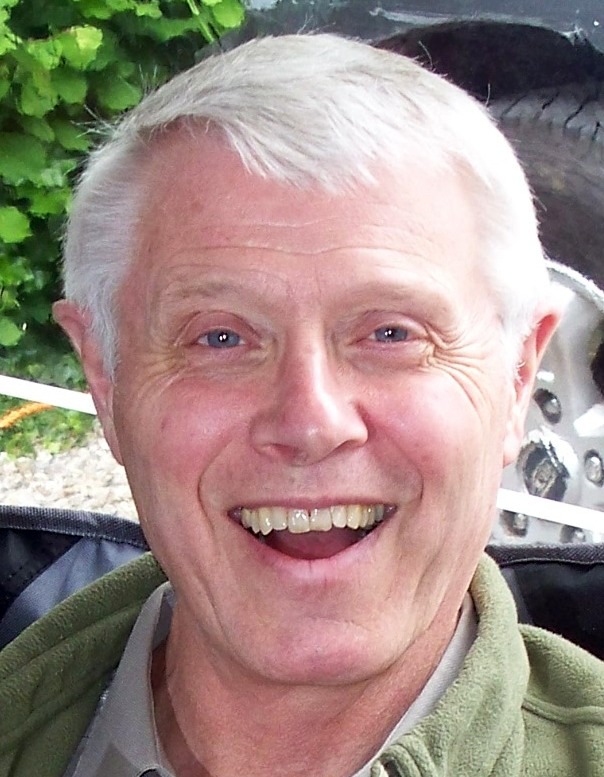
Summary
Brian Longhurst discusses communication with spirit beings, life beyond physical death, reincarnation, and the role of perception in shaping human experience. He also describes his lifelong search for God and his profound encounters with Jesus, drawing on A Course in Miracles and his belief that life is a journey from separation toward spiritual awakening.
Questions This Interview Explores
- What are spirit realms, and how can people become aware of them?
- Why do people experience suffering and difficult life circumstances?
- Do we choose our incarnations and life circumstances before birth?
- What happens after physical death?
- How can someone develop a direct relationship with Jesus or the divine?
Key takeaways
- Spirit communication is presented as a potential available to everyone.
- Human experience is shaped by perception, so changing our outlook can change how we meet the world.
- Difficult lives may have meaning within a larger spiritual journey.
- Physical death is described as leaving the body rather than ending consciousness.
- A sincere desire to know God can guide a person’s spiritual development.
- Jesus is portrayed as a living spiritual teacher rather than only a historical figure.
Transcript
Rick: Welcome to Buddha at the Gas Pump. My name is Rick Archer. Buddha at the Gas Pump is an ongoing series of interviews with spiritually awakening people. I use that phrase carefully because I feel that no one is ever totally spiritually awakened, because there’s always room for growth.
I’ve done over 500 of these now. If this is new to you and you’d like to check out previous ones, please go to the Past Interviews menu on BatGap.com, where you’ll see all the previous ones organized in several different ways.
This program is made possible by the support of appreciative listeners and viewers. So if you appreciate it and would like to support it, there’s a PayPal button on every page of BatGap.com. This also exists as an audio podcast. So if you’d like to listen to things while you’re commuting and so on, you can subscribe to that.
My guest today is Brian Longhurst. Welcome, Brian.
Brian: Thank you very much for inviting me.
Rick: Oh, yes, yeah. Happy to have done so. Brian is in the UK. He’s been aware of the reality of the spirit realms since childhood. He was born in England, but then he moved to Canada as a young man, where he began what was to become an enduring personal relationship with Jesus, who manifested in glory to him when he was 22. Jesus told him he had come to lead him back to God.
From then, his encounters with the living Jesus began in earnest, with a decades-long, still-ongoing journey of spiritual awakening. Brian met his wife, Theresa, in Canada, although she, too, is British. After marrying, they returned to live in England, where they now reside in Gloucester, which is in Gloucestershire.
Brian: Yes, that’s right.
Rick: Shire, not share. Okay, good.
So, let’s start with some basics. Many people—a lot, most of the people listening to this show—will probably acknowledge that there is such a thing as spirit realms or subtle realms, that perhaps beings reside in them that we ordinarily can’t see. But not everyone will. I interact with people who think that’s a lot of imaginative nonsense.
So let’s maybe just start by discussing what these realms are, where they are, and why scientists don’t see them. If there are beings residing there, what are they made of? What kind of bodies do they have, and so on?
Brian: That’s a multiple question.
Rick: It is, yeah.
Brian: I could probably cover quite a lot on that. Okay. We’re not seeing the spirit world because we’re looking with our bodily senses. Our bodily senses are devised only to detect what’s on that wavelength or between those wavebands—the physical, so-called realm.
When we lay aside our body and find that we are no longer in this so-called physical world, and that there is continuity, many people are very surprised to find that they’re still alive, even though they know they have died.
Rick: If they know. That’s another story we can get into. Sometimes they don’t realize they’ve died. But go ahead.
Brian: Yes, that’s right. I’ve been helpful to people who didn’t know what was going on, and the transformation once they wake up is, “Okay, right. What you’re saying makes sense.”
We can talk to people who are not with us in embodied form because it’s what I call mind-to-mind communicating, or communing. We commune mind-to-mind via a body. But when there isn’t a body present, we’re still communing from our mind to theirs.
We can talk to people who are not with us in embodied form because it’s what I call mind-to-mind communicating, or communing. We commune mind-to-mind via a body. But when there isn’t a body present, we’re still communing from our mind to theirs.
If we are listening, because we choose to want to believe that there is something beyond this world, then our receptors to that start to become uncluttered. We can start to refine our attunement, or at-one-ment, with such souls.
I’ve been doing this for over 52 years, so I’m fairly finely tuned to it. But that doesn’t make me unique. It doesn’t make me any different. This is potential within all of us; we can all do this.
This is potential within all of us; we can all do this.
Now, those who are no longer embodied can readily say, “Well, this material world is the unreal world,” and where they are, at various levels of spiritual awakening, is real to them. They would say that their world is more real to them than our world is to us.
Who’s to say, in this world, what’s real? If you have, let’s say, for example, a car accident—a road traffic accident—and there are 20 witnesses, and the police come along and take the statements of the witnesses, they’ll have 20 different stories. There are 20 different realities. So which one is right?
It’s all a matter of perception, or what is our perspective? What is our take on these things?
Rick: Yeah, that was a big “aha” for me when I was 18 years old and aided by some sort of chemical. Just the realization that not everybody sees the world the same. I had assumed they did. Then, all of a sudden, I was seeing it so differently and seeing people who were still presumably seeing it more or less the way I had.
I realized that everybody sees it differently. So obviously, the thing to do is change the way you see the world, not just try to change the world. All that, too, has its value.
Brian: People talk about saving the world. The world, in terms of the physical planet, doesn’t need saving. What needs saving, or changing, is our attitude towards the world as we see it.
You can talk to as many different people as you like, and they’ll all have a different take on what’s wrong. Not very many have as much of a take on what’s actually right, or how to put it right. The only thing we need is to change our mind about the world.
I have a brother who is bipolar. He sees everything from a perspective of darkness; everything’s wrong, and it’s always somebody else’s fault. Well, he and I—he’s my brother, and I love him—we talk quite often on Skype. But I don’t debate with him because he’s made up his mind, and he doesn’t want to be confused with “facts.”
Rick: I think it might have been Gandhi, but maybe not in light of what I’m about to say. Someone said it’s a lot easier to wear shoes than it is to pave the Earth with leather.
Brian: That’s true. That would mean a lot of dead cows.
The desire to know truth
Rick: So that’s why I’m thinking it wasn’t Gandhi. In any case, one thing that impressed me as I was reading your book—a lot of things impressed me; it was a great book—was the view of the cover: “Seek Ye First the Kingdom … One Man’s Journey with the Living Jesus.”
One thing that impressed me is that from a very young age, you had an ardent desire to know God or to know truth. You were very focused on that during periods of your life in which I was just totally messing around, hadn’t a clue, and hadn’t any thought about there being any higher possibility.
Brian: I did plenty of messing around as well when I was a kid—late teens, early twenties—but I never lost focus completely. Beer and girls were high on my radar, I can tell you, just in case anyone’s wondering.
Rick: I liked a little beer until I found pot, and then I lost interest in that. But in any case, what impressed me, though, was the ardency, sincerity, and innocence of your search. Maybe you could talk about that a little bit.
It seems to me I’ve seen this pattern: people who have this strong desire for truth and a deep feeling that there is truth, that there is something higher, often end up getting onto it—having some realization.
Brian: Well, that’s because that’s the center of our focus. We all know about child musicians, like Mozart, who started writing music when he was a tiny child, four years old or whatever. Whatever your interest is, that’s what your focus will be centered around.
Because I had had mystical experiences as a small kid, about five or six years old, and ongoing, I got involved with some Ouija board activities when I was about 12. That made sense, and I’d read books about spiritual reality.
When you have a connection, even through a Ouija board, and they start telling you things that you didn’t know, and that the person you’re doing it with didn’t know, you realize that there are people beyond this world, and we can communicate with them, whether it’s through a Ouija board or what I call mind-to-mind, depending on the motivation.
So I was motivated. I have to also say that we choose the path of our incarnated life—what some people call a birth vision—before we incarnate, and Jesus told me that. He said that he and I had planned this incarnation for me before I took a body, and that this has been ongoing through multiple incarnations over thousands of years.
The last one of which I’m aware was in the 1600s, when some events took place that really triggered my intent to help people understand the truth about Jesus, rather than what the church has been saying for centuries, many centuries: that Jesus is coming again to judge the quick and the dead. That’s a lie. There is no truth in that whatsoever.
Rick: Just to follow up on the point you just made before we go on, I have also heard—and it makes sense to me—that we choose the life we’re going to live. But people might ask, why would you choose to be born to an alcoholic mother, or in some dire situation in Syria or something like that? Why would you choose such a thing?
Brian: Well, again, it all comes to perspective. In the context of eternity, time is indistinguishably small. It’s like that—[a snap of the fingers]—and one incarnation, which may be 60, 70, 90, or 100 years, in the context of eternity is that—[a snap of the fingers]—and it’s gone.
It seems like five minutes ago that Theresa and I were courting, and 50 years have gone. Where did that go? Time—Einstein said, when he was asked, “What do you make of time?”—he said, “Well, it’s a movable feast.”
If you are spending time with that beautiful girl that you’re so in love with, one hour will seem like one minute. But if you have your hand on a hot stove, one minute will seem like one hour. That’s a fairly good way of saying that time is not what the atomic clocks tell us it is. Time is all here in our mind, and what we make of it.
Rick: As Kermit the Frog put it, “Time’s fun when you’re having flies.”
Brian: Yes, that’s good. So people who incarnate into conditions that most people would say, “Well, I wouldn’t choose that”—whether it’s being born to a drug-addicted parent or whatever, or being born with cancer, as happens—it’s all about connection.
That baby that died, that didn’t survive more than a few hours, a few weeks, or a few months—Theresa had a stillborn at six months. Now, he was Peter. He would be, in earthly terms, 50 years old now, or coming up—49 and whatever.
We are in contact with him and have been since he was a little toddler growing up in the spirit world. We both saw him independently of each other and described him exactly.
What was needed in that short connection, even as an unborn fetus, was the connection. He was making the connection with us so that he could be with us during our journey in this embodied life, to be helpful to us, and could bring people to us for us to help.
It’s all about being truly helpful and wholly harmless.
Rick: So he hasn’t reincarnated yet? He’s still in spirit?
Brian: He hasn’t, but Theresa had six pregnancies, two of which made it through. And they’re now in their late 40s. The youngest of the six has since reincarnated, about 20-odd years ago. She didn’t make it through in ’75, but she did in ’96.
And so we had awareness of her. Her name was Jessica—we named all our children, and so we named her. Jessica manifested to me in the summer of ’93, and we had a glorious connection. But afterward, I felt a tinge of sadness, and I couldn’t figure out why I would feel this sadness. The sadness wasn’t a thought; it was a feeling. Why do I feel sad after I’ve just had the most precious encounter?
I realized it was because she hadn’t just come to say hello; she’d come to say farewell. And she was telling me, without saying it in words, “I’m going to reincarnate.” She was desperate to incarnate in ’75 and didn’t make it. And so now she was coming to do what she’d come here to do originally.
And we’re all on a mission. Some people’s mission is to lie in a gutter suffused with alcohol. But there’s much more to it than that. And if we step back, like an astronaut does, way above the Earth, we can start to see the bigger picture. That alcoholic is on his journey to wakefulness, and he had something to learn, to remember, from that experience in the gutter.
It may be when he has laid aside his body and is going through his period of reflection: “Why did I do that? Well, it was an opportunity, if nothing else, for me to say, ‘I don’t need to do that anymore. I’ve experienced that. Now I can move along.’”
👁️ The dream of separation
Rick: Yeah, good. If those are—I mean, I agree with everything you’re saying, and I’ve thought through this stuff—but if this is a bit perplexing to anybody who’s listening, feel free to send in a question and we can elaborate on it.
But I like what you said about the big picture. Because if we zoom out big enough and regard the whole universe as this big, giant evolution machine that has this evolutionary trajectory, all the souls are moving along. And if we also realize that if there’s going to be a universe, there have to be polarities and different shades of qualities, and so on, there’s going to be the extremely horrible stuff, the extremely beautiful stuff, and everything in between.
If everything were just beautiful, it would be imbalanced. How could you have heavy without light? How could you have fast without slow? How could you have hot without cold? There have to be these polarities.
In any case, that’s just a little bit of philosophical reflection. Now, I want to get onto the whole thing of Jesus, since you’ve name-dropped him a number of times already, and that’s a pretty big deal. Do you have any wrap-up thoughts about what we’ve been discussing before we move on to that? That’s our central theme.
Brian: Well, Jesus has dictated a book to a woman called Helen Schucman. In that, he explains that what we perceive as the physical universe is a dream—a dream of separation from the Oneness in God, the singularity. What we’re experiencing as separateness from Oneness is duality.
So we’ve got hot, cold, light, dark, male, female, all the rest of it, but none of that’s real, although it seems very real—ultimately, it seems very real. When we have dreams at night, many of them are very real. When we wake up in the morning, we think, “Where am I? That was real.” And it takes us a few moments to say, “Oh, well, that was actually only a dream, but it sure seemed real at the time.”
And Einstein, to quote him again, said, “The universe is a dream.” A very realistic-seeming dream, but a dream nevertheless.
Rick: Shankara said the same thing. He said it’s a lure.
Brian: Who?
Rick: Shankara—Shankaracharya. He was an Indian sage a couple of thousand years ago, but he referred to the pre-enlightenment state of ignorance as a long dream.
Brian: Yes. And we’re on our journey from slumber to wakefulness. Each incarnation provides opportunities for another step on the path to wakefulness. That’s what we’re doing here.
We’re dreaming of separation. We thought it would be a good idea to go out and do our own thing. Well, we found that it wasn’t such a good idea. And again, the six o’clock news will affirm that.
Rick: Yeah. Although, you know that T. S. Eliot poem where he says that there won’t be an end to all of our seeking until we come to the place from which we started and then know it for the first time? It seems like there’s something to be gained from going through this whole rigmarole.
And it would make sense. Otherwise, did God make a mistake in creating the universe? I mean, God doesn’t make mistakes.
Brian: That is a crucial point in A Course in Miracles, but Jesus makes it very clear, over and over and over throughout the whole book, that God has nothing to do with the physical universe.
God is Spirit, and He creates only in His own likeness. That creation is abstract, and it is universal, unified mind and spirit. There are no bodies involved. We’ve made up bodies as, if you like, a hiding place from the truth of ourselves, which is eternal. It’s bliss; it’s joy.
God is Spirit, and He creates only in His own likeness. That creation is abstract, and it is universal, unified mind and spirit. There are no bodies involved. We’ve made up bodies as, if you like, a hiding place from the truth of ourselves, which is eternal. It’s bliss; it’s joy.
Rick: But don’t you think—don’t you think of bodies as vehicles? I mean, you say you and Jesus planned all these incarnations, right? Why didn’t Jesus say, “Hey, the whole thing’s an illusion; don’t incarnate”?
But there was something to be learned through all these incarnations. And if you actually look at what an incarnation is and what a body is, it’s maybe 100 trillion cells, each one of which is mind-bogglingly complex, and all are in coordination with one another.
So there’s some kind of vast intelligence that orchestrates everything. And for me to say that God has nothing to do with creation—I think that creation is God, that God is in the present and therefore totally imbued in, or present in, every particle of creation. He’s staring us right in the face, in the sense that anything we look at is this marvel of intelligence.
Brian: Well, the best way I can answer that is to say that God—the Creator, Spirit, whatever you want to call Him. “Papa,” I call Him. That’s what He invited me to call Him. I said, “I would like to have a name that I can think of You as, on a personal, intimate basis.” And the instant reply was, “Papa. Big Daddy.”
Rick: Yeah.
Brian: Yeah, that’s it. But God is the life in every cell, in every leaf, every animal, every microbe, every human being—a life force that is Spirit and that is life.
When that life, when that journey with a body, has reached its conclusion, either prematurely or after everything that you wanted to do has been done, we lay aside the body. Well, who has laid aside the body? The body hasn’t laid itself aside. The inhabitant of the body has laid it aside, like casting off a worn-out overcoat.
But the life, the being, the mind, and spirit that inhabited and animated the form has moved on and is now ready to take the next steps on its journey toward the Light, enlightenment, Oneness, back with God.
❤️ Meeting Jesus
Rick: Okay, no problem with any of that. So, let’s talk about Jesus. You know, you—
Brian: I could do that all day.
Rick: Yeah. Well, maybe take a few minutes to give us an account of what led up to your original, or your initial, experience of meeting Jesus.
And I’m saying this because some people might say, “What are you saying? He met Jesus?” I give everybody the benefit of the doubt. I also take everybody with a grain of salt—and dosages vary—but I find you very credible, honest, and sincere.
And you’re not the first person I’ve talked to who has had experiences like this. I fully think—I’m trying to give a little bit of slack to those who may be skeptical. I’m just saying, don’t throw away your skepticism, but keep an open mind. That’s actually a scientific attitude.
Testing Spiritual Claims Through Experience
Everything can be regarded as a hypothesis that can be investigated. If someone says that there are angels, or that we reincarnate, or that they met Jesus, all right, maybe that’s a possibility. Let’s hear the evidence. And maybe we can experience it ourselves. That would be even greater proof than somebody else’s word for it.
So go ahead and elaborate on that and take us along, leading up to this initial meeting that you had.
Brian: Okay. Well, in the early ’60s, when I was in my late teens, I decided that there was something inside me trying to get out. I felt slightly suffocated by my surroundings, commuting on the train every day to work in London, seeing the same people, many of whom had been doing it for decades. I thought, “That is not for me.”
I had godparents living in Canada, and I thought I’d like to go there so that I could get away from everything that was trying to close in on me and stifle me. So I went out to Canada, and I realized that this was all being organized from Spirit, without me knowing anything about it.
The whole process was under guidance, without me knowing it, to get me out there. I went into the Bible bookshop in Vancouver to get a book. As I was leaving, my hand was taken by an unseen force and placed on a book on a bookshelf that was around the corner from where I was standing.
Rick: It reached around, eh?
Brian: Yes. And it pulled this book off the shelf. It was called Between Time and Eternity. Anything about eternity, I wanted to know about it, because I was into eternity big time. That was my real focus of interest.
The author of that book lived in Vancouver, and I met up with her. She told me that she had had decades—she was 74 when I met her in 1965—of encounters with Jesus and others from the Realms of Light.
She was also from England but had moved to Canada when she was 19, the same age I was when I went there. There was a little bit of similarity.
About 1914, when she was a young woman, she was taken out of the body one night to a place that resembled a cathedral or a temple in Spirit by a man who had introduced himself to her as her teacher.
This wasn’t Jesus. She came to realize later that this was John, the beloved disciple, the author of the fourth Gospel and the Book of Revelation.
Rick: Who was King David in a previous life, before that. I got to that point in your book.
Brian: Yeah. That nearly made me fall off my chair and break a leg when he revealed that to me. That really took me by surprise, but he explained why he revealed that later—to tie a few loose ends together.
So I met Olga Park. She was the author of that book. She talked about Jesus in a way that I’d never heard anybody talk about him before, least of all in the church.
That developed in me a desire to know Jesus as she spoke about him, because all I ever heard was what somebody else had to say about him. But I wanted to get to know the man, the person, the being, directly.
It was such a strong desire; it was almost painful to my soul. So strong was my desire.
Rick: And that’s what I was saying earlier: you had this ardent desire.
Brian: That was awakened in me by Olga, by the way, when she spoke of him. It was so natural; she wasn’t “selling” anything. I was asking her all the questions. She didn’t say anything without me asking. She then explained whatever I was asking about.
So I would kneel at my bedside at night and talk to Jesus and say, “Look, I really want to know you as Olga knows you. I want to experience your livingness.” This went on for months.
On January 24, 1967, I got up from kneeling at my bed and was starting to get ready for going to bed. Suddenly, he was there, in the corner of the room, three or four paces away from me. He was in his celestial glory. The light emanating from him was easily as bright as the sun.
It’s hard for an embodied person to think that anything could be brighter than the sun, but the light coming from him didn’t hurt my eyes at all. Whereas you don’t want to look at the sun for too long because you’ll damage your eyes.
As I took in his presence, he started to move toward me. He wasn’t walking; he was gliding, floating above the floor. As he started to move toward me, he started to speak. By the time he had gotten this close to me—less than a foot from my face, eyeball to eyeball—he stopped. He finished what he was saying, which I can talk about if you want to hear that.
Rick: I do. Let me ask you a few questions about this encounter. First of all, do you think that Jesus—was he as solid as you and I, or was he sort of diaphanous, like you could see through him, that kind of thing?
Brian: No, I couldn’t see through him. But I found out many, many years later that I wasn’t actually seeing him with my eyes. I was seeing him with my inner eye, what some people call the third eye—it doesn’t matter what we call it. We’re actually seeing with our mind.
I’m not even seeing you with my eyes; I’m seeing you with my mind. My mind is receiving that image via the organs that we call our eyes. So there’s a better word than “seeing,” and that is “having awareness of,” because awareness is a more all-encompassing thing than just seeing.
My awareness of him was inestimably more than if I was only seeing him with my eyes. If you look at a photograph with your eyes and then put the photograph away, you will have forgotten most of the detail in that photograph. But if you then take it out and examine it very closely for a long time, you’ll notice things that you’d missed. This is what happens when you’re seeing something with your mind. You’re seeing everything.
When he got here, in front of my face, and I was looking into his eyes, I was looking into eternity. I’ve seen hundreds of representations of Jesus—paintings, artists’ impressions, and actors playing the role of Jesus. Not one of them has ever come within a country mile of looking like Jesus at all.
That’s because there’s an ego in their eyes. We all have it because that’s where we are. We’re still on the journey. But Jesus completed his journey thousands of years ago, long before he incarnated, long before Abraham. He was fully awake. The ego was gone from his consciousness, from his awareness, whereas it’s still running our lives much of the time for many of us—most of the time for some of us, and increasingly less of the time for others of us as our progress on the path to wakefulness continues.
By the time he got here, less than a foot from my face, his aura was extending out from his form—the form that I had awareness of, what we might think of as his body, although he wasn’t in a physical body. By this time, I was completely enveloped in his aura, fully enveloped, and I was overcome by the Love.
This is Love that the world knows nothing about. This is perfect Love, unconditional Love, total Love. There is no contrariness in it. It’s absolute Love. That is so powerful that I was overwhelmed, and my eyes were pouring with tears—tears of joy, not of fear. This was Love that the world knows nothing about.
This is Love that the world knows nothing about.
Sincere Asking and Jesus’s Response
That won my devotion to Him, totally. He had responded to my asking. I’d been asking him, kneeling at my bedside. He always responds to our asking, but only if our asking is sincere.
We can’t say, “Oh, come on, Jesus. Let’s have a look at you.” He knows that isn’t real. He knows that isn’t from the heart. That’s something that we want to brag about. A relationship with Jesus is something you don’t need to brag about. It’s all you ever need.
That Spirit is in you. It’s in me. It’s in all of us. It was in Adolf Hitler, heavily disguised because he had come here on his own mission. Don’t ask me to go into that; Michael Roads will talk to you about that. But we’re all here for a purpose.
He told me that I had come into this life with potential and that his job was to help me fulfill that potential by helping me. Now, the church thinks we’ve got to help him. How are we qualified to help Jesus? He knows inestimably more than we do. He doesn’t need our help. But we certainly need his if we’re going to awaken from this walk in the valley of the shadow of death, which is from Psalm 23.
Rick: Yes, I love that Psalm. My mother used to read it to me, or say it to me, before bed every night.
Let me ask you a couple of questions that may sound trivial, just to fill in some gaps, and then we’ll get into more profound ones. I’ve seen pictures of what Jesus probably actually looked like, based on the ethnicity of the people who lived in that region at that time. He looks a lot different from how he’s usually depicted in modern paintings—much more swarthy, with curly hair and all kinds of stuff.
Did he look like that to you, or did he look more like a Charlton Heston kind of modern depiction—a white Anglo-Saxon Protestant guy?
Brian: The only thing that mattered to me at the time, and since, was the feeling that he gave to me, the Love that he gave to me, and that overrode any physical appearance.
Rick: Any physical appearance.
Brian: If someone were to say to me after this discussion, “What does Rick look like? What does Rick Archer look like?” I could give you a description—pretty vague, but nevertheless. You’ve got a bit of a beard and so on.
But that wasn’t the point about Jesus appearing to me, manifesting to me. It was bringing me his Love, the Love of Heaven, the Love of God, the Love that is real, that is the only reality in all eternity.
So the eyes were what made the most lasting impression. If I could draw, which I can’t, and someone said, “Draw a picture of Jesus as you saw him,” I couldn’t even do that. How would you depict the eyes that, when you’re looking into them from this close, you’re looking into eternity?
I can’t even find the words for that, let alone portray what Jesus the man looked like, which is actually not relevant. People allow themselves to get distracted: “I want to know what Jesus looked like.”
Rick: What does it matter?
Brian: Exactly. What does it matter? What’s far more important is, who is he? Not the form, but the spirit, the life, and the Love within.
That’s my desire: to help people focus on that and understand that the real Jesus is so far beyond form. So are we, but we’re living a dream. We’re pretending that we’re a body, separate from God.
✨ Awakening and service
Rick: Maybe he even appears to people differently according to what they’re comfortable with, in order for them to relate to him better, or for him to relate to them better.
Brian: Well, he’s appeared to people all over the world and has done so for countless centuries and generations. I’m a long way from the only man he’s ever appeared to.
My wife, Theresa, met a man in Israel who was from Iran. He was number two under the Ayatollah Khomeini—you may remember him from the ’80s?
Rick: Well, the Ayatollah was in Iran. But go ahead.
Brian: Sorry, you’re right—Iran. I was wrong about that. This man was from Iran. He woke up one night, in the middle of the night, and there was a man standing at the foot of his bed. That man was Jesus.
This chap, who was a Muslim, knew nothing about Jesus. But as soon as he saw him, he knew who he was. He knew that he had to leave Iran, pronto. He got up, took his family, and they escaped in the middle of the night.
They originally went to South Africa, but from there he went to Israel. He’s helping people who want to make Aliyah, which is Jews returning to their homeland of Israel, particularly Messianic Jews—Jews who believe that Jesus is the Messiah.
He’s helping because he’s a lawyer, so he’s helping them with all the paperwork and so on. Jesus will appear to us all if we’re not too afraid of him to ask him.
People are afraid of him because they think he’s going to judge us and cast us into hell. That is a lie—not to put too fine a point on it!
Rick: We live in a vast universe. These days, astronomers estimate that there may be trillions of planets inhabited by intelligent life. Does Jesus have a role to play in all of these civilizations? Or is he the guy for Earth—or one of the guys for Earth—while each other planet in other galaxies and so on would have its own such being who ministers to them?
Brian: That is a question for which I have to use an analogy. We’re going back to the road traffic accident. Which witness are we going to call upon for the true story when there are twenty different stories?
But there is one fundamental difference here, and that is that there is no physical universe other than in a dream. When we awaken from the dream—when you awaken from the dream, you, Rick Archer, awaken from the dream—the physical universe, planet Earth, the solar system, this galaxy, the whole physical universe, will no longer exist in your mind.
That’s the only place it actually exists, or appears to exist: in the mind of the Son of God. The Son of God is One, and we are that One pretending to be many.
As any one of us, and ultimately all of us, awaken, we will leave behind the dream that there is a physical universe of unfathomable vastness, with trillions of planets containing intelligent life forms. Intelligence is not in the form; it’s in the consciousness, in the mind.
Don’t get me wrong, Rick. I have pondered this long and hard myself. Is Jesus the Lord just of this planet? What about the lord of that planet? Who is that?
Ultimately, it doesn’t actually matter. That isn’t a cop-out, or me trying to avoid the question. It’s simply that we’re making up questions that we needn’t bother with. They don’t really apply.
Our real focus will serve us best if we say, “I want to awaken from the dream. Somebody—whoever you are, Jesus, Buddha, whoever, someone from the Realms of Light who is awake from the dream—please help me.”
Effectively, that’s what I was doing. Jesus is helping me. I gave up asking, “What about all those other planets?” because it really doesn’t matter. At the end of the day, it doesn’t matter.
Rick: And how would we know, unless Jesus told you or something?
Brian: Exactly.
Rick: Yeah. Ask him on my behalf. So, have you awoken from the dream in that way? Do you regard the universe as nonexistent?
Brian: I’m still functioning in form within the so-called physical world, because how else can I? If I didn’t have a body, I wouldn’t be able to sit here, having a discussion with you or anyone else. And so Jesus took a body so that he could communicate with those that he had come to help. The word in religion is to save. I try to avoid using the word salvation because it’s too churchy. It’s all about awakening, so he’d come into a body so that he could communicate verbally and, by example, what unconditional love and compassion and caring and truth are all about.
And so that’s why he took a body. You’ve taken a body for your purpose; I’ve taken a body for mine. My purpose, I came to discover over a period of years, was to become like Jesus. And Christians—that should be, even if it isn’t—that should be their objective, to become like Jesus. And 1 John 3:2 says that when he appears, we shall be like him, because we shall see him as he is. That’s not the form. It’s the spirit, the love, and the light.
So we’ve all come here for our own particular purpose. And mine is to help as many people as are brought to me by Jesus and the Holy Spirit, to share my experiences with. And so people read my books and say, “Wow, this is really speaking to me.” Thanks be. This is not an ego trip for me. I’m not in this for the money or the fame. I have no interest in any of that.
Rick: Yeah. It’s interesting that when someone awakens, and there are famous examples of them throughout history, they don’t just say, “Oh, the world’s an illusion; to heck with it, I’m out of here.” They actually become much more involved in the world, in the sense of engaging with it in order to help people.
Yes, yes. And that’s how I feel. There was a time 40 years ago when I wanted out of here because I could see the world was hell, a hell of a place. But now I’m quite happy, indeed committed, to staying in form as long as I can be truly helpful and wholly harmless in this world, and help some other people to take a few steps forward on their journey to wakefulness.
Brian: Yes, yes. And that’s how I feel. There was a time 40 years ago when I wanted out of here because I could see the world was hell, a hell of a place. But now I’m quite happy, indeed committed, to staying in form as long as I can be truly helpful and wholly harmless in this world, and help some other people to take a few steps forward on their journey to wakefulness.
Rick: I went through a similar thing. And there was a time when I thought, “Oh, God, I just want to get enlightened or whatever and be out and never come back.” And now my feeling is I’ll come back as many times as God wants me to if I can be of use.
Brian: Yes, exactly. That’s the only reason any of us is really here. Although most of us—the vast mass of humanity—have no idea of that in application to themselves and no interest. They’re much more interested in money and power, power over people rather than power with people, and all the other inveiglements of this world.
Living through a time of change
Rick: Some questions have already come in before today, before we started. And here’s one that seems relevant to what we’ve just been talking about, from Andrea Matthews in White River, South Africa. She asks, “The world is in a tumultuous state, with disruption everywhere and fearful predictions for worsening chaos. What do you do to stick to the truth, capital T, amidst this external turmoil? And do you ever falter in that? If you do falter, then how do you best realign yourself?”
Brian: That is an amazingly insightful question. And we are in the chaos time. I can explain this by using another analogy. A friend of mine called Owen Waters, who lives between Florida and Colorado, runs a website and has written a few books on spirituality, one of which is called The Shift. And in that, he states that if you take a tumbler full of water and subject it to sound waves on a particular wavelength, the water in that tumbler will start to vibrate, and you’ll see ripples on the surface of the water, and they will establish a pattern. That pattern will become stable all the while the vibrations that it’s subjected to are stable.
But when you raise the vibration of the sound that you’re putting onto the tumbler of water—so you’re raising the frequency—that water becomes turmoil, tumultuous, and it’s out of control. But gradually, it starts to establish a new pattern, a new, stable pattern. That, as an analogy, is exactly what’s happening now in these times.
We have moved from one epoch, which was—you’ll see in my first book, I’ve described this in chapter 10. I don’t know if you’ve got that far, about the parable of the three measures of meal.
Rick: I didn’t quite get that far. I think I was almost there.
Brian: So we are now in a new epoch. You may remember that in the time of Flower Power and hippiedom, which started in San Francisco, “Now is the dawning of the Age of Aquarius” by the Fifth Dimension. Amazingly insightful lyrics, and so on. And so that was the beginning of a new era.
Although there’s been chaos in this world throughout history, and the Old Testament will testify to that, because there was nothing but war and slaughter going on throughout the Middle East, and probably everywhere else as well, there was an epoch of some stability, relatively speaking. But then, in the ’60s, with pot, LSD, and whatever else, people started to realize, “There’s much more to this than I have been led to believe. And I want to shrug off this mantle of control from finance and business and parental control and so on, and experience my own thing.”
Well, that started the chaos. Other people say it was the Beatles. But it was all in the same era. And that was the start of the change of frequency to a higher vibration. “Good Vibrations” from the Beach Boys. And so we’re now still in that chaos time.
The water is a symbol of psychic consciousness. So the water is still in a state of turbulence, but it’s now beginning to find a new level, or a new pattern, of stability at the higher vibration, and that is manifesting in today’s world.
Do you know what I mean by Crystal Children? Or Indigo Children?
Rick: Indigo children is the more common phrase. Sure.
Brian: Yes. Well, Crystal Children is a bit of a step.
Rick: Oh, it’s the next along the same kind of thing.
Brian: Yes. Some people would say it should be pronounced “Christ-all” rather than Crystal Children. And youngsters are coming into this world now with wisdom that this world has not seen, and the politicians and the church leaders and the money moguls are utterly floundering in the presence of words of wisdom coming from the mouths of babes and sucklings.
So now, this is happening. What Andrea will serve herself, and all the rest of us will serve ourselves very well indeed to do is to focus on the new vibration, the new order, what I call the Kingdom order, which is the Kingdom of Heaven on Earth, what Jesus calls “the real world” in A Course in Miracles, where everything is—where all grievances and judgments are forgiven, released into innocence.
I expect you to read Gary Renard’s book…
Rick: I interviewed him, yes.
Brian:The Disappearance of the Universe.
Rick: Yes.
Brian: And they, Arten and Pursah, talk about this, the real world, the world where we see through the illusion of “This person is my enemy.” He isn’t my enemy at all; he is my brother. And when we change the focus, the frequency from “enemy” vibration to “brother” vibration, then we start to see that person as the brother they really are—a brother in the Sonship of God. And we’re all brothers in that context. It’s nothing to do with biology or genetics. This is to do with soul.
And so Andrea, bless her, is surrounded by distractions, as we all are. But even if you’re a monk in a monastery, scrubbing the floor on your knees every day at 5:00 a.m., you can still be communing with God because the monastery and the stone walls and the stone floor are nothing. We can see beyond them.
And Jesus was at that place even while he was on the cross. He wasn’t really there. His animated body was on the cross being crucified, but he was above the battleground. I’m going to show you the cover of my fourth book. I don’t know if you can see that.
Rick: Yes, I can see that.
Brian: There’s Jesus here, and he’s looking down on the crucifixion of his own body. And you see that?
Rick: Yeah.
Brian: Now, that is where he really was and is, and I was there with him on that platform, about 30 feet off the ground, in a vision—an actual, what do you want to call it? A mystical experience. It doesn’t matter what you call it, but I was there with him above the battleground on which his form, his animated form, was being crucified.
But he, in his mind and in his consciousness, was above. And he was looking down in absolute peace because what was taking place down below him was perfect. But not many people would see themselves being crucified as perfect. But that was what he had come here, as part of his plan, to show people: that we are unassailable. “You can nail me to a cross, but you can’t kill me, because I’m the Son of God.”
You’re the Son of God, Rick Archer. I’m the Son of God. There is not one embodied form that isn’t the Son of God. And this has nothing to do with gender; male and female, we made all that up. It’s part of the duality consciousness. There’s only eternal life, unified mind, and spirit. And that’s what we all are.
So he showed me that so that I could share it in my writing and help people to understand. It is my free choice, Andrea, to look beyond the distractions, the traumas, and the adversities of this world, and stay steadfastly focused. That takes commitment. The world is pretty short on commitment. It’s committed to having fun, but hey, the fun runs out in this world. So I hope that’s answered the question.
Rick: No, it has, and I have about three other questions now, based on that. Let’s stick with Andrea’s one first, which is that, obviously, if a person is not aware of the kind of things we’re talking about here—Indigo Children and people waking up all over the world, and all this profound spiritual upwelling which seems to be taking place—if they’re just tuned in to what’s happening in politics and the environment, and the various conflicts in Syria and places like that, it can be very depressing.
Because you feel like, “Oh, well, we’re doomed, the way things are going.” But there is this more subtle…
Brian: That’s the chaos time. Sorry, I just had to inject that. That’s why it’s appearing that way on the six o’clock news, because we’re in the chaos time, but we’re moving into the new vibration. Sorry, I interrupted.
Rick: That’s okay. But the new vibration part of it is more subtle. It doesn’t make the six o’clock news. And so people could get very discouraged. And that’s why I like to talk about this sometimes on this show. The show itself is a sort of way of popularizing the notion that there’s something very profound happening in the world.
Yeah, we’re moving into it, I understand that. But it gives—we want to spread a little optimism. I’m optimistic, and I have the feeling I like to instill more optimism in listeners, that something good is happening despite the surface level of chaos and the clamping down of conservative governments around Europe and the U.S. and so on. That seems so discouraging. There’s a more invincible force that’s moving along, and it will have its day.
Brian: That day has already dawned. And we’re starting to awaken from our slumbers and go out into the rising of the new dawn, which will never set.
We’re starting to awaken from our slumbers and go out into the rising of the new dawn, which will never set.
Jesus and the Spiritual Dawning
This has nothing to do with Planet Earth revolving on its axis. “Oh, at five o’clock in the morning, the sun comes up.” This is a spiritual dawning. And Jesus is in charge of all that because he was the first person, the first “human,” in quotes, to awaken from the dream of being separate, being a body, a mortal body, to remembrance of the reality—not only of who he is, but of who we all are—that we are one in the heart of God, in eternity.
This has nothing to do with Planet Earth revolving on its axis. “Oh, at five o’clock in the morning, the sun comes up.” This is a spiritual dawning. And Jesus is in charge of all that because he was the first person, the first “human,” in quotes, to awaken from the dream of being separate, being a body, a mortal body, to remembrance of the reality—not only of who he is, but of who we all are—that we are one in the heart of God, in eternity.
Rick: So he’s the first person in the history of humanity. And …
Brian: Yes …
Rick: … like, when—many, many thousands of years ago or what?
Brian: Yeah. Well, this is what … I can share this with you now, although I don’t have any documentary evidence of it. But … I’ve been walking with Jesus for 52 years. So you can’t help but pick up quite a lot of intuition. It’s not just what is said, or what is experienced; it’s what you infer from the experiences and what’s been said.
So what I have inferred is that the man we know, or the being we now know as Jesus, underwent his final awakening somewhere over 30,000 years ago, in Atlantis. Now, a lot of people say, “Oh, Atlantis, that’s just a fable.” There are actually photographs from space showing the remnants of Atlantis, off the southwest coast of Spain, under the sea. You may have heard about it. I haven’t seen them myself, but I have been told about them.
Now, Atlantis, so the story goes, disappeared, whether it went under the sea or there was some human event, like nuclear war 30,000 years ago, whatever. But he underwent his awakening at that time. And so he decided that all these cycles of birth and death, the rising of civilizations and then their collapse—and we’re on the point of collapse right now—but that doesn’t matter, because we’re collapsing, or we’re awakening instead of descending into oblivion.
And it’s Jesus who has come up with what he called to me—and has done since the 1970s—his Great Rescue Program. And the Great Rescue Program he refers to as the At-One-ment in A Course in Miracles. Terminology isn’t crucial. But the Great Rescue Program is whereby he, instead of going head-to-head with “dark energy,” if you like, he … it’s like, I have to use the analogy of Eastern martial arts, where you don’t go head-to-head with your opponent; you let him come to you, and you use the kinetic energy that he is emitting. And you use that to overcome him.
Rick: Right, like Aikido? Yeah.
Brian: Yes. Well, I’m not a practitioner of any of that. But I’ve got the general drift of what they’re saying. So you use the energy of “darkness”—let’s call it that—to move things forward, and reinterpret … If we talk about the ego as what Jesus calls the power of darkness, what the Church calls the devil, the ego is intent on destruction. Well, we can take the energy of destruction and reinterpret it; we use it to rebuild. And that’s what Jesus is doing.
So he planned—and much of what I’m now saying is intuition. Quite a lot of it is in what I’ve been told from spirit and shared in my books, as well as in A Course in Miracles and what is stated in The Disappearance of the Universe. But the man we know as Jesus now said, “Okay, time and place seem to function in cycles.” So we have cycles that may be hundreds of thousands of years, lesser cycles within the cycles. There are human cycles; there’s the Earth rotating around on its own axis, around the sun, in the solar system. These are all cycles.
But cycles only take place, or appear to take place, in the illusion of time. Beyond time, in eternity, there are no cycles; there’s only peace and stillness, silence, Oneness, bliss, joy, forever. It’s an orgasm of the soul, a thousand times a thousand more intense than any such feeble bodily equivalent.
So he came to understand, because he was now awake to all knowledge—the knowledge of eternity—that he could use the energy of these cycles and transform that energy into a process that is moving mind—fragmented, split mind—toward the Light instead of out into outer darkness.
And so, using the zodiac of astrology, the three measures of … the parable of the three measures of meal that he quotes in Matthew 13:33: “The Kingdom of Heaven is like unto yeast, which a woman took and hid in the three measures of meal until the whole was leavened.”
Now, I’ve been inspired to write about that extensively in chapter 10 of book one, Seek Ye First the Kingdom. And that explanation states that the first measure of meal was implemented with the incarnation of Abraham 4,000 years ago.
And that first measure of meal—and I’m swapping between bread-making terminology and epochal events—Abraham kicked off the first measure of meal and its leavening by establishing a monotheistic race of people.
Now, Akhenaten had attempted that in ancient Egypt, a few thousand years—I don’t know how long—but long before Abraham. He wanted to establish a monotheistic way of spirituality or religion in ancient Egypt, and he succeeded. But after he laid aside his body, the people who were inured to the idea of a god for this and a god for that said, “We don’t want his monotheistic stuff anymore. We’re going back to our old ways.” So he was written out of their history books. Akhenaten was expunged from all their history.
So Abraham started the first measure of meal, a monotheistic race of people, the Jews, into which could incarnate a man whom we now know as Jesus, who would bring the next measure of meal into its leavening by taking what Abraham and Moses had started and taking some of it. If you know about bread-making, you take some of the leaven from the first measure, mix it into the next, and that then rises. Then you take it and mix it in with the next.
So the second measure of meal was the Jesus measure, which started 2,000 years ago with his embodiment. And that established a faith in his name. And it’s only his name that has much relevance to it, because they’re saying things that are the opposite of what Jesus was really saying. But that doesn’t matter, because he knew that would happen.
So what is now happening is the first measure of meal, leavened after 2,000 years, and the second measure of meal, which was moving things higher, up the Hill of the Lord, if you like. And we’re now at the beginning of the third measure of meal, which will be what I was prompted to dub the Kingdom measure of meal, in which the Kingdom of Heaven on Earth—the real world, the forgiven world, the healed world, where there’s no more judgment, no more grievance, no more killing, only Love, peace, and joy—we’re right at the door of that. We’re emerging into that state right now.
And that’s taking place during the third measure. And those three measures equate to the three zodiacal signs: Abraham, the Arian epoch; Jesus, the Aquarian epoch … sorry, the Piscean epoch; and the present epoch, the Aquarian Age, the age of awakening to the reality of Oneness.
So I’ve tried to keep this as short as possible. Anybody who’s really interested, if they want to read my first book, chapter 10 goes into this in comprehensive detail and will explain a lot.
Unity beyond religious boundaries
Rick: My only reaction to it—and it’s all very profound, and I don’t disagree—is that … I asked that question earlier about other planets. I mean, even on this planet, there are other cultures who have their own spiritual history. You have Rama and Krishna and so on in India, and then there are shamanic cultures in South America and so on, who have a rich spiritual history going back thousands of years.
And I don’t think any of that is to be discounted. I’m not sure how that interfaces with what you’re saying, but I honor the legitimacy of these other traditions while at the same time respecting the legitimacy of the one you’re describing.
Brian: Okay, so this is really not a personality culture or a cult. This has nothing to do … There are lots of Jesus cults that are off the wall, demanding your money and taking over your life, like so many of the other cults. This is not a personality thing at all. This is about Love and the rejoining of the fragmented Sonship.
It doesn’t have to be in the name of Jesus. That’s incidental. It is simply awakening to the brotherhood of man, in the Oneness that we all are. And it doesn’t matter whether we’re from some undiscovered tribe in South America or New Guinea. It’s all about Love and Spirit and awakening to the Oneness of all.
And if we want to look at this from a linear perspective, we’ve still got 2,000 years for that to happen. But the rate of progress isn’t linear; it’s logarithmic. So it’s accelerating.
And you may have heard of something called the “celestial speed-up,” which Gary Renard talks about. That is that as the awakening progresses, the pace at which it progresses increases. And so, if this is 2,000 years hence, we may have arrived at our destination—here, Heaven, full wakefulness—before we get to that 2,000-year end period. By which time, it will all be gone.
And so, 150 or 200 years ago, Christian missionaries went to what they called primitive cultures and told them, “This is how you’ve got to be. You are not allowed to marry your sister. That’s against the rules, the laws, of God.” If you ever saw the film Hawaii …
Rick: I think I read the book. James Michener, wasn’t it?
Brian: Yes. So that era is over. And Christian—the old order of Christianity—is gone. It’s still breathing its last, but it’s finished. And it’s lost all its power over the people.
And instead, people are awakening to their remembrance that we have power with our brothers, and should and can stop wanting to have power over them. We’ve got to stop competition, and we’ve got to start cooperating. Cooperating will bring peace on Earth; competition will keep conflict going.
And this whole economy of planet Earth is based on competition. Well, it’s running out of time.
Rick: It really is. I mean, just a tiny handful of people have more wealth than the bottom 90 percent of the population or something like that. I forget the statistics. But there are two or three people in the United States whose combined wealth is more than that of everybody else in the country.
Brian: Yes. That can’t go on. That is not a sustainable approach to what we call life on planet Earth. And it isn’t just about humans. What are we doing to the rest of all the other life forms on whom we’re dependent for breathing?
Rick: Yeah, I mean, imagine if two or three trees in the forest sucked up all the nutrients and took all the carbon dioxide that they need to breathe, and just said, “Okay, you other trees, just do the best you can. But I’ve got mine.”
Brian: Yes. And that’s what humans are doing.
Rick: Yeah.
Brian: And this isn’t a political statement, or intended to be, but as long as I can remember, America had this story: “Living the dream, the great American dream.” But it’s turning into a nightmare.
But that isn’t just for America. Everybody wanted a bit of the action. In Britain, in Europe, everywhere—Africa—they’ve all been chasing the dream. But the dream has turned into a nightmare.
But it’s now time for us to gently, lovingly, gradually awaken. And we’ve got Help. We can’t do it on our own. We don’t know how. But we can be Helped. We have to ask.
📚 Love, guidance, and inner communication
Rick: Yeah, that’s good. Let’s talk about the help bit for a minute. Well, first of all, we know from common examples that working on a subtler level is more powerful than working on a gross level.
Like, if you take a log, you can do something with it if you pick it up and swing it. But if you burn it, then you’re getting at the molecular level of the log, and you’re releasing a whole lot more energy. If you could release the atomic energy in the log, you could probably power the whole country for a year with it.
So subtler levels are more powerful. And you’re describing something here that is subtle. You refer to what you call Inner Plane Servers, or Beings of Light, and Jesus himself, functioning on this more primordial, fundamental, or subtle level. And from there, I would imagine, their range of influence—and the power of their influence—is much more potent than any surface-level activity.
Brian: Well, you use the word subtle. But it’s only subtle to our Earth mind-consciousness, where we’re looking at the external world and saying, “This is reality.” Anything that we aren’t aware of at that vibration is subtle. But to them, this is subtle. And where they are is more real than anything we can experience in this world.
Atomic explosions are nothing compared with the power of Love. And that’s what actually is the power behind the Great Rescue Program. It’s Love, and only through Love can minds become unified into the One Mind of the Son of God—what Christians, and in A Course in Miracles, Jesus calls the Christ.
But Jesus isn’t the Christ on his own. He is sharing the mind of Christ through his embodied form, and we are all the Christ, but living in forgetfulness of that. And when we have become reunited, we will have become reunited as what he calls the Christ. But that’s just a word. It’s Oneness that he is really on about. And that’s really consciousness.
Yes, yes. Muslims may not like this. Buddhists may not like this. Hindus may not like this. But we’re not here to set up conflict between one religion and another. That’s the ego’s job. Jesus’ job is to unite all people, leaving disparity of belief and perception behind. We don’t need it. We don’t need conflict anymore. And the world is awakening to that now.
Rick: Just get to those deeper values of what the Muslims and Buddhists and Hindus and so on are saying. They’re saying Oneness also, in their own terminology, yeah. They’ve been saying that for a long time also.
No, I imagine you have gotten flak over the years from some fundamentalist Christians. And a question came in from my friend Siguna Mueller in Austria. She asks:
I deeply resonate with what you are sharing. However, many of my relatives and friends are fundamentalist Christians, just as I once had been. They take every word in the Bible literally. Some of what you shared is in sharp contrast with biblical scripture, and yet I have heard you quote the Bible as well. Has Jesus shared with you what the Bible, in parts or in its entirety, is all about? What about other writings attributed to Jesus? How do you relate to fundamentalist Christians?
Brian: Well, we have to look at the perspective of duality consciousness, and the perspective of singularity, or nonduality. The Bible has a lot of duality consciousness in it, like sin and sacrifice, and guilt, and so on.
Rick: It’s all edited and redacted.
Brian: Oh, utterly, over multiple eras of the Christian church.
Rick: Right. And nothing was even written down for a few hundred years, before or after it happened. So—
Brian: Because I have focused my mind on Truth, as presented to me by Jesus, I’m in tune with that. And so the things that I read in the Bible, quite many of them, I can intuitively realize, are actually the intention of Jesus when He spoke the words, or the equivalent thereof, 2,000 years ago.
Other bits you can look at and say, “That isn’t the Jesus that I know, or that I want to know,” because he’s talking about judgment and the fires of hell, and blah, blah, blah. And Jesus has never talked about judgment or anything like that to me. It’s all about Love, peace and joy, and the rejoining of the fragmented Sonship.
So fundamentalist Christians, who are persuaded to take what they’re told to take from the religious authorities and believe that without questioning it—Jesus doesn’t want us to take it without questioning. He wants us to ask. He says, “Ask and you shall receive, seek and you shall find, knock and it shall be opened to you.” Well, I’ve done that and he’s answered.
And there’s nothing unique or remarkable about me. I’m just an ordinary guy, just the same as anyone—your neighbor, our neighbors. We’re all the same. It just depends where we focus. What is our motivation? My motivation is to find out about the real Jesus for my own benefit. But then, so I can share that with anyone else that he brings to me to share it with, so that we—we’re like the ripples on the pond—we can share that.
Furthermore, towards the end of Book One, you will see that a man called William Tyndale was the first man, 500 years ago, to translate the Bible from the original manuscripts—Hebrew and Greek and whatever, Aramaic—into the English language. And he lived here where I’m sitting now—not in this house, but in this county. He was born and lived in the county of Gloucestershire 500 years ago.
Because the church didn’t want the people, their flock, to know what Jesus said, other than what their priests told them, the Roman Catholic Church—which was the only Christian Church then—persecuted him. They hounded him. They tracked him down to Belgium, where he was seized by those acting for the Roman Catholic Church. And he was burned at the stake for doing the people a favor and giving them the words of Jesus, albeit not all of them exactly as he had said them, but at least giving them a shot at understanding the things that he said.
And so that era is over. But William Tyndale manifested to me on Christmas Day, 1993. I’d been given a copy of a new edition of the William Tyndale Bible for Christmas. And when I removed the wrapping paper and saw what it was, I went—and William Tyndale came into me. As I breathed, I breathed him in. And there he was in me.
And he told me—and I could feel his vibration; I knew who it was instantly because I’d been interested in him anyway. And that’s why I was given this book. So he knew that I was interested. So he’d come to offer his help. And he told me, “I will help you to understand the scriptures if you want.” And I said, “I certainly do want,” and he’s been helping me ever since.
So I’ve been able to interpret stuff from the Book of Revelation that I hadn’t the foggiest idea what it was about. And those words, when understood, apply today, right now. They’re speaking of what’s going on in this world right now.
Rick: Aramaic… They’re like predictions or prognostications of what was to come? Sometimes prediction is regarded that way.
Brian: Yes, yes, it is. And what he was experiencing—John, the author of the fourth Gospel, who wrote the Book of Revelation—he had these experiences with Jesus, and he was 90-some-odd years old. He was an old man. He’d been a friend of Jesus when he was a young man, and 60 or more years had gone by. And he had these experiences with Jesus out of the body.
I don’t know if you’ve ever looked at the Book of Revelation. Most people say, “Well, I can’t understand any of it.”
Rick: I’ve looked at it. And I’ve listened to the entire Bible on audiotape and all that. But as you say, a lot of it went in one ear and out the other because I didn’t know what it was about.
Brian: Well, that’s right. And for most people, including religionists, it’s too mystical. But if we are interested and ask for help, we will receive help in understanding it. We’ve got to be willing to be patient.
Well, I’ve been patient for 52 years. But it’s paying dividends. Nothing Jesus has ever said to me in that time has ever not happened. And some of the things he said 20, 30, 40 years ago, I didn’t understand. And I found it almost impossible to believe that what he had said was true. But because I knew who it was who had spoken those words to me, and I trusted him totally, I accepted that what he said must be true, even though I didn’t understand it.
It seemed contrary to my own experience, but I didn’t dismiss it, and I didn’t kick him into touch. So I just waited with an open mind. And in due course, my journey unfolded, and I came to realize that what he’d said years or decades earlier was actually true.
But he was speaking truth from up here, and I was only here. But one step at a time—and he says this to us all: “Come up higher.” So we are all—those of us who are ready and willing—being brought up higher into a state of One-mindedness with the living Jesus. And that’s available to us all.
So the Book of Revelation talks about what’s going on now, albeit in mystical terms. And it talks about the mark of the beast. And the beast, we can—the church would—say is Satan; Jesus would say it’s the ego, in A Course in Miracles. And people who have received the mark of the beast, or the stamp in their forehead, and are sealed with that mark, are living according to time-and-place consciousness, which is the reversal of eternal consciousness.
And so I’m sure you’ve had conversations with organizations where you’ve tried to talk to someone who could give you a meaningful answer. And they say, “I understand what you’re saying, Mr. Archer, but I’m terribly sorry, we can’t help. We can put a man on the moon, but we can’t…” You know, we’ve all had that.
Rick: Yeah, my wife trying to work out our satellite TV bill on the phone for an hour and a half, going round and round.
Brian: Yes. And so they’ve received the mark of the beast in their forehead. And so they’re only functioning according to the ego, which is saying, “These are the rules. This is the way it works. Don’t listen to Jesus. Don’t listen to eternal reality, because we’re in time and place, and we’re here to make a profit. And never mind the customer; we’re only interested in his money.”
📚 Patience, discernment, and asking for guidance
Rick: Just interrupt you to zero back in on Siguna’s question. Let’s say you got a knock at the door, and it was some fundamentalist Christians, and they were trying to tell you that the world was 6,000 years old, and that people rode around on dinosaurs and all kinds of crazy stuff that some of these people believe. Do you just say, “Well, thank you very much, I’ve got to go eat lunch”? Or do you actually engage them in conversation? And if and when you do, do you make any headway whatsoever? Or is it pretty much a lost cause because they’re locked into what they believe? And what can you do?
Brian: You will have read in the first chapter or two, two or three chapters, of my first book, where I had just moved into my own place. I had just got out of the shower, and there was a knock on the door. I put the towel around my waist and answered the door, thinking this would be someone expecting to see the previous occupants.
And it was a man and a woman standing there. They didn’t say a word. And I thought they’d say, “Oh, who are you? We’ve come to see Fred and Ginger,” or whoever was there before. And when they didn’t say anything, I knew they were Jehovah’s Witnesses. So I thought, “Yes, I can start to share my story with them.”
But they didn’t want to hear my story because they wanted to tell me theirs. And of course, it was deadlock. And so they went away. And I was a little disconcerted: “I failed to share the message of Jesus. I must try harder”—the usual nonsense.
But as soon as I shut the door, Jesus spoke to me. And he said, “Don’t go out looking for people to share your story with, because you don’t know their hearts and minds. I know the hearts and minds of all, and I will bring to you those who are ready to hear your story. And I will put in your mouth the words for you to speak to their hearts.”
Rick: “Don’t cast your pearls before swine.”
Brian: Yes. So I no longer try to persuade people of another persuasion to believe my story. It’s up to them. And Jesus told me 20 or 30 years ago, “Your job is to deliver the message. It is not to concern yourself with how the message is received or understood. You look after your job, and I’ll do mine.” I’m paraphrasing, but that was the drift of what he said.
So it’s much more relaxing to not have to worry about converting people.
Rick: I have some more questions for you. But first, I want to get in one that was sent in earlier from Linda down in Northampton, UK. She asks three questions. Let me ask each one, and don’t give us too long an answer for each one; let’s go through her questions. First is: What is the difference between brain and mind? Do you have an answer to that question?
Brian: I do.
Rick: Okay, good.
Brian: Shall I answer that now?
Rick: Yes, go for it.
Brian: Okay. The brain is temporal; the mind is eternal. The brain is an organ in the temporal body, just like the liver and the spleen and all the rest of them, and it is a mechanism for transferring information from the mind, which is universal, limitless, and eternal, to the body.
It might say, “If you don’t put on a coat, you’re going to get cold because it’s now the dead of winter,” or whatever. Or it might be saying, “If you’re willing to listen to your Inner Being, the Inner Being will speak to you.”
So the mind is the consciousness. The brain is not conscious; it is only an organ, no different from the liver in that sense. It has its own role. It’s like, a computer isn’t the information. The computer’s…
Rick: It’s the hardware.
Brian: It’s the hardware. It’s the brain, it’s the mechanism into which you put information so that it can then process it. That’s the difference between the brain and the mind.
Rick: Okay. Then her second question is: What is Vision—as opposed to sight with the eyes?
Brian: Well, Vision is of the soul, or the whole awakened mind, which we think is unconscious or subconscious, but is actually conscious, in the same sense that Jesus’ mind is conscious.
As you and I sit here now, we’re functioning from what we would call our conscious mind, but it is actually below the level of consciousness that Jesus is at. Therefore, it could be said to be unconscious. So we’ve got it in reverse.
What we see as Vision is nothing to do with the eyes. It’s to do with inner awakening, awareness, and understanding of mystical, eternal reality, whereas sight is more associated with our ocular faculty—what we see when we walk down the street so we don’t trip over a paving stone.
Rick: Right. The third question—I’ll preface it with a comment, which is that I’ve spoken to other people who speak with Jesus, or he with them. I’ve spoken with people who channel Mary Magdalene, or various other subtle beings. And the question here is: How can we truly know we’re hearing the voice of Jesus or the Holy Spirit, and not the ego’s voice?
Brian: The answer to that is very easy. If we are truly hearing the Voice of Love—whether we attribute it to Jesus or any of the other Enlightened Beings in the Realms of Light—but let’s use the generic term: If we are hearing, or aware of, the Voice for Love, then we will find ourselves experiencing inner peace, joy, and upliftment.
If that voice that we’re hearing—there are mass murderers who say that they hear voices in their heads telling them to go and kill people—if we’re hearing a voice that is not the Voice of Love, there will be fear and tension and trepidation, confusion, and bewilderment in our mind.
The purpose of the Voice for God, the Voice for Love, is to bring us peace, enlightenment, joy, and increased understanding. That’s the difference.
Rick: Okay, good. Here’s a quote that jumped out at me from your book, which I liked a lot. Maybe you can comment on it in a bit. This is something Jesus said to you: “Growth has to be balanced across the full spectrum of every aspect of your being.”
The reason I like that is that sometimes I think spiritual development in people is rather lopsided. They can get quite developed in a certain area but remain quite stunted in other areas. So I just like that holistic-growth idea.
Brian: Yes. Well, if we think of a body—let’s say a child, a newborn baby grows up—but if a certain aspect, or some of its aspects of growth—its bones, its heart, its brain, and all the other bodily parts—if one part starts to grow quicker than another part, that body is out of balance.
Let’s say the bones in your left leg are starting to grow quicker; you’ll become lopsided. So the growth of understanding and spiritual awakening has to be in balance. Otherwise, we’d be lopsided mentally and spiritually.
Rick: Yeah. Sometimes people have quite deep insights or awakenings in consciousness, and yet they’re ethically compromised or don’t have a lot of heart development or something like that.
Brian: Yes, yes. And also, there are a lot of people with a very high IQ who barely know how to tie their tie and have no common sense at all. Michael Roads has a brother like that. He is beyond a genius, in terms of Mensa. I won’t bore you with all the details of what he’s done. But Michael tells us that he can get his brother screaming in rage in 30 seconds because he’s an infant emotionally.
But he’s a genius. If you want to talk about gunpowder, or whatever he does.
Rick: So would you concur that a good definition of spirituality, or spiritual development, might be that it’s a holistic blossoming of all facets of what makes us up? All the different senses and emotions, our consciousness and everything—the whole package?
Brian: Yes. That’s exactly right. And if we don’t…
I’m quite a patient person now, but I can assure you that 50 years ago, I was not. When I started my journey with Jesus, I said to him, “Look, let’s get this show on the road. The Kingdom of Heaven is… We need it! So let’s do this thing now!”
And he said, “Whoa, just a minute. It doesn’t quite work like this. This is a growing process, and we have to take it one step at a time. And we can’t do that if we are impatient.”
Rick: Yeah. You cannot get a rose to blossom quicker by pulling apart the petals, or you cannot help a chick by cracking its egg, or something.
Brian: Exactly. So we have to learn patience and take it one step at a time, so that all the aspects of that growing process can become assimilated across the broad spectrum of our development—spiritually, emotionally, mentally.
The body is something else again. We all want a nice, healthy body, and I’ve been fairly blessed with that. But that’s only an aside. It’s our mental, spiritual, and mystical development. Without emotional balance, our spirituality won’t be able to express itself without getting impatient with the person we’re trying to share something with or help.
Rick: So there are a lot of people with a sort of fast-food mentality. You hear it when they hear you’ve been on the spiritual path for 50 years. They say, “What? Fifty years? Haven’t you got it all figured out by now?” Or something.
Brian: Yes, I’ve heard that before, quite a few times. But it’s all about one step at a time. And then we’ll get there. If we want to run a marathon at the pace of a sprinter, we’ll run out of steam very, very shortly.
Rick: Yeah. Actually, on this note of patience, there’s something interesting that you said in your book a number of times: “If in doubt, wait.”
On the one hand, I think it was Goethe, or someone, who said something about how, if you just take action, then all kinds of resources come to your aid that wouldn’t have if you had just sat on your butt waiting for something to happen.
But on the other hand, there’s another side to it, which is that if we rush into something where we don’t really know what direction we’re rushing in—or, as they say, fools rush in where angels fear to tread—then we just waste a lot of time and energy going off on the wrong tangent.
Brian: Okay, well, that quote was only part of the quote. What Jesus actually said to me in full—and I may not even have recorded it in that book, but I may have shared it elsewhere…
Rick: Maybe I heard it in one of your interviews.
Brian: What he said was, “If in doubt, do nothing, but ask for guidance, and you will if you’re…” I’m going off at half a pace to one side here to make the explanation more complete.
He also said to me, on another occasion, “A single step does not determine the overall direction of your journey. And if you take a step in the wrong direction—off-piste, as it were—and you have asked for help and guidance,” which I had, “then you will be redirected back onto the path.”
Now that’s crucial. So people say, “Well, I’m in doubt. So I’ll do nothing, but then nothing will happen.” That isn’t actually true. What will happen is, if we say, “I’m in doubt, so Jesus, or Holy Spirit, please guide me here,” and then we leave it with Them and wait, doing nothing—but not permanently—until we receive the guidance, which enables us to take the next step and the steps after that.
So “If in doubt, do nothing” doesn’t serve us well if we take that as the whole quote.
Rick: Yeah, that’s good.
Brian: I worked for a man once who said the only wrong decision is no decision, and even a wrong decision is better than no decision. But I disagree with him on that. It’s better to wait—but ask.
And we cannot receive the help without asking because we’ve got free will. Jesus and the Holy Spirit honor our free will, so they won’t tell us without our asking.
A lot of Christians are sitting there saying, “Come on, Jesus, what do you want me to do next?” Well, he’s not going to tell them what he wants them to do next, because it’s their journey.
He said to me, “I can be a staff”—as in a walking stick—”to help you in the steep places, but I cannot be your feet. This is your journey, and you must take the steps. Without the steps, you cannot complete the journey upon which you have embarked.”
Well, who can argue with that? He is there to help us. He’s not there to do it for us. We have to… We’ve decided, “What am I here to do? What do I want to do before I take this next body?”
And when we’ve decided, he will be there with us every step of the way to help us, even though we’re not conscious of that. And I wasn’t until my encounter with him in 1967.
Rick: It’s interesting to note that sometimes guidance may come in the form of resistance if you’re pushing off in the wrong direction. You’re not getting any success with it, and you’re wondering why. It’s because you shouldn’t; you should redirect.
Brian: Yes, yes, exactly. But still, how many of us blunder on, saying, “I’m going to run at this brick wall with my head and batter it down because I’m determined to go in this direction”? Well, how is that serving us?
Rick: So it’s interesting. It requires a balance of gentleness—not being bullheaded—and yet, at the same time, being alert, because you want to be aware of the impulses to action that might be getting subtly suggested to you.
So it’s this restful-alertness thing, almost like an arrow pulled back on the bow, ready to fly but not being released yet until the target is properly aimed at?
Brian: Yes. Yeah, that’s good. That’s exactly right. We have to decide what is the direction of our journey that we’re choosing to set out upon?
The vast mass of humanity would say, if you’ve posed that question to them, “I haven’t the faintest idea what you’re talking about. I’m taking one day at a time. And I don’t know what tomorrow is going to bring. I didn’t even know what’s going to happen in the next hour.”
But if we have set a target, a goal, and it’s seeking first the Kingdom, then it is inevitable that if we keep that goal in our mind, even if it’s at the back of our mind but still there, we will arrive at our destination—finding the Kingdom within—and so that’s what happens. We will get there. And it doesn’t matter how many embodiments it takes. We’ve all had thousands of embodiments, and they’re that quick.
It’s like the flint in a lighter that’s got no fuel. You flick the wheel and it creates a spark. But the spark is gone instantaneously because there’s no fuel to ignite. And that’s what most people are doing. They’re flicking their lighter, but they don’t know what they want to accomplish. So no illumination comes because there’s no fuel.
We’ve got to decide what our purpose, what our desire is. That’s the first thing Jesus said to me: “What is your desire?”
Rick: I’m reminded of something I heard Maharishi Mahesh Yogi say many times. He always used to talk about the principle of the highest first. And what he meant by that is, there are so many things you could be interested in, and so many priorities, but if you can think to yourself, “Okay, which of these things is really the highest? I’ll do that first.”
Which is not to say you’re not going to do any of the other things; maybe you’ll get around to them. But there’s only so much time, and so you just prioritize and do the highest. Then maybe, once that’s accomplished, do the next one, you know, like that?
Brian: Yes, utterly. See, there’s no monopoly on truth. Whether it’s Maharishi, or Jesus, or Buddha, or Plato, most of those others have got some of the truth. Jesus is the only one, or the first one, to arrive at the whole truth. My intuition around 30,000 years ago—but time is irrelevant; it really doesn’t matter.
And if people are going to stumble, a lot of people stumble over the Immaculate Conception, the virgin birth, and the resurrection. “I can’t accept Jesus because I don’t believe in Immaculate Conceptions,” blah, blah, blah. We’re stumbling at little things instead of focusing on the important thing, which is: What did Jesus really have to say? And how will we know what he has to say unless we ask him? And if we ask him, he will tell us.
Rick: I mean, if you think of all the things he was reputed to have said, I don’t think he ever mentioned that he was born of a virgin. That was somebody else who wrote that in. It’s like he didn’t flaunt that, you know.
Brian: It really doesn’t matter. If we allow it to matter, it will matter. But it won’t get us home. It won’t get us back to wakefulness. People spend decades, lifetimes, railing about the madness of the virgin birth. Well, get over it, move on, deal with it. You’ve got more of the journey ahead of you.
Rick: Besides which, as we’ve discussed earlier, the Bible was heavily edited and redacted. So I don’t think we have to really hang our whole orientation to it on any one little thing like that, which somebody may have made up. I mean, did Jesus ever tell you that he was born of a virgin?
Brian: No.
Rick: Okay, there we go.
Brian: I’ve never asked him because, hey…
Rick: He had better things to talk about. It doesn’t matter.
Brian: It doesn’t matter. It won’t alter what he had to say and why he came here.
The Bible and translation
Rick: Right. Yeah. Quick question before we move on. This is from Ruza Maliknof in Kitchener, Ontario. Ruza wonders, “How do we know which translated version of the Bible is correct?” And I think maybe a better way of phrasing the question would be, “Is there a particular translation that you would recommend as ringing most true?”
Brian: Okay, well, there are dozens of latter-day translations of the Bible, of which the New International Version is one, probably the best known and widely circulated. I’ve got a copy of it here.
In 50 years of following Jesus, and until he appeared to me in ’67—well, until I came to A Course in Miracles in ’05—the Bible was a great deal of Theresa’s and my source of external information, which we married up with what he’d shared with us spiritually.
And I am in no doubt whatsoever that the best translation of the Bible is the King James Bible. There are a couple of references in that which I’ve quoted in Book One.
This book is divided into two sections. Part One is the story of my journey. Part Two is a series of 27 vignettes, which are short stories that were part of the journey but didn’t necessarily fit into any particular chronological sequence. So I’ve shared them as vignettes, and Vignette 12 is entitled “The False Doctrine of Sacrifice as the Path to Salvation.”
Now, because there’s so much flawed in Orthodox Christian terminology and understanding, I set out to see what the Bible actually tells us about salvation. And I quoted from the Old Testament and from the New Testament. In one place, it says—in the New International Version, let me just see if I can find it.
Okay. In the Old Testament book of Jeremiah, God is recorded as having said to Jeremiah, “For I spake not to your fathers, nor commanded them in the day that I brought them out of the land of Egypt, concerning burnt offerings or sacrifices.”
Now, that is a very definitive statement that he was not interested in burnt offerings or sacrifices. But the Mosaic religion is based on sacrificing animals as a blood offering, to put our sins onto an animal and then slaughter it. That’s what the Old Testament Mosaic religion is founded on.
But then, in that same section, in the New International Version—so I’ll read on another few sentences. After more than three centuries of unequivocal statements in the King James Bible that animal sacrifices and burnt offerings were not the intentions of God—and I’ve used a number of other quotes from the King James Old Testament—not the intention of the God of mercy, which seems to have escaped the attention of, or been conveniently overlooked by, both Orthodox Jews and Christians, along come a raft of new translations.
I’ve got about 16 or 18 versions of the Bible on software on my computer, so I can check each one, chapter and verse, to see whether there are differences. Most of these agree with the King James Version’s statement in Jeremiah 7:22, but with two very notable exceptions: the New International Version and the New Century.
In the NIV, that pivotal verse has had one extra word added that causes the verse to imply the exact opposite meaning. That word is “just.” So it now says, “When I brought your forefathers out of Egypt and spoke to them, I did not just give them commands about burnt offerings and sacrifices.”
But that’s the exact opposite of what the King James Bible says, and of about 14 or 15 other translations, which all agree with the King James. That’s just one. The other one was the New Century. They added the word “only” instead of the word “just”: “I did not only give them commands about burnt offerings and sacrifices,” blah, blah, blah.
So if your questioner in Kitchener, Ontario—I think it was—is asking about which is the best translation, this is it. And I’m not having a go at any of the people who’ve done these translations. But there’s one fundamental factor: The man who translated the Bible from the original texts, William Tyndale, was doing this from a heart-centered, Christ-committed, devoted intent.
Imagine trying to do that 500 years ago. There was no internet. There were no libraries. Where did he…? That took a real job, a real commitment.
Today, we can access anything we like off the internet and our computers. And even if the NIV was done in the last, say, 75 years, or whenever it was first done, a whole lot of scholars came together. Now, scholars are all about the intellect. And the intellect is the head-mind; it is not the heart-mind.
Now, a lot of Bible scholars will say, “Well, I’m coming from the heart-mind.” But they’ve also got the head-mind. And this is where confusion comes in. So they want—it’s like sometimes the police will adjust the evidence to fit what they have decided is the perpetrator of the crime. And so they’ll say, “Well, it would read better if we said, ‘I did not just speak to you about burnt offerings.’ Yes, we’ll put that in.”
You can just imagine. And I’m not saying that’s what happened because I wasn’t there. But this is the kind of thing that happens when the ego gets involved.
Rick: So to answer her question, what do you feel is the most authentic or true?
Brian: In English, which is the only language I know, it’s got to be the King James Bible. But you’ve got to be willing to accept and adapt to Tudor language. It’s like Shakespeare. People can say, “Well, I don’t like Shakespeare because I don’t understand what he’s saying.” And that’s okay. That’s fine.
But people who are devoted to wanting to understand the deep messages that Shakespeare was sharing will adapt to it and go along with it. And the King James Bible has the same language—Tudor English—as Shakespeare. In fact, a lot of words that William Tyndale came up with were borrowed by Shakespeare in his writings.
Shakespeare introduced hundreds of new words into the English language. The only one that comes to mind is “surviving by the skin of my teeth.” We all know what that means. But Shakespeare introduced that as a term, which nobody had ever heard of. And now everybody knows it. Wonderful!
Helping those who are lost
Rick: Okay, we’re just about out of time. Not that we have a strict time limit; we try to keep it to about two hours. If we had more time, there are about three things I’d like to talk to you about, but maybe we can touch on them just within a five- to ten-minute time span. And people can read your book to get into the greater details.
Firstly, there’s a follow-up. So, short answers to these. First, there’s a follow-up question from our friend Siguna in Austria. She says, “Well, when you commune with Jesus, is there a sense of ‘another,’ implying separation? Can you elaborate on what you meant earlier when you said that God told you to refer to him as ‘Father’? Does this mean separation, in the sense of you being someone ‘different’ from the Father? Does worship”—and just a final bit of her question—”does worship play any role in your life? And if so, are you worshiping and calling upon ‘another’?”
Brian: That’s a very insightful question. The Kingdom of God, as Luke’s Gospel will tell us, is within. And the voice that speaks to me, whether it’s Papa Himself, Jesus, the Holy Spirit, or anyone else, is speaking within my own mind. And that’s because there is only one mind. There’s only one mind, and that’s the universal, unified mind. And we’re part of and an extension of that mind.
So whether it’s Papa, Jesus, the Holy Spirit, William Tyndale, or anyone else that I’m hearing, I know exactly who it is within my own mind. But it’s not these things—my ears—that are hearing it; it’s my mind that is receiving the communication. That manifests on the plate of my consciousness as words, because in time and place, where we appear to be, words are our main mechanism for communicating.
When we’ve finished with the illusion of time and place, words will cease to be, and it’s all about understanding: mind-to-mind communing. But the mind-to-mind becomes no longer “this mind” to “that mind”; it becomes One Mind, and the communion is eternal, perfect, and blissful: joy, peace, and love.
At the moment, we’re “here”; we’re gradually coming together. We’re about “here” now. Some of us are getting a bit more, but it takes commitment, devotion, and focus. And if it takes 50 years, so what? If it takes 50 lifetimes, how many more do we want? If we don’t decide to focus now, which is the only moment there is, we will have to take more opportunities to awaken. That is, more embodiments.
This is a whole new area of conversation which we haven’t really touched on, and we haven’t got time for that now.
Rick: Well, that’s good. P. T. Barnum said, “Always leave ’em wanting more.” So, the second little thing that we’ll just touch on, but we won’t be able to elaborate fully, is that there are a number of portions in your book—the one I was reading—where you, or someone else, intercedes on behalf of some people who are kind of stuck, having died and then getting stuck and not moving on.
For instance, there was this head of RAF Fighter Command in the UK, Hugh Dowding, who did this for a group of World War II soldiers who had crashed in Africa. And then you experienced a number of things; you actually went back and helped some Civil War-era soldiers who had been massacred. And you also had a thing with Bobby Kennedy right after he was assassinated.
So, again, we could talk about this for half an hour. But why don’t you just give them a little bit of a taste of what they might read in your book?
Brian: The key here is desire. And if a person who has been projected from their body by traumatic events, like Bobby Kennedy being shot in the head in Los Angeles—then Bobby Kennedy—let’s not talk about politics—he was a good man. He was a caring person. He was open to good things.
And when he passed, when he was projected from his body by this violent, traumatic event, he was bewildered and lost. He knew that he was “dead,” but he didn’t know what to “do” about it. So, he knew that he needed Light.
Now, Theresa, Olga Park, and I were performing our Service of Mystical Christ Communion 1,200 miles away a few days later. It was a Wednesday when he was shot, and on the Sunday morning following, we were sending out the Light to all—embodied or disembodied, it doesn’t make any difference.
Bobby needed Light. And he was shown the Light. The Light reached him because he was reaching out for Light. And so he appeared. He was—and there’s no time span to travel 1,200 miles; that’s irrelevant. You see the Light and you want it, so you’re there.
So he came to where the Light was, and he overshadowed me. He didn’t know what he was doing, but I felt him in me, taking place. I could feel his hair. I could feel his face. There were like cobwebs over my head and face. And Theresa looked at me and she said, “Bobby Kennedy’s here. He’s overshadowing you; I can see him.”
So we blessed him. We explained to him what was happening. We prayed for him and told him to ask Jesus for help. And for a few moments, he was assimilating this, and then he was gone. And that’s what usually happens.
Those cavalrymen in the Midwest of America—they’d been in a fight with the Native people, the Sioux, or whatever the tribe was, possibly under Custer at the Battle of Little Bighorn; it doesn’t matter. And my brother-in-law, John, who passed away in ’79, aged 34, had been in the U.S. Marines, and he was helping with rescue, like Hugh Dowding was.
And so John—that’s Theresa’s brother—brought these cavalrymen and us into the same point of contact, where they became aware of me. So I was able to introduce them to John and said, “I have a friend here…”
Rick: And when they first saw you, they were like, “Oh my God, it’s an angel.”
Brian: Yeah. But I said, “I am not an angel, but I am a friend. And I have a friend with me who will be able to help you, if you’re willing to accept that he’s here in Spirit, just as you are. You may not be aware that you are no longer embodied. You’re still experiencing the embodiment, but that’s your etheric counterpart.”
So when I introduced John to them, they suddenly became aware of him. And he went out to them with arms outstretched, in amity, in welcome, in peace. So they trusted him. When you’re radiating love and peace…
There are many. And it does. People say, “Well, how could you possibly have come into contact with this well-known person or that well-known person?” Well, how about coming into contact with Jesus? Isn’t he more well-known than all of them? What’s the big deal about whether it’s some famous person? I’m not going to name any names. I might in a private conversation, but that’s not part of this.
Rick: Sure.
Brian: So it’s a case of attunement. If we lay aside our body and we’re in a place of darkness, hatred, judgment, or fear, we’re not going to be looking for the Light; we’re going to be trying to hide from it. Because darkness is fearful of the Light, because Light will shine it away.
And people who are in darkness in the next life, as it were—”realms of darkness,” the lower astral—they don’t want to know about Jesus, because they think he’s going to shine them away, destroy them, judge them, and cast them into hell. The fact that they’re already “there” may have escaped their attention. Hell is a state of mind; it’s nothing to do with a place of burning fires.
Rick: So finally, you’ve written six or seven books, and they seem to be sequential and progressive. There’s a theme that keeps evolving. And we don’t really have time to go into much elaboration on the different books, but they’re all outlined on your website, right? There’s a synopsis of each one.
Brian: Yes, absolutely. So if you go to my website—
Rick: Which I’ll link to…
Brian: And scroll down to the bottom of the home page, there’ll be links to other pages on the site. Just look for Book One, Book Two, Book Three, Book Four, Book Five…
That link will take you to that book and give you an excerpt from each of the books and what readers have had to say about it. And then there’s a link to sources of supply on Amazon or wherever.
Rick: Okay, good. That’s probably the best way of doing it. So I think people who have enjoyed this interview will definitely enjoy those books, as we’ve touched upon a lot of things here that we didn’t have a chance to really discuss at length, but they are discussed at length in the books. And obviously, an interview like this is just a sort of snapshot of a much bigger picture.
Brian: I’ve met businessmen, and worked with some of them, who didn’t want the whole story. They’d say, “Okay, what’s going on?” And I’d start to explain, and they’d say, “That’s enough. Next.” They only want a snapshot.
Rick: Where the main point—
Brian: They’ll never get the whole story. We have to be patient and willing to hear the whole story in order for us to be restored to wholeness; wholeness of mind and understanding.
You can’t understand a whole film from one frame in that movie, or a whole book from one page in the book. You’ve got to read the whole thing. And that’s what I’ve set out to do by writing seven books. The seventh book is already written, but it’s got to be made ready. And that’ll be published in 2021. And Book Six—I’m working on it now—for publication at Easter next year.
Rick: Well, thank you so much for everything you’ve been doing. It’s, you know…
Brian: Rick, this has been fun. I really enjoyed this. And thank you for inviting me. I had a whale of a time.
Rick: Somebody is saying—I just missed it. Something just popped up on my screen and then went away. It says, “Oh my God, I don’t want this interview to end!” Somebody named Connie. Well, Connie, sorry, we’ve got to end it somewhere. But we can do a second one. Maybe we’ll do a second one in a year or so. So, yeah, thank you, Brian.
Brian: Rick, I want to compliment you on being amazing. You’re not an interviewer; you’re a conversationalist. I don’t feel as if I’m being questioned and subjected to what the news correspondents subject politicians to—you know, a grilling. You haven’t done a grilling on me. We’ve had a friendly, amicable, easy, relaxed conversation, and I’ve loved it. So I congratulate you.
Rick: Well, thank you. Actually, we sometimes debate changing the subtitle on the website from “Interviews with spiritually awakening people” to “Conversations with spiritually awakening people,” because then perhaps I’d get less flack for talking so much, because it is a conversation. I mean, that’s how I see it. You just don’t want to change that header. Yeah, well, no, we should change the header…
Brian: Well, you could add a slash: “Interviews/Conversations.”
Rick: Yeah, something like that.
Brian: That way, you’ve embodied both terms.
Rick: Yeah. But I definitely love this whole spiritual topic, and I’m open to many different points of view. And I like talking to people, and I’m always interested. I could interview the garbage man. I probably wouldn’t run out of questions for an hour, asking him about different aspects of his job. Just curiosity.
Brian: Well, we’re not actually a garbage man or a business mogul; we’re the Son of God…
Rick: Yes, exactly.
Brian: …pretending to be a garbage disposal man, or a business mogul, or whatever. We’re none of those things. There’s only One of us.
Rick: It’s true.
Brian: It’s time for us to get back together. What can I say but Alleluia?
Rick: Alleluia! All righty, so we’ll continue the conversation one of these days, because I’m reluctant to end this conversation because I’m having so much fun. And there’s so much more we could talk about, but we’ve got to end it somewhere. So, thanks so much, Brian.
Brian: All the best. Thank you.
Rick: And thanks to those who have been listening or watching. And as you no doubt are aware, this is an ongoing series. So if you’d like to check out other ones, go to the website; you can explore the past ones. If you’d like to be notified of future ones, there’s an email sign-up thing there where you can receive an email notification, and a bunch of other things on the website if you just poke around through the menus.
So thanks for listening or watching. Thanks again, Brian. And we’ll see you all next week. Best to you.
 Apple Podcasts
 Spotify
 YouTube